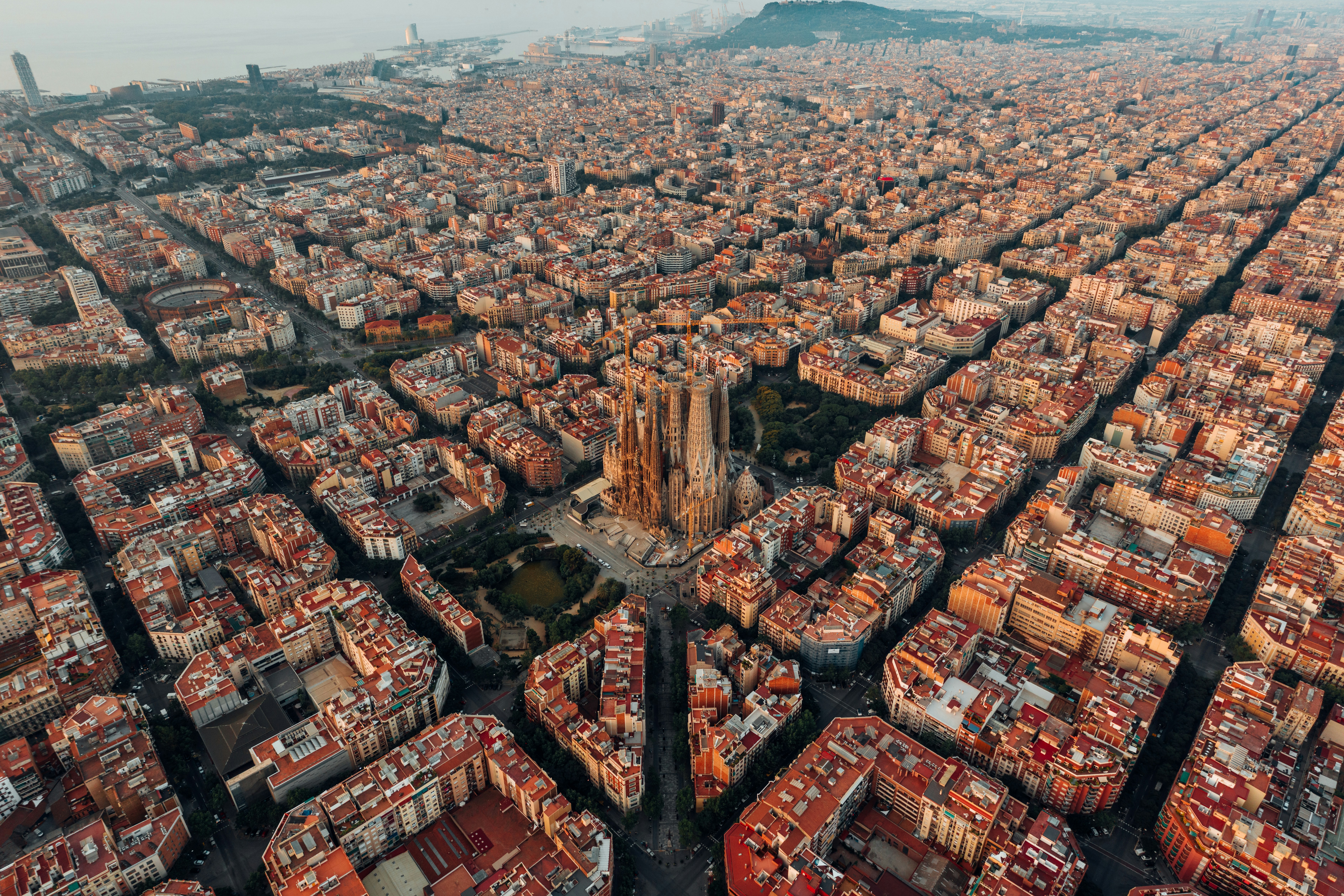
Plan and listen to Plaça De Francesc Macià, Barcelona with Audiala.
Audio guide in your pocket, itinerary in your browser. Built for the way you actually visit.
Introduction
Plaça de Francesc Macià is a vibrant urban square at the crossroads of Barcelona’s Eixample, Sarrià-Sant Gervasi, and Les Corts districts. Named in honor of Francesc Macià, the first president of the restored Generalitat de Catalunya, the square is a reflection of Catalonia’s historical evolution, political spirit, and urban dynamism. Renowned for its distinctive elliptical layout by architect Nicolau Maria Rubió i Tudurí and its integration of public art, Plaça de Francesc Macià stands as both a functional transit hub and a cultural landmark.
This guide covers essential information for visitors: history, architectural highlights, accessibility, transport, nearby attractions, practical travel tips, and more—helping you get the most out of your visit to this emblematic Barcelona site.
For additional details and updates, refer to official tourism resources such as Barcelona Bus Turístic and Barcelona Turisme.
History and Urban Development
Origins and Design
Plaça de Francesc Macià was established in the early 1930s as part of Barcelona’s urban expansion, designed by Nicolau Maria Rubió i Tudurí to manage growing traffic and unify key city districts. Its elliptical form was a pragmatic solution for vehicular flow while allowing for the integration of green spaces and artistic elements.
Name Evolution
The square’s name mirrors Spain’s political shifts:
- 1932: Opened as Plaça d’Alcalá Zamora (for the Second Republic president).
- 1936: Renamed Hermanos Badia (after Catalan politicians).
- 1939: Changed to Calvo Sotelo (under Franco).
- 1979: Became Plaça de Francesc Macià, honoring the Catalan leader’s legacy.
Dedication to Francesc Macià
Francesc Macià (1859–1933) was a pivotal figure in Catalonia’s autonomy movement. His presidency and advocacy for self-determination are commemorated in the square's name and public art. The site is a living symbol of Catalonia’s ongoing quest for political and cultural recognition.
Cultural Significance
Beyond its function as a transit hub, Plaça de Francesc Macià is a gathering place for civic events, demonstrations, and festivals. It is often included in walking tours focused on Barcelona's modernist and political history, reflecting its status as a symbol of Catalan pride and community engagement.
(Spain Tourist Information - Travel Tips)
Architectural and Artistic Features
- Elliptical Layout: The square’s unique shape manages heavy traffic and creates dynamic sightlines.
- Central Pond: Designed in the shape of Menorca—Rubió i Tudurí’s birthplace.
- Monuments and Sculptures:
- “Joventut” (1953) by Josep Manuel Benedicto symbolizes vitality.
- Francesc Macià Monument (1991) by Josep Maria Subirachs, a modernist tribute to the president.
- Surrounding Landmarks:
- Casa Sayrach: A Modernisme masterpiece with undulating stonework and ornate balconies (Casa Sayrach Official).
- Edifici La Caixa: Notable for its rationalist architecture and glass façade.
- Landscaping: Mediterranean greenery, benches, and shaded areas offer respite from the city bustle.
Visiting Hours, Accessibility, and Tickets
- Hours: Open 24/7 as a public space.
- Tickets: No entrance fee to visit the square. Tickets are only required for specific nearby museums or guided tours.
- Accessibility: Wheelchair-accessible sidewalks, tactile paving, ramps, and clear signage. Central island and pond are not pedestrian-accessible due to traffic.
- Restrooms: Available in adjacent cafes and shopping centers.
(Barcelona Turisme - Accessibility)
Transportation and Getting There
- Tram: Trambaix lines T1, T2, T3 stop at Francesc Macià.
- Bus: Numerous city bus lines serve the area (e.g., 6, 7, 14, 27, 32, 33, 34, 59, 63, 67, 68, 78, H8, V13).
- Metro: Hospital Clínic (L5) and Diagonal (L3, L5) are the closest stations (10–15 min walk); a dedicated Francesc Macià metro station (L8) is planned.
- Tourist Bus: Red and Blue routes of Barcelona Bus Turístic.
- Taxi & Ride-Sharing: Easily available.
- Cycling: Bike-sharing via Bicing and dedicated lanes on Diagonal.
Guided Tours and Events
- Tours: The square is included in many architectural and political history walking tours.
- Events: Occasional cultural festivals and community events occur in or near the plaza, especially during La Mercè and other local celebrations.
- Photography: Morning and late afternoon provide the best light for capturing the plaza’s features and surrounding architecture.
(Barcelona Turisme - Street Sculptures Route)
Nearby Attractions
- Jardines de La Tamarita: Tranquil gardens ideal for relaxation.
- Avinguda Diagonal: Barcelona’s shopping and business artery, lined with boutiques and cafés.
- Casa Sayrach: An architectural highlight of the Modernisme movement.
- Passeig de Gràcia: Home to Gaudí’s Casa Milà and Casa Batlló.
- Barrio de Sarrià: A historic neighborhood with traditional bakeries and cafés.
Visitor Amenities and Practical Tips
- Dining & Shopping: Numerous cafés and restaurants with outdoor terraces; luxury retail along Avinguda Diagonal.
- Wi-Fi: Free Wi-Fi in many eateries; consider a local SIM for reliable connectivity.
- Safety: Use marked crossings, be mindful of traffic, and watch for pickpockets in busy areas.
- Weather: Mediterranean climate—summer temperatures between 20°C–30°C. Stay hydrated and use sunscreen.
- Travel Passes: T-Casual 10-ride pass or Hola Barcelona Travel Card for unlimited transit rides.
- Family-Friendly: Open spaces and proximity to parks make it an inclusive destination for all ages.
Sustainability and Local Etiquette
- Sustainable Tourism: Use public transport, refill water bottles, and support local establishments.
- Etiquette: Greet with basic Catalan or Spanish phrases, respect local customs, and be considerate of others in public spaces.
- Tipping: Optional but appreciated.
Frequently Asked Questions (FAQ)
Q: What are the visiting hours for Plaça de Francesc Macià?
A: The square is open 24 hours a day as a public space.
Q: Is there an entrance fee?
A: No, access to the square is free.
Q: Are guided tours available?
A: Yes, various walking tours include the square, especially those focused on architecture and history.
Q: How accessible is the plaza for wheelchair users?
A: Surrounding sidewalks are accessible; central island is not.
Q: Is photography allowed?
A: Yes, and the plaza provides many scenic spots for photos.
Listen to the full story in the app
The whole Plaça De Francesc Macià, Barcelona,
told well.
Audio guides for 1,100+ cities across 96 countries. History, stories, and local insight — offline ready.

Verified, and shown.
Researched and written by the Audiala editorial team from historical records, architectural archives, and local expertise.
Last reviewed
Researched from Wikidata, Wikipedia & official sources · fact-checked · How we make our guides →