Plan and listen to Casa Francesc Coll with Audiala.
Audio guide in your pocket, itinerary in your browser. Built for the way you actually visit.
Introduction
Casa Francesc Coll is a hidden architectural jewel in Barcelona’s Eixample district. Designed by Eduard Ferrés i Puig and constructed between 1913 and 1914, the building is an outstanding example of Catalan Modernisme infused with eclectic and oriental-inspired motifs. While less famous than nearby icons such as Casa Batlló or Casa Milà, Casa Francesc Coll offers a unique insight into the city’s early 20th-century urban and artistic evolution. This guide provides historical context, architectural highlights, practical visitor information, and tips for exploring nearby attractions.
Historical Background and Urban Context
The Eixample and Barcelona’s Urban Evolution
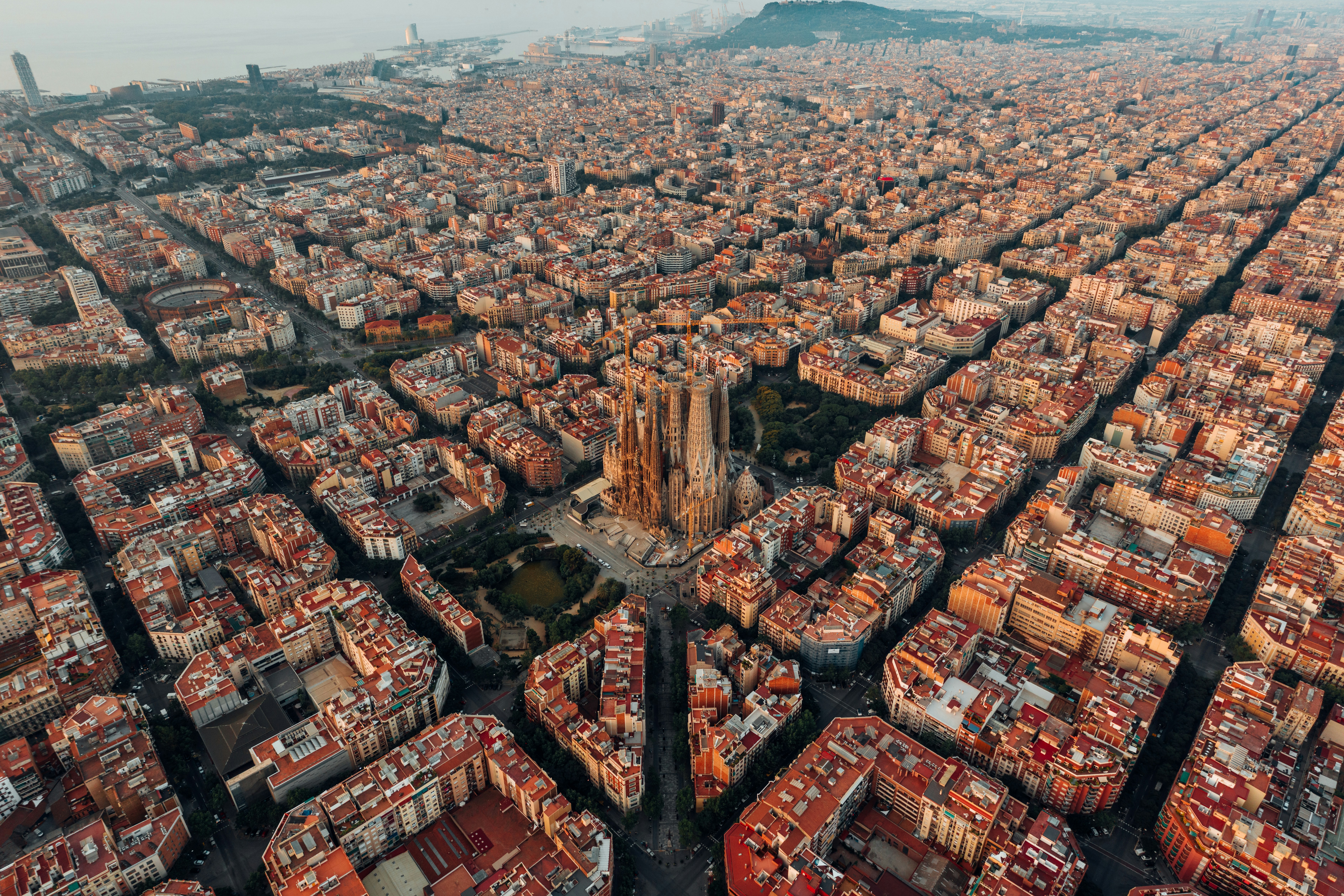
Barcelona’s Eixample district—catalyzed by Ildefons Cerdà’s visionary 19th-century expansion plan—transformed the medieval city into a modern, organized urban grid. Wide boulevards, chamfered corners, and integrated green spaces allowed for innovation in architecture and urban living (Vox). This environment fostered the rise of the Modernisme movement, with architects like Antoni Gaudí and Lluís Domènech i Montaner creating works that define Barcelona’s skyline (Patrimoni Gencat).
Casa Francesc Coll’s Role in Modernisme
Casa Francesc Coll stands at the intersection of Gran Via de les Corts Catalanes and Carrer de Calàbria. Commissioned by Francesc Coll i Portabella, the building is officially recognized as a property of architectural interest and is listed in the Inventari del Patrimoni Arquitectònic de Catalunya (ca.wikipedia.org). Its construction reflects the optimism and creativity of early 20th-century Barcelona, when Modernisme flourished as a symbol of Catalan identity and bourgeois pride (World City History).
Architectural Features and Significance
Eclectic Design and Modernisme Elements
Casa Francesc Coll exemplifies the eclectic nature of late Modernisme. Its façade is adorned with intricate stonework, oriental-inspired columns, wrought-iron balconies, and mosaic tiles. The building’s corner treatment is particularly distinctive for its bold, organic forms—an unusual approach in the Eixample (arquitecturamodernista.cat).
- Ornate Ironwork: Balconies and entrance gates feature elaborate wrought-iron designs.
- Ceramic Tiles: Colorful, geometric, and floral tiles accentuate both façade and interior spaces.
- Organic Motifs: Decorative details echo natural forms, a hallmark of Modernisme.
- Symbolic Carvings: Elements referencing Catalan folklore and identity.
Urban Integration
The building’s corner location maximizes natural light and air flow—key principles in Cerdà’s Eixample plan. The ground floor historically housed commercial spaces, reflecting the mixed-use character common to Barcelona’s urban fabric (ca.wikipedia.org).
Heritage Protection
Casa Francesc Coll is catalogued as a “Bé Cultural d’Interès Local” (BCIL), affording it legal protection under Catalan heritage laws (Patrimoni Gencat). Restoration and maintenance work must comply with strict guidelines to preserve the building’s historical integrity (Ajuntament de Barcelona).
Visiting Casa Francesc Coll: Hours, Tickets, and Accessibility
Location
- Address: Gran Via de les Corts Catalanes, 464-466 / Carrer de Calàbria, 87, Eixample, Barcelona.
- Getting There: Nearest metro stations are Rocafort (L1) and Urgell (L1). Passeig de Gràcia, Diagonal, and Provença stations are also within walking distance. Local buses and bike-share systems serve the area (poblesdecatalunya.cat).
Visiting Hours and Tickets
- Exterior Viewing: The façade and exterior details can be admired freely from the street at any time.
- Interior Access: Casa Francesc Coll is primarily a residential and commercial building; interior access is generally not available to the public.
- Special Events: On rare occasions (e.g., during “48h Open House Barcelona”), guided tours may provide access. Check with local heritage organizations or the official tourism office for event listings (Barcelona Life).
Accessibility
- Wheelchair Access: Surrounding sidewalks are accessible. For special events, interior accessibility may vary—contact organizers in advance.
- Restrooms: Not available on-site; nearby cafés and shops provide facilities.
Tickets
- No tickets are required for exterior viewing. For guided tours, tickets (if available) can be purchased through the event organizer or local tourism portals (Barcelona Turisme).
Nearby Attractions and Guided Tours
Modernisme Landmarks
- Casa Batlló: Gaudí’s colorful icon, 7 minutes on foot (Spain Tourist Information).
- Casa Milà (La Pedrera): Another Gaudí masterpiece, 10-minute walk (Spain Tourist Information).
- Casa Amatller: Next to Casa Batlló, celebrated for its tilework and stepped gables.
- Museu del Modernisme de Barcelona: Dedicated to the Modernisme movement, 10 minutes away.
Other Attractions
- Passeig de Gràcia: Upscale boulevard with shopping, dining, and architectural gems.
- Gothic Quarter: Medieval streets, Roman ruins, and the Barcelona Cathedral (Splendidly Spain).
- Parc de la Ciutadella: Popular urban park, 20 minutes on foot.
Day Trips
- Montserrat: Mountain monastery, about an hour by train (TravelTriangle).
- Sitges: Seaside town, 40 minutes by train.
- Colònia Güell: Industrial village with Gaudí’s crypt, 30 minutes away (TravelTriangle).
Practical Travel Tips
- Best Viewing Times: Early morning or late afternoon for optimal lighting and fewer crowds.
- Photography: Permitted from the street; use natural light for best results.
- Safety: Watch for pickpockets in busy areas (Mint Notion).
- Language: Catalan and Spanish are official languages; English is widely understood in tourist zones.
- Public Transport: Efficient and recommended; parking is limited in Eixample.
- Dining: Numerous cafés, tapas bars, and bakeries nearby.
Frequently Asked Questions (FAQ)
Q: Can I visit the interior of Casa Francesc Coll?
A: Interior access is generally restricted. Occasionally, guided tours are available during special events—check with local organizations.
Q: Are tickets required to see Casa Francesc Coll?
A: No tickets are needed for exterior viewing. Tickets may be required for special tours.
Q: Is the building wheelchair accessible?
A: The exterior is accessible; interior accessibility depends on the event.
Q: What are the best nearby attractions?
A: Casa Batlló, Casa Milà, Passeig de Gràcia, and the Gothic Quarter are all within easy reach.
Summary and Recommendations
Casa Francesc Coll is a distinctive testament to Barcelona’s architectural diversity and Modernisme heritage. Although interior access is limited, its exquisite façade and ornamental details are freely accessible and worth a visit—especially as part of a self-guided walking tour through the Eixample’s modernist landmarks. For a richer experience, plan your route to include Casa Batlló, Casa Milà, and nearby museums. Use official tourism resources and the Audiala app for up-to-date information, guided audio tours, and curated itineraries.
Listen to the full story in the app
The whole Casa Francesc Coll,
told well.
Audio guides for 1,100+ cities across 96 countries. History, stories, and local insight — offline ready.

Verified, and shown.
Researched and written by the Audiala editorial team from historical records, architectural archives, and local expertise.
Last reviewed
Researched from Wikidata, Wikipedia & official sources · fact-checked · How we make our guides →