Introduction
The first time you bite into pa amb tomàquet on a sun-warmed bench in Barcelona, Spain, something shifts. The bread is properly stale, the tomato fierce with acidity, and the olive oil so green it stains your fingers. Suddenly the city stops performing for you and simply sits beside you. This is not the polished Mediterranean fantasy sold in brochures. It is a working Catalan capital that happens to contain seven UNESCO-listed Gaudí buildings and one unfinished cathedral that has already taken longer to build than the Pyramids.
Antoni Gaudí and Lluís Domènech i Montaner treated stone like living tissue. Their buildings lean, bulge, and drip with trencadís tile that catches the afternoon light in ways no flat façade ever could. Walk down Passeig de Gràcia at golden hour and the façades of Casa Batlló and Casa Milà look as if they are exhaling. Yet the real Barcelona reveals itself in smaller moments: the echo of castellers practicing in a Gràcia square, the smell of charred calçots drifting from a hidden courtyard, the way locals still say “Bon dia” in Catalan even when they know you’re foreign.
The city has kept its own rhythm despite everything. It survived the fall of autonomy in 1714, the bombs of the Civil War, and the long silence under Franco only to re-emerge with its language and stubborn identity intact. Today that identity shows up in the refusal to serve dinner before 9 p.m., in the Friday-night vermut rituals, and in the quiet pride that the best bomba in town still comes from a grandmother-run bar in Barceloneta with no sign above the door.
Stay long enough and the place changes how you see other cities. You start noticing which staircases are purely functional and which ones feel like theatre. You understand that light itself can be a architectural material. And you realise the greatest secret about every building here is not who designed it, but how patiently the city waits for you to stop rushing and finally look up.
Places to Visit
The Most Interesting Places in Barcelona
Sagrada Família
The Basílica de la Sagrada Família stands as one of Barcelona’s most iconic historical sites and a pinnacle of architectural innovation and spiritual symbolism.
Plaça De Catalunya
Plaça de Catalunya, often considered the epicenter of Barcelona, is a vibrant and historically rich square that attracts millions of visitors each year.
Macba Barcelona Museum of Contemporary Art
The Museu d’Art Contemporani de Barcelona (MACBA) stands as a pivotal institution in Barcelona’s rich cultural mosaic, showcasing the evolution and vibrancy…
La Pedrera
Casa Milà, popularly known as La Pedrera (“the stone quarry”), stands as a monumental testament to Antoni Gaudí’s visionary genius and Barcelona’s rich…
Park Güell
Park Güell in Barcelona, Spain, stands as a monumental testament to the architectural genius of Antoni Gaudí, one of the most revered figures in Catalan…
Centre De Cultura Contemporània De Barcelona
The Centre de Cultura Contemporània de Barcelona (CCCB) stands as a vital cultural landmark nestled in Barcelona’s historic Raval district, offering an…
Palau Güell
Palau Güell is an architectural marvel nestled in the vibrant heart of Barcelona, Spain.
Montjuïc Castle
Montjuïc Castle is an iconic historical monument perched atop Montjuïc Hill in Barcelona, Spain.
Arc De Triomf
The Arc de Triomf stands as one of Barcelona's most treasured landmarks, offering visitors a profound glimpse into the city's rich historical tapestry and…
Barcelona Zoo
Nestled within the scenic Parc de la Ciutadella, Barcelona Zoo stands as a historic and vibrant institution offering visitors a unique opportunity to connect…
Port of Barcelona
The Port of Barcelona stands as a remarkable maritime gateway that blends over two millennia of rich historical legacy with a dynamic, modern presence.
Magic Fountain of Montjuïc
The Magic Fountain of Montjuïc stands as one of Barcelona’s most enchanting and iconic landmarks, captivating millions with its spectacular displays of water,…
What Makes This City Special
Modernisme Mastery
Antoni Gaudí's buildings don't just stand in Barcelona, they twist, bulge and breathe. The unfinished Sagrada Família has been under construction since 1882 yet its Nativity façade still stops you cold with stone that looks soft enough to touch.
Catalan Identity
This isn't just another Spanish city. Catalan is the language you'll hear in markets and on street signs. The 19th-century Modernisme movement deliberately rejected Castilian styles, creating a visual language that still defines the place more than a century later.
Unexpected Escapes
Climb to the Bunkers del Carmel at dusk for the city's best 360-degree view. The former anti-aircraft batteries sit above Gràcia, where the light turns the grid of Eixample into something almost liquid. Bring wine. Locals do.
Market Life
The Boqueria's sensory assault begins before you've even stepped fully inside. Stalls have operated on the same patch of Las Ramblas since 1217. Skip the fruit smoothies aimed at tourists and find the counter that serves only jamón ibérico carved from legs hanging overhead.
Historical Timeline
A City Forged by Conquest and Defiance
From Roman outpost to Catalan heart
First settlements take root
Neolithic people built their huts near what is now El Raval. The smell of pine smoke and baked clay hung over Montjuïc long before any city dreamed of existing. These scattered hamlets left pottery shards that still surface under modern tram lines.
Romans found Barcino
Augustus planted Colonia Iulia Augusta Faventia Paterna Barcino on the gentle slope of Mont Tàber. Four-meter-thick walls rose around a neat grid of streets. The sound of legionary boots on fresh stone marked the birth of a town that would outlast empires.
Visigoths make it capital
King Ataulf moved his court inside the old Roman walls. For a few flickering decades the city rang with Germanic voices and Latin replies. Then the Visigoths drifted south, leaving Barcino to fade into a provincial backwater.
Carolingians seize the city
Louis the Pious stormed the Moorish-held town after a short, brutal siege. The walls still carried scars from both sides. Barcelona became the forward bastion of the Frankish March, a buffer between two worlds.
Wilfred the Hairy unites counties
Count Guifré el Pilós refused to shave until he had bound the Catalan counties together. He succeeded. His descendants ruled an increasingly confident Barcelona that looked seaward instead of north to the Franks.
Union with Aragon
The marriage of Ramon Berenguer IV and Petronilla joined Barcelona’s ships to Aragon’s armies. The city suddenly commanded a future Mediterranean empire. Merchants began keeping double books in Catalan and Latin.
Consell de Cent is born
The city won the right to its own council of one hundred citizens. They met in the Saló de Cent, voices echoing off stone vaults. For the next four centuries this assembly guarded Barcelona’s liberties against kings and popes alike.
Black Death ravages the city
Plague ships docked at the Drassanes. Within months two-thirds of the population lay dead. The silence that followed was broken only by the creak of burial carts and the occasional desperate prayer inside emptied churches.
Barcelona falls to Bourbon troops
After thirteen months of siege the city surrendered on 11 September. Felipe V’s cannons had reduced whole quarters to rubble. The Decrees of Nueva Planta abolished Catalan institutions overnight. That date still burns in local memory.
Spain’s first railway opens
The Barcelona–Mataró line carried its first passengers amid brass bands and nervous horses. Iron rails sliced through the old city walls that were already being torn down. The Industrial Revolution had officially arrived.
Antoni Gaudí is born
A coppersmith’s son entered the world in Reus but found his language in Barcelona’s light and stone. The city would later watch him crawl along scaffolding like a devout spider, twisting iron and ceramic into impossible curves.
Sagrada Família construction begins
The first stone was laid on 19 March under architect Francisco de Paula del Villar. Gaudí took over the following year and never really let go. One hundred and forty-two years later the towers still claw at the sky, unfinished and defiant.
Tragic Week sets streets ablaze
Anger over conscription for Morocco exploded into riots. Churches burned while nuns’ skulls were paraded on sticks. The army restored order with rifle fire. The smoke took weeks to clear from the Eixample’s wide avenues.
Lluís Domènech i Montaner completes masterpiece
The architect put the final touches on the Hospital de Sant Pau just before his death. Its pavilions glowed with mosaic and stained glass. Patients recovered under tiled ceilings that looked more like cathedral domes than medical wards.
Anarchists seize the streets
After the military rising failed, workers’ militias controlled Barcelona within days. Tram conductors wore pistols. Churches became warehouses. George Orwell arrived to find a city that briefly believed it had abolished class.
Barcelona becomes Republican capital
The government fled north from Madrid and settled into the city’s ministries. For two years it directed a losing war from behind elegant Modernista façades. Night after night Italian bombers droned overhead.
Franco’s troops enter the city
On 26 January the last Republican units withdrew. Franco’s soldiers marched down Las Ramblas between silent crowds. The repression that followed was methodical and thorough. Catalan vanished from schools and street signs for decades.
Joan Miró dies in his city
The painter who once said he wanted to murder painting passed away in Palma but had left his spirit all over Barcelona. His foundation on Montjuïc still watches the harbor where he first learned to see color in Mediterranean light.
Olympics transform the waterfront
Seventeen thousand athletes arrived. The city bulldozed derelict warehouses, opened the seafront, and built the Vila Olímpica where fishermen once dried their nets. Barcelona stopped turning its back on the Mediterranean.
Montserrat Caballé’s final note
The voice that once filled the Liceu with impossible high C’s fell silent in Barcelona. Her funeral drew thousands who remembered how she had made the city believe its opera house belonged on the world stage.
Notable Figures
Antoni Gaudí
1852–1926 · ArchitectGaudí walked these streets with pockets full of acorns and feathers, studying shapes nature had already perfected. He left the Sagrada Família unfinished on purpose. Locals still debate whether he would smile or weep at the cranes still working on his dream a century later.
Joan Miró
1893–1983 · Painter and sculptorMiró learned to hate conventional beauty inside the narrow lanes of the Gothic Quarter. He spent his life reducing forms to their essential bones. The foundation that bears his name sits on Montjuïc like a quiet refusal of everything Gaudí celebrated.
Pablo Picasso
1881–1973 · PainterAt 14 Picasso moved into a cramped apartment on Carrer de la Mercè. The city’s smoky taverns taught him blue. The Museu Picasso holds his early awkward sketches, proof that even geniuses once struggled with perspective on these exact cobblestones.
Carlos Ruiz Zafón
1964–2020 · NovelistZafón turned the city’s second-hand bookshops into a Cemetery of Forgotten Books. He wrote his characters walking the same Raval alleys he knew as a boy. Today readers still hunt for the fictional shop door on Carrer de la Canuda, half hoping it might actually open.
Plan your visit
Practical guides for Barcelona — pick the format that matches your trip.
Barcelona Money-Saving Passes & Cards: Which Is Actually Worth It
Honest 2026 comparison of Barcelona tourist passes — Barcelona Card, Articket, Hola BCN, Go City — with break-even math, scams to avoid and free museum days.
Barcelona First-Time Visitor Tips From Someone Who Actually Lives Here
Barcelona rewards planning. These first-timer tips cover ticket timing, airport fare traps, pickpocket zones, free-entry days, and the smartest ways to move around.
Photo Gallery
Explore Barcelona in Pictures
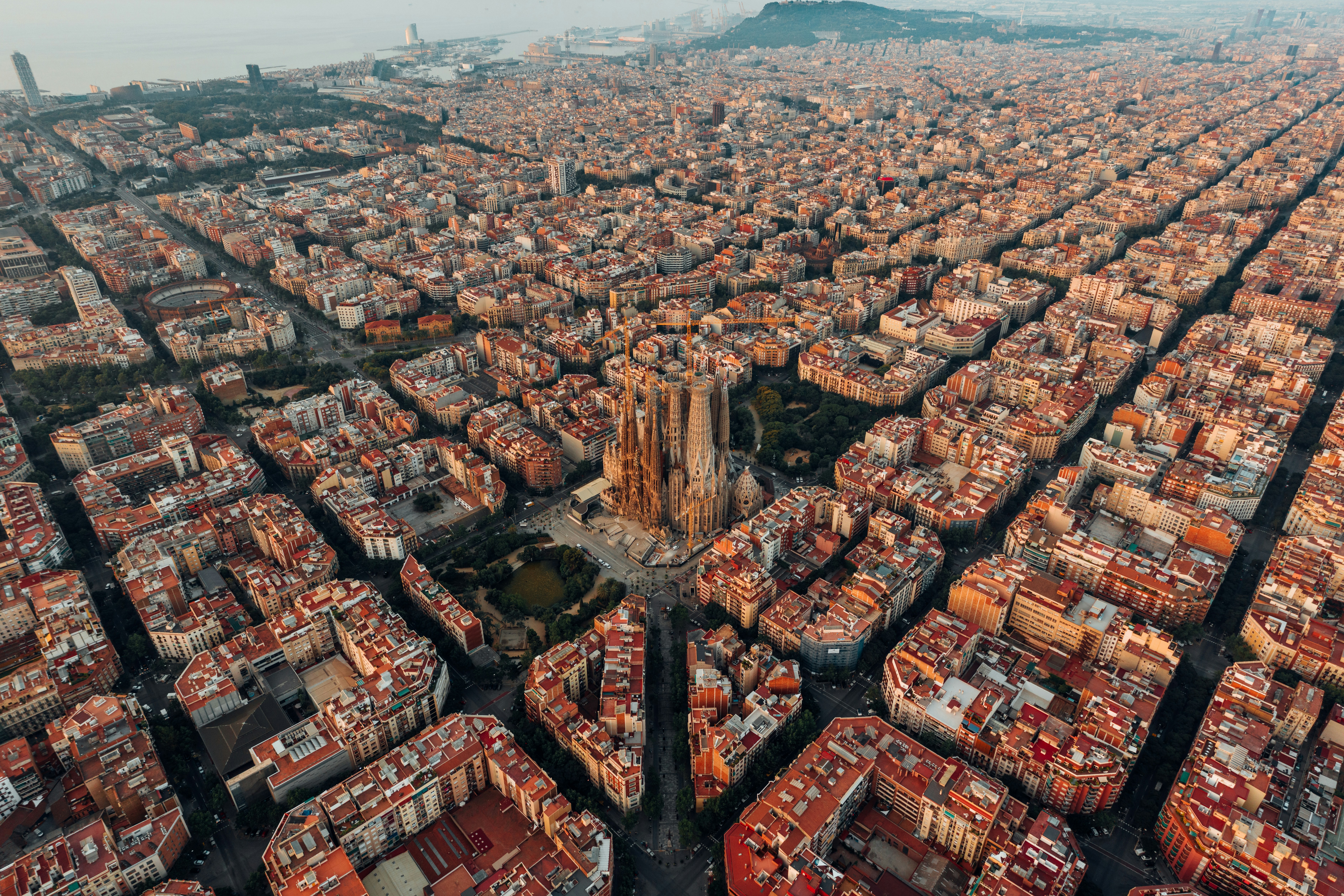
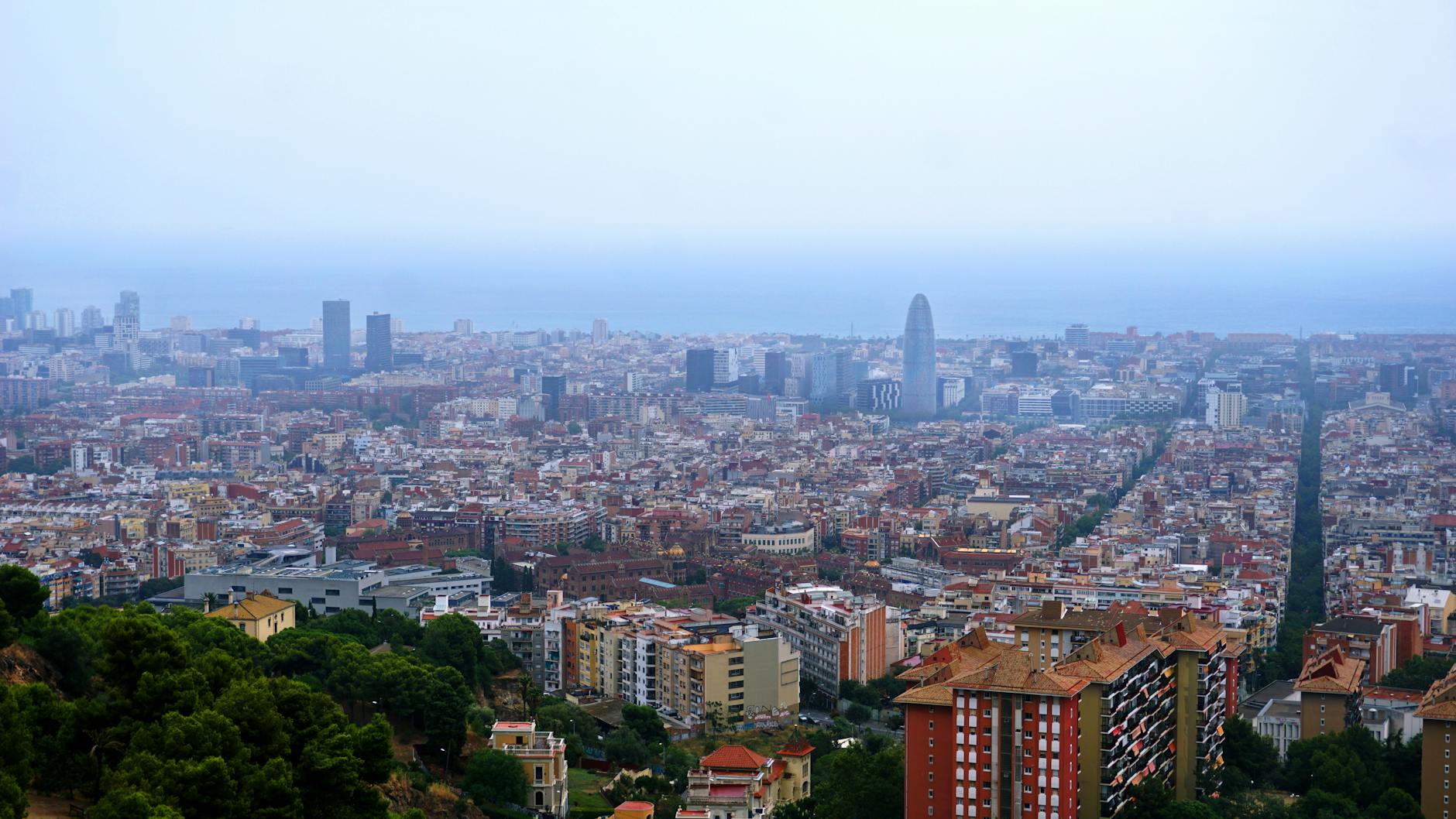
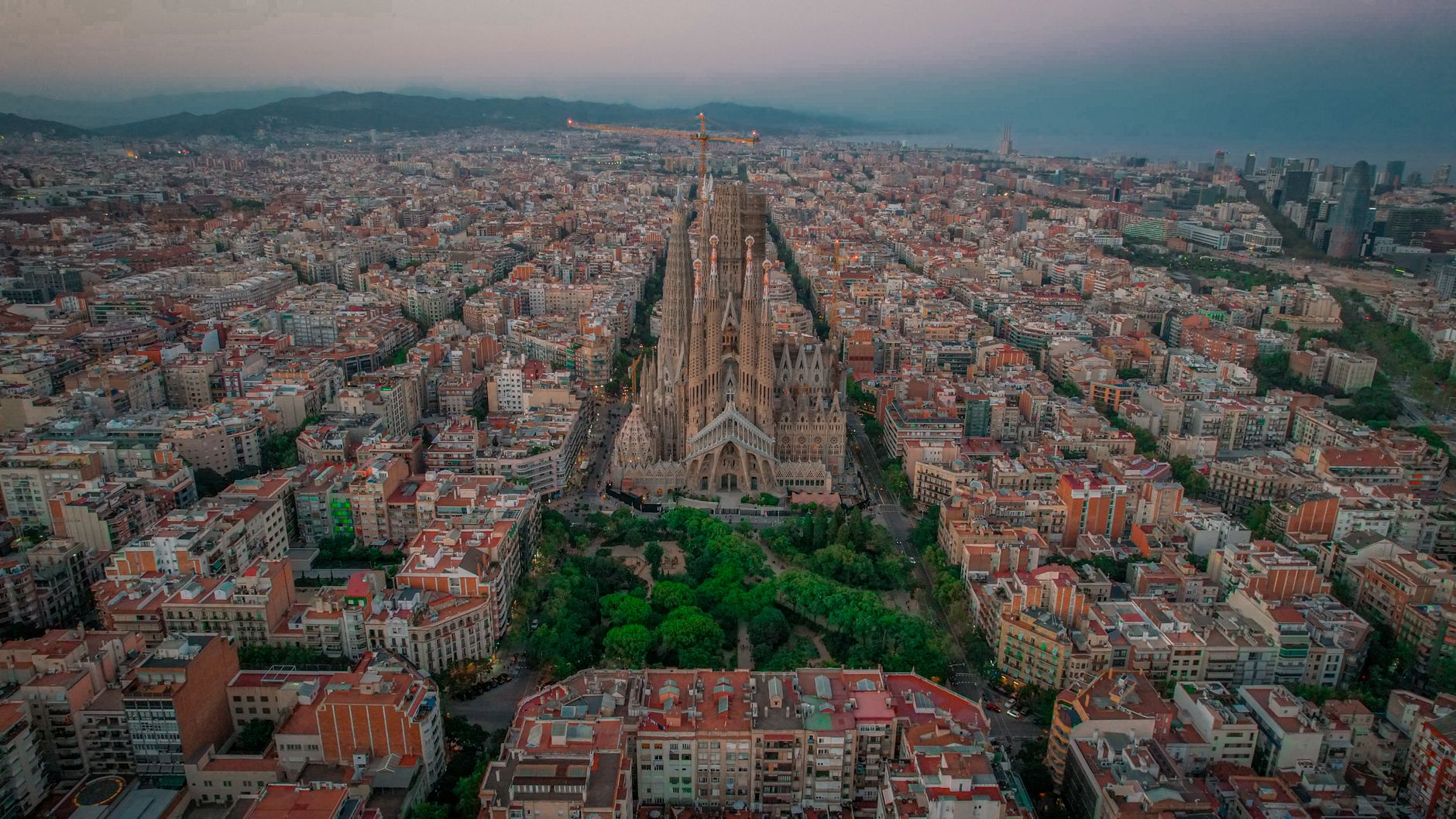
An expansive aerial perspective of Barcelona, Spain, highlighting the city's unique grid layout and the prominent Agbar Tower against the horizon.
Yevheniia Savchenko on Pexels · Pexels License
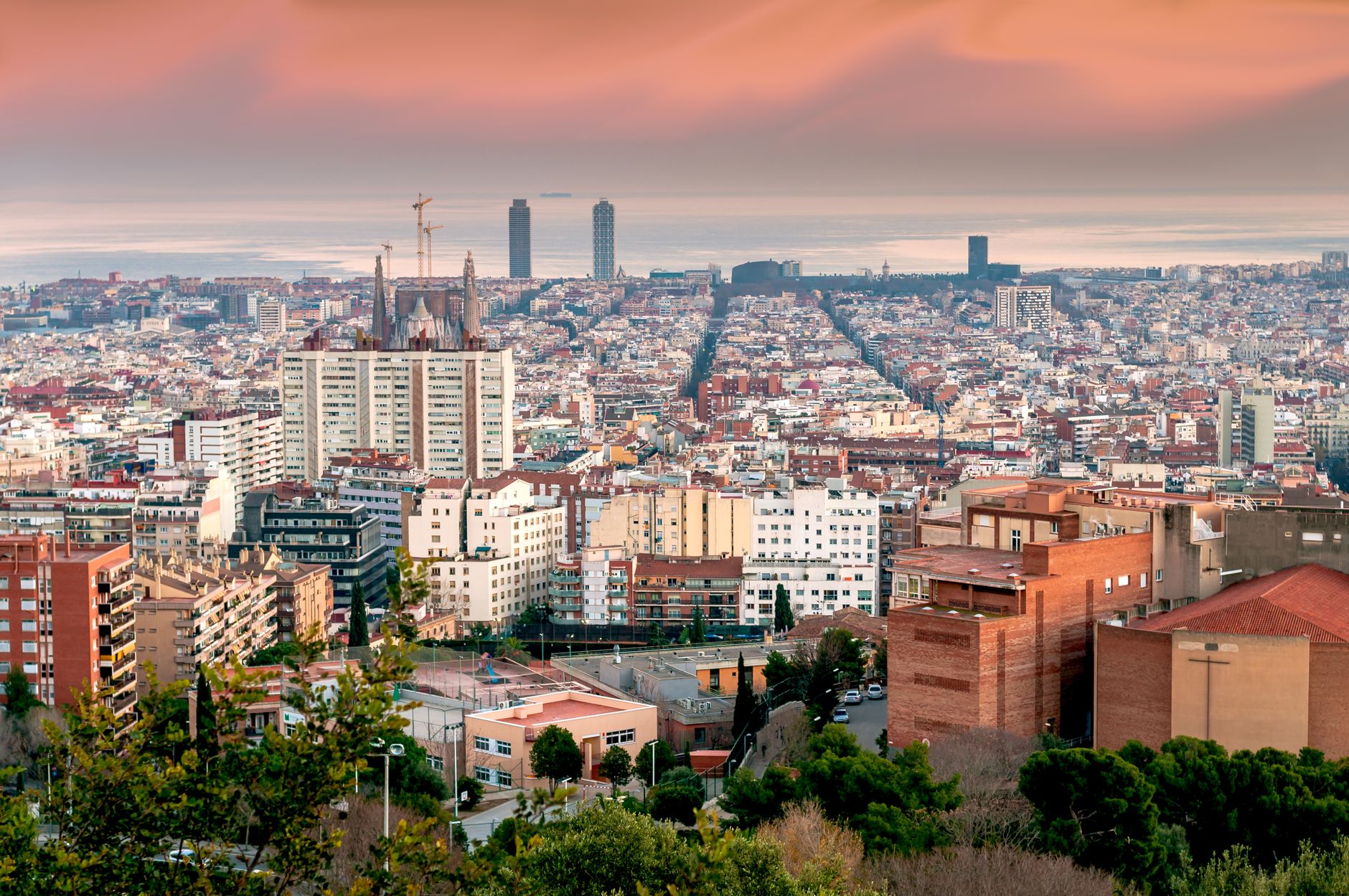
A stunning sunset view overlooking the iconic Venetian Towers and the Four Columns in Barcelona, Spain, as the city transitions into the evening.
Nikola Čedíková on Pexels · Pexels License
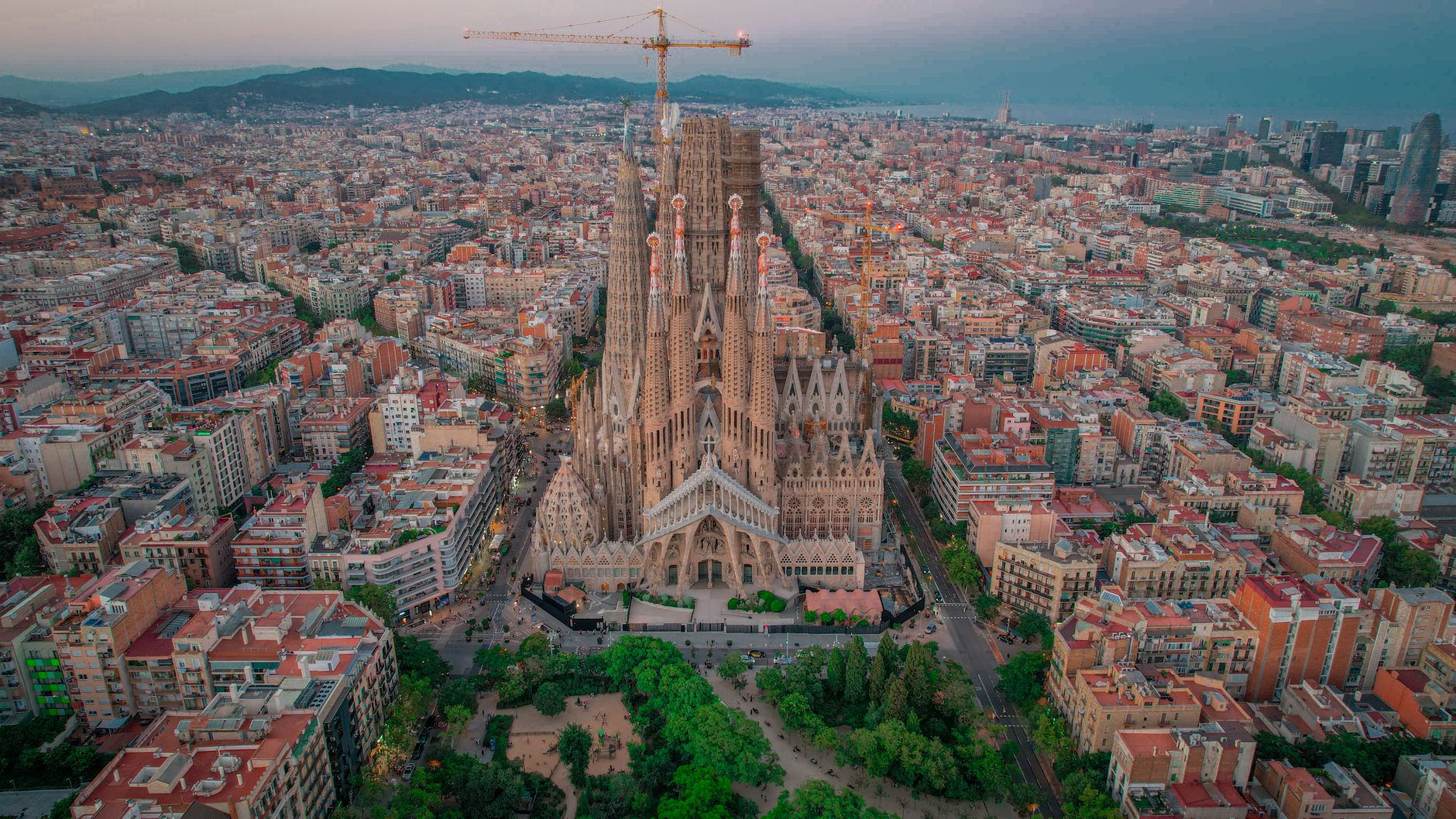
An impressive aerial perspective of the iconic Sagrada Familia basilica surrounded by the dense urban grid of Barcelona, Spain, captured during the golden hour.
Archie McNicol on Pexels · Pexels License
A stunning elevated view of Barcelona's dense urban grid and iconic skyline captured during a warm, golden sunset.
Antonio Lorenzana Bermejo on Pexels · Pexels License
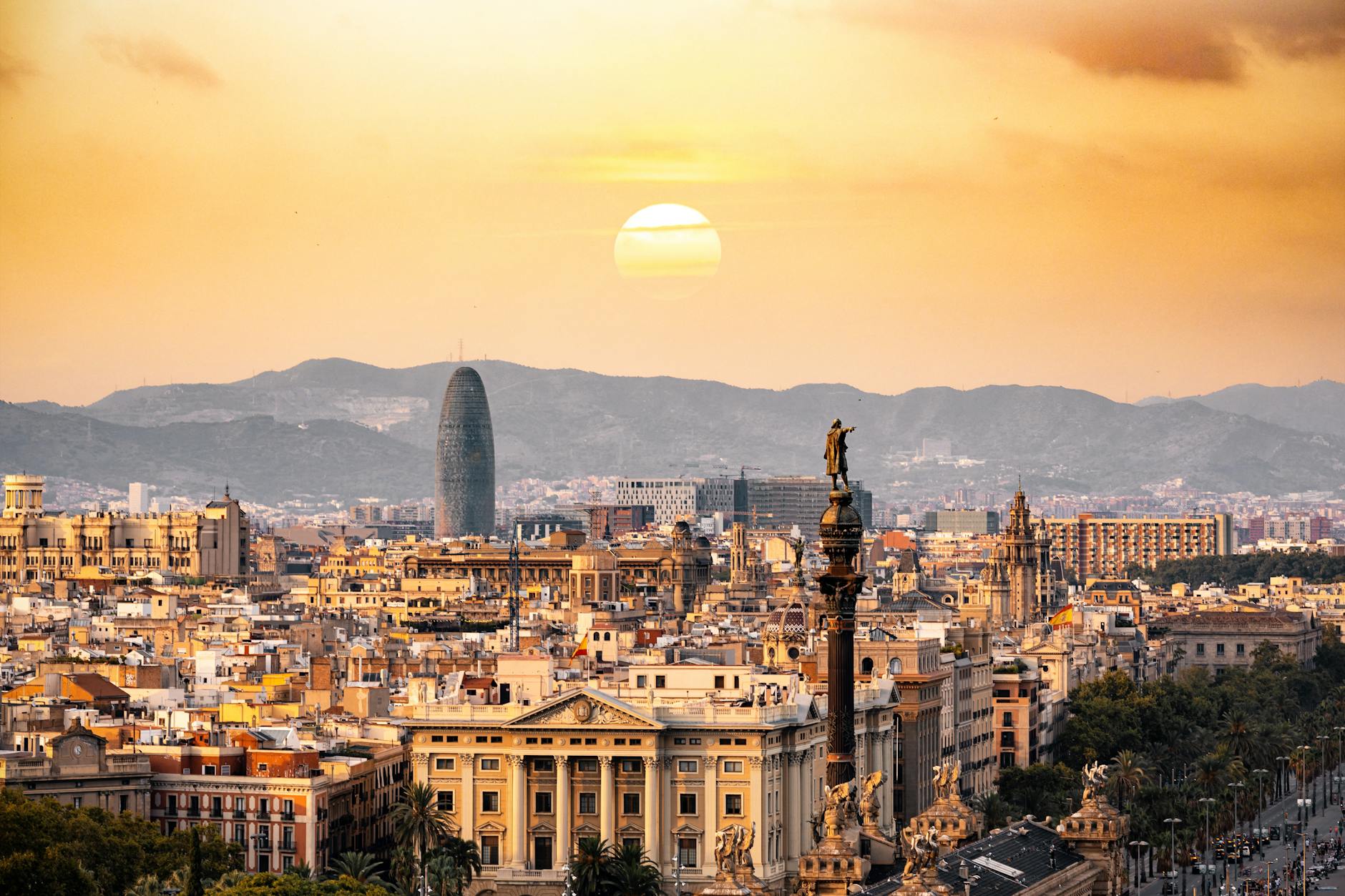
The golden hues of sunset illuminate the historic rooftops and iconic church domes of Barcelona, Spain.
Jobove Reus on Pexels · Pexels License
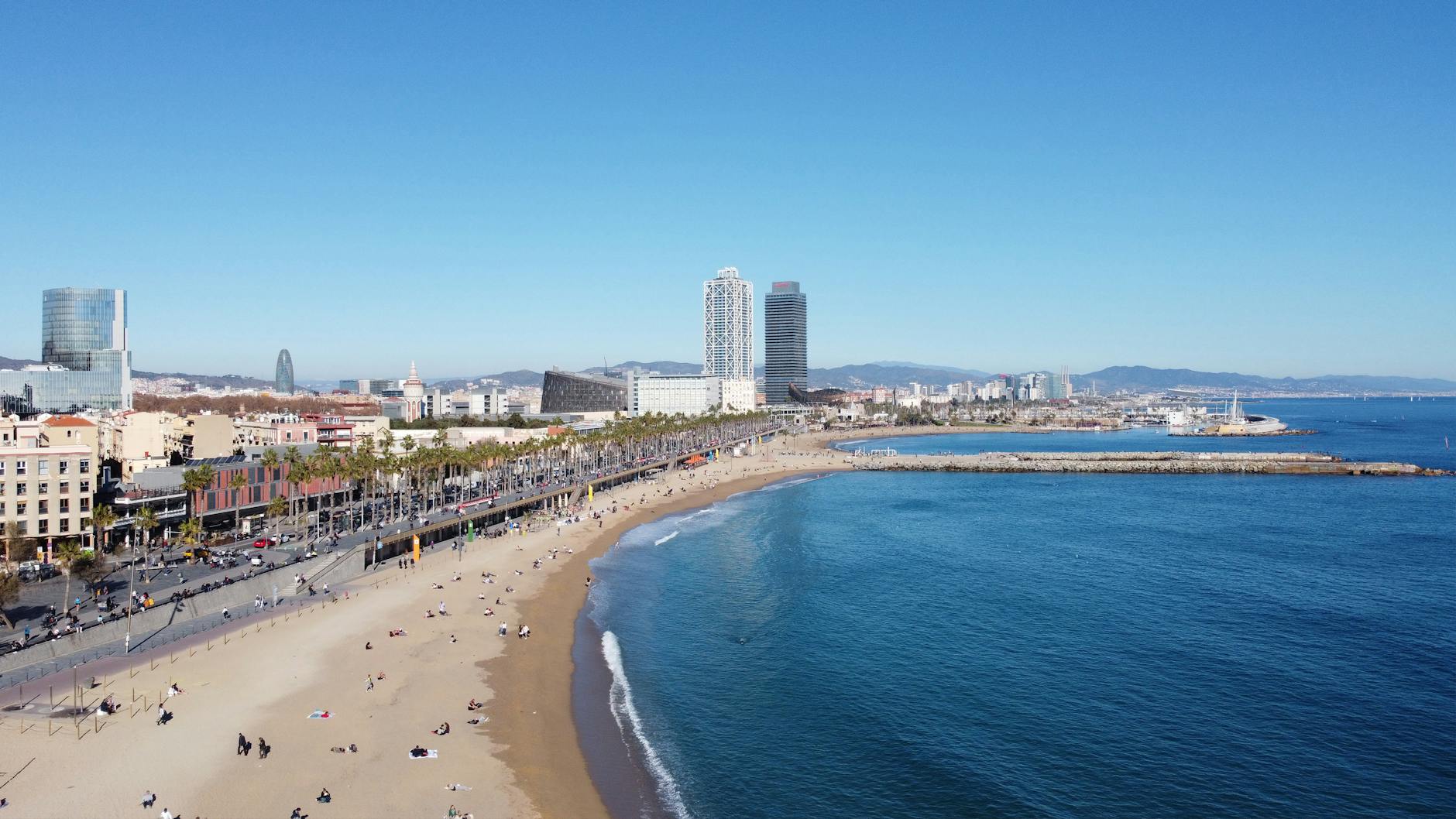
The modern skyline of Barcelona, Spain, showcases the iconic Mapfre Tower and Hotel Arts rising above the sandy shores of Port Olímpic.
Samar L. on Pexels · Pexels License
An impressive aerial perspective of the Sagrada Familia rising above the dense, historic urban grid of Barcelona, Spain during the golden hour.
Archie McNicol on Pexels · Pexels License
A stunning aerial perspective of Barcelona's coastline, showcasing the vibrant city beach alongside iconic modern architecture.
Lazar Krstić on Pexels · Pexels License
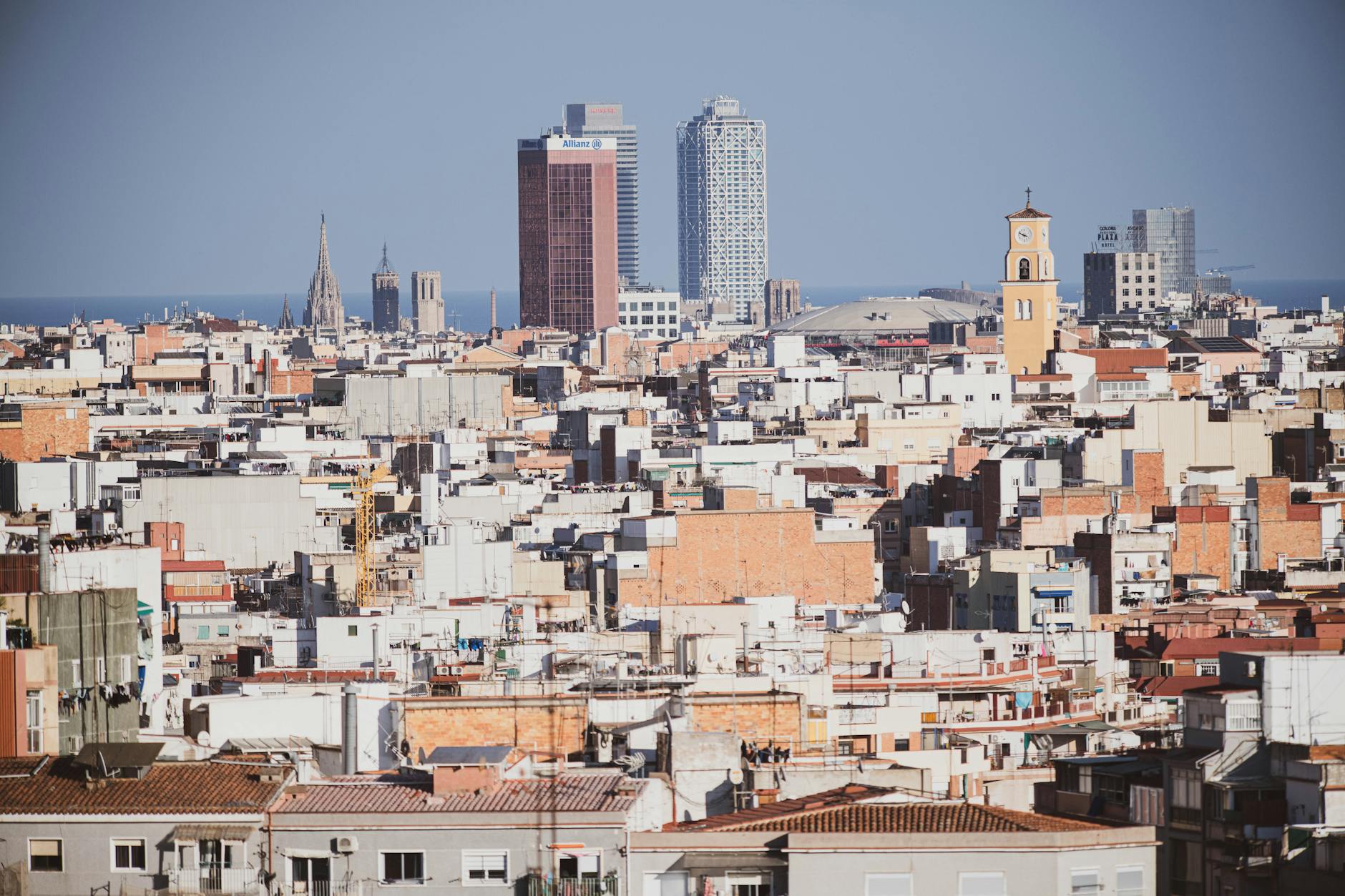
An elevated perspective of Barcelona's diverse skyline, blending historic Mediterranean architecture with modern high-rise buildings along the coast.
Walter Cunha on Pexels · Pexels License
A warm, golden-hour perspective looking out over the historic and diverse rooftops of Barcelona, Spain.
Min Nguyen on Pexels · Pexels License
Practical Information
Getting There
El Prat Airport (BCN) sits 13km southwest of the centre. The Aerobús runs every 5-10 minutes to Plaça de Catalunya in 35 minutes. Trains (Rodalies R2 Nord) depart Terminal 2 only for Sants Estació and Passeig de Gràcia. High-speed AVE trains arrive at Barcelona Sants from Madrid in 2.5 hours.
Getting Around
The TMB metro has eight lines and 165 stations. Integrated tickets cover metro, buses, trams and Rodalies trains. Buy the Hola Barcelona Card for unlimited travel: €17.50 for 48 hours, €25.50 for 72 hours in 2026. The city maintains 240km of dedicated bike lanes. Most journeys across the Eixample take 15 minutes on foot.
Climate & Best Time
Mediterranean climate brings 28-32°C highs in July and August with high humidity. Winters average 8-14°C and rarely drop below 5°C. Spring (April-June) and autumn (September-October) offer the sweet spot of 18-25°C days and fewer crowds. July and August see peak tourism with intense heat.
Safety
Petty theft targets phones and wallets on Las Ramblas, in the Gothic Quarter and around El Born, especially after dark. Keep valuables in front pockets or cross-body bags. The Raval requires extra caution at night. Violent crime remains rare.
Where to Eat
Don't Leave Without Trying
Sensi Tapas
local favoriteOrder: The jamón ibérico and pan con tomate are stellar; order several small plates and share like a local.
Nearly 10,000 reviews speak to consistency and authenticity. This is where Barcelona residents go for proper tapas, not tourist theater—tight bar, standing room, real energy.
Ocaña
local favoriteOrder: Vermouth on tap with a simple tapa—anchovy, cheese, or cured meat. The all-day energy means you can drop in anytime.
Over 15,000 reviews for a reason: Ocaña is the social hub of Plaça Reial. Open from breakfast through late night, it's where locals linger for hours over vermouth and conversation.
Bodega La Tinaja
local favoriteOrder: Classic Spanish wines by the glass paired with jamón, queso, and simple montaditos. No frills, just quality.
A true bodega in the old-school sense—wine-focused, intimate, and beloved by locals who know that good wine and good company beat fancy plating every time.
Gelaaati DI MARCO.
quick biteOrder: The pistachio or hazelnut gelato is creamy and intense; grab a cone and walk the Gothic Quarter.
5,000+ reviews for authentic Italian gelato made fresh daily. This is where you go when you want the real thing, not the neon-colored tourist trap across the street.
La Central del Raval
cafeOrder: Coffee and a pastry in the morning; come back for lunch with a sandwich and local wine.
A beloved neighborhood spot that doubles as a cultural hub—relaxed, welcoming, and packed with locals who treat it like their living room.
Restaurante La Dentellière
local favoriteOrder: French-inspired dishes with Catalan touches; the evening menu showcases seasonal ingredients and careful technique.
A rare gem that blends French baking tradition with Barcelona's culinary sensibility. Small, intimate, and run by people who care deeply about what's on the plate.
Grand Hotel Central
fine diningOrder: Cocktails with a view; the bar offers classic and modern drinks in a sophisticated setting.
A refined perch overlooking the Gothic Quarter. Perfect for an aperitif or evening drink when you want a bit of elegance without pretension.
ICON BCN
fine diningOrder: Contemporary Mediterranean dishes with seasonal focus; ask the staff for wine pairings.
Located in Eixample on a tree-lined street, ICON offers modern cooking with respect for local ingredients. Smart, not showy—exactly what Barcelona dining should be.
Dining Tips
- check Lunch is the main meal, served between 1:30 PM – 3:30 PM; dinner starts late, typically 8:00 PM – 10:30 PM.
- check Tipping is not mandatory. Rounding up or leaving a few euros is sufficient; for excellent service, 5–10% is generous.
- check Always tip in cash—tips left on credit cards may not reach staff.
- check Check your bill for 'servicio incluido' (service included); if present, tipping is already factored in.
- check La Boqueria market is open Monday–Saturday, 8:00 AM – 8:30 PM; Sant Antoni Market operates Monday–Thursday 7:00 AM – 2:30 PM & 5:00 PM – 8:30 PM, Friday/Saturday 7:00 AM – 8:30 PM.
- check Markets are generally closed on Sundays.
- check Reservations are highly recommended for dinner and weekends at popular spots; casual tapas bars are often walk-in only.
- check Avoid restaurants with aggressive staff outside soliciting customers or menus in 5+ languages—seek out places crowded with residents during meal times.
Restaurant data powered by Google
Tips for Visitors
Guard Your Phone
Pickpockets work Las Ramblas, Gothic Quarter and El Born in crowds. Carry your phone in a front zip pocket and never set it on a cafe table.
Visit in Spring
April–June brings 18–24 °C temperatures and far fewer cruise-ship groups than July and August. Book Sagrada Família tickets for 9 am slots to avoid the worst queues.
Skip the Euro Change
Contactless cards work everywhere. Leave 5–10 % only when service stands out; rounding the bill to the nearest euro is normal and enough.
Buy a T-casual Card
The €12.25 ten-trip card covers metro, bus, tram and Rodalies trains. Single tickets cost €2.55 each; the card pays for itself by trip four.
Eat Like a Local
Lunch between 2–3:30 pm gets you the menú del día. For dinner, arrive after 9 pm or risk half-empty rooms and indifferent service.
Sunset at Bunkers
Walk or bus 24 up to the old anti-aircraft bunkers on Carmel hill. Bring a beer from a Gràcia shop; the 360-degree view costs nothing.
Explore the city with a personal guide in your pocket
Your Personal Curator, in Your Pocket.
Audio guides for 1,100+ cities across 96 countries. History, stories, and local insight — offline ready.
Audiala App
Available on iOS & Android
Join 50k+ Curators
Frequently Asked
Is Barcelona worth visiting? add
Yes, if you like architecture that bends stone like clay. Gaudí’s buildings still surprise after a hundred years. Three or four days lets you see the big sites without the exhaustion that turns wonder into obligation.
How many days do you need in Barcelona? add
Four days works for most people. Two days for the Gaudí route, one for the Gothic Quarter and museums, one for a day trip to Montserrat or Sitges. Five days lets you slow down and sit in Gràcia squares.
Is Barcelona safe for tourists? add
The city itself is safe, but petty theft is common. Las Ramblas, the Gothic Quarter at night and crowded metro carriages are the main hunting grounds. Keep valuables in front pockets and avoid flashing phones.
What is the best way to get from Barcelona airport to the city? add
The Aerobús takes 35 minutes to Plaça de Catalunya and runs 24/7. The L9 Sud metro needs a special airport ticket. Rodalies train from Terminal 2 is cheapest if you already have a T-casual card.
Should I learn Catalan or Spanish for Barcelona? add
Spanish gets you everywhere. Locals appreciate “bon dia” and “gràcies” in Catalan. Using the local language shows you see Barcelona as Catalonia’s capital, not just another Spanish city.
Is Barcelona expensive in 2025? add
A mid-range day costs €90–130 including one museum, two meals and public transport. Accommodation drives the budget. Book Sagrada Família and Park Güell tickets months ahead to avoid inflated tour prices.
Sources
- verified UNESCO World Heritage Centre - Works of Antoni Gaudí — Official documentation on Gaudí sites, dates, and Modernista context.
- verified Barcelona Turisme Official Guide — Transport options, safety information, visitor passes and seasonal advice.
- verified Eater - What Is Catalan Cuisine — Signature dishes, local customs and historical culinary timeline.
- verified Dosde & Geeky Explorer - Hidden Gems of Barcelona — Local-favorite viewpoints, gardens and lesser-visited sites.
Last reviewed: