Plan and listen to Lucentum with Audiala.
Audio guide in your pocket, itinerary in your browser. Built for the way you actually visit.
Introduction
Perched atop Tossal de Manises in Alicante, Spain, Lucentum is a remarkable archaeological site that reflects the region’s diverse Mediterranean history. Originally an Iberian settlement dating back to the 4th–5th centuries BCE, Lucentum absorbed Greek, Carthaginian, and later Roman influences, evolving into a sophisticated urban center known as Akra Leukḗ (“White Cliff”) and, ultimately, as the Roman municipium Lucentum—the “City of Light.” Today, its ruins offer invaluable insights into the successive cultures that have shaped southeastern Spain (Ancient History Sites; World Travel Guide).
Visitors can explore well-preserved city walls, a Roman forum, baths, houses with mosaic floors, and remnants of Islamic necropolises. Lucentum’s continuous occupation from Iberian through Roman and Islamic periods makes it a key destination for understanding Mediterranean cultural dynamics and Alicante’s rich heritage (Alicante About; Trip.com; alicanteturismo.com).
This detailed guide covers Lucentum’s historical significance, visitor information (hours and ticketing), practical travel tips, and nearby attractions—equipping you to appreciate this “City of Light” and its enduring Mediterranean legacy.
- Historical Overview: From Iberian Roots to Roman Splendor
- Archaeological Features and Site Layout
- Visiting Lucentum: Hours, Tickets, and Access
- Guided Tours, Educational Resources, and Visitor Facilities
- Practical Tips and Nearby Attractions
- Cultural Significance and Modern Relevance
- Frequently Asked Questions (FAQs)
- Summary and Visitor Recommendations
- References and Further Reading

Iberian and Greek Origins
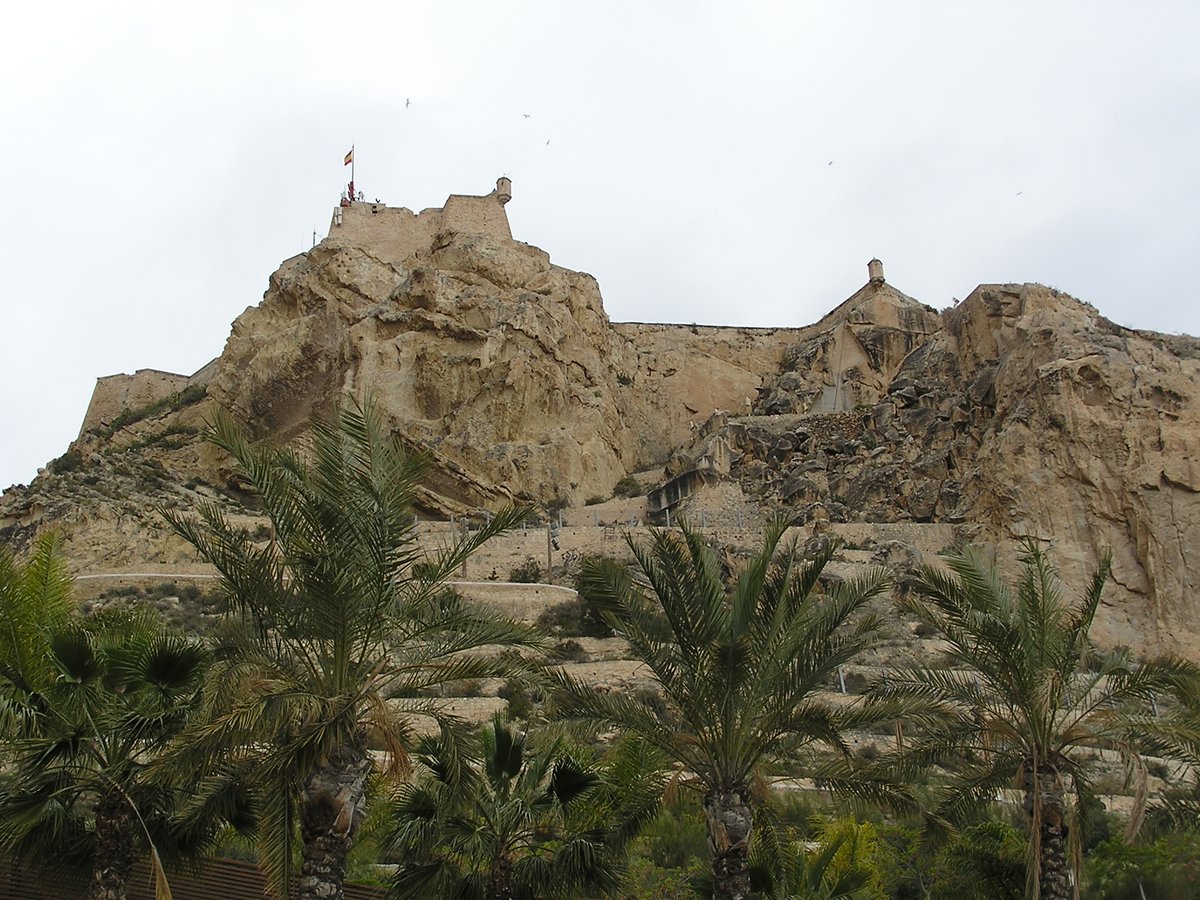
Lucentum's beginnings trace back to the Contestani, an Iberian people active along the southeastern Iberian Peninsula in the 4th–5th centuries BCE. The site’s strategic position atop a limestone outcrop attracted Greek traders, who called it Akra Leukḗ (“White Cliff”). Archaeological finds—including imported ceramics and luxury goods—attest to thriving trade and cultural interchange (Ancient History Sites; World Travel Guide).
Carthaginian and Roman Periods
In the 3rd century BCE, Lucentum became a contested site between Carthage and Rome. Hamilcar Barca, the Carthaginian general, is traditionally credited with founding Akra Leuke as a military outpost. The Second Punic War led to the city’s destruction and subsequent Roman rebuilding. Under Roman rule, Lucentum flourished as a municipium, with significant urban development, monumental public buildings, and sophisticated infrastructure (Spain Calling; Ancient History Sites).
Decline and Later Occupation
Lucentum reached its peak between the 1st century BCE and 1st century CE but declined as nearby Ilici (Elche) rose in regional prominence. By the 2nd–3rd centuries CE, the city was largely abandoned. The site saw intermittent occupation during the Visigothic era and was later reused as an Islamic cemetery (maqbara) from the 8th to 10th centuries CE, reflecting the region’s multicultural evolution (Ancient History Sites).
2. Archaeological Features and Site Layout
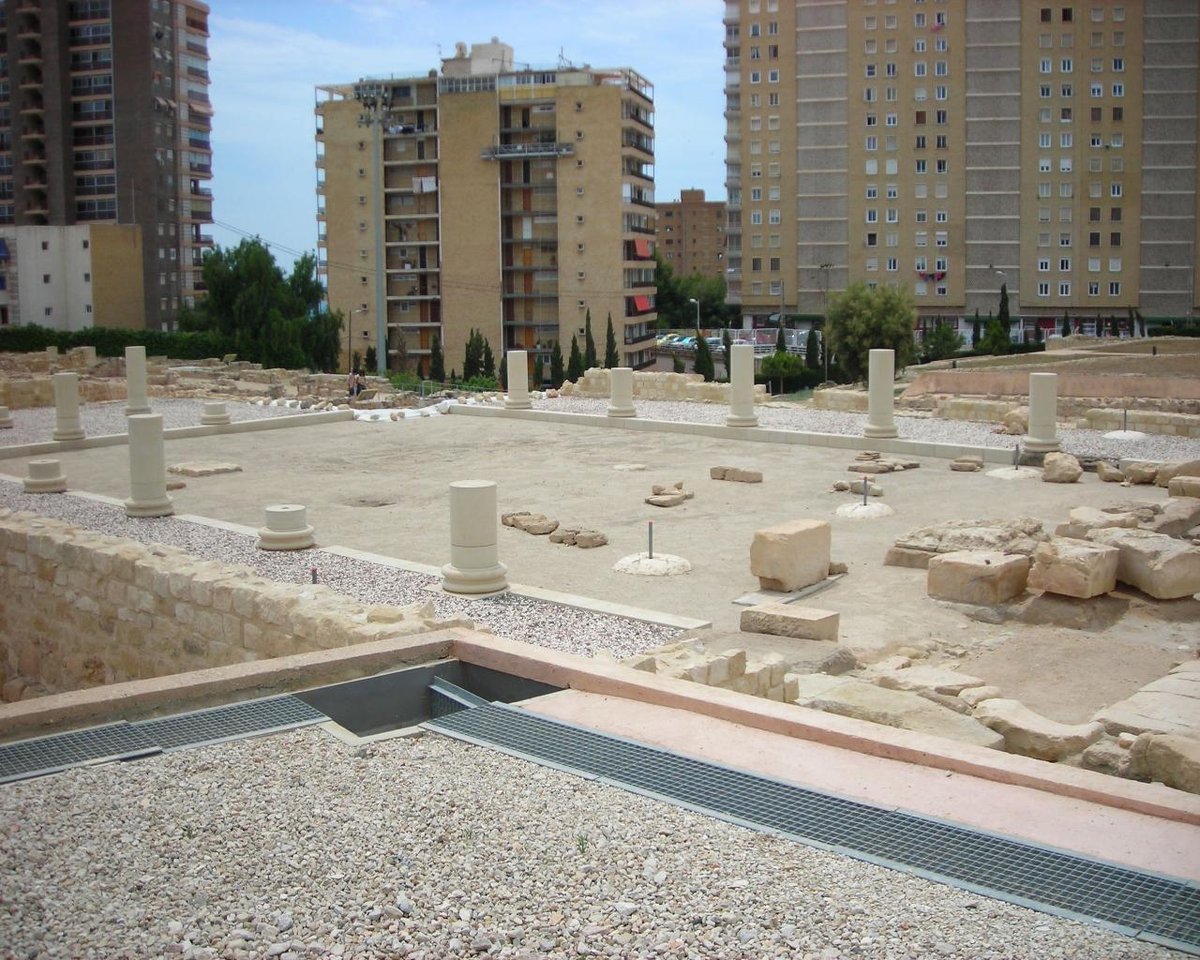
Lucentum is one of Spain’s most significant Roman urban archaeological sites, encompassing about 2.5 hectares. Key features include:
- City Walls and Towers: Defensive walls (some up to 3 meters thick) incorporate both pre-Roman and Roman construction. Towers and gates mark the ancient city’s boundaries (Alicante About).
- Forum: The heart of civic life, surrounded by shops, temples, and public buildings with paved streets and colonnades.
- Roman Baths: Hypocaust-heated frigidarium, tepidarium, and caldarium chambers illustrate advanced engineering (Alicante.com).
- Residential Areas: Domus (houses) with mosaic floors and courtyards speak to the prosperity of Lucentum’s elite.
- Necropolis and Islamic Cemetery: Artifacts from burial grounds reveal funerary customs and social stratification through the ages.
Interpretive panels, QR codes, and multimedia displays help visitors visualize Lucentum’s evolution across centuries.
3. Visiting Lucentum: Hours, Tickets, and Access
Location and Directions
- Address: Avenida Miriam Blasco, s/n, 03540 Alicante, Spain (Albufereta district, 3 km northeast of Alicante city center).
- Public Transit: TRAM Line 3 (Lucentum stop) and several bus lines provide fast access from downtown Alicante. Limited parking is available nearby (alicanteturismo.com).
Visiting Hours (as of June 2025)
- Summer (April–September): Tuesday to Sunday, 10:00 AM–7:00 PM
- Winter (October–March): Tuesday to Sunday, 10:00 AM–5:00 PM
- Closed: Mondays (except public holidays) and on select holidays
- Note: Hours may vary during special events—check the official website for updates.
Ticket Prices
- General Admission: €4
- Reduced: €2 (students, seniors, groups)
- Children under 12: Free
- Special Days: Free entry on International Museum Day and select local festivals
Tickets can be purchased at the Visitor Reception Center or online via the official tourism website (Trip.com).
Guided Tours and Interpretation
- Tours: Offered in Spanish, English, and French (45–60 minutes). Prices range from €6–€10 per person. Advance booking is recommended, especially for groups.
- Self-Guided Visits: Multilingual panels and QR codes link to interactive maps, 3D reconstructions, and expert commentary.
- School and Group Programs: Arrange in advance for specialized educational experiences.
Visitor Facilities
- Reception Center: Maps, brochures, and tickets (Spanish, English, occasional French).
- Restrooms: Near the entrance.
- Gift Shop: Books, replicas, and locally made souvenirs.
- Seating Areas: Benches throughout the site.
- Accessibility: Main paths are mostly accessible; some uneven terrain and steps due to the site’s archaeological nature.
5. Practical Tips and Nearby Attractions
Tips for a Smooth Visit
- Best Times: Early morning or late afternoon to avoid heat and crowds.
- Essentials: Comfortable shoes, sun protection, water.
- Photography: Allowed; drones are prohibited.
- Weather: Minimal shade—dress accordingly.
Nearby Attractions
- MARQ Archaeological Museum: Houses Lucentum’s key finds and rotating exhibitions (MARQ Museum).
- Santa Bárbara Castle: Medieval fortress with panoramic city views.
- Albufereta and San Juan Beaches: Ideal for relaxation post-visit.
- El Tossal Archaeological Park and Ciudad Descubierta: Additional archaeological points of interest.
Local cafés, restaurants, and shops in Albufereta and along Avenida de la Condomina offer refreshments and further exploration.
6. Cultural Significance and Modern Relevance
Multicultural Heritage
Lucentum’s layers—spanning Iberian, Greek, Carthaginian, Roman, and Islamic periods—embody the Mediterranean’s multicultural legacy. Its name and legacy are deeply embedded in Alicante’s modern identity, with local organizations and events celebrating its heritage (Wikipedia; alicante-carhire.com).
Archaeology, Conservation, and Community
The site was saved from destruction in the 1960s through the efforts of archaeologist Solveig Nordström and local advocates (viewfromlavila.com). Ongoing research and conservation—led by the MARQ team—have transformed Lucentum into both a research hub and a vibrant community resource, with public programming, exhibitions, and seasonal events (todoalicante.es).
7. Frequently Asked Questions (FAQs)
Q: What are Lucentum’s visiting hours?
A: Summer: Tuesday–Sunday, 10:00 AM–7:00 PM; Winter: Tuesday–Sunday, 10:00 AM–5:00 PM; closed Mondays.
Q: How much do tickets cost?
A: General admission is €4; reduced tickets are €2; children under 12 enter free.
Q: Are guided tours available?
A: Yes, in Spanish, English, and French, for an additional fee. Book in advance.
Q: Is the site accessible for visitors with reduced mobility?
A: Main paths are accessible, but some uneven terrain exists.
Q: Can I combine a visit to Lucentum with the MARQ Museum?
A: Yes, they are easily connected via tram or short drive.
Q: Are pets allowed?
A: Only guide dogs are permitted.
8. Summary and Visitor Recommendations
Lucentum offers a unique opportunity to explore the layers of Alicante’s ancient heritage—from its Iberian roots to Roman urbanism and beyond. With accessible visiting hours, affordable tickets, and enriching tours, the site provides an educational and immersive experience for all ages (Ancient History Sites; alicante-carhire.com). Pair your visit with the MARQ Museum or Santa Bárbara Castle for a deeper dive into Alicante’s history (viewfromlavila.com; alicanteabout.com). Always respect conservation rules to protect this invaluable heritage.
For up-to-date information, interactive guides, and exclusive content, download the Audiala app and follow local tourism resources.
Listen to the full story in the app
The whole Lucentum,
told well.
Audio guides for 1,100+ cities across 96 countries. History, stories, and local insight — offline ready.
Verified, and shown.
Researched and written by the Audiala editorial team from historical records, architectural archives, and local expertise.
History of Alicante
Alicante History
MARQ Archaeological Museum in Alicante
Explore the Amazing Lucentum in Alicante
Lucentum Tossal de Manises
Lucentum Archaeological Site
Romans in Alicante
Lucentum Archaeological Site
Three Decades of Research at Lucentum
15 Best Things to Do in Alicante, Spain
Tourist Attractions Alicante
Alicante Travel Tips
Researched from Wikidata, Wikipedia & official sources · fact-checked · How we make our guides →