Plan and listen to Town Palace Of A Coruña with Audiala.
Audio guide in your pocket, itinerary in your browser. Built for the way you actually visit.
Introduction
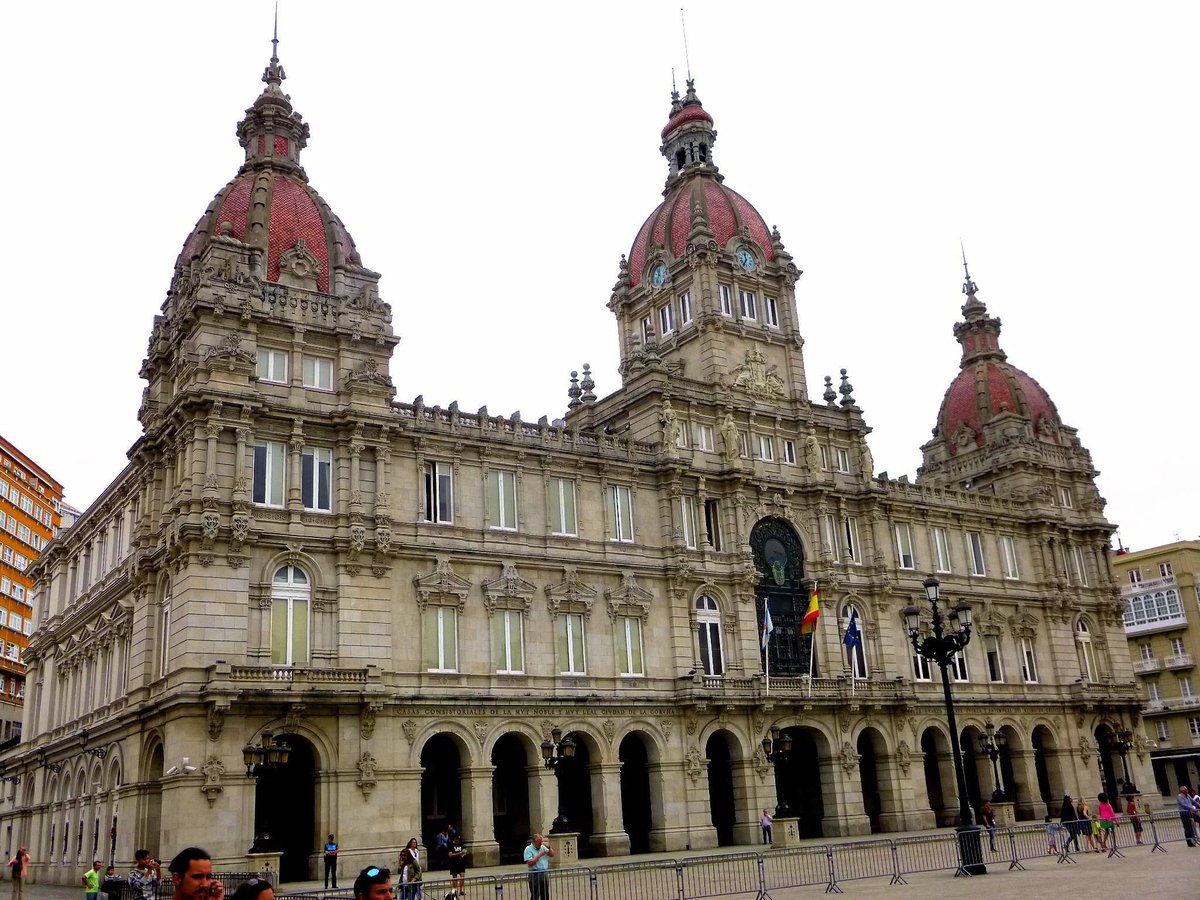
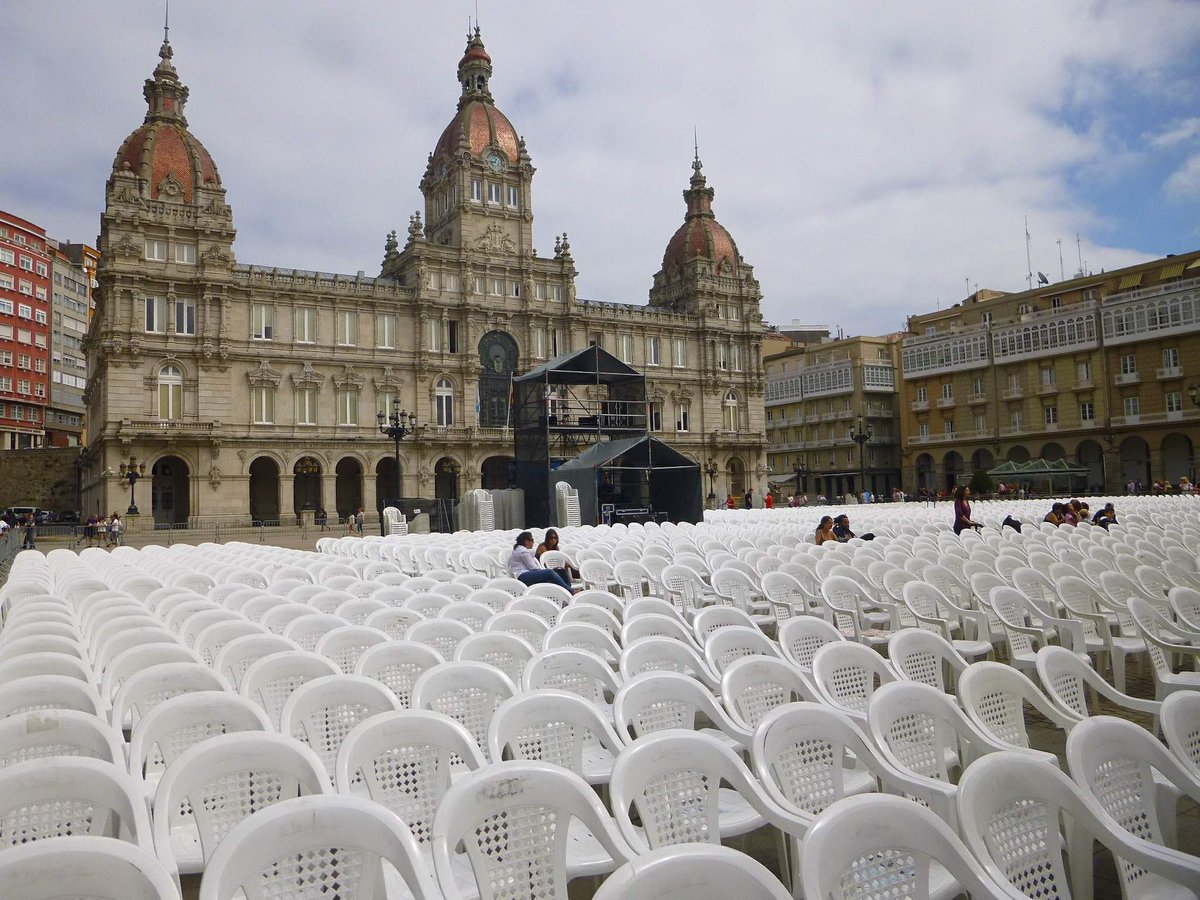
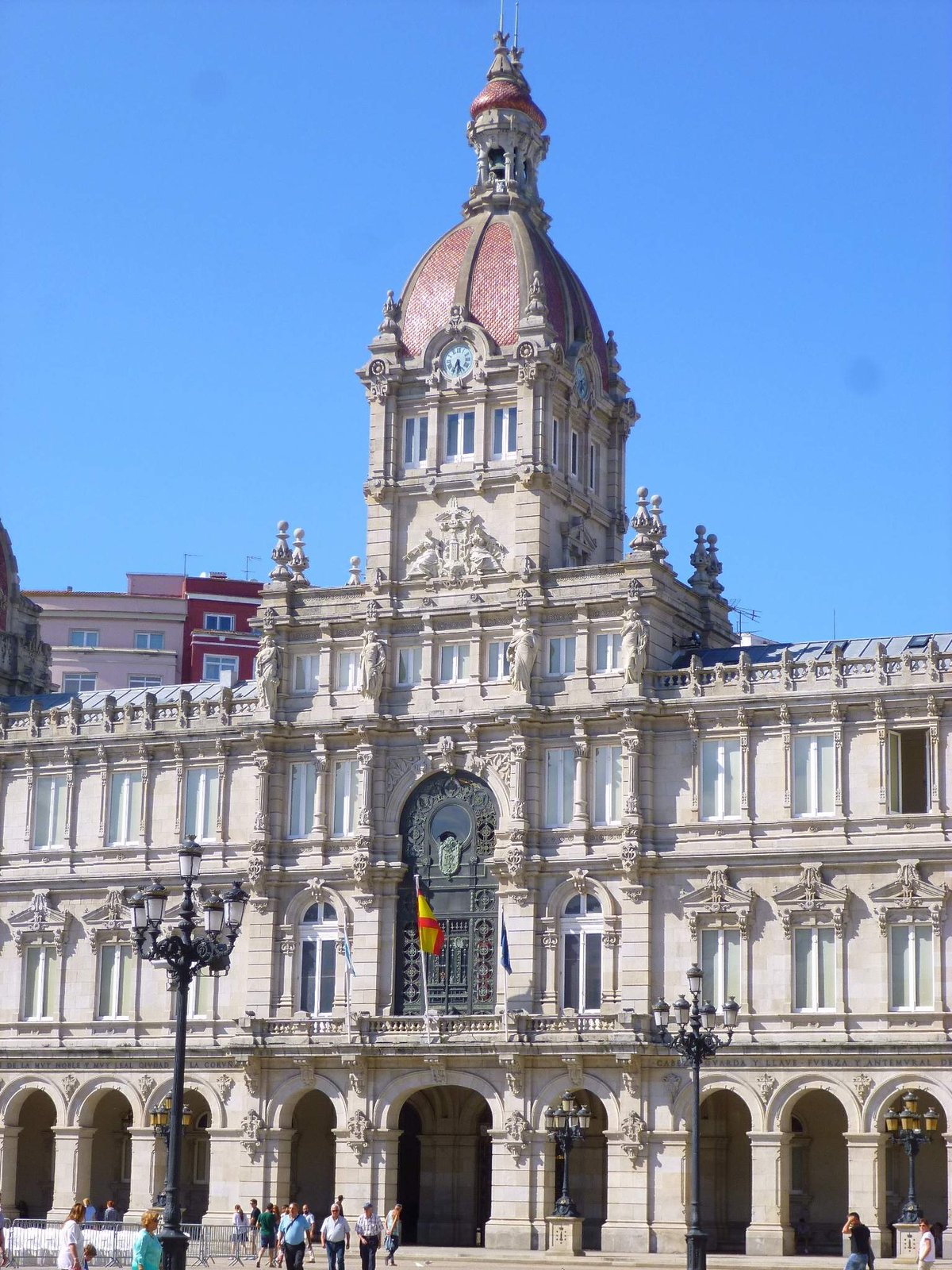
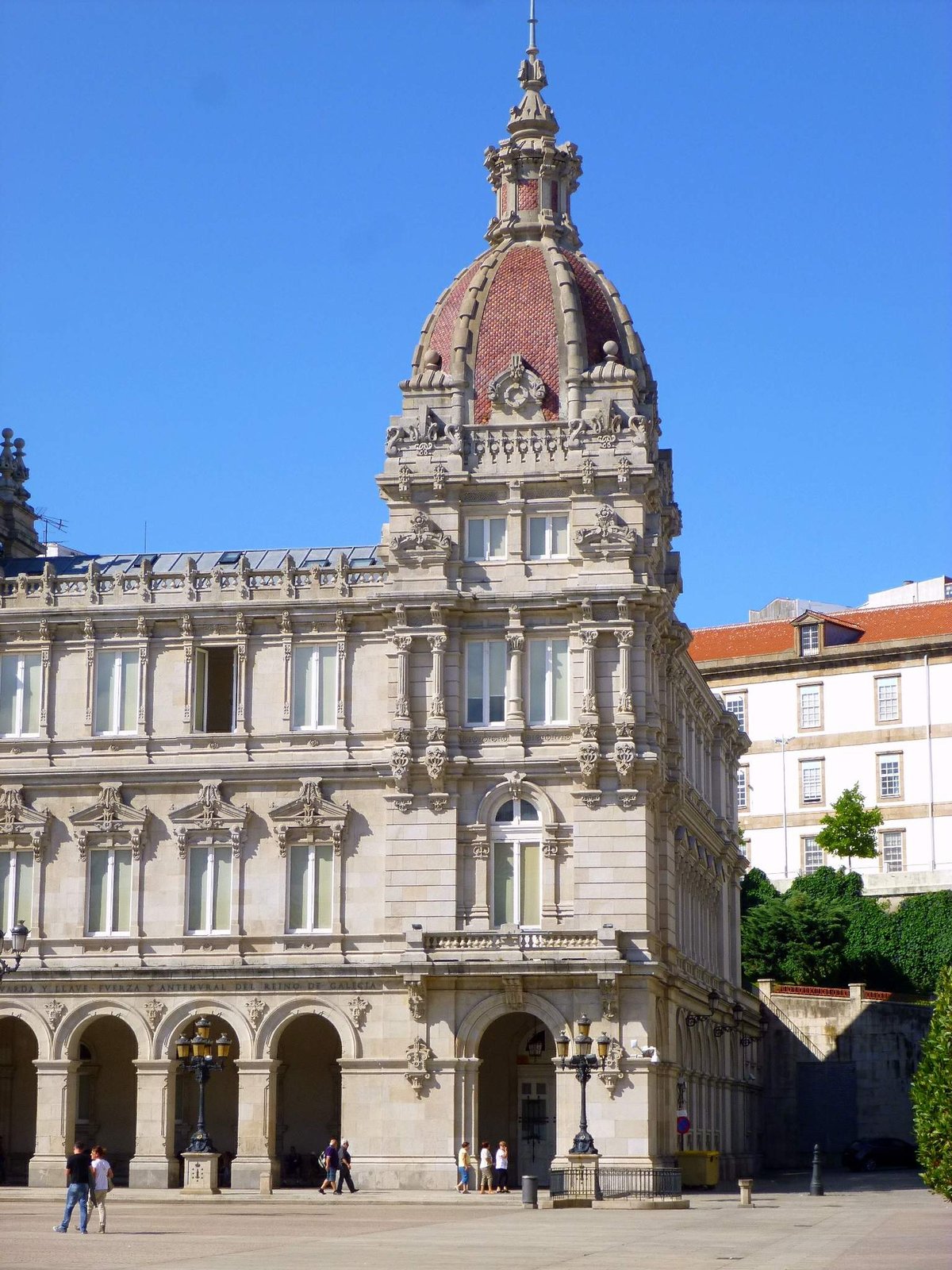
Located in the heart of A Coruña’s Old Town, the Town Palace (Palacio Municipal or Palacio de María Pita) is a magnificent emblem of the city’s rich history, architectural splendor, and vibrant civic life. Prominently positioned on the northern edge of Plaza de María Pita, this iconic municipal building invites visitors to explore the evolution of A Coruña—from Roman Brigantia, through medieval fortifications, to a modern Galician urban center. Designed by Pedro Mariño and inaugurated in 1918, the palace showcases early 20th-century eclectic architecture, blending neoclassical, French Second Empire, and Galician regionalist styles.
This guide delivers essential information on the Town Palace’s historical significance, architectural features, visiting hours, ticketing, accessibility, nearby attractions, and practical tips—ensuring you enjoy an enriching visit to one of Galicia’s architectural gems. For the latest updates, consult the official A Coruña municipal website, Galicia Guide, and Galicia Travels.

Historical Evolution
Roman and Medieval Foundations
A Coruña’s origins date back to the Roman settlement of Brigantia, whose strategic coastal location established the area as an important port. During the Middle Ages, the city expanded as a fortified town, with remnants of Roman and medieval walls still visible near the Old Town. Although the Town Palace itself is a product of the 20th century, its central site embodies centuries of urban development (Galicia Guide).
Construction and Architectural Milestones
The current Town Palace was constructed between 1908 and 1917, officially opening in 1918. It replaced earlier municipal offices with a grand design that symbolized the city’s modernization and civic pride (Kurby Blog). The palace’s prominent placement on Plaza de María Pita cements the square’s status as A Coruña’s social and administrative heart.
Architectural Style & Interior Features
Eclecticism and Neoclassical Influences
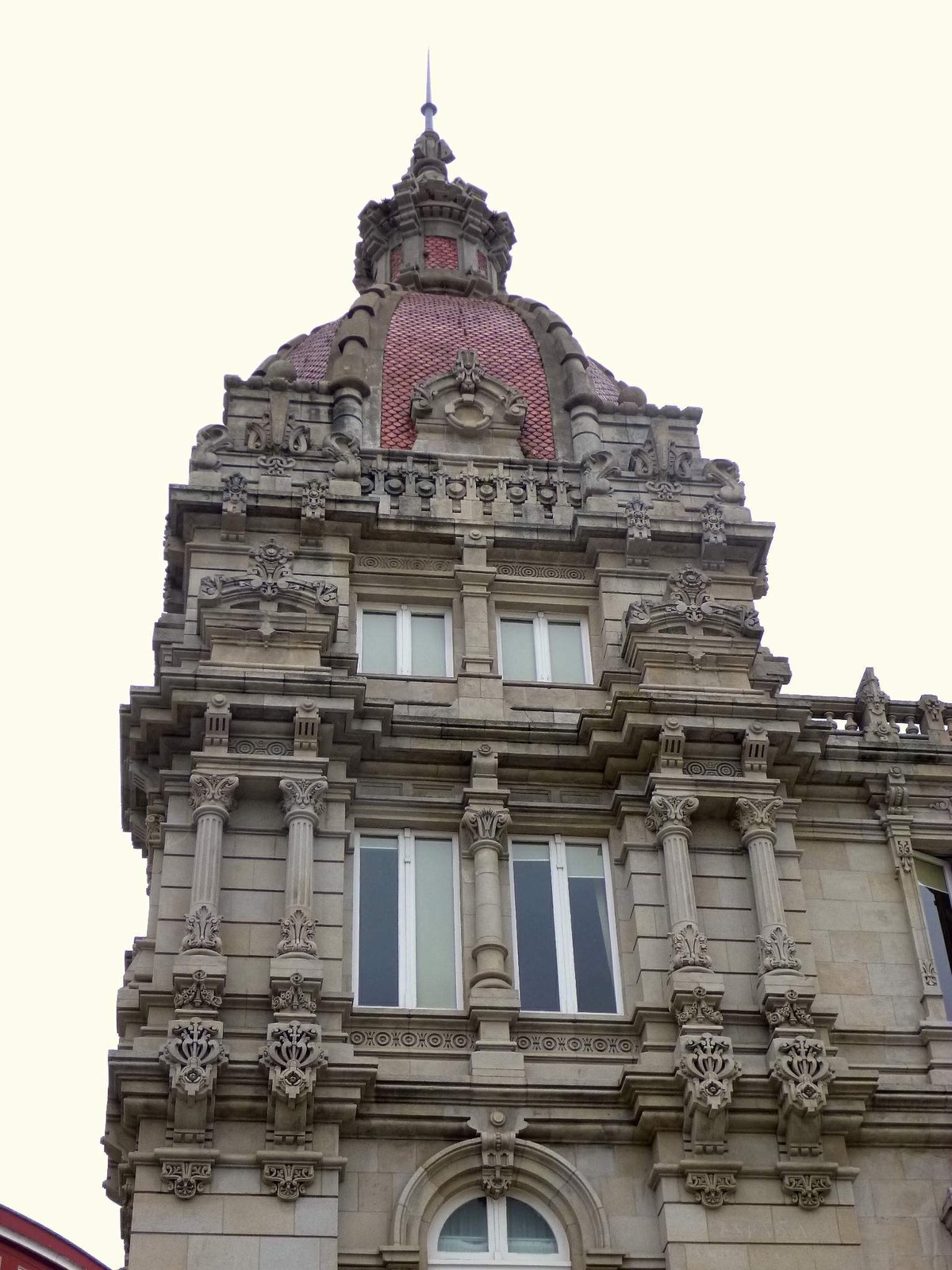
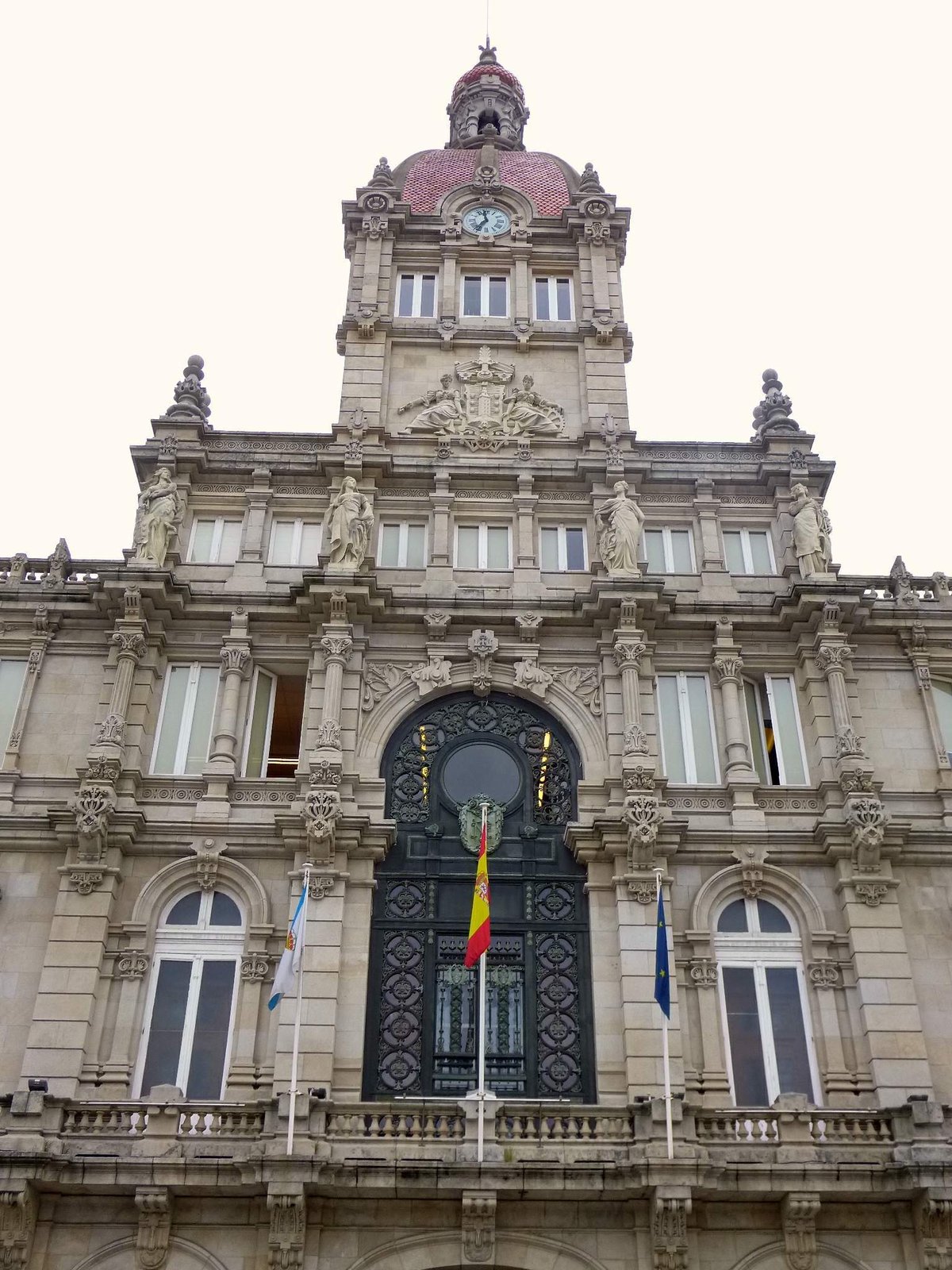
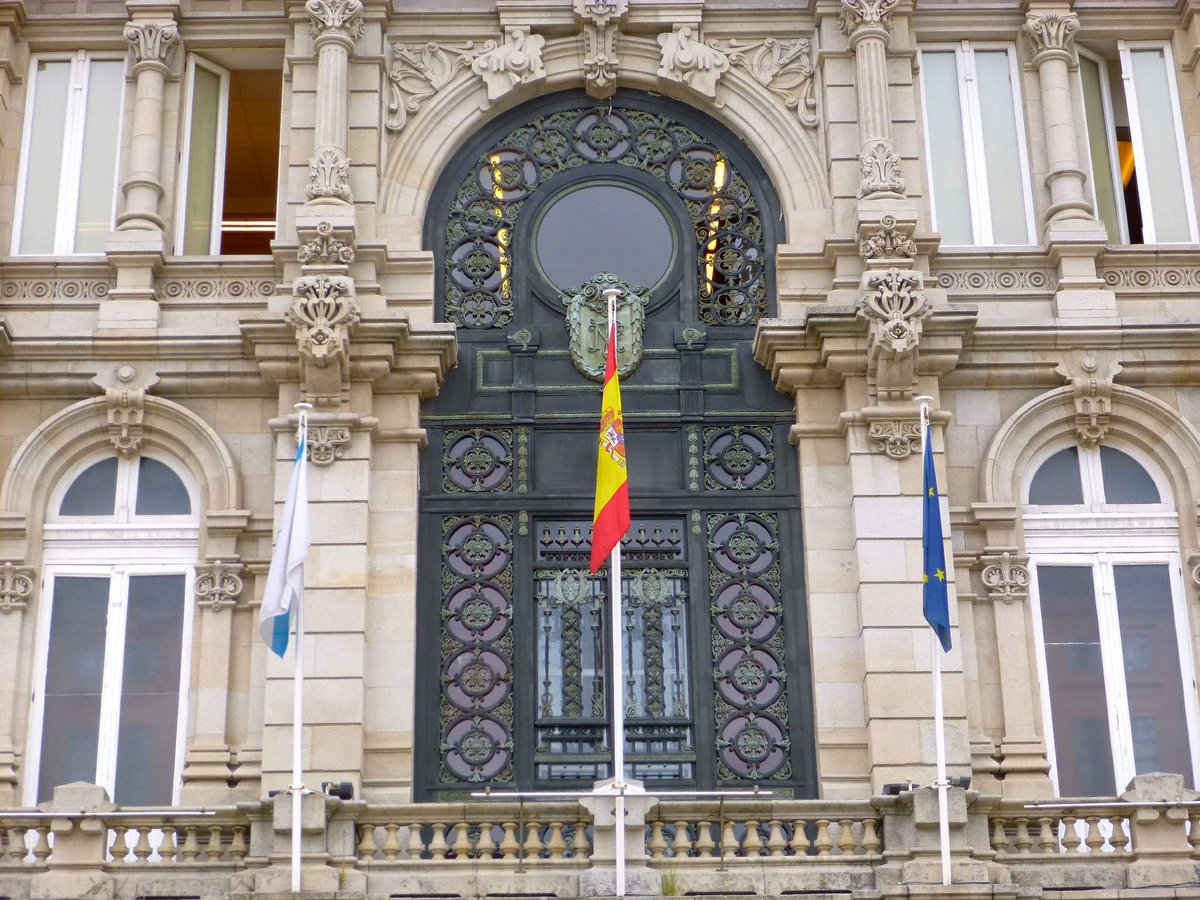
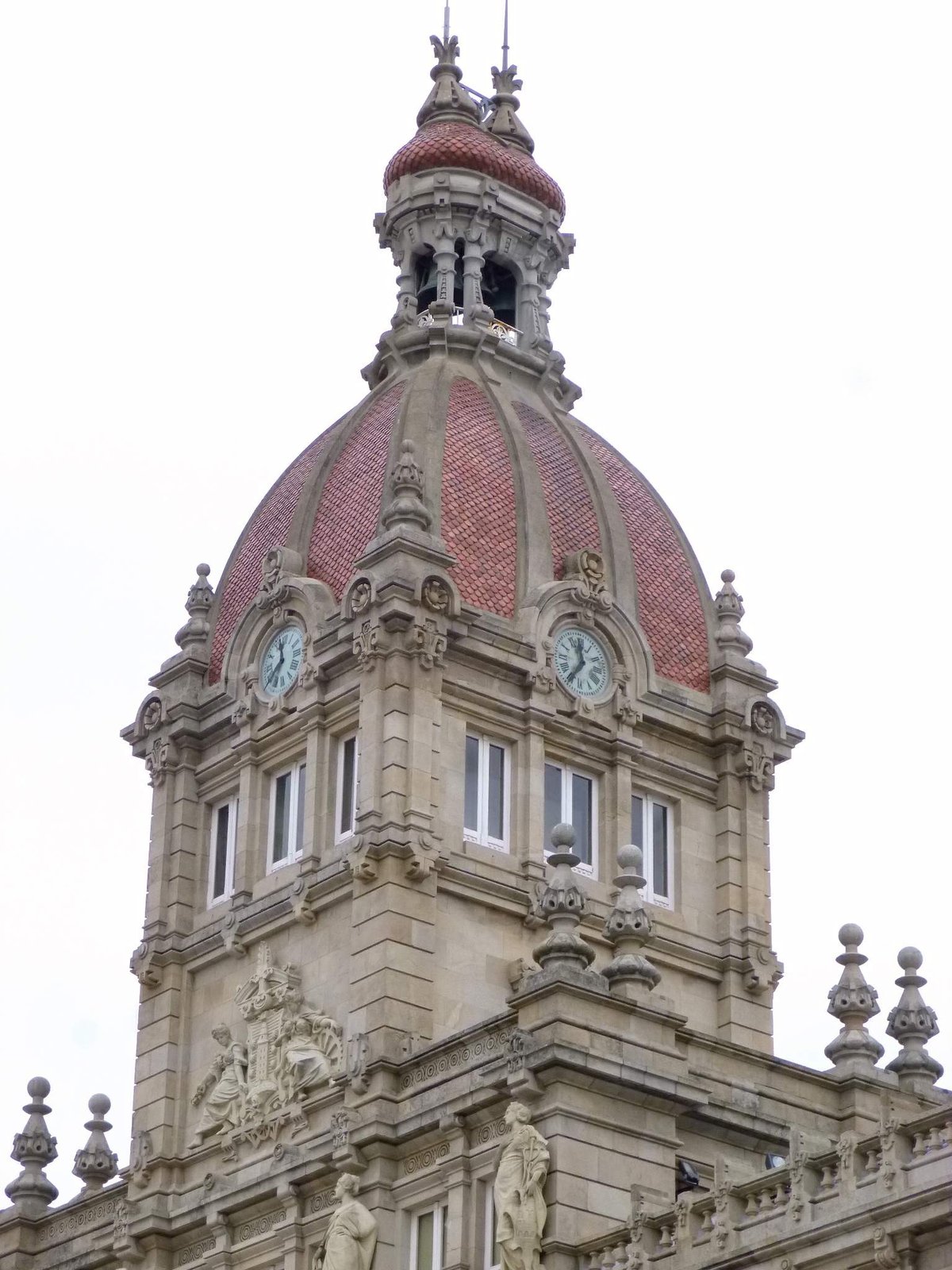
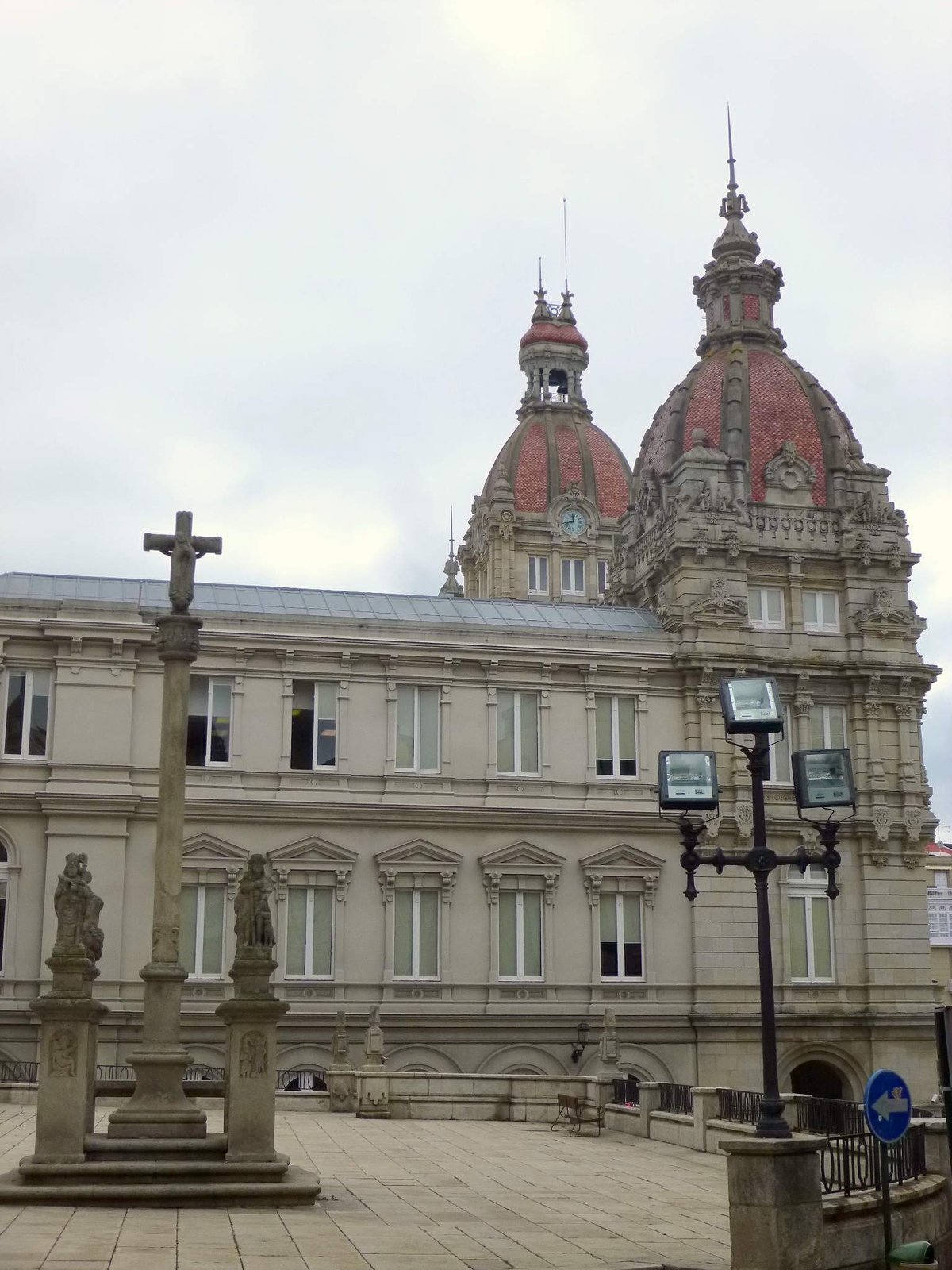
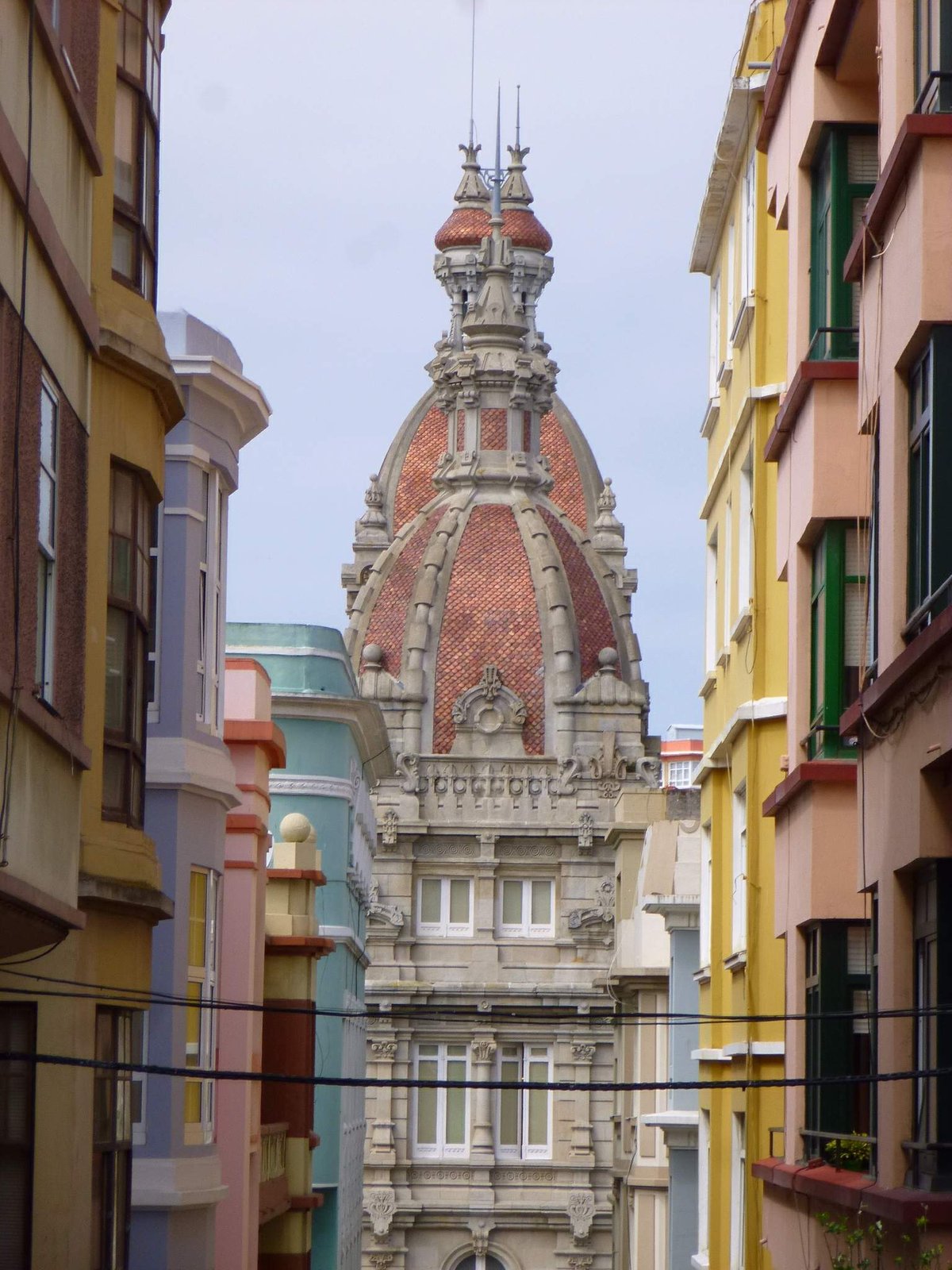
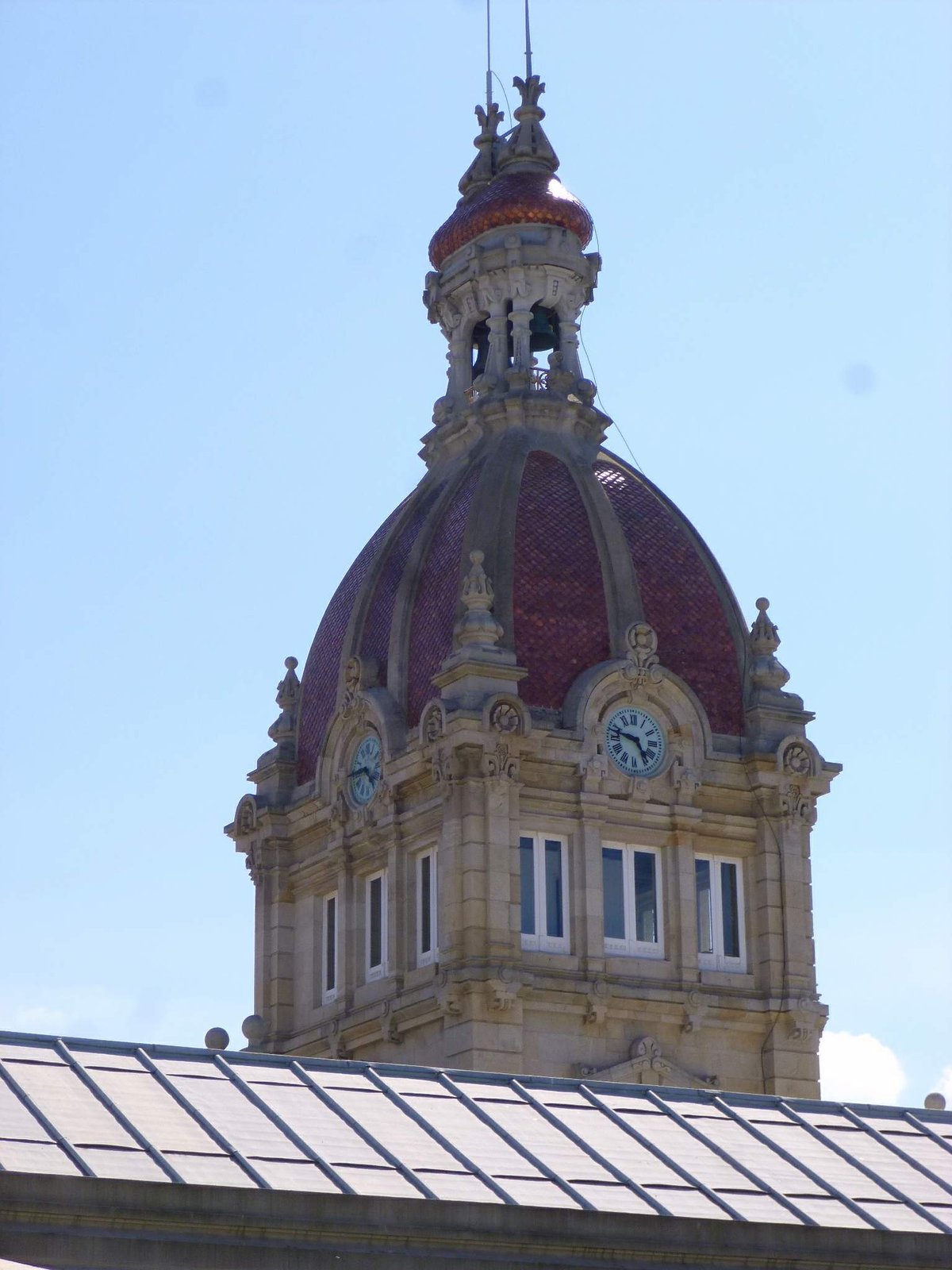
The Town Palace is a striking example of early 20th-century eclectic architecture, merging neoclassical, French Second Empire, and Galician regionalist elements. Its symmetrical granite façade is adorned with grand arches, sculpted coats of arms, balustrades, allegorical figures, and three distinctive copper-clad domes that command the city skyline (Kurby Blog).
Interior Layout and Decorative Arts
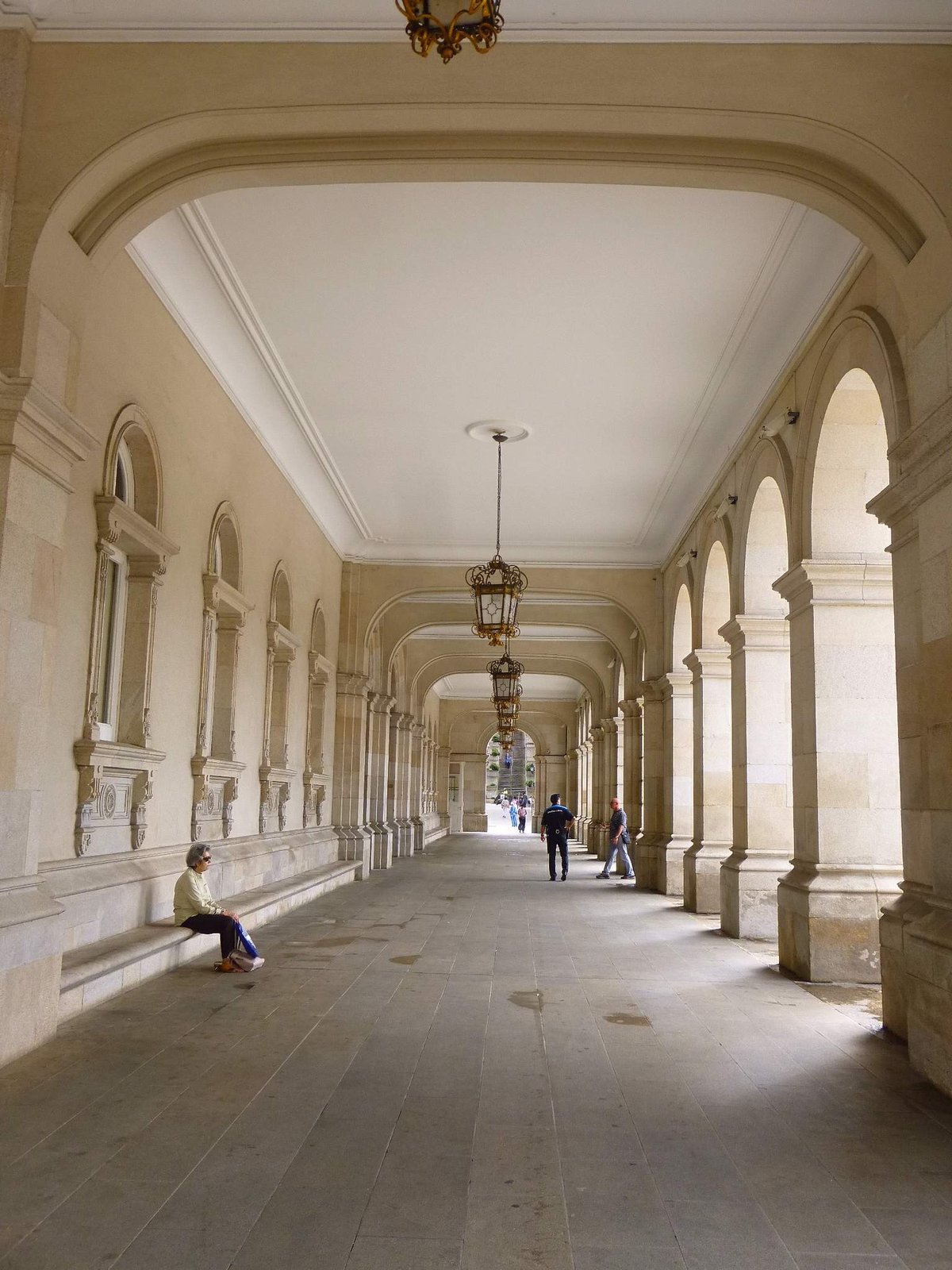
Inside, the grand staircase features polished marble and ornate ironwork, leading to ceremonial halls with high ceilings, stained glass, and period furnishings. The council chamber, with wood-paneled walls and a coffered ceiling, serves as the venue for official meetings and civic events. Natural light floods the interiors through tall arched windows, echoing A Coruña’s reputation as “The Glass City” (Galicia Guide).
Civic and Symbolic Significance
Center of Municipal Power
The Town Palace is home to A Coruña’s city council and mayor’s office, hosting official receptions, council sessions, and civic celebrations. It remains a venue for local democracy and community engagement.
Tribute to María Pita
The palace honors María Pita, a local heroine who defended the city against the English Armada in 1589. Her statue stands at the center of the adjacent square, symbolizing resilience and community pride (Galicia Guide).
Architectural Landmark in the “Glass City”
Though it lacks the galerías typical of A Coruña’s Marina district, the palace’s monumental style harmonizes with the city’s diverse architectural landscape, bridging historic churches and modern landmarks (Kurby Blog).
Visiting Information
Opening Hours
- Exterior & Plaza: Accessible 24/7.
- Interior Visits: Generally available during weekday business hours (Monday–Friday, 9:00 AM–6:00 PM), special events, or by guided tour. Opening times may vary due to holidays or official functions—check the official website for updates.
Tickets
- Exterior Viewing: Free, no ticket required.
- Guided Tours: Occasionally available, providing access to council chambers and ceremonial rooms. These may require advance booking and a nominal fee—verify with the tourist office.
Accessibility
- Ramps, elevators, and accessible facilities are provided for visitors with reduced mobility.
- Plaza de María Pita is pedestrian-friendly and flat, with seating and public restrooms nearby.
Photography and Etiquette
- Photography is encouraged outside and, with some restrictions, during guided tours inside.
- As it is an active government building, please respect all posted guidelines and ongoing official business.
Nearby Attractions
- Plaza de María Pita: The city’s social hub, lined with cafés and shops.
- Old Town (Ciudad Vieja): Medieval streets with historic churches, including the Church of Santiago and Santa María del Campo.
- Avenida de la Marina: Renowned for its glass-fronted balconies (galerías).
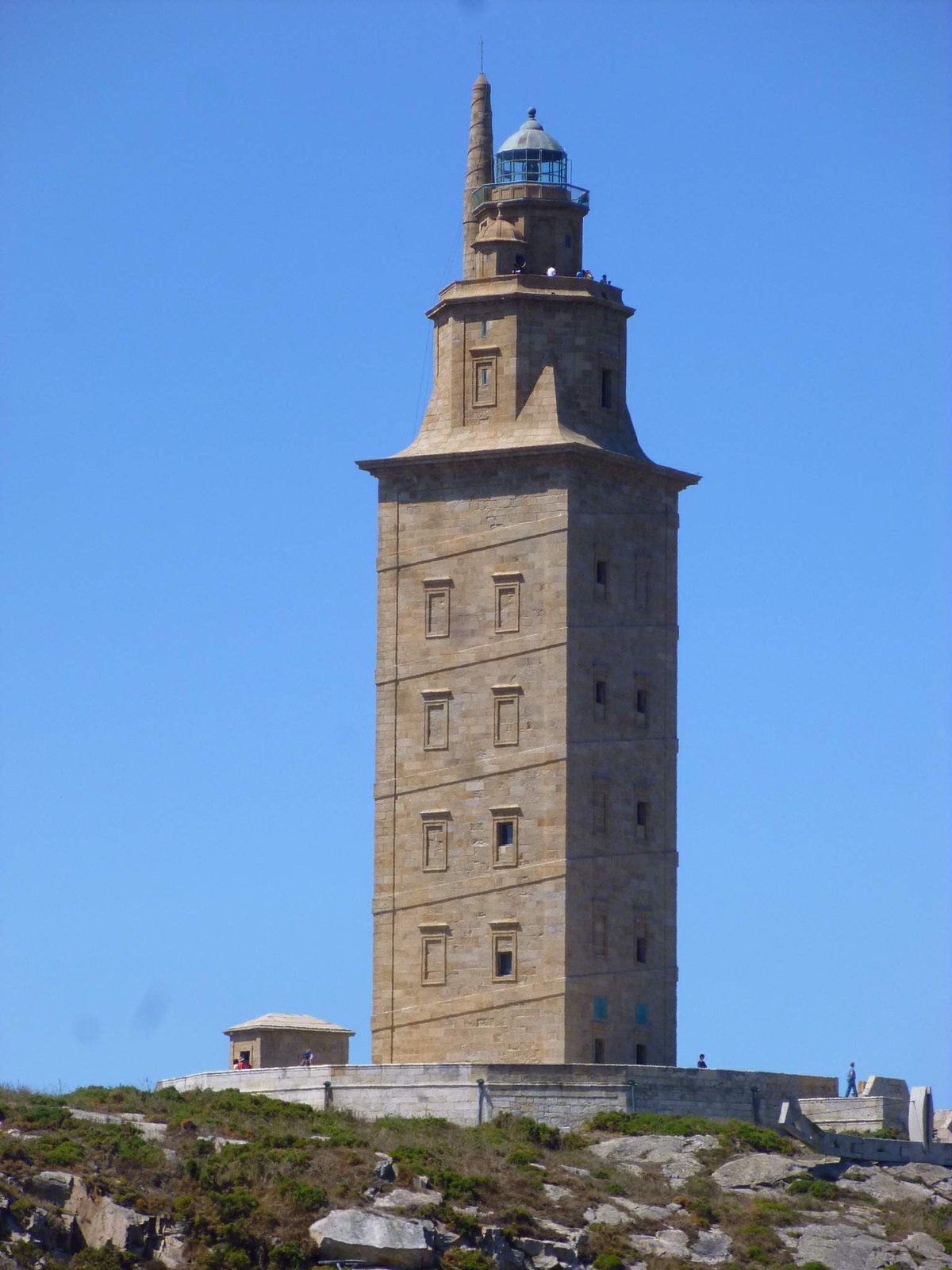
- Tower of Hercules: UNESCO-listed Roman lighthouse.
- Castillo de San Antón: Former fortress, now an archaeological museum.
- Museo de Belas Artes da Coruña: Museum of Fine Arts, showcasing Galician art.
Frequently Asked Questions (FAQ)
Q: What are the visiting hours for the Town Palace?
A: The exterior and plaza are always accessible; interior visits are limited to business hours or guided tours—check official sources for current schedules.
Q: Is there an entrance fee?
A: No fee for viewing the exterior or plaza. Guided tours may have a nominal charge.
Q: Are guided tours available?
A: Yes, by appointment or during special events. Inquire at the tourist office or online for booking.
Q: Is the building accessible for people with disabilities?
A: Yes, ramps, elevators, and accessible facilities are provided.
Q: Are there restrictions on photography?
A: Photography is permitted in public areas, but may be restricted during official meetings or inside certain rooms.
Visitor Tips
- Best Times: Visit early morning or late afternoon for ideal lighting and fewer crowds.
- Events: The María Pita Festival (August) and San Juan Bonfires (June) offer lively atmospheres.
- Combine Visits: Explore the nearby Old Town, Tower of Hercules, and Marina district for a comprehensive experience.
- Guided Tours: Enhance your visit with a walking tour for historical context (guruwalk.com).
Listen to the full story in the app
The whole Town Palace Of A Coruña,
told well.
Audio guides for 1,100+ cities across 96 countries. History, stories, and local insight — offline ready.
Verified, and shown.
Researched and written by the Audiala editorial team from historical records, architectural archives, and local expertise.
Researched from Wikidata, Wikipedia & official sources · fact-checked · How we make our guides →