Introduction
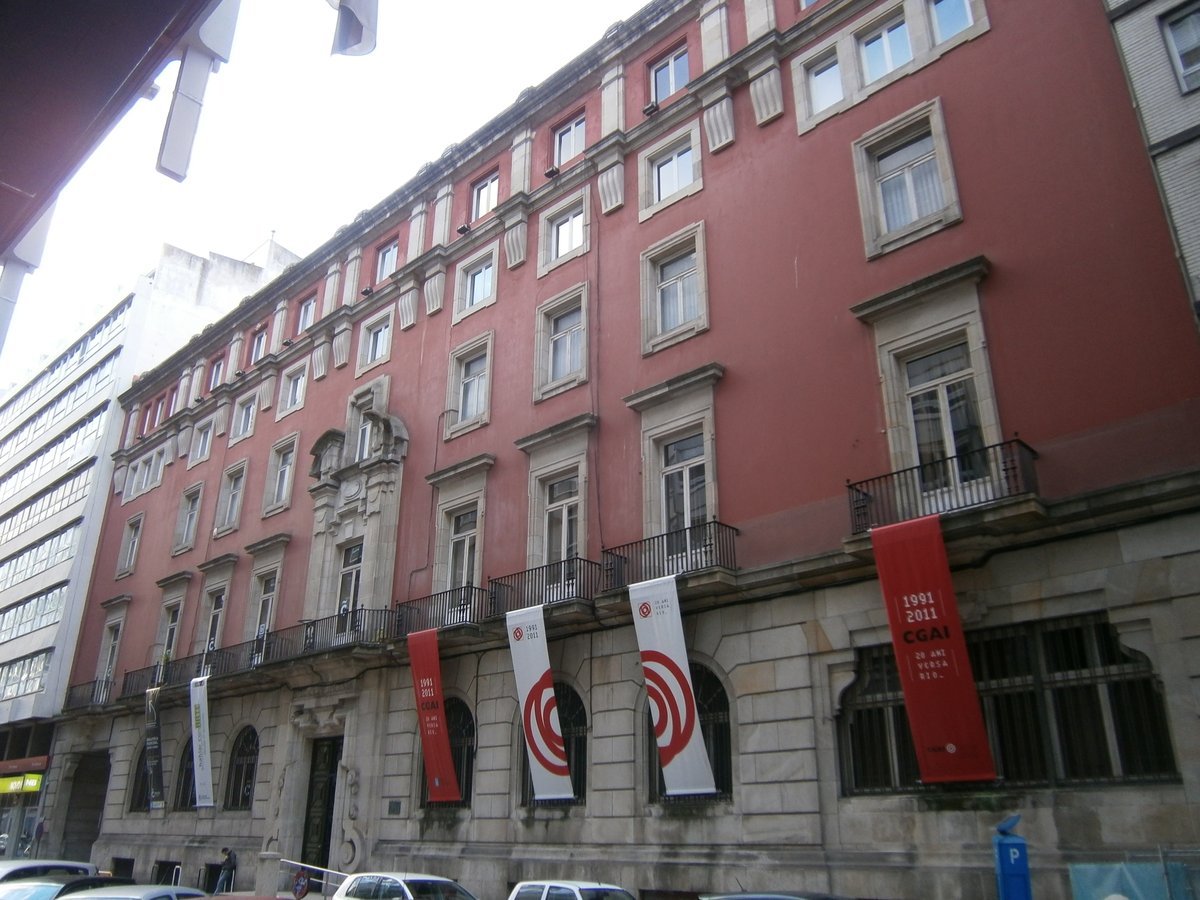
The Centro Galego de Artes da Imaxe (CGAI), officially recognized today as the Filmoteca de Galicia, stands as a pillar of Galicia’s cultural landscape. Located in the heart of A Coruña, this institution was established to preserve, study, and promote the region’s rich audiovisual heritage—including film, photography, and multimedia arts. Since its founding in 1989 and inauguration in 1991, the CGAI has evolved into a dynamic cultural hub, hosting exhibitions, film screenings, workshops, and educational programs that connect Galician heritage with contemporary creativity. This comprehensive guide details the CGAI’s history, visitor information, programming, cultural significance, and practical tips for making the most of your visit (Filmoteca de Galicia Official, Wikipedia CGAI).
Photo Gallery
Explore Centro Galego De Artes Da Imaxe in Pictures
Institutional Origins and Foundation
The CGAI was established by a decree of the Xunta de Galicia on October 5, 1989, with the primary aim of safeguarding Galicia’s audiovisual and photographic legacy. Officially inaugurated on March 15, 1991, it was housed in the Casa da Cultura Salvador de Madariaga, centrally located in A Coruña. The choice of location underscored A Coruña’s established cultural tradition and accessibility for both professionals and the general public. From the outset, the CGAI was envisioned as a multidisciplinary space, encompassing cinema, photography, and various forms of audiovisual expression (ca.wikipedia.org, filmotecadegalicia.xunta.gal).
Growth and Consolidation
Throughout the 1990s and early 2000s, the CGAI became Galicia’s leading institution for cinema and visual arts. Its mission included the conservation of audiovisual archives, the organization of screening cycles, retrospectives, and exhibitions, and the training of both audiences and professionals. The CGAI was a pioneer in recovering and digitizing historical film materials, many at risk of being lost.
At its peak, the archive held over 10,000 film reels—representing some 7,000 audiovisual documents and approximately 2,000 titles—alongside a significant collection of video formats and photographic negatives (ca.wikipedia.org). Regular programming of screenings, workshops, and conferences established the CGAI as a meeting point for filmmakers, photographers, researchers, and enthusiasts. Notably, it organized festivals such as the Festival de Cine Inédito and the Festival Internacional de Cine LGBTIQ+ de Galicia, as well as thematic retrospectives (queverengalicia.ovh).
Crisis and Community Response
In 2016, the CGAI faced significant budget cuts due to economic constraints, resulting in reduced staff and resources. This challenge sparked widespread community mobilization, highlighting the institution’s deep-rooted importance in Galician society. Despite adversity, the center maintained its core activities, adapting through resource optimization and partnerships with other cultural entities (ca.wikipedia.org).
Evolution to Filmoteca de Galicia
Recently, the CGAI has been rebranded as the Filmoteca de Galicia, reinforcing its role as Galicia’s primary audiovisual archive and reference center. This transformation brought infrastructure upgrades, expanded programming, and enhanced services. The Filmoteca occupies a 1,200 m² facility at Rúa Durán Loriga, 10, equipped with modern technology for preservation and exhibition (filmotecadegalicia.xunta.gal, coruna.gal).
Visitor Information: Hours, Tickets, and Accessibility
Address: Rúa Durán Loriga, 10, 15003 A Coruña, Spain
Phone: +34 981 227 701
Email: [email protected]
Website: https://cgai.xunta.gal/
Opening Hours
- Tuesday to Saturday: 10:00 – 14:00 and 16:00 – 20:00
- Closed: Sundays, Mondays, and public holidays
- Note: Hours may vary for special events or during holidays; always check the official website for updates.
Tickets and Admission
- Exhibition entry: Free
- Film screenings and special events: Typically €3–€6
- Advance booking: Recommended for popular events; available online or at the venue
Facilities and Accessibility
- Fully wheelchair accessible, with ramps, elevators, and accessible restrooms
- Lockers available for personal items; free Wi-Fi throughout the building
- Staff speak Spanish, Galician, and basic English; information materials available in multiple languages
- Guide dogs permitted; some screenings offer subtitles or audio descriptions
Guided Tours and Groups
- Guided tours and workshops can be arranged by appointment for groups (minimum 10 people); available in Spanish, Galician, and occasionally English
Getting There
- Easily reachable via local bus lines (1, 1A, 2, 3, 7)
- 2.5 km from Estación de San Cristóbal (main train station); taxis and public bike-sharing nearby
- Public parking garages within 5–10 minutes’ walk
Cultural Significance and Artistic Role
The Filmoteca de Galicia is a guardian of Galician cultural identity. Its extensive archives, which include tens of thousands of films, photographs, and documents, provide scholars and the public with access to the region’s visual memory. By curating exhibitions, film cycles, and retrospectives, the Filmoteca not only preserves but also reinvigorates interest in Galician cinema and photography, fostering dialogue between local creators and global audiences (queverengalicia.ovh).
The institution’s publishing arm and research initiatives have produced critical works on Galician cinematic history, and its restoration projects—such as the recovery of experimental films by Eugenio Granell—underscore its commitment to both heritage and innovation (IASA, Dialnet).
Activities and Programming
- Film Screenings: Diverse programming includes Galician, Spanish, and international films—both classic and contemporary. Many screenings are accompanied by director talks or panel discussions (CGAI Events).
- Festivals: Key venue for events like the (S8) Mostra de Cinema Periférico, attracting audiences from across Europe (S8 Mostra).
- Workshops and Education: Regular workshops for all ages, covering photography, filmmaking, editing, and animation. Collaborations with schools and universities are frequent.
- Temporary Exhibitions: Rotating shows highlight contemporary photographers, filmmakers, and visual artists, often relating to Galician identity and history.
- Archive Access: The Galician Film Archive and library are open to researchers and the public by appointment (CGAI Library).
Social Impact and International Projection
The Filmoteca’s influence extends nationally and internationally, raising the profile of Galician cinema at festivals and cultural forums. It has received recognition such as the Chano Piñeiro Prize and has inspired similar initiatives throughout Spain. Through community engagement, educational outreach, and partnerships, the institution ensures the preservation and appreciation of Galician audiovisual heritage for future generations (El Correo Gallego, Wikipedia).
Frequently Asked Questions (FAQ)
What are the Filmoteca’s visiting hours?
Tuesday to Saturday, 10:00–14:00 and 16:00–20:00. Closed on Sundays, Mondays, and public holidays.
Is there an admission fee?
General exhibition entry is free; film screenings and special events typically cost €3–€6.
Are guided tours available?
Yes, for groups by appointment. Offered in Spanish, Galician, and sometimes English.
Is the Filmoteca accessible?
Fully accessible, with accessible restrooms, elevators, and guide dog access.
Can I take photographs inside?
Photography is generally not permitted in exhibition or archive areas.
How do I get there?
Located at Rúa Durán Loriga, 10, A Coruña. Accessible by local bus, taxi, bike, or on foot from city center.
Internal Links and Nearby Attractions
- Museo de Belas Artes da Coruña
- Plaza de Lugo (local market and food scene)
- Obelisco (historic monument)
- Riazor Beach (seaside stroll)
- Exploring Galician Culture Through Art
Combine your Filmoteca visit with other A Coruña attractions for a comprehensive cultural experience.
Practical Tips for Visitors
- Check Schedules: Always consult the CGAI official website for up-to-date exhibitions, screenings, and events.
- Book in Advance: Reserve tickets for popular screenings or workshops online.
- Arrive Early: Seating for events is limited and allocated on a first-come, first-served basis.
- Weather: A Coruña weather can be unpredictable—bring an umbrella if planning to walk.
- Combine with Cuisine: Enjoy local Galician dishes at nearby restaurants after your visit.
Discover More
The Filmoteca de Galicia (CGAI) is an essential destination for anyone seeking to engage with Galicia’s vibrant audiovisual culture. Through its extensive collections, dynamic programming, and inclusive approach, it offers visitors a window into the region’s history, creativity, and identity. Plan your visit today by checking current schedules and ticketing options, and consider joining a workshop or festival for an even richer experience. For further cultural insights, download the Audiala app and explore related articles about A Coruña’s historical and artistic sites. Immerse yourself in the stories and artistry that define Galicia—your cultural journey starts here!
Listen to the full story in the app
Your Personal Curator, in Your Pocket.
Audio guides for 1,100+ cities across 96 countries. History, stories, and local insight — offline ready.
Audiala App
Available on iOS & Android
Join 50k+ Curators
Sources
- verified
- verified
- verified
- verified
- verified
- verified
- verified
- verified
Last reviewed: