Introduction: The Enduring Legacy of Breogán and the Tower of Hercules
Perched on the rugged Atlantic coast of Galicia, Spain, the Tower of Hercules stands as a remarkable synthesis of ancient history, enduring mythology, and maritime tradition. Revered as the world's oldest functioning Roman lighthouse and a UNESCO World Heritage Site, this monument is more than an architectural marvel—it is a living symbol of the region's deep-rooted Celtic and Roman heritage (UNESCO). Central to this cultural tapestry is the legendary figure of Breogán, the mythic Celtic king credited with founding the ancient city of Brigantia—modern-day A Coruña—and, according to lore, erecting the monumental tower that would guide seafarers for centuries (coruna.gal).
A visit to A Coruña is incomplete without experiencing the Tower’s imposing form, panoramic vistas, and the captivating stories that merge myth and history. The legend of Breogán, whose son Ith is said to have glimpsed Ireland from the tower’s summit, underscores the profound connection between Galicia and the broader Celtic world (Fascinating Spain). This link is celebrated in local festivals, cultural events, and art installations that enliven the surroundings with music, dance, and storytelling.
Beyond its legendary roots, the Tower of Hercules offers a comprehensive visitor experience: well-maintained trails, guided tours in multiple languages, and a surrounding sculpture park featuring contemporary works inspired by Celtic and maritime themes. This guide will provide detailed information on visiting hours, ticketing, accessibility, transportation, and tips for exploring both the tower and A Coruña’s historical and cultural sites (Guias Viajar). Whether you're climbing its 234 steps, exploring the adjacent Sculpture Park, or delving into Galician folklore, prepare to witness the living legacy of Breogán and the enduring beacon of the Tower of Hercules (Caminosantiago Compostela).
- Discover the Tower of Hercules: Breogán’s Legendary Lighthouse
- Historical Background and Architectural Evolution
- Symbolism and Cultural Significance
- Tower of Hercules: Visiting Hours and Tickets
- Climbing the Tower and Visitor Experience
- Surrounding Attractions and Visitor Tips
- Myths, Legends, and the Legacy of Breogán
- Conservation and UNESCO Status
- Frequently Asked Questions (FAQ)
- Enhance Your Visit
- A Coruña: History, Tickets, and Cultural Highlights
- Summary and Key Tips
- References and Further Reading
Photo Gallery
Explore Breogán in Pictures
Discover the Tower of Hercules: Breogán’s Legendary Lighthouse
The Legend of Breogán and the Tower of Hercules
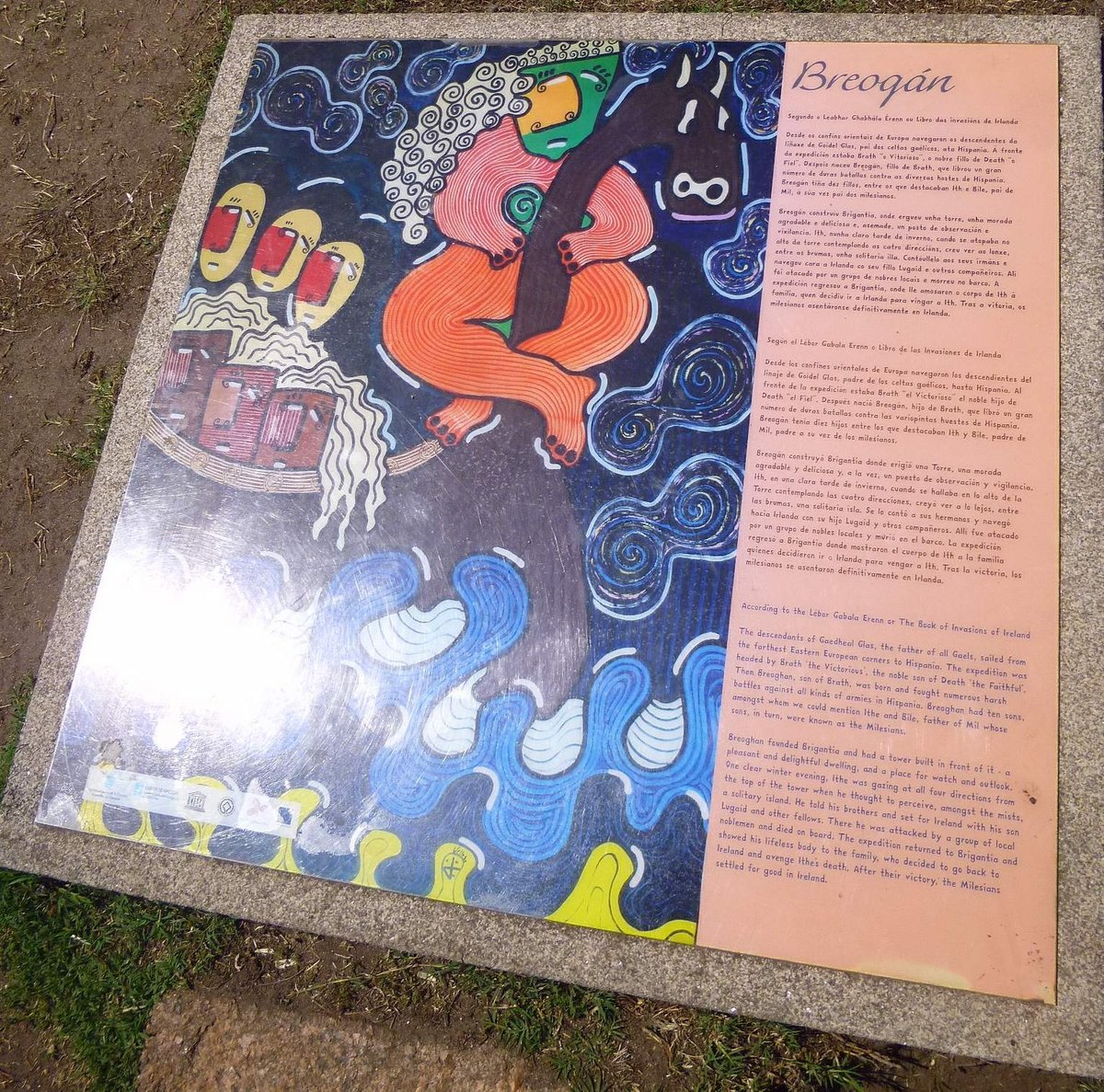
Breogán occupies a central place in Galician and Irish mythology. According to the Lebor Gabála Érenn (Book of Invasions), Breogán was the founder of Brigantia—modern-day A Coruña—and is credited with building a monumental tower from which his son Ith first saw the distant shores of Ireland (coruna.gal). This myth has become foundational to Galician identity and is celebrated throughout the region, forging a unique link between Galicia and Ireland.
Visiting Hours and Ticket Information
- Hours: Generally open daily from 10:00 AM to 7:00 PM (summer) and 10:00 AM to 6:00 PM (winter); holiday schedules may vary (Coruna Official).
- Tickets: Free for EU citizens under 25 and A Coruña residents; standard tickets about €3 for adults, €1.50 for children and seniors. Tickets can be purchased on-site or online to avoid queues.
- Accessibility: The tower’s Roman stairs limit full accessibility, but the surrounding park and visitor center are wheelchair-friendly.
Getting to the Tower
- By Bus: Lines 1 and C1 from city center.
- On Foot or By Bike: Coastal path, approximately 30-minute walk/cycle.
- By Car: Limited parking near the site; early arrival advised during peak season.
Guided Tours and Special Events
Guided tours provide rich insights into the tower’s history and mythology. These are available in several languages and can be reserved online or at the site. Special events, especially during summer and the annual Celtic Festival, enliven the area with music, dance, and reenactments of Breogán's legend.
Best Photographic Spots and Nearby Attractions
- Panoramic Views: From the tower top and nearby coastal cliffs.
- Breogán Statue: Iconic photography spot.
- Nearby Sites: Domus Museum, Archaeology and History Museum, and the Old Town.
The Tower in Local Culture
Breogán’s myth pervades local culture: the Galician anthem references the “nation of Breogán,” and his likeness appears in literature, public art, and monuments (mythslegendes.com). The 19th-century Celticist revival further cemented his role as a symbol of Galician heritage.
FAQ: Your Questions Answered
- Are tickets required? Yes, for tower interior; park access is free.
- What are the hours? Typically 10:00 AM–7:00 PM (summer), 10:00 AM–6:00 PM (winter).
- Is it accessible? Limited inside, but exterior facilities are accessible.
- How do I get there? Bus 1/C1, walk, or drive (parking limited).
- Are guided tours available? Yes, in multiple languages.
Plan Your Visit: Tips
- Arrive early or late to avoid crowds and harsh sunlight.
- Wear comfortable shoes for walking.
- Check cultural event schedules to experience local festivals.
- Combine your visit with other cultural sites in A Coruña.
Historical Background and Architectural Evolution
The Tower of Hercules, or Torre de Hércules, is the world’s oldest operational lighthouse, built by Romans in the late 1st century CE as the Farum Brigantium (UNESCO; Brogan Abroad). Rising 34 meters, the Roman core is enveloped by an 18th-century neoclassical shell, added during restoration by architect Eustaquio Giannini (Guias Viajar).
The lighthouse has always been vital for navigation along the treacherous Galician coast (Caminosantiago Compostela). In the Middle Ages, it also served defensive roles, and archaeological excavations in the 1990s uncovered Roman foundations and buildings, underscoring its ancient origins (UNESCO).
Symbolism and Cultural Significance
The tower represents resilience and maritime prowess, featured on A Coruña’s coat of arms and in the Galician anthem (Caminosantiago Compostela). Its connection to Breogán, celebrated by a statue at the base, highlights the region’s layered Roman and Celtic identities (Brogan Abroad). The adjacent Sculpture Park, with contemporary works inspired by local legends, reinforces its cultural resonance (Guias Viajar).
Tower of Hercules: Visiting Hours and Tickets
Location and Access
Situated about 2.4 km from central A Coruña, the tower is accessible via a seafront promenade, public buses (3, 3A, 5), or by car (parking at the sculpture park) (Caminosantiago Compostela; Guias Viajar).
Visiting Hours
Open daily, typically 10:00 AM–6:00 PM, with half-hour timed entries starting at 10:15 AM. Seasonal variations apply (Coruna Official).
Tickets and Admission
Advance purchase is recommended to guarantee entry due to daily visitor limits. Tickets are available online or on-site; Mondays are free (Guias Viajar).
Climbing the Tower and Visitor Experience
Ascending the 234 steps reveals both Roman and neoclassical features. Each floor has interpretive panels detailing history and architecture (Trek Zone). The climb is moderately strenuous but offers breathtaking views of the Atlantic and A Coruña. At the base, a small museum displays archaeological finds, and the visitor center offers interactive exhibits (Caminosantiago Compostela).
Surrounding Attractions and Visitor Tips
Attractions
- Sculpture Park: Over 15 contemporary works, Iron Age rock carvings, Muslim cemetery, and the Compass Rose, symbolizing the Celtic nations (UNESCO).
- Nearby Beaches: Orzán and San Amaro, both with Blue Flag status (Trek Zone).
- Other Sites: Aquarium Finisterrae, National Museum of Science and Technology.
Tips
- Visit in spring/summer for pleasant weather and local festivals (Audiala).
- Book tickets in advance and arrive early to avoid queues.
- Pack layers due to unpredictable Atlantic weather (Brogan Abroad).
Myths, Legends, and the Legacy of Breogán
The Tower of Hercules is deeply steeped in myth. Breogán, the legendary king, is said to have built the tower and inspired the Galician anthem (Guias Viajar). Another local legend attributes the tower’s construction to Hercules himself, who is said to have buried the giant Geryon’s head beneath its foundation (Fascinating Spain). These narratives enrich the cultural significance of the monument.
Conservation and UNESCO Status
Inscribed as a UNESCO World Heritage Site in 2009, the Tower of Hercules is conserved through coordinated national, local, and international efforts (UNESCO). Its continuous use as a lighthouse and its archaeological significance secure its place as one of Europe’s most valuable cultural landmarks (Caminosantiago Compostela).
Frequently Asked Questions (FAQ)
- What are the visiting hours? Generally 10:00 AM–6:00 PM; check seasonal updates.
- How to buy tickets? Online or on-site; advance booking recommended.
- Is the climb strenuous? The 234 steps are moderately challenging; not recommended for those with limited mobility.
- Are tours available? Yes, in multiple languages.
- Best time to visit? Spring and summer, especially during local festivals.
- Is photography allowed? Yes, especially recommended for panoramic views.
Enhance Your Visit
Download the Audiala mobile app for audio guides, interactive maps, and the latest event information. Explore related posts for deeper insights and follow us on social media for updates and travel tips.
A Coruña: History, Tickets, and Cultural Highlights
Historical and Cultural Context
A Coruña, in Galicia’s northwest, is a vibrant city shaped by its Roman, medieval, and Celtic past. Its strategic port and rich traditions are reflected in its architecture, from the Old Town to the 19th-century glass-fronted galerías (The Orange Backpack; Winalist).
The Celtic Legacy and Breogán
Breogán’s legend is central to Galician and Irish identity, linking A Coruña to the mythological founding of Ireland (Wikipedia; Irish Times).
Urban and Natural Highlights
The city’s Old Town features Romanesque churches and medieval squares, while the Marina’s iconic galerías define its waterfront (Winalist). The 13-km Paseo Marítimo connects beaches, the Tower, and public art installations, including the Breogán sculpture (A Coruña City Council).
Visiting the Tower: Hours and Tickets
- Summer: 10:00 AM–8:00 PM; Winter: 10:00 AM–6:00 PM.
- Tickets: About €3 (adults); discounts for children, seniors, and groups.
- Guided Tours: Available in several languages.
- Official Info: A Coruña tourism website.
Getting There
Accessible by air, train, and bus, A Coruña is compact and walkable. Public transport connects all major sites (Spain Guide Now).
Where to Stay and Eat
Options range from boutique Old Town hotels to modern beach resorts. The local gastronomy is renowned for seafood, including Galician-style octopus and percebes (Winalist).
Culture and Traditions
Experience festivals like San Juan with beach bonfires and Celtic music events (Irish Times).
Accessibility
Most major sites are accessible, though terrain near the lighthouse can be challenging (A Coruña City Council).
Nearby Attractions
Explore Santiago de Compostela, Costa da Morte, and the scenic Rías Altas for more history and natural beauty (The Orange Backpack).
Summary and Key Tips
The Tower of Hercules embodies centuries of history, legend, and culture, representing Galicia’s unique blend of Roman engineering and Celtic myth (Brogan Abroad). The site offers a rewarding experience through its preserved Roman core, neoclassical restoration, and evocative Sculpture Park (Vivir no es caro).
A Coruña itself is a vibrant city filled with coastal promenades, historical sites, and culinary delights. The enduring myth of Breogán connects Galicia to Ireland, celebrated through festivals and cultural exchanges (Irish Times).
Visitor Tips:
- Reserve tickets in advance, especially during peak seasons.
- Explore the Sculpture Park and nearby beaches.
- Take advantage of guided tours and the Audiala app for an enriched visit.
Listen to the full story in the app
Your Personal Curator, in Your Pocket.
Audio guides for 1,100+ cities across 96 countries. History, stories, and local insight — offline ready.
Audiala App
Available on iOS & Android
Join 50k+ Curators
Sources
- verified
- verified
- verified
- verified
- verified
- verified
- verified
- verified
- verified
- verified
- verified
- verified
- verified
- verified
Last reviewed: