water
The Sudd Wetlands
The Sudd is one of the world’s largest tropical wetlands, a seasonal maze of papyrus, floodwater, and birdlife. It shapes the country’s history as much as any border ever did.
South Sudan is one of the few places left where geography still sets the terms: the Sudd blocks, the Nile connects, and the best journeys feel discovered rather than packaged.
 South Sudan
EntryE-visa required in advance for most travelers
SThis South Sudan travel guide starts with a surprise: the country’s great spectacle is not a city skyline but a wetland so vast it can swallow maps. Begin in Juba, then follow the White Nile north and east.
South Sudan rewards travelers who care more about what is real than what is polished. Independence came on July 9, 2011, making it the world’s youngest country, but the deeper story runs through cattle camps, papyrus marsh, and river towns older than the state itself. In Juba, the White Nile sets the rhythm and nearly every trip begins with logistics, heat, and dust. Then the country opens out: north toward Malakal and the Nile corridor, west toward Wau and the Bahr el Ghazal region, south toward Nimule where the river narrows and the border with Uganda feels close enough to touch.
Nature is the main argument. The Sudd, spread across a seasonal area that can range from 30,000 to 130,000 square kilometers, is one of the planet’s largest tropical wetlands, a bird-rich barrier of papyrus, floodwater, and sky. East of the Nile, Boma and Bandingilo hold one of Africa’s biggest mammal migrations, with white-eared kob, tiang, and Mongalla gazelle moving in numbers that still surprise people who assume every great migration has already been branded and ticketed. Nimule National Park offers another mood entirely: escarpment light, river scenery, and Fola Falls breaking the Nile into a bright, hard rush of water.
Kingdoms of the White Nile, c. 3000 BCE-1820
At dawn the White Nile looks almost harmless, a pale ribbon sliding past reeds and mudbanks. Then the land opens into the Sudd, a wet maze of papyrus and floating vegetation so vast that ancient expeditions lost themselves in it, and 19th-century steamers still cursed it. Ce que l'on ignore souvent, c'est que this swamp did not merely block travelers; it shaped history by slowing conquest, filtering trade, and keeping whole societies slightly out of reach.
Long before any border called this place South Sudan, Nilotic-speaking communities moved with their cattle along the river corridors and seasonal grasslands. Wealth walked on four legs. A bride-price was counted in cattle, quarrels could be settled in cattle, and a family's standing could be heard at dusk in the lowing of a herd. That logic still echoes today in the cattle camps around Bor and the plains south of Malakal.
By the late 15th century, the Shilluk kingdom had taken form along the western bank of the White Nile, near what is now Kodok, north of Malakal. Its sacred founder, Nyikang, belonged to that rare category of rulers who become larger in death than in life: oral tradition says he did not vanish, but returned in the body of each new king, the Reth. A crown under those conditions was not a privilege. It was possession.
That belief carried a brutal clause. If a Shilluk king weakened too visibly, nobles could force his death before the body betrayed the divinity it was meant to hold. It sounds like legend, and part of it is, but the political idea is unmistakably real: authority here was sacred, theatrical, and never entirely safe. When later empires arrived from the north with ledgers, rifles, and flags, they were not entering an empty backwater. They were stepping into old countries with long memories.
Nyikang, half founder and half sacred presence, gave the Shilluk kingdom a political theology in which kingship was inherited and haunted at the same time.
European mapmakers spent centuries treating the Sudd as a blank because boats could enter it and fail to come back with anything more useful than panic.
The Slave Century, 1820-1899
Picture the river in the 1850s: narrow boats, bales of cloth, tusks stacked like pale clubs, chains hidden until the moment they were needed. The Egyptian conquest of Sudan, launched in 1820, opened the south to commercial raiding on a new scale. Traders, soldiers, and local brokers pushed into the Bahr el Ghazal and Upper Nile in search of ivory first, then people, because people could be sold faster.
No name hangs over this century more darkly than Zubeir Pasha. Starting from trading stations in the southwest, he built a private empire on ivory and enslaved labor, then became too powerful for Cairo to ignore. His world was one of fortified zaribas, armed retainers, and bargains sealed at gunpoint. Ce que l'on ignore souvent, c'est que many of these raids did not look at first like formal conquest; they arrived as commerce, then stayed as terror.
The British came south carrying the language of suppression and order, but the picture was never clean. Samuel Baker reached Gondokoro, near present-day Juba, in 1863 and dreamed of ending the slave trade while extending imperial control. Charles Gordon followed. Emin Pasha after him. Each man wrote dispatches as though the map could be disciplined by will. The swamps, the distances, and the entrenched trading networks had other ideas.
Meanwhile, whole communities were broken and remade. Villages moved. Children were taken north. Cattle routes shifted under the pressure of armed demand. By the time Mahdist armies and then Anglo-Egyptian forces fought for Sudan at the century's end, the south had already been scarred by decades of extraction. The violence of the next age would not begin from zero; it would inherit roads of trauma already cut through the grass.
Zubeir Pasha was no distant villain from a schoolbook but a businessman of astonishing discipline, building power in the south through ledgers, rifles, and human misery.
When Samuel Baker emerged from the southern Nile campaigns with Florence Baker beside him, polite British society was less scandalized by slavery than by the fact that he had met her in a slave market before marrying her.
The Southern Question, 1899-1972
The Anglo-Egyptian Condominium loved paperwork. District files, patrol reports, censuses, ethnographic notes: empire in this part of the world often arrived on paper before it arrived on the ground. But the south was administered as a problem apart. Officials in Juba, Wau, and Malakal governed through distance, missionaries, and selective isolation, wary of both northern influence and the expense of ruling too closely.
That policy left marks that lasted. English gained ground in mission schools. Arabic remained the language of trade and everyday exchange. Roads stayed thin, investment thinner still. Ce que l'on ignore souvent, c'est que under the colonial habit of separating north and south lay a dangerous postponement: London never solved the basic question of how these regions were meant to share a state.
The answer came violently in Torit on 18 August 1955, months before Sudan's independence. Southern soldiers, fearing transfer north and distrusting Khartoum's promises, mutinied. Officers were killed. Panic spread. What looked at first like a barracks revolt became the first unmistakable warning that Sudan's future would be fought over in the south.
The years that followed were harsh and improvised. The Anyanya rebellion grew from scattered resistance into a long insurgency, while civilians paid in displacement, reprisals, and hunger. Then, in 1972, the Addis Ababa Agreement granted the south a measure of autonomy after 17 years of war. It was a pause, and a meaningful one. But pauses are not settlements, and the unresolved matters of power, oil, and dignity were already waiting behind the curtain.
Joseph Lagu turned a fragmented southern insurgency into a political force strong enough to negotiate rather than merely survive.
The Torit mutiny began in a garrison town that many outsiders could barely find on a map, yet its shockwave reordered the politics of the entire Sudanese state.
Liberation and Oil, 1972-2011
For a brief moment after 1972, the south could imagine ordinary politics. Regional institutions returned. Families rebuilt. Traders moved again between river towns and cattle country. Then President Jaafar Nimeiri, under pressure and temptation in equal measure, dismantled southern autonomy in 1983 and pushed Sudan toward centralization and Islamic law. Oil made the quarrel sharper. Power rarely becomes gentler when pipelines enter the story.
John Garang, trained as an economist and soldier, responded by founding the SPLM/A. He did not present himself as a provincial separatist at first; he spoke of a "New Sudan," a re-made country rather than a partitioned one. But war has its own education. Across Upper Nile, Jonglei, Equatoria, and Bahr el Ghazal, battles, famine, scorched villages, and child displacement turned politics into endurance.
The movement itself was never a court of angels. In 1991, Riek Machar and Lam Akol split from Garang, exposing rival visions, ethnic fractures, and personal ambition in the rebellion. Bor suffered appalling violence. Civilians learned again what elites often forget: factional arguments are paid for in blood by people who never asked to arbitrate them. Yet the SPLM/A remained the central vehicle of southern aspiration because no other force could match its reach.
Then came the improbable hinge of 2005. The Comprehensive Peace Agreement laid out a path to self-determination, and months later Garang died in a helicopter crash after barely three weeks as First Vice President of Sudan. Juba went into mourning. Women wept in the streets. Men who had carried rifles for decades stood silent beside the river. Six years later, on 9 July 2011, the flag of South Sudan rose in Juba before crowds who had waited generations to see a country called by their own name. Independence was real. It was also the beginning of another test.
John Garang could speak like a professor, command like a guerrilla leader, and unsettle allies because he believed history should be argued with, not merely inherited.
Garang spent years defending a united "New Sudan," yet his death made him, in memory, the martyred father of a fully independent South Sudan.
The Young Republic, 2011-present
On independence day in Juba, the heat was already thick by morning, uniforms stiff with ceremony, the new flag bright against a washed-out sky. It should have been a chapter ending. Instead it became a beginning written in haste. State institutions were thin, oil revenues unstable, and the habits of armed politics stronger than the manners of civilian compromise.
In December 2013 the quarrel between President Salva Kiir and Vice President Riek Machar broke into open conflict. The language of party discipline collapsed into the language of ethnicity, fear, and revenge. Juba shook first, then Bor, Bentiu, Malakal, and vast rural areas beyond the capitals of news headlines. Ce que l'on ignore souvent, c'est how quickly a capital's intrigue can become a village's funeral.
Peace agreements followed, failed, returned, and were rewritten. Regional mediators leaned in. Churches sheltered the displaced. Women organized, negotiated, documented, and buried the dead while men argued over ministries. The 2018 peace deal reduced the scale of fighting, though not the fragility of the settlement. In places like Wau and Malakal, the question was no longer who had won, but who could go home and find a roof still standing.
And yet history in South Sudan has never been only the story of commanders. It is also the story of teachers reopening classrooms, traders crossing checkpoints with impossible patience, poets giving the republic a language sharper than its official slogans, and communities insisting on life beside the Nile after every betrayal. The country remains young, wounded, and unfinished. That is precisely why its history cannot be told as a triumphal march: it is a struggle, still in progress, over what freedom is supposed to look like once the anthem ends.
Salva Kiir inherited a state before it had learned how to be a state, and every weakness in that inheritance landed on his desk with a rifle attached.
South Sudan became independent in 2011, yet within two years thousands of civilians were already seeking shelter inside United Nations bases on their own soil.
South Sudan speaks in layers. English sits in ministries and schoolbooks; Arabic, especially Juba Arabic, moves through markets, minibuses, jokes, flirtation, argument. Then come Dinka, Nuer, Bari, Zande, Shilluk, Lotuko, Kakwa, and dozens more, each carrying its own weather, its own way of dividing the world into what matters and what can be ignored.
Juba teaches this quickly. A sentence begins in English, softens into Juba Arabic, then lands in a mother tongue for the word that refuses substitution. That last word is often the important one. Bureaucracy may prefer the official language; affection does not.
Juba Arabic itself has a practical elegance that feels almost indecently intelligent. It trims grammar the way a good cook trims fat from meat: enough to leave flavor, never enough to leave poverty. Listen at a tea stall in Juba or near the river in Malakal and you hear a language built not by professors but by necessity, trade, barracks, migration, and the daily genius of people who need to understand one another before sunset.
Greetings here are not decorative noises. Ask after the family, and in many communities you also ask after the cattle, because wealth, memory, milk, marriage, and dignity are all standing in the same enclosure. A country is a table set for strangers. South Sudan is a greeting prolonged until it becomes moral philosophy.
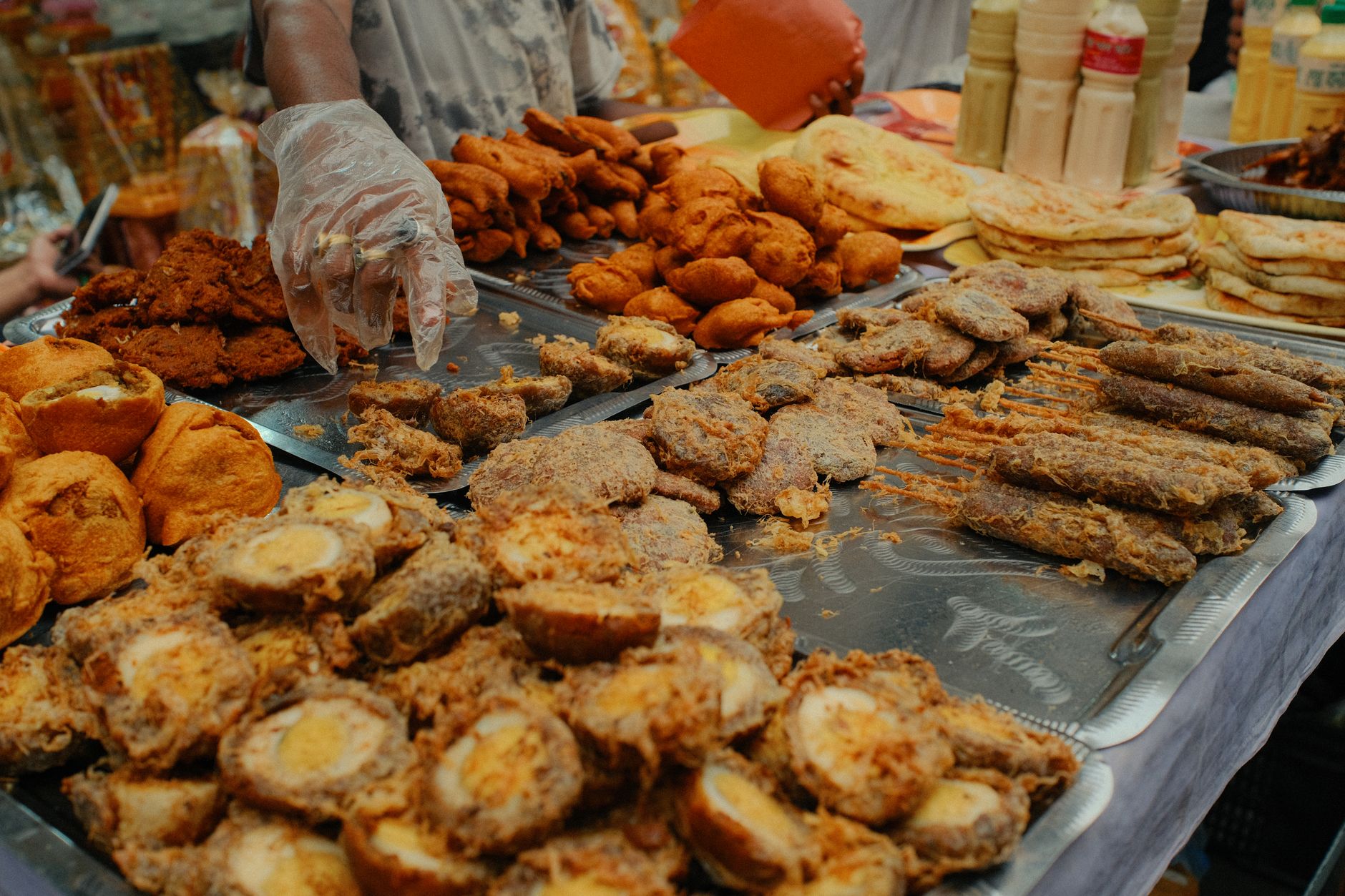
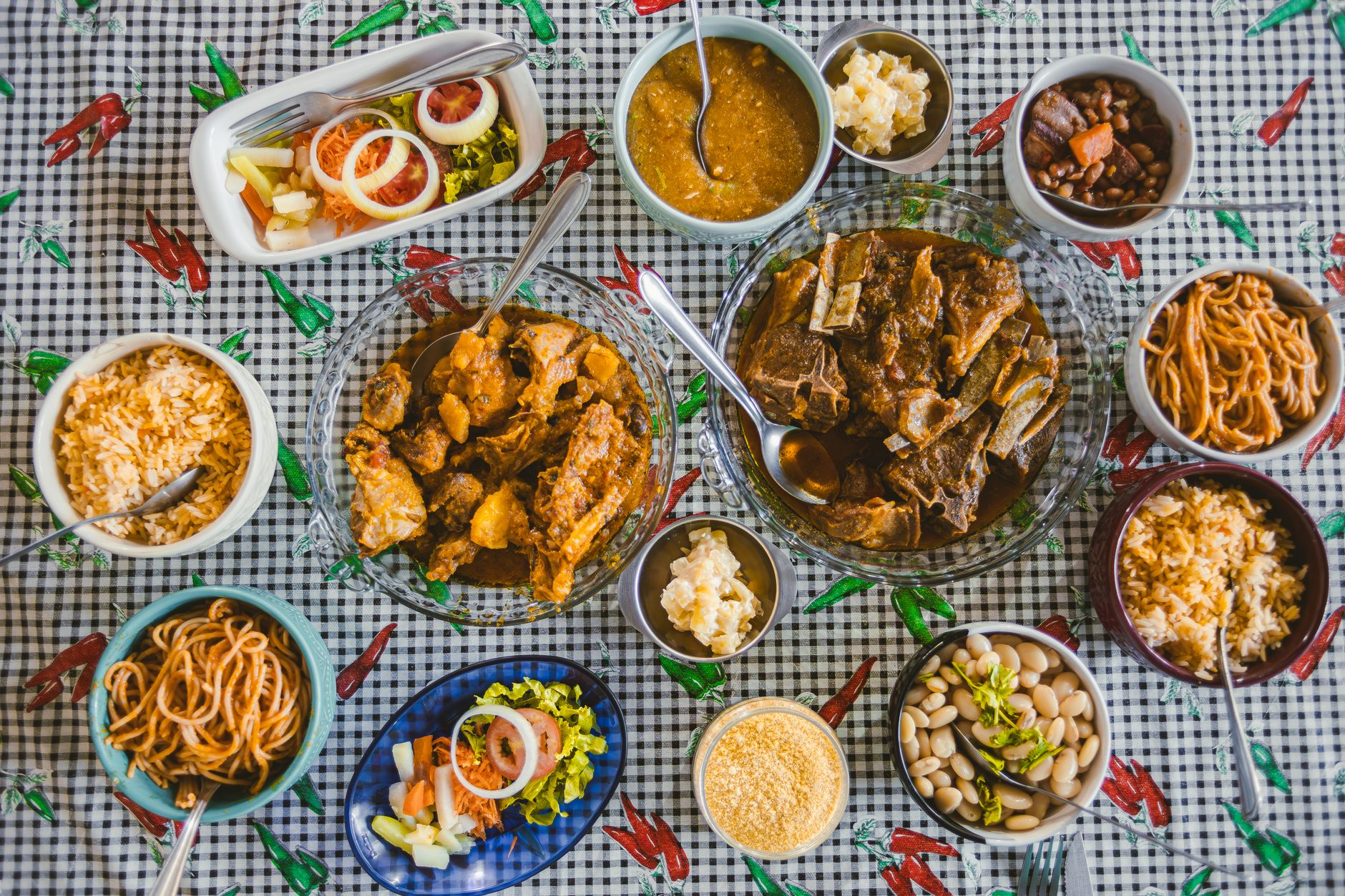
South Sudanese food does not seduce through display. It arrives in bowls, mounds, stews, smoke, steam. Asida, made from sorghum or millet, looks almost severe until you tear off a piece with your right hand and use it to lift mullah or bamia; then the whole meal reveals its intelligence, which is that texture is not an accessory but the grammar of eating.
Kisra carries another lesson. Fermented sorghum batter spread thin on a hot surface becomes a flexible sheet with a quiet sourness, the sort of taste that does not shout but insists. In Juba, and sometimes in homes in Wau, it appears beside okra stew, fish, or meat with tomato and onion, and the sour edge keeps the richness honest.
Then comes the Nile. Tilapia and perch are fried whole, dried on racks, or folded into stews whose perfume reaches the road before the pot comes into view. Markets smell of fish, charcoal, hibiscus, dust, and ground sesame. Good. A kitchen that smells alive is telling the truth.
Food here is often communal without becoming sentimental. Hands meet over one bowl, silence alternates with laughter, and the meal proceeds with the grave pleasure of something older than etiquette books. The opposite of performance, then. Nourishment with style.
South Sudanese politeness can bewilder visitors because it asks for time before it gives access. You do not lunge at the subject. You greet, you ask, you wait, you show that the other person exists in more than one dimension. In Juba this may happen fast, with urban compression; in smaller places such as Torit or Rumbek, the courtesy can stretch into a ritual of patient reconnaissance.
Among cattle-keeping communities, questions about the herd are not quaint local color. They are direct inquiries into health, fortune, kinship, and continuity. Ask badly and you sound ignorant. Ask well and you have already crossed half the distance between stranger and guest.
Dress matters in a way many travelers from sloppier cultures pretend not to understand. Clean clothes, covered shoulders, composure, restraint in gesture: these are simple offerings to the social contract. Shorts in central Juba are possible; respect is still more persuasive than comfort. One notices this especially at churches, offices, and family compounds, where appearance is read less as vanity than as evidence that you grasp the seriousness of arrival.
And then there is hospitality, the discipline of making room. Tea appears. Water appears. A chair appears from nowhere, as if furniture had been waiting behind a curtain for your moral exam. Refusing too quickly can look rude. Accepting with quiet gratitude works better. Manners are never abstract here; they are the visible form of esteem.
Religion in South Sudan does not sit in a single box and behave. Christianity is everywhere visible: Catholic churches, Anglican compounds, choirs in pressed shirts, women in bright wraps carrying Bibles whose pages have softened from weather and hands. Yet older cosmologies remain present, not as museum residue but as living habits of interpretation, especially around land, cattle, kinship, and the dead.
Attend a Sunday service in Juba and you may hear hymns sung with a force that makes the corrugated roof seem temporary. The sermon belongs to scripture; the atmosphere belongs to the place itself, to heat, dust, grief, survival, and the fierce human preference for praise over despair. Faith here often sounds less like abstraction than like insistence.
Traditional belief systems still shape what is feared and what is protected. Ancestors are not distant concepts. They remain implicated in family fortune, illness, fertility, and the moral weather of a household. A tree, a cattle enclosure, a burial place, a patch of ground outside the village can carry meaning thick enough to alter behavior without any signboard explaining why.
This coexistence does not always feel tidy. Good. Tidy religion is usually a bureaucrat's fantasy. In South Sudan, prayer and custom often stand side by side like relatives who disagree on doctrine yet still share a meal after the funeral.
Music in South Sudan begins in the body before it reaches the ear. Drums mark ceremony, dance lines answer them with footwork, ululation slices through the air, and a song becomes less an object than an event into which everyone nearby is drafted. The first lesson is simple: listening passively is a foreign habit.
Traditional forms differ by community, of course. Dinka and Nuer performance can carry the cadence of cattle camps and age-set life; Equatorian styles often bring different rhythms, string instruments, church harmonies, and dance traditions shaped by other histories of contact. One country, many pulse systems.
In Juba, contemporary music folds in East African pop, gospel, Congolese guitar sheen, Sudanese echoes, and the stubborn local preference for songs that can still function in a gathering rather than only in headphones. Studios exist, radios circulate hits, weddings amplify everything, and church choirs remain one of the country's great musical schools whether or not they use that name.
A dawn cattle camp near the outskirts of Juba offers another register entirely: bells on animals, men calling, songs half-spoken into smoke and morning ash, the low thunder of bodies larger than the people guiding them. It is not a concert. That is why one remembers it.
South Sudanese literature has had the indecency to exist under terrible conditions. War, exile, censorship, fractured schooling, displacement, and the economics of survival do not favor the patient making of sentences. Yet writers persist, which is perhaps the purest definition of literature: language continuing after history has behaved badly.
Taban lo Liyong remains the unavoidable elder, brilliant and quarrelsome, a writer who seems to treat prose as both knife and percussion instrument. Then come later voices such as Stella Gaitano, who writes with the calm precision of someone who knows that one exact detail can humiliate a page of slogans. Their work belongs to South Sudan and also to the larger argument of the Sudans, where identity, memory, and language have never obeyed borders politely.
Oral tradition still matters immensely. Praise poetry, clan histories, songs of migration, stories attached to kings, rivers, cattle, and battles continue to carry cultural memory in forms older than print. In places such as Bor or Malakal, history may arrive first through the mouth of an elder rather than through a bound volume. One would be foolish to call that less literary.
A young country produces a strange reading experience. Independence came on 9 July 2011, which is yesterday in the life of a nation and long ago in the life of a child born that week. South Sudanese writing often lives inside that temporal contradiction. It records not only what happened, but what words survived to tell it.
The Sudd is one of the world’s largest tropical wetlands, a seasonal maze of papyrus, floodwater, and birdlife. It shapes the country’s history as much as any border ever did.
Boma and Bandingilo host one of Africa’s largest mammal migrations, with more than a million white-eared kob, tiang, and gazelle moving across the plains. Few travelers realize the scale until they see it.
Near Juba, Mundari cattle camps offer some of East Africa’s strongest photographic scenes: ash-white cattle, woodsmoke, and dawn light over red earth. The image stays with you because the culture behind it is still fully lived.
Nimule National Park brings the Nile, border-country landscapes, and Fola Falls into one compact southern route. It is one of the country’s clearest nature itineraries from Juba when roads and security allow.
South Sudan speaks in more than 60 languages, with English official and Arabic widely used in daily life. That mix gives markets, river towns, and roadside conversations a texture you do not get from guidebooks alone.
This is not a soft-entry destination. For travelers who have already covered Kenya, Uganda, Rwanda, or Ethiopia, South Sudan offers a rarer thing: a country where the sense of first-hand discovery still feels intact.
12 cities — start with the ones we'd send you to first.
The world's youngest capital sprawls along the White Nile's western bank, where red-dust roads, UN convoys, and open-air tukul bars exist in the same unpaved block.
Upper Nile's battered river port has been taken and retaken by armed factions four times since 2013, leaving a city of ghosts, aid workers, and the Nile's indifferent current.
Western Bahr el Ghazal's largest town retains the faded grid of a colonial-era administrative center, where Catholic mission bells and cattle auction dust mark the hours.
Jonglei's state capital sits on the east bank of the White Nile at the edge of cattle-camp country, where Dinka herdsmen ash their bodies white against insects each dawn.
Deep in the green southwest near the DRC border, this Azande town is one of the few places in South Sudan where the forest closes overhead and the war feels geographically distant.
Perched below the Imatong Mountains in Eastern Equatoria, Torit is the gateway to Mount Kinyeti — South Sudan's 3,187-metre high point — and the starting point of almost nobody's itinerary.
The last town before the Ugandan border straddles the Nile at the edge of Nimule National Park, where Fola Falls drops the river into a roar audible from the main road.
Lakes State's capital is the informal capital of Dinka cattle culture, where bride-price negotiations measured in hundreds of cows are conducted with the seriousness of treaty talks.
Northern Bahr el Ghazal's main town sits close to the Sudanese border in territory that was a front line for decades, and where the memory of famine is still a living, named thing.
Juba is the country’s front door and still the place where every South Sudan conversation begins, whether that means ministries, markets, river views, or the practical business of finding fuel and a driver. The White Nile gives the capital a broad horizon, but the mood is not leisurely; it is a city built around movement, negotiation, and heat.
The northeast is river country on a grand scale, with Malakal and Renk tied to the Nile, trade routes, and the vast wetland system of the Sudd. This is where the map stops feeling abstract: channels spread, distances distort, and the country’s history of movement, conflict, and survival comes into focus very fast.
Wau has the feel of a regional capital that still works as a working town first and a curiosity second. The farther west and north you move from here, the more the landscape opens into savannah, cattle routes, and settlements where logistics matter more than scenery in the brochure sense.
Rumbek sits in a region where water, grazing, and cattle shape daily life more clearly than formal urban planning ever could. Travelers who come this way are not chasing monuments; they are watching how roads, herds, and seasonal movement still organize the country at ground level.
Torit and Nimule sit on one of the most practical corridors in the country, the route south toward Uganda, and that gives the whole region a sharper commercial pulse. The land also starts to lift toward the Imatong range, so you get a useful contrast between border movement, mountain horizons, and rough but busy roads.
Kapoeta and Pibor belong to the drier, more thinly served east, where distance is the real landmark and every route depends on timing, weather, and local arrangements. This is also the direction of Boma and Bandingilo, the great migration country that makes wildlife specialists pay attention to South Sudan in the first place.
South Sudan's history is not a prelude to 2011; it is a long struggle over river, power, and belonging.
Communities speaking early Nilotic languages move into the riverine and grassland zones of what is now South Sudan. Cattle become wealth, social grammar, and sacred measure all at once, a pattern that still shapes life from Bor to Upper Nile.
Along the western bank of the White Nile, north of present-day Malakal, the Shilluk kingdom emerges as one of the region's strongest political formations. Its kingship is tied to Nyikang, whose presence is treated not as memory alone but as living force.
Whether as a historical ruler or a figure enlarged by ritual memory, Nyikang becomes the sacred center of Shilluk kingship. Later coronations are understood as his return, which turns succession into theology.
Muhammad Ali's forces conquer Sudan from the north, and the south becomes increasingly exposed to armed trading networks. What follows is not immediate annexation so much as a slow commercial penetration that soon hardens into violence.
Armed traders establish stations deep in Bahr el Ghazal and Upper Nile, buying, coercing, and capturing on a large scale. Whole communities are uprooted as ivory profits merge with the traffic in enslaved people.
Baker arrives at Gondokoro, near present-day Juba, and thrusts the southern Nile into the Victorian imagination. His expedition mixes anti-slavery rhetoric, imperial ambition, and the practical misery of moving through swamp and fever country.
From fortified trading stations, Zubeir Pasha builds a private empire based on ivory and enslaved labor. Cairo eventually tries to absorb his influence because leaving it entirely in private hands has become too dangerous.
Britain and Egypt establish joint rule over Sudan, including the southern provinces. The south is administered separately, thinly, and often hesitantly from posts such as Juba, Wau, and Malakal.
Colonial officials formalize a policy that limits northern influence and leans on missionaries, local chiefs, and indirect rule in the south. It creates distance, but not a durable constitutional answer to the question of shared statehood.
Southern soldiers in Torit rebel on 18 August, fearing domination by Khartoum after independence. The mutiny is both a military rupture and a prophecy: Sudan will not hold together peacefully on its inherited terms.
After 17 years of war, the agreement grants the south regional autonomy and pauses the fighting. Joseph Lagu emerges as one of the men who turned rebellion into negotiation.
President Jaafar Nimeiri dismantles southern autonomy and reshapes Sudan's politics around central control and Islamic law. John Garang responds by founding the SPLM/A, and the second civil war begins.
Riek Machar and Lam Akol break with Garang, exposing deep political and ethnic fractures inside the southern movement. The violence that follows around Bor leaves a wound that later peace agreements can name but not erase.
The CPA ends the long north-south war and sets a timetable for southern self-determination. Months later John Garang dies in a helicopter crash, turning celebration into national mourning.
On 9 July, the Republic of South Sudan is declared in Juba. The moment is joyous and hard-earned, but the state begins life with unresolved military rivalries, weak institutions, and an economy tied tightly to oil.
A power struggle between President Salva Kiir and Vice President Riek Machar turns violent in December. The fighting spreads from Juba into Bor, Malakal, Bentiu, and beyond, devastating civilians and shattering the optimism of independence.
After failed attempts and regional pressure, a new peace deal reduces the scale of war and restores a power-sharing framework. It does not solve every conflict, but it shifts the country's argument back toward politics rather than open battlefield logic.
A revitalized transitional government is finally established, bringing Kiir and Machar back into an uneasy institutional arrangement. The country enters another waiting period, suspended between exhaustion and the hope that compromise might outlast command.
Kingdoms of the White Nile
Nyikang, half founder and half sacred presence, gave the Shilluk kingdom a political theology in which kingship was inherited and haunted at the same time.
At dawn the White Nile looks almost harmless, a pale ribbon sliding past reeds and mudbanks. Then the land opens into the Sudd, a wet maze of papyrus and floating vegetation so vast that ancient expeditions lost themselves in it, and 19th-century steamers still cursed it. Ce que l'on ignore souvent, c'est que this swamp did not merely block travelers; it shaped history by slowing conquest, filtering trade, and keeping whole societies slightly out of reach.
Long before any border called this place South Sudan, Nilotic-speaking communities moved with their cattle along the river corridors and seasonal grasslands. Wealth walked on four legs. A bride-price was counted in cattle, quarrels could be settled in cattle, and a family's standing could be heard at dusk in the lowing of a herd. That logic still echoes today in the cattle camps around Bor and the plains south of Malakal.
By the late 15th century, the Shilluk kingdom had taken form along the western bank of the White Nile, near what is now Kodok, north of Malakal. Its sacred founder, Nyikang, belonged to that rare category of rulers who become larger in death than in life: oral tradition says he did not vanish, but returned in the body of each new king, the Reth. A crown under those conditions was not a privilege. It was possession.
That belief carried a brutal clause. If a Shilluk king weakened too visibly, nobles could force his death before the body betrayed the divinity it was meant to hold. It sounds like legend, and part of it is, but the political idea is unmistakably real: authority here was sacred, theatrical, and never entirely safe. When later empires arrived from the north with ledgers, rifles, and flags, they were not entering an empty backwater. They were stepping into old countries with long memories.
European mapmakers spent centuries treating the Sudd as a blank because boats could enter it and fail to come back with anything more useful than panic.
The Slave Century
Zubeir Pasha was no distant villain from a schoolbook but a businessman of astonishing discipline, building power in the south through ledgers, rifles, and human misery.
Picture the river in the 1850s: narrow boats, bales of cloth, tusks stacked like pale clubs, chains hidden until the moment they were needed. The Egyptian conquest of Sudan, launched in 1820, opened the south to commercial raiding on a new scale. Traders, soldiers, and local brokers pushed into the Bahr el Ghazal and Upper Nile in search of ivory first, then people, because people could be sold faster.
No name hangs over this century more darkly than Zubeir Pasha. Starting from trading stations in the southwest, he built a private empire on ivory and enslaved labor, then became too powerful for Cairo to ignore. His world was one of fortified zaribas, armed retainers, and bargains sealed at gunpoint. Ce que l'on ignore souvent, c'est que many of these raids did not look at first like formal conquest; they arrived as commerce, then stayed as terror.
The British came south carrying the language of suppression and order, but the picture was never clean. Samuel Baker reached Gondokoro, near present-day Juba, in 1863 and dreamed of ending the slave trade while extending imperial control. Charles Gordon followed. Emin Pasha after him. Each man wrote dispatches as though the map could be disciplined by will. The swamps, the distances, and the entrenched trading networks had other ideas.
Meanwhile, whole communities were broken and remade. Villages moved. Children were taken north. Cattle routes shifted under the pressure of armed demand. By the time Mahdist armies and then Anglo-Egyptian forces fought for Sudan at the century's end, the south had already been scarred by decades of extraction. The violence of the next age would not begin from zero; it would inherit roads of trauma already cut through the grass.
When Samuel Baker emerged from the southern Nile campaigns with Florence Baker beside him, polite British society was less scandalized by slavery than by the fact that he had met her in a slave market before marrying her.
The Southern Question
Joseph Lagu turned a fragmented southern insurgency into a political force strong enough to negotiate rather than merely survive.
The Anglo-Egyptian Condominium loved paperwork. District files, patrol reports, censuses, ethnographic notes: empire in this part of the world often arrived on paper before it arrived on the ground. But the south was administered as a problem apart. Officials in Juba, Wau, and Malakal governed through distance, missionaries, and selective isolation, wary of both northern influence and the expense of ruling too closely.
That policy left marks that lasted. English gained ground in mission schools. Arabic remained the language of trade and everyday exchange. Roads stayed thin, investment thinner still. Ce que l'on ignore souvent, c'est que under the colonial habit of separating north and south lay a dangerous postponement: London never solved the basic question of how these regions were meant to share a state.
The answer came violently in Torit on 18 August 1955, months before Sudan's independence. Southern soldiers, fearing transfer north and distrusting Khartoum's promises, mutinied. Officers were killed. Panic spread. What looked at first like a barracks revolt became the first unmistakable warning that Sudan's future would be fought over in the south.
The years that followed were harsh and improvised. The Anyanya rebellion grew from scattered resistance into a long insurgency, while civilians paid in displacement, reprisals, and hunger. Then, in 1972, the Addis Ababa Agreement granted the south a measure of autonomy after 17 years of war. It was a pause, and a meaningful one. But pauses are not settlements, and the unresolved matters of power, oil, and dignity were already waiting behind the curtain.
The Torit mutiny began in a garrison town that many outsiders could barely find on a map, yet its shockwave reordered the politics of the entire Sudanese state.
Liberation and Oil
John Garang could speak like a professor, command like a guerrilla leader, and unsettle allies because he believed history should be argued with, not merely inherited.
For a brief moment after 1972, the south could imagine ordinary politics. Regional institutions returned. Families rebuilt. Traders moved again between river towns and cattle country. Then President Jaafar Nimeiri, under pressure and temptation in equal measure, dismantled southern autonomy in 1983 and pushed Sudan toward centralization and Islamic law. Oil made the quarrel sharper. Power rarely becomes gentler when pipelines enter the story.
John Garang, trained as an economist and soldier, responded by founding the SPLM/A. He did not present himself as a provincial separatist at first; he spoke of a "New Sudan," a re-made country rather than a partitioned one. But war has its own education. Across Upper Nile, Jonglei, Equatoria, and Bahr el Ghazal, battles, famine, scorched villages, and child displacement turned politics into endurance.
The movement itself was never a court of angels. In 1991, Riek Machar and Lam Akol split from Garang, exposing rival visions, ethnic fractures, and personal ambition in the rebellion. Bor suffered appalling violence. Civilians learned again what elites often forget: factional arguments are paid for in blood by people who never asked to arbitrate them. Yet the SPLM/A remained the central vehicle of southern aspiration because no other force could match its reach.
Then came the improbable hinge of 2005. The Comprehensive Peace Agreement laid out a path to self-determination, and months later Garang died in a helicopter crash after barely three weeks as First Vice President of Sudan. Juba went into mourning. Women wept in the streets. Men who had carried rifles for decades stood silent beside the river. Six years later, on 9 July 2011, the flag of South Sudan rose in Juba before crowds who had waited generations to see a country called by their own name. Independence was real. It was also the beginning of another test.
Garang spent years defending a united "New Sudan," yet his death made him, in memory, the martyred father of a fully independent South Sudan.
The Young Republic
Salva Kiir inherited a state before it had learned how to be a state, and every weakness in that inheritance landed on his desk with a rifle attached.
On independence day in Juba, the heat was already thick by morning, uniforms stiff with ceremony, the new flag bright against a washed-out sky. It should have been a chapter ending. Instead it became a beginning written in haste. State institutions were thin, oil revenues unstable, and the habits of armed politics stronger than the manners of civilian compromise.
In December 2013 the quarrel between President Salva Kiir and Vice President Riek Machar broke into open conflict. The language of party discipline collapsed into the language of ethnicity, fear, and revenge. Juba shook first, then Bor, Bentiu, Malakal, and vast rural areas beyond the capitals of news headlines. Ce que l'on ignore souvent, c'est how quickly a capital's intrigue can become a village's funeral.
Peace agreements followed, failed, returned, and were rewritten. Regional mediators leaned in. Churches sheltered the displaced. Women organized, negotiated, documented, and buried the dead while men argued over ministries. The 2018 peace deal reduced the scale of fighting, though not the fragility of the settlement. In places like Wau and Malakal, the question was no longer who had won, but who could go home and find a roof still standing.
And yet history in South Sudan has never been only the story of commanders. It is also the story of teachers reopening classrooms, traders crossing checkpoints with impossible patience, poets giving the republic a language sharper than its official slogans, and communities insisting on life beside the Nile after every betrayal. The country remains young, wounded, and unfinished. That is precisely why its history cannot be told as a triumphal march: it is a struggle, still in progress, over what freedom is supposed to look like once the anthem ends.
South Sudan became independent in 2011, yet within two years thousands of civilians were already seeking shelter inside United Nations bases on their own soil.
South Sudan speaks in layers. English sits in ministries and schoolbooks; Arabic, especially Juba Arabic, moves through markets, minibuses, jokes, flirtation, argument. Then come Dinka, Nuer, Bari, Zande, Shilluk, Lotuko, Kakwa, and dozens more, each carrying its own weather, its own way of dividing the world into what matters and what can be ignored.
Juba teaches this quickly. A sentence begins in English, softens into Juba Arabic, then lands in a mother tongue for the word that refuses substitution. That last word is often the important one. Bureaucracy may prefer the official language; affection does not.
Juba Arabic itself has a practical elegance that feels almost indecently intelligent. It trims grammar the way a good cook trims fat from meat: enough to leave flavor, never enough to leave poverty. Listen at a tea stall in Juba or near the river in Malakal and you hear a language built not by professors but by necessity, trade, barracks, migration, and the daily genius of people who need to understand one another before sunset.
Greetings here are not decorative noises. Ask after the family, and in many communities you also ask after the cattle, because wealth, memory, milk, marriage, and dignity are all standing in the same enclosure. A country is a table set for strangers. South Sudan is a greeting prolonged until it becomes moral philosophy.
South Sudanese food does not seduce through display. It arrives in bowls, mounds, stews, smoke, steam. Asida, made from sorghum or millet, looks almost severe until you tear off a piece with your right hand and use it to lift mullah or bamia; then the whole meal reveals its intelligence, which is that texture is not an accessory but the grammar of eating.
Kisra carries another lesson. Fermented sorghum batter spread thin on a hot surface becomes a flexible sheet with a quiet sourness, the sort of taste that does not shout but insists. In Juba, and sometimes in homes in Wau, it appears beside okra stew, fish, or meat with tomato and onion, and the sour edge keeps the richness honest.
Then comes the Nile. Tilapia and perch are fried whole, dried on racks, or folded into stews whose perfume reaches the road before the pot comes into view. Markets smell of fish, charcoal, hibiscus, dust, and ground sesame. Good. A kitchen that smells alive is telling the truth.
Food here is often communal without becoming sentimental. Hands meet over one bowl, silence alternates with laughter, and the meal proceeds with the grave pleasure of something older than etiquette books. The opposite of performance, then. Nourishment with style.
South Sudanese politeness can bewilder visitors because it asks for time before it gives access. You do not lunge at the subject. You greet, you ask, you wait, you show that the other person exists in more than one dimension. In Juba this may happen fast, with urban compression; in smaller places such as Torit or Rumbek, the courtesy can stretch into a ritual of patient reconnaissance.
Among cattle-keeping communities, questions about the herd are not quaint local color. They are direct inquiries into health, fortune, kinship, and continuity. Ask badly and you sound ignorant. Ask well and you have already crossed half the distance between stranger and guest.
Dress matters in a way many travelers from sloppier cultures pretend not to understand. Clean clothes, covered shoulders, composure, restraint in gesture: these are simple offerings to the social contract. Shorts in central Juba are possible; respect is still more persuasive than comfort. One notices this especially at churches, offices, and family compounds, where appearance is read less as vanity than as evidence that you grasp the seriousness of arrival.
And then there is hospitality, the discipline of making room. Tea appears. Water appears. A chair appears from nowhere, as if furniture had been waiting behind a curtain for your moral exam. Refusing too quickly can look rude. Accepting with quiet gratitude works better. Manners are never abstract here; they are the visible form of esteem.
Religion in South Sudan does not sit in a single box and behave. Christianity is everywhere visible: Catholic churches, Anglican compounds, choirs in pressed shirts, women in bright wraps carrying Bibles whose pages have softened from weather and hands. Yet older cosmologies remain present, not as museum residue but as living habits of interpretation, especially around land, cattle, kinship, and the dead.
Attend a Sunday service in Juba and you may hear hymns sung with a force that makes the corrugated roof seem temporary. The sermon belongs to scripture; the atmosphere belongs to the place itself, to heat, dust, grief, survival, and the fierce human preference for praise over despair. Faith here often sounds less like abstraction than like insistence.
Traditional belief systems still shape what is feared and what is protected. Ancestors are not distant concepts. They remain implicated in family fortune, illness, fertility, and the moral weather of a household. A tree, a cattle enclosure, a burial place, a patch of ground outside the village can carry meaning thick enough to alter behavior without any signboard explaining why.
This coexistence does not always feel tidy. Good. Tidy religion is usually a bureaucrat's fantasy. In South Sudan, prayer and custom often stand side by side like relatives who disagree on doctrine yet still share a meal after the funeral.
Music in South Sudan begins in the body before it reaches the ear. Drums mark ceremony, dance lines answer them with footwork, ululation slices through the air, and a song becomes less an object than an event into which everyone nearby is drafted. The first lesson is simple: listening passively is a foreign habit.
Traditional forms differ by community, of course. Dinka and Nuer performance can carry the cadence of cattle camps and age-set life; Equatorian styles often bring different rhythms, string instruments, church harmonies, and dance traditions shaped by other histories of contact. One country, many pulse systems.
In Juba, contemporary music folds in East African pop, gospel, Congolese guitar sheen, Sudanese echoes, and the stubborn local preference for songs that can still function in a gathering rather than only in headphones. Studios exist, radios circulate hits, weddings amplify everything, and church choirs remain one of the country's great musical schools whether or not they use that name.
A dawn cattle camp near the outskirts of Juba offers another register entirely: bells on animals, men calling, songs half-spoken into smoke and morning ash, the low thunder of bodies larger than the people guiding them. It is not a concert. That is why one remembers it.
South Sudanese literature has had the indecency to exist under terrible conditions. War, exile, censorship, fractured schooling, displacement, and the economics of survival do not favor the patient making of sentences. Yet writers persist, which is perhaps the purest definition of literature: language continuing after history has behaved badly.
Taban lo Liyong remains the unavoidable elder, brilliant and quarrelsome, a writer who seems to treat prose as both knife and percussion instrument. Then come later voices such as Stella Gaitano, who writes with the calm precision of someone who knows that one exact detail can humiliate a page of slogans. Their work belongs to South Sudan and also to the larger argument of the Sudans, where identity, memory, and language have never obeyed borders politely.
Oral tradition still matters immensely. Praise poetry, clan histories, songs of migration, stories attached to kings, rivers, cattle, and battles continue to carry cultural memory in forms older than print. In places such as Bor or Malakal, history may arrive first through the mouth of an elder rather than through a bound volume. One would be foolish to call that less literary.
A young country produces a strange reading experience. Independence came on 9 July 2011, which is yesterday in the life of a nation and long ago in the life of a child born that week. South Sudanese writing often lives inside that temporal contradiction. It records not only what happened, but what words survived to tell it.
Nyikang is the kind of ruler history cannot quite pin down and therefore never forgets. In Shilluk tradition he did not simply found a kingdom; he continued to inhabit it, returning in each king's body, which made politics inseparable from ritual and fear.
Zubeir turned the southwest of what is now South Sudan into the engine room of his fortune. He was no crude bandit but an organizer of terrifying skill, building fortified stations, moving ivory north, and treating human lives as inventory.
Baker arrived with the Victorian conviction that a river could be morally improved if only a determined Englishman stood beside it. His campaigns against the slave trade in Equatoria mixed genuine outrage, imperial ambition, and a taste for dramatic self-fashioning.
Lagu understood that scattered resistance wins sympathy but rarely wins terms. By unifying major southern rebel forces under one banner, he helped push Khartoum toward the 1972 Addis Ababa Agreement, the first serious recognition of the south's political distinctiveness.
Garang could quote political theory one moment and plan a campaign the next. He made the south imagine itself not as a marginal province begging for concessions, but as the center of a historical argument Sudan could no longer avoid.
With his black hat and careful public stillness, Kiir often looks like a man determined not to show the strain. Yet his real place in history lies in the contradiction he inherited: winning statehood is one achievement, learning how to govern a fractured wartime coalition is another.
Machar has spent decades as both indispensable negotiator and destabilizing rival, which is a difficult combination but an accurate one. His 1991 break with Garang and later clash with Kiir altered the political fate of the south twice over, each time at immense human cost.
Rebecca Nyandeng has often stood where grief and politics meet, turning widowhood into a platform rather than a retreat. In a political culture crowded with commanders, she represents another lineage of power: memory, legitimacy, and the authority of having watched the movement from the inside.
Gaitano writes the republic without ceremonial varnish. Her stories catch the textures that speeches miss: the absurdity of bureaucracy, the ache of displacement, the way Khartoum, Juba, and memory can occupy the same sentence without ever reconciling.
This is the shortest route that still shows three different faces of the south: the river capital in Juba, the road-town feel of Torit, and the Ugandan border atmosphere in Nimule. It suits travelers who need a compact window, a driver, and a realistic tolerance for long road hours rather than polished sightseeing.
This western loop trades headline sites for a better sense of distance, market life, and the flat, cattle-shaped logic of the northwest. Wau gives you the biggest urban base, Rumbek breaks the route through the lake country, and Aweil adds a far-northern edge few outsiders ever reach.
This Nile route follows the country's long spine from the Upper Nile corridor down toward the center. Malakal brings the river frontier into focus, Renk adds the northern border logic that shapes trade and movement, and Bor shows how quickly the landscape shifts once you drop south again.
This is the hard version: the green southwest around Yambio, the dry eastern tracks toward Kapoeta, the remote plains around Pibor, and a final return through Torit. It only makes sense for travelers with arranged transport, serious flexibility, and an appetite for seeing how one country can contain rainforest edges, cattle country, and semi-arid frontier in a single trip.
Sorghum mound, right hand, shared bowl. Lunch or dinner, family table, guests close enough to become witnesses.
Fermented sorghum crepe, okra stew, fingers tearing and folding. Evening meal, household rhythm, conversation slow.
Fava beans, oil, lemon, flatbread, tin bowl. Breakfast near bus stations in Juba, standing, before the heat starts its argument.
Whole fish, charcoal smoke, salt, lime, bare hands. Best at twilight by the White Nile in Juba or on simple roadside grills in Nimule.
Cattle hoof stew, long simmer, gelatin and patience. Feast food, pastoral households, eaten when time matters less than abundance.
Cold hibiscus drink in a plastic bag or a glass, crimson as ceremony. Market refreshment, afternoon heat, dust on the tongue.
Paper cone, slow shelling, husks falling between sentences. Bus stops, roadside pauses, talk that does not need urgency.





For most travelers, including U.S., Canadian, British, EU, and Australian passport holders, the working rule is simple: get the visa before you fly. South Sudan's official e-visa portal says approved applications are usually processed within 72 hours, and you should travel with at least six months of passport validity, a yellow fever certificate, and ideally five blank pages.
The local currency is the South Sudanese pound, but clean recent U.S. dollars are often easier to use in practice, especially in Juba. Cash is the system here: ATMs are unreliable, card acceptance is thin, and exchange rates can diverge sharply between official and street markets, so confirm the rate before handing over money.
Almost every international trip starts in Juba via Juba International Airport. The most useful air hubs are Addis Ababa, Entebbe, Nairobi, Cairo, and Istanbul, with schedules that can change faster than older booking engines admit, so recheck directly with the airline before departure.
Distances are long, roads are rough, and the wet season can turn a map into fiction. Domestic flights link Juba with Wau and Malakal on the most dependable schedules, while overland travel to places such as Nimule, Bor, Torit, or Rumbek needs current security checks, a driver who knows the checkpoints, and generous time buffers.
The most workable travel window runs from November to April, with December to March the safest bet for roads and general logistics. From late spring into autumn, heavy rain and flooding can cut routes across the Sudd and beyond, which is why a journey that looks short on paper can stretch into a full lost day.
Mobile coverage is usable in Juba and patchier as soon as you push out toward Malakal, Yambio, Kapoeta, or Pibor. Hotel Wi-Fi often exists in name before performance, so buy a local SIM, download offline maps, and assume that uploads, calls, and payments may fail when you need them most.
This is still a high-risk destination, and the major official advisories remain unusually blunt: several governments advise against all travel or maintain do-not-travel warnings. If you go anyway, keep the trip tightly planned, avoid spontaneous road moves, monitor local advice daily, and treat security arrangements as part of the basic travel budget rather than an optional extra.
Bring newer U.S. dollar notes in small and medium denominations. Torn, marked, or old-series bills can be refused even when the amount is perfectly fair.
In South Sudan, the driver, airport transfer, and local fixer often matter more than the hotel star rating. Lock those in before you choose the nicer room.
Passenger rail is not a usable planning tool here. Think in flights, 4WD road time, and weather delays instead.
Save offline maps, booking confirmations, passport scans, and contact numbers before you arrive. Weak mobile data in places such as Wau, Malakal, or Kapoeta is an inconvenience until it becomes your whole day.
Quoted hotel and vehicle prices are not always presented the same way. Before you agree, ask whether tax, fuel, security, and airport transfers are already included.
Be patient, stay calm, and let your driver handle the conversation when possible. A checkpoint is not the place to prove efficiency or charm.
Take greetings seriously, especially outside Juba. Rushing straight to the request can read as abrasive in a country where courtesy still carries practical weight.
If the dates are flexible, choose December through March. It will save you far more time and money than trying to shave a few dollars off a wet-season plan that later collapses on the road.
Explore South Sudan with a personal guide in your pocket
Audio guides for 1,100+ cities across 96 countries. History, stories, and local insight — offline ready.

No, not in the ordinary holiday sense. Official advisories from the United States, United Kingdom, Canada, and Australia remain extremely severe, so any trip should be treated as essential or specialist travel with fixed logistics, daily checks, and a clear exit plan.
Yes, most travelers should arrange one before departure. The official e-visa portal is the standard route, and you should not assume visa on arrival unless you have confirmed a specific exemption tied to your nationality or status.
Yes, often more easily than local currency for larger travel expenses, especially in Juba. Even so, carry some South Sudanese pounds for smaller purchases and always agree the exchange rate before paying.
January and February are usually the easiest months for logistics. They sit in the dry season, when roads are more passable, skies are clearer, and wildlife areas such as the Boma migration zone are at their most workable.
Use arranged drivers, domestic flights where available, and hotel or fixer transfers. Public transport exists in fragments, but it is not reliable enough for tight schedules or first-time travel in a country where road conditions and security can shift quickly.
Yes, if your interest is in understanding the country rather than collecting polished attractions. Juba is where the White Nile, politics, trade, aid, nightlife, and everyday improvisation all meet, and that makes it the most revealing city in South Sudan even when the sightseeing is uneven.
Yes, in principle, but you should treat it as a current-conditions route rather than a routine border hop. Nimule is the main overland gateway from Uganda, yet road security, checkpoints, and local operating rules need to be checked immediately before travel.
Some higher-end places in Juba do, but cash remains the safer assumption almost everywhere. Build the trip around physical money, because card readers, bank links, and local ATMs fail too often to be your main plan.
Pack clean U.S. dollars, a yellow fever certificate, a local-SIM-ready phone, power backup, basic medicines, and printed copies of bookings and passport details. The point is redundancy: if the network drops or a checkpoint asks questions, paper still wins.
Last reviewed