An introduction.
Researched by the Audiala editorial team from historical records, architectural archives, and local expertise.
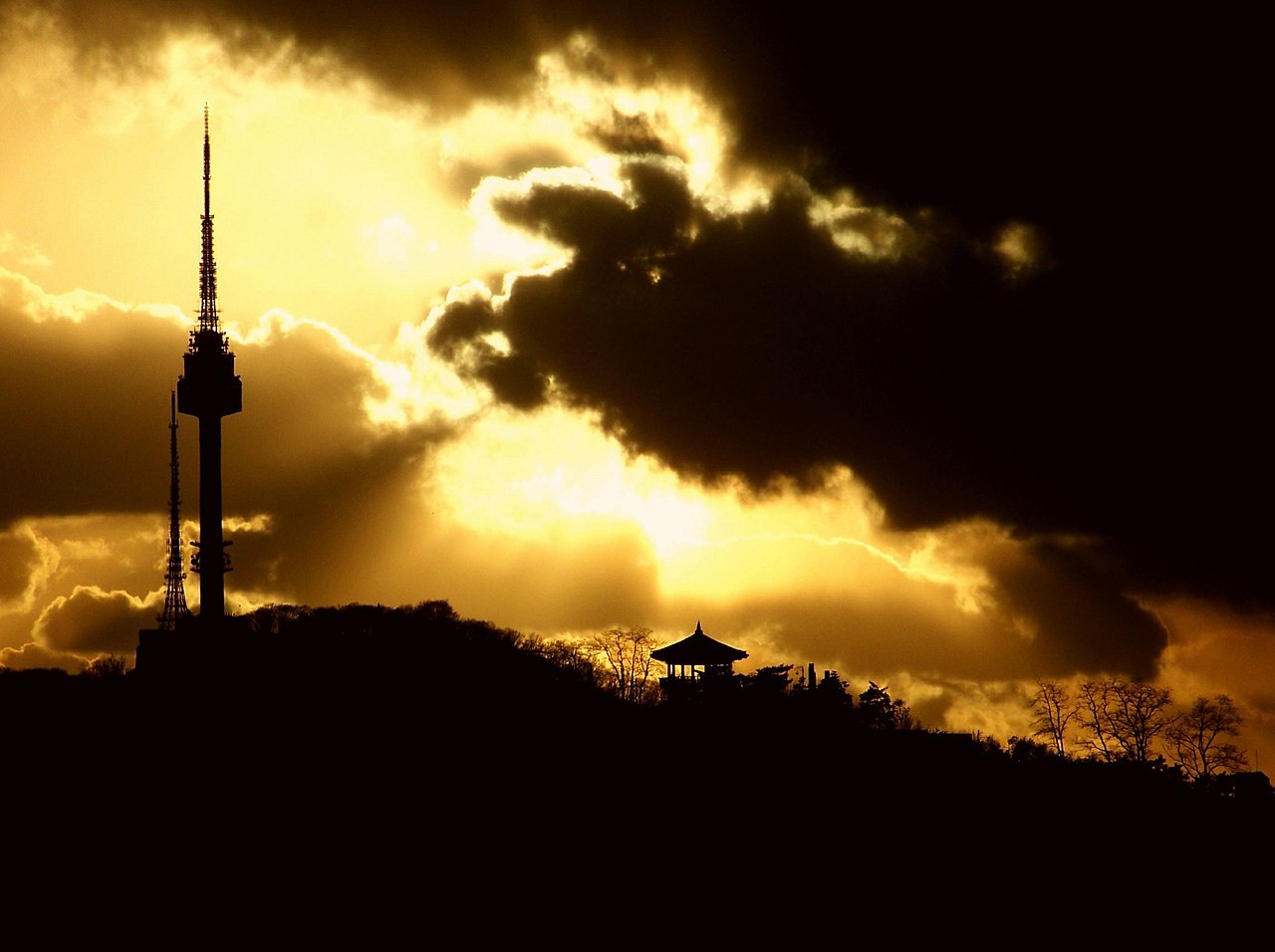
FFor five years after its completion, the tallest structure in Seoul was a secret — a tower the public could see from every corner of the city but was forbidden to enter. N Seoul Tower, perched atop Namsan Mountain in the heart of South Korea's capital, began life as a Cold War broadcasting weapon before becoming the country's most recognizable landmark. Today it draws visitors for panoramic views that stretch from the Han River's silver bends to the mountains ringing the city, but the real reason to come is the strange layering of centuries beneath your feet.
The numbers alone are arresting. The tower itself stands 236.7 meters tall, but because it sits on Namsan's 243-meter summit, its tip reaches 479.7 meters above sea level — higher than the Empire State Building's roof. On clear days, the observatory offers a 360-degree sweep across a metropolitan area home to nearly 10 million people, the city's glass-and-steel sprawl giving way to forested ridgelines that haven't changed much since the Joseon Dynasty.
But N Seoul Tower isn't just a viewpoint. The mountain beneath it holds fragments of the 14th-century Hanyangdoseong — Seoul's original city wall — and the site itself served as a beacon-fire signal station for over 500 years before anyone thought to plant a broadcasting antenna here. The tower compresses Korean history into a single vertical line: dynastic defense, authoritarian control, and modern romance, all stacked on the same rocky peak.
The love locks clamped to every railing get the Instagram attention. The OLED tunnel and revolving restaurant get the guidebook paragraphs. What most visitors miss is the tension between what this place was built to do — jam North Korean radio signals and surveil the capital — and what it has become: a place where couples come to promise forever.
01 What to see.
The Observatory and Its Glass Floor
Here's what nobody tells you about the observatory at 236.7 meters: it spent its first five years closed to everyone. President Park Chung-hee, worried the vantage point could be used to spy on the Blue House below, kept the tower sealed from its 1975 completion until October 1980 — after his assassination. The view that a dictator feared is now yours for the price of a ticket.
Once inside, the 360-degree panoramic glass walls dissolve the boundary between you and a city of ten million. Digital telescopes let you zoom into specific landmarks across the Han River and beyond. But the real gut-punch is the "Shocking Floor" — a glass-bottomed section where you look straight down through your feet at Namsan's forested slopes, roughly 480 meters above sea level. Your brain knows the engineering is sound. Your knees disagree. The collective nervous laughter of strangers standing on transparent nothing is one of those sounds you won't forget.
The Love Lock Terrace
The roof terrace below the observatory is covered — blanketed, really — in padlocks. Thousands upon thousands of them, hung on wire fences and railings by couples who then toss the key into the trees below. The weight of all that metal is genuinely startling; you can hear the constant, tinny clinking as wind moves through the mass of locks, a sound like distant wind chimes made of spare change.
It's kitschy. It's also oddly moving. Locks from 2005 have rusted into near-illegibility, their messages dissolving into orange patina, while fresh ones gleam beside them. The contrast between corroded devotion and shiny new promises makes this terrace a strange, accidental monument to time itself. If the crowd gets thick — and it will, especially at sunset — step to the far western edge, where the fence thins out and the view toward the Han River opens up without a dozen selfie sticks in your sightline.
The Bongsudae and the Namsan Fortress Wall Walk
Skip the elevator down. Instead, walk the Namsan Dulle-gil trail at dusk and do what most visitors never bother to: stop at the Bongsudae signal fire station near the tower's base. These weathered stone mounds date to the Joseon Dynasty, when fire signals relayed military intelligence across the peninsula — the original telecommunications infrastructure, centuries before architect Jang Jong-ryul planted a steel antenna on the same mountain in 1971. Run your hand along the rough, lichen-spotted stone and then look up at the LED-lit tower above you. The juxtaposition is almost absurd.
The trail itself threads through sections of the old Seoul City Wall, and as you descend through the tree canopy, the tower keeps reappearing between branches — each angle better than the last. The air smells of pine and damp earth, birdsong replaces the mechanical hum of the elevator, and the city below shifts from a map into a living thing as lights flicker on across Seoul. This 40-minute walk reframes the entire visit: the tower stops being a tourist attraction and becomes what it always was — a signal on a mountain.
02 In pictures.





Plan and listen to N Seoul Tower with Audiala.
Audio guide in your pocket, itinerary in your browser. Built for the way you actually visit.
Tickets & tours.
These are guided options from our partners — same price as booking direct.
Prices are indicative — final pricing and availability are confirmed at checkout. Audiala may earn a commission from bookings made through these links.
Also on GetYourGuide
More tours for N Seoul Tower
Curated from GetYourGuide. Same price as official, free cancellation on most.
 GetYourGuide
Seoul Highlights: Gyeongbok Palace, Insadong & N Seoul Tower
from
€22
 GetYourGuide
Seoul: N Seoul Tower Observatory & Cable Car Combo Ticket
from
€28
 GetYourGuide
Seoul: N Seoul Tower Observatory Official Ticket
from
€16
Prices shown are indicative — final pricing and availability are confirmed at checkout. Audiala may receive a commission from bookings made via these links.
03 Visitor logistics.
The practical scaffolding for a good visit — kept short.
Getting There
Private cars can't reach the summit — take the yellow Namsan Sunhwan Shuttle Bus (lines 01A or 01B) from Chungmuro Station (Lines 3/4, Exit 2) or Dongdaemun Station (Line 3, Exit 6), which drops you about 357m from the tower. The Namsan Cable Car — Korea's first, running since 1962 — departs near Myeong-dong and costs 15,000 KRW round-trip for adults. Or do what locals do: walk one of the Namsan hiking trails from the base, a 30–40 minute climb through forest that makes the view feel earned.
Opening Hours
As of 2026, the observatory is open 365 days a year: weekdays 10:00–22:30, weekends and holidays 10:00–23:00. Last admission is 30 minutes before closing. Hours may shift in severe weather, so check the official site on stormy days.
Time Needed
A focused visit — ride up, take in the 360° panorama, snap photos — runs about 1.5 to 2 hours including transit time. If you want to linger over the love locks, browse Seoul Tower Plaza's media art galleries, and eat at one of the restaurants, budget 3 to 4 hours.
Tickets & Costs
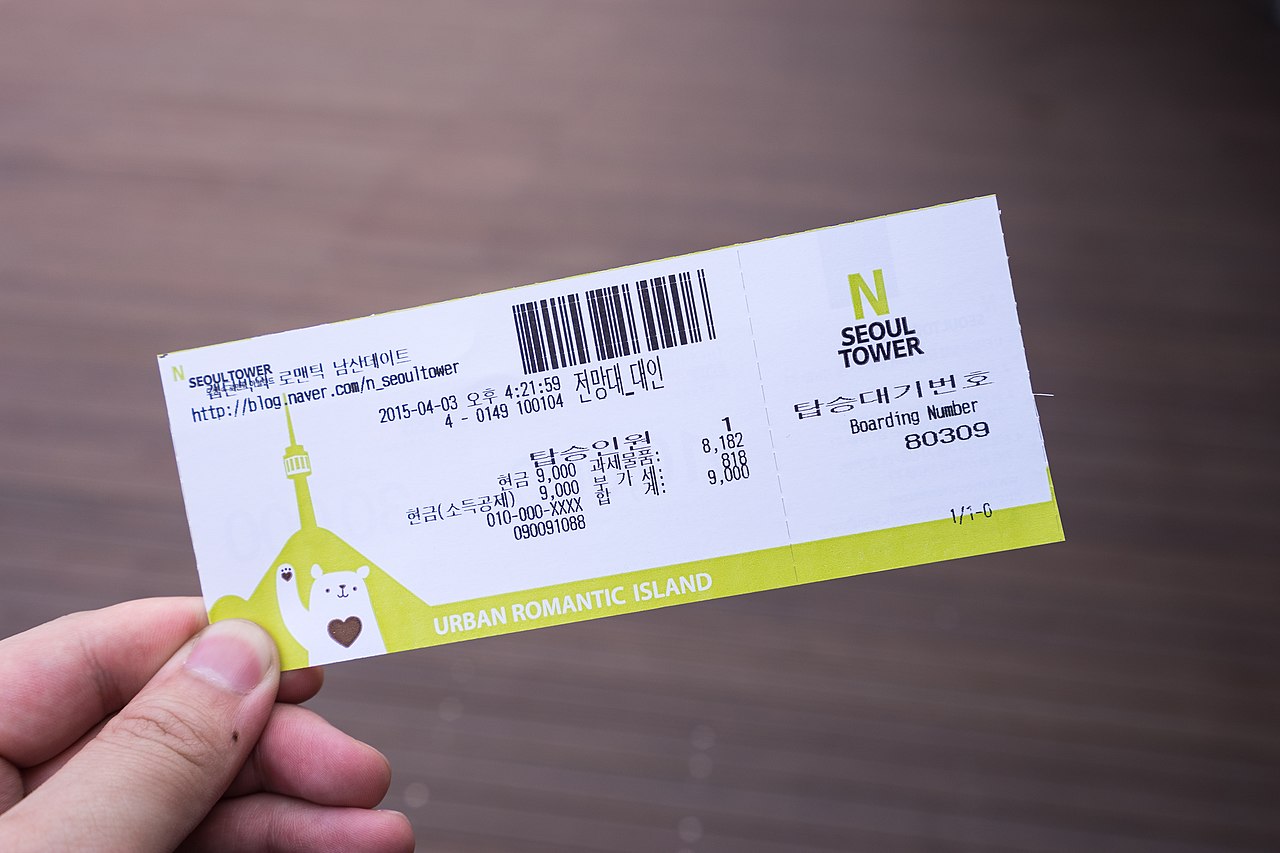
As of 2026, observatory admission is 29,000 KRW for adults and 23,000 KRW for children and seniors. Disabled visitors (with documentation) and national merit holders get a 30% discount. Book a table at n.GRILL or HANCOOK and your observatory admission is included free — a smart move if you're planning to splurge on dinner anyway.
Accessibility
The tower is equipped with elevators and accessible pathways from the bus drop-off point to the observatory. The cable car is also wheelchair-accessible. The hiking trails, however, involve steep grades and uneven steps — stick to motorized transport if mobility is a concern.
04 Tips for visitors.
Small things that change the day.
Time Your Visit
Arrive about 45 minutes before sunset to watch Seoul shift from a sprawl of concrete and glass into a carpet of light — you get both views for one ticket. Weekday evenings draw noticeably thinner crowds than weekends.
Photography Update
Older guidebooks warn about strict no-photo zones facing the former Blue House. Since the presidential office moved to Yongsan in 2022, those restrictions have been largely relaxed — shoot freely in all directions from the observatory.
Eat Before You Climb
Tower dining is pricey for what it is. Locals eat in nearby Myeong-dong or Hannam-dong first. If you do eat up top, Durumi Bunsik serves budget tteokbokki, while n.GRILL is a revolving splurge-level French restaurant where the bill includes free observatory access.
Read the Tower's Light
The LED lighting on the tower isn't decorative — it's a real-time air quality indicator. Blue means the air is clean; red warns of high micro-dust levels, a signal locals use to decide whether to exercise outdoors.
Walk Up via Namsan
Skip the cable car queue and hike one of the forested Namsan trails from the base — it takes 30–40 minutes and is the preferred local route. You'll pass through thick canopy that blocks out the city noise almost completely.
Pair with Hanok Village
Namsangol Hanok Village sits at the foot of the mountain and is free to enter. Traditional wooden houses against the backdrop of the tower above makes for one of Seoul's sharpest old-meets-new contrasts — worth 30 minutes before or after your ascent.
Where to Eat
Don't Leave Without Trying
두루미분식
local favoriteOrder: Tteokbokki (spicy rice cakes) and kimbap—the real stuff locals eat when they're grabbing lunch near the tower, not tourist fare.
This is where Namsan residents actually go. It's unpretentious, affordable, and serves honest Korean comfort food steps from N Seoul Tower without the markup.
제주면장 남산서울타워점
local favoriteOrder: Jeje-style noodles and traditional Korean set meals—this place opens early and stays late, perfect for both breakfast and late-night cravings.
A regional Korean chain with staying power, it's been feeding tower visitors since early morning through midnight. Reliable, authentic, and genuinely local in spirit.
Cinnabon Namsan Tower Branch
quick biteOrder: The classic Cinnabon roll—gooey, indulgent, and perfect with coffee after climbing the tower. No surprises, just reliable carb satisfaction.
Nearly 500 reviews and a 4.9 rating speak volumes. It's the go-to quick bite for sugar-fueled energy before or after exploring the tower complex.
Gong Cha
cafeOrder: Their signature milk tea or seasonal fruit teas—refreshing and perfect for sipping while you're taking in views or browsing the tower plaza.
Perfect 5.0 rating (though limited reviews) makes this a solid choice for a casual beverage break. Located in Seoul Tower Plaza for maximum convenience.
Dining Tips
- check Namsan is accessible from multiple entry points; the tower plaza restaurants are convenient but pricier than nearby neighborhoods like Haebangchon.
- check Many casual Korean restaurants near the tower accept both cash and card, but it's smart to carry some Korean won for smaller vendors.
- check Lunch sets (typically 11 AM–2 PM) at Korean restaurants offer better value than dinner pricing.
- check The surrounding Haebangchon area has excellent 'view cafes' and rooftop spots—worth exploring if you want atmosphere with your meal.
Restaurant data powered by Google
05 The Tower That Watched Before It Was Watched
Namsan Mountain has been a strategic vantage point since the founding of the Joseon Dynasty in 1392, when it was incorporated into the Hanyangdoseong wall system as one of four guardian mountains protecting the capital. For centuries, a bonghwadae — a beacon-fire relay station — sat on its summit, passing military signals across the peninsula by torchlight. When architect Jang Jong-ryul began designing a modern broadcasting tower for the same peak in the late 1960s, he was, whether he knew it or not, continuing a 600-year tradition of using this hill to send messages across the nation.
Construction started on December 15, 1969, under the authoritarian government of President Park Chung-hee. The tower's steel frame was completed by late 1971, but the facility didn't become fully operational until July 30, 1975. Its primary purpose was bluntly practical: consolidate Seoul's radio and television transmitters, which had been scattered across the city, into a single powerful relay point. Romance was not part of the brief.
Park Chung-hee and the Tower He Couldn't Let Go
When N Seoul Tower was completed in 1975, President Park Chung-hee faced an uncomfortable realization. The observatory he had commissioned offered an unobstructed line of sight directly into the Blue House — the presidential residence nestled against Bugaksan Mountain to the north. For a leader who had survived at least two assassination attempts and governed through a climate of surveillance and martial law, the idea of ordinary citizens peering down at his compound was intolerable. He ordered the observatory sealed.
For five years, Seoulites could look up at the tower's silhouette against the sky every evening but could not look out from it. The facility operated strictly as a telecommunications hub and, records suggest, as a signal-jamming station aimed at disrupting North Korean broadcasts. The tower became a paradox: the most visible structure in the city, and the most closed. Park's assassination on October 26, 1979, by his own intelligence chief, Kim Jae-gyu, broke the deadlock. Within a year of his death, the political calculus shifted entirely.
In October 1980, the observatory opened to the public for the first time. Crowds lined up to see what Park had guarded so jealously — and found, of course, just a city. The same rooftops, the same river, the same mountains. The turning point wasn't architectural. Nothing about the tower changed. What changed was who was allowed to stand inside it.
From Jammer to Landmark
The Mountain Beneath the Tower
Listen to the full story in the app
The whole N Seoul Tower,
told well.
Audio guides for 1,100+ cities across 96 countries. History, stories, and local insight — offline ready.

06 Frequently asked.
The questions travellers send us most about N Seoul Tower.
Is N Seoul Tower worth visiting?
Yes — it's the single best place to grasp the sheer scale of Seoul from above, with a 360-degree panorama from 479.7 meters above sea level (roughly the height of a 160-story building). Beyond the view, the tower carries a surprisingly dark history: it was built as a Cold War signal-jamming station and kept closed to the public for five years because a dictator feared spies could watch his residence from the top. The combination of that backstory, the love-lock terrace, and the LED-lit silhouette at night makes it far more interesting than a typical observation deck.
How long do you need at N Seoul Tower?
Budget 1.5 to 2 hours for a quick visit covering the observatory and love-lock terrace. If you want to ride the cable car, eat at one of the restaurants, browse Seoul Tower Plaza, and walk part of the Namsan trail, plan for 3 to 4 hours. Arriving about 45 minutes before sunset gives you both the daylight cityscape and the transition to Seoul's glittering nighttime grid.
How do I get to N Seoul Tower from Seoul?
The easiest route is the yellow Namsan Sunhwan Shuttle Bus (lines 01A or 01B), which you can catch from Chungmuro Station (Lines 3/4, Exit 2) — the bus drops you about 357 meters from the tower entrance. Alternatively, the Namsan Cable Car runs from 10:00 to 23:00 and costs 15,000 KRW round-trip for adults. Private cars are banned at the summit, so don't bother driving up.
What is the best time to visit N Seoul Tower?
Late afternoon, roughly 60 to 90 minutes before sunset, so you catch the city in golden light and then watch it ignite after dark. Weekdays are noticeably less crowded than weekends. Winter offers the sharpest, clearest views — cold, dry air strips away the haze that can blur the horizon in Seoul's humid summers.
Can you visit N Seoul Tower for free?
You can reach the base of the tower, the outdoor love-lock terrace, and the surrounding Namsan Park trails entirely for free. The observatory itself costs 29,000 KRW for adults and 23,000 KRW for children. One workaround: reserving a table at n.GRILL or HANCOOK restaurant gets you complimentary observatory admission.
What should I not miss at N Seoul Tower?
Don't skip the ancient Bongsudae signal-fire station near the tower base — these rough stone mounds were used for military beacon fires during the Joseon Dynasty, centuries before the tower existed, and most visitors walk right past them. Inside, the glass "Shocking Floor" section of the observatory gives you a stomach-dropping look straight down. And for the best photograph of the tower itself, walk the Namsan Dulle-gil trail at dusk: the tower framed by the remnants of the 14th-century Seoul City Wall is a far more striking shot than anything you'll get from the top.
What are N Seoul Tower opening hours and ticket prices?
The observatory is open daily: 10:00–22:30 on weekdays and 10:00–23:00 on weekends and holidays, with last admission 30 minutes before closing. Adult tickets cost 29,000 KRW; children and seniors pay 23,000 KRW. Disabled visitors and national merit holders receive a 30% discount.
Why was N Seoul Tower closed to the public until 1980?
President Park Chung-hee, who ordered the tower's construction in 1969, refused to let civilians onto the observation deck because it offered a direct line of sight to the Blue House — the presidential residence. He feared the vantage point could be used for surveillance, so the tower served strictly as a telecommunications and anti-North Korean broadcast-jamming facility from its 1975 completion until his assassination in 1979. The observatory finally opened to the public in October 1980.
Verified, and shown.
Researched and written by the Audiala editorial team from historical records, architectural archives, and local expertise.
Detailed Korean-language history including construction timeline, Park Chung-hee security restrictions, and rebranding details
English version with construction dates, architect attribution to Jang Jong-ryul, and the five-year public closure
General history, dimensions (236.7m tower height, 479.7m elevation), completion dates, and gondola controversy
Official timeline of construction milestones and 2005 CJ Foodville renovation/rebranding
Current opening hours for the observatory, restaurants, and gift shop
Ticket prices, discount categories, and free-entry policy for restaurant guests
Bus routes, cable car details, parking restrictions, and accessibility info
Group picnic packages and educational programs for minors
Seoul city government tourism page with access info and operating hours
Details on digital telescopes and interactive media art exhibits in the observatory
Information on the Hanyangdoseong (Seoul City Wall) trails surrounding Namsan
Tower height details, OLED displays, and Sky Restroom description
Alternate December 1971 completion date claim (unconfirmed)
Coverage of the Namsan Trail contextualizing human rights abuses during the military junta era
UNESCO listing for the Seoul City Wall system on Namsan and preservation vs. development debate
Historical role of Namsan as a Joseon-era beacon-fire signal station
Visitor reviews and estimated visit duration
Practical visit planning and time estimates
Official FAQ covering luggage, pets, and photography policies
Researched from Wikidata, Wikipedia & official sources · fact-checked · How we make our guides →