Introduction
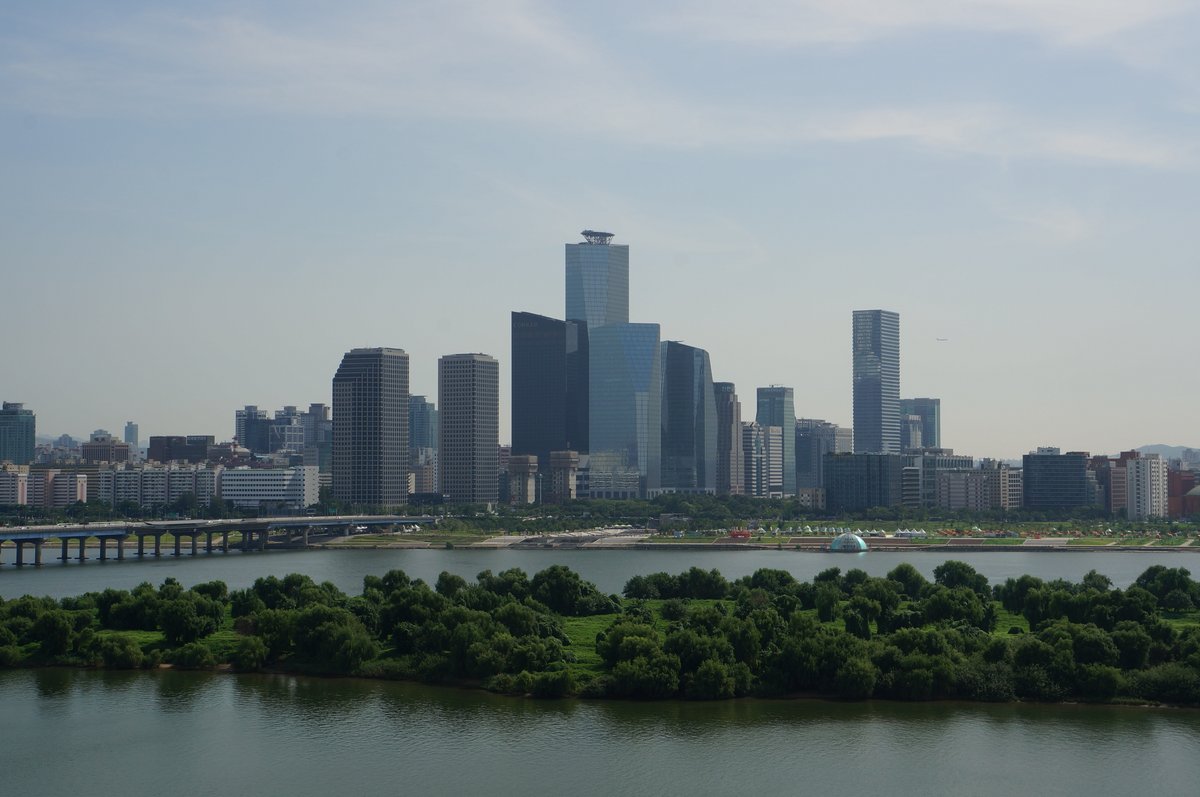
The LG Twin Towers, located in Seoul’s dynamic Yeouido financial district, are more than just the headquarters of LG Corporation; they are a powerful symbol of South Korea’s economic ascent and modern architectural innovation. Since their completion in 1987, the towers have embodied LG’s corporate vision and Korea’s rapid modernization. Following a major renovation in 2024, their lower levels offer vibrant, reimagined public spaces—cafes, lounges, exhibition areas, and green plazas—blending state-of-the-art design with echoes of Korean heritage. This guide provides a comprehensive overview of the LG Twin Towers’ history, architecture, visiting information, nearby attractions, and practical travel tips, ensuring you make the most of your visit to Yeouido and Seoul’s business heart (Korea JoongAng Daily; Korea Herald; SOM Project Overview).
Photo Gallery
Explore Lg Twin Towers in Pictures
Table of Contents
- Introduction
- Historical Background & Architectural Significance
- Visiting Information
- Nearby Yeouido Attractions
- Architecture & Design
- Cultural & Social Role
- Economic & Urban Impact
- Visitor Tips & FAQs
- Conclusion
- Sources & Further Reading
1. Historical Background & Architectural Significance
Origins & Corporate Context
The LG Twin Towers represent the headquarters of LG Corporation, one of South Korea's most influential conglomerates. LG, founded as Lucky-Goldstar in 1947 by Koo In-hwoi, has expanded globally across electronics, chemicals, telecommunications, and more (Wikipedia: LG). The decision to establish the Twin Towers in Yeouido—the nation’s financial nucleus—underscored LG’s ambitions and the broader narrative of South Korea’s economic development.
Construction & Early Years
Completed in 1987, the towers marked a pivotal moment in Seoul’s transformation, rising during the “Miracle on the Han River” economic boom. Their mirrored facades and twin structure quickly became landmarks, not only for LG’s corporate identity but also for the evolving skyline of Yeouido and Seoul (Korea JoongAng Daily).
Renovation & Modernization
The 2023–2024 renovation, directed by original architects Skidmore, Owings & Merrill (SOM), focused on revitalizing the lower floors, lobby, and communal areas—an overhaul for the first time in 37 years. The update introduced biophilic design, sustainable materials, and contemporary amenities, positioning the towers as a model for modern corporate environments and urban integration (SOM Project Overview).
2. Visiting Information
Public Access & Visiting Hours
- Public Areas: Renovated lower floors (including the lobby, cafes, and lounges) are open to the public.
- Hours: Monday to Friday, 9:00 AM to 6:00 PM. Closed on weekends and public holidays.
- Entry: No ticket or admission fee is required for public areas. Office floors are restricted to employees and authorized visitors.
Facilities & Accessibility
- “Connectwin” Area: Multifunctional communal space featuring open lounges, meeting rooms, and cafes.
- Dining: Multiple cafes and casual dining options.
- Restrooms: Accessible and well-maintained.
- Accessibility: Ramps, elevators, and clear signage ensure full access for visitors with mobility needs.
- Security: Bag checks and ID verification may be required for areas beyond the lobby.
3. Nearby Yeouido Attractions
Yeouido, often called the "Manhattan of Seoul," is a business and cultural hub with many attractions:
- Yeouido Hangang Park: Riverside park with bike/walking paths, picnic areas, and seasonal festivals.
- LG Arts Center: Performance and exhibition venue (Visit Korea: LG Arts Center).
- 63 Building: Observation deck, aquarium, art gallery, and restaurants.
- IFC Mall: Shopping, dining, and cinema.
- National Assembly Building: South Korea’s legislature, open for tours.
- Saetgang Ecological Park: Urban wetland with walking trails and birdwatching.
- Eland Hangang River Cruise: Various themed cruises from Yeouido Dock (klook.com).
4. Architecture & Design
Structure & Symbolism
- Height: Each tower is 128 meters, 31 floors tall.
- Design: Glass and steel facades maximize light and signify transparency and innovation.
- Connecting Podium: Central podium for shared amenities.
- Symbolism: Twin towers symbolize partnership and corporate harmony, reinforcing Yeouido’s status as a financial and business center.
Sustainability & Innovation
- Biophilic Design: Sunken gardens, cascading greenery, and ultra-transparent glass for daylight and visual connection to nature.
- Traditional Korean Motifs: Latticework, patterned facades, and moon-chang-sal (traditional ornamentation) blend heritage with modernity.
- Smart Office Features: Energy-efficient systems, digital connectivity, and sustainable materials align with LG’s environmental goals (SOM Project Overview).
5. Cultural & Social Role
The LG Twin Towers serve as both a corporate headquarters and a communal space. Occasional exhibitions, public events, and art installations in the lower levels foster engagement with the local community. LG’s participatory approach to employee well-being, including new wellness facilities and relaxation zones, reflects changing workplace culture in Korea (Korea Herald).
6. Economic & Urban Impact
- Employment Hub: Home to about 6,500 employees, the towers are central to Yeouido’s business ecosystem (Korea Herald).
- Business Magnet: Attracts ancillary services and stimulates the local economy.
- Urban Development: The towers’ presence, alongside other major buildings, has shaped Yeouido into a premier financial and business district.
- Innovation Network: Linked to LG’s broader R&D initiatives, including LG Science Park (LG Science Park).
7. Visitor Tips & FAQs
Tips
- Best Time: Visit on weekdays during business hours for the full experience.
- Photography: The towers, plaza, and lobby offer excellent photo opportunities.
- Transport: Use Yeouido Station (Lines 5, 9), city buses, or taxis for easy access.
- Combine Your Visit: Explore nearby parks, shopping, and cultural sites for a full day itinerary.
- Language: Signage is bilingual (Korean/English); staff have basic English proficiency.
- Wi-Fi: Available in most cafes.
Frequently Asked Questions
Are tickets required to visit the LG Twin Towers?
No, public areas such as the lobby and cafes are free to enter.
Are guided tours available?
Occasionally, during special events. Check the official LG website or visitor center in advance.
Is there an observation deck?
No, the towers do not have a public observation deck.
Is the area wheelchair accessible?
Yes, with ramps, elevators, and accessible restrooms.
Can I visit on weekends?
Public areas are typically closed on weekends and holidays.
Listen to the full story in the app
Your Personal Curator, in Your Pocket.
Audio guides for 1,100+ cities across 96 countries. History, stories, and local insight — offline ready.
Audiala App
Available on iOS & Android
Join 50k+ Curators
Sources
- verified
- verified
- verified
- verified
- verified
Last reviewed: