Introduction
The Guard of Seoul Government Complex is a remarkable site where South Korea’s contemporary governance seamlessly fuses with its rich historical legacy. Located in Jongno District, at the heart of the capital, the complex stands as a testament to Korea’s journey from the Joseon Dynasty through modern democracy. Visitors can not only explore impressive architecture but also experience ceremonial guard events that vividly bring history to life. This detailed guide provides up-to-date information on visiting hours, ticketing, travel tips, ceremony highlights, and nearby attractions, ensuring an immersive and well-informed visit (Government Complex Seoul Wikipedia).
Historical Background and Development
Origins & Evolution
The Seoul Government Complex was established in the post-Korean War era as a centralized administrative hub, strategically located in Jongno-gu—an area synonymous with power since the Joseon Dynasty. The site’s significance is amplified by its proximity to Gwanghwamun Square and key historical landmarks (Namu Wiki). Initially known as the Central Government Complex, its design and function have continually adapted to Korea’s evolving political landscape.
Architectural Significance
The complex replaced the Japanese colonial Government-General Building after its demolition in 1996, symbolizing a reclaiming of Korean sovereignty. The current architecture is a blend of robust modernism with subtle traditional motifs:
- Main Building: 19 stories, 70,473㎡ floor area; Korea’s largest single building at completion.
- Annex: Added between 1998–2002, includes international conference facilities.
- Foundation: Advanced caisson method ensures stability.
- Public Spaces: The Open Communication Forum fosters civic engagement and transparency.
The juxtaposition of the modern complex with nearby Gyeongbokgung Palace embodies the nation’s journey from royal tradition to democratic governance (Government Complex Seoul Wikipedia).
Symbolic and Administrative Importance
The complex houses key ministries such as the Ministry of Unification and is the headquarters for Seoul’s metropolitan government. Its design and location reinforce themes of national continuity, transparency, and civic participation. The area remains central to both administrative functions and major civic gatherings, underscoring its ongoing relevance (Seoul Metropolitan Government Cultural Events).
The Guard Ceremony at Seoul Government Complex
History & Cultural Symbolism
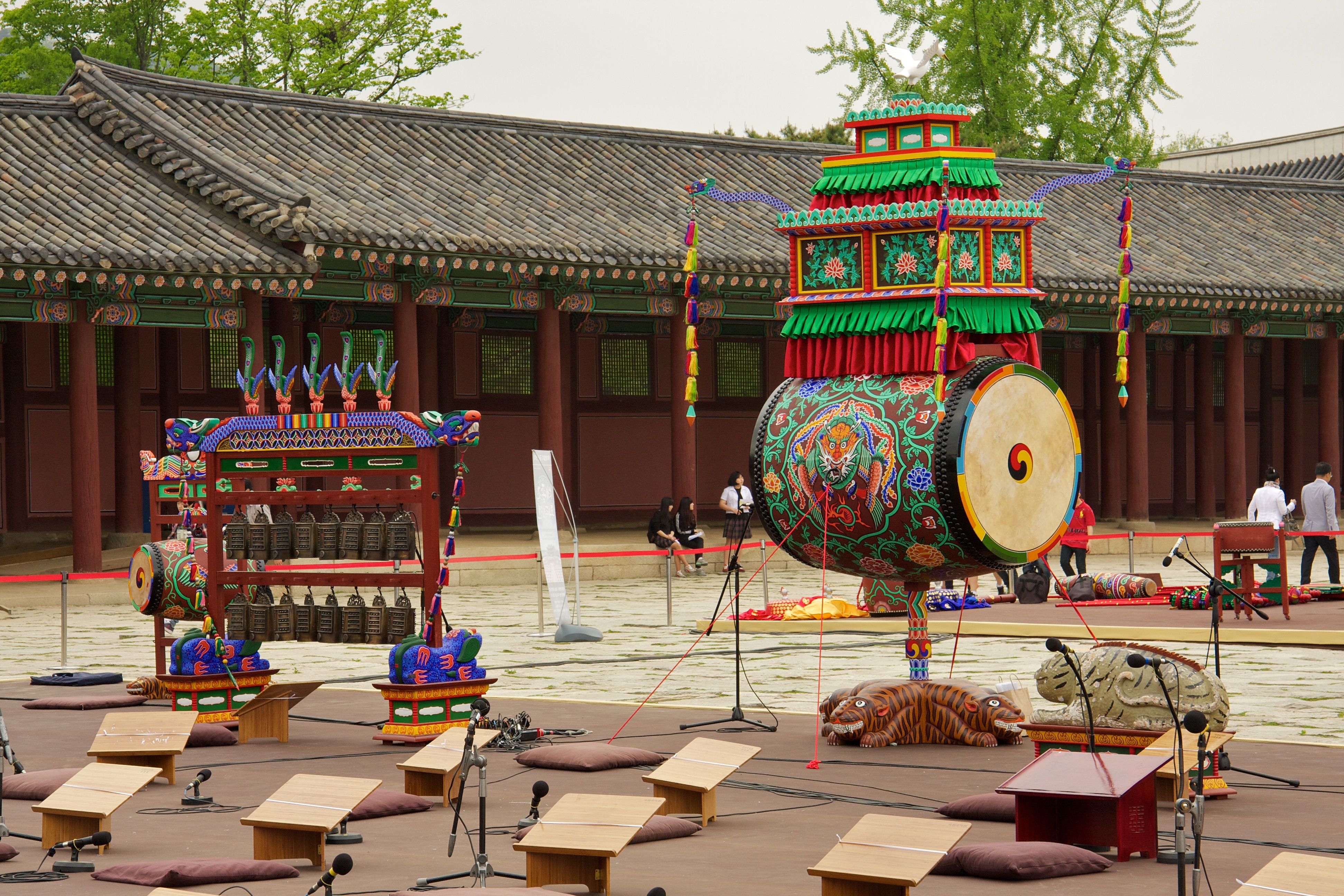
The guard ceremony is a vivid reenactment of traditions dating to the Joseon Dynasty, where guards (Sumunjang) protected palaces and government buildings. Their uniforms, music, and martial displays honor Confucian ideals of order and respect, serving as a living bridge between past and present (openkorea.org). The event highlights national pride and the enduring importance of ritual in Korean culture.
Ceremony Details
- Location: Main entrance, Seoul Government Complex, Sejong-daero (adjacent to Gwanghwamun Square).
- Typical Times: 10:00 AM & 2:00 PM (varies with season and holidays—check official calendar).
- Duration: 20–30 minutes.
- Admission: Free (no tickets required).
- What to Expect:
- Procession of guards in historical attire, led by the Sumunjang.
- Traditional instruments (taepyeongso, janggu) accompany the march.
- Inspection, changing of the guard, martial demonstrations.
- Photo opportunities with guards after the ceremony (chloestravelogue.com).
Uniforms & Regalia
- Colors: Red, blue, yellow—denote rank and role.
- Headgear: Horsehair-topped hats.
- Weapons: Spears, swords, bows.
- Flags/Banners: Indicate guard units and functions.
Visitor Tips
- Arrive Early: Secure your spot 15 minutes ahead, especially on weekends.
- Photography: Permitted; best lighting in morning or late afternoon.
- Accessibility: Wheelchair accessible; visitor desks nearby.
- Amenities: Restrooms, cafés, and information centers available close to the complex.
- Hanbok Rental: Enhance your experience and receive discounts/free admission to some attractions (iwanderlista.com).
- Guided Tours: Book in advance via the official website or visitor center (chargetheglobe.com).
Gyeongbokgung Palace Guard Ceremony
Historical Context
The Changing of the Royal Guard at Gyeongbokgung Palace is Korea’s most iconic ceremonial event, rooted in 15th-century royal protocol. After being discontinued, it was revived in 1996 to preserve this aspect of intangible heritage (Trippose).
Visiting Hours & Tickets
- Ceremony: 10:00 AM & 2:00 PM daily (except Tuesdays; verify current schedule).
- Palace Hours: 9:00 AM–6:30 PM (summer), shorter in winter.
- Tickets:
- Palace entry: 3,000 won (adults), 1,500 won (ages 7–18), free for children under 7/seniors over 64.
- Hanbok wearers: Free entry.
- Combo ticket (multiple palaces): 10,000 won, valid for three months.
- Guard Ceremony Viewing: Free, no ticket required (KoreaToDo).
Ceremony Experience
- Visuals: Guards in colorful attire, flags, drums and horns.
- Sequence: Outgoing and incoming guards exchange positions and passwords; ritualized salutes.
- Accessibility: Public plaza viewing, wheelchair access.
- Tours: Free guided tours available in multiple languages (Visit Seoul).
Practical Tips
- Arrive Early: 15–20 minutes before ceremony.
- Photography: Encouraged, but avoid flash and blocking others’ views.
- Hanbok Rental: Many nearby shops; hanbok grants free palace admission.
- Facilities: Restrooms, info centers, souvenir shops near entrance.
- Transport:
- Gyeongbokgung Station (Line 3, Exit 5)
- Gwanghwamun Station (Line 5, Exit 2)
Cultural Insights
The ceremony, steeped in symbolism, offers educational value and a spectacular introduction to Korea’s royal heritage. Uniforms, banners, and music all communicate the order and authority of the Joseon court (Korean Heritage).
Visitor Information
Visiting Hours & Entry
- Government Complex: Monday–Friday, 9:00 AM–6:00 PM; closed weekends/public holidays.
- Guard Ceremonies: Typically 10:00 AM & 2:00 PM on select days.
- Tickets: Free for public areas and ceremonies; book tours in advance for guided experiences.
Accessibility
- Full wheelchair access, ramps, elevators, accessible restrooms and parking.
Transportation
- Subway:
- Gyeongbokgung Station (Line 3)
- Gwanghwamun Station (Line 5)
- Bus: Multiple routes serve Gwanghwamun Square area.
- By Car: Limited parking; public transport recommended.
Nearby Attractions
- Gyeongbokgung Palace: Main royal palace of the Joseon Dynasty.
- Gwanghwamun Square: Statues, events, public plaza.
- Museums: National Museum of Korean Contemporary History, Seoul Museum of Art.
- Cultural Districts: Bukchon Hanok Village, Insadong.
FAQs
Q: What are the visiting hours for the Seoul Government Complex and Guard Ceremony?
A: The complex is open weekdays 9:00 AM–6:00 PM. Guard ceremonies are usually at 10:00 AM and 2:00 PM on select dates.
Q: Is there an admission fee?
A: No, entry to public areas and ceremonies is free.
Q: Are guided tours available?
A: Yes, book in advance via official channels.
Q: Is the venue accessible for visitors with disabilities?
A: Yes, comprehensive accessibility features are provided.
Q: What is the best way to get there?
A: Subway (Gwanghwamun Station, Line 5; Gyeongbokgung Station, Line 3) or city bus.
Q: Can I take photos during the ceremonies?
A: Yes, but respect restrictions and other visitors.
Listen to the full story in the app
Your Personal Curator, in Your Pocket.
Audio guides for 1,100+ cities across 96 countries. History, stories, and local insight — offline ready.
Audiala App
Available on iOS & Android
Join 50k+ Curators
Sources
- verified
- verified
- verified
- verified
- verified
Last reviewed: