Introduction
Gimpo International Airport (IATA: GMP), located just 15 kilometers west of central Seoul, serves as a crucial aviation hub in South Korea. With a history spanning from its origins as a military base during the Japanese colonial era to becoming Seoul’s main airport before the opening of Incheon International Airport, Gimpo remains a vital connector for domestic flights and short-haul international routes to key Asian cities. Its strategic location, efficient transport links, and ongoing modernization efforts, such as the Gimpo Airport Innovation District, make it indispensable for both business and leisure travelers (seoulgimpoairport.com; Wikipedia; agoda.com; KDevelopedia).
This comprehensive guide details Gimpo International Airport’s history, terminal layouts, visiting hours, ticketing information, accessibility, nearby attractions, and key travel tips to help you navigate one of Seoul’s busiest airports with ease.
Early Origins and Japanese Colonial Era (1935–1945)
Gimpo’s story began in 1935 when the airfield was constructed as a military base for the Imperial Japanese Army. Located on the Han River’s western outskirts, it supplemented the smaller Keijo New Airfield (Yeouido Airport) and was built with the labor of Korean workers (seoulgimpoairport.com). The site was originally called Kimpo Airport, named after the nearby town of Gimpo.
Post-Liberation and Korean War (1945–1953)
After Korea’s liberation in 1945, the U.S. military assumed control of Kimpo Air Base. Its strategic value surged during the Korean War, when it was designated K-14 by the USAF, captured by North Korean forces, and then bombed and recaptured by UN forces (seoulgimpoairport.com). After the war, in 1948, authority was transferred to the Republic of Korea’s Ministry of Transport, paving the way for civilian aviation (centers.ibs.re.kr).
Growth and Modernization (1958–1990s)
By 1958, a presidential decree established Gimpo as Seoul’s international gateway, taking over from Yeouido. New terminals opened in 1971 and 1977 to accommodate growing air traffic. The 1980s saw the creation of the International Airport Authority, major expansions, and preparations for the 1988 Seoul Olympics (centers.ibs.re.kr; seoulgimpoairport.com). By the late 1990s, capacity constraints highlighted the need for Incheon International Airport.
Transition and Innovation (2001–Present)
In 2001, Incheon Airport became the main international gateway, while Gimpo began focusing on domestic routes and short-haul international flights to cities like Tokyo, Shanghai, and Beijing (agoda.com). Despite this shift, Gimpo’s proximity to Seoul and streamlined services ensure it remains a preferred choice for many travelers.
Visiting Hours and Ticket Information
- Airport Operating Hours: 24 hours a day.
- Passenger Facilities: Usually open from 5:00 AM to 10:00 PM; check with your airline for specific check-in and boarding times.
- Ticket Purchase: Tickets for domestic and international flights can be booked via airline websites, travel agencies, or at airport counters. Early booking is recommended during peak seasons.
- Shuttle Service: Free shuttle bus connects the domestic and international terminals every five minutes (Cestee).
Terminal Layout, Transfers, and Facilities
Transfer Procedures
- Domestic ↔ International: Use the free shuttle; allow 60–90 minutes for transfers.
- International ↔ International: Dedicated security checkpoint; about 30 minutes transfer time.
- Domestic ↔ Domestic: Direct access between gates.
Facilities
- Shopping & Dining: Duty-free, specialty stores, restaurants, cafes, and connected Lotte Mall.
- Lounges: Available for both domestic and international passengers.
- Observation Deck: Offers runway views and aviation exhibits (Korea Trip Guide).
- Luggage Services: Storage and porter services available.
- Wi-Fi & SIM Cards: Free Wi-Fi throughout; SIM cards and Wi-Fi rentals at arrivals.
Transportation and Accessibility
- Subway: Direct access via Lines 5, 9, AREX, Gimpo Goldline, and Seohae Line (Wikipedia; Creatrip).
- Buses: Multiple city and airport limousine routes.
- Taxis: Available at both terminals; rides to central Seoul cost around 20,000–28,000 KRW.
- Parking: Ample short- and long-term parking adjacent to terminals.
Accessibility Features:
- Ramps, elevators, accessible restrooms, and assistance for passengers with disabilities. Request additional support through airlines in advance.
Nearby Attractions and Amenities
- Onsite:
- Sky Park: Green space for relaxation.
- Lotte Mall: Shopping, cinema, restaurants, and hotel.
- Close to Seoul’s Main Sights:
- Gyeongbokgung Palace: Iconic royal residence (see next section for details).
- Bukchon Hanok Village: Traditional Korean homes.
- Insadong: Art galleries and tea houses.
- National Museum of Korea: Korean cultural artifacts.
Public transport makes these attractions easily accessible for visitors with layovers or free time (Tourist Places Guide).
Economic Impact and Future Development
Gimpo Airport supports thousands of jobs in airlines, retail, hospitality, and logistics. The Gimpo Airport Innovation District, a USD 2.2 billion project, is set to transform the airport by 2033, integrating Urban Air Mobility (UAM), S-BRT, and advanced digital and sustainability technologies (World Seoul). This will create over 30,000 jobs and generate an estimated USD 3 billion in economic benefits, positioning Gimpo as a high-tech hub comparable to Haneda or Changi airports (Seoul Metropolitan Government).
Gimpo also complements Incheon Airport by focusing on domestic and short-haul international routes, reducing congestion and supporting resilience in Korea’s aviation network (KDevelopedia).
Frequently Asked Questions (FAQ)
Q: What are Gimpo International Airport’s visiting hours?
A: The airport operates 24/7, but most passenger services are available from 5:00 AM to 10:00 PM.
Q: How do I buy tickets for flights?
A: Purchase online via airlines or travel agencies, or at the airport ticket counters.
Q: How do I get from Gimpo Airport to central Seoul?
A: Use subway Lines 5, 9, AREX, city/airport buses, or taxis.
Q: Are there accessibility features for travelers with disabilities?
A: Yes, including ramps, elevators, accessible restrooms, and assistance services.
Q: What attractions are near Gimpo Airport?
A: Gyeongbokgung Palace, Bukchon Hanok Village, Insadong, and the National Museum of Korea are easily accessible.
Q: Is there a fee for the shuttle bus between terminals?
A: No, the shuttle is free and operates every five minutes.
Q: Is free Wi-Fi available?
A: Yes, throughout both terminals.
Gyeongbokgung Palace: Seoul’s Iconic Historical Site
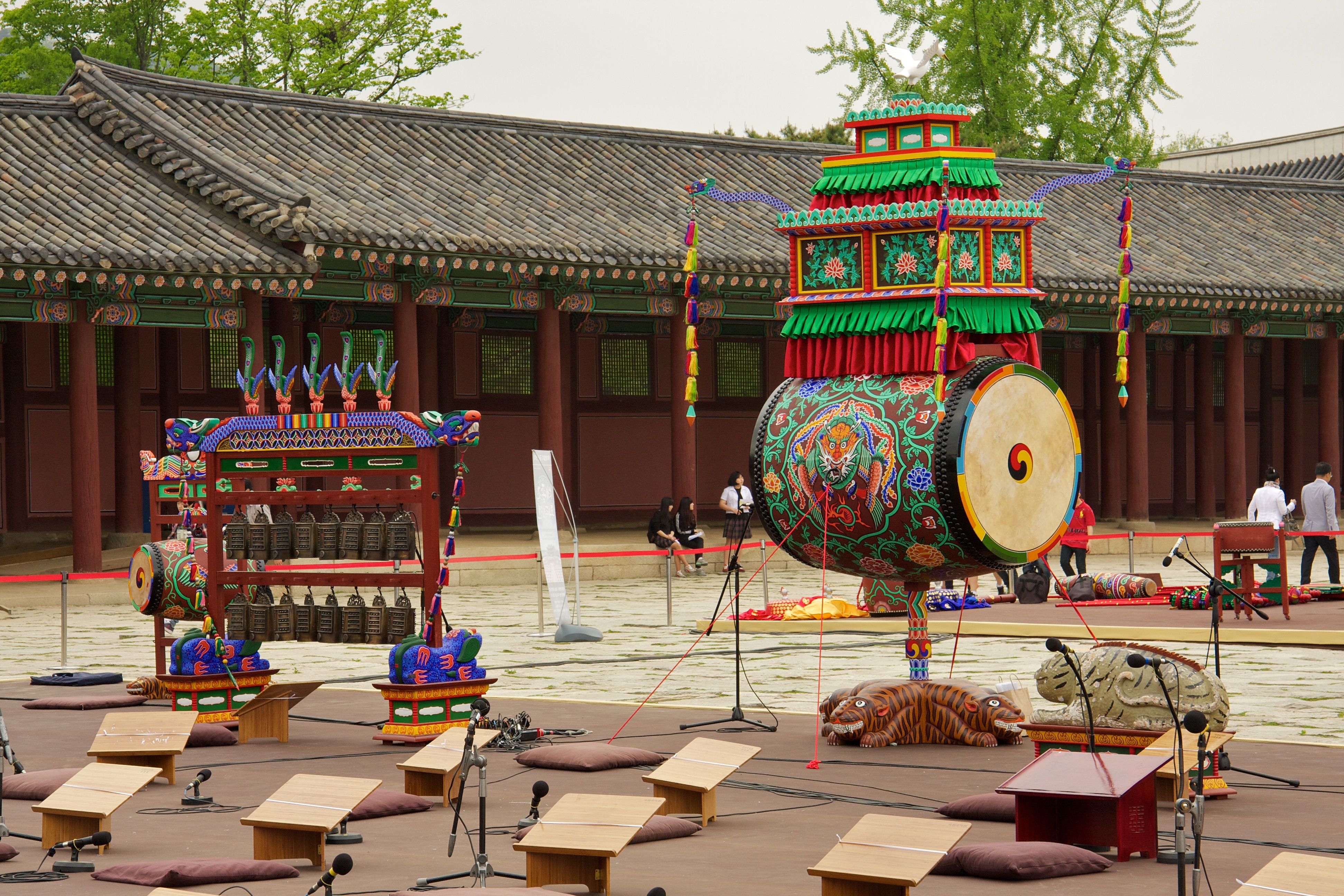
Gyeongbokgung Palace is a must-visit for those interested in Korean history and culture. Built in 1395, this "Northern Palace" was the main royal residence during the Joseon Dynasty.
Visiting Information:
- Hours:
- March–October: 9:00 AM–6:00 PM (last admission 5:00 PM)
- November–February: 9:00 AM–5:00 PM (last admission 4:00 PM)
- Closed Tuesdays
- Tickets: KRW 3,000 (discounts for children, seniors, groups; free for Korean citizens on certain holidays)
Purchase online at the official site or at the entrance.
Getting There:
- Subway: Line 3 to Gyeongbokgung Station, Exit 5.
- Bus: Multiple routes serve the area.
- Taxi: Direct drop-off at the entrance.
Accessibility:
Wheelchair ramps, accessible restrooms, multilingual signage, and audio guides available.
Notable Features:
- Geunjeongjeon Hall (throne hall)
- Gyeonghoeru Pavilion (banquet pavilion)
- National Folk Museum of Korea (on palace grounds)
Nearby:
- Bukchon Hanok Village
- Insadong
Tips:
- Arrive early for fewer crowds.
- Wear a hanbok for free admission and immersive experience.
- Guided tours in English available.
FAQs:
- Photography allowed (no flash/tripods in some areas)
- Occasional night tours—check official website
- No food inside palace grounds
- English tours available
For more, see the Korea Tourism Organization website.
Summary and Travel Tips
Gimpo International Airport exemplifies South Korea’s aviation evolution—transitioning from a military airfield to a primary international hub, and now a modern regional and domestic gateway. Its strategic location, efficient terminal design, and comprehensive facilities make it an ideal choice for travelers. The upcoming Innovation District will further enhance Gimpo’s role as a future-oriented mobility and economic center (World Seoul; agoda.com).
Travel Tips:
- Arrive 2 hours before international, 90 minutes before domestic flights.
- Use public transport for convenience and cost savings.
- Download the Audiala app for real-time updates and travel planning.
- Explore nearby historical sites for a richer Seoul experience.
Listen to the full story in the app
Your Personal Curator, in Your Pocket.
Audio guides for 1,100+ cities across 96 countries. History, stories, and local insight — offline ready.
Audiala App
Available on iOS & Android
Join 50k+ Curators
Sources
- verified
- verified
- verified
- verified
- verified
- verified
- verified
- verified
- verified
Last reviewed: