Introduction: Geunjeongjeon and Its Legacy
Geunjeongjeon (근정전), the Main Throne Hall of Gyeongbokgung Palace, is not just an architectural marvel but a living symbol of Korea’s dynastic history and Confucian governance. Built in 1395 by King Taejo at the dawn of the Joseon Dynasty, this "Hall of Diligent Governance" served as the center of statecraft, royal ceremonies, and diplomatic events for centuries (Wikipedia: Gyeongbokgung; Tripologist).
Elevated on a grand double-tiered stone platform and adorned with intricate carvings and vibrant dancheong paintwork, Geunjeongjeon’s architecture embodies both regal authority and harmony with nature. Despite suffering destruction during invasions and the colonial period, it has been meticulously restored and now stands as a National Treasure, drawing millions of visitors annually and offering a window into Korea’s rich past (Visit Korea; worldxplorr.com).
This comprehensive guide provides essential information on visiting Geunjeongjeon—including hours, tickets, accessibility, and travel tips—while delving into its historical, architectural, and cultural significance. Whether you are a history enthusiast, architecture lover, or cultural explorer, Geunjeongjeon promises an enriching and memorable experience (thesoulofseoul.net; Bring You Info; Shape the Trip).
Origins and Construction
Geunjeongjeon was constructed in 1395, as part of Gyeongbokgung Palace’s original design, symbolizing the authority and legitimacy of the Joseon royal family. The hall’s name, translated as "Hall of Diligent Governance," encapsulates the Confucian ideals that shaped the era’s politics and society (Wikipedia: Gyeongbokgung; Tripologist).
Architectural Features and Symbolism
The hall is raised on an expansive two-level stone platform, featuring detailed carvings of clouds, dragons, and other auspicious motifs. The interior is a showcase of Joseon artistry, with tall wooden columns, an ornately painted ceiling, and a royal throne set before the iconic Irworobongdo folding screen—depicting the sun, moon, and five peaks, symbolic of royal authority (Visit Korea).
Destruction and Restoration
Geunjeongjeon was destroyed during the Imjin War (1592–1598) and later suffered further damage under Japanese colonial rule. The hall was reconstructed in 1867 during a major restoration led by Heungseon Daewongun and has since undergone extensive preservation efforts to maintain its authenticity (Wikipedia: Gyeongbokgung; worldxplorr.com).
Ceremonial Role and Modern Significance
Throughout the Joseon Dynasty, Geunjeongjeon was the stage for coronations, royal weddings, diplomatic ceremonies, and daily assemblies. Its spatial arrangement and architectural grandeur reinforced the Confucian hierarchy and the legitimacy of the monarchy. Today, it is a National Treasure, hosting cultural performances and state events, and serves as a powerful symbol of resilience and national pride (Tripologist; thesoulofseoul.net).
Architectural Layout and Site Planning
Structural Highlights
Geunjeongjeon stands as the focal point of Gyeongbokgung Palace. Elevated on a double-tiered stone foundation, the hall’s design commands attention and underscores its importance (CHA). Visitors enter via a sequence of gates, including Gwanghwamun and Heungnyemun, followed by the Geunjeongmun Gate, leading to the vast ceremonial courtyard.
Symbolic Carvings and Decorations
The stone base features railings and stairways adorned with haetae (mythical beasts) and phoenix motifs, signifying protection and royal auspiciousness. Inside, the vibrant dancheong paints and ceiling dragons represent royal power and cosmic unity.
Gates and Site Orientation
Access to Geunjeongjeon is strictly controlled by ceremonial gates, including Ilhwamun and Wolhwamun, reflecting palace hierarchy. The hall is oriented south toward Bugaksan Mountain, following geomantic principles believed to bring harmony and prosperity (CHA).
Restoration Efforts
After centuries of turmoil, Geunjeongjeon was restored to its late 19th-century appearance in the 1990s and is now protected as National Treasure No. 223 (Wikipedia).
Visitor Information
Visiting Hours and Ticketing
- March–May & September–October: 09:00–18:00
- June–August: 09:00–18:30
- November–February: 09:00–17:00
- Closed: Tuesdays
- Last admission: One hour before closing
Admission Fees:
- Adults (19–64): 3,000 KRW
- Youth (7–18): 1,500 KRW
- Children under 6 and seniors over 65: Free
- Hanbok wearers (traditional Korean attire): Free entry
Tickets can be purchased onsite or online through the official palace website. Combination tickets covering multiple palaces are also available (Bring You Info).
Accessibility and Facilities
- Most paths are wheelchair accessible, with ramps and assistance available.
- Modern restrooms, water fountains, and shaded benches are distributed throughout the palace.
- Souvenir shops offer palace-themed gifts; vending machines and cafes are nearby.
Guided Tours and Language Support
- Free English guided tours depart several times daily from Heungnyemun Gate Information Center, covering Geunjeongjeon and other highlights. No reservations needed for groups under 10; larger groups should book in advance (Shape the Trip).
- Audio guides and multilingual signage are available.
Dress Code and Hanbok Experience
No formal dress code exists, but comfortable shoes are recommended for the stone courtyards. Many visitors rent hanbok nearby, which grants free entry and enhances the cultural immersion (Bring You Info; Seoul Searching).
Travel Tips and Best Times
- Early mornings and late afternoons offer the best lighting and fewer crowds.
- Spring (cherry blossoms) and autumn (vivid foliage) are particularly scenic.
- Avoid weekends and holidays if possible for a quieter experience (Shape the Trip).
Photography and Conduct
Photography is permitted, including inside Geunjeongjeon. Use of tripods or drones may require advance permission. Respect the site by not touching artifacts, climbing structures, or causing disturbances, especially during ceremonies (Gabriel Paladino).
Key Events and Experiences
- Changing of the Royal Guard Ceremony: Multiple times daily at Gwanghwamun Gate (except Tuesdays)
- Night Tours: Seasonal, with advance booking required
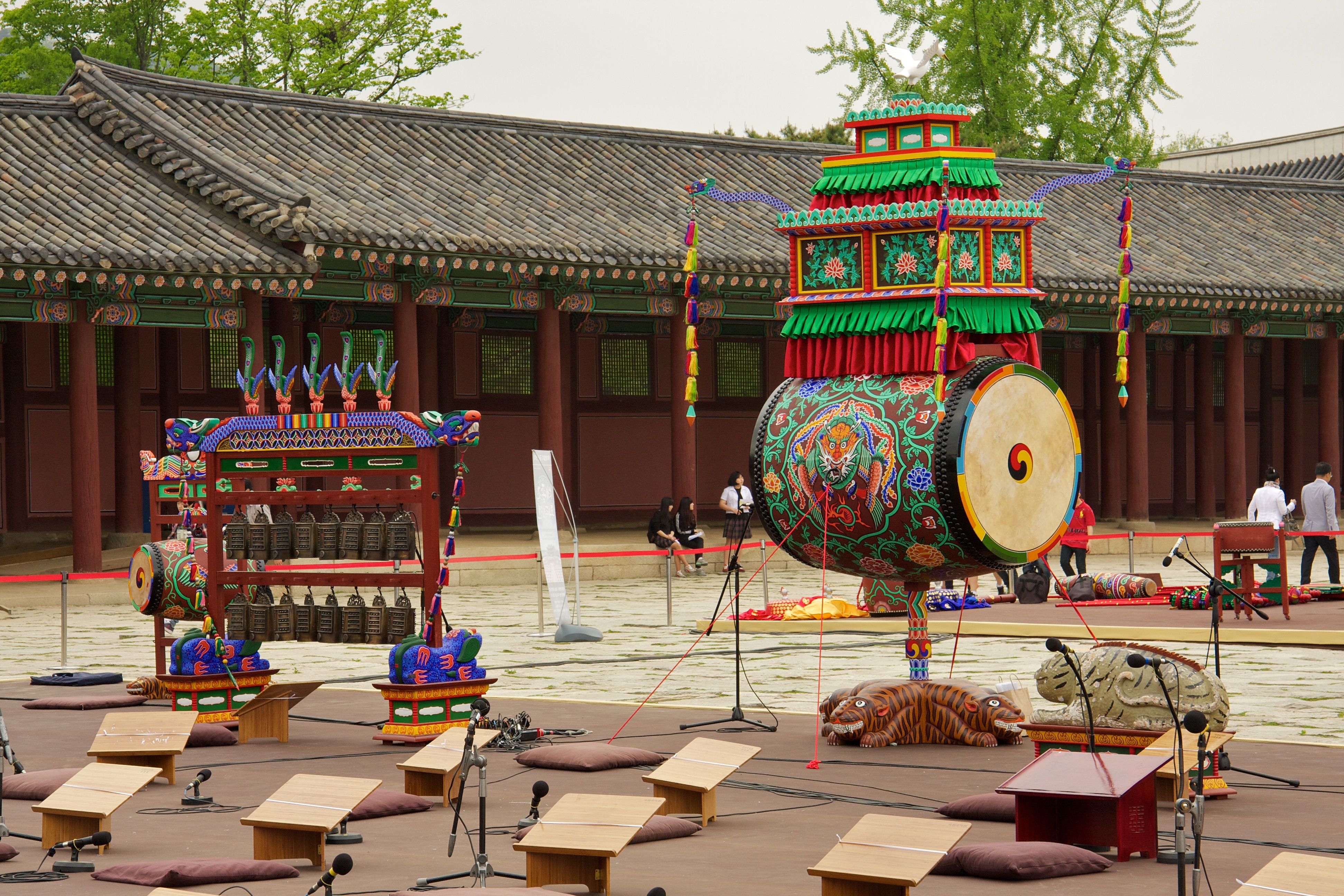
- Cultural Performances: Traditional music, dance, and tea ceremonies enliven the grounds (thesoulofseoul.net)
Check the official events calendar for updates.
Location and Access
Geunjeongjeon is located within Gyeongbokgung Palace at 161, Sajik-ro, Jongno-gu, Seoul. The palace is easily reached by Seoul Metro Line 3 (Gyeongbokgung Station, Exit 5) or Line 5 (Gwanghwamun Station, Exit 2). Several city buses also serve the area (Bring You Info).
Nearby Attractions
- Bukchon Hanok Village: Historic traditional houses and artisan shops (Hey Roseanne)
- Insadong Street: Galleries, tea houses, and souvenir shops
- Gwanghwamun Square: Statues of King Sejong and Admiral Yi Sun-sin
- National Folk Museum of Korea: Located within the palace grounds
Safety, Etiquette, and Practical Tips
- Stay on marked paths and supervise children near ponds and steps.
- Dispose of litter responsibly and keep noise to a minimum.
- Lost and found and security are located at the main entrance.
- Allocate at least 1.5–2 hours for your visit to explore Geunjeongjeon and its surroundings (Prepare Travel Plans).
Frequently Asked Questions (FAQ)
Q: What are Geunjeongjeon’s visiting hours?
A: Typically 09:00–18:00 (seasonal variations apply); closed on Tuesdays.
Q: How do I purchase tickets?
A: Buy at the palace entrance or online via the official website.
Q: Is Geunjeongjeon wheelchair accessible?
A: Yes, most main paths are accessible; some historic areas have steps.
Q: Are guided tours available?
A: Yes, free English tours run several times daily; audio guides available.
Q: Can I enter for free wearing hanbok?
A: Yes, visitors in traditional Korean attire enjoy free entry.
Q: When is the Changing of the Guard ceremony?
A: Multiple times daily at Gwanghwamun Gate (except Tuesdays).
Listen to the full story in the app
Your Personal Curator, in Your Pocket.
Audio guides for 1,100+ cities across 96 countries. History, stories, and local insight — offline ready.
Audiala App
Available on iOS & Android
Join 50k+ Curators
Sources
- verified
- verified
- verified
- verified
- verified
- verified
- verified
- verified
- verified
- verified
Last reviewed: