Type 2+ letters to search all countries, cities, and places
/Ctrl KEsc
travel_explore
Type 2+ letters to search all countries, cities, and places
Press Enter to open the top result
Digital Media City Station
Seoul·South Korea·37° N · 126° E·
Verified Apr 2026
Seoul's sleekest tech district sits atop Nanjido, a 98-meter garbage mountain that once held 92 million m³ of waste. Free galleries, direct airport rail.
Beneath the glass towers of Seoul's Digital Media City Station, the ground holds a confession: until 1993, this was a garbage mountain taller than a twenty-story building. Three rail lines now converge at this South Korean transit hub in the Sangam-dong district, serving a tech corridor built on 92 million cubic meters of buried waste — roughly enough trash to fill 37,000 Olympic swimming pools. The station is worth the trip not for its platforms but for its premise: a city that turned its most toxic scar into its most forward-looking neighborhood.
Digital Media City Station connects Seoul Metro Line 6, the Gyeongui-Jungang commuter rail, and the AREX Airport Railroad in a single D-shaped complex with nine exits. For travelers arriving at Incheon International Airport, the AREX link makes this one of the first subway stations reachable without a transfer — about 35 minutes from touchdown to platform.
The district surrounding the station houses South Korea's major broadcasters, production studios, and tech firms across 570,000 square meters of developed space, roughly 1.7 times the footprint of London's Canary Wharf. Hongik University Station — the gateway to Seoul's liveliest nightlife and street art district — is just three minutes away on Line 6.
What makes DMC Station unusual among Seoul's 700-plus subway stops is its name. When it was rechristened in 2009, it became the first station in the city's transit system named entirely in a foreign language. A small thing, maybe. But it says everything about what this neighborhood is trying to be.
Researched by the Audiala editorial team from historical records, architectural archives, and local expertise.
What to see
SBS Prism Tower
The headquarters of broadcaster SBS won the Excellence Award at the 2013 Korean Architecture Awards, and you can see why from street level — the box-shaped glass facade refracts sunlight differently depending on where you stand, behaving less like a building and more like a gemstone the size of a city block. The ground-floor lobby is open to the public and houses works by French artist François Morellet, American sculptor Roni Horn, and Korean artist Jeong-wan Bae. Visit on a Tuesday and you might catch fans queuing outside for the live taping of K-pop show MTV The Show, which films in the upper studios. Exit 2 puts you within walking distance.
World Cup Park and the Nanjido Mounds
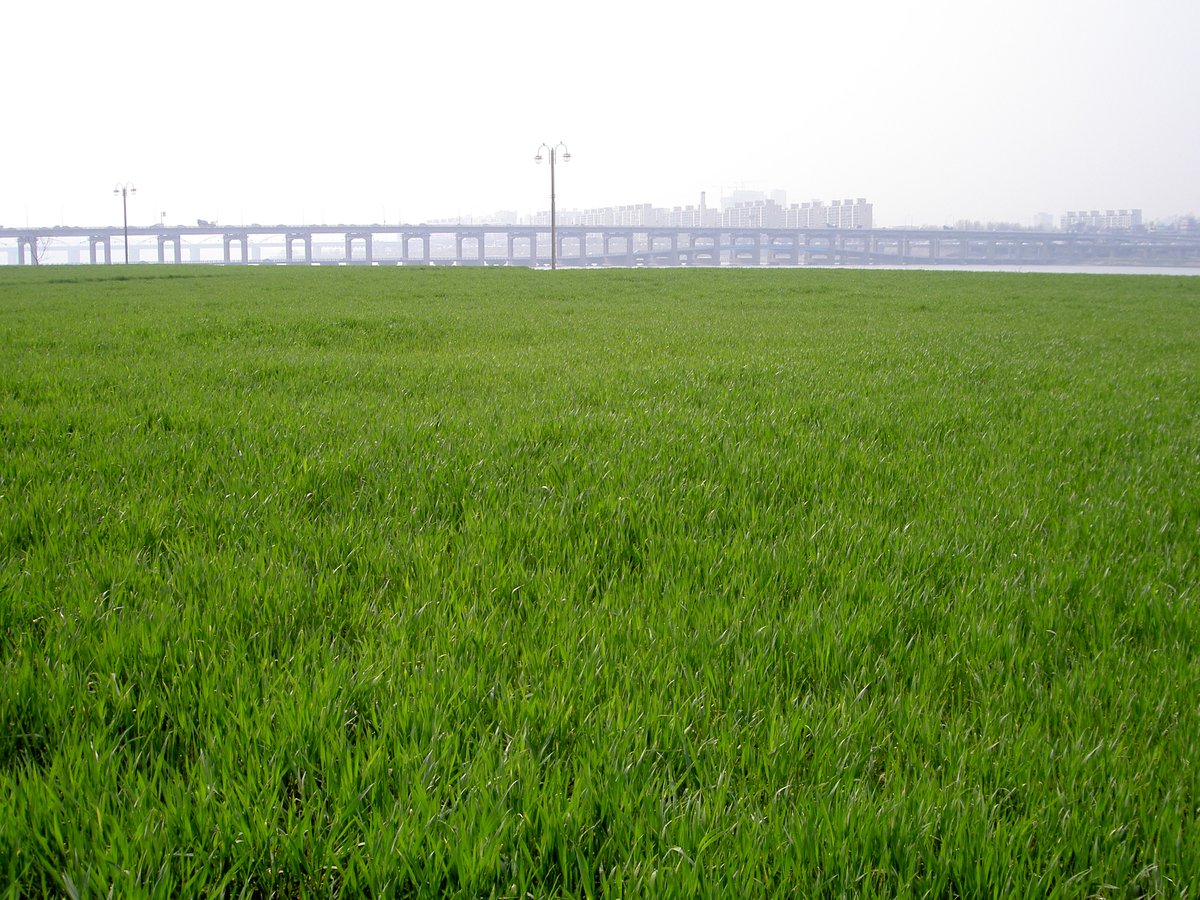
Five ecological parks now sit on the former landfill mounds, connected by walking trails that wind up stabilized slopes where 98-meter mountains of garbage once festered. The transformation is so complete that most visitors have no idea they're hiking over compressed waste. Noeul Park, the westernmost mound, offers some of the best sunset views in Seoul, looking out over the Han River toward Yeouido's skyline. Haneul Park — meaning "sky" — tops the highest point with a field of silver grass that catches autumn light in a way that has made it one of the most photographed spots on the city's north side. Free entry, accessible from Exit 1, about a fifteen-minute walk northwest.
Three Lines, Nine Exits, One Transfer Trick
DMC Station is one of the few points in Seoul where the municipal subway, a commuter rail line, and the airport express intersect — making it a practical base for day trips in either direction. Heading to Gongdeok Station takes four minutes on the AREX. Reaching Hongdae's bars and galleries takes three on Line 6. And if you're catching a flight, the non-express AREX runs directly to Incheon Airport in about 35 minutes. Veteran commuters know the transfer trick: board AREX car 2 or 3 if heading toward Seoul Station, or car 6 toward Incheon, to land closest to the escalator connecting to Line 6. Saves about two minutes in the transfer corridors — small mercy on a rainy Monday.
Plan your visit
Getting There
Three rail lines converge here: Seoul Metro Line 6, the Gyeongui-Jungang commuter line, and the AREX Airport Railroad — which gets you from Incheon Airport in about 35 minutes on the all-stop service. Hongik University (Hongdae) station is just 3 minutes away on Line 6, making a combined visit effortless. From Gongdeok Station, take the AREX one stop west. Exit 2 is your best bet for reaching the DMC district on foot.
Opening Hours
As of 2026, the station operates with Seoul Metro's standard hours: first trains around 5:30 AM, last trains near midnight. The DMC district itself is open around the clock — it's a working neighborhood, not a gated attraction. Individual venues like the SBS Prism Tower lobby and DMC Gallery keep their own schedules, typically 10 AM to 6 PM on weekdays.
Time Needed
A focused walk through the DMC district takes 45 minutes to an hour — enough to absorb the glass-and-steel skyline and peer into the SBS Prism Tower lobby. Architecture and media buffs who want to explore the wider Sangam-dong area, including World Cup Park on the old Nanjido landfill mounds, should budget 2–3 hours. The station itself is a transit hub, not a destination, so plan your time around what surrounds it.
Accessibility
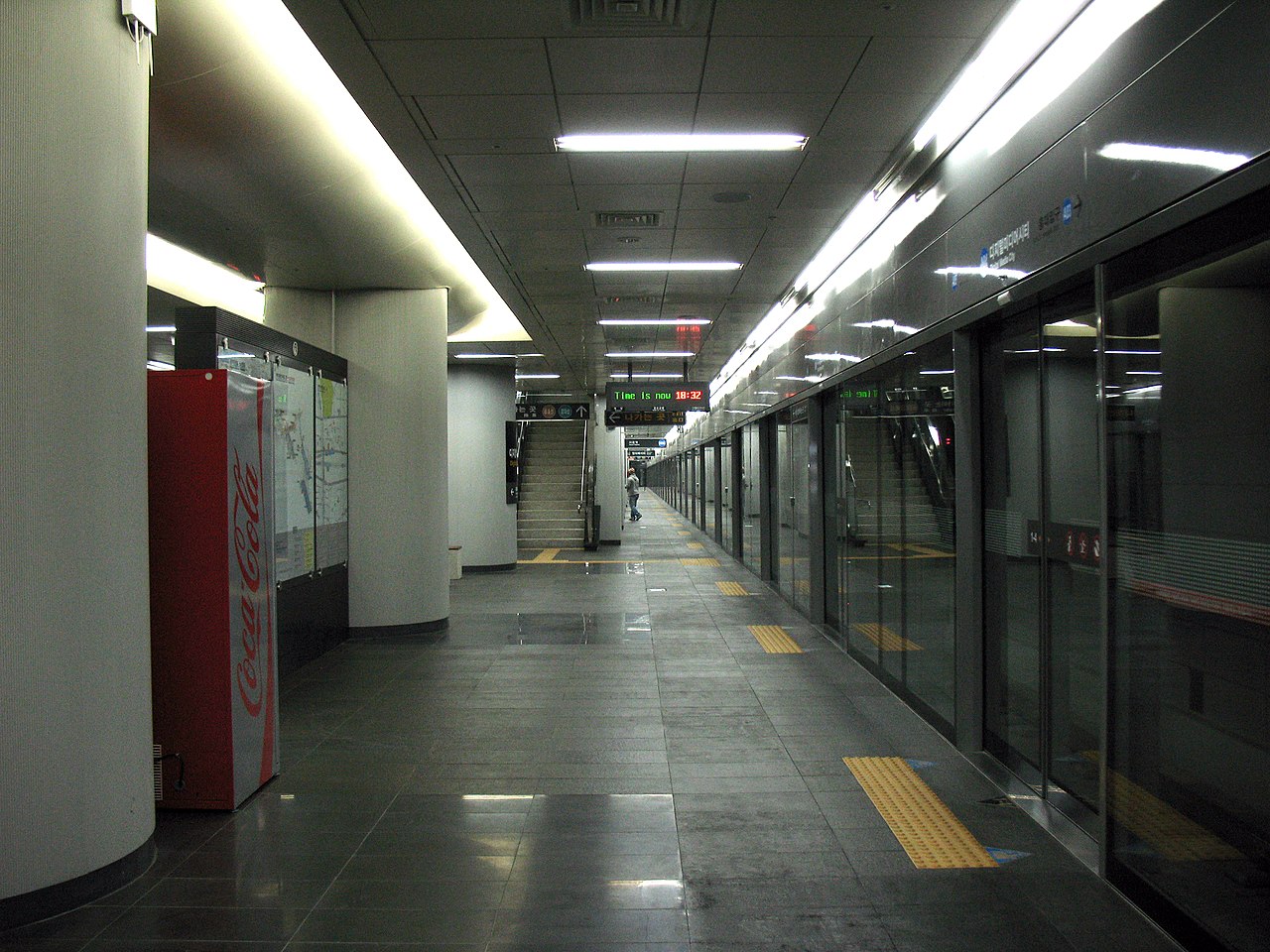
All three station lines have elevators and platform screen doors. Transfer corridors between lines are long — the AREX-to-Line 6 walk takes 5–7 minutes even without mobility constraints, so allow extra time. The DMC district above ground is flat, modern, and built with wide sidewalks, making wheelchair navigation considerably easier than in older Seoul neighborhoods.
Photo Gallery
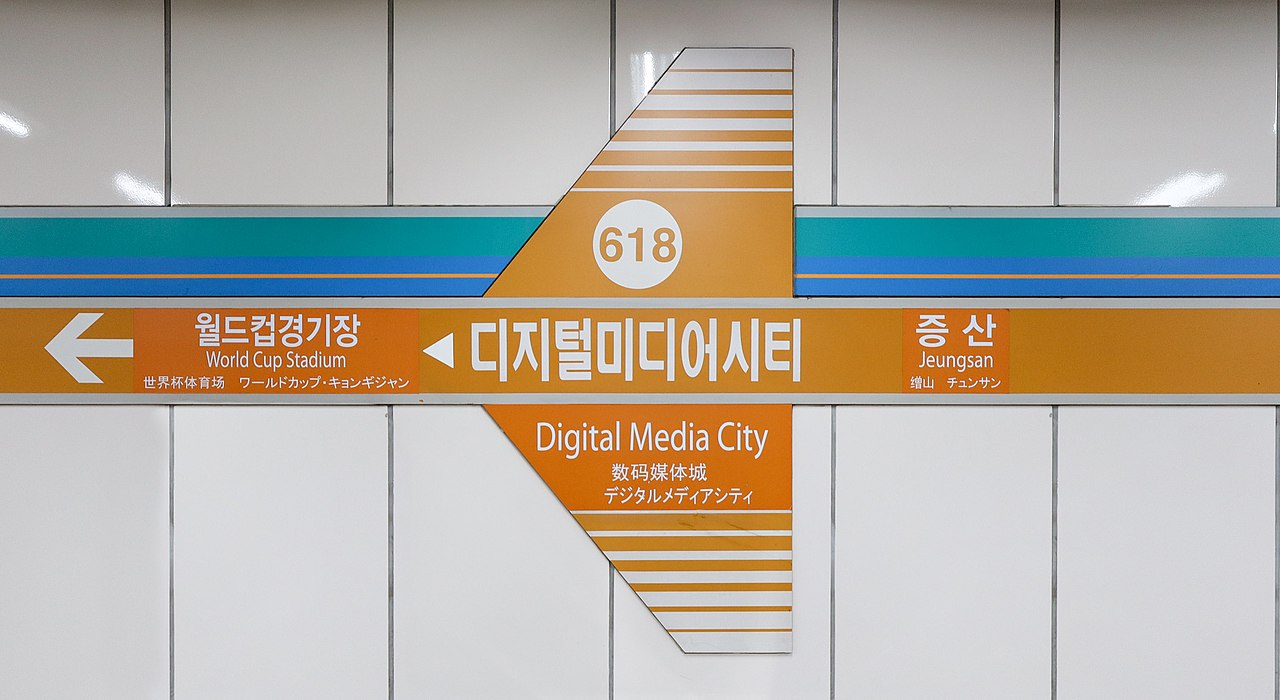
A quiet, modern underground walkway at Digital Media City Station in Seoul, South Korea, featuring minimalist architecture and clear directional signage. · IRTC1015A clear view of the directional signage at Digital Media City Station, a major transit hub in Seoul, South Korea. · 경의중앙수색A quiet, modern subway platform at Digital Media City Station in Seoul, South Korea, featuring clean architectural lines and glass safety barriers. · IRTC1015The distinctive orange and teal signage at Digital Media City Station, a major transit hub in Seoul, South Korea. · Mobius6A wide-angle view of the spacious, modern interior of Digital Media City Station in Seoul, South Korea, showing directional signage and transit infrastructure. · IRTC1015A clear, multilingual directional sign at Digital Media City Station in Seoul, South Korea, guiding passengers toward Incheon International Airport. · Mobius6A directional sign at Digital Media City Station in Seoul, South Korea, indicating the route toward Gimpo International Airport. · Baek Seung Woon
History
From Garbage Mountain to Glass Towers
The story of Digital Media City Station is really two stories layered on top of each other — the literal kind. Below: fifteen years of compacted waste from a city of ten million. Above: a tech district that pretends the waste was never there. The station opened on August 7, 2000, under the name Susaek Station, serving Line 6 commuters in a neighborhood still midway through its reinvention.
Nine years later, on July 1, 2009, it was renamed Digital Media City Station to match the tech district that had assembled around it. The Gyeongui commuter line and AREX Airport Railroad arrived at the same time, turning a single-line local stop into a three-line interchange. But the real history here isn't about trains. It's about what's under your feet.
The turning point
Mayor Goh Kun and the Bet on a Trash Heap
Between 1978 and 1992, the island of Nanjido absorbed everything Seoul wanted to forget — domestic garbage, construction rubble, industrial waste. The pile grew to 98 meters above sea level, taller than the Statue of Liberty from pedestal to torch, and reportedly the world's tallest garbage mountain at the time. Toxic runoff seeped into the Han River. The stench carried for kilometers.
In July 1998, Seoul Mayor Goh Kun stood before cameras and announced the "New Seoul Town Development" project, staking his political credibility on a plan to build a modern residential district on reclaimed landfill. By April 2000, the vision had expanded: the Sangam New Millennium City Plan would pivot from housing to a media and technology hub, catalyzed by two forces arriving almost simultaneously — the 2002 FIFA World Cup stadium being erected on the same site, and Incheon International Airport opening in 2001.
Goh Kun's gamble paid off. By 2006, the 570,000-square-meter DMC complex was fully constructed, packed with broadcast studios, tech offices, and cultural venues. The garbage mountains became World Cup Park, with hiking trails winding over stabilized landfill mounds now covered in wildflowers and oak trees. Urban planners still cite the transformation as one of the most dramatic land reclamation projects of the 21st century.
Nanjido: The Island That Drowned in Trash
Nanjido was once two small islands in the Han River, joined to the mainland in 1977. Within a year, Seoul designated it the city's primary dump. For fifteen years, trucks arrived daily — an estimated 92 million cubic meters of waste accumulated, enough to bury Manhattan's Central Park under 27 meters of garbage. Dumping stopped in 1993, and stabilization work began in 1996 to cap methane emissions and prevent groundwater contamination. The ecological recovery took over a decade, but today the former dump hosts wetlands, meadows, and one of Seoul's most popular outdoor concert venues.
A Station That Keeps Changing Its Name
The station opened in 2000 as Susaek Station, named after the surrounding neighborhood. When the DMC district matured and the Gyeongui Line arrived in 2009, the name changed to Digital Media City Station — a mouthful in any language, but especially notable as the first Seoul Metro station named entirely in English rather than Korean. The AREX Airport Railroad stop at the same complex was originally called Multimedia City Station before aligning with the DMC branding. Even the aqua-blue paint on the Line 6 tunnel pillars dates from the Susaek era and was never updated — a small ghost of the station's former identity, still visible if you look up.
Tips for visitors
Board the Right Car
For the fastest AREX transfer, board Car 2–3 if heading toward Seoul Station, or Car 6–4 if heading toward Incheon Airport. This puts you right at the escalator connecting to the other lines.
Prism Tower Light Show
The SBS Prism Tower's glass facade refracts light differently depending on the hour. Late afternoon sun turns the building into a kaleidoscope — the best photo angle is from the plaza at Exit 9, looking southeast.
Eat in Sangam-dong
Skip the overpriced cafés inside the DMC office towers. Walk 5 minutes north from Exit 1 into Sangam-dong's residential streets for Korean-budget lunch sets — galbi-jjim and doenjang-jjigae spots where broadcast crews eat between shoots, most under ₩10,000.
Combine with World Cup Park
The grassy mounds of Haneul Park and Noeul Park sit on top of what was once a 98-meter-tall garbage mountain — taller than the Statue of Liberty's pedestal. A 20-minute walk west from Exit 2 gets you there, and sunset from the Haneul Park sky stairs is worth the 291 steps.
Catch a K-pop Taping
MTV's The Show films at SBS Prism Tower every Tuesday. Fan entry is free but requires advance registration through the show's app — spots fill within minutes of opening, so set a reminder for the weekly release.
The Aqua Blue Clue
Look for the aqua-blue painted tunnel pillars where Line 6 trains enter the platform. They're a leftover from the station's original 2000 identity as Susaek Station — never repainted after the 2009 renaming. A small ghost of the pre-DMC era hiding in plain sight.
Where to Eat
local_dining
Don't Leave Without Trying
Korean BBQ (삼겹살/갈비) — grilled pork belly or ribs cooked at your tableGomtang (곰탕) — slow-simmered milky beef bone broth soup, a Seoul comfort food classicSundae (순대) — Korean blood sausage stuffed with glass noodles, quintessential street foodKongguksu (콩국수) — cold soy milk noodle soup, a summer staple with creamy, nutty brothKaisendon — Japanese-style raw seafood rice bowlChimaek (치맥) — fried chicken paired with beer, Seoul's favorite casual comboJapchae (잡채) — stir-fried glass noodles with vegetablesKimchi Jjigae (김치찌개) — spicy fermented cabbage stew
coffee talk
cafe
Cafe€€star3.6(5)
Order: A specialty latte or espresso — coffee talk is a solid neighborhood spot for your morning caffeine fix before exploring the DMC area.
This is where locals actually grab coffee in Sangam-dong, not a tourist trap. It's open early and stays late, making it perfect for a quick pit stop between the broadcast studios and shopping.
checkThe Sangam-dong area around DMC Station has a concentrated food culture near the broadcast station complex — hundreds of restaurants and cafes within walking distance.
checkKorean BBQ is a specialty in Mapo-gu; expect to grill meat at your table and pay by weight or portion.
checkStreet food stalls (sundae, hotteok, chimaek) are abundant and affordable — perfect for quick, authentic bites.
checkExit 9 of DMC Station is a good landmark for cafes and restaurants; many specialty spots cluster within a 5-minute walk.
checkBudget-friendly cafe options exist with items under ₩5,000 if you're looking to save on coffee and light snacks.
Food districts:Sangam-dong — the heart of DMC area with Korean BBQ, street food, and cafes concentrated near the broadcast centerMapo-gu — historically famous for Korean BBQ and local Korean dishes; the broader neighborhood where DMC Station sits
Restaurant data powered by Google
Frequently asked
Is Digital Media City Station worth visiting?
Worth it if glass-and-steel urban planning interests you, or if you want to watch a K-pop show being filmed at SBS Prism Tower on a Tuesday. The district around the station — built on what was once Seoul's largest garbage dump — tells a more interesting story than most purpose-built media districts. Add Hongdae, three minutes away by rail, and you have a genuinely varied afternoon.
How do you get from Digital Media City Station to Incheon Airport?
Take the AREX Airport Railroad directly from the DMC Station complex — non-express trains reach Incheon in around 35 minutes. The AREX platform shares the same station complex as Line 6 and the Gyeongui-Jungang Line, connected by transfer corridors. For the fastest transfer toward Incheon, board Car #6-4.
What is there to do near Digital Media City Station?
The DMC Gallery is free and open to the public. SBS Prism Tower's lobby — winner of the Korean Architecture Award 2013 — displays works by François Morellet and Roni Horn and is open to walk-in visitors. MTV The Show films inside SBS Prism Tower every Tuesday; audiences can sometimes attend. Hongdae's street food and nightlife are three minutes away on Line 6.
How long do you need at Digital Media City Station?
The station itself is a transit hub — five minutes to transfer between lines. If you're exploring the DMC district, budget 1 to 2 hours for the gallery, the SBS Prism Tower lobby, and a walk along the central boulevard. Pair it with Hongdae to make the detour feel worthwhile.
What is Digital Media City (DMC) in Seoul?
DMC is a 570,000 m² planned media and technology district in Sangam-dong — roughly 1.7 times the footprint of London's Canary Wharf. It was built from scratch after 2002 on land reclaimed from Seoul's former main garbage dump, Nanjido, which received 92 million m³ of waste between 1978 and 1992. Major broadcasters, tech firms, and studios now occupy the glass towers that replaced the trash heap.
What was Digital Media City before it was built?
The entire Sangam-dong area was Seoul's primary garbage dump from 1978 to 1992. The island of Nanjido accumulated so much waste that the trash heap reached 98 meters above sea level — taller than the Statue of Liberty, and reportedly the world's highest garbage mountain at the time. Seoul halted dumping in 1993 and spent years stabilizing the site before repurposing it.
Why was Digital Media City Station renamed from Susaek Station?
The station opened as Susaek Station on August 7, 2000, on Line 6. When the Gyeongui Line commuter rail opened a stop here on July 1, 2009, the entire complex was renamed Digital Media City Station to match the tech district developing around it. According to local sources, this makes it the first Seoul subway station named entirely in a foreign language — a detail that apparently still provokes debate.
Is Digital Media City Station wheelchair accessible?
Yes. The station complex has elevator access across all three lines — Line 6, the Gyeongui-Jungang Line, and the AREX Airport Railroad. The DMC district is flat and pedestrian-friendly, with wide pavements along the main boulevard.
Sources & attribution7
Researched and written by the Audiala editorial team from historical records, architectural archives, and local expertise. Last reviewed April 2026.
Wikipedia — Digital Media City — District size (570,000 m²), Canary Wharf comparison, founding timeline, and general DMC development history
NamuWiki — 디지털미디어시티역 — Station renaming history, aqua-blue tunnel pillars detail, AREX car transfer tips, first foreign-language station name claim, and 2026 Lotte development plans
Seoul Solution / Korea.net — Nanjido garbage dump history, 92 million m³ waste figure, environmental stabilization timeline, and Sangam New Millennium City Plan milestones
Wikipedia — Nanjido — Island geography, waste accumulation history, and 1977 land connection to Seoul mainland
Wikipedia — Seoul Lite DMC Tower — Proposed 640-meter SOM/Samoo-designed tower, 40,000 LED panel concept, August 2009 groundbreaking claim, and ongoing construction delays
SpringerLink — 2002 FIFA World Cup stadium and Incheon Airport opening as catalysts for the DMC development pivot
Korean Architecture Award 2013 — SBS Prism Tower — Excellence Award citation for SBS Prism Tower and public art lobby programme (Morellet, Horn, Bae)
Saved and recently read places — kept on this device only.
Photo credits (13)
Digital Media City Station 20220701 001 — Mobius6 — CC BY-SA 4.0 (https://creativecommons.org/licenses/by-sa/4.0/) — Source: https://commons.wikimedia.org/wiki/File:Digital_Media_City_Station_20220701_001.jpg
Digital Media City Station 20220701 003 — Mobius6 — CC BY-SA 4.0 (https://creativecommons.org/licenses/by-sa/4.0/) — Source: https://commons.wikimedia.org/wiki/File:Digital_Media_City_Station_20220701_003.jpg
SMRT Seoul Subway Line 6 Digital Media City Station Platform — G43 — CC BY 3.0 (https://creativecommons.org/licenses/by/3.0/) — Source: https://commons.wikimedia.org/wiki/File:SMRT_Seoul_Subway_Line_6_Digital_Media_City_Station_Platform.jpg
20170704 Gyeongui Line DMC Station — 경의중앙수색 — CC BY-SA 4.0 (https://creativecommons.org/licenses/by-sa/4.0/) — Source: https://commons.wikimedia.org/wiki/File:20170704_Gyeongui_Line_DMC_Station.jpg
Digital Media City Station 20220701 008 — Mobius6 — CC BY-SA 4.0 (https://creativecommons.org/licenses/by-sa/4.0/) — Source: https://commons.wikimedia.org/wiki/File:Digital_Media_City_Station_20220701_008.jpg
ArexDigitalMediaCity — Baek Seung Woon — CC BY 3.0 (https://creativecommons.org/licenses/by/3.0/) — Source: https://commons.wikimedia.org/wiki/File:ArexDigitalMediaCity.JPG
Digital Media City Station 20220701 005 — Mobius6 — CC BY-SA 4.0 (https://creativecommons.org/licenses/by-sa/4.0/) — Source: https://commons.wikimedia.org/wiki/File:Digital_Media_City_Station_20220701_005.jpg
Digital Media City Station 20220701 004 — Mobius6 — CC BY-SA 4.0 (https://creativecommons.org/licenses/by-sa/4.0/) — Source: https://commons.wikimedia.org/wiki/File:Digital_Media_City_Station_20220701_004.jpg
Digital Media City Station 20220701 007 — Mobius6 — CC BY-SA 4.0 (https://creativecommons.org/licenses/by-sa/4.0/) — Source: https://commons.wikimedia.org/wiki/File:Digital_Media_City_Station_20220701_007.jpg
Digital Media City Station 20220701 006 — Mobius6 — CC BY-SA 4.0 (https://creativecommons.org/licenses/by-sa/4.0/) — Source: https://commons.wikimedia.org/wiki/File:Digital_Media_City_Station_20220701_006.jpg
Strictly necessary cookies keep navigation working. Analytics cookies (PostHog, Google Analytics) help us learn which pages work — aggregate only, no ads, no selling. You can change this any time from the footer.
Privacy
Cookie preferences
Pick what you're okay with. You can change this any time from the footer.
Strictly necessary
Always on
Sign-in, language, navigation. Always on.
Product analytics
PostHog and Google Analytics, aggregate usage only. Helps us see which pages work and which need fixing. No selling, no ads.
Marketing
Off today. Reserved if we ever run paid acquisition. We will ask again before turning it on.