Pretoria
South Africa Updated Apr 2026
Purple jacaranda petals stick to hot pavement in spring, while sandstone government buildings glow the color of toast above the city. That contrast tells you a lot about Pretoria, South Africa: part bureaucratic capital, part leafy old-world town, part argument about whose history gets carved in stone. People arrive expecting paperwork and embassies; they find hills, memorials, weekend food markets, and a city that keeps its tensions out in the open.
 Photo: Ryanj93 · CC BY-SA 4.0
- Attractions
- 10
- Trip length
- 2-3 days
- Best season
- Late summer to spring (late February-May and mid August-late October)
Why Pretoria
Built from cited sources · see the method · How we make our guides →
Pretoria makes sense from high ground. From the Union Buildings on Meintjieskop or the ridge near the Voortrekker Monument, the city spreads out in jacaranda-lined avenues and low suburbs, less vertical than Johannesburg and less hurried too. The pace is slower.
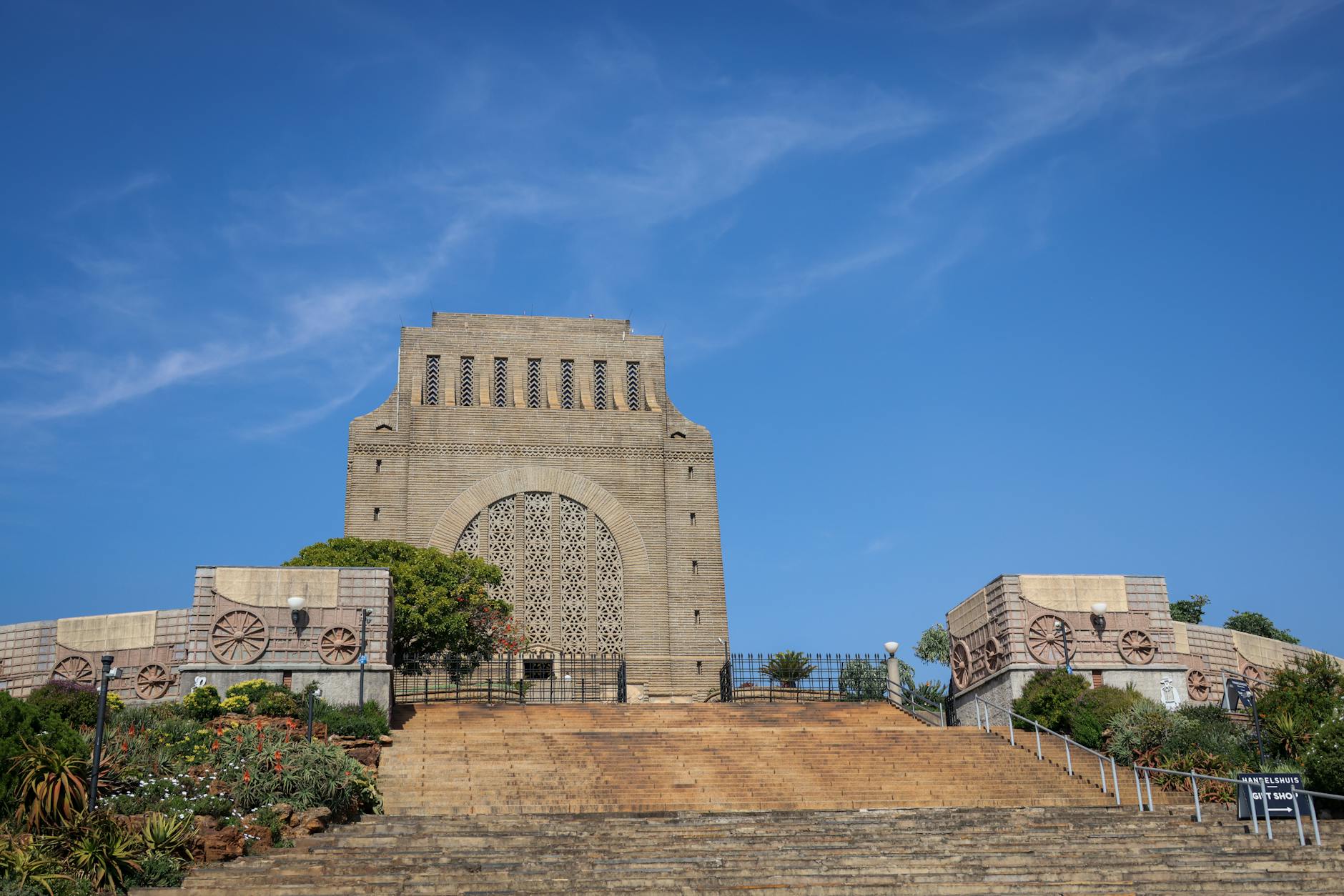
That slower rhythm can mislead you. Pretoria holds some of South Africa's heaviest symbols within a short drive of each other: the Union Buildings, where Nelson Mandela was inaugurated in 1994; Freedom Park on Salvokop; Church Square with its Paul Kruger statue; the Voortrekker Monument, still monumental enough to make you argue with it even if you don't agree with what it celebrates.
Daily life softens the severity. On Saturday mornings the city smells like coffee, grilled boerewors, and wood smoke at Hazel Food Market or Irene Village Market, and by late afternoon the mood shifts toward bookshop cafés, craft beer, and long conversations rather than grand gestures. Pretoria doesn't flirt for your attention. It waits for you to notice how much of South Africa's story has been staged here, contested here, and still lived here.
Power On A Hill
Pretoria wears government in stone. The Union Buildings, designed by Sir Herbert Baker on Meintjieskop, give the city its long sandstone silhouette and a view that explains why politicians keep climbing this hill.Two Histories Facing Each Other
Few cities stage South Africa's argument with itself so clearly. The Voortrekker Monument and Freedom Park stand on opposing hills, turning a short drive into a lesson about memory, grief, and who gets written into national history.Jacarandas And Game Reserve
Pretoria can smell of dust after rain one week and wild sage the next. In October and November, jacarandas tint whole streets purple, and Rietvlei Nature Reserve puts rhino, zebra, and hippo within city limits.Old Capital, Slow Details
Church Square, the Palace of Justice, Kruger House, and the Ditsong museums reward people who like texture over spectacle. This is a city of courtrooms, verandas, museum drawers, and stories that don't fit on a postcard.
Neighborhoods
Where to wander, by quarter — each with its own rhythm.
Hazelwood
Hazelwood is where Pretoria loosens its tie. Come for Hazel Food Market, specialty coffee, and small restaurants that feel more local than ceremonial; stay if you like your evenings unhurried, with a good plate and a second drink rather than a big night out.Brooklyn
Brooklyn has old-money calm, embassy energy, and a polished dining scene that rarely needs to raise its voice. Cafés, boutique restaurants, and antique fairs give it texture, and it works well as a base if you want comfort without being sealed off from the city.Church Square and the CBD Fringe
This is Pretoria's historical core, and it still carries itself like a place where verdicts were handed down. Around Church Square you'll find the Palace of Justice, 19th-century civic architecture, street-level commerce, and a harder-edged urban pulse that feels very different from the suburban east.Irene
Irene sits outside the center with a village mood that Pretoria wears surprisingly well. Irene Village Market draws families, food stalls, and makers on weekends, and the whole area suits travelers who prefer leafy streets, slower mornings, and room to breathe.Montana
Montana leans practical, suburban, and proudly local. The market scene matters here more than architecture: Montana Family Market pulls in residents for casual eating, browsing, and the kind of Saturday routine that tells you how a city actually lives.Pretoria Gardens
Pretoria Gardens appears less often on standard visitor itineraries, which is exactly why it can be interesting. Research points to a cluster of galleries and artist activity here, so it is worth a look if you want contemporary South African work rather than another hour of state symbolism.Salvokop
Salvokop is defined by elevation and memory. Freedom Park gives the area its emotional weight, and the hill's position opposite the Voortrekker Monument turns a visit here into more than sightseeing; you are looking at South Africa arguing with itself across a ridge.
Plan your trip
Before you go
- Getting There
- Most visitors arrive through O.R. Tambo International Airport (JNB), about 35 to 45 km from central Pretoria; Lanseria International Airport (HLA) sits roughly 50 km southwest and handles fewer flights. Main rail arrivals in 2026 are Pretoria Station in the CBD and Hatfield Station in the east, both linked to Gautrain services. Road access is strong via the N1 north-south corridor and the N4 east-west route, with airport traffic usually feeding in from the N1.
- Getting Around
- Pretoria has no metro, subway, or tram system in 2026. Fast trips rely on Gautrain regional rail and feeder buses between Pretoria Station, Hatfield, Centurion, Johannesburg, and JNB, while A Re Yeng BRT covers selected city corridors rather than the whole urban area. Gautrain requires a reloadable Gold Card, and official guidance notes off-peak fares are about 10% lower outside 06:00 to 09:00 and 16:00 to 18:30; for most visitors, Uber or Bolt fills the gaps.
- Climate & Best Time
- Pretoria has a subtropical highland climate: summer runs warm and stormy, with January highs around 26 to 29C and most rain falling from November to February, often in late-afternoon bursts. Winter stays dry and bright, with July days near 20C and nights dropping to about 3 to 5C. The sweet spot is late February to mid-May and mid-August to late October, while October and November bring jacaranda season and heavier visitor demand.
- Language & Currency
- English is the language you'll use for hotels, museums, rides, and transport signage, but Afrikaans, Sepedi, and Setswana are widely heard across Pretoria. South Africa uses the rand (ZAR), and cards work in most restaurants, malls, museums, and fuel stations. Keep some cash for tips, parking attendants, and smaller purchases; in practice, R500 to R1,000 in small notes covers the awkward moments.
- Safety
- Pretoria rewards a little caution rather than paranoia. In 2026, the usual advice is to avoid wandering the CBD after business hours, skip informal taxi ranks if you do not know the system, and keep phones and cameras out of sight at intersections where smash-and-grab theft can happen. Use Gautrain, Uber, or Bolt for longer hops, and stick to busier areas such as Hatfield, Brooklyn, and Menlyn after dark.
A Capital Written in Sandstone and Argument
From an Apies River frontier town to the stage for South Africa's hardest reckonings
- 1825
Mzilikazi Claims the Region
Chief Mzilikazi and his Ndebele followers moved into the wider Transvaal in 1825, pulling the Apies River valley into a new political orbit. The valley was not yet a city, barely even a fixed town, but power had arrived before street plans did. That matters in Pretoria: the ground was contested long before it was surveyed.
- 1838
Andries Pretorius Becomes a Symbol
Andries Pretorius entered the story through the Great Trek and the Battle of Blood River, where his name hardened into Afrikaner legend. Pretoria would later be named for him, which tells you something about the city's original self-image. It chose a military patriarch before it chose a skyline.
- 1840
First Permanent Settlers Arrive
After the Voortrekkers pushed north of the Vaal and defeated Mzilikazi's forces, white settlers began establishing a lasting presence in the Pretoria area by 1840. The Apies River valley offered water, grazing land, and room to build. A future capital often starts with such plain things.
- 1852
The Sand River Convention
Britain recognized Transvaal Boer independence in the Sand River Convention of 1852. Paper changed everything. A frontier settlement could now imagine itself as the center of a republic rather than a camp at the edge of one.
- 1853
Pretorius Buys the Future
On 16 November 1853, Marthinus Wessels Pretorius bought the farms Elandspoort and Koedoespoort, the land from which Pretoria would be laid out. Deeds can look dry on paper. In a young settler republic, they were acts of city-making.
- 1855
Pretoria Is Founded
Pretoria was founded in 1855 and named for Andries Pretorius, the Voortrekker leader whose memory the new town was meant to honor. From the start it was political theater as much as settlement. Streets, names, and power were arranged together.
Show the full timeline (29 moments)
- 1860
Capital of the ZAR
On 1 May 1860, Pretoria replaced Potchefstroom as the seat of government of the Zuid-Afrikaansche Republiek. That promotion turned a young town into the nerve center of Boer statehood. Clerks, politicians, petitioners, and ambition followed.
- 1877
Britain Seizes the Republic
British annexation in 1877 jolted Pretoria from republican capital into occupied administrative center. Flags changed faster than loyalties did. The city would spend the next quarter century learning how expensive imperial attention could be.
- 1881
The Pretoria Convention
After the First Anglo-Boer War, the Pretoria Convention of 3 August 1881 restored Transvaal self-government under British suzerainty. Pretoria gave its name to the agreement because this was where the argument over sovereignty landed. The city had become a place where wars ended in signatures.
- 1883
Paul Kruger Takes Power
Paul Kruger became president of the ZAR in 1883 and stamped his personality on Pretoria more firmly than any other 19th-century figure. His government expanded institutions, shaped segregationist urban patterns, and gave the capital a stern, patriarchal face. You can still feel him in Church Square.
- 1891
The Raadsaal Rises
The new Raadsaal was completed in December 1891, a brick-and-stone statement that the republic intended to look permanent. Council chambers have their own sound: boots on timber floors, papers sliding across desks, voices thick with certainty. Pretoria was dressing itself for statehood.
- 1895
Railway Links the Capital
The Delagoa Bay railway connection opened on 1 January 1895, tying Pretoria to the port at Lourenco Marques. Steel rails changed the city's tempo. Goods, officials, newspapers, and rumors could now arrive with unnerving speed.
- 1897
Plague and the Palace
Pretoria suffered a bubonic plague outbreak in 1897, a reminder that growing capitals smell less like glory than drains, animals, and panic. In that same year the foundation stone of the Palace of Justice was laid. One city, two truths: disease in the streets, grandeur in the plans.
- 1898
Palace of Justice Completed
By 1898 the Palace of Justice stood on Church Square, heavy with authority before it had earned its later symbolism. Court buildings are always performances. This one would eventually stage some of South Africa's darkest and most consequential legal drama.
- 1900
British Troops Enter Pretoria
On 5 June 1900, British forces under Lord Roberts occupied Pretoria during the Second Anglo-Boer War. The republican capital fell without the cinematic last stand its founders might have imagined. Empire arrived in boots and dust.
- 1902
Peace Signed at Melrose House
The Peace of Vereeniging was signed in Pretoria on 31 May 1902 at Melrose House, ending the Second Anglo-Boer War. Inside, polished wood and velvet softened the room. Outside, the war's cost was written across farms, prisons, and graves.
- 1910
Union Makes Pretoria Capital
When the Union of South Africa was formed on 31 May 1910, Pretoria became the administrative capital. Cape Town kept Parliament and Bloemfontein kept the courts, but Pretoria got the bureaucracy, which may be the more durable form of power. Cities are shaped as much by filing cabinets as by battles.
- 1913
Union Buildings Crown the Ridge
Herbert Baker's Union Buildings were completed in 1913 on Meintjieskop, their sandstone curve stretching across the ridge like an imperial gesture turned to stone. The site commands the city because it was designed to. Pretoria's skyline has been arguing about authority ever since.
- 1931
Pretoria Becomes a City
Pretoria gained official city status on 14 October 1931. By then the jacarandas were helping invent the place's softer myth, one bloom-heavy avenue at a time. Bureaucratic capitals usually struggle to look romantic; Pretoria found a way, at least for six purple weeks each spring.
- 1935
City Hall Opens
Pretoria City Hall was completed in 1935, mixing Beaux-Arts symmetry with Cape Dutch flourishes in a way that feels both grand and faintly self-conscious. That blend suits the city. Pretoria has long preferred buildings that look sure of themselves, even when the politics inside them were anything but.
- 1949
Voortrekker Monument Inaugurated
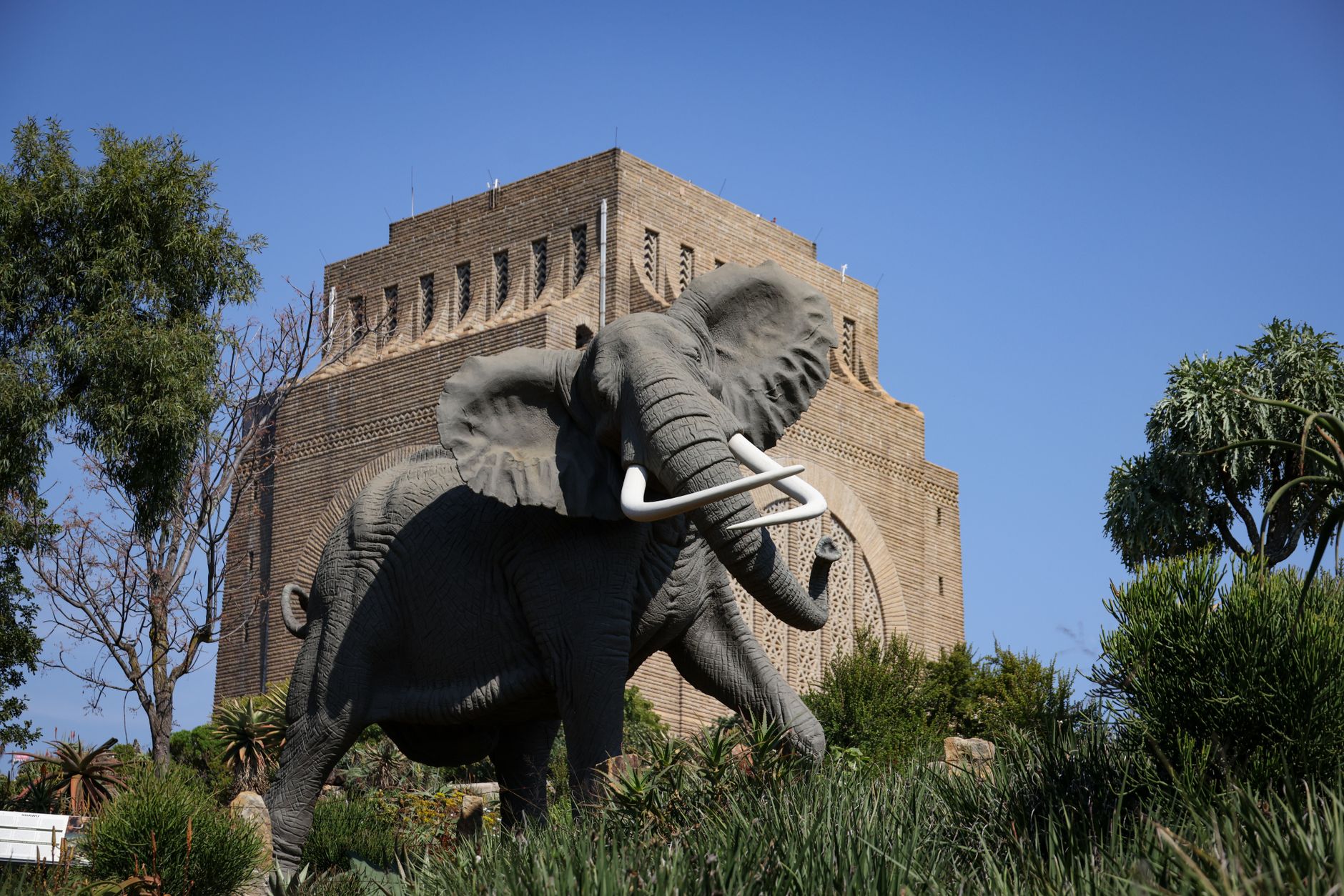
The Voortrekker Monument was inaugurated in 1949 after a decade of construction, a granite block of memory looming above the city. Inside, the air is cool and echoing, and the marble frieze turns migration into national scripture. It is less a monument than an argument in stone.
- 1963
Mandela Faces Pretoria's Court
The Rivonia Trial opened in the Palace of Justice in 1963, bringing Nelson Mandela and other anti-apartheid leaders into Pretoria's legal heart. Courtroom words became world history there. The city that housed apartheid's bureaucracy also became the place where its moral bankruptcy was spoken aloud.
- 1979
Solomon Mahlangu Is Executed
Solomon Mahlangu was executed in Pretoria on 6 April 1979, turning the city into a site of grief and resistance memory. The state meant the hanging as a warning. It did the opposite, sharpening Mahlangu into one of apartheid's enduring martyrs.
- 1980
The Silverton Siege
On 25 January 1980, MK operatives seized hostages in a Silverton bank east of the city center, and the standoff ended in blood. Pretoria felt the armed struggle at close range that day, not as slogan or headline but as gunfire in a suburban street. The war had reached the capital's shopfront glass.
- 1994
Mandela Takes the Oath
Nelson Mandela was inaugurated president at the Union Buildings on 10 May 1994, and Pretoria's most imperial stage was handed a different script. Crowds filled the terraces below the sandstone arc while military aircraft passed overhead. A place built to project white power became the backdrop for democratic legitimacy.
- 2000
Tshwane Metropolitan Era Begins
The City of Tshwane Metropolitan Municipality was formed in 2000, folding Pretoria into a much larger municipal structure that included townships, satellite towns, and older white suburbs. Administrative maps changed, and with them the city's sense of itself. The name debate that followed was never just about labels.
- 2007
Freedom Park Opens
Freedom Park opened on Salvokop in 2007, within sight of the Voortrekker Monument yet speaking in a wholly different register. That proximity is the point. Pretoria placed two rival memory projects on neighboring hills and asked the country to live with both.
- 2013
Mandela Returns in Bronze
A nine-meter statue of Nelson Mandela was unveiled at the Union Buildings in 2013, days after his death. Bronze replaced protocol at the main approach. The building no longer belonged only to the state that built it.
- 2018
UNESCO Recognizes the Union Buildings
In 2018, the Union Buildings were inscribed as part of UNESCO's Nelson Mandela Legacy Sites. International recognition mattered, but the deeper point was local: Pretoria's defining hill had been reinterpreted before the world's eyes. Few capitals revise their own symbols so publicly.
Who lived here
-
President of the South African Republic · 1825–1904
Paul Kruger
Lived and governed here in the late 19th century
Pretoria was Kruger's capital, and his former house still stands as the Kruger Museum with much of its furnishings intact. He'd still recognize Church Square, though he might be startled by how the city now places his statue inside a far louder argument about memory, power, and who gets honored in public stone.
-
Anti-apartheid leader and President of South Africa · 1918–2013
Nelson Mandela
Inaugurated here at the Union Buildings in 1994
Mandela turned Pretoria from a symbol of state power into the stage for democratic transition when he took the presidential oath at the Union Buildings on 10 May 1994. The giant statue on the lawns catches tourists first, but the deeper point sits in the setting itself: this is where the old order had to make room.
-
Architect · 1862–1946
Herbert Baker
Designed the Union Buildings
Baker gave Pretoria one of its defining silhouettes when he designed the Union Buildings on Meintjieskop. He shaped them to command the city, all sandstone and symmetry, though the place has outgrown his imperial intentions and now reads as something more complicated, and far more interesting.
Insider tips
Small things that change how the city treats you.
Use Gautrain First
From O.R. Tambo, Gautrain is the fastest reliable link into Pretoria: about 30 minutes to Hatfield and about 45 minutes to Pretoria Station. Buy a Gold Card at the station because cash single rides are not the system.Pick Your Season
Late February to mid May and mid August to late October give you the easiest weather for long outdoor days, with mild temperatures and less rain. If you want the jacarandas, aim for October to November, when whole streets turn purple.Carry Small Rand
Keep R5, R10, and R20 notes handy for car guards, petrol attendants, and market purchases. Cards work in most restaurants and museums, but smaller vendors can still prefer cash.Eat At Markets
Skip bland hotel buffets and go early to Hazel Food Market, Irene Village Market, or Market @ The Sheds. Arriving by 9 or 10 a.m. means easier parking, shorter queues, and better shots at the popular stalls.Move Smartly
Pretoria works best when you treat walking as district-based, not citywide. Stick to Hatfield, Brooklyn, Menlyn, and the University precinct on foot, then use Uber, Bolt, or Gautrain for longer hops and avoid the CBD after dark.Drive Reserve Early
Rietvlei Nature Reserve makes a strong half-day escape because you can see rhino, buffalo, hippo, zebra, and wildebeest without leaving the city. Go in the cooler morning hours when animals are more active and the light is kinder.
Gallery
The city, as it actually looks.





Frequently asked
Is Pretoria worth visiting?
Yes, especially if you want South African history without giving up easy wildlife access. Pretoria lets you move from the Union Buildings and Church Square to a game reserve, a major zoo, or a memorial park in the same day, and jacaranda season gives the city a look that feels almost staged.
How many days in Pretoria?
Two to three days is enough for a strong first visit. That gives you time for the Union Buildings, Church Square, one of the major museums or memorials, and either Rietvlei Nature Reserve or a day trip to Hartbeespoort.
How do I get from Johannesburg airport to Pretoria?
Take the Gautrain if you want the most reliable airport transfer. Trains run from O.R. Tambo to Hatfield and Pretoria, and rideshare is the main alternative if you're carrying more luggage or heading to a suburb far from a station.
Is Pretoria safe for tourists?
Pretoria is manageable for tourists, but you need city habits. Petty theft and phone snatching are the main concerns, so avoid flashing valuables, skip unlit routes and informal taxi ranks, and use Gautrain, Uber, or Bolt between districts.
Can you walk around Pretoria?
Yes, but only in selected areas and in daylight. Hatfield, Brooklyn, Menlyn, and the University of Pretoria precinct are the easiest on foot, while the CBD is better treated as a place to visit with purpose rather than wander casually after business hours.
What is the best month to visit Pretoria?
October is the month people remember because the jacarandas usually bloom then. If flowers matter less than comfortable sightseeing weather, March, April, September, and early October are the safer bets for clear days and fewer afternoon storms.
Is Pretoria expensive for tourists?
Pretoria can be fairly moderate if you build your days around public transport, markets, and free outdoor sites. Union Buildings grounds cost nothing, Gautrain off-peak fares are cheaper than peak, and weekend markets often feed you better than hotel dining for less money.
What should I not miss in Pretoria?
Start with the Union Buildings, then pair either Freedom Park or the Voortrekker Monument with Church Square for historical contrast. After that, choose your mood: Rietvlei for open sky and wildlife, or the Ditsong museums if you want the city to explain itself indoors.
Pick up where you left off
Saved and recently read places — kept on this device only.
Photo credits (13)
- Farm Views — Ryanj93 — CC BY-SA 4.0 (https://creativecommons.org/licenses/by-sa/4.0/) — Source: https://commons.wikimedia.org/wiki/File:Farm_Views.jpg
- Sipho Ndebele — Pexels License (https://www.pexels.com/license/) — Source: https://www.pexels.com/photo/17294989/
- Magda Ehlers — Pexels License (https://www.pexels.com/license/) — Source: https://www.pexels.com/photo/14025837/
- Magda Ehlers — Pexels License (https://www.pexels.com/license/) — Source: https://www.pexels.com/photo/32142131/
- Magda Ehlers — Pexels License (https://www.pexels.com/license/) — Source: https://www.pexels.com/photo/28495861/
- Magda Ehlers — Pexels License (https://www.pexels.com/license/) — Source: https://www.pexels.com/photo/32142127/
- Magda Ehlers — Pexels License (https://www.pexels.com/license/) — Source: https://www.pexels.com/photo/32142129/
- Sipho Ndebele — Pexels License (https://www.pexels.com/license/) — Source: https://www.pexels.com/photo/8060106/
- Alexander F Ungerer — Pexels License (https://www.pexels.com/license/) — Source: https://www.pexels.com/photo/19814645/
- Alexander F Ungerer — Pexels License (https://www.pexels.com/license/) — Source: https://www.pexels.com/photo/20158731/
- Alexander F Ungerer — Pexels License (https://www.pexels.com/license/) — Source: https://www.pexels.com/photo/19739988/
- Bruce Taylor — Pexels License (https://www.pexels.com/license/) — Source: https://www.pexels.com/photo/26798013/
- Bruce Taylor — Pexels License (https://www.pexels.com/license/) — Source: https://www.pexels.com/photo/19014974/
Photos may have been resized or cropped.