Plan and listen to Sentech Tower with Audiala.
Audio guide in your pocket, itinerary in your browser. Built for the way you actually visit.
Introduction
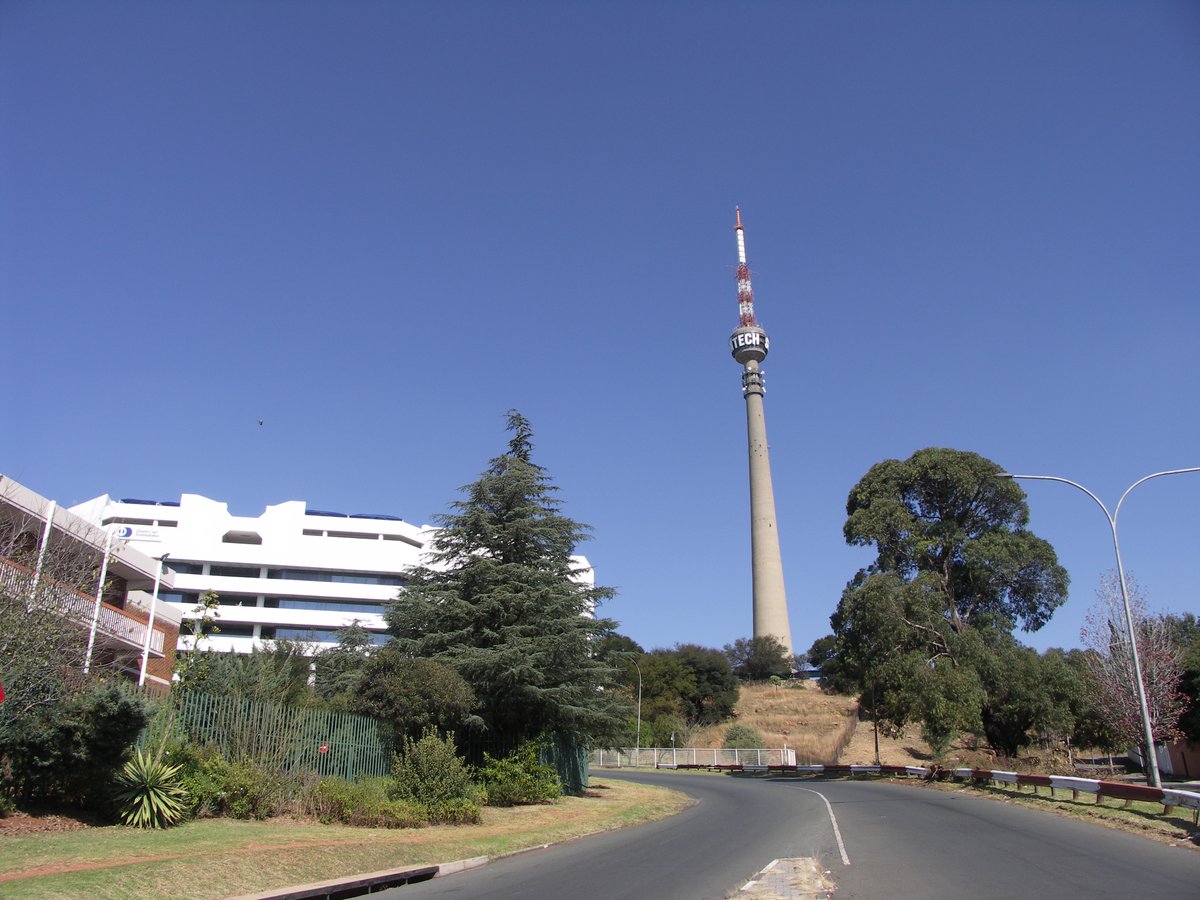
The Sentech Tower, formerly the Albert Hertzog Tower, rises 237 meters above Johannesburg’s Brixton Ridge and stands as a powerful symbol of South Africa’s technological advancement and urban evolution. Completed in 1962, this reinforced concrete structure was engineered to serve as the nation’s FM radio and, later, television broadcast hub—heralding Johannesburg’s emergence into the broadcast era (Artefacts, Wikipedia). Its silhouette is instantly recognizable across the city and encapsulates a complex history that intertwines infrastructure, politics, and culture (TechCentral).
Today, the Sentech Tower remains a vital node in Johannesburg’s telecommunications network, supporting FM radio, digital terrestrial television, and advanced data services (Sentech, TechCentral). While public access to its interior is restricted, the tower’s prominence continues to attract visitors and photographers, who can experience its presence from various vantage points around Brixton and neighboring districts. This guide delivers in-depth historical context, architectural insights, current visitor information, practical travel tips, and recommendations for nearby Johannesburg historical sites.

Origins and Historical Context
The Sentech Tower, originally named after apartheid-era Minister Dr. Albert Hertzog, was constructed as part of South Africa’s push into modern broadcasting. Its position atop Brixton Ridge—elevated 1,778 meters above sea level—was strategically chosen to ensure optimal signal coverage for the Johannesburg metropolitan region (Artefacts). The tower’s construction was completed in 1962, although the introduction of television in South Africa was delayed until 1976, meaning the tower initially broadcast only FM radio (Wikipedia).
During the apartheid era, the tower became a symbol of both technological advancement and state-controlled information—serving as a tool for government messaging and consolidating broadcasting power (TechCentral).
Architectural Design and Engineering
An exemplar of mid-century modernist engineering, the Sentech Tower stands 237 meters (778 feet) tall. Its slender, tapering shaft and reinforced concrete construction were designed for resilience and to maximize signal distribution. The tower’s monolithic design, crowned by antenna platforms, gives it a distinctive profile (Artefacts).
It is often compared to the Hillbrow Tower—Johannesburg’s other major communications structure—though Sentech Tower is slightly shorter. Both towers are regarded as “architectural cousins,” reflecting the era’s vision of broadcast infrastructure (Wikipedia).
Technological Evolution and Broadcasting Role
Initially serving as a hub for FM radio, the Sentech Tower’s role expanded with the introduction of television broadcasting in the 1970s. Today, Sentech, the state-owned enterprise, manages the site, which supports digital terrestrial television (DTT), FM radio, and various telecommunications services. The tower’s design has proven adaptable, able to accommodate new technologies as broadcasting and connectivity needs have evolved (Wikipedia, Sentech).
Visitor Information: Hours, Tickets, Accessibility
Public Access:
The Sentech Tower is not open to the public for tours or observation deck visits. There are no regular visiting hours, ticket sales, or guided tours due to the tower’s operational status and security protocols.
Viewing the Tower:
The tower can be enjoyed from numerous vantage points in Brixton, Auckland Park, and surrounding neighborhoods. Its illuminated form is a popular subject for photographers, especially during the evening.
Special Events:
Occasionally, industry-focused events such as Sentech Africa Tech Week may offer limited access for select groups. Information about such events is available via the official Sentech website (Sentech Africa Tech Week).
Getting There:
- By Car: Easily accessible, with street parking available nearby.
- Public Transport: Served by Johannesburg’s Rea Vaya bus system and minibus taxis.
- On Foot/Bicycle: The area is walkable, but standard urban safety precautions are advised.
Accessibility:
Because the tower is closed to visitors, there are no accessibility features or visitor facilities on-site.
Nearby Attractions and Johannesburg Historical Sites
While the Sentech Tower itself is not open for tours, nearby attractions offer rich historical and cultural experiences:
- Constitution Hill: South Africa’s Constitutional Court and former prison complex, with immersive tours (Never Ending Footsteps).
- Apartheid Museum: A comprehensive exploration of South Africa’s apartheid history (Miss Tourist).
- Brixton Market: A vibrant market featuring crafts, food, and local culture.
- 44 Stanley: An arts and dining precinct with unique shops and galleries.
- Maboneng Precinct: Known for street art, creative studios, and nightlife.
- Soweto Towers: Adventure and cultural activities at this iconic site.
- Cradle of Humankind: A UNESCO World Heritage Site about 50 km away, ideal for a day trip.
Cultural and Urban Significance
The Sentech Tower is woven into Johannesburg’s identity, featuring in cityscapes, art, and media. Locally, it serves as a landmark and point of orientation. Its history reflects the intersection of politics, society, and technology—having been closed to the public since 1982 due to security measures during the anti-apartheid struggle (SAHA).
The tower’s presence has shaped the Brixton neighborhood, fostering a sense of pride and influencing local development. Its status as a National Key Point continues to spark debate about balancing security, heritage, and public engagement.
Preservation and Contemporary Relevance
Ongoing maintenance and technological upgrades ensure the Sentech Tower remains a critical part of Johannesburg’s digital communications infrastructure. There are calls for its designation as a heritage site, recognizing its architectural and historical value (Sentech). While formal heritage status is yet to be achieved, the tower’s legacy endures in the city’s collective memory and urban narrative.
Frequently Asked Questions (FAQ)
Q: Can I visit or tour the Sentech Tower?
A: No, the tower is not open to the public due to operational and security reasons.
Q: Are there any tickets or guided tours?
A: There are no tickets or regular tours available. Limited access may be granted during special events—check Sentech’s official website for updates.
Q: Where can I get the best views or photos of the tower?
A: Brixton and Auckland Park offer excellent perspectives, especially at sunset or night.
Q: What are the best nearby historical sites to visit?
A: Constitution Hill, Apartheid Museum, Maboneng Precinct, 44 Stanley, and Soweto Towers.
Q: Is the Sentech Tower a protected heritage site?
A: Heritage recognition has been proposed, but no formal designation exists yet.
Q: Who manages the tower?
A: Sentech, a state-owned enterprise, is responsible for management and operations.
Listen to the full story in the app
The whole Sentech Tower,
told well.
Audio guides for 1,100+ cities across 96 countries. History, stories, and local insight — offline ready.
Verified, and shown.
Researched and written by the Audiala editorial team from historical records, architectural archives, and local expertise.
Researched from Wikidata, Wikipedia & official sources · fact-checked · How we make our guides →