Maribor
Slovenia Verified Apr 2026
A 440-year-old grapevine clings to a trellis on a quiet corner, its roots drinking from soil that has outlasted empires. Maribor keeps its oldest secrets in plain sight, tucked behind unassuming facades along Slovenia's second-largest river. You come here to watch daily life unfold at the speed of a slow river, not a checklist.
 Photo: Eugene Kuznetsov / Pexels
- Attractions
- 12
- Trip length
- 2–3 days
- Best season
- May, June, or September
Why Maribor
Built from cited sources · see the method · How we make our guides →
The Drava River cuts through the old core, carrying centuries of raftmen’s lore and weekend cyclists. Maribor runs on water. You can smell damp limestone in the Vinag cellars while tasting Šipon that aged two years in clay amphorae.
Visitors expecting a polished tourist circuit often leave disoriented by the quiet confidence of the streets. The real draw lives in unscripted moments, like a spontaneous accordion set on Glavni Trg or sudden golden-hour light hitting the 1515 Rotovž town hall balcony. Maribor rewards patience.
The Living Old Vine
A 450-year-old Žametovka vine still fruits outside the Lent district. Inside Hiša Stare Trte, the museum preserves the grafting techniques that kept it alive while local vintners shifted toward natural amphora aging.A Medieval Core Reused
The 15th-century Judgement Tower hosted witchcraft trials before summer acoustic concerts repurposed its thick limestone acoustics. Three streets over, Maribor Castle’s 1478 bastions now house archaeological finds alongside Baroque frescoes in the Knights’ Hall.Drava River & Hill Trails
The Splavarska Brv pedestrian bridge angles polished wood decks over the river, catching late-afternoon light. A steep 20-minute climb through terraced vineyards to Piramida hill rewards you with a quiet chapel ruin and a skyline unbroken by glass towers.Industrial Spaces Turned Cultural Hubs
The Pekarna complex converts a 19th-century Austro-Hungarian military bakery into a performance venue where experimental sound bounces off exposed brick. June’s Lent Festival spills across the riverbank, turning cobblestone alleys into open-air stages for local and European acts.
Neighborhoods
Where to wander, by quarter — each with its own rhythm.
Lent District
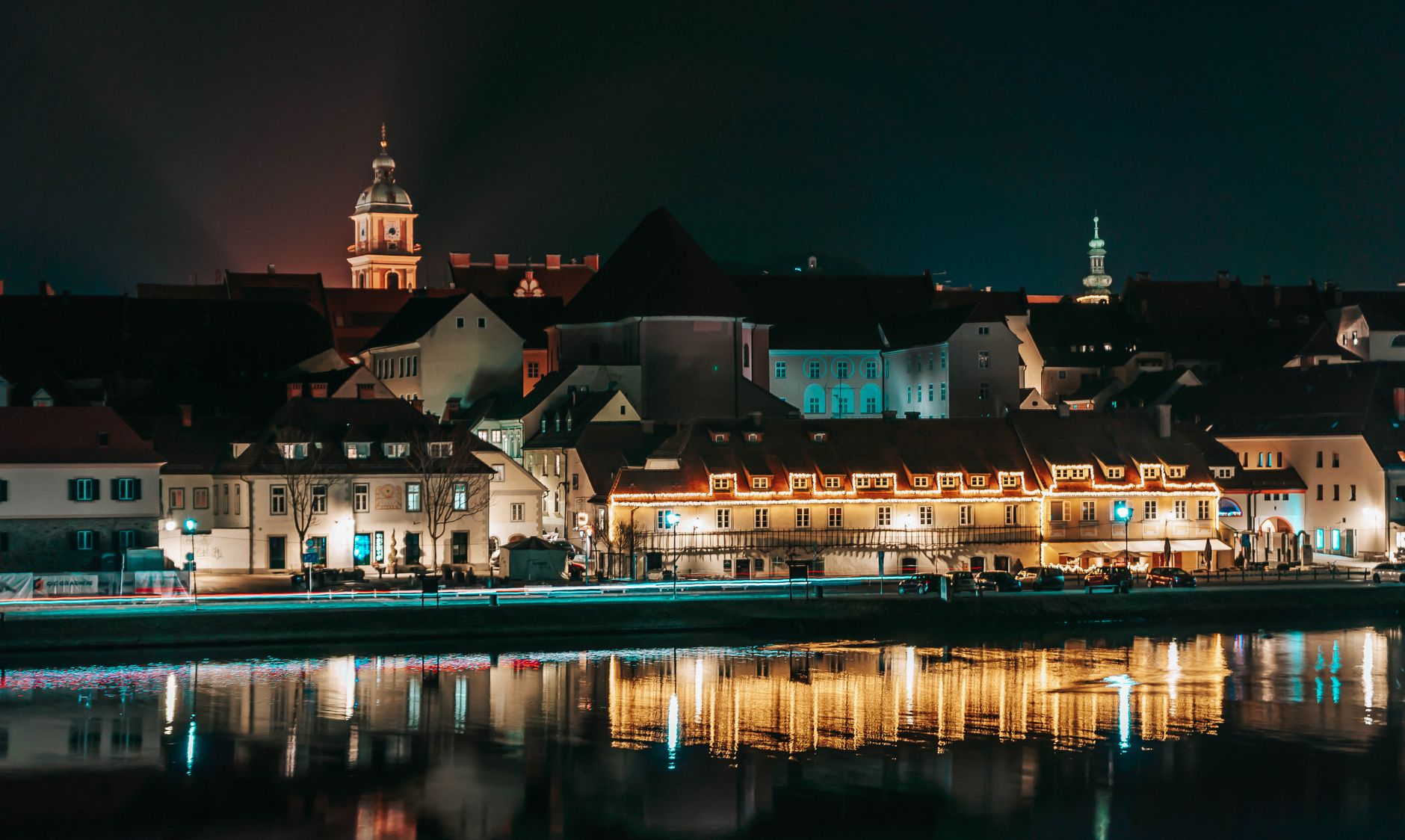
The Drava riverbank curves past medieval stone cellars and the glasshouse protecting a 440-year-old Žametovka vine. Summer turns cobblestones into an open-air stage. Acoustic sets bounce off the 14th-century Judgement Tower.Stari Trg & Glavni Trg
The civic square anchors a dense grid of 16th-century merchant houses. The 1515 Rotovž Town Hall dominates the center. Its asymmetrical clock tower allegedly shifted because a disgruntled mason never received full payment.Tabor & Nova Vas
Right-bank neighborhoods built in the 1950s housed workers of a booming textile zone. Socialist concrete blocks now shelter independent roasteries. Architects here reassess Yugoslav-era urban planning without nostalgia.Piramida & Kalvarija Hills
Steep dirt paths climb through terraced vineyards to ruined chapels overlooking the Drava basin. Piramida delivers the classic postcard angle. Kalvarija offers quiet benches.Pekarna Cultural Quarter
A late 19th-century Austro-Hungarian military bakery complex now channels industrial acoustics into contemporary performance. Bass frequencies rattle the original iron support beams.Mestni Park & Drava Promenade
Dense canopy shade covers three interconnected ponds and a four-kilometer walking loop. The Splavarska Brv pedestrian bridge spans the water with undulating steel beams. Locals treat the green belt as a living room.
Plan your trip
Before you go
- Getting There
- Maribor Edvard Rusjan Airport (MBX) sits 12 kilometers south of center, handling regional charters and seasonal European flights. Most travelers fly into Ljubljana Jože Pučnik Airport (LJU) and take a direct 90-minute FlixBus or Slovenian Railways train to Maribor’s main station. The A1 motorway connects Graz (45 minutes) and Ljubljana (1 hour 15 minutes) for drivers.
- Getting Around
- The city runs entirely on the Marprom municipal bus network, with 22 urban lines radiating from the central Glavni Trg terminal. Single rides cost €1.30 when bought from the driver, while the 2026 Maribor City Card bundles unlimited bus travel with museum discounts for €15 per day. Walk the compact Lent and Old Town districts on foot, or grab a BPP Maribor shared bicycle at docking stations along the Drava.
- Climate & Best Time
- Summer highs reach 27°C in July and August, though afternoon thunderstorms frequently roll in from the Pohorje range. May and September offer the smoothest conditions, hovering around 20°C with fewer rainy days and manageable hotel rates. Winters dip below freezing, with January averaging 0.5°C and occasional snowfall that coats the Drava riverbanks in quiet frost.
- Money & Tipping
- Slovenia uses the euro, and contactless cards work in nearly every restaurant and shop across the center. Keep €5–€10 in cash for the Lent market stalls, mountain huts on Pohorje, and family-run gostišča in the Styrian hills. Round up taxi fares and leave 5–10% at sit-down tables; service charges rarely appear on the final bill.
River, Rails, and Resilience
From Habsburg fortress to Slovenia’s eastern cultural anchor
- 1164
First record as Castrum Marchburch
A surviving parchment names a hilltop fortress overlooking the Drava River. Stone walls rose on Pyramid Hill. Merchants traded salt for Styrian iron at the muddy ford below, while the settlement waited for the empire to notice it.
- 1254
Habsburgs grant market town privileges
Imperial decree transformed a riverside trading post into a chartered urban center. Cobblestone streets replaced dirt paths. Guilds formed around wine cooperage and wool spinning, locking Maribor into Central European trade networks for centuries.
- 1354
Jewish community builds stone synagogue
Merchants pooled silver to carve out a place of worship beneath the cathedral’s shadow. Vaulted ceilings amplified Hebrew liturgy while Latin market chatter drifted through open windows. For two centuries, the quarter thrived.
- 1496
Imperial decree expels Jewish population
Emperor Maximilian I ordered the community to leave within months. Families abandoned ledgers, prayer books, and half-built homes along the riverbank. The synagogue stood empty, later converted into a granary and tavern before history reclaimed it.
- 1646
Plague sweeps through walled city
Flea-borne sickness climbed the Drava valley and slipped past the wooden gates. Bells tolled for weeks. Survivors boarded up timber-framed houses as the burial grounds overflowed the defensive moats, leaving the damp autumn air heavy with ash and incense.
- 1681
Plague column rises on main square
Marble replaced the temporary wooden crosses. Sculptors carved weeping angels to crown the stone pillar on the main square. Locals still trace the weathered reliefs during evening strolls, remembering the exact winter the fever broke.
Show the full timeline (19 moments)
- 1846
Southern Railway slices through valley
Iron tracks carved through the river corridor. Steam locomotives shattered the quiet rhythm of ox carts and barges. The Vienna-Trieste line turned Maribor into an industrial junction, and smokestacks soon choked the Drava’s banks.
- 1859
Slomšek takes the episcopal seat
The new bishop arrived with satchels of Slovene-language textbooks. He founded schools and standardized the local dialect for print. Maribor’s cathedral echoed with lessons instead of Latin mass, quietly planting the seeds of a national awakening.
- 1892
Hermann Potočnik enters the world
Born to a military family in a city divided by language and class, the boy grew up watching trains depart toward Vienna. He would later draft blueprints for space stations decades before the first rocket left the ground. Maribor’s railway workshops taught him that geometry could conquer gravity.
- 1918
Maister secures the city for Slovenia
German-speaking councilmen voted to join Austria as the empire collapsed overnight. Maister arrived with a handful of uniformed volunteers and a poet’s conviction, seizing the town hall and railway stations. Within forty-eight hours, the flag changed and a new border was drawn in the snow.
- 1934
Drago Jančar born near factory chimneys
He grew up beside soot-stained factory chimneys and closed border checkpoints. The boy absorbed the city’s fractured identity. Decades later, readers still find Maribor’s damp alleys and quiet resentments woven into his psychological novels.
- 1941
Nazi occupation imposes forced Germanization
Wehrmacht officers marched into town halls and renamed streets overnight. Slovene schools closed their doors, while libraries burned their Slavic collections in public squares. Families whispered in their kitchens, hiding resistance pamphlets beneath floorboards.
- 1945
Allied bombers strike railway district
Fifty separate raids reduced the industrial quarter to brick dust. The Drava bridges collapsed into the current. Survivors sifted through rubble for salvageable timber, dragging beams through mud while sirens wailed across the valley.
- 1975
University of Maribor opens its doors
A former factory campus welcomed its first generation of students and professors. Lecture halls replaced assembly lines, shifting the city’s pulse from heavy manufacturing to intellectual inquiry. The riverfront slowly shed its soot-stained identity.
- 1978
Zoran Predin forms band in basement
They plugged cheap amplifiers into cracked sockets near the Lent district. Predin sharpened his voice against damp brick walls. The cassette tapes they smuggled out of town eventually soundtracked a country’s quiet rebellion.
- 1991
Slovenia declares independence from Yugoslavia
Tanks rolled down the Ljubljana highway while Maribor watched the border close. The Ten-Day War left scars on the infrastructure, but the city council quickly pivoted toward European integration. Customs barriers fell, and the Drava became a bridge again.
- 2012
European Capital of Culture transforms waterfront
Scaffolding wrapped decaying warehouses as artists claimed them for galleries. The Lent Festival spilled into the streets. Crowds gathered along the riverbank to watch acrobats and orchestras perform while Maribor finally stopped apologizing for its provincial past.
- 2015
Old Vine reaches fifth century of harvest
Pruners trimmed the knotted trunk that has survived wars, fires, and neglect. The Žametovka grapes yield barely enough for a hundred bottles, distributed to visiting dignitaries and local vintners. It stands as a living archive of Styrian soil.
- 2026
City claims European Best Wine Capital title
Judges walked through amphora cellars and family estates along the wine route. They recognized centuries of uninterrupted viticulture. Tourists now follow the terraced vines uphill, trading museum tickets for glasses of unfiltered red at dusk.
Who lived here
-
General & Poet · 1874–1934
Rudolf Maister
Secured the city for Yugoslavia in 1918
He arrived with Slovene troops in November 1918 to block German annexation and formally handed Maribor to the new Yugoslav state. Standing before the Freedom Square monument today, he would likely recognize the quiet civic pride that replaced imperial flags.
-
Bishop & Educator · 1800–1862
Anton Martin Slomšek
Enthroned as Bishop in Maribor in 1859
He moved the Diocese of Lavant to Maribor in 1859 to anchor Slovene-language education against Germanization. His push for rural literacy transformed local parishes into early cultural hubs. Visitors reading his old parish registers in the cathedral archives trace his quiet revolution on paper.
-
Royal Patron & Industrialist · 1782–1859
Archduke John of Austria
Promoted Styrian mining and early industrial networks
He used his Styrian estates to fund early railway surveys and ironworks that eventually turned Maribor into a manufacturing node. Modern visitors riding the Pohorje cable car trace the industrial corridors his patronage first mapped. The mountain’s current infrastructure grew directly from those nineteenth-century logging routes.
-
Architect · 1860–1935
Fritz Friedriger
Designed the Baroness’ House in 1903
He wrapped the Secessionist Baroness’ House in yellow ceramic tiles and geometric plant motifs before the city shifted toward functionalist concrete. The building survived decades of neglect to now house engineering students, quietly proving his structural instincts. His yellow terracotta trim catches the afternoon sun exactly as he calculated in 1903.
Where to Eat
Where locals actually book dinner — not the tourist menus.
-
Žametovka
A dark-skinned, late-harvest grape native to Styria that produces low-yield, high-tannin reds with notes of dried cherry and forest floor. Seek out bottles from family cellars near Haloze to taste the same varietal that feeds the Old Vine.
-
Pohorska Gibanica
A dense, layered pastry from the Pohorje hills stacked with buckwheat dough, cottage cheese, walnuts, and poppy seeds. Mountain huts like Koča Luka bake it fresh for hikers, pairing it with strong black coffee to cut through the rich, nutty sweetness.
-
Štajerski Kmečki Zajtrk
A heavy morning plate featuring pumpkin seed oil (bučno olje), smoked meats, hard-boiled eggs, and dark rye bread drizzled with honey. It anchors the local palate before a day of walking or cycling the Drava basin.
-
Rooster Coffee & Polek | Coffee & Wine Bar
Rooster serves precision-pulled espressos and light brunch plates until 2 PM, while Polek shifts gears after sunset with global bean roasts transitioning into natural Styrian wine flights. Both spaces prioritize lingering over quick turnover.
-
Bučna Olja
Pressed from Styrian naked pumpkin seeds, this emerald oil carries a toasted, nutty intensity that locals pour over everything from vanilla crepes to fresh salads. Look for cold-pressed bottles at the Glavni Trg morning market to gauge harvest quality by the year on the label.
-
Maribor’s Underground Wine Cellars
The Vinag complex stretches over 14 kilometers of limestone tunnels beneath the city, where oak barrels rest at a steady 12°C. Smaller family-run gostišča in the surrounding hills pair these reserves with house-made žganci and roasted game, avoiding tourist-trap menus entirely.
Insider tips
Small things that change how the city treats you.
Rent BPP Bikes
The historic core and Drava embankment are flat and heavily pedestrianized. Use the BPP Maribor app to unlock a city bike for under €5 a day.Taste the Žametovka
The 450-year-old Stara Trta vine still drops grapes for ceremonial pressing. Book a guided tasting at the Old Vine House to understand Styrian winemaking roots.Carry Small Bills
Credit cards work in most restaurants, but Pohorje mountain huts and Lent market vendors prefer cash. Keep €50–100 in smaller denominations for seamless transactions.Visit in September
Summer thunderstorms clear by early autumn, leaving crisp 19°C days and the Old Vine Festival. You will avoid July heatwaves and still catch open-air cultural events.Respect the NOB Sphere
The bronze sphere at Freedom Square lists 667 executed partisans. Approach quietly; it is a working memorial, not a photo prop.Skip the MBX Shuttle
Maribor airport sits just 12 km from downtown. A licensed taxi costs €25–40 and drops you at your hotel door faster than waiting for a scheduled bus.
Gallery
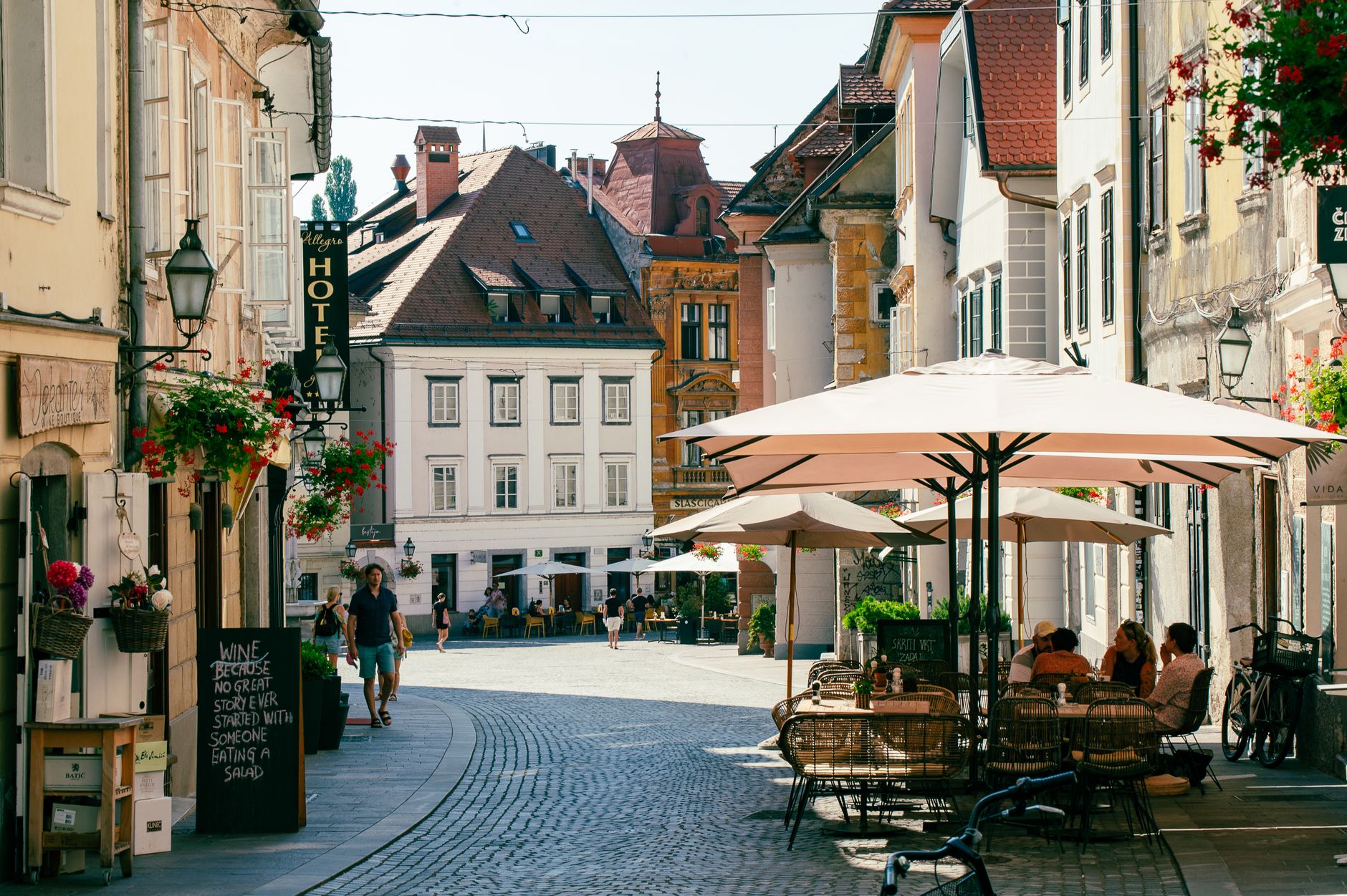
The city, as it actually looks.





Frequently asked
Is Maribor worth visiting?
Yes, especially if you prefer layered history over crowded tourist circuits. The city packs a 450-year-old vineyard, Austro-Hungarian architecture, and alpine proximity into a walkable center. You will find it quieter and cheaper than Ljubljana.
How many days do you need in Maribor?
Two full days cover the essentials without rushing. Spend the first walking the Lent embankment and exploring Maribor Castle. Dedicate the second to a Pohorje cable car ride or a short train hop to Ptuj.
How much does a weekend in Maribor cost?
A couple can comfortably manage on €120–€150 per day excluding flights. Mid-range hotels average €70 nightly, while a three-course dinner with regional wine costs roughly €45 total. City buses and free museum courtyards stretch that budget further.
Is public transport in Maribor reliable?
The Marprom bus network covers the city and suburbs efficiently, though the historic center is best explored on foot. Single tickets cost under €1.50 and can be purchased directly from drivers. Walking remains the fastest way to cross between the Cathedral and the riverfront.
Is Maribor safe for tourists?
Slovenia consistently ranks among Europe’s safest destinations, and Maribor reflects that standard. Violent incidents against visitors are rare, though standard pickpocket awareness applies during Glavni Trg market hours. You can walk the riverside paths after dark without hesitation.
Pick up where you left off
Saved and recently read places — kept on this device only.
Photo credits (13)
- Eugene Kuznetsov — Pexels License (https://www.pexels.com/license/) — Source: https://www.pexels.com/photo/5565358/
- Ana Kenk — Pexels License (https://www.pexels.com/license/) — Source: https://www.pexels.com/photo/36478359/
- Gaj Gorza — Pexels License (https://www.pexels.com/license/) — Source: https://www.pexels.com/photo/11062536/
- Frank van Dijk — Pexels License (https://www.pexels.com/license/) — Source: https://www.pexels.com/photo/37239623/
- ᛟᛞᚨᛚᚹ ᚨᚱᚲᛟᚾᛊᚲᛁ — Pexels License (https://www.pexels.com/license/) — Source: https://www.pexels.com/photo/35493571/
- Marek P — Pexels License (https://www.pexels.com/license/) — Source: https://www.pexels.com/photo/18378634/
- Matej Sudar — Pexels License (https://www.pexels.com/license/) — Source: https://www.pexels.com/photo/139597/
- Cosmin Gavris — Pexels License (https://www.pexels.com/license/) — Source: https://www.pexels.com/photo/32472552/
- Alexander Nadrilyanski — Pexels License (https://www.pexels.com/license/) — Source: https://www.pexels.com/photo/11487774/
- Alexander Nadrilyanski — Pexels License (https://www.pexels.com/license/) — Source: https://www.pexels.com/photo/11487629/
- Dragan Cenic — Pexels License (https://www.pexels.com/license/) — Source: https://www.pexels.com/photo/33275578/
- Ákos Szűcs — Pexels License (https://www.pexels.com/license/) — Source: https://www.pexels.com/photo/36613996/
- José Barbosa — Pexels License (https://www.pexels.com/license/) — Source: https://www.pexels.com/photo/13316759/
Photos may have been resized or cropped.