Plan and listen to Roman Walls In Mirje with Audiala.
Audio guide in your pocket, itinerary in your browser. Built for the way you actually visit.
Introduction
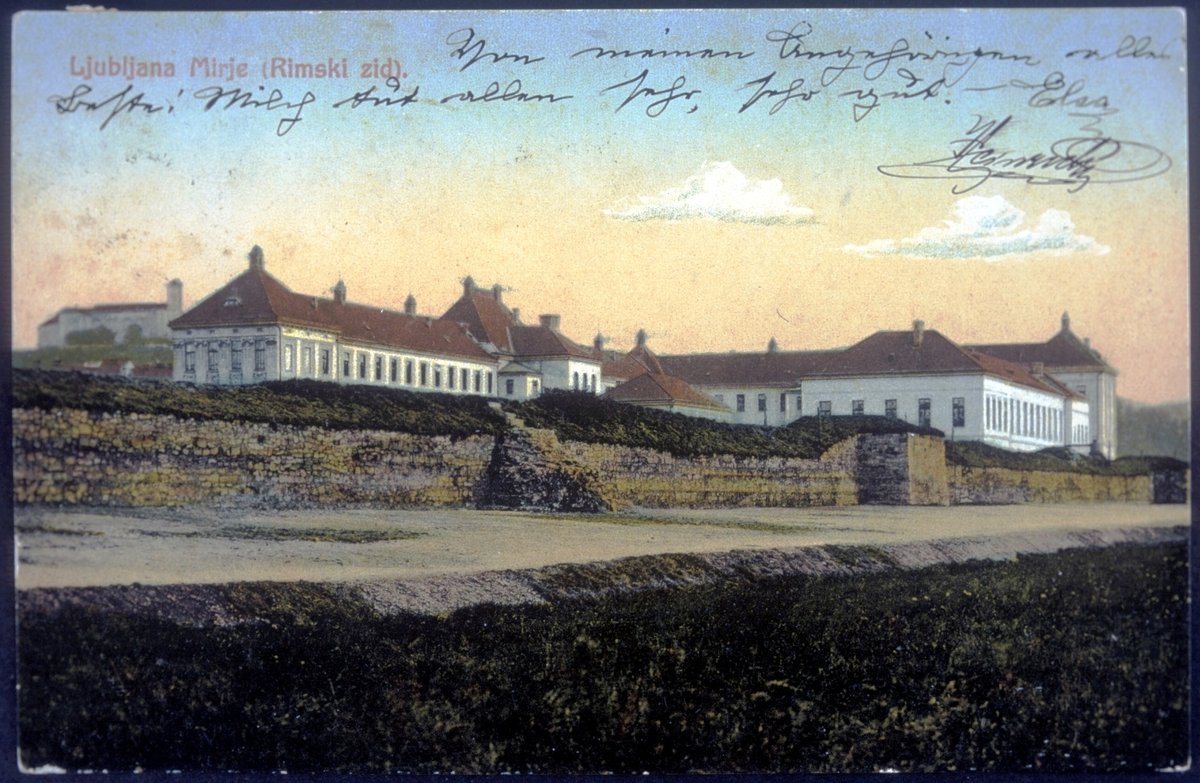
The Roman Walls at Mirje are a defining landmark of Ljubljana, seamlessly blending ancient history with the city’s vibrant modern life. Once encircling Emona—the Roman predecessor of Ljubljana—these walls stand as enduring symbols of Roman engineering, urban planning, and the city’s evolving identity. Built between 14 and 15 AD and later restored by the celebrated architect Jože Plečnik, the Mirje walls offer visitors a direct connection to over two millennia of history. This comprehensive guide covers the historical background, architectural features, visiting information, nearby attractions, accessibility, and expert tips to help you make the most of your visit to this iconic site (Emona Archaeological Park official website; Visit Ljubljana).

Historical Context of the Roman Walls at Mirje
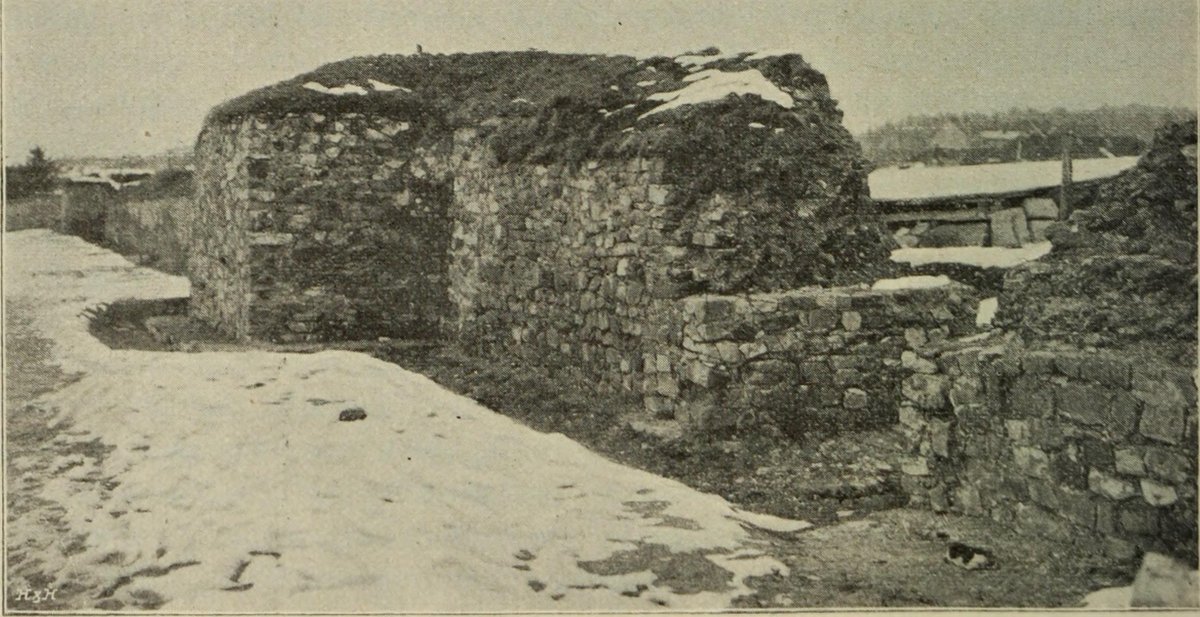
The Roman Walls at Mirje are among the most prominent archaeological remains of Emona, founded as a Roman colony in the early 1st century AD. The walls marked the city’s defensive perimeter, enclosing an area of approximately 540 by 430 meters and sheltering a population of 3,000–5,000. Emona’s strategic location—between the Ljubljanica River and Castle Hill—made it a vital outpost, linking major Roman settlements such as Aquileia and Siscia (slovenia.si).
After the Roman period, the walls lost their defensive purpose. Over centuries, they were partially dismantled, and their stones repurposed for later medieval and modern buildings. The 20th century saw renewed appreciation for the walls, culminating in their restoration and integration into Ljubljana’s urban landscape (Academia.edu).
Architectural Features and Construction Techniques
Materials and Design
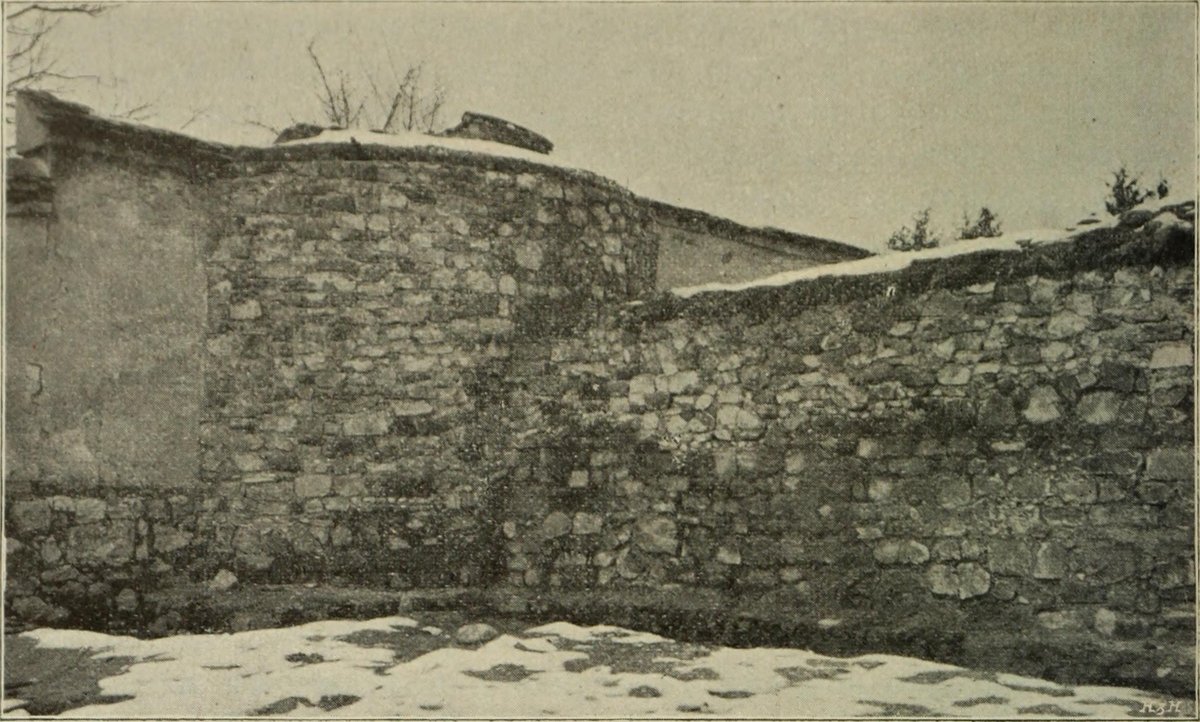
Roman engineers constructed the walls with outer faces of precisely hewn stone blocks, bonded with lime mortar. The core was filled with a mix of river pebbles, sand, and rubble, achieving a thickness of up to 2.4 meters and heights originally reaching 6–8 meters (culture.si). The rectangular city plan included four main gates, with towers at corners and strategic points along the walls.
Defensive Elements
Emona’s defenses were strengthened by a double moat system and natural barriers such as the Ljubljanica River slope. The city’s gateways allowed for controlled access, and side gates could be sealed in times of danger—a defensive feature still visible today at Mirje.
Restoration and Preservation
In the 1930s, architect Jože Plečnik led a visionary restoration, blending historical accuracy with modern design. He reconstructed significant wall sections using original Roman blocks and introduced new features:
- The Roman Pyramid: A symbolic stone pyramid above the southern gate, built from repurposed blocks (Spotted by Locals).
- Colonnade and Park: Plečnik designed a leafy park and a colonnade beside the main gate, creating a tranquil urban retreat (drjamtravels.blog).
- Lapidarium: He integrated an arched vault displaying Roman archaeological finds.
Plečnik’s interventions are recognized as part of Ljubljana’s UNESCO World Heritage and are exemplary of creative heritage management (drjamtravels.blog).
Archaeological and Cultural Significance
The Roman Walls at Mirje are a focal point of the Emona Archaeological Park, which includes reconstructed streets, houses, and burial sites. The walls are celebrated for their preservation and for illustrating Roman military architecture and urbanism. Plečnik’s restoration gave the site renewed civic and symbolic value, making it a hub for education, cultural memory, and public gathering (letsgoslovenia.si).
Planning Your Visit
Location & Access
The Roman Walls run along Mirje Street, just south of Ljubljana’s city center. The site is easily accessible by foot from Prešeren Square (15–30 minutes), by bike (dedicated lanes), or via public transport—bus lines 1, 6, and 20 stop nearby. Car parking is available at city lots, a short walk from the walls (Evendo).
Opening Hours & Tickets
- Opening Hours: The Roman Walls and park are open 24/7, year-round, as an open public space.
- Tickets: Admission is free; no tickets are required (Live the World).
- Lapidarium/Museum: The nearby lapidarium and City Museum of Ljubljana have specific hours (typically 10:00–18:00, Tuesday–Sunday). Check MGML for current details.
Guided Tours & Events
- Guided Tours: Available through the City Museum of Ljubljana, including the “Roman Trail of Ljubljana.” Tours may include costumed guides and interactive experiences (Visit Ljubljana).
- Special Events: Cultural festivals, open-air concerts, and historical reenactments are held throughout the year (Slovenia.info).
Accessibility
- Physical Access: The site is pedestrian-friendly and mostly flat, suitable for wheelchair users, though some uneven surfaces exist due to the ancient masonry (Slovenian Guide).
- Facilities: No dedicated visitor center at the walls, but nearby cafes, shops, and amenities in Mirje.
Visitor Etiquette & Photography
- Preservation: Please do not climb on the walls or disturb the masonry.
- Photography: The site offers excellent photo opportunities, especially at sunrise/sunset or from the Roman Pyramid.
- Best Times to Visit: Spring and autumn offer pleasant weather and fewer crowds (Slovenian Guide).
Frequently Asked Questions (FAQ)
Q: What are the opening hours for the Roman Walls at Mirje?
A: The walls and park are open 24/7, year-round. The lapidarium/museum nearby has dedicated hours.
Q: Is there an entry fee?
A: No. The site is free to visit. Tickets are required only for certain museum exhibitions and guided tours.
Q: Are guided tours available?
A: Yes. Book through the City Museum of Ljubljana or join special tours during cultural events.
Q: Is the site accessible for people with disabilities?
A: Yes, the main pathways are wheelchair accessible, but be cautious of some uneven surfaces.
Q: What other Roman sites can I visit nearby?
A: Emonan House, Early Christian Centre, and the City Museum of Ljubljana are part of the Roman heritage trail.
Q: When is the best time to visit?
A: Spring and late autumn for mild weather and fewer visitors.
Listen to the full story in the app
The whole Roman Walls In Mirje,
told well.
Audio guides for 1,100+ cities across 96 countries. History, stories, and local insight — offline ready.
Verified, and shown.
Researched and written by the Audiala editorial team from historical records, architectural archives, and local expertise.
Researched from Wikidata, Wikipedia & official sources · fact-checked · How we make our guides →