Plan and listen to Paviljon Na Cesti Dveh Cesarjev with Audiala.
Audio guide in your pocket, itinerary in your browser. Built for the way you actually visit.
Introduction: A Portal to Ljubljana’s Imperial Past
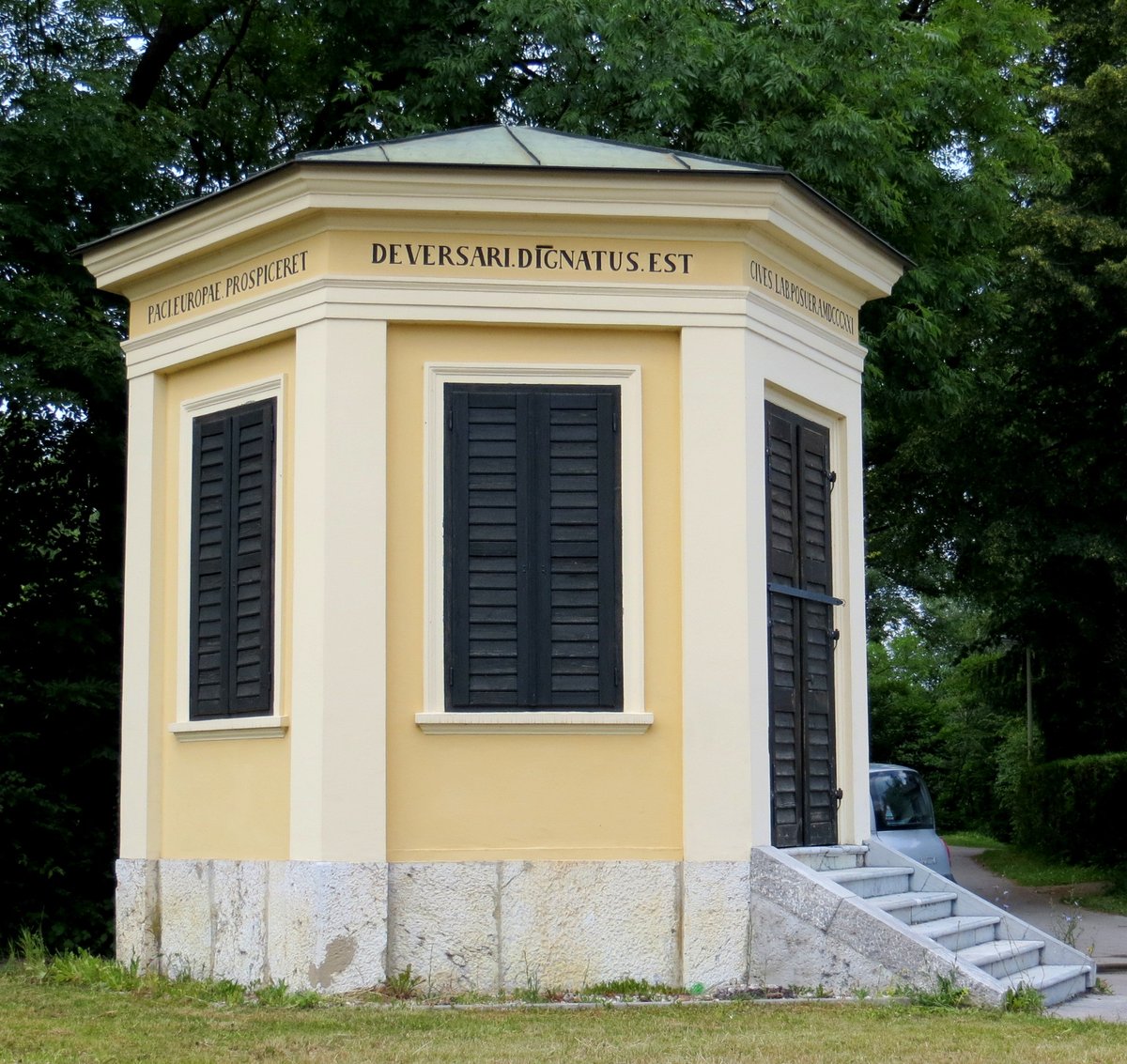
Nestled along the storied Cesta Dveh Cesarjev (Road of Two Emperors), the Paviljon Na Cesti Dveh Cesarjev is a unique monument in Ljubljana, Slovenia, that bridges the city’s imperial legacy with contemporary cultural life. Constructed in 1820–1821 to commemorate the pivotal 1821 Congress of the Holy Alliance, where Emperor Francis I of Austria and Tsar Alexander I of Russia convened, the pavilion is an enduring symbol of European diplomacy and Slovenian heritage. Blending neoclassical Empire style with historical gravitas, the pavilion and its setting offer visitors a rare glimpse into the diplomatic, architectural, and cultural history of Ljubljana (geocaching.com).
Today, the pavilion stands protected under Slovenian heritage laws and is integrated into the revitalized urban landscape of Ljubljana. Its significance is further enhanced by the addition of a contemporary, minimalist pavilion by Scapelab, transforming the area into a vibrant hub for exhibitions and community engagement (scapelab.si). This guide explores the rich history and evolving role of the pavilion, offering essential visitor information, travel tips, and insights into its enduring appeal.

Historical Context and Architectural Value
Origins and Significance
Commissioned by Baron Jožef Kalasanc Erberg, the pavilion was constructed as a gesture from Ljubljana’s citizens to Emperor Francis I, marking his birthday and visit during the 1821 Congress of the Holy Alliance—a defining event that shaped post-Napoleonic Europe (dol.si). The event brought together European monarchs intent on restoring peace and stability, and the pavilion served as a ceremonial resting place amid the emperor’s hunting expeditions in Mestni log.
Architectural Features
The pavilion’s hexagonal floor plan and neoclassical design epitomize early 19th-century Empire style. Its clean lines, symmetry, and elegant proportions are complemented by a gently sloping metal roof and Latin inscriptions that memorialize the emperor’s visits. Baron Erberg’s design extended to a larger ensemble, including a commemorative obelisk and additional classicist structures, underscoring the pavilion’s artistic and historical value (dol.si).
Heritage Status
One of Slovenia’s few surviving examples of empirical architecture, the pavilion is protected as a national monument and features in educational initiatives, heritage trails, and city cultural programs (ljubljana.si). Recent urban development has prioritized accessibility and preservation, ensuring the site remains a touchstone for both locals and visitors.
Cultural Significance and Modern Relevance
Symbol of Diplomacy and Local Identity
The pavilion is emblematic of Slovenia’s connection to European diplomatic history and is a point of local pride. It hosts commemorative events, educational activities, and serves as a gathering place for the community, especially during significant anniversaries such as the bicentennial jubilee of the 1821 Congress (dol.si).
Integration with Urban Life
Located along the renovated Cesta Dveh Cesarjev, the pavilion benefits from new pedestrian paths, cycling lanes, and improved public transport, making it easily accessible and inviting for a broad range of visitors (ljubljana.si).
Contemporary Architecture: The Scapelab Pavilion
A short walk away, the modern Paviljon Na Cesti Dveh Cesarjev designed by Scapelab adds a dynamic dimension to the area. Featuring minimalist steel and glass construction, this contemporary structure hosts cultural events and exhibitions, and serves as a model for sustainable, flexible public architecture (scapelab.si). The interplay between the historic and modern pavilions enriches the cultural landscape of Ljubljana.
Practical Visitor Information
Location
- Address: Cesta dveh cesarjev 399, Mestni log, Ljubljana
- Easily accessible by car, bicycle, or public transport (bus line 16) (Mestna občina Ljubljana).
Visiting Hours and Tickets
- Historic Pavilion Exterior: Open for public viewing at all times; interior access is rare and generally limited to pre-arranged events (eHeritage.si PDF).
- Contemporary Pavilion (Scapelab): Open Monday–Sunday, 10:00 AM–6:00 PM (closed on major holidays).
- Admission: Free for both exteriors; special exhibitions or events may require tickets (scapelab.si).
Accessibility
- Smooth sidewalks, tactile markings for visually impaired, and step-free access for wheelchair users.
- No on-site restrooms or cafés, so plan accordingly (Brezovir.si).
Safety
- The area is generally safe during the day, though it can be quiet in the evening. Standard urban caution is advised (Revieweuro.com).
Guided Tours and Educational Opportunities
- Regular Guided Tours: Not available for the historic pavilion alone, but it is included in broader heritage walks and during special events.
- Group or Educational Visits: Arrange through the Museum and Galleries of Ljubljana or the Ljubljana Tourist Board.
- Interpretive Signage: On-site, with information in Slovenian and some English.
Nearby Attractions and Travel Tips
- Tivoli Park: Ljubljana’s largest park, great for leisure and picnics.
- Ljubljana Castle: Iconic hilltop fortress with panoramic views.
- Plečnik House: Museum dedicated to renowned architect Jože Plečnik.
- Vič District: Blend of historical and modern city life.
- Central Market, Old Town: Bustling center with shops, cafes, and cultural landmarks.
Tips:
- Visit in spring or early autumn for optimal weather.
- Bring water and snacks; few amenities are on site.
- Respect the monument and avoid climbing or littering.
- Combine your visit with cycling or walking along Cesta dveh cesarjev.
Frequently Asked Questions (FAQ)
Is the pavilion interior open to the public?
The exterior is always accessible; interior visits are rare and require prior arrangement.
Are tickets required?
No tickets for the exterior; special events may require tickets.
Is the pavilion wheelchair accessible?
Yes; recent upgrades ensure good accessibility.
Are guided tours available?
Tours can be arranged through local heritage organizations or as part of city walks.
How do I reach the pavilion?
By city bus line 16, cycling, walking, or car (limited parking available).
Visual Media Suggestions
- High-resolution photographs of the pavilion’s hexagonal exterior and the Scapelab modern pavilion (“Paviljon Na Cesti Dveh Cesarjev exterior glass facade”).
- Map showing the pavilion’s location relative to major Ljubljana landmarks.
- Aerial or panoramic shots of the Cesta dveh cesarjev corridor.
Listen to the full story in the app
The whole Paviljon Na Cesti Dveh Cesarjev,
told well.
Audio guides for 1,100+ cities across 96 countries. History, stories, and local insight — offline ready.
Verified, and shown.
Researched and written by the Audiala editorial team from historical records, architectural archives, and local expertise.
Researched from Wikidata, Wikipedia & official sources · fact-checked · How we make our guides →