Majda Vrhovnik in Ljubljana
Majda Vrhovnik is remembered as one of Slovenia’s notable figures of courage and resistance during World War II. Her memory is honored in Ljubljana through monuments, plaques, schools and other public spaces. The sites dedicated to her offer a way to learn about her life and the wider history of wartime Slovenia. Further information is available from Slovenska biografija, Visit Ljubljana and ZZB NOB.
History
Early life and education
Majda Vrhovnik was born in Ljubljana on April 14, 1922. She attended the Women’s Real Gymnasium in Ljubljana before enrolling at the Faculty of Medicine at the University of Ljubljana. Her studies were interrupted by World War II (Slovenska biografija).
Political activism and resistance
Vrhovnik became involved in student organizations and edited youth periodicals. She joined the League of Communist Youth of Yugoslavia (SKOJ) in 1939 and the Communist Party of Slovenia in 1940.
After the Axis occupation of Yugoslavia in 1941, she joined the National Liberation Movement (NOB). She worked as a trusted courier for the Central Committee of the Communist Party of Slovenia, handling confidential assignments. From December 1941, under the partisan name “Lojzka,” she worked in the Central Technical Section, helping run clandestine printing presses that produced materials for the resistance.
Arrest, execution and legacy
Vrhovnik was captured and executed on May 4, 1945, in the Welzenegg forest near Klagenfurt, Austria. Her burial place remains unknown. She was posthumously awarded the title of “National Hero” of Yugoslavia.
Her name appears on streets, schools and public spaces across Ljubljana. Her life and sacrifice are taught in schools, featured in cultural works and remembered in local commemorations, where she is a symbol of youthful resistance and national pride (Slovenska biografija, Visit Ljubljana).
What to see
Majda Vrhovnik Primary School and memorial site
Majda Vrhovnik Primary School is at Gregorčičeva ulica 16. Named in her honor, the school has a memorial corner with exhibits about her life. A memorial site in front of the school features inscriptions and is often adorned with flowers and wreaths during commemorations. It serves as a focal point for educational programs and remembrance events, and is one of more than 25 World War II memorials in Ljubljana.
Memorial plaque
A plaque at her birthplace, at Trg Prekomorskih brigad 1, pays tribute to Vrhovnik and is a frequent stop on historical walking tours.
Majda Vrhovnik Monument
The public monument is in a prominent area of Ljubljana, easily reached from the city center. Set amid landscaped greenery, the statue is accompanied by plaques detailing Vrhovnik’s life and resistance activities.
Statue of Majda Vrhovnik commemorating her resistance efforts during WWII.
National Museum of Contemporary History
The National Museum of Contemporary History has exhibits on World War II and the resistance, including references to Vrhovnik (Visit Ljubljana).
Practical visiting information
Hours, tickets and accessibility
- Outdoor sites, including the plaque and monument Accessible at all times and free of charge. The monument is listed as open 24/7.
- Primary School memorial corner Typically open on weekdays from 8:00 AM–3:00 PM. Advance arrangements are recommended for group visits (Osnovna šola Majde Vrhovnik).
- Memorial site in front of the school Accessible at all times; no tickets are required.
- National Museum of Contemporary History Open Tuesday–Sunday, 10:00 AM–6:00 PM. General admission is ~€6; discounts are available for students and seniors.
- Accessibility The major sites are described as wheelchair accessible and centrally located. The monument has paved paths and nearby parking. The memorial site has pedestrian-friendly surroundings.
- Getting around The memorial site is a short walk from the city center and accessible by bus, bicycle or on foot (Hikersbay). Major sites are also easy to reach by public transportation.
Guided tours and commemorative events
Guided tours are available through local operators, visitor centers, tourism offices and historical societies. Tours often focus on Ljubljana’s World War II history and may include sites connected with Vrhovnik.
Commemorative events may include lectures, performances and wreath-laying ceremonies. They are held around April 14 (Vrhovnik’s birthday), May 4 (the anniversary of her death), April 27 (Day of Uprising Against Occupation) and May 9 (Victory Day). Events at the monument are also held on national holidays such as Liberation Day (May 9). The memorial site has commemorations on April 27, May 9 and November 1 (Day of the Dead), including wreath-laying ceremonies (ZZB NOB).
Tips for a meaningful visit
- Combine several memorials and related museums for a broader historical perspective.
- Local tours can provide deeper insights; public ceremonies offer a chance to learn about local commemorative traditions.
- Behave respectfully at memorials, especially during school hours and official events.
- Photography is permitted, but should be discreet during ceremonies or school activities.
- Laying flowers or lighting candles is customary, especially on anniversaries.
- The monument is described as quieter in the early morning or late afternoon.
- Prepare for Ljubljana’s changeable weather (Kimkim).
- Check event schedules through Visit Ljubljana.
Nearby places
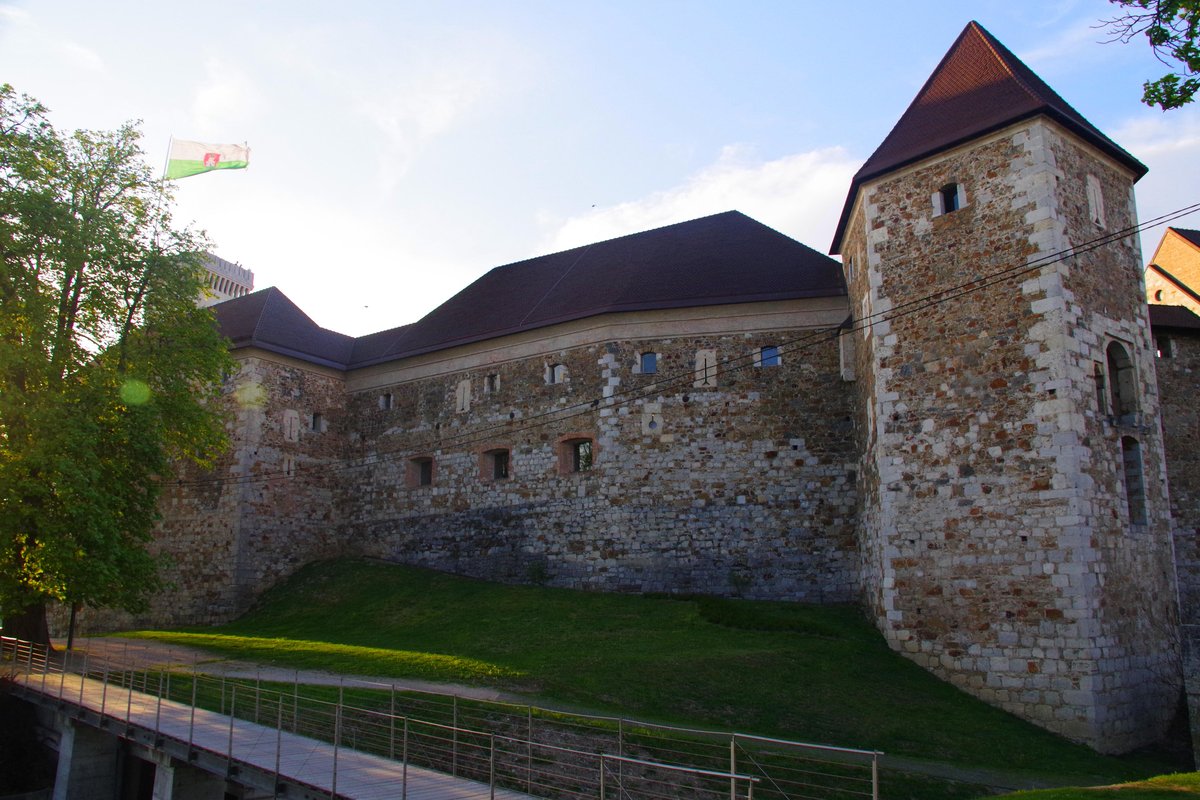
- Ljubljana Castle Historical exhibitions and panoramic views (Ljubljana Castle).
- Tivoli Park The city’s largest park and home to the National Museum of Contemporary History (National Museum of Contemporary History).
- Metelkova Art Center A hub of contemporary culture (Metelkova).
- Central Market and Old Town Known for local cuisine and traditional architecture (Jetsetting Fools).
FAQs
Where can I see memorials dedicated to Majda Vrhovnik in Ljubljana?
At her birthplace at Trg Prekomorskih brigad 1, the Primary School and the public monument.
Are guided tours available?
Yes. Local operators and historical societies offer tours that may include the monument and other sites connected with Vrhovnik.
Is there an entrance fee?
The memorial-site information states that no tickets are required and that all major sites are free to visit. The National Museum of Contemporary History listing gives general admission as ~€6, with discounts for students and seniors.
Are the sites wheelchair accessible?
The major sites are described as wheelchair accessible.