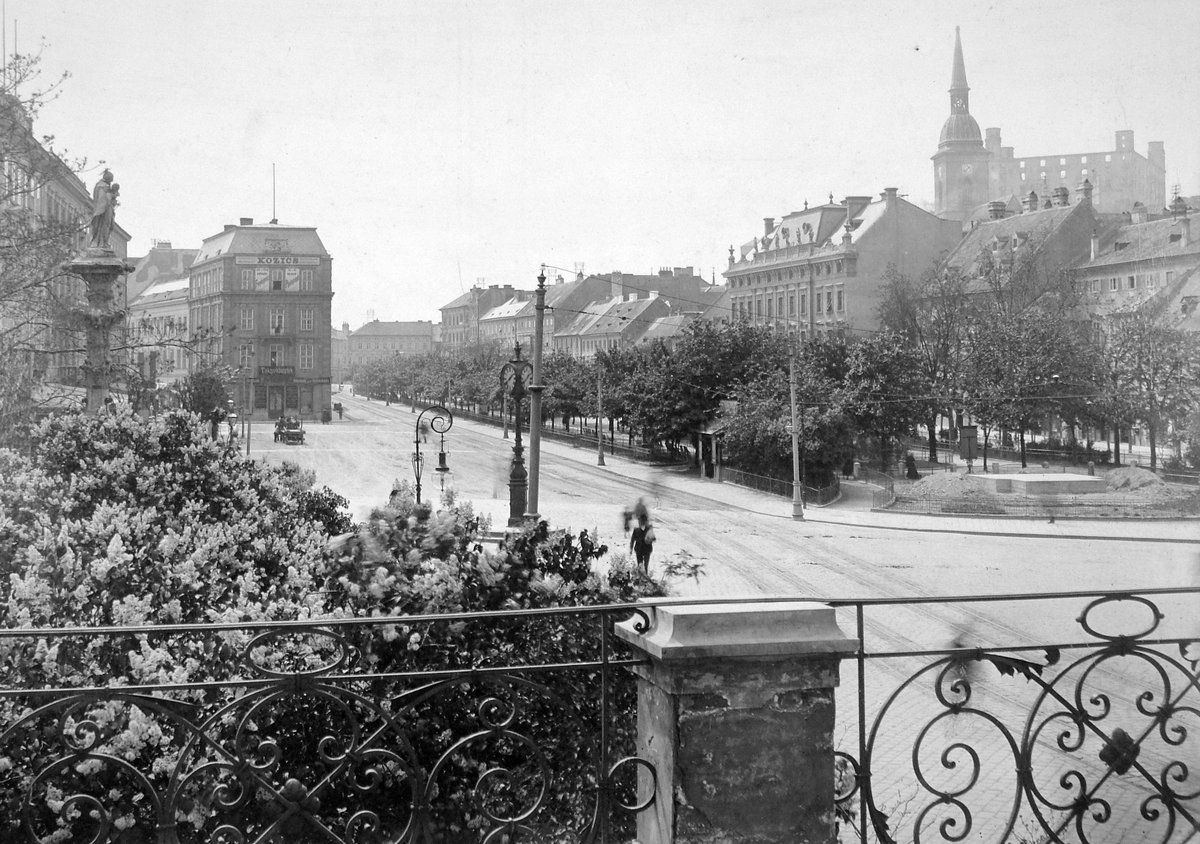
Plan and listen to Slavín with Audiala.
Audio guide in your pocket, itinerary in your browser. Built for the way you actually visit.
Introduction
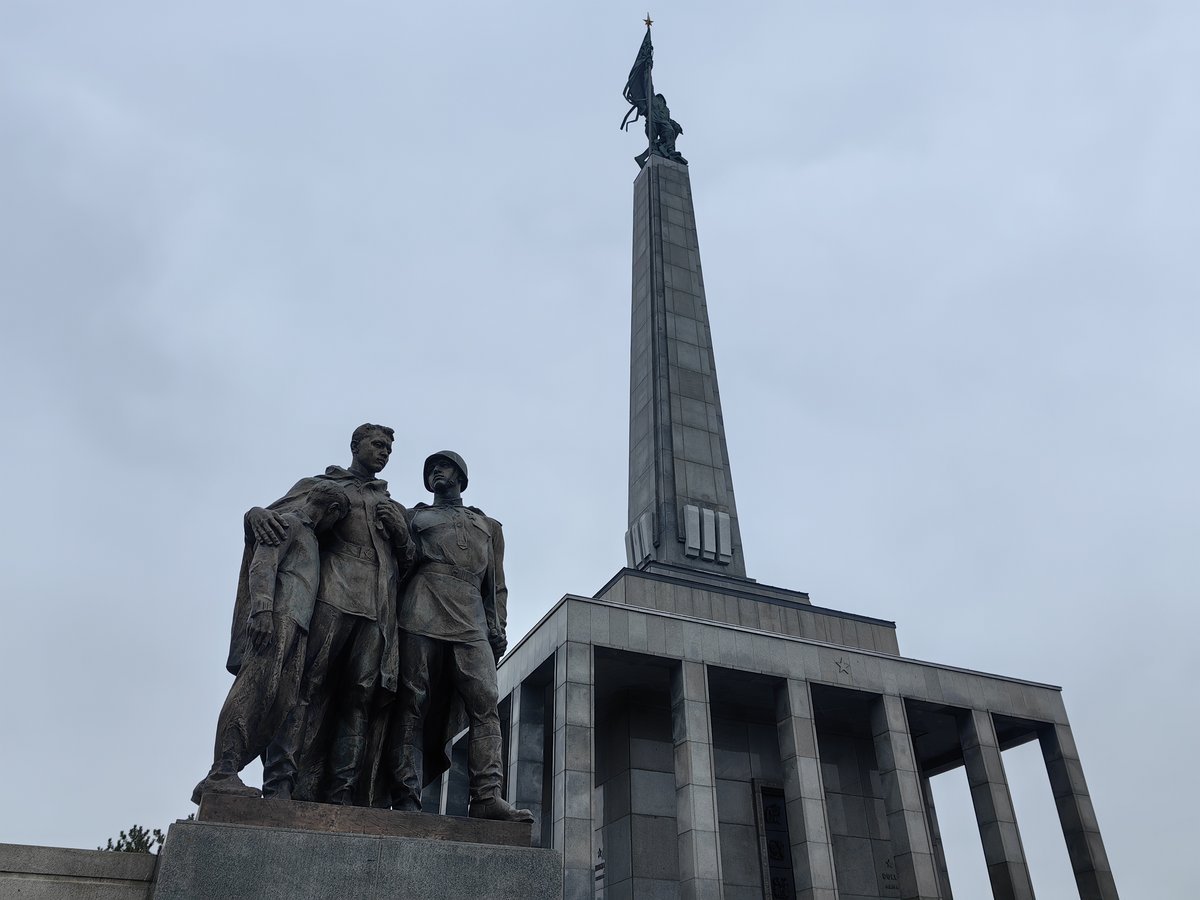
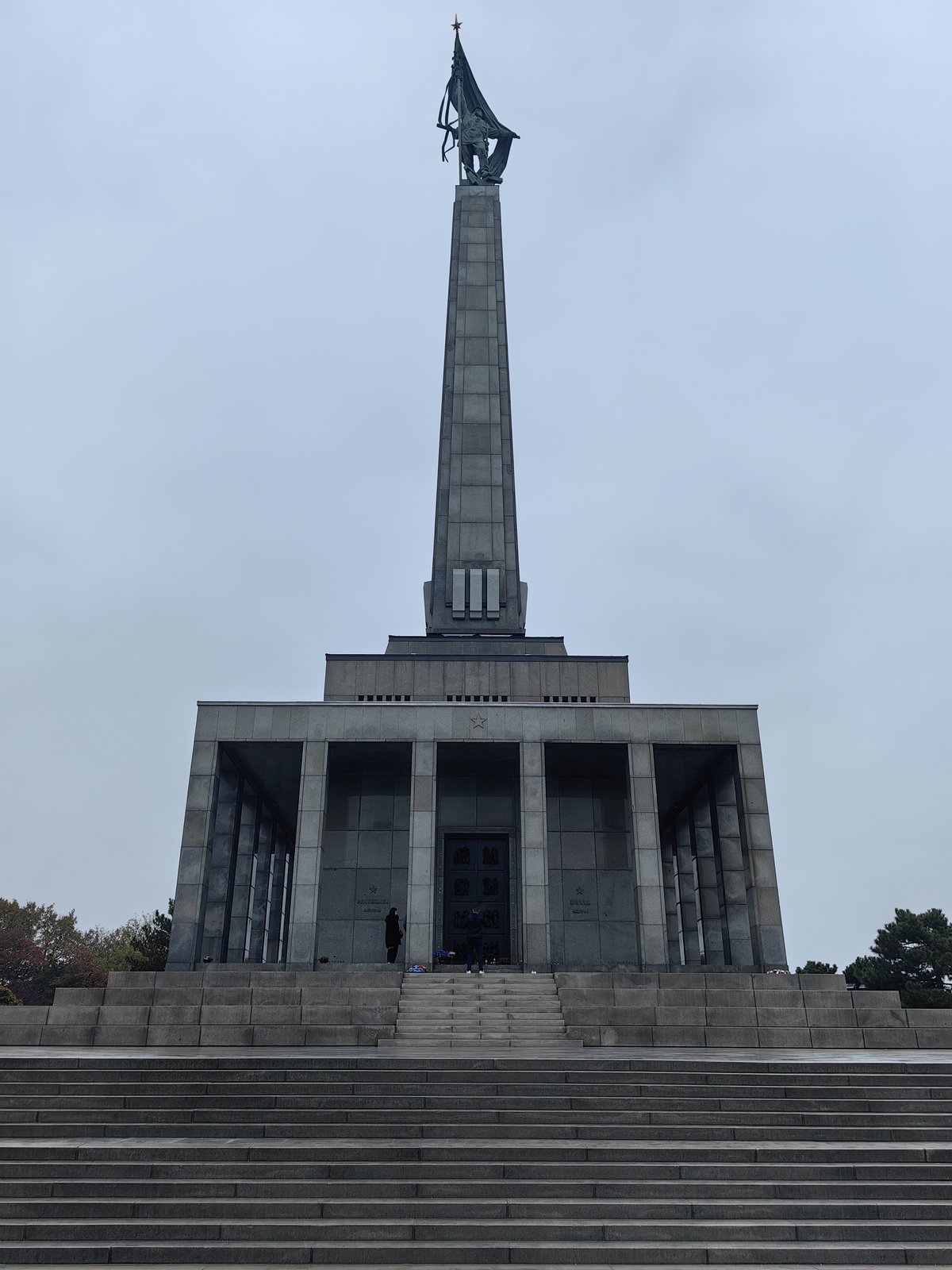
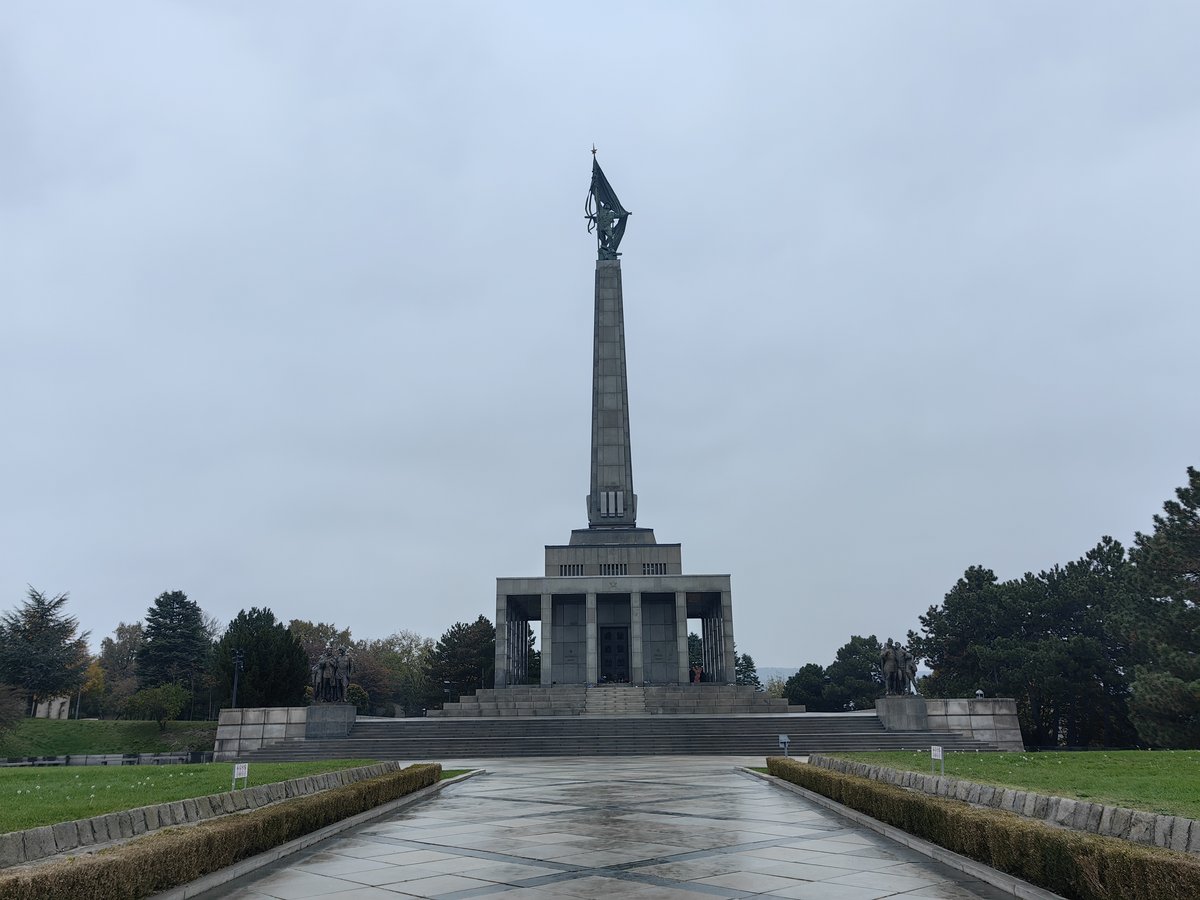
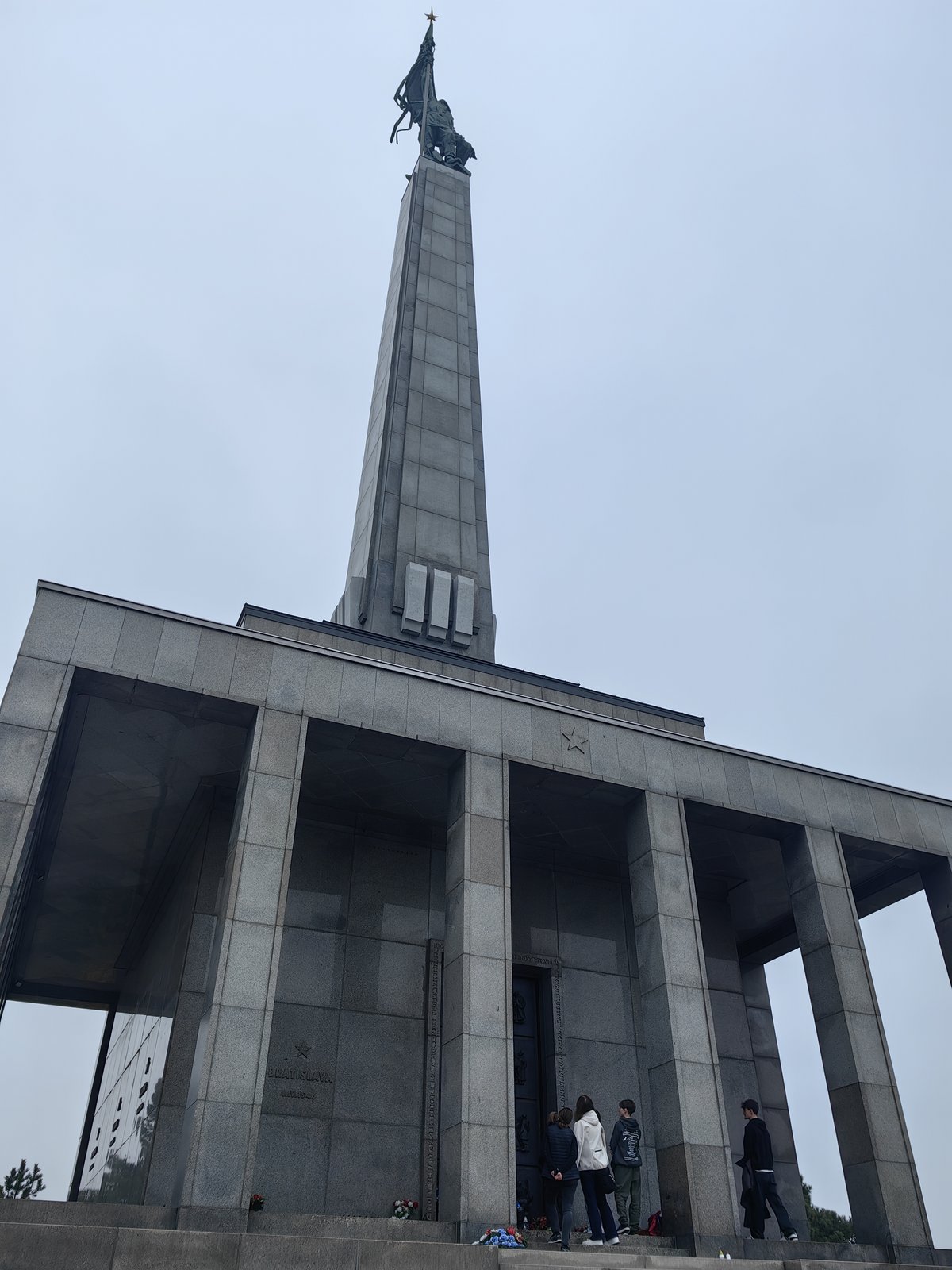
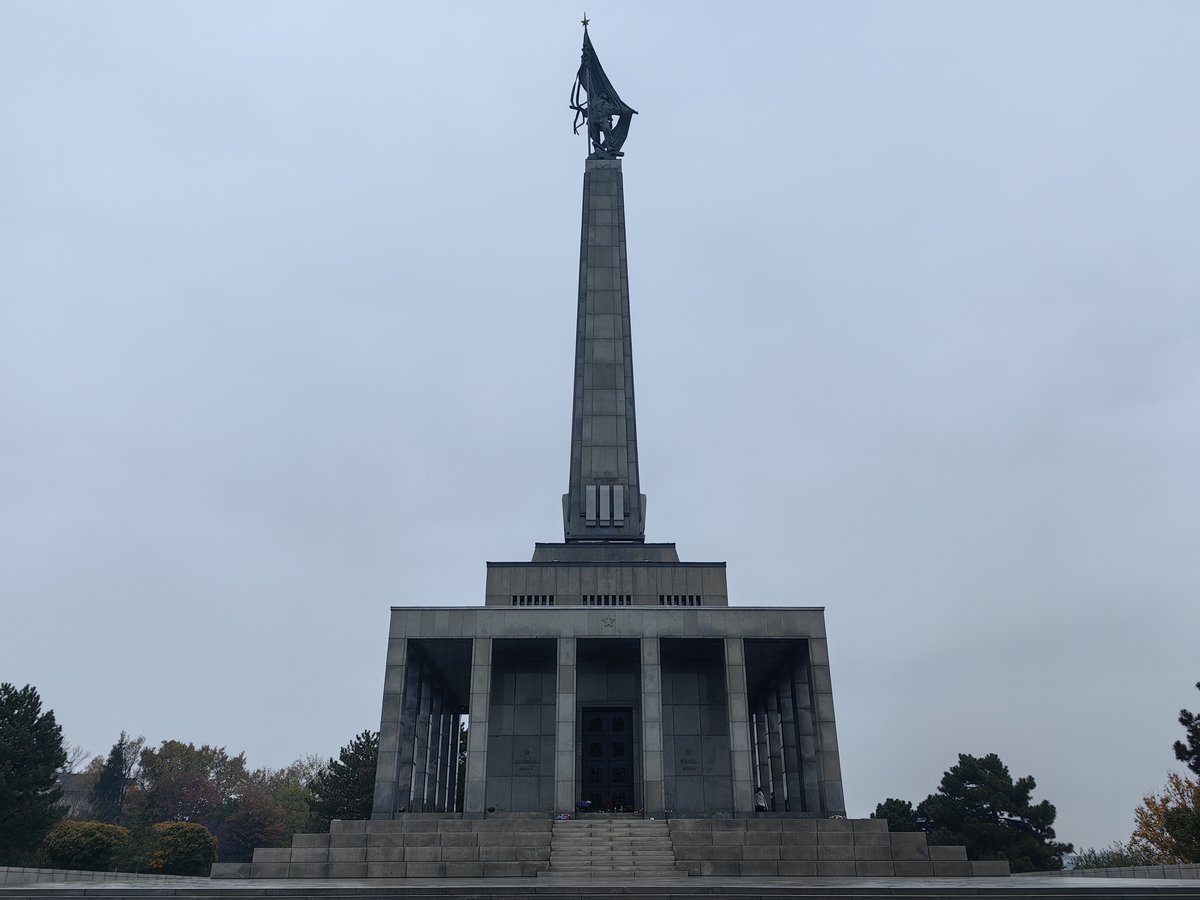
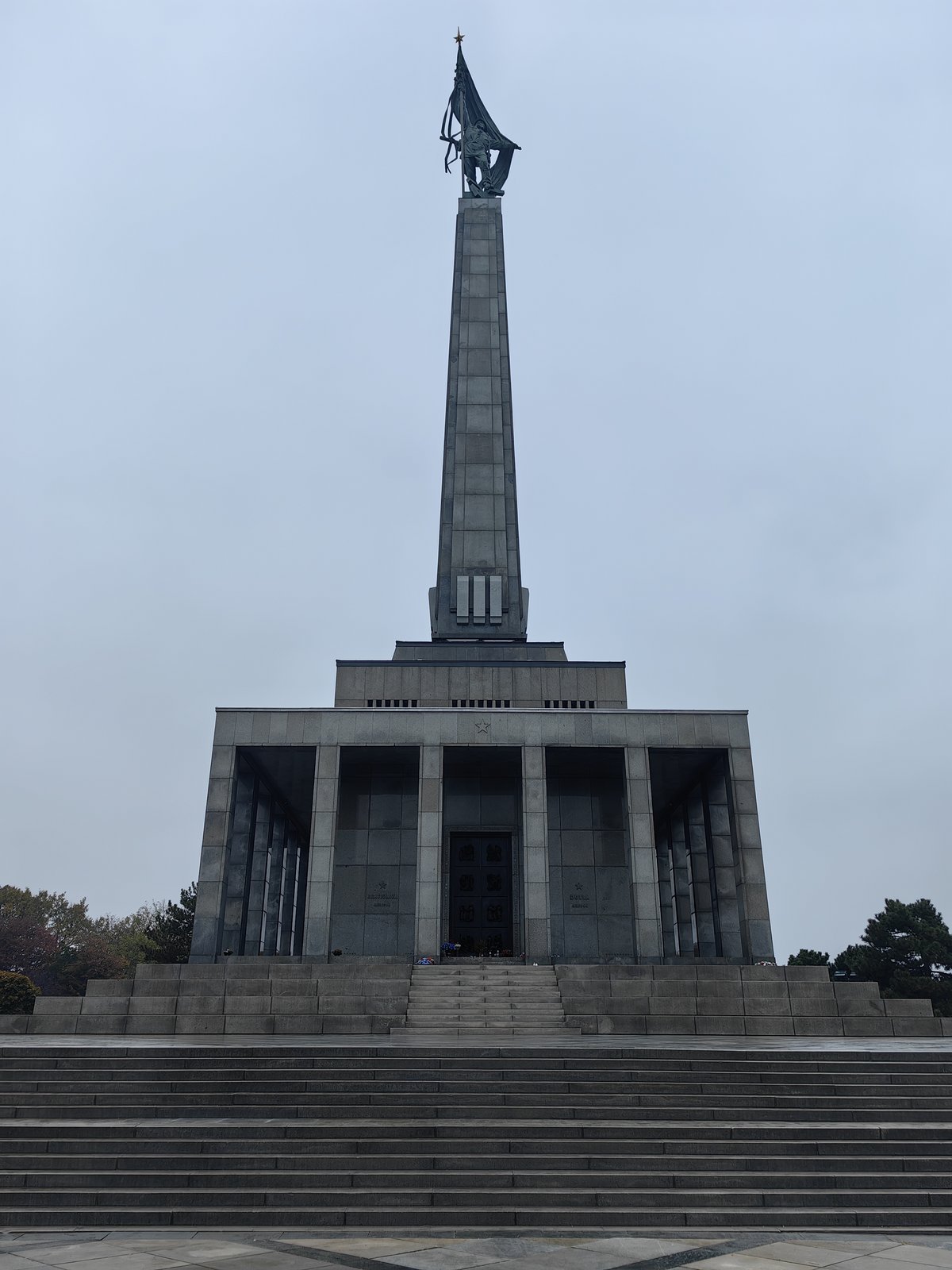
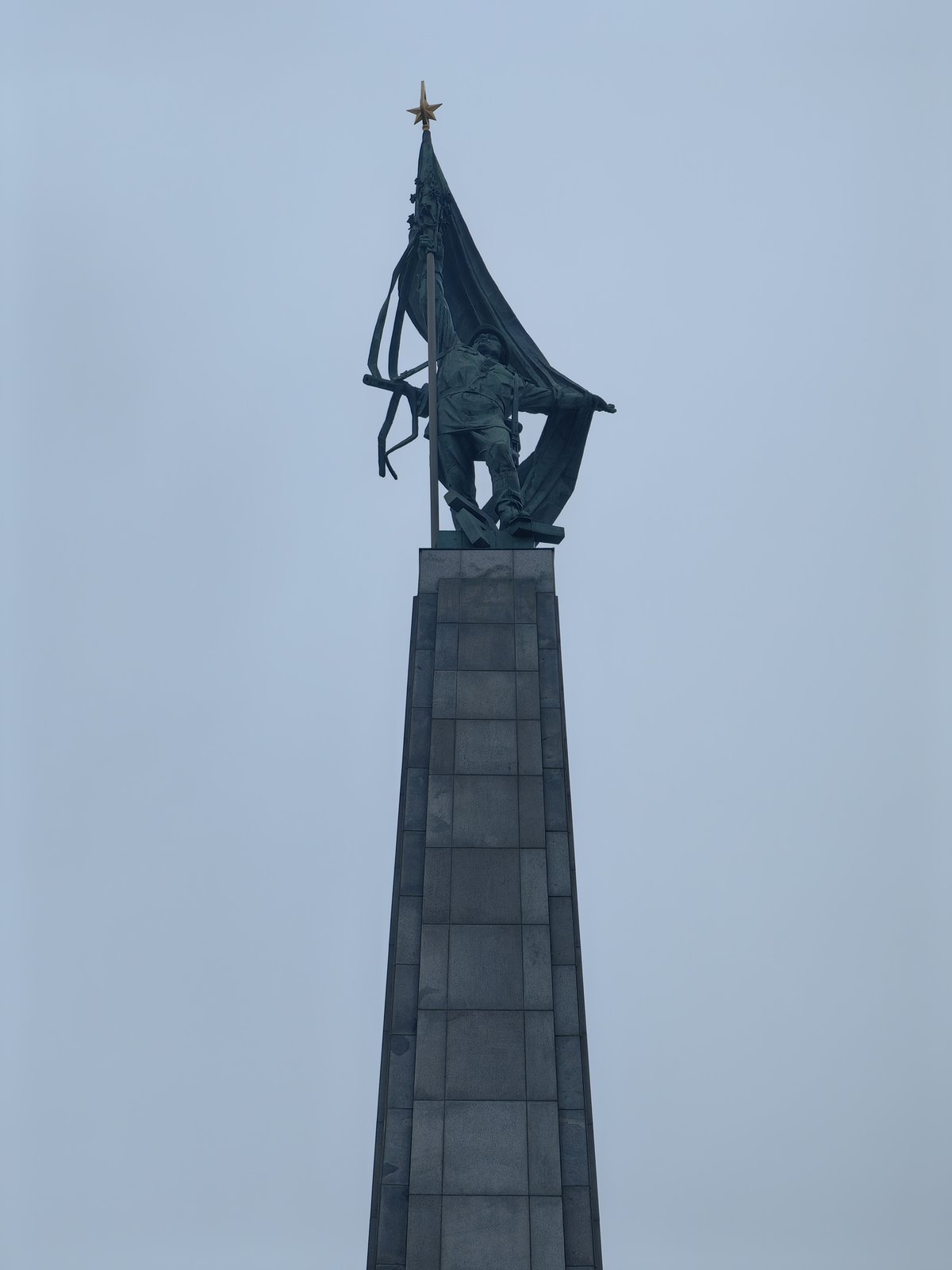
Slavín Memorial, perched atop one of Bratislava's most prominent hills, stands as a moving tribute to the 6,845 Soviet soldiers who perished during the liberation of the city in April 1945. As a monumental war memorial and military cemetery, Slavín not only commemorates these fallen soldiers but also serves as a reflection of the shifting political and historical landscapes of Slovakia and Central Europe. Designed by architect Ján Svetlík and constructed between 1957 and 1960, Slavín is renowned for its Stalinist monumentalism and its iconic obelisk, crowned by a statue of a Soviet soldier holding a flag—an enduring symbol of victory and liberation (bratislava-city.sk; citywalksvirtualtours.com).
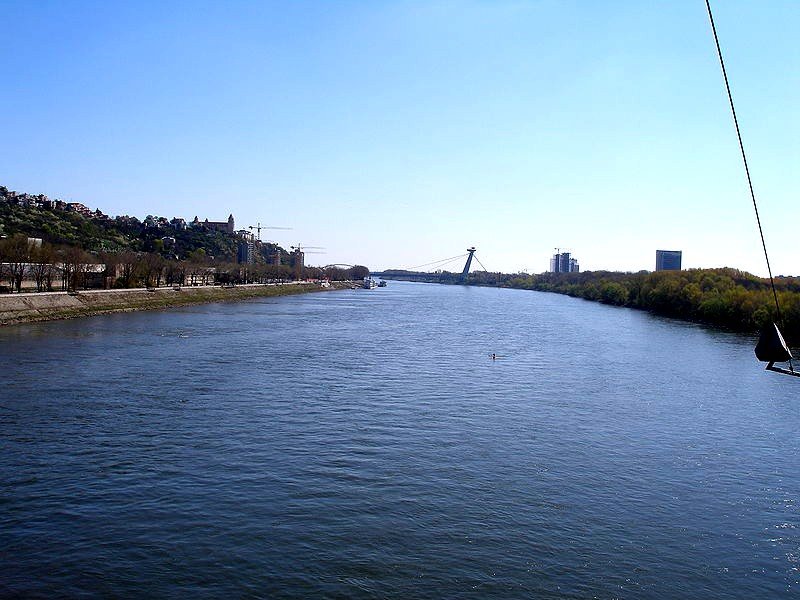
Set against panoramic views of Bratislava, the Danube River, and the Small Carpathians, Slavín seamlessly integrates powerful sculpture, landscaped grounds, and military graves, offering both a tranquil space for reflection and a deep dive into the region’s 20th-century history (holidify.com; war-documentary.info). Accessible year-round and free to the public, Slavín invites visitors to contemplate the complexities of liberation and memory, making it a must-visit site in Bratislava.

Origins and Construction of Slavín
Slavín’s origins trace back to the aftermath of World War II and the liberation of Bratislava by Soviet and Romanian forces in April 1945. The intense fighting resulted in considerable casualties among the liberators, and the city was soon dotted with improvised military cemeteries (SITA.sk). Seeking a central, dignified location to honor the fallen, Bratislava’s authorities selected the current hilltop site for a unified memorial and cemetery. Construction began in 1957 under Ján Svetlík and culminated in the official opening on April 3, 1960, marking the 15th anniversary of the city's liberation (citywalksvirtualtours.com; bratislava-city.sk). In 1961, Slavín was designated a National Cultural Monument (bratislava-city.sk).
Architectural Features and Symbolism
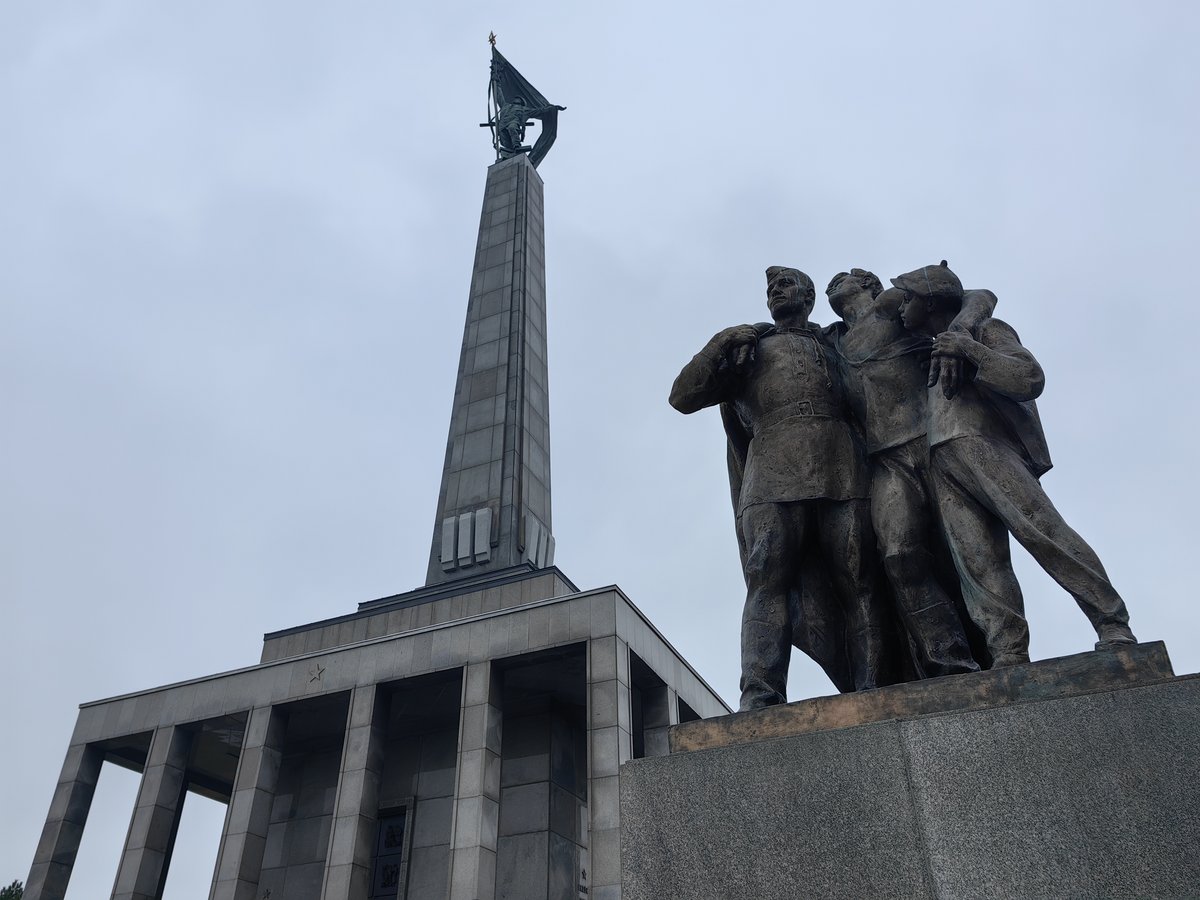
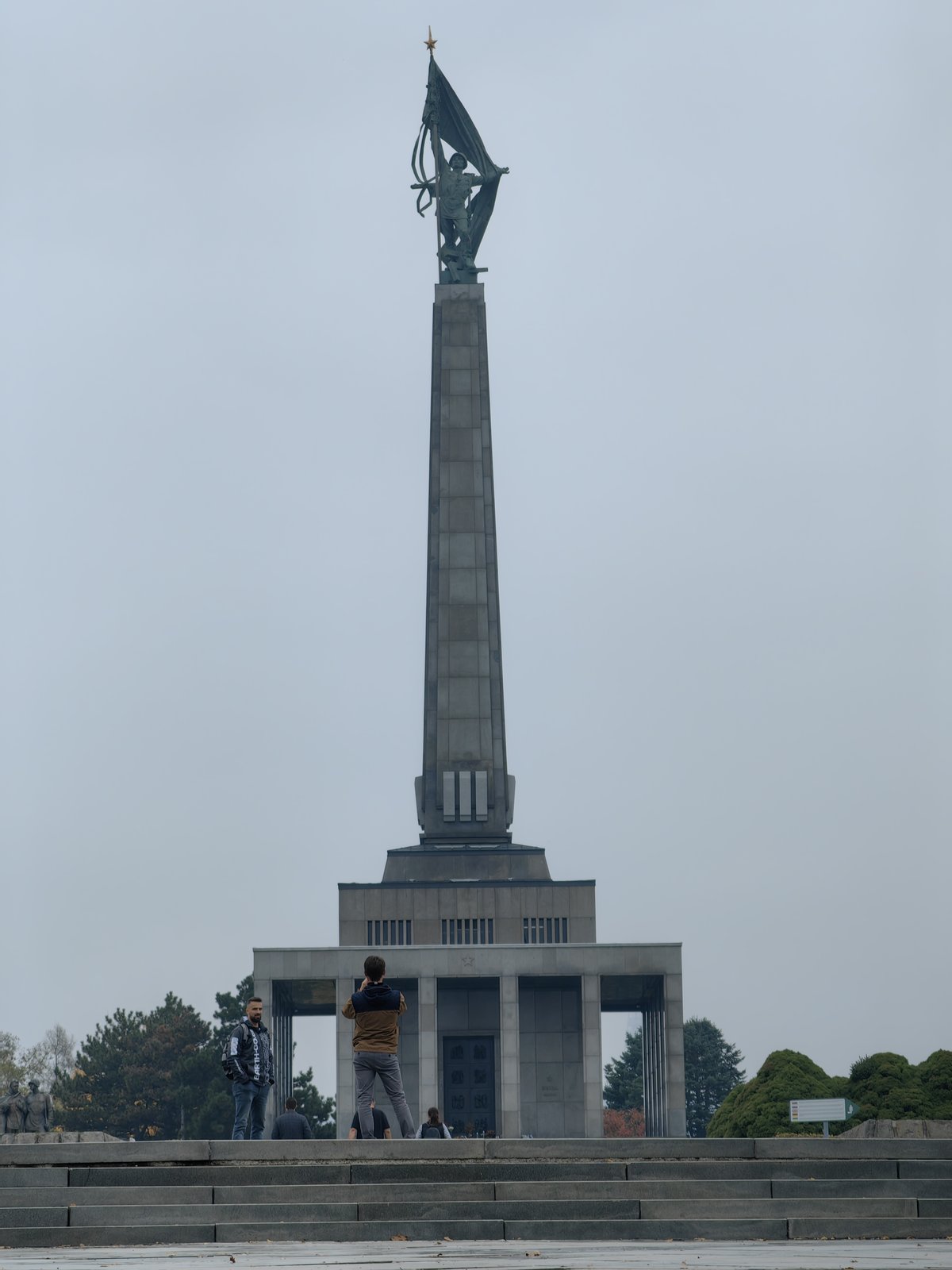
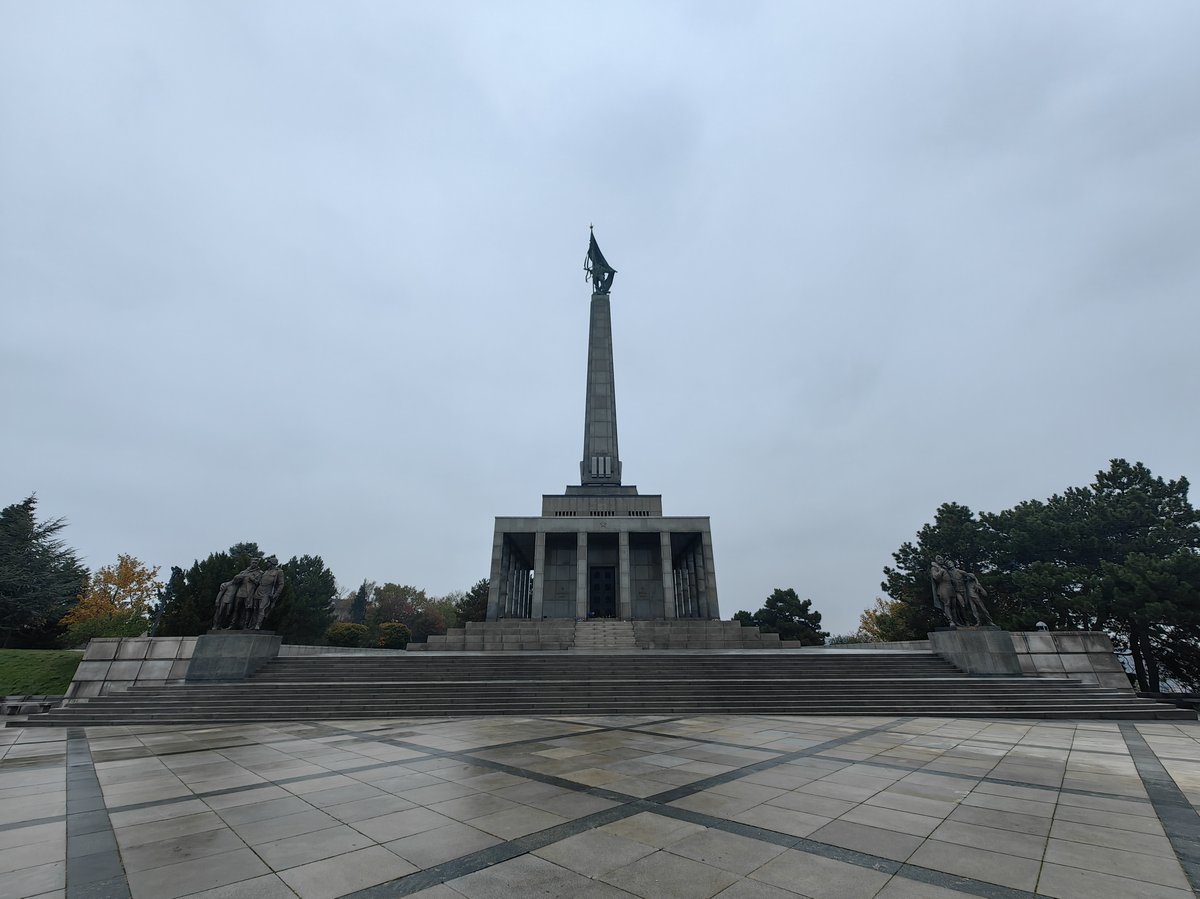
Slavín exemplifies Stalinist monumentalism and socialist realism, reflecting the political climate of mid-20th-century Czechoslovakia. Its central feature is a 39.5-meter granite obelisk, crowned by a 7-meter statue of a Soviet soldier created by Alexander Trizuljak, holding a flag and a submachine gun—a dual symbol of victory and liberation (bratislava-city.sk; holidify.com). The memorial complex includes a ceremonial hall, which is usually closed to the public except during special events (Hlavný denník).
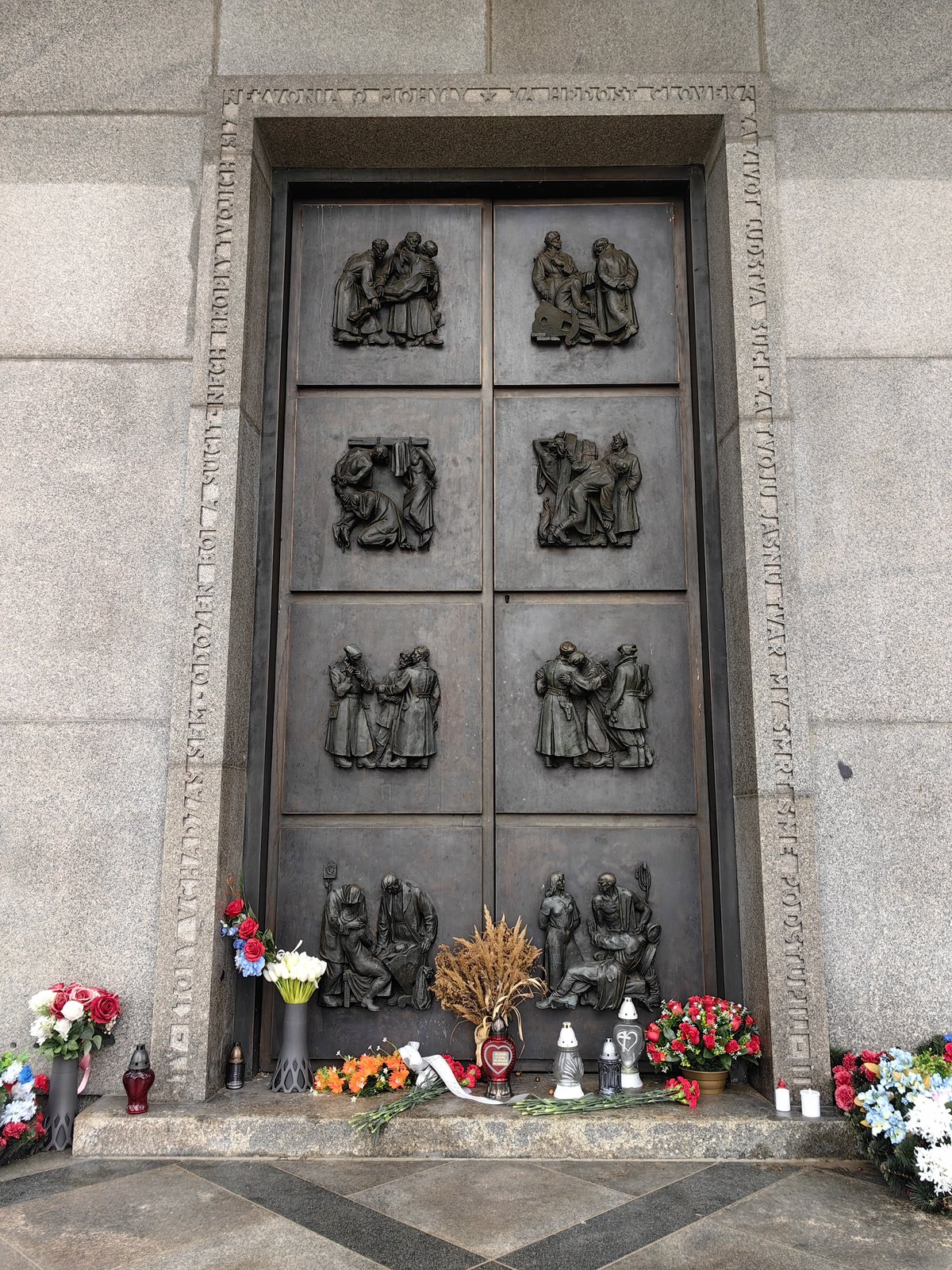
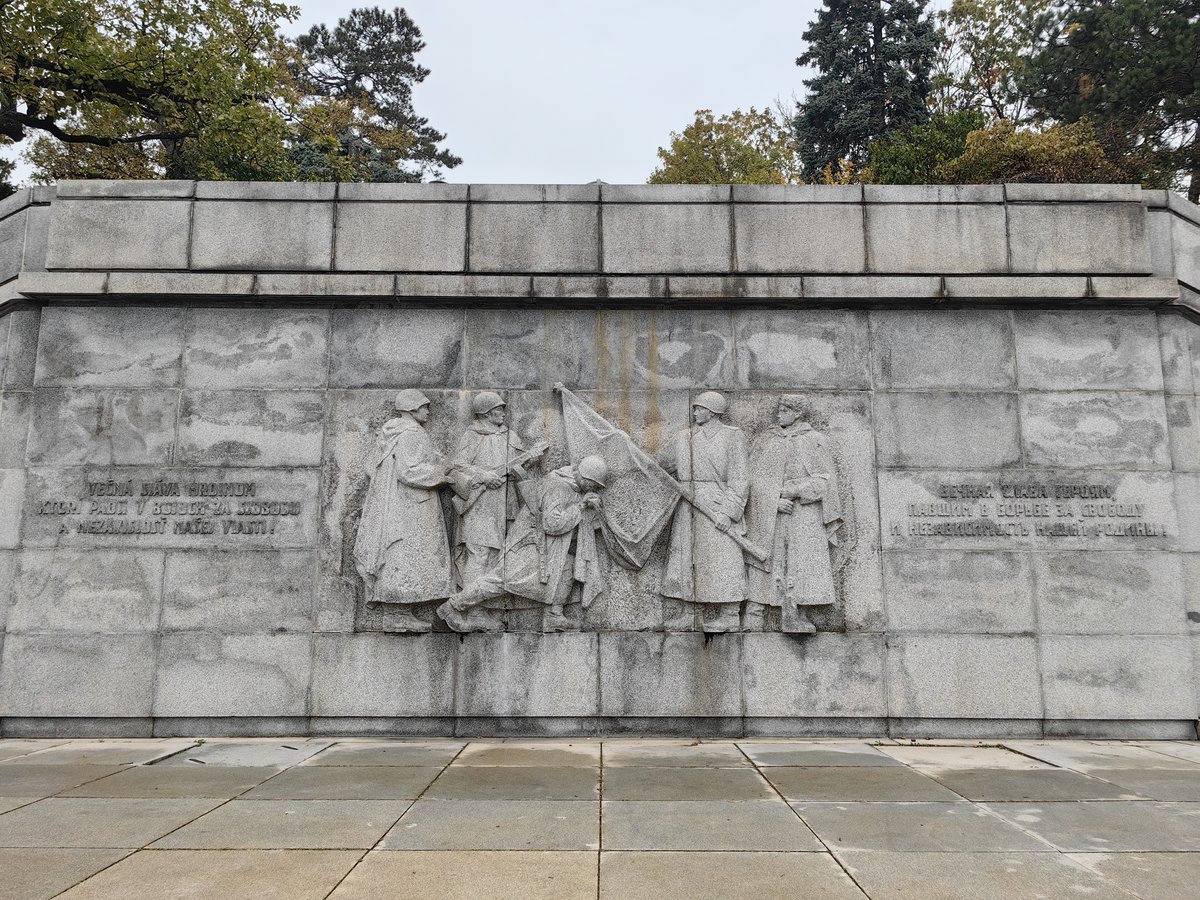
The grounds are organized into six mass graves and 317 individual graves, the resting places of soldiers from across the former Soviet Union and a few civilians (Hlavný denník). Artistic reliefs and sculptures in the socialist realism style depict scenes of battle, mourning, and reflection, while inscriptions in Slovak and Russian reinforce the memorial’s message of sacrifice and gratitude (holidify.com).
The design also incorporates Christian symbolism, as a subtle cross is formed by the flag and gun held by the statue—a quiet nod to religious heritage in an era of state atheism (Hlavný denník).
Historical and Political Context
World War II and Liberation
The liberation of Bratislava in April 1945 was achieved through a coordinated offensive involving Soviet and Romanian divisions, ending Nazi occupation and the Tiso regime (citywalksvirtualtours.com). The casualties from this brief but fierce battle are honored at Slavín.
The Communist Era
Post-war Czechoslovakia fell within the Soviet sphere, and Slavín became both a place of mourning and a powerful tool of state propaganda, symbolizing Soviet-Czechoslovak friendship and legitimizing the Communist regime. Slavín was a regular stop for dignitaries and the site of official commemorations (Hlavný denník).
Post-Communist Reinterpretation
After 1989, the fall of Communism led to a more nuanced understanding of Slavín. Today, it is both a site of mourning and a reminder of the complexities of Soviet liberation—including freedom from fascism and the start of Soviet dominance (citywalksvirtualtours.com). Commemorations now emphasize peace, reconciliation, and historical reflection.
Slavín in the Urban and Cultural Landscape
Slavín’s commanding hilltop location in a prestigious residential district, surrounded by embassies and villas, grants it both symbolic and physical prominence. The memorial’s design and sculptural elements by Slovak artists like Ladislav Snopek and Tibor Bartfay add artistic value, while the landscaped grounds offer a tranquil setting for visitors (bratislava-city.sk). Restoration efforts, such as the recent refurbishment of the obelisk and statue, underscore its ongoing public importance (Hlavný denník).
Visitor Information: Hours, Tickets, Accessibility, and Directions
Visiting Hours
- General Access: Slavín’s grounds are open daily, year-round, with no barriers or gates. Visiting during daylight is recommended for safety and optimal views.
- Ceremonial Hall: Usually closed, except during special events or guided tours.
- Recommended Times: Early morning or late afternoon for fewer crowds and best lighting.
Tickets and Admission
- Entry: Free of charge. No tickets or reservations required.
Accessibility
- Terrain: The site is on a hilltop, accessible by paved paths and stairs. Some areas may present challenges for wheelchair users or those with limited mobility.
- Public Transport: Bus lines 29, 31, 32, and 39 stop near the memorial. A short uphill walk is required from the nearest stop (evendo.com).
- On Foot: 20–25 minutes uphill from the Old Town, passing the Presidential Palace.
- By Car: Limited parking is available; arrive early during weekends and commemorative events.
Facilities
- Restrooms: Not available on-site. The nearest facilities are in the city center.
- Food and Drink: Bring your own, as there are no cafés or kiosks at Slavín.
- Seating: Benches are scattered throughout the grounds for rest and contemplation.
Travel Tips, Nearby Attractions, and Practical Advice
- Wear comfortable shoes for uphill walking and climbing terraces.
- Bring water and weather-appropriate clothing.
- Visit on clear days for panoramic views.
- Consider combining your visit with other attractions: Bratislava Castle, the Old Town, the Danube promenade, Grassalkovich Palace, and the Botanical Garden (trek.zone).
- Dogs are allowed on a leash; respect the solemnity of the site.
- Maintain respectful behavior—no loud conversations or climbing on monuments.
Slavín in Contemporary Slovak Society and Memory
Slavín remains a focal point for national and international commemorations, especially on April 4th, the anniversary of Bratislava’s liberation (Spectator.sme.sk). It is an open-air classroom for history, a place for reflection, and a symbol of both the costs of war and the enduring quest for peace. Its dual legacy—as a monument to liberation and a site shaped by Soviet influence—makes it a powerful, multilayered symbol in Slovakia’s evolving collective memory (Slovakia.com).
Frequently Asked Questions (FAQ)
Q: What are Slavín’s visiting hours?
A: The grounds are open 24/7 year-round, though visiting during daylight is recommended. The ceremonial hall is only open for special events.
Q: Is there an entrance fee?
A: No, entry is free of charge.
Q: Is Slavín wheelchair accessible?
A: Some paved paths and ramps are present, but the uphill terrain and stairs may be challenging for some visitors.
Q: How do I reach Slavín by public transportation?
A: Buses 29, 31, 32, or 39 stop near Slavín; from there, it’s a short uphill walk.
Q: Are guided tours available?
A: Guided tours can be arranged through local operators. Self-guided exploration is straightforward with on-site signage.
Q: Are pets allowed?
A: Yes, dogs are allowed on a leash.
Visuals, Virtual Tours, and Useful Links
- High-quality images and virtual tours are available through citywalksvirtualtours.com.
- For up-to-date visitor information, consult the Bratislava Tourist Board (visitbratislava.com) and Slovakia Travel.
Listen to the full story in the app
The whole Slavín,
told well.
Audio guides for 1,100+ cities across 96 countries. History, stories, and local insight — offline ready.
Verified, and shown.
Researched and written by the Audiala editorial team from historical records, architectural archives, and local expertise.
Researched from Wikidata, Wikipedia & official sources · fact-checked · How we make our guides →