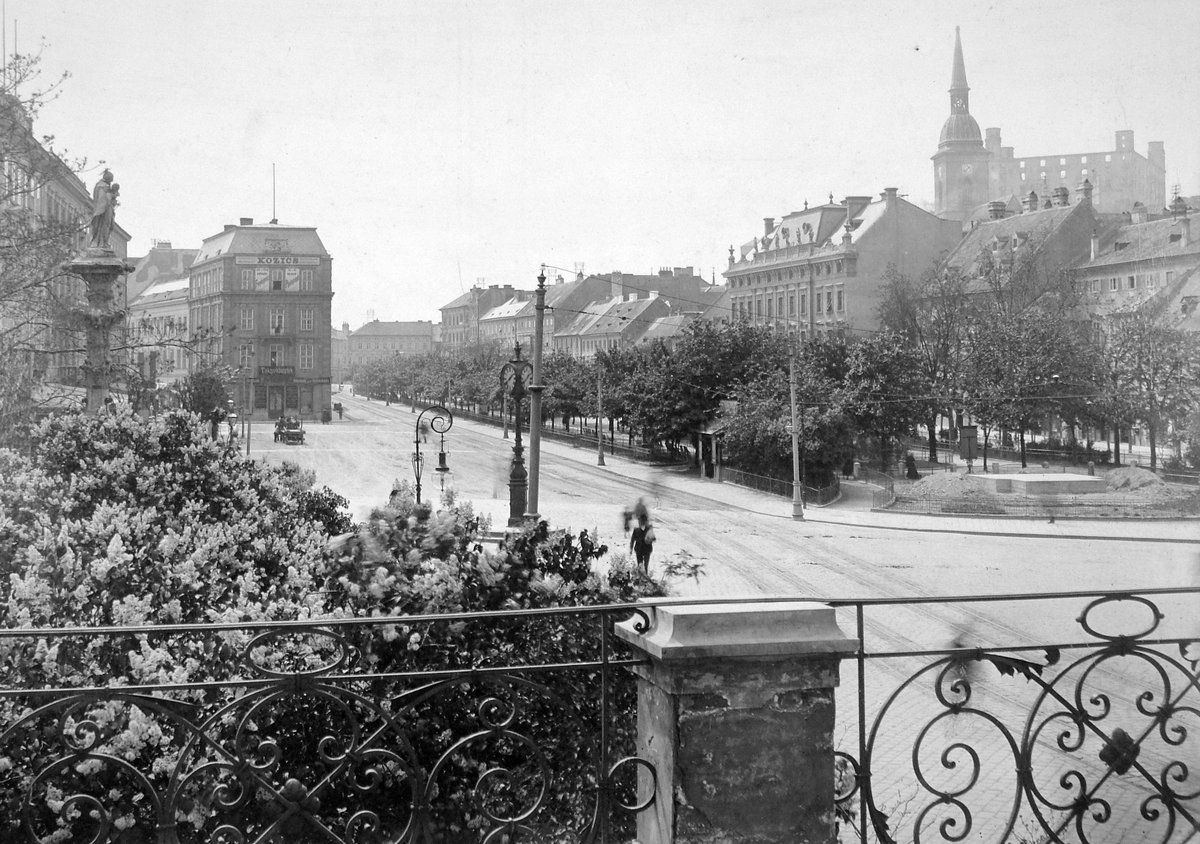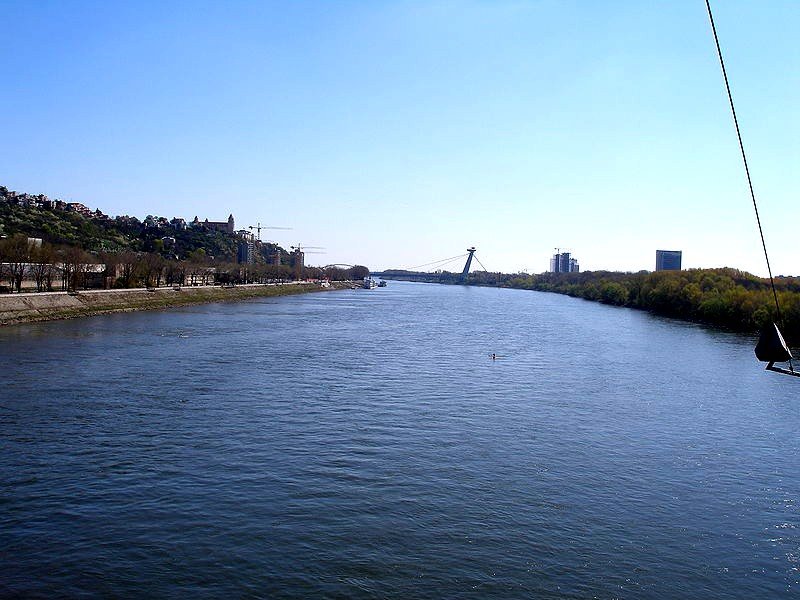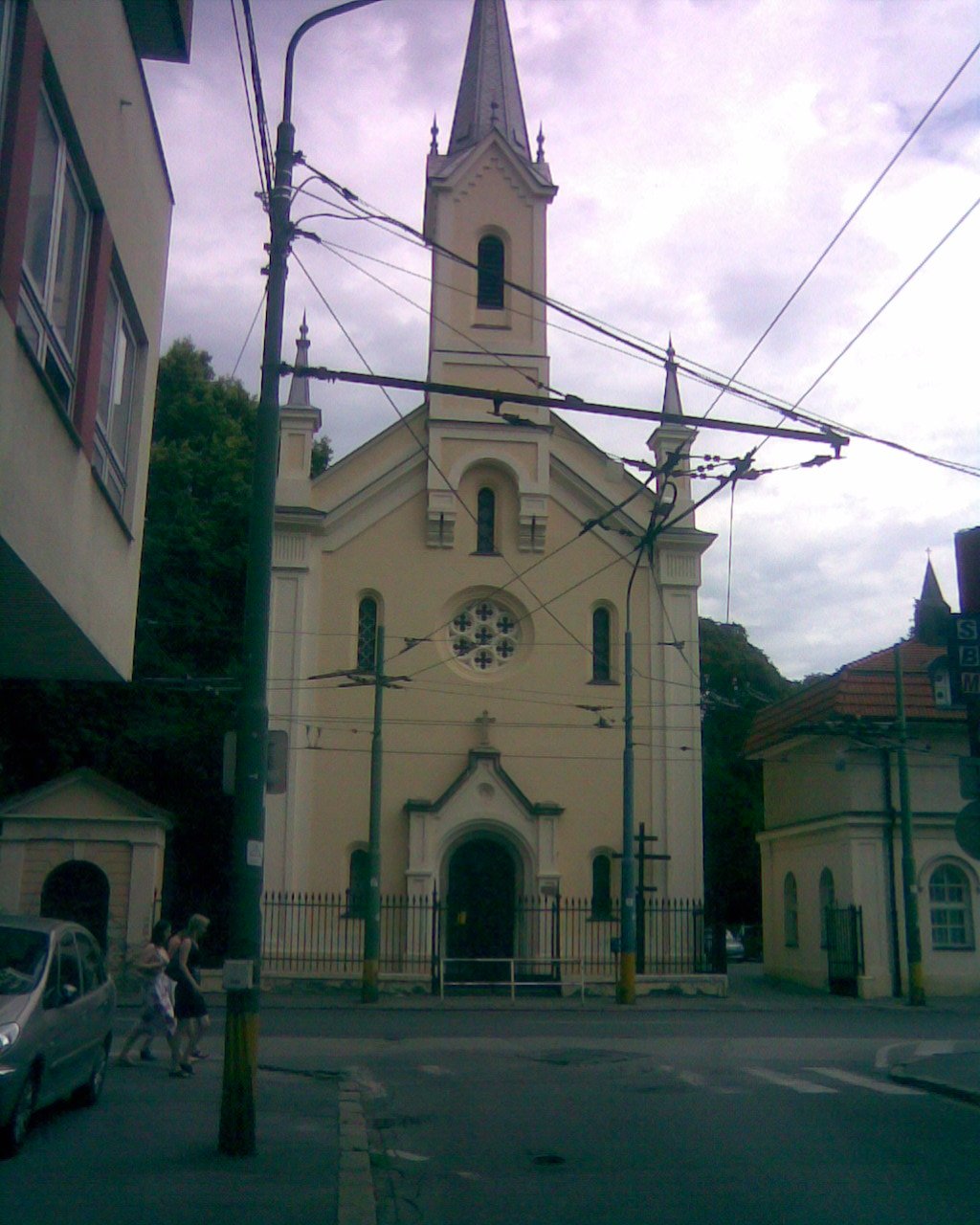
Plan and listen to Cathedral Of The Exaltation Of The Holy Cross, Bratislava with Audiala.
Audio guide in your pocket, itinerary in your browser. Built for the way you actually visit.
Introduction
The Cathedral of the Exaltation of the Holy Cross in Bratislava, Slovakia, is a prominent symbol of the city’s religious diversity and historical depth. Serving as the seat of the Slovak Greek Catholic Eparchy of Bratislava, this cathedral reflects centuries of spiritual resilience, architectural evolution, and community significance. Blending the Byzantine Rite with Slovak traditions, it offers visitors a unique window into the liturgical, artistic, and historical fabric of Central Europe. Centrally located in Bratislava’s Old Town, near landmarks like St. Martin’s Cathedral and Bratislava Castle, the cathedral is both a spiritual hub and a destination for cultural exploration (visitbratislava.com, grkat.net, GCatholic.org).

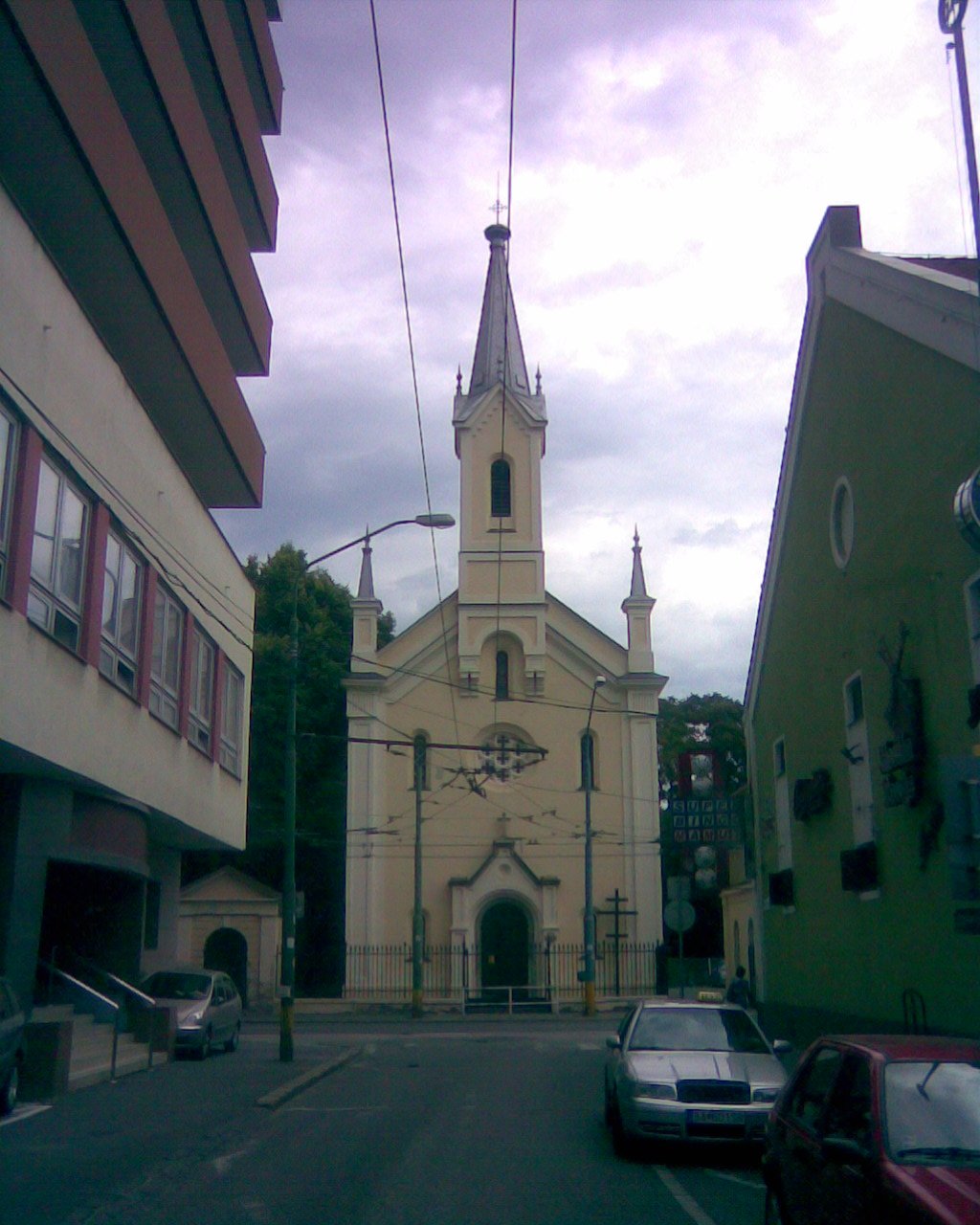
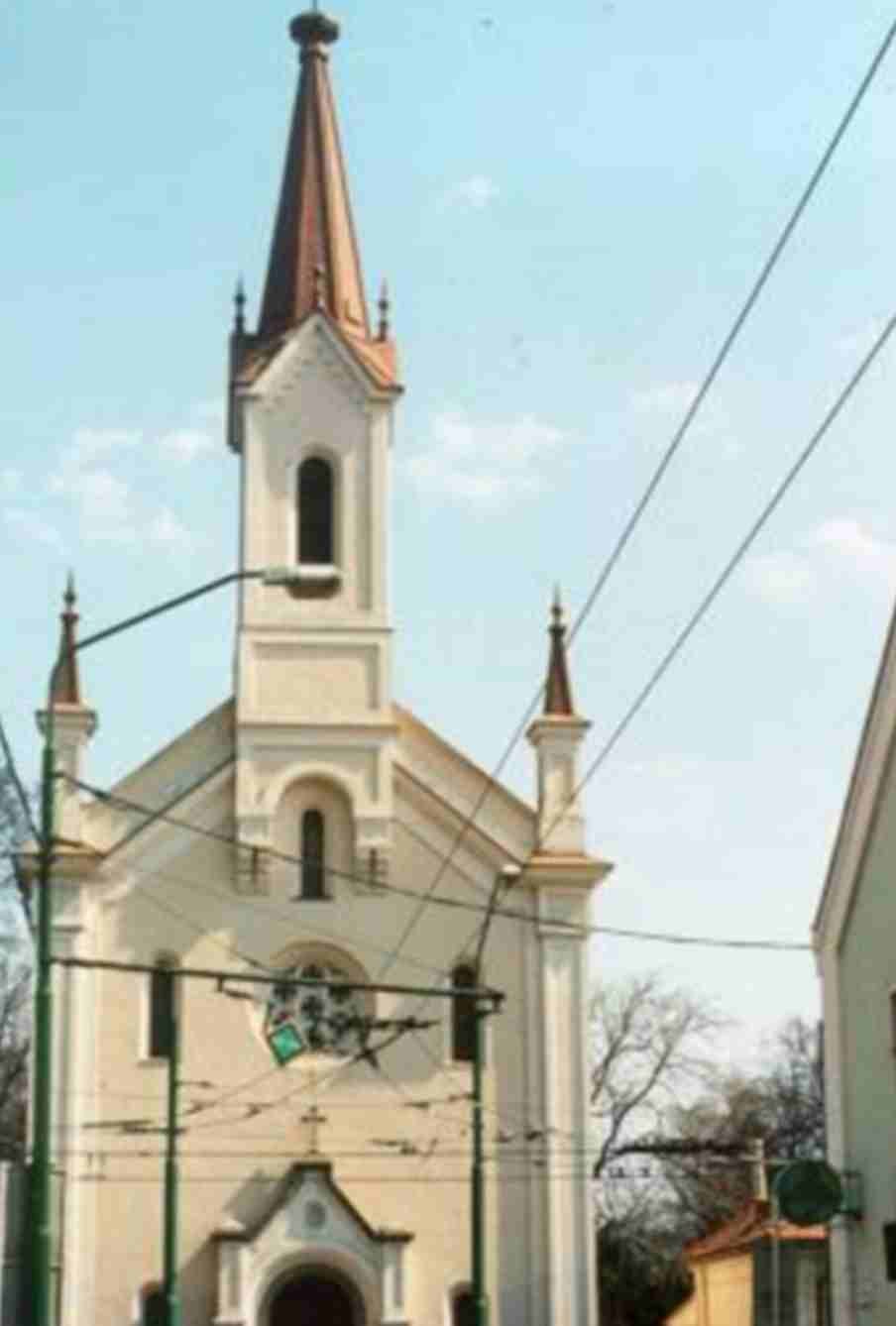
Medieval Origins and Early History
The cathedral’s origins trace to the late 17th century, a time when Bratislava (formerly Pressburg) stood at the crossroads of East and West. The site originally hosted a medieval church, but the present structure was built between 1860 and 1862, during a period of religious transition and migration in Central Europe. This new church primarily served the Ruthenian and Ukrainian Greek Catholics who settled in the city, reflecting the growing need for a dedicated space for Eastern Christians within a predominantly Latin Catholic environment (visitbratislava.com).
The dedication to the Exaltation of the Holy Cross is rooted in Christian tradition, specifically the feast commemorating Saint Helena’s discovery of the True Cross and the dedication of the Basilica of the Holy Sepulchre in 335 AD (lpj.org). This feast, celebrated on September 14, is central to both Eastern and Western Christian calendars and symbolizes the triumph of Christ’s sacrifice.
Greek Catholic Heritage and Religious Transition
The cathedral stands at the heart of the Slovak Greek Catholic Eparchy of Bratislava, representing the Byzantine Catholic tradition within Slovakia. The Greek Catholic Church follows the Byzantine Rite but is in full communion with the Roman Catholic Church. This dual identity emerged after the Union of Uzhhorod in 1646, when many Eastern Orthodox Christians in the Carpathian region united with Rome.
Bratislava’s Greek Catholic community initially lacked a dedicated church, relying on Latin Rite services until the construction of the present cathedral. The church’s architecture and interior iconostasis make its Byzantine liturgical identity clear. The 20th century brought severe challenges: the Greek Catholic Church faced suppression under communist rule, with its properties seized and many clergy and faithful forced to join the state-sanctioned Orthodox Church. The cathedral itself served as a symbol of resilience until the Greek Catholic Church was officially restored in 1968 (encyclopediaofukraine.com).
Architecture and Artistic Heritage
Architecturally, the cathedral blends neo-Romanesque and Byzantine elements. The exterior features understated elegance, while the interior is richly adorned with frescoes, a gilded iconostasis, and intricate woodwork. The iconostasis, painted by Rastislav Bujna in 1996, is a focal point—separating the sanctuary from the nave and illustrating key figures and events in Christian theology (Slovak Wikipedia).
Relics of Blessed Pavol Peter Gojdič and Vasiľ Hopko, Greek Catholic martyrs of the communist era, are venerated here, bridging the cathedral’s spiritual and historical significance. The cathedral’s artistic program visually narrates the story of Christ’s sacrifice, especially through the central icon of the Exaltation of the Holy Cross (lpj.org).
Liturgical Life and Major Feast
The liturgical calendar at the cathedral is centered on the Feast of the Exaltation of the Holy Cross (September 14), marked by solemn processions, veneration of the cross, and traditional Byzantine chants. Regular Divine Liturgies, sacraments, and community events contribute to the vibrant life of the parish. Services are held in Slovak and Old Church Slavonic, reflecting the multicultural tapestry of the Greek Catholic tradition (Wikipedia, GCatholic.org).
Visiting Hours, Tickets, and Accessibility
- Visiting Hours: Typically open Monday to Saturday from 9:00 AM to 5:00 PM; Sunday visiting hours follow the liturgical schedule. Hours may vary on religious holidays.
- Tickets: Entry is free. Donations are encouraged to support maintenance and programs. Guided tours may require advance booking and a nominal fee.
- Accessibility: The cathedral is wheelchair accessible, with ramps and facilities for visitors with mobility needs.
- Dress Code: Modest attire is recommended.
- Photography: Allowed outside service times, subject to staff approval.
For the most current schedules, check the official parish website (grkat.net).
Location and Getting There
- Address: ul. 29. augusta 7, SK-811 08, Bratislava
- GPS: 48.147899, 17.121312 (grkat.net)
- By Public Transport: Short walk from Mlynské Nivy bus station; accessible via city buses and trams.
- By Car: Paid parking at TESCO supermarket and nearby lots. City center parking can be limited.
- On Foot: Easily reachable from the Old Town and major hotels.
Nearby Attractions and Travel Tips
- St. Martin’s Cathedral: Gothic cathedral, historically significant for Hungarian coronations.
- St. Elizabeth’s Church (Blue Church): Noted for its distinctive blue Art Nouveau architecture (thecrazytourist.com).
- Bratislava Old Town (Staré Mesto): Baroque palaces, lively squares, and cobbled streets.
- Bratislava Castle: Offers panoramic city views and houses Slovak National Museum exhibits.
- St. Andrew’s Cemetery: The cathedral’s setting provides a peaceful glimpse into Bratislava’s multicultural legacy.
Travel Tips:
- Wear comfortable shoes due to cobblestone streets.
- Visit during the Feast of the Exaltation of the Holy Cross for a rich liturgical experience.
- Weekday afternoons are usually less crowded.
- Check local event calendars for special celebrations.
Frequently Asked Questions (FAQ)
Q: What are the cathedral’s visiting hours?
A: Monday to Saturday from 9:00 AM to 5:00 PM; Sunday hours depend on services.
Q: Is there an entrance fee?
A: No, admission is free; donations are appreciated. Guided tours may have a small fee.
Q: Are guided tours available?
A: Yes, by advance arrangement through the parish office (+421-2-52 93 28 56) or grkat.net.
Q: Is the cathedral accessible for those with disabilities?
A: Yes, though some areas may have steps or uneven surfaces.
Q: Can I attend services in English?
A: Services are primarily in Slovak; some clergy may speak English.
Visual Experience and Media
Visitors can admire the neo-Romanesque façade, the vibrant iconostasis, and the cathedral’s frescoes. Choir performances and virtual tours are available via the parish website and other local tourism portals, providing a preview and enriching the onsite experience.
Listen to the full story in the app
The whole Cathedral Of The Exaltation Of The Holy Cross, Bratislava,
told well.
Audio guides for 1,100+ cities across 96 countries. History, stories, and local insight — offline ready.
Verified, and shown.
Researched and written by the Audiala editorial team from historical records, architectural archives, and local expertise.
Researched from Wikidata, Wikipedia & official sources · fact-checked · How we make our guides →