
A City Founded Under a Tree
Freetown's origin story sits in plain sight. On March 11, 1792, 1,196 freed Nova Scotian settlers gathered beneath the Cotton Tree, and that kapok became more than shade: it became the city's moral center.
Salt hangs in the air, poda-podas grind past the old center, and then an enormous kapok tree appears as if the city had grown around a piece of memory. Freetown, Sierra Leone, lives on sharp contrasts: Atlantic beaches bright enough to hurt your eyes, hill roads folding into rainforest, and streets shaped by one of West Africa's heaviest histories. Few capitals carry freedom and violence, prayer and nightlife, grief and appetite this close together.
Researched from Wikidata, Wikipedia & official sources · fact-checked · How we make our guides →
FSalt hangs in the air, poda-podas grind past the old center, and then an enormous kapok tree appears as if the city had grown around a piece of memory. Freetown, Sierra Leone, lives on sharp contrasts: Atlantic beaches bright enough to hurt your eyes, hill roads folding into rainforest, and streets shaped by one of West Africa's heaviest histories. Few capitals carry freedom and violence, prayer and nightlife, grief and appetite this close together.
The city's founding story still sits in plain view. On March 11, 1792, 1,196 freed Black settlers from Nova Scotia gathered at what became the Cotton Tree, and that fact changes how downtown feels: every colonial facade, every church tower, every weathered gate seems to argue about who got to belong here and at what cost.
Freetown's rhythm is looser than its history. Before sunrise, Kissy and the streets around the center smell of hot akara and frying oil; by late afternoon the peninsula roads pull people toward Lumley, River No. 2, Tokeh, and Bureh, where the city loosens its collar and faces the sea. And above it all, the hills hold another version of Sierra Leone: chimpanzees at Tacugama, thick forest in the Western Area Peninsula National Park, and viewpoints where the Atlantic looks close enough to touch.
What makes this place worth slowing down for.
Freetown's origin story sits in plain sight. On March 11, 1792, 1,196 freed Nova Scotian settlers gathered beneath the Cotton Tree, and that kapok became more than shade: it became the city's moral center.
Few cities hold Bunce Island and the Old King's Yard Gateway in the same orbit. One marks the machinery of the slave trade, the other the place where thousands of Liberated Africans entered a new life after 1808; together they change how you read every street in town.
Freetown runs from steep green hills straight into the Atlantic. In one day you can watch rescued chimpanzees at Tacugama, then end on the pale sand of River No. 2, Bureh, or Tokeh with salt drying on your skin.
Freetown's arts scene doesn't wait for grand concert halls. Poetry slams, beach festivals, hotel courtyards, and pop-up galleries carry the city's creative life, which feels less polished than Lagos or Accra and often more alive.
Where to wander, by quarter — each with its own rhythm.
Downtown Freetown is where the city's origin story still breathes. Around the Cotton Tree you'll find the National Museum, the old colonial street pattern, busy trading streets, and the kind of traffic that turns every short walk into a piece of street theater. Come early, before the heat thickens and offices fully open.
Kissy wakes up before most visitors do. This is where market life starts in the dark with akara sellers, smoke from cooking oil, and the hard-working rhythm of a district that feeds the city before breakfast. Go for street food and daily life, not polished scenery.
Cline Town is one of the places to eat with your eyes open and your elbows tucked in. Roadside stalls and local chop houses turn out affordable plates that locals actually queue for, and the neighborhood gives you a better feel for working Freetown than any hotel restaurant ever will.
Aberdeen sits on the peninsula side of the city and catches much of Freetown's after-dark energy. Expect hotels, bars, restaurant terraces, access to the Aberdeen mangroves, and a social scene that can switch from quiet drinks to loud speakers in the space of one block.
Lumley is the beach front most visitors meet first, and it earns that role honestly. The sand is urban rather than pristine, but that is the point: swimmers in the shallows, grilled fish, live music on weekends, and a long strip where Freetown comes to exhale after work.
Regent climbs into the hills and feels cooler, greener, and older than the seafront districts. As one of the historic liberated African settlement areas tied to the peninsula's 19th-century villages, it offers a different register of Freetown: steep roads, dense vegetation, and easier access toward Tacugama and the forested interior.
Leicester has the same hillside logic as Regent but with a quieter, more residential feel. Visitors come this way for mountain air, views back toward the city and sea, and a sense of how quickly Freetown gives way to the Upper Guinean forest that still survives on the peninsula slopes.
This is less a single neighborhood than Freetown's weekend release valve, stretching south toward River No. 2, Tokeh, and Bureh. The road and water-taxi circuit links surf beaches, quieter coves, and low-key guesthouses where lunch arrives with sand on the table and nobody seems eager to rush you.
From ancient estuary settlements to a capital that keeps remaking itself
Archaeological evidence points to continuous human settlement around the Freetown peninsula for roughly 2,500 years. Long before the city had a name, fishing communities and small settlements worked the creeks, forest edges, and sheltered water of one of the world's great natural harbors. The story starts far earlier than the colony.
Portuguese explorer Pedro de Sintra mapped the mountain wall above the harbor and recorded it as Serra Lyoa, the Lioness Mountains. The name stuck, bent by foreign tongues into Sierra Leone. A sailor's label became the country's future name.
By the 17th century, European traders had turned the Sierra Leone River into a corridor of commerce and captivity. Bunce Island, about 20 miles upriver from modern Freetown, grew into a British slave-trading fort where human lives were priced, branded, and shipped across the Atlantic. The harbor's beauty carried a hard history.
British abolitionists founded an experimental settlement for formerly enslaved people from Britain and North America on this coast in 1787. Disease, bad planning, and conflict with local power holders wrecked the colony within a few years. The idea survived even when the first settlement did not.
Thomas Peters, a Black Loyalist leader who had fought for freedom across continents, helped lead 1,196 settlers from Nova Scotia to this shore. His role in Freetown was not symbolic window dressing; he pushed, argued, and organized until return to Africa became policy. The city owes part of its existence to that stubbornness.
On March 11, 1792, 1,196 Black Loyalists gathered beneath the Cotton Tree and formally founded Freetown. According to longstanding local memory, prayers and songs rose under the kapok branches before streets, courts, and warehouses existed. Few cities can point to a single tree and say: we began there.
Roughly 550 Maroons from Jamaica arrived in 1800 and helped stabilize the struggling settlement. They brought military skill, hard-earned suspicion of imperial promises, and a culture that would fuse with earlier settlers and later recaptives. Freetown was becoming a city of returns, not a single founding myth.
On January 1, 1808, Freetown passed from private company control to direct British rule as a Crown Colony. The city then became the administrative hinge of British West Africa, with clerks, soldiers, missionaries, and merchants crowding its humid streets. Power moved in on paper first, then in stone.
The Old King's Yard Gateway marked the entrance to a compound where recaptured Africans were processed after interception at sea. Behind that threshold, names were recorded, wounds treated, and futures redirected. The gate still stands with an awkward dignity, part asylum, part bureaucratic machine.
Fourah Bay College opened in 1827 and turned Freetown into an intellectual center for anglophone West Africa. Classrooms here trained clergy, teachers, lawyers, and later nationalists who carried ideas far beyond the peninsula. Chalk dust can change a region as surely as gunpowder.
Samuel Ajayi Crowther, liberated from a slave ship and processed through Freetown, became the first student associated with Fourah Bay College. The city shaped him at a hinge moment, turning trauma into scholarship and then into a clerical career that reached across West Africa. Freetown did that often: it caught broken histories and gave them a new grammar.
Reverend Edward Jones, an African American missionary educator, became the first principal of Fourah Bay College and helped shape its early institution-building. In Freetown, his work tied Black Atlantic ambition to formal education in brick, curriculum, and discipline. The city was small, but its intellectual reach was not.
Fourah Bay College's affiliation with Durham in 1876 gave Freetown's educated elite a new institutional shine. Degrees and credentials mattered in a colonial world obsessed with ranking, and the city learned to turn them into influence. This was one of the reasons Freetown became known as the Athens of West Africa, a grand phrase that sounds less inflated once you see who studied here.
British authorities proclaimed the Sierra Leone Protectorate over the hinterland in 1896, ruling it separately from the colony based in Freetown. That administrative split sharpened old divisions between the coastal capital and the interior. Maps can wound quietly.
Resistance to British taxation erupted in 1898 under leaders including Bai Bureh, and the shock was felt directly in Freetown, seat of colonial power. Orders, panic, and reprisals flowed outward from the capital while the rebellion exposed how thin imperial authority could be beyond the waterfront offices. The colony never looked quite as secure again.
J. E. Casely-Hayford studied at Fourah Bay College and joined the stream of West African thinkers sharpened by Freetown's classrooms. The city gave him more than instruction; it offered a network of argument, law, print culture, and anti-colonial thought. Ideas crossed these verandas faster than steamers crossed the bay.
A memorial designed by Edwin Lutyens was erected in Freetown in 1930 to honor members of the Sierra Leone Carrier Corps who died in the First World War. Its cool geometry sits against tropical light and traffic noise, an imperial monument in a city that would later outgrow the empire that commissioned it. Stone remembers selectively.
Sierra Leone became independent on April 27, 1961, and Freetown remained the capital. Power shifted from colonial office to national government, though the old buildings and procedures did not vanish overnight. Freedom rarely comes with new furniture.
In 1971 Sierra Leone became a republic, and Freetown turned from colonial capital into the seat of a sovereign presidency. Ceremonies changed first, then constitutional reality. The city kept the same harbor and humidity, but authority now spoke in a different voice.
A new constitution in 1978 made Sierra Leone a one-party state, concentrating power in Freetown. Ministries, patronage, and fear thickened around the capital's political center. Cities notice when debate narrows; you hear it in offices, newspapers, and the long pauses before people answer.
The civil war began on March 23, 1991, when the Revolutionary United Front launched its insurgency from the east. Freetown was not the first battlefield, but every rumor and refugee trail bent toward it. The capital started bracing for a storm that would eventually reach its streets.
Nigerian-led ECOMOG forces drove the junta from Freetown in February 1998 and restored President Ahmad Tejan Kabbah soon after. For a brief moment the city felt released, though the relief was thin and temporary. War had not finished with Freetown yet.
In January 1999, RUF rebels and their allies broke into Freetown and unleashed weeks of killing, looting, and arson under the name Operation No Living Thing. Around 5,000 people died, and whole neighborhoods filled with smoke, gunfire, and the metallic smell of burning wire. The city still carries that scar in memory before it carries it in masonry.
As rebels threatened renewed collapse in 2000, British forces launched Operation Palliser and secured Lungi Airport across the estuary from Freetown. The intervention helped prevent another disaster in the capital and shifted the war's momentum. Sometimes a city is saved from just over the water.
The war was formally declared over in January 2002 after the disarmament of about 45,000 combatants. In Freetown, the end did not sound triumphant so much as exhausted. Shops reopened, offices restarted, and grief stayed put.
The Special Court for Sierra Leone began war crimes proceedings in Freetown in 2004. That mattered because the city was no longer only a witness to violence; it became a place where testimony, evidence, and accountability were forced into the open. Courtrooms can be as tense as front lines, just quieter.
During the Ebola epidemic of 2014 to 2016, Freetown became one of the country's hardest-hit urban centers. Quarantines, checkpoints, chlorine buckets, and fear changed the rhythm of daily life from market stalls to hospital wards. The enemy was invisible this time, which made the silence worse.
Julius Maada Bio won the presidency in 2018, continuing Sierra Leone's uneven but real pattern of democratic alternation, with Freetown as its political stage. Ballot boxes, court challenges, rallies, and state ceremony all converged in the capital. After the city's history, peaceful transfer still counts as a hard-earned event.
The people who shaped the city — and were shaped by it.
Prempeh I spent years in exile in Freetown before he was allowed back to the Gold Coast. His wooden exile house still stands as a quiet insult in timber form, a reminder that empire liked to punish kings by turning them into neighbors.
Edward Jones helped shape Fourah Bay College when Freetown was becoming one of West Africa's intellectual capitals. He would probably recognize the ambition in the city at once, even if the old college ruins now carry more weather and ash than certainty.
Blyden taught and wrote in Freetown, where Fourah Bay College drew students who would carry ideas across West Africa. He argued for African intellectual self-confidence long before it became fashionable, and the city still feels like the right stage for that argument.
Where locals actually book dinner — not the tourist menus.
These fried bean cakes are Freetown at sunrise: hot oil, wood smoke, and market chatter before the city fully wakes. Kissy Market is the right setting, and eating them early matters because they lose their edge once they've sat around.
Research notes place ogbono soup among the morning staples around Kissy Market, which tells you something about local appetites: Freetown doesn't save deep flavor for dinner. The draw is the texture, thickened by wild mango seed, with a savory depth that clings to rice or fufu.
The research is clearer on setting than on specific menus, and that's enough to make a recommendation. Along Lumley and farther down the peninsula, grilled fish eaten with sea air and a cold drink beats any polished dining room in town.
You hear about palm wine in the music scene for a reason: it belongs to long conversations, beach evenings, and live bands rather than formal tastings. Slightly sour, faintly sweet, and best when fresh, it tastes like a drink that never expected to leave the tropics.
Small things that change how the city treats you.
Lungi Airport sits across the Sierra Leone River, so most arrivals reach Freetown by water taxi or ferry, not by road. Pre-book a licensed operator such as Sea Coach Express or Sea Bird Express and expect about 80 to 120 minutes door to hotel.
November through April is the easier window for Freetown: sunnier days, better road conditions, and fewer weather delays on peninsula trips. Heavy rain from May to October can flood roads and turn a beach day into a long, muddy crawl.
Freetown has no metro or city tram, and poda-podas run on informal routes that can feel chaotic if you are new to town. Agree the taxi fare before you get in, carry cash, and avoid overcrowded minibuses when you are heading to the peninsula.
Petty theft shows up most in crowded areas such as Kissy Market, the Cotton Tree area, and transport hubs. Use your hotel safe, keep your phone out of sight in dense crowds, and skip isolated beach stretches after dark.
Some of Freetown's best snacks appear before sunrise, especially akara around Kissy Market and the Cotton Tree area. Go early, bring small notes, and follow the local rule of thumb: choose the stall with the fastest turnover.
No sightseeing pass exists, and many everyday payments still happen in cash. Small leone notes save time for taxis, tips, and market buys, while US dollars are often accepted for tours and larger tourism services.
The city, as it actually looks.

A view of Freetown, Sierra Leone.
Phil Evenden on Pexels

A view of Freetown, Sierra Leone.
Alex Levis on Pexels

A view of Freetown, Sierra Leone.
George John on Pexels
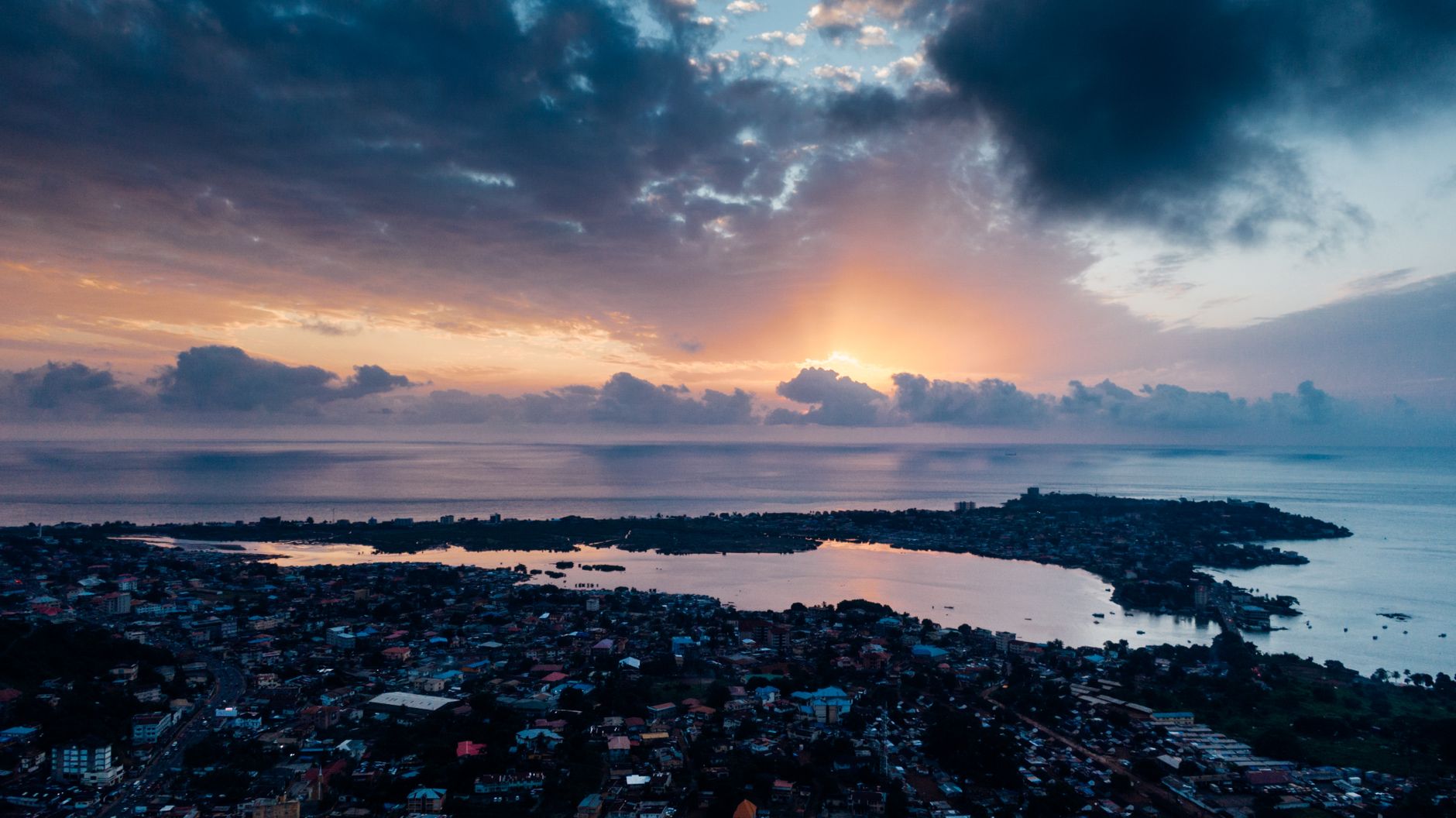
A view of Freetown, Sierra Leone.
Kelly on Pexels
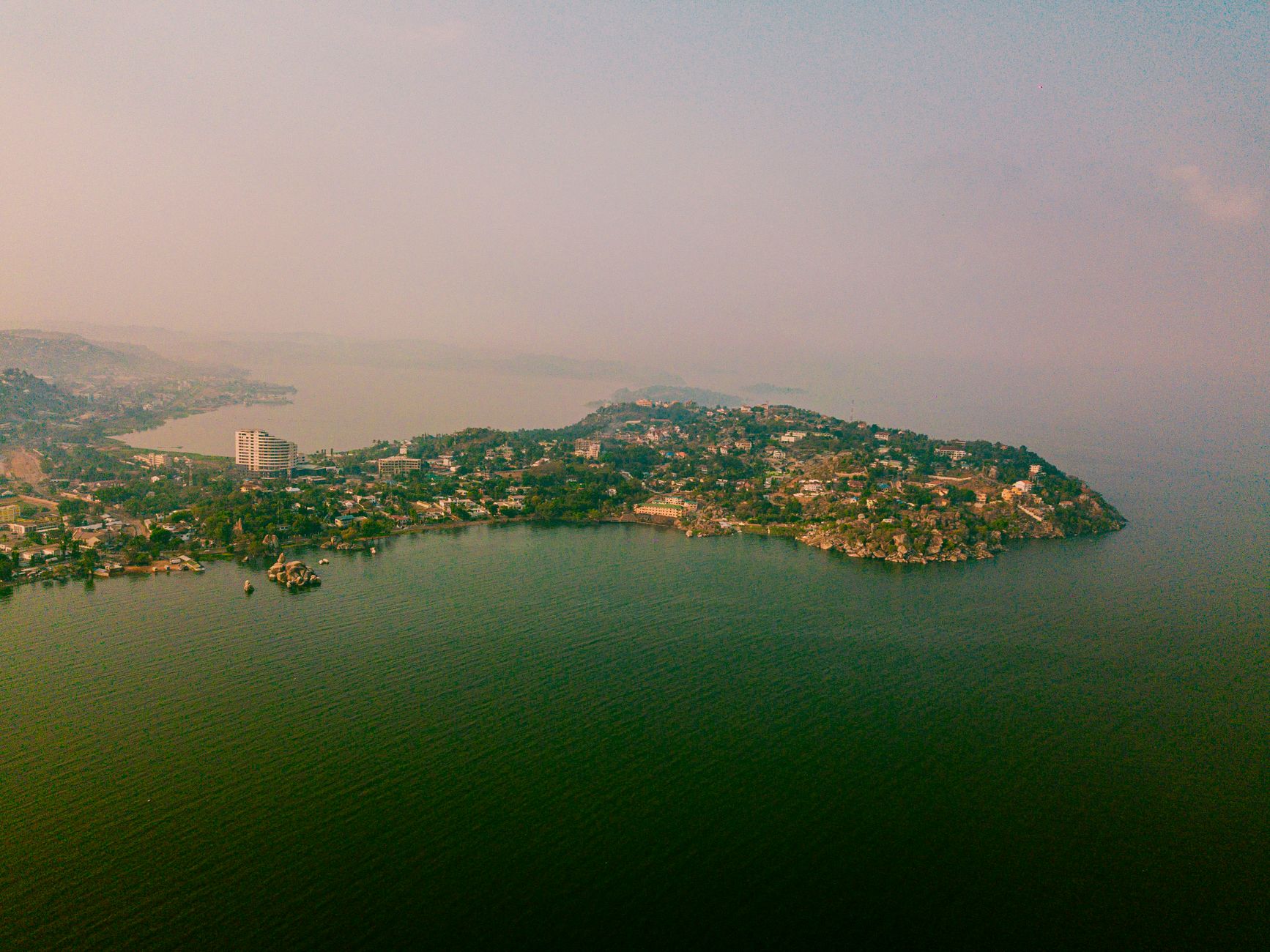
A view of Freetown, Sierra Leone.
George John on Pexels

A view of Freetown, Sierra Leone.
Kelly on Pexels

A view of Freetown, Sierra Leone.
Tappiah Sesay on Pexels

A view of Freetown, Sierra Leone.
Kelly on Pexels

A view of Freetown, Sierra Leone.
Isaac Naph on Pexels

A view of Freetown, Sierra Leone.
Muhammad Fullah on Pexels
Yes, if you want a city where history and coastline keep colliding in the same day. Few capitals let you stand under the Cotton Tree in the morning, face the memory of Bunce Island by afternoon, and end at Lumley Beach with grilled fish and Atlantic wind.
Three to five days works well for most travelers. That gives you time for the city's historic core, Tacugama Chimpanzee Sanctuary, and at least one peninsula beach or Bunce Island excursion without turning the trip into a sprint.
Most travelers use a water taxi or ferry from Lungi to Freetown. The river crossing takes about 20 to 45 minutes, but customs, shuttle transfer, and hotel drop-off usually push the full trip to 80 to 120 minutes, so book ahead.
Freetown is manageable for careful travelers, but petty theft is a real risk in crowded markets, around Cotton Tree, and at transport hubs. Use licensed boat operators, keep valuables concealed, and avoid quiet beach stretches and long walks after dark.
November to April is the best stretch for most visitors. Dry weather makes beach trips, wildlife visits, and road travel far easier, while the rainy season from May to October can bring flooding and long delays on peninsula routes.
Freetown can be mixed: local food and shared transport are cheap, while airport transfers, guided boat trips, and beach logistics add up fast. The airport water crossing alone is often around 45 USD, so the city feels affordable on the street and pricey at the tourism edges.
Yes, but it takes patience. Taxis and poda-podas do most of the work, sidewalks are patchy, and there is no formal metro, tram, or integrated bus card system, so short hops are easy and cross-city plans need more time than the map suggests.
Yes. English is the official language, but Krio is the everyday language you will hear in markets, taxis, and street stalls, so even a simple "Kushe" goes a long way.
Start with akara at dawn, then move to rice with cassava leaf stew, groundnut soup, or potato leaf stew. Street food is part of the city's rhythm, especially around markets and beach corridors, and the best stalls usually announce themselves by the queue.
Ready to book?
In 2026, nearly every visitor arrives through Freetown International Airport (FNA) in Lungi, across the Sierra Leone River from the capital. The standard transfer is a 20-45 minute water taxi or ferry with operators such as Sea Coach Express and Sea Bird Express; no passenger rail serves Freetown, and the overland drive via Port Loko usually takes 3-5 hours.
Freetown has no metro, subway, or tram system in 2026, and no integrated transport card or tourist pass. Getting around means shared poda-podas, privately run taxis with fares agreed before departure, and occasional water links along the peninsula; cycling infrastructure is close to nonexistent, with no dedicated bike-lane network.
Freetown stays tropical all year: spring runs about 30-31C by day, summer 28-30C with heavy rain, autumn 28-30C and still wet, winter 29-31C with drier air and clearer skies. Rain falls hardest from May to October, while November to April is the cleanest window for beaches, Bunce Island, and road trips; those dry months are also the city's peak visitor season.
English is the official language, but Krio is what you'll hear in taxis, markets, and beach bars; a simple "Kushe" goes a long way. Sierra Leone uses the Leone (SLE), though US dollars are common for tours and larger hotel bills; in 2026, cash still matters because card acceptance is uneven and many ATMs work best with Visa.
Petty theft shows up where crowds and confusion do the work for it: Kissy Market, the Cotton Tree area, and transport hubs deserve your full attention. Use licensed water-taxi operators, avoid isolated beaches after dark, and remember that the rainy season can turn a short road trip into a slow, flooded crawl.
0 places, one continuous walking route. Free with your first city.