Introduction
A Sierra Leone travel guide starts with a surprise: Freetown sits beside rainforest and white-sand beaches, not the image most travelers expect of West Africa.
Sierra Leone rewards travelers who want a country with sharp contrasts and very little performance. In Freetown, one of the world's largest natural harbors meets steep green slopes, Atlantic beaches, and a history that still presses close to the surface; a day can move from Bunce Island, where the slave trade was organized with bureaucratic calm, to sunset at Tokeh or a boat out to the Banana Islands. That range matters. You are not looking at a single postcard coast, but a country where geography keeps changing the story.
The interior shifts the rhythm. Bo and Kenema are the gateways to market towns, palm-oil kitchens, and roads that lead toward forest reserves and the old diamond country around Koidu, while Makeni and Kabala open onto northern savanna and the high ground beyond. Then the islands pull you back to the water: Bonthe feels half-remembered and tidal, Tiwai Island trades beach time for pygmy hippos and eleven primate species, and almost every route reminds you that Sierra Leone is best seen slowly, with cash in your pocket and room for plans to change.
A History Told Through Its Eras
When the Lion Mountains Belonged to the Ancestors
Before The Colony, Before 1462
Mist clung to the mountains above the Atlantic long before any European chart pretended to name them. On the peninsula where Freetown now stands, Temne communities treated the heights as a threshold, not a commodity: a place of sacred groves, initiation clearings, and negotiations with the dead as much as with the living.
Ce que l'on ignore souvent, c'est que political authority here did not sit only in the court of a chief. It also moved through the Poro and Sande societies, which judged disputes, shaped alliances, and guarded knowledge with a seriousness that baffled later colonial officers. A mask was never just a mask. A forest was never just a forest.
The sea mattered as much as the soil. Oral tradition remembers an early settlement called Romarong, the place of the water people, a name that suggests a coast understood through spirits, tides, and memory rather than through survey lines. That older imagination still haunts Sierra Leone's shoreline: the sense that the edge of the water is a border where bargains are made with forces one does not entirely control.
This matters because the first Europeans did not arrive in an empty land waiting for a map. They arrived in a world already organized, already sacred, already political. And that is why every later struggle over Freetown, Bunce Island, or the rivers inland was also a struggle over who had the right to define the land itself.
The emblematic figure of this era is not a crowned monarch but the Sande initiate, hidden inside the Sowei costume, carrying a power British officials could never quite penetrate.
Colonial records describe administrators trying and failing to see who was inside a Sowei masquerade costume; local rules were so strict that the mystery remained intact.
Pepper, Forts, and the Polite Horror of Bunce Island
The Atlantic Bargain, 1462-1787
A ship appears in the haze around 1462, its sails white against the dark hills, and Pedro de Sintra gives the mountains a name that Europe will keep: Serra Lyoa, the Lion Mountains. One can almost hear the vanity of it, that old maritime habit of renaming what other people had lived with for centuries. The coast, however, did not yield itself so easily.
At first, Europeans came less for gold than for malagueta pepper, those grains of paradise that fetched fine prices in Lisbon. For a few decades Sierra Leone sat inside the spice trade rather than the slave trade, which is a detail worth holding onto because it reminds us history rarely begins with its worst chapter. Then the market shifted after the sea route to India opened, and commerce sought a darker profit.
That darker profit found its machinery on Bunce Island, twenty miles up the Sierra Leone River from Freetown. The fort that rose there in the late seventeenth century was not dramatic in the romantic way ruins like to pretend; it was administrative, efficient, almost tidy. People were counted, confined, priced, and shipped toward the rice plantations of South Carolina and Georgia, where traces of Sierra Leonean speech and memory would survive in Gullah communities.
Ce que l'on ignore souvent, c'est that the men running this traffic also imported their leisure. One traveler described Scottish factors playing golf on Bunce Island, with enslaved Africans carrying clubs and balls. The obscenity lies precisely there: not in theatrical cruelty, but in routine, in the way human catastrophe was made to coexist with games, ledgers, and evening drinks. That cold normality would provoke, much later, the dream of another Sierra Leone: a colony of freedom.
Pedro de Sintra gave the mountains their European name, but the true human face of this era is the anonymous captive marched through Bunce Island, reduced on paper to cargo and remembered only in fragments across the Atlantic.
Period accounts suggest Bunce Island hosted one of the earliest golf grounds in Africa, an elegant pastime played beside slave barracoons.
Freetown, the Utopia Built by Exiles
Province of Freedom And Crown Colony, 1787-1896
Rain fell hard on canvas, timber, and exhausted bodies when the first British-backed settlers arrived in 1787 to found the Province of Freedom. The scheme had the lofty vocabulary of philanthropy and the practical planning of a disaster. Granville Sharp imagined redemption from London; fever, hunger, and political misunderstanding answered from the Sierra Leone coast.
The first experiment collapsed. Land agreements made with King Tom did not mean the same thing to both sides, disease tore through the camp, and within a few years the noble project looked painfully like another imperial delusion. Yet Sierra Leone's story is full of second acts.
The decisive scene comes on 15 January 1792, when ships from Halifax bring nearly 1,200 Black Loyalists to the shore of what becomes Freetown. They are not abstract symbols of liberty. They are veterans, mothers, carpenters, preachers, children, people who had fought for the British Crown during the American Revolution, been promised land in Nova Scotia, then cheated by cold, racism, and official neglect. They come ashore singing hymns. One can picture the beach, the wet sand, the rolled-up trunks, the stubborn music carrying over the water.
Thomas Peters, who had escaped slavery repeatedly and crossed the Atlantic to petition London in person, is the heroic nerve of the moment. John Clarkson, the young naval officer who believed in fair dealing, tried to turn promises into policy and was punished for it. Then came the Jamaican Maroons in 1800, then the thousands of Liberated Africans recaptured from illegal slave ships after 1808, and from this improbable convergence Krio culture was born in Freetown: language, manners, churches, newspapers, schools, choirs, ambition.
The colony was founded in the name of freedom, but it remained under imperial control, and that contradiction shaped the century. Fourah Bay College opened in 1827 and gave West Africa an intellectual capital. Mission schools spread literacy. Krio merchants and clergy carried influence far beyond Freetown. But inland, colonial reach hardened into protectorate rule. The promise of liberty at the water's edge was turning into something much more complicated across the rest of Sierra Leone.
Thomas Peters is the beating heart of this era: a former slave, British sergeant, political petitioner, and exile who reached Freetown only to die before he could fully see what he had begun.
Witnesses recorded that the Black Loyalists sang Methodist hymns as they landed in 1792, a musical habit that would echo through Freetown's famous church and school choirs.
Diamonds, Coups, and the Long Road Back
Protectorate, Independence, and The Broken Republic, 1896-2002
A document signed in 1896 declared the interior a British Protectorate, and with that stroke the old balance between coastal colony and inland polities shifted decisively. Chiefs were left in place, but now under a colonial frame that taxed, recruited, and disciplined from above. In 1898 the Hut Tax War exploded, led in part by Bai Bureh, who understood at once what the tax meant: not revenue, but submission.
Independence arrived on 27 April 1961 with flags, speeches, pressed suits, and the intoxicating belief that a new state could reconcile its many histories. Freetown stood as a capital with unusual pedigree for West Africa: not an old royal seat, not a conquest city, but a place built by freed people, missionaries, merchants, and empire all at once. That complexity should have been a strength. Too often, it became a quarrel over who truly owned the republic.
Then diamonds sharpened every vice. In the eastern districts around Koidu, wealth glittered under the soil while power hollowed out above it. Siaka Stevens mastered patronage with a brilliance one might almost admire if the consequences were not so grave; state institutions thinned, corruption became a system rather than a scandal, and public trust frayed year by year.
When civil war began in 1991, fed by regional conflict, predatory politics, and the diamond trade, Sierra Leone entered the chapter outsiders remember most easily and Sierra Leoneans had to survive sentence by sentence. Villages burned. Children were forced into militias. Freetown itself was attacked in January 1999 in scenes of terrible intimacy, street by street, house by house. Yet even here the country refused to be reduced to victimhood. Journalists documented, market women kept families alive, religious leaders negotiated, musicians mocked the killers, and ordinary people improvised endurance.
The formal end of the war in 2002 did not erase what happened. It did something harder. It reopened the possibility of a future in which the state might once again deserve the faith of its citizens. That future, fragile and unfinished, belongs to the Sierra Leone of today.
Bai Bureh, warrior and negotiator, saw earlier than most that colonial taxation was really a test of who would command the country.
The war that made Sierra Leone infamous abroad was also fought with cassette players, rumors, and radio broadcasts; information could save a life as surely as a roadblock could end one.
After The Fire, A Country That Refused to Be Only Its Tragedy
The Difficult Rebirth, 2002-Present
The postwar years did not begin with triumph. They began with paperwork, amputee clinics, school reopening lists, UN vehicles in the mud, and families trying to locate one another across districts. Sierra Leone had to rebuild not only buildings and roads, but ordinary trust: the trust that a bus would arrive, that a court might function, that a child could sleep without hearing gunfire.
Freetown once again became the country's stage, though not always by choice. The Ebola epidemic of 2014 brought another national ordeal, this time invisible and intimate, entering through touch, burial, and care itself. Nurses, burial teams, community leaders, and radio presenters did as much to save the republic as any minister. Ce que l'on ignore souvent, c'est that Sierra Leone's modern resilience was written as much by health workers and local volunteers as by politicians.
And yet the country is more than recovery language. In Bo, Kenema, Makeni, and Kabala, daily life has its own momentum: schools, football pitches, market stalls, wedding processions, palm wine, arguments over generators, children switching between English, Krio, Temne, and Mende in the same afternoon. On Tiwai Island and the Banana Islands, on the beaches near Tokeh, on Bunce Island where the stones still hold their silence, the old layers remain present without freezing the nation in memorial.
Sierra Leone now lives with a rare inheritance. It was shaped by sacred polities, by the Atlantic slave trade, by a radical experiment in freedom, by colonial rule, by diamonds, by war, and by survival. Few countries have had to reinvent themselves so many times. Fewer still have done it with such wit, such music, and such refusal to surrender the last word.
The emblematic figure of the present is not a single ruler but the survivor who rebuilt a household after war and epidemic, and then insisted on planning for tomorrow anyway.
During Ebola, local radio in Krio became one of the country's most effective public-health tools, translating lifesaving instructions into the language people actually used at home.
The Cultural Soul
A Mouth Full of Salt and Mercy
Krio does not sound like broken English. It sounds like English after shipwreck, prayer, bargaining, hunger, and survival have boiled it down to its mineral content. In Freetown, a greeting can take the measure of your whole day before you have even sat down: "Aw di bodi?" asks after the body as if it were a companion temporarily entrusted to you, and "Tell God tenki" answers with a theology compact enough to fit between two market stalls.
A country reveals itself in the verbs it prefers. Sierra Leone likes verbs that soften impact, delay refusal, preserve dignity. "We go see" means no, but no with the door left on the latch. "Lef am" means leave it, drop it, spare your blood pressure, and perhaps save your soul. Wisdom often arrives disguised as laziness.
Krio also has that rare gift: it can laugh without cruelty. "Eh boh" carries surprise, pity, amusement, fatigue, solidarity, all in two syllables. You hear it in a poda-poda when the tire goes soft, in a courtyard when the generator dies, in a conversation about politics that has become too accurate for comfort. One interjection. Whole philosophy.
English remains the official script, but daily life moves through Krio, then bends toward Mende in Bo and Kenema, toward Temne in Makeni, toward older local cadences that survived both empire and bureaucracy. A language map can look neat on paper. Human speech refuses neatness.
Rice, the Serious Matter
In Sierra Leone, rice is not accompaniment. Rice is the throne. Everything else approaches it in tribute: cassava leaf, groundnut soup, pepper soup, bonga fish, palm oil, smoke, fire. To understand the place, begin with the grain mound on the enamel plate and notice how everyone judges the meal by what happens around it.
Cassava leaf stew tastes like a forest that has learned the habits of the sea. The leaves are pounded until they lose all vanity, then cooked with palm oil, onion, chili, meat, and smoked fish until the pot gives off a smell both green and tidal. Groundnut soup is another doctrine entirely: peanut, stock, tomato, heat, that sweet-fat depth that makes a first spoonful feel almost gentle and the second one feel like an argument.
Street food is where Sierra Leone becomes flirtatious. Akara at breakfast, hot enough to sting the fingers. Oleleh unwrapped from banana leaf, steam hitting the face like a private blessing. Kanya sold in small bars of groundnut and sugar that dissolve childhood and market dust on the tongue at the same time.
Then come the rituals of appetite at the coast, from Tokeh to Bonthe, where fish arrives with the Atlantic still clinging to it and palm wine moves from sweet to sour with indecent speed. A country is a table set for strangers. Sierra Leone sets it with rice and tests whether you are paying attention.
Books After Fire
Sierra Leonean literature writes with unusual calm about subjects that should make language split in half. That calm is not indifference. It is mastery. Ishmael Beah's pages move with the flat tone of someone who knows horror does not become more true when ornamented, and Aminatta Forna writes as if memory were a room in Freetown with one shutter open and one nailed shut.
This is a country where narrative has had to do forensic work. War, slavery, migration, return, disappearance, reinvention: each left its paperwork incomplete. The writer steps in where the archive stammers. Bunce Island survives in stone and tide marks; the rest survives because someone kept telling the story before the story was convenient.
Even the institutions carry drama. Fourah Bay College in Freetown, founded in 1827, was once called the Athens of West Africa, which is an extravagant title and, for once, not a stupid one. Clergymen, lawyers, teachers, civil servants, agitators, all passed through its classrooms and carried words across the region like contraband.
The result is prose with unusual moral hearing. Sierra Leonean writers know that what is unsaid can govern a family, a city, a republic. Silence here is never empty. It is often crowded.
Drums for the Living, Hymns for the Stubborn
Music in Sierra Leone does not separate cleanly into sacred and secular, old and new, village and capital. A church choir in Freetown can carry the discipline of Nova Scotian Methodists and the swing of Krio speech in the same breath. A wedding can begin in polished shoes and end in dust, sweat, and drums that remind everyone the body was always going to win.
The historical irony is exquisite. Some of the earliest returning settlers arrived in 1792 singing hymns from the Atlantic crossing into what became Freetown, and those imported religious forms did not remain imported for long. They were absorbed, bent, warmed, set to local rhythm, and made answerable to African ears. Sierra Leone accepts inheritance the way a good cook accepts a foreign ingredient: only after altering it.
Then there is the percussion world, which belongs not to concert halls but to initiation grounds, festivals, family ceremonies, and those hours after dusk when sound travels farther than logic. Temne and Mende traditions keep drum language, call-and-response, praise singing, and masked performance tied to social life rather than trapped behind glass. Music here still has a job.
In the cities, that inheritance keeps changing clothes. Palm-wine guitar, gospel, hip-hop, Afrobeats, local pop in Krio, dance tracks from beach bars near Aberdeen to roadside speakers in Bo. Sierra Leone does not ask music to stay pure. Purity is for distilled water and bad ideas.
The Courtesy of Taking Time
A hurried person looks slightly obscene in Sierra Leone. Not because speed is immoral, but because greeting comes before transaction and relation comes before efficiency. If you walk into a shop in Freetown or Kenema and go straight to your question, you have announced that money matters more to you than the existence of the person in front of you. This is ugly everywhere. Here, people still notice.
So you greet. You ask after the body, the morning, the family, the work. You let the exchange breathe. The point is not decorative politeness. The point is to establish that both parties remain human before discussing fish, phone credit, boat times, or the price of petrol.
Refusal, too, is handled with tact sharp enough to deserve admiration. A blunt no can land like a slap, so language curls around the obstacle instead: later, perhaps, we will see, not today, God willing. This can confuse visitors from cultures addicted to explicitness. They should recover quickly.
Dress carries its own syntax. For ceremonies, church, Friday mosque, family visits, and official encounters, people present themselves with care: pressed shirt, polished shoe, gara cloth, a head tie tied with full conviction. Respect is visible. Sierra Leone does not confuse casualness with sincerity.
God in the Greeting, Ancestors in the Room
Religion in Sierra Leone is public without always being theatrical. A blessing slips into ordinary speech the way salt slips into cooking: not announced, simply assumed. Christians and Muslims live with a degree of everyday coexistence that many richer countries manage to discuss endlessly without achieving, and it is common for families to move between churches, mosques, funerals, naming ceremonies, and feast days with more ease than doctrinal purists would like.
But the older spiritual architecture never vanished. Secret societies such as Poro and Sande shaped law, education, gendered power, and initiation long before colonial administration began filing reports about what it could not fully understand. Their ceremonial life still hums beneath official religion, not as folklore for tourists, but as social force.
That layering matters. A mosque call, a church choir, a libation, a masked performance, a proverb about fate, all can belong to the same moral landscape without canceling one another. Sierra Leone has little patience for tidy categories when lived reality refuses them.
Visit Bunce Island and you feel another theology entirely: the river as witness, the fort as accusation, the silence as liturgy. History can make a ruin into a chapel of the unbearable. Some places teach faith. Others teach the need for mercy after faith has failed.
Masks That Know More Than You Do
Sierra Leonean art resists the museum habit of treating objects as if they were born to stand still. A Sowei helmet mask from the Mende world is not merely a carved head with lustrous black surface and elaborate coiffure. It belongs to performance, secrecy, dance, female initiation, collective memory, and the dangerous fact that beauty can also govern.
The form is precise. Lowered eyes for modesty. Full neck rings for health and prosperity. A polished face that catches light like wet seed. European collectors admired the sculptural logic and missed the point, which was typical of them.
Gara cloth offers another kind of intelligence. Indigo, rust, deep blue, resist-dyed geometry, fabric that can turn a body into moving pattern. In markets in Freetown or on special occasions in Bo, cloth announces seriousness before the wearer says a word. Textile is not an accessory. Textile is speech.
Even daily craft carries that density of meaning: carved stools, woven baskets, sign painting, hand-lettered storefronts, practical beauty everywhere because usefulness has never excluded style. Sierra Leone does not waste elegance on galleries alone. It lets it walk the street.
What Makes Sierra Leone Unmissable
Peninsula Beaches
The Freetown Peninsula runs for roughly 42 kilometers, with rainforest-covered hills dropping into pale sand and calm bays. Tokeh and the Banana Islands give you the side of Sierra Leone most outsiders never picture.
Atlantic History
Bunce Island turns the history of the slave trade into something physical and hard to dodge. Twenty miles upriver from Freetown, the ruins show how global wealth once moved through this estuary.
Wildlife Islands
Tiwai Island is one of the country's strongest reasons to leave the coast for a few days. The sanctuary is known for pygmy hippos, dense river forest, and an unusual concentration of primates.
Mountains And Savanna
Sierra Leone is not only shoreline. The north and east rise into highlands and open country, with Kabala as a base for cooler air, walking routes, and the wider Loma mountain region.
Rice And Plasas
The national table is built around rice, cassava leaf, groundnut soup, smoked fish, and serious pepper. In Freetown, Bo, and Kenema, the food tastes local in the most useful way: dense, direct, and impossible to mistake for anywhere else.
Cities
Cities in Sierra Leone
Freetown
"A capital that tumbles down rainforest hills to a natural harbor so deep the Portuguese anchored here in 1462, and where Cotton Tree — a 500-year-old kapok at the city's heart — still marks the spot where freed slaves kn"
Bo
"Sierra Leone's second city runs on palm oil, motorcycle taxis, and Mende market culture, its central market stacking dried bonga fish, kola nuts, and country cloth in a density that makes Freetown feel orderly by compari"
Kenema
"The diamond capital of the east, where artisanal miners sluice the Sewa River tributaries and Lebanese-owned trading houses on the main street have brokered rough stones since the 1930s."
Makeni
"The Temne heartland's main town sits at the crossroads of the north and carries the quiet authority of a place that has been a chieftaincy seat long before any colonial map was drawn."
Koidu
"A raw, fast town built almost entirely on kimberlite — the diamond-bearing rock beneath it — where the gap between what comes out of the ground and what stays in the community is the defining story of modern Sierra Leone"
Bonthe
"A Victorian-era colonial town stranded on Sherbro Island, its brick warehouses and wide verandahed houses slowly being reclaimed by mangrove and salt air, reachable only by boat."
Kabala
"Perched in the Wara Wara Hills near the Guinea border, this small northern town is the base camp for Bintimani Peak — at 1,945 metres, the highest point in West Africa west of Mount Cameroon."
Moyamba
"Graham Greene passed through the Moyamba district while working for British intelligence in the 1940s, and the slow-moving town on the Jong River still has the colonial-era atmosphere that fed 'The Heart of the Matter.'"
Banana Islands
"Three tiny islands — Dublin, Mes-Meheux, and Ricketts — connected by sandbanks at low tide, where the ruins of a Portuguese chapel sit in jungle fifty metres from a beach that sees perhaps a dozen visitors a week."
Tiwai Island
"A 12-square-kilometre island sanctuary in the Moa River that shelters eleven primate species including rare pygmy hippos, accessible only by dugout canoe from the riverbank village of Kambama."
Bunce Island
"An uninhabited 1,600-foot island twenty miles up the Sierra Leone River from Freetown, where the crumbling walls of a British slave fort that processed tens of thousands of captives — some traceable to South Carolina's G"
Tokeh
"A fishing village on the Freetown Peninsula where a crescent of white sand backed by rainforest-covered mountains has remained largely undeveloped, the morning catch still sorted on the beach in front of the same wooden "
Regions
Freetown
Freetown Peninsula and Estuary
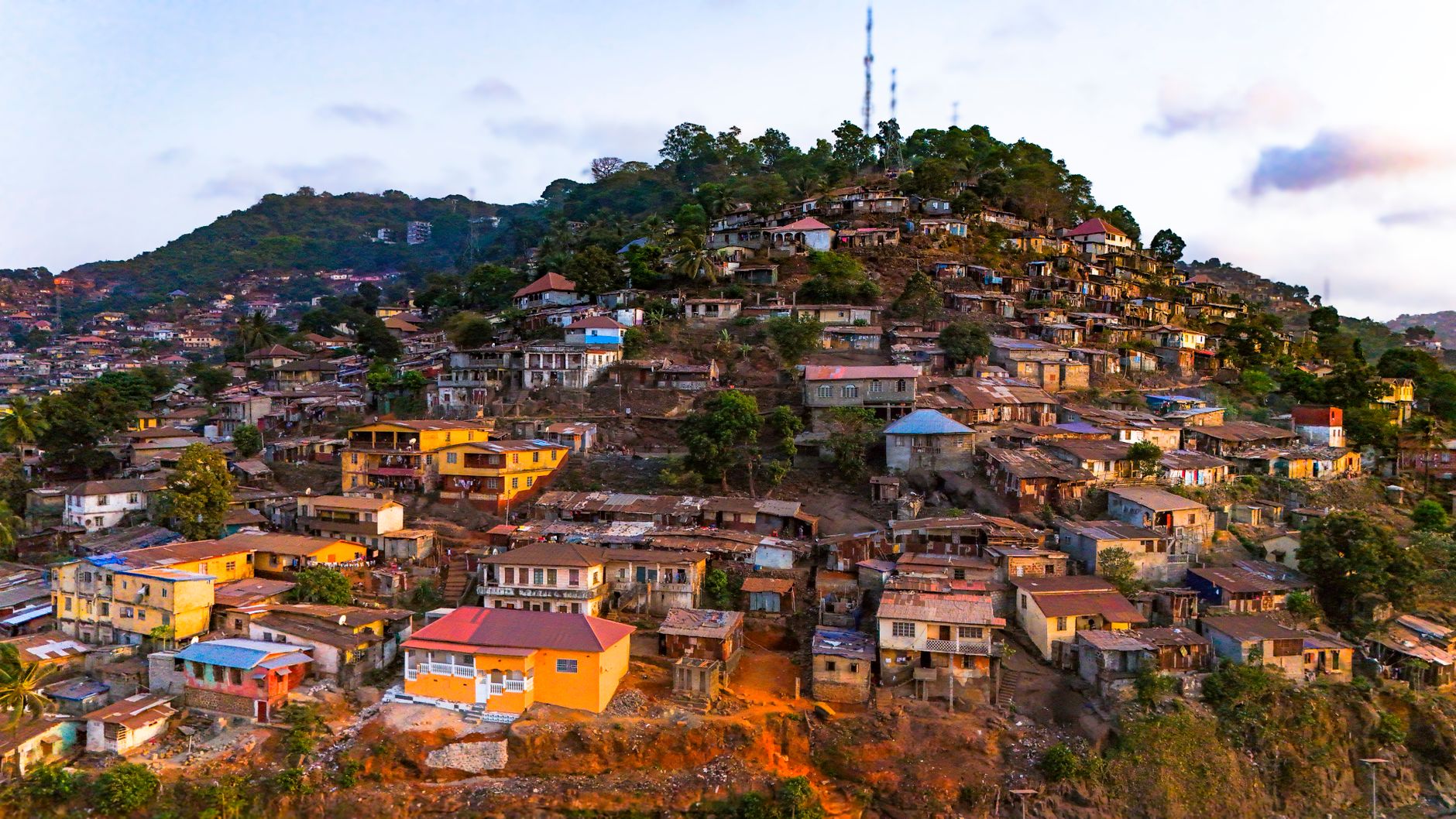
This is the Sierra Leone most travelers meet first: one of the world's largest natural harbors, steep green hills, and beaches within day-trip range of the capital. Freetown carries the country's founding story, while the estuary and peninsula hold the sharpest contrast between urban pressure and Atlantic calm.
Bonthe
Southern Coast and Sherbro Waters
The south coast moves at boat speed. Bonthe and the wider Sherbro zone feel older, looser, and less wired into the capital's rhythm, with river channels, decaying colonial facades, and a coastline where transport depends on tide, weather, and patience.
Bo
Southern Heartland
Bo is one of Sierra Leone's big inland anchors, practical rather than theatrical, and a useful base for understanding how the country actually moves between coast and provinces. Markets, transport routes, and regional trade matter more here than postcard scenery, which is part of the appeal.
Kenema
Eastern Forest and Diamond Country
The east is where rainforest edges, mining history, and borderland trade all crowd the same map. Kenema works as the region's commercial hinge, while Koidu carries the weight of the diamond trade and Tiwai Island offers the rare counterpoint of intact forest and wildlife.
Kabala
Northern Highlands and Savannah Fringe
Northern Sierra Leone feels drier, wider, and more remote than the coast, with Kabala as the clear highland base and Makeni as the transport hinge. This is the region for travelers who want mountain air, longer road journeys, and a country that reveals itself by degrees rather than in one grand sight.
Suggested Itineraries
3 days
3 Days: Freetown, Bunce Island, and the Peninsula
This is the short route that makes sense if you want history, sea air, and a workable first look at Sierra Leone without spending half the trip in transit. Base yourself in Freetown, take the river trip to Bunce Island, then finish on the peninsula around Tokeh, where the country shifts from traffic and ferries to palm trees and Atlantic light.
Best for: first-timers with limited time
7 days
7 Days: Southern Rivers and Island Edges
This southern route trades big mileage for quieter places and slower water-bound travel. Start inland in Moyamba, continue to the colonial-era island town of Bonthe, then head to Tiwai Island for forest walks, primates, and the kind of silence you notice only after leaving a city.
Best for: wildlife travelers and repeat visitors
10 days
10 Days: Bo to Kenema to Koidu
The southeast gives you Sierra Leone away from the beach clichés: market towns, long road days, forest country, and the diamond history that still shapes the east. The route runs in a clean line from Bo to Kenema and on to Koidu, which makes it one of the more coherent overland circuits in the country.
Best for: travelers interested in inland culture and history
14 days
14 Days: Estuary to Highlands via the North
Two weeks gives you enough room to pair the coast with the north rather than pretending Sierra Leone is only about beaches. Begin with the harbor and offshore calm of Freetown and the Banana Islands, then turn north through Makeni to Kabala, where the air cools, the roads thin out, and the country feels built on distance rather than tide.
Best for: slow travelers who want coast and highlands in one trip
Notable Figures
Thomas Peters
1738-1792 · Black Loyalist leaderThomas Peters did not arrive in Sierra Leone as a passive beneficiary of British charity. He forced the imperial system to hear him, crossing to London to demand justice for Black Loyalists in Nova Scotia, then helped lead them to Freetown, where he died only months after landing.
John Clarkson
1764-1828 · Naval officer and colony organizerJohn Clarkson believed, perhaps too sincerely for empire, that the settlers of Freetown should receive the equality they had been promised. His diaries make him invaluable because he noticed people as people, not just as cargo for a social experiment.
Granville Sharp
1735-1813 · Abolitionist reformerGranville Sharp helped imagine Sierra Leone as a refuge for freed Black people, which was morally bold and administratively naive in almost equal measure. He never set foot there, and that distance explains much about the first colony's collapse.
Bai Bureh
1840-1908 · Temne ruler and anti-colonial leaderBai Bureh understood that a hut tax was not about huts. It was about power, obedience, and who had the right to command the interior of Sierra Leone, which is why he became the great face of resistance in 1898.
Sir Milton Margai
1895-1964 · First Prime MinisterMilton Margai carried independence with a physician's temperament rather than a demagogue's appetite. His style was cautious, conciliatory, almost old-fashioned, which made him look modest beside louder African contemporaries and perhaps more valuable than they seemed to notice.
Siaka Stevens
1905-1988 · Prime Minister and PresidentSiaka Stevens was one of those men who can charm a room while emptying the state behind its back. His political instinct was formidable, his survival skills even more so, and the institutional damage of his rule set much of the stage for the disasters that followed.
Foday Sankoh
1937-2003 · RUF rebel leaderFoday Sankoh offered the rhetoric of liberation and delivered mutilation, fear, and a war financed by diamonds. To understand Sierra Leone's 1990s, one has to reckon with the banal mixture of grievance, vanity, and cruelty he turned into a national nightmare.
Aminatta Forna
born 1964 · WriterAminatta Forna writes Sierra Leone without sentimental fog. In her work, memory is never neat, and Freetown appears as it often is in life: beautiful, wounded, ironic, and intellectually alive.
Ishmael Beah
born 1980 · Memoirist and human rights advocateIshmael Beah gave the world a first-person account of Sierra Leone's war from inside a stolen childhood. What makes his voice endure is not spectacle but precision: the way small details carry the full moral weight of catastrophe.
Photo Gallery
Explore Sierra Leone in Pictures

A vibrant aerial view of Mount Aureol and its colorful houses in Freetown, Sierra Leone.
Photo by Tappiah Sesay on Pexels · Pexels License

Aerial photograph showcasing the scenic hillside housing of Freetown, Sierra Leone during daytime.
Photo by Tappiah Sesay on Pexels · Pexels License

Aerial photo of mining operations in Koidu, Sierra Leone, showcasing land transformation.
Photo by Tappiah Sesay on Pexels · Pexels License

Vibrant traditional dance with people wearing colorful attire in an outdoor setting.
Photo by Anchau on Pexels · Pexels License

A vibrant outdoor cultural celebration with people in traditional attire dancing joyfully.
Photo by Anchau on Pexels · Pexels License

A group of women in vibrant red traditional attire participate in a cultural ceremony outdoors.
Photo by Zeal Creative Studios on Pexels · Pexels License

Rusty shipwreck on a sunny beach in Freetown with children playing nearby.
Photo by Muhammad Fullah on Pexels · Pexels License
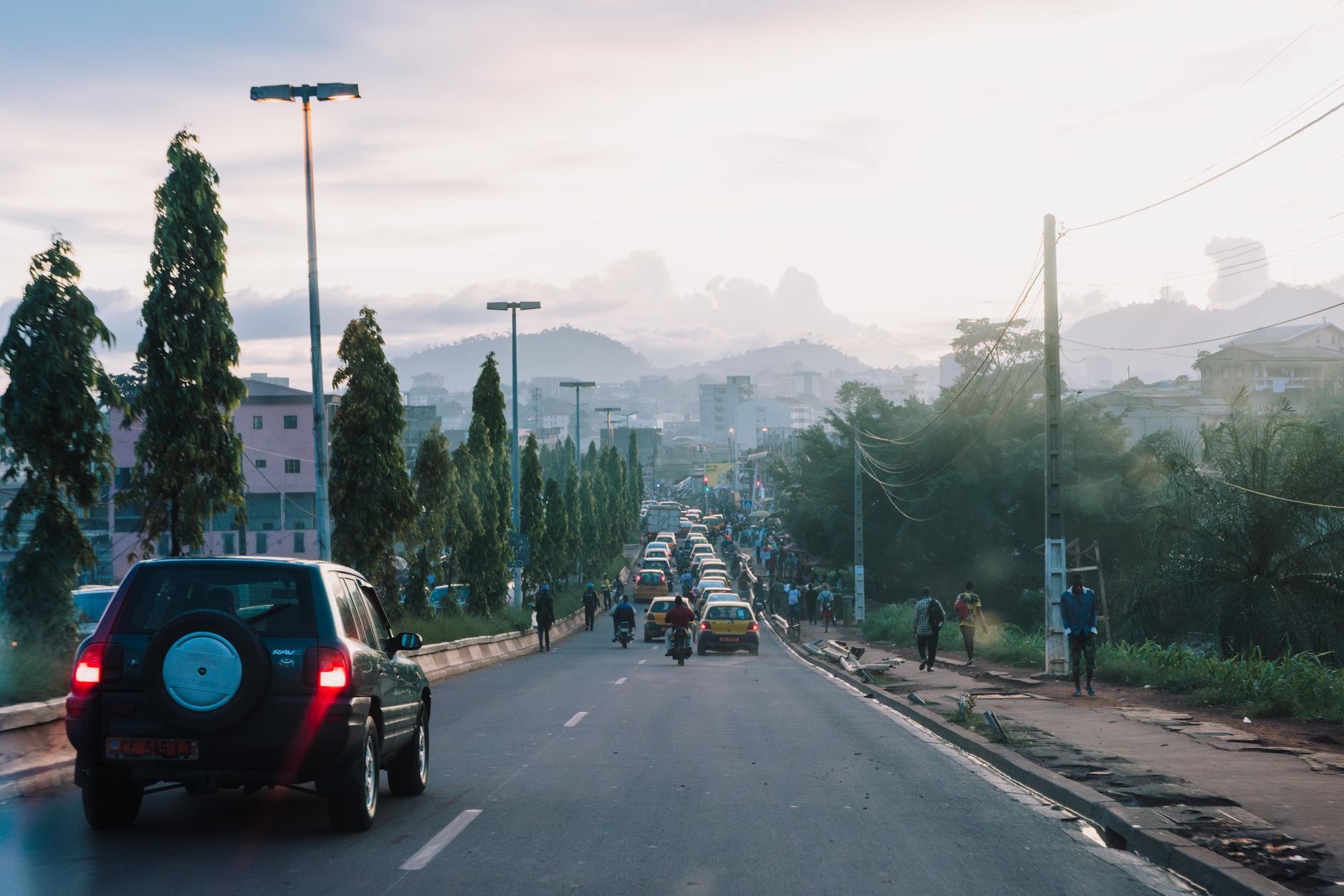
View of a busy urban street during evening with vehicles and pedestrians.
Photo by Kelly on Pexels · Pexels License

Woman in traditional dress stands by a rustic, weathered door with a lattice design.
Photo by Kanja Fofana on Pexels · Pexels License

Scenic aerial view of Mother Elephant Stone amidst lush green forests in Dak Lak, Vietnam.
Photo by Quang Nguyen Vinh on Pexels · Pexels License

A woman stands in colorful traditional dress in front of a rustic hut, showcasing cultural heritage.
Photo by Kanja Fofana on Pexels · Pexels License
Practical Information
Visa
Most travelers need a visa before arrival, and the safest route is the official eVisa system at evisa.sl. Plan on a valid passport with at least six months left, one blank page, a yellow fever certificate, and the separate airport security fee of US$25 each way.
Currency
Sierra Leone uses the New Leone, written as NLe. Cash still runs the country outside central Freetown, so carry enough local currency plus crisp US$50 or US$100 notes as backup, and do not assume cards will work beyond better hotels and a few restaurants.
Getting There
You arrive through Freetown International Airport in Lungi, across the estuary from Freetown. The crossing is part of the trip: pre-book a speedboat or ferry, land in daylight if you can, and leave at least three extra hours on flight days because airport-to-city transfers are rarely quick.
Getting Around
Main paved roads connect Freetown, Bo, Makeni, and parts of the southeast, but road quality drops fast once you leave the trunk routes or travel in the rains. For intercity travel, a hired car with driver is the sensible option; shared transport exists, though it is slower, harder to predict, and not the best use of limited holiday time.
Climate
November to April is the dry season and the easiest time to move around, with lower humidity, calmer seas, and fewer road problems. May to October brings heavy rain, especially around Freetown and the peninsula, where washed-out roads and rougher boat crossings can reshape an itinerary in a day.
Connectivity
Orange, Africell, and Qcell all operate here, with the strongest 4G coverage in Freetown and larger towns such as Bo, Kenema, and Makeni. Buy a local SIM, expect patchy service in rural areas, and pack a power bank because outages and load-shedding are common outside top-end hotels.
Safety
Sierra Leone rewards travelers who plan ahead rather than improvise late at night. Use registered drivers or hotel-arranged taxis, keep cash split between bags, avoid isolated beaches after dark, and build extra time for transport because the real risk here is often logistical, not dramatic.
Taste the Country
restaurantCassava Leaf with Rice
Lunch ritual. Right hand, rice ball, green stew, smoked fish, pepper. Family table, enamel plate, silence for the first mouthful.
restaurantGroundnut Soup
Evening meal. Rice or fufu, shared bowl, slow spoonfuls. Peanut, tomato, stock, heat, conversation.
restaurantOleleh
Breakfast or market snack. Banana leaf unwrapped by hand, steam first, bite second. Tea nearby, bus horn outside.
restaurantAkara
Street breakfast. Paper packet, fingers, quick eating, hot oil, onion, pepper. Best standing up.
restaurantPepper Soup
Night food. Goat or fish, thin broth, sweat, laughter, recovery. Eaten late, often with friends after a long day.
restaurantJollof Rice
Party dish. One pot, metal spoon, arguments about the bottom crust. Weddings, birthdays, Sunday gatherings.
restaurantPalm Wine
Village drink and coastal ritual. Calabash or bottle, fresh in the afternoon, sharper by dusk. Shared, never rushed.
Tips for Visitors
Carry cash
Bring enough cash for several days, especially once you leave Freetown. ATMs can fail, card terminals disappear outside better hotels, and boat operators or drivers often want payment in cash on the spot.
Ignore rail fantasies
Sierra Leone does not have a useful passenger train network for travelers. Build your plans around road transfers, boats, and hired drivers, not old rail maps or hopeful internet threads.
Book transport first
In Sierra Leone, the expensive mistake is usually bad timing, not the room rate. Lock in the airport crossing, first-night transfer, and any boat-dependent leg before you start comparing hotel upgrades.
Travel early
Start long drives in the morning. Afternoon storms, traffic around Freetown, and simple breakdowns all become harder to solve after dark, when backup options shrink fast.
Buy a local SIM
A local SIM is more useful than you think because drivers, guesthouses, and boat contacts often confirm plans over WhatsApp rather than email. Orange usually gives the strongest coverage for travelers moving between major towns.
Tip lightly, in cash
Rounding up is normal, and 5 to 10 percent is generous in restaurants if service is not already added. Small cash tips also matter for porters, boat crew, and hotel staff who help solve transport problems.
Keep your papers handy
Carry your passport copy, yellow fever card, and visa details in a dry pouch or zip bag. Between ferries, road checks, and sudden rain, paper documents have a talent for getting wet exactly when someone asks for them.
Explore Sierra Leone with a personal guide in your pocket
Your Personal Curator, in Your Pocket.
Audio guides for 1,100+ cities across 96 countries. History, stories, and local insight — offline ready.
Audiala App
Available on iOS & Android
Join 50k+ Curators
Frequently Asked
Do I need a visa for Sierra Leone? add
Yes, most travelers do. The usual plan is to apply through the official eVisa system before departure, and you should also budget for the separate airport security fee and carry proof of yellow fever vaccination.
Is Sierra Leone expensive for tourists? add
No, not by regional beach-destination standards, but transport can push costs up quickly. A careful traveler can manage on about US$35 to US$60 a day, while private drivers, peninsula resorts, and boat transfers move the budget into mid-range or higher territory.
What is the best month to visit Sierra Leone? add
January and February are usually the easiest months. They sit in the dry season, with lower humidity, calmer sea crossings, and better road conditions than the heavy-rain months from May to October.
How do you get from Lungi Airport to Freetown? add
Most travelers use a speedboat or water taxi, while some take the ferry or drive around the estuary. Pre-booking matters because the airport is not in Freetown itself, and missed connections here can cost hours rather than minutes.
Can I use credit cards in Sierra Leone? add
Only sometimes, and mostly in better hotels or a small number of restaurants in Freetown. Sierra Leone is still a cash-first destination, so carry New Leone for daily spending and keep backup US dollars for exchange.
Is Sierra Leone safe to travel around independently? add
Yes, with planning and realistic timing, but it is not a place to leave transport decisions until the last minute. The bigger problems are unreliable logistics, dark-road travel, and patchy communications rather than constant petty crime in tourist areas.
Is Sierra Leone good for beaches or wildlife? add
Both, but they sit in different kinds of trips. Tokeh and the Banana Islands work for sea-and-sand days, while Tiwai Island is the stronger choice if you want primates, forest, and guided wildlife time.
How many days do you need in Sierra Leone? add
Seven to ten days is the useful minimum if you want more than Freetown and one beach. Three days works for the capital and peninsula, but inland places such as Bo, Kenema, Koidu, Kabala, or Tiwai Island need longer road time than the map first suggests.
Sources
- verified UK Foreign, Commonwealth & Development Office — Visa rules, airport security fee, yellow fever requirement, and current entry guidance for Sierra Leone.
- verified U.S. Department of State - Sierra Leone Travel Advisory — Entry requirements, airport transfer timing, currency cautions, and practical transport advice.
- verified Government of Sierra Leone eVisa Portal — Official online visa application portal referenced for pre-trip entry planning.
- verified Government of Canada - Travel Advice and Advisories for Sierra Leone — Independent government guidance on visas, transport conditions, money, and public transport risks.
- verified National Revenue Authority of Sierra Leone — Reference for the 15 percent Goods and Services Tax applied to many taxable goods and services, including hotels and restaurants.
Last reviewed: