Victoria

Seychelles

Victoria

Africa's smallest capital has just two traffic lights and a clock that strikes twice. Victoria packs markets, Creole food, and harbor light into a walkable core.

location_on 6 attractions
calendar_month Shoulder seasons (April-May and October-November)
schedule 1-2 days

Introduction

A cast-iron clock in Victoria, Seychelles, strikes twice on the hour while the smell of tuna, cinnamon, and diesel drifts in from the harbor. That tells you almost everything about this capital: imperial leftovers, market life, and the Indian Ocean pressed close together on a scale so small you can walk across town in 15 minutes. Victoria is the capital of an island nation, but it feels more like a port village that somehow kept the paperwork.

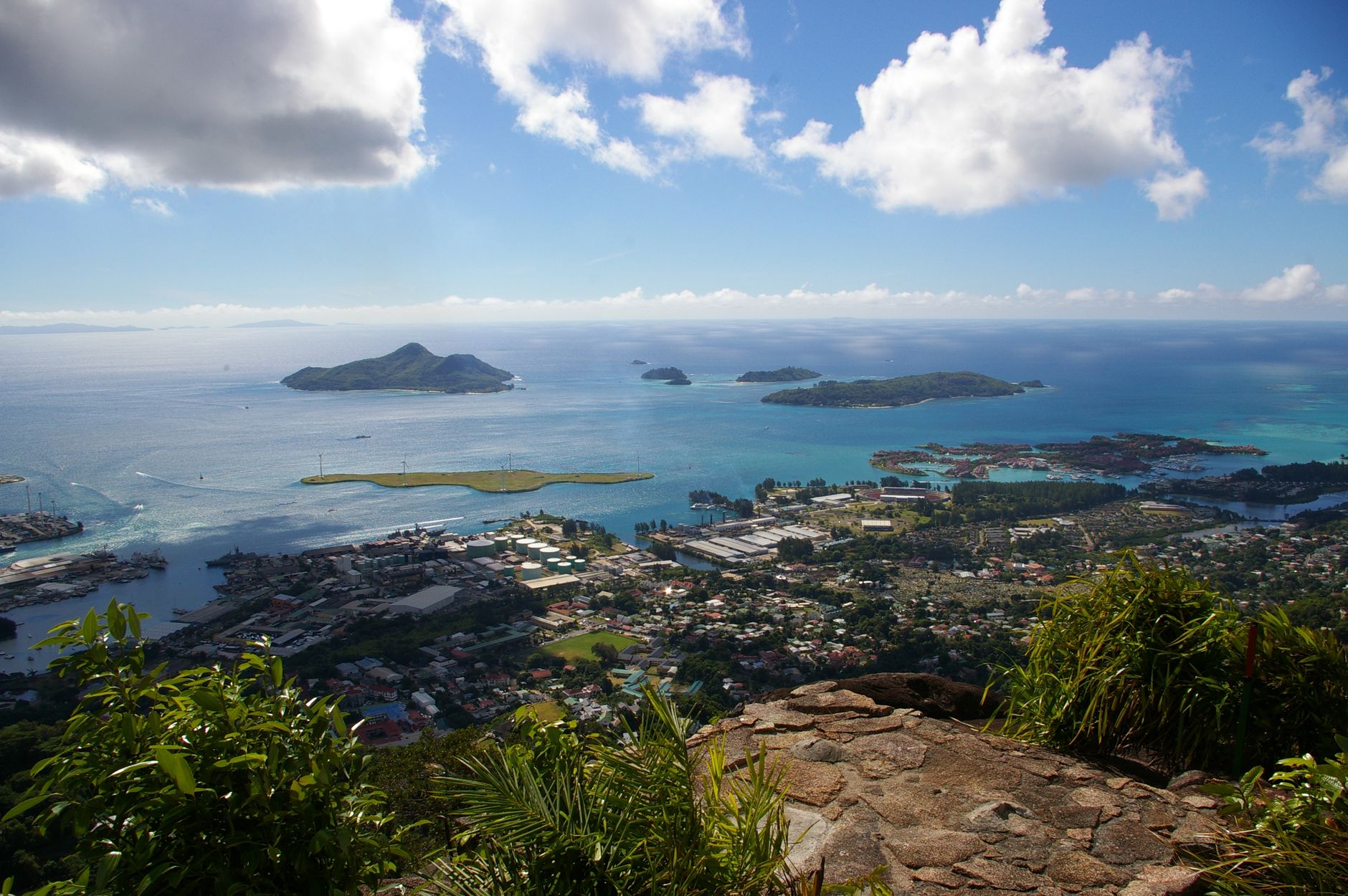
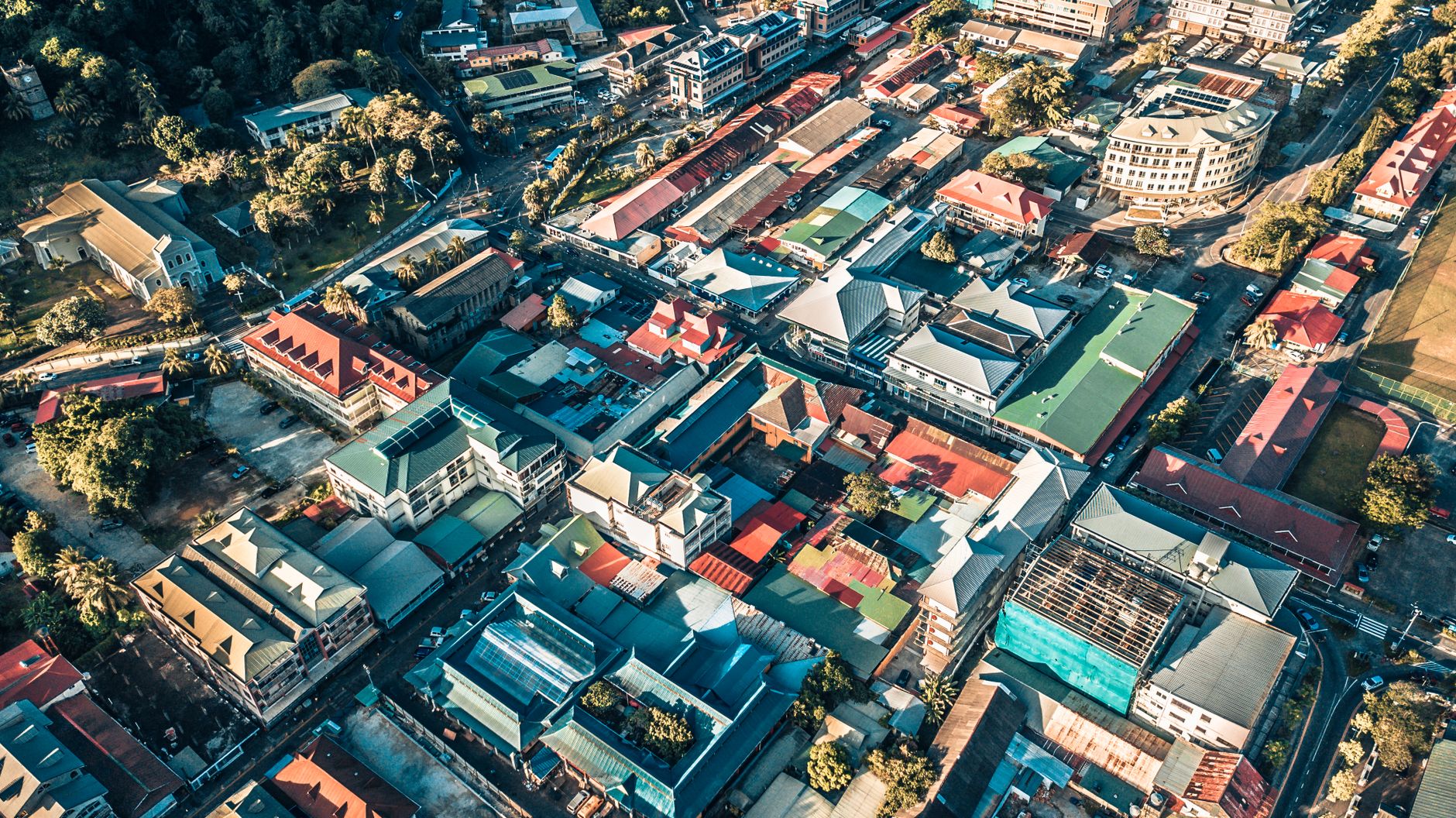
Scale is Victoria's first surprise. About 25,000 people live here, the streets run out quickly, and steep green slopes crowd the back of town so tightly that the city seems wedged between mountain and sea. Nothing sprawls.

The city's character comes from overlap rather than grandeur. French settlers founded it in 1778, British rule renamed it after Queen Victoria, and today's streets carry Creole, Indian, African, and European traces all at once: a Hindu temple on Quincy Street, a Catholic cathedral uphill, market traders switching between English, French, and Seychellois Creole before lunch.

Come here for texture, not spectacle. Saturday morning at Sir Selwyn Selwyn-Clarke Market is all wet fish scales, vanilla pods, shouted prices, and bags of breadfruit chips; a few streets away, the Botanical Gardens settle into shade, fruit bats, and the prehistoric sulk of Aldabra tortoises. Victoria changes your sense of what a capital can be: less monumental, more intimate, and far more revealing because of it.

What Makes This City Special

A Capital in Miniature

Victoria feels less like a capital than a harbor town that accidentally inherited the paperwork. You can cross the center on foot, pass the 1903 clock tower at Independence Avenue and Albert Street, and still hear market vendors over the traffic because traffic here barely raises its voice.

Market Mornings

Sir Selwyn Selwyn-Clarke Market is where the city smells like tuna, vanilla pods, wet herbs, and ripe papaya before breakfast. Go on Saturday morning, when the fish tables are full, the spice stalls are sharp in the air, and the upstairs food counters start pulling in regulars.

Tortoises and Coco de Mer

The Seychelles National Botanical Gardens, established in 1901, compress a surprising amount of island life into 5 acres: Coco de mer palms, spice plots, fruit bats, and Aldabra giant tortoises that move with the confidence of creatures who know nobody is rushing them. Victoria's secret is that nature doesn't sit outside town here; it presses right up against it.

Creole Crossroads

Within a short walk you can move from a British-era clock tower to the Catholic cathedral and then to the Arul Mihu Navasakthi Vinayagar Temple on Quincy Street, its painted tower rising above the traffic like a shout. French settlement, British rule, African and Indian memory, Creole daily life: the city wears all of it in plain sight.

Historical Timeline

A Capital Built on Salt Air, Empire, and Quiet Nerve

From an empty harbor on Mahé to the political heart of Seychelles

public
1503

Da Gama Spots the Islands

On 15 March 1503, Vasco da Gama's fleet sighted islands in the Seychelles group while crossing the Indian Ocean. Victoria did not exist yet, but the future harbor at Mahé had entered the written map of empire. The sea came first here, as it usually does.

public
1609

First Recorded Landing

Crew from the English East India Company ship Ascension came ashore in January 1609 looking for fresh water and supplies. Records describe an island with no permanent population, thick vegetation, and the practical promise every sailor notices first: a place where ships might stop and survive. Victoria's future begins with that plain, maritime logic.

person
1756

Morphey Claims the Archipelago

French navigator Corneille Nicholas Morphey formally took possession of the islands on 1 November 1756 for Louis XV and the French East India Company. No streets, no market, no clock tower yet. But this act gave the archipelago a colonial owner and a name, and that changed everything that followed on Mahé's northeast shore.

gavel
1770

First Permanent Settlement Nearby

The first permanent French settlement in Seychelles was established on Ste Anne Island on 27 August 1770, just across the water from present-day Victoria. Smoke from cooking fires would have drifted over a channel that now feels short by boat, almost intimate. The capital's mainland site was next.

gavel
1778

Port Royal Takes Root

French colonists founded the settlement on Mahé's northeast coast in 1778, first calling it Port Royal and later L'Établissement du Roi. The choice was practical and elegant at once: a harbor open to trade, backed by steep green slopes that make expansion feel hemmed in even now. Victoria's geography still explains its temperament.

swords
1794

British Guns Enter the Harbor

In May 1794, the British frigate Orpheus arrived during the French Revolutionary Wars and forced a temporary surrender. Control shifted, then shifted back, as treaties and distant wars rearranged ownership over a town that barely had time to catch its breath. Even this small harbor was tied to European conflict by cannon range and shipping lanes.

gavel
1811

Britain Takes Permanent Control

Captain Phillip Beaver arrived on 23 April 1811 and secured permanent British possession after France lost its regional grip. The change of flag mattered, but the deeper story is stranger: French language, property customs, and social habits stayed stubbornly alive. Victoria became British without ever sounding entirely British.

gavel
1814

Treaty Makes It Official

The Treaty of Paris in 1814 formally ceded Seychelles to Great Britain. Paper caught up with conquest. From then on, the town developed under British administration while keeping a French-Creole pulse in its streets, kitchens, and church life.

gavel
1841

Victoria Gets Its Name

British authorities renamed L'Établissement du Roi as Victoria in 1841, honoring Queen Victoria. The imperial gesture was tidy, almost ceremonial, yet the place remained far smaller and odder than the name suggests. A capital named for a queen would grow into a town with barely two dozen streets and a pace all its own.

school
1876

Venn's Town Opens Above the City

The Church Missionary Society opened Venn's Town on the Sans Souci ridge in 1876, about 6 kilometers from Victoria, to educate children of liberated slaves taken from intercepted ships. The mountain air up there is cooler, thinner, quieter than the port below. That school helped shape the Creole society Victoria would later govern and narrate to itself.

person
1892

Frichot Shapes the Cathedral

In 1892, Seychellois architect Gilbert Frichot is credited with designing the Cathedral of Our Lady of Immaculate Conception at the edge of town. The building gave Catholic Victoria a ceremonial spine: stained glass, a rising bell tower, and a slightly elevated position above the commercial streets. Faith here was never abstract; it sat in stone and tropical light.

castle
1901

Botanical Gardens Are Laid Out

Most sources date the Seychelles National Botanical Gardens to 1901, when a 5-acre site near the town was set aside for cultivation and display. This was empire in one of its quieter forms: collecting plants, classifying them, making a tropical island explain itself through beds and labels. Today the coco de mer and giant tortoises steal the scene, as they should.

gavel
1903

A Colony Stands Alone

On 10 November 1903, Seychelles was separated from Mauritius and became its own British Crown Colony. Victoria's role hardened overnight from local port to administrative center, with governors, files, ceremonies, and all the paperwork empire loves. Small town, large desk.

castle
1903

Little Ben Starts Telling Time

The cast-iron clock tower rose in 1903 at the junction now formed by Independence Avenue and Albert Street, a replica of the Vauxhall Bridge Road clock tower in London rather than Big Ben, despite what careless guides still say. It gave Victoria a civic center in miniature. And then it acquired its own local quirk, striking twice on the hour, as if one announcement were not enough.

person
1935

France-Albert René Is Born

France-Albert René was born in Victoria in 1935 and grew up in the compact colonial capital he would later rule for decades. His political career cannot be separated from the city: State House, party offices, and administrative blocks were the rooms in which his socialist republic was argued into being. Victoria taught him both intimacy and control.

person
1939

James Mancham's Victoria Begins

James Mancham was born in Victoria in 1939, into a town that still looked colonial in timber, stone, and hierarchy. He would become the first president of independent Seychelles, and his political imagination was rooted in this harbor city where everyone knew the institutions by face and street corner. Capitals larger than Victoria can feel anonymous. This one never did.

public
1976

Independence Arrives at the Harbor

Seychelles became independent on 29 June 1976, with Victoria remaining the capital of the new republic. For the city, independence meant more than a flag change. Colonial offices became national ones, and the administrative heart of a small island colony became the decision-making center of an African state.

swords
1977

The Bloodless Coup

On 5 June 1977, René overthrew Mancham in a bloodless coup while the president was abroad. Victoria woke to a different future without the spectacle larger capitals often stage for such moments. Power changed hands in the same compact city blocks where colonial authority had once been managed, which gave the rupture an unnerving neatness.

church
1992

A Hindu Temple Brightens Quincy Street

The Arul Mihu Navasakthi Vinayagar Temple was built on Quincy Street in 1992, serving the capital's Hindu community with a facade full of painted deities and saturated color. Against Victoria's colonial masonry and market bustle, the temple makes a different argument about the city: this port was shaped by Indian Ocean movement as much as by Europe. One look at the roofline settles that debate.

gavel
1993

Multi-Party Politics Return

A new constitution was ratified in 1993, and Seychelles held its first multi-party presidential election. In Victoria, that meant the capital stopped acting as the stage set for one-party certainty and became a place of contest again. Public buildings did not move, but their meaning changed.

person
mid-1990s

Egbert Marday Leaves His Mark

During the cathedral's mid-1990s renovation, sculptor Egbert Marday contributed tabernacles and doors that tied modern Seychellois craftsmanship to a 19th-century church. This matters more than it may sound. Victoria's religious architecture was not frozen under glass; local hands kept rewriting it.

person
2020

Power Changes Hands Peacefully

Wavel Ramkalawan's election in 2020 marked the first opposition victory in Seychelles, and Victoria absorbed the shift with the calm of a city used to carrying the state in a very small body. That result gave the capital a new chapter after decades shaped by René's political lineage. Democratic alternation reached the same streets where empire, coup, and independence had all passed before.

local_fire_department
2020

Pandemic Empties the Port City

When COVID-19 reached Seychelles in 2020, Victoria felt the shock in closed borders, thinner traffic, and the uneasy quiet of a capital built around tourism, port work, and face-to-face exchange. In a city known for moving slowly on purpose, this was a different kind of stillness. The pause exposed how much of modern Victoria depends on connection to the wider ocean world.

schedule
Present Day

Practical Information

flight

Getting There

Seychelles International Airport (SEZ) sits about 10 km southwest of Victoria on Mahé, and the drive usually takes 15 to 20 minutes. The city has no rail network, so there are no train stations to name; most arrivals continue by taxi, public bus, hotel transfer, or rental car via the island's main coastal roads linking the airport, Victoria, and Beau Vallon.

directions_transit

Getting Around

In 2026, Victoria still has no metro or tram system; movement depends on the Seychelles Public Transport Corporation bus network, which links the capital with most of Mahé and usually runs from around 06:00 to 20:00. Single bus rides are about SCR 10, and SPTC visitor travel cards are reported at SCR 100 for 1 day, SCR 198 for 4 days, and SCR 363 for 8 days, though those card prices should be checked on arrival because the published source is a demo portal. Walking works well in the compact center, while cycling on Mahé is for confident riders only because the roads are narrow, steep, and left-driving.

thermostat

Climate & Best Time

Victoria stays warm all year: roughly 27 to 30°C by day, with the driest stretch from June to August and the heaviest rain from December to February. April to May and October to November usually bring calmer seas and clearer water for snorkeling or boat trips, while July and August suit hikers better thanks to lower rainfall and slightly cooler air. Peak visitor periods tend to cluster around December to March and holiday weeks; shoulder months are kinder.

translate

Language & Currency

English, French, and Seychellois Creole are all official, and in practice you'll hear Creole most often in daily exchanges while English carries hotels, transport, and official signage. The local currency is the Seychellois rupee (SCR); cards work in many hotels and larger restaurants, but markets, buses, and small food stalls still reward anyone carrying cash in small notes.

shield

Safety

Victoria is generally calm, with petty theft the more realistic concern than violent crime, so keep an eye on bags at the market and don't leave valuables in parked cars. The bigger risks sit outside town: narrow unlit roads after dark, sudden tropical downpours, and rough surf on exposed beaches elsewhere on Mahé, where warning flags deserve your attention.

Tips for Visitors

schedule
Go Saturday Early

Hit Sir Selwyn Selwyn-Clarke Market on Saturday morning, when the fish counters, spice stalls, and upstairs food vendors are at full tilt. Go late and you'll still see the market, but not the version locals actually use.

directions_bus
Use The Bus

Public buses run between Seychelles International Airport and Victoria for about SCR 10 per ride, with the airport stop a 5 to 7 minute walk from arrivals. On Mahé, buses usually run from around 06:00 to 20:00, so don't leave your return too late.

restaurant
Eat Local Lunch

Lunch is the main meal here, and local takeaways around the market and harbor cost far less than hotel dining. Ask for the day's plate instead of ordering by habit; the freshest fish often never makes it onto a printed menu.

savings
Carry Small Cash

Hotels and larger restaurants often take cards, but market stalls, street food vendors, and small shops may expect Seychellois rupees. Keep small notes for buses, fruit, and a quick grilled-fish lunch.

wb_sunny
Match The Season

April to May and October to November bring calmer seas and good snorkeling conditions, while July and August are drier and better for walking and hill trails. June through August can be breezier, so sea trips may feel rougher than they look on a map.

health_and_safety
Respect The Roads

Mahé's roads are narrow, winding, and poorly lit after dark, especially in rain. If you're driving beyond Victoria, avoid treating a short distance like an easy one.

beach_access
Watch The Water

Victoria itself feels calm, but exposed beaches on Mahé can have strong rip currents and heavy surf. Swim where flags and local advice say it's safe, and skip solo swims on rough days.

Explore the city with a personal guide in your pocket

Your Personal Curator, in Your Pocket.

Audio guides for 1,100+ cities across 96 countries. History, stories, and local insight — offline ready.

smartphone

Audiala App

Available on iOS & Android

download Download Now

Join 50k+ Curators

Frequently Asked

Is Victoria worth visiting? add

Yes, if you want a capital that still feels like a port town with actual daily life in view. Victoria is small enough to cross on foot, but the mix of Creole food, colonial buildings, the market, the botanical gardens, and the harbor gives it more texture than its size suggests.

How many days in Victoria, Seychelles? add

One to two days is enough for Victoria itself, and three to five days works well if you're using it as a base on Mahé. The city center is compact, so the extra time goes to the botanical gardens, hill viewpoints, beach trips, and harbor departures.

Can you walk around Victoria, Seychelles? add

Yes. Victoria is compact, with only a couple dozen streets and just two traffic lights, so most central sights are an easy walk. Sidewalks can be narrow, though, and the heat builds fast by midday.

How do you get from Seychelles Airport to Victoria? add

The airport sits about 10 kilometers southwest of Victoria, and the drive usually takes 15 to 20 minutes. You can take a public bus for about SCR 10 after a short walk from arrivals, or grab a taxi if you want the easier option with luggage.

Is Victoria safe for tourists? add

Yes, generally. Violent crime is rare, but petty theft still happens, so don't leave bags or valuables unattended, especially around cars and busy public areas.

Is Victoria expensive? add

It can be, but it doesn't have to be. Resorts and organized tours push costs up quickly, while buses, market lunches, and small local eateries keep daily spending far lower.

What is the best time to visit Victoria, Seychelles? add

April to May and October to November are the sweet spots for calmer seas and clear water. If you care more about hiking and drier weather than snorkeling, July and August usually work better.

Do you need a car in Victoria, Seychelles? add

No, not for the city center. You only really need a car or driver if you're heading to quieter beaches, inland trails, or scattered viewpoints around Mahé where buses are slower and schedules feel loose.

What should you eat in Victoria, Seychelles? add

Start with grilled fish, octopus curry, breadfruit chips, and anything cooked with coconut, cinnamon, or fresh chili. The market and nearby takeaways give you the real thing without the padded hotel bill.

Sources

Last reviewed: