Novi Sad
Serbia Updated Apr 2026
The clock on Petrovaradin Fortress tells time backward, at least at first glance: the large hand marks the hours so boatmen on the Danube could read it from a distance. That small oddity says a lot about Novi Sad, Serbia, a city that keeps revealing itself through sideways details rather than grand speeches. Baroque ramparts look down on Austro-Hungarian facades, tamburitza music drifts out of a kafana, and the river keeps the whole place from becoming too polished.
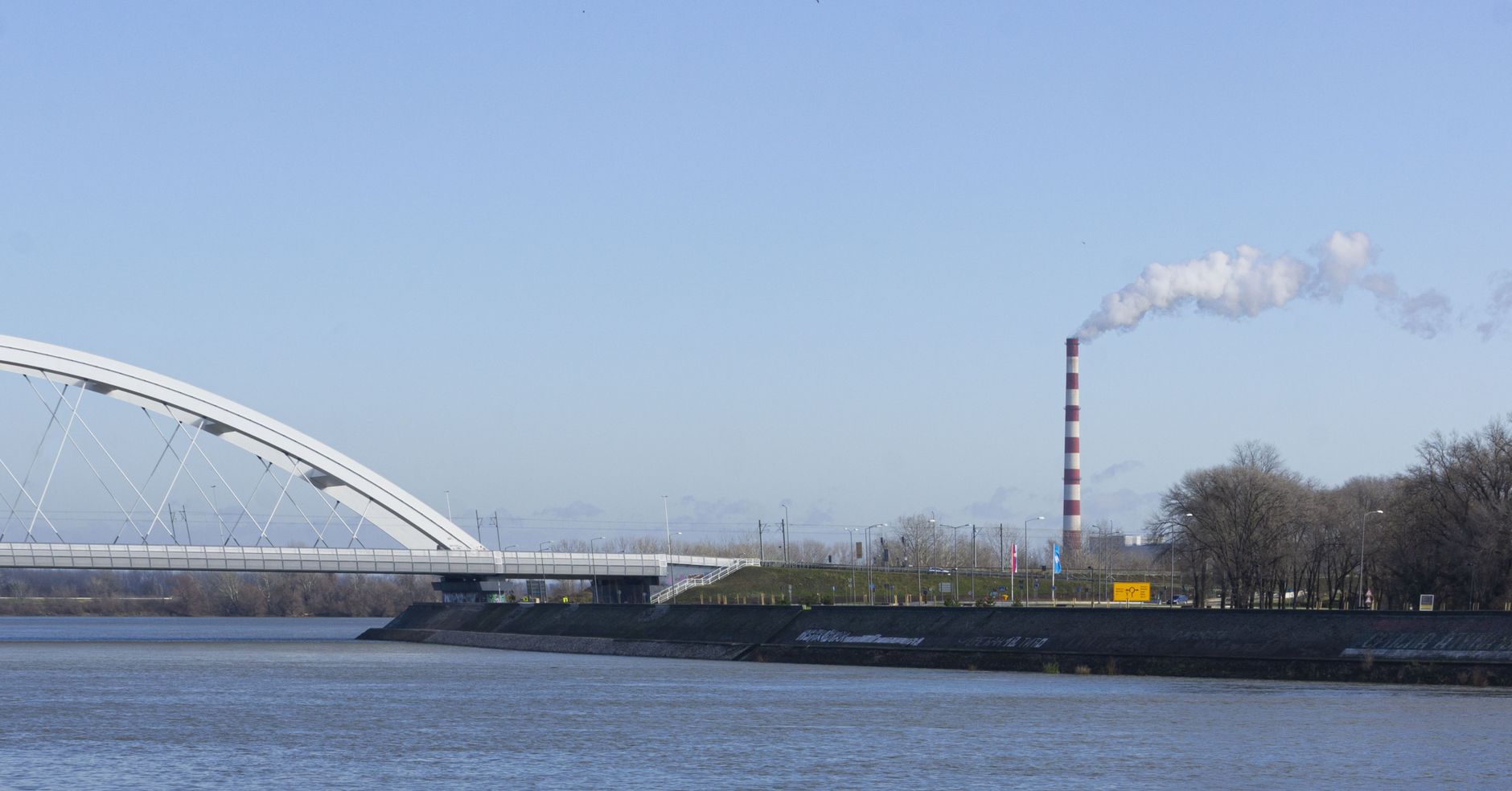 Photo: Timofei Sazeev / Pexels
- Attractions
- 10
- Trip length
- 2-3 days
- Best season
- Late spring to early autumn (May-September)
Why Novi Sad
Built from cited sources · see the method · How we make our guides →
Novi Sad works best when you stop treating it as a checklist stop between Belgrade and Budapest. Freedom Square gives you the postcard frame with Town Hall and the neo-Gothic Church of the Name of Mary, but the mood shifts fast once you slip into Dunavska, cut through old passages, and hear coffee cups knocking against saucers on a shaded terrace.
This is a city built from contrasts that never quite cancel each other out. The Habsburg military logic of Petrovaradin, laid out between 1692 and 1780, sits across the water from a center shaped by Serbian institutions, Secession facades, and the stubborn café habit of stretching one coffee into an hour.
Culture here doesn't stay inside museum walls. One evening might mean Roman parade helmets at the Museum of Vojvodina or a concert in the 1909 synagogue; the next could end in the Creative District, where old factory buildings now hold studios, clubs, and exhibition spaces left behind by the city's 2022 European Capital of Culture year. Novi Sad feels relaxed until you notice how much history, memory, and argument is packed into its streets.
Petrovaradin Above the River
Petrovaradin Fortress shapes the whole city: a Habsburg stronghold built between 1692 and 1780, spread high above the Danube like a stone ship run aground. Come for the Clock Tower and the wide river view, then go below ground into the military galleries, where about 1 kilometer of tunnels is open on guided visits and the air smells faintly of damp brick and old powder.Austro-Hungarian Center
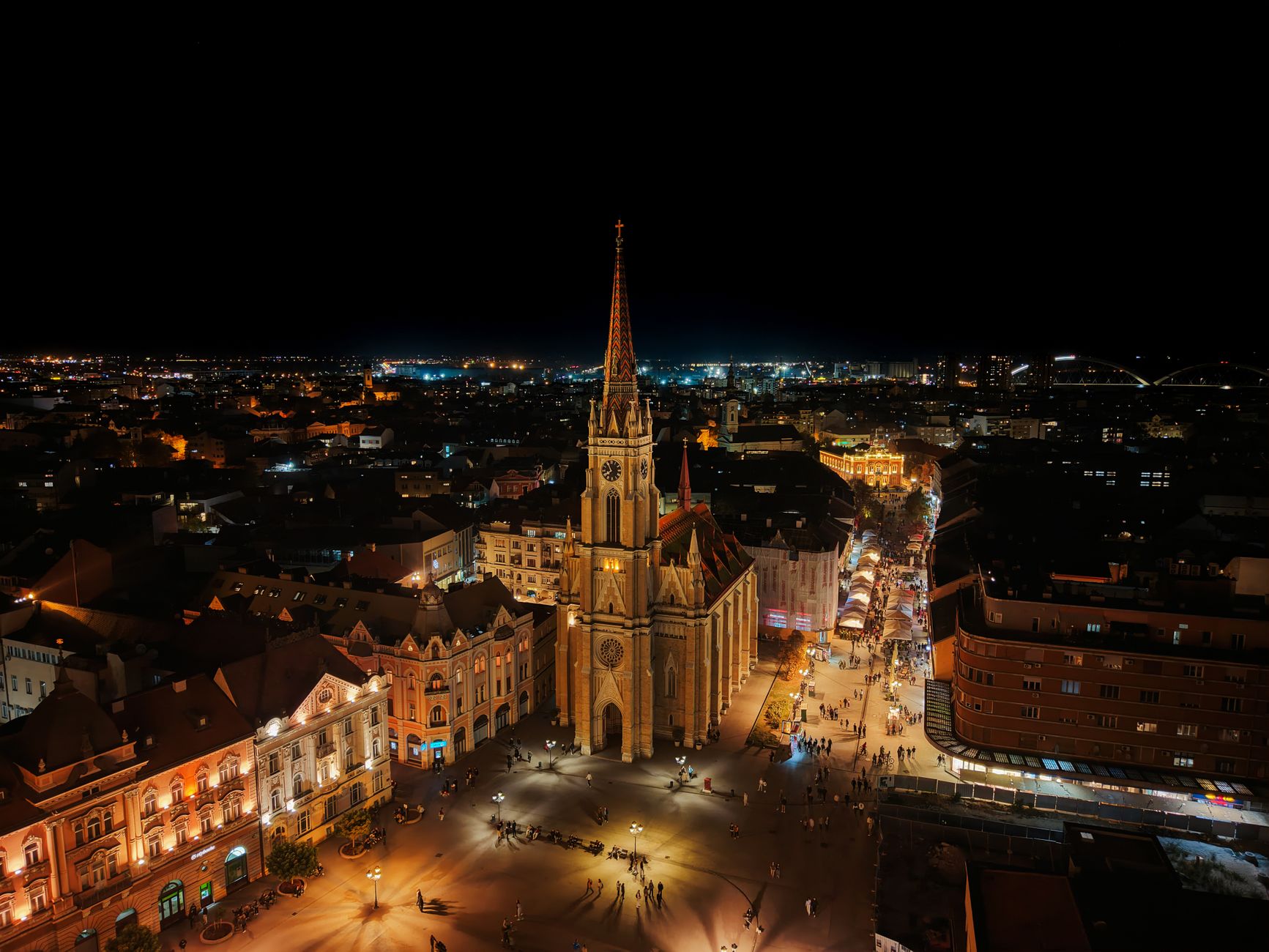
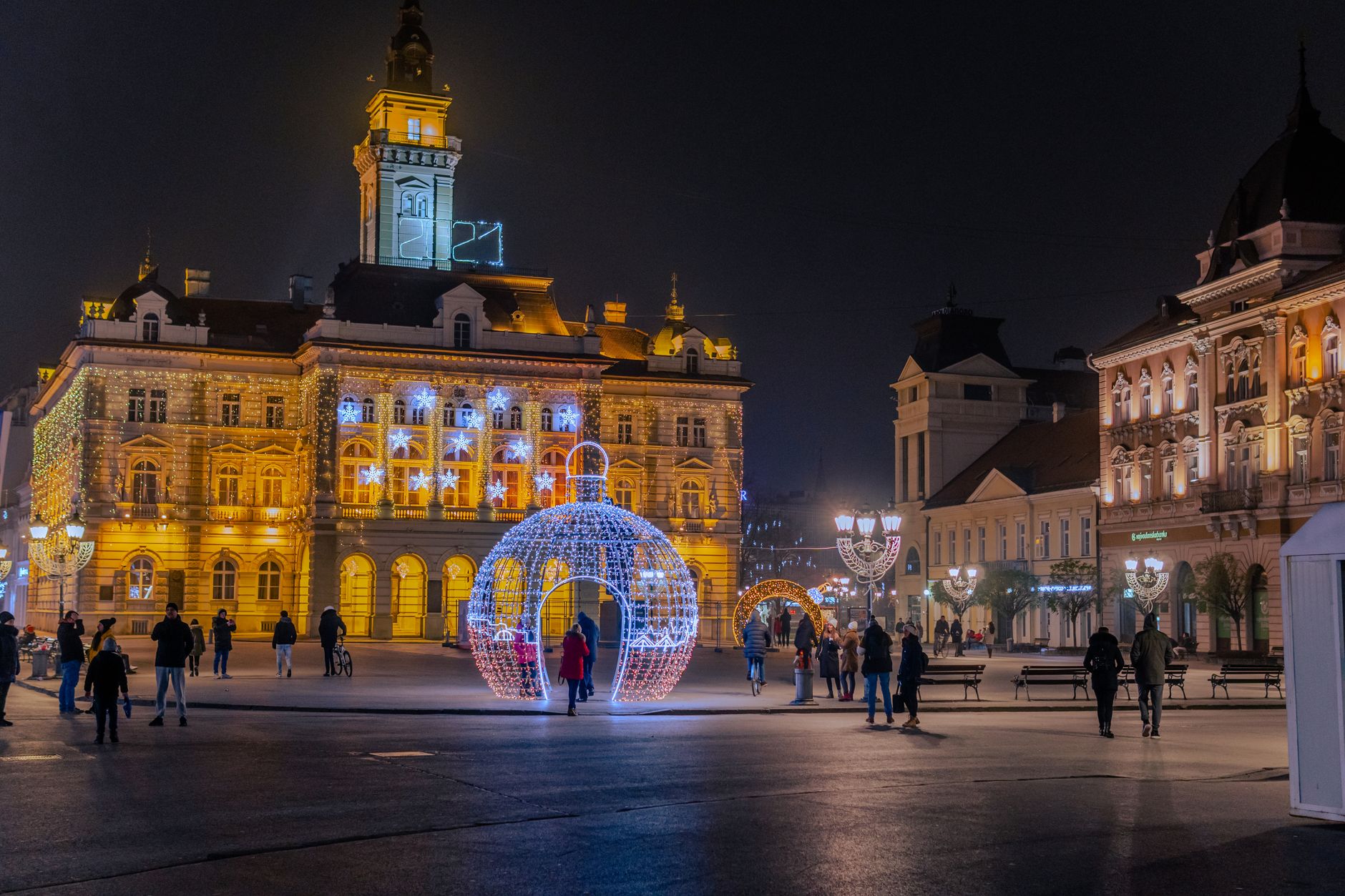
Freedom Square pulls together Novi Sad's late-19th-century confidence in one glance: Town Hall, the neo-Gothic Church of the Name of Mary, and Secession facades that reward slow looking. Walk on to Zmaj Jovina, Dunavska, the Bishop's Palace, and Banovina, and the city stops feeling provincial very quickly.Culture With Edges
Novi Sad isn't only polished facades and fortress views. The Creative District, Svilara, SKCNS Fabrika, and the Synagogue's concert hall show a city that still makes room for experiments, multilingual theater, and art that doesn't ask permission first.Danube Life
The river is not background here; it is daily life. Danube Park, the quays, Štrand beach, Ribarsko Ostrvo, and the memorial stretch at the Quay of the Victims of the Raid give the city a softer rhythm, then change it again with memory, wind, and long evening light off the water.
Neighborhoods
Where to wander, by quarter — each with its own rhythm.
Stari Grad
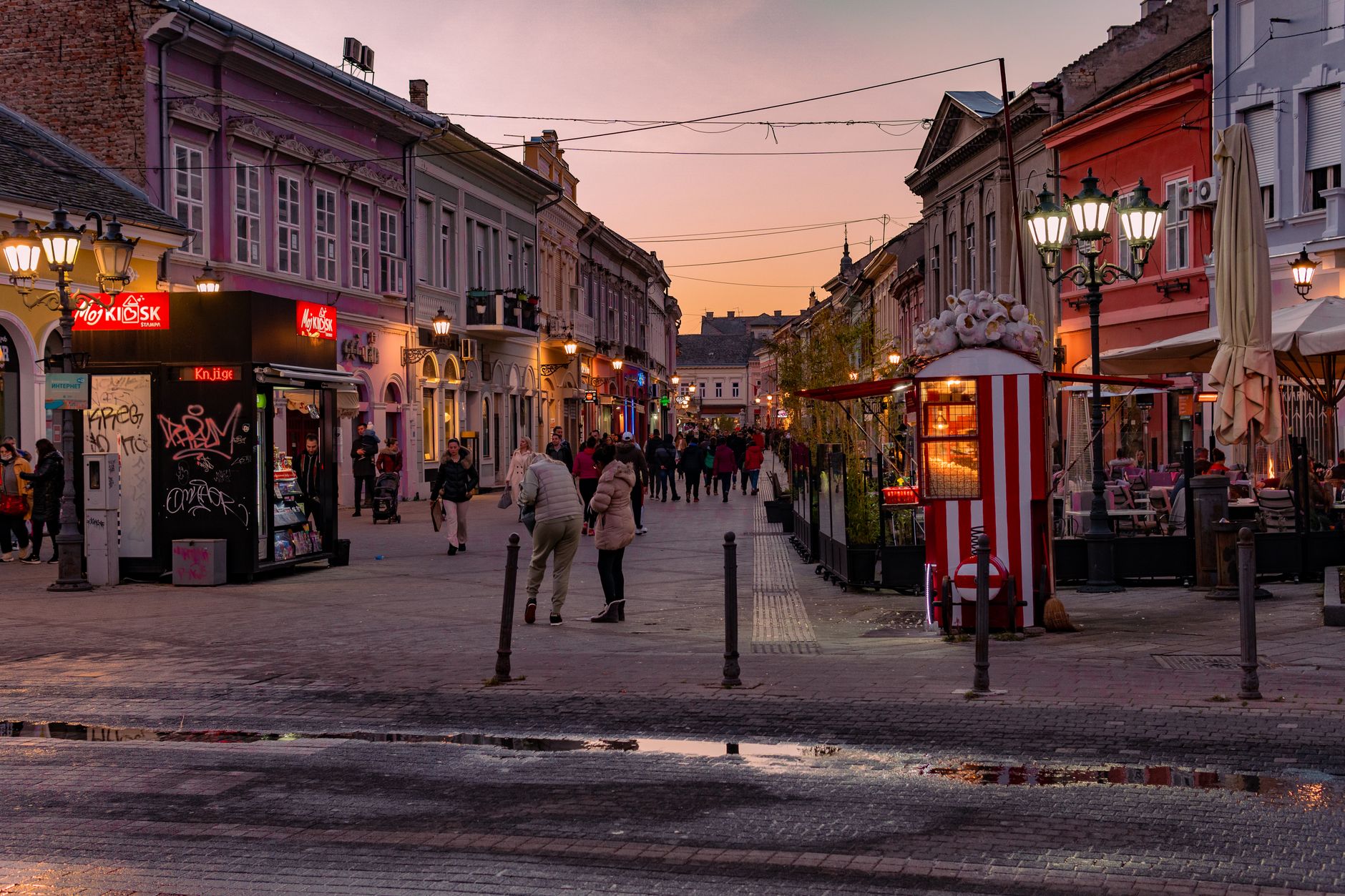
Stari Grad is the city center most visitors meet first, and it earns the attention. Freedom Square, Zmaj Jovina, and Dunavska carry the civic drama, but the real pleasure is slower: Secession facades, pastry shops, bookshops, and the shift in light as the streets pull you toward Danube Park and the river.Petrovaradin Fortress
Petrovaradin is less a single sight than a whole elevated city of walls, tunnels, terraces, and views. Come for the Clock Tower if you must, then stay for the 16 kilometers of military galleries, the City Museum, and the sudden quiet once the day-trippers drift off and the Danube starts reflecting the evening light below.Podgrađe
Most people march uphill and miss Podgrađe, the Lower Town at the foot of the fortress. That is a mistake. Baroque streets, old military-residential buildings, and the Church of St. George give this quarter a Habsburg texture the shinier center can't fake.Almaški Kraj
Almaški Kraj feels like an older Novi Sad that survived by staying slightly out of fashion. Its curved streets, hidden courtyards, and the vast Almaška Church, built between 1797 and 1808, create a quieter, more local rhythm than the café circuit around the main square.Liman and the Creative District
Liman shows the city at its most contemporary, stretched along the river with broad blocks, student energy, and easy access to the quays. The Creative District, carved out of the former industrial Chinatown zone and expanded during the 2022 culture year, swaps nostalgia for studios, concert venues, murals, and the kind of programming that rewards checking what's on that night.Jevrejska and Futoška
Jevrejska Street carries one of Novi Sad's sharpest emotional turns. The synagogue's Hungarian Secession lines are elegant enough in daylight, then the history of the Jewish community and the city's wartime losses catches up with you; a short walk away, Futoška Market brings you back into ordinary life with produce stalls, shouted prices, and the smell of fresh bread.Štrand and Ribarsko Ostrvo
When the weather turns warm, the river stops being scenery and becomes the city's living room. Štrand is the social beach, while Ribarsko Ostrvo leans more local with fish restaurants, terraces over the water, and late-night spots where dinner can slide into drinks without anybody checking the time.
Plan your trip
Before you go
- Getting There
- In 2026, most international visitors still arrive through Belgrade Nikola Tesla Airport (BEG), then continue 70-90 km northwest to Novi Sad by shuttle, bus, or rail. Main rail access is Novi Sad railway station via Srbija Voz's Belgrade-Novi Sad line; key road links are the A1/E75 motorway from Belgrade and Subotica, with onward connections toward Croatia and Hungary.
- Getting Around
- Novi Sad has no metro and no current tram network in 2026; local transport runs mainly on JGSP Novi Sad buses, with a walkable center around Zmaj Jovina and Dunavska. Reported current fares are about 100 RSD onboard, 65 RSD via the NSMART e-wallet, and 278 RSD for a day ticket, while the flat terrain and riverside paths make cycling practical even without a citywide bike-share system.
- Climate & Best Time
- Spring usually runs around 7-23 C, summer 15-29 C, autumn 3-24 C, and winter about -2 to 7 C, with annual precipitation near 578 mm. June is often the wettest month, July and August can push past 35 C, and January fog can flatten the city into gray; May, June, and September are the sweet spot, while peak visitor pressure rises during summer weekends and EXIT season.
- Language & Currency
- Serbia uses the Serbian dinar (RSD), and cash still helps for buses, kiosks, bakeries, and small market buys even in 2026. Serbian is the main everyday language, but Novi Sad officially recognizes Serbian, Hungarian, Slovak, and Ruthenian, which tells you something real about Vojvodina's layered identity.
- Safety
- Novi Sad is generally manageable with normal city caution rather than special tactics, though transport hubs, late-night bar areas, and big festival crowds deserve a closer eye on phones and wallets. Save the local emergency numbers: police 192, fire 193, ambulance 194; summer heatwaves and occasional heavy rain are the weather risks that matter most.
A City Split by the Danube, Joined by Memory
From Roman stronghold and Ottoman outpost to Serbia’s restless cultural capital
- c. 5000 BCE
First Farmers Settle the Banks
Neolithic communities left traces in the wider Novi Sad area and on Petrovaradin Rock, where the Danube bends and the ground rises just enough to stay above floodwater. Clay, stone, fire, river. Long before the city had a name, people had already worked out why this spot mattered.
- 4th century BCE
Scordisci Raise the First Fort
Celtic Scordisci tribes occupied the area and built the first known fortification on the right bank. That decision set a pattern Novi Sad never escaped: whoever held the rock above the river controlled trade, crossings, and trouble.
- 1st century CE
Rome Builds Cusum
The Romans folded the site into Pannonia and established the fort of Cusum on Petrovaradin Rock. Soldiers would have heard the same river wind you hear today, though theirs carried orders in Latin and the scrape of armor instead of festival bass from EXIT.
- 1237
Petrovaradin Enters the Record
A charter of King Bela IV gave the first written mention of Petrovaradin and recorded estates on the opposite bank where Novi Sad would later grow. Paper can feel dry, but this one matters: once a place enters the archive, it starts to acquire a political life of its own.
- 1526
Ottomans Take the Crossing
After the Battle of Mohacs shattered Hungarian power, the Ottomans captured Petrovaradin. The frontier changed language, faith, and rhythm; mosques rose, garrisons rotated through, and the Danube became less a border than a military road.
- 1692
A Fortress Begins in Stone
The Habsburgs began building the modern Petrovaradin Fortress, the giant military machine that still stares across the river at Novi Sad. Engineers worked here for decades, cutting galleries through the hill until the underground maze reached roughly 16 kilometers. Paranoia, properly funded, leaves durable architecture.
Show the full timeline (29 moments)
- 1694
Novi Sad Appears Across the Water
The first firm references to the left-bank settlement date from 1694, when merchants, craftsmen, and refugees began gathering beyond the fortress guns. The city was born in the fortress's shadow, but not as its servant; commerce was already teaching it independence.
- 1716
Prince Eugene Breaks the Ottoman Army
The Battle of Petrovaradin ended in a sharp Habsburg victory over the forces of Damad Ali Pasha. Cannon smoke hung over the Danube plain, and the result fixed the region’s direction for generations: fewer raids, more walls, more bureaucracy, and a new confidence on the north bank.
- 1726
Zaharije Orfelin and the Printed Mind
Zaharije Orfelin, later one of the great Serbian polymaths of the 18th century, is tied closely to Novi Sad, where he lived and died. His world was made of engravings, chronicles, calendars, and argument; he helped turn the town from a trading post into a place where ideas had local address.
- 1748
Maria Theresa Grants a City
On 1 February 1748, after local elites paid 80,000 Rhine forints in silver, Maria Theresa granted free royal city status and the names Neoplanta, Neusatz, Ujvidek, and Novi Sad. That charter changed everything. Taxes, fairs, self-government, and civic pride now had legal backing, not just ambition.
- 1780
The Fortress Reaches Full Form
By 1780 the Habsburg fortress had largely reached the shape we recognize today, after nearly nine decades of work. It was less a single building than a whole military landscape of bastions, gates, barracks, and tunnels, all designed to make an attacker feel watched from every angle.
- 1826
Svetozar Miletic's Political City
Svetozar Miletic was born in 1826 and would become Novi Sad’s defining 19th-century political voice, later serving as mayor and championing Serbian civic rights in the Habsburg lands. His monument still stands in Freedom Square for a reason: he gave the city a public language of defiance.
- 1833
Zmaj Gives the Streets Their Poet
Jovan Jovanovic Zmaj was born in Novi Sad in 1833, and the city still wears his name on one of its best-loved pedestrian streets. He wrote with wit and ache, and his connection to Novi Sad feels fitting: this is a city that likes intelligence best when it arrives with rhythm.
- 1849
Bombardment Tears the City Open
During the revolutions of 1848-49, artillery from Petrovaradin Fortress bombarded Novi Sad and destroyed roughly a third of its houses. The old center burned, church towers fell, and the population dropped hard. A city known later as Serbian Athens first had to survive being shelled by the hill above it.
- 1861
The Serbian National Theatre Opens
The Serbian National Theatre was founded in Novi Sad in 1861, the first professional Serbian theatre. That tells you what kind of city this had become: one that answered political pressure not only with speeches and petitions, but with actors, scripts, and a stage lit against the dark.
- 1864
Matica Srpska Moves In
When Matica Srpska and its library moved from Pest to Novi Sad in 1864, the city’s claim to be 'Serbian Athens' stopped sounding like local vanity and started looking factual. Books, journals, manuscripts, and scholars arrived together. Culture needs institutions, not slogans.
- 1895
A New Skyline on Freedom Square
The neo-Gothic Church of the Name of Mary, completed in 1895, lifted a 73-meter tower over the center, while the nearby Town Hall gave the square its late Habsburg civic face. Stand there in evening light and the city’s mixed inheritance becomes visible at once: Catholic spire, Serbian memory, imperial urban planning.
- 1909
The Synagogue Rises in Secession Style
Lipót Baumhorn’s synagogue opened in 1909 in Hungarian Art Nouveau, all curves, brick, and a dome that catches light like pale copper. It speaks of a Jewish community confident enough to build large and elegant, before the century turned murderous.
- 1918
Vojvodina Votes for Union
On 25 November 1918, the Great National Assembly in Novi Sad declared the union of Banat, Backa, and Baranja with the Kingdom of Serbia. Empires had been collapsing for weeks; here, amid speeches and paperwork, a provincial city helped redraw the political map of the region.
- 1921
Adolf Hempt Brings Modern Medicine
Adolf Hempt returned to Novi Sad in 1921 and founded the Pasteur Institute, later developing a rabies vaccine that could be transported far more easily than earlier versions. Science can leave a quieter monument than a fortress. In this case it saved lives across borders.
- 1942
The Raid on the Frozen Danube
Between 21 and 23 January 1942, Hungarian occupation forces murdered more than 1,200 civilians in the Novi Sad Raid, killing Jews, Serbs, and others and throwing many victims beneath broken river ice. Winter sharpened the horror. The city still carries that January in its moral weather.
- 1944
Liberation Comes from the East
Partisan units entered Novi Sad on 23 October 1944, followed by the Red Army, ending occupation rule. Liberation did not erase grief, but it did reset the city’s future, pushing it into socialist Yugoslavia and a new cycle of rebuilding, planning, and industrial growth.
- 1960
A University City Takes Shape
The University of Novi Sad was founded on 28 June 1960, giving the city a new institutional spine. Students changed the sound of the streets as much as any factory did: more debate in cafes, more books under arms, more reasons to stay after graduation.
- 1990
Chess Boards Face the World
Novi Sad hosted the 29th Chess Olympiad in late 1990, welcoming teams from well over 100 countries just as Yugoslavia was starting to crack. The contrast was almost cruel. Inside the halls, quiet concentration; outside, a federation edging toward noise and fracture.
- 1999
Bridges Fall Under NATO Bombs
NATO air strikes in spring 1999 destroyed all three major Danube bridges in Novi Sad and hit the oil refinery, power sites, and transport links. Smoke from the refinery stained the air, and the river that had long connected the city suddenly became an obstacle again. Few dates explain modern Novi Sad more clearly than this one.
- 2005
Liberty Bridge Returns
The rebuilt Liberty Bridge reopened on 7 October 2005, restoring a crossing that had become symbolic far beyond its traffic function. Cities know when a bridge matters. You feel it in commuting time, yes, but more in the sudden sense that separated neighborhoods belong to one another again.
- 2019
Youth Takes the Microphone
As European Youth Capital in 2019, Novi Sad leaned into a role it had been practicing for decades: student city, festival city, city of argument and experiment. Titles can be empty. This one fit because the place already had the habit.
- 2022
Culture Becomes Statecraft
Novi Sad became the European Capital of Culture in 2022, the first city in Serbia to hold the title. The year mattered less as decoration than as recognition of something older: this city has long answered political pressure with literature, music, theatre, and a stubborn belief that culture is public infrastructure.
- 2024
Station Canopy Collapse Shocks the City
On 1 November 2024, a canopy collapsed at Novi Sad railway station and killed 14 people in the first confirmed toll, a number later reported higher. Concrete failed in a place built for movement and routine, which made the shock feel even colder. Modern cities rarely expect tragedy to arrive at the timetable board.
Who lived here
-
Poet and physician · 1833–1904
Jovan Jovanović Zmaj
Born here; later worked here
Novi Sad gave Serbia one of its most loved poets, and the city still carries his nickname on Zmaj Jovina, the pedestrian street that many visitors cross without realizing they are walking through a memorial. He wrote for children, practiced medicine, and would probably enjoy the fact that his name now belongs to the everyday theater of shop windows, café chairs, and slow evening walks.
-
Lawyer, journalist, and political leader · 1826–1901
Svetozar Miletić
Served as mayor of Novi Sad
Miletić helped turn Novi Sad into more than a provincial town; he made it a political voice for Serbs in Vojvodina. Standing in Freedom Square beside his monument, you can feel the scale of his ambition, though he might raise an eyebrow at how calmly pigeons now occupy his old battleground.
-
Singer-songwriter and writer · 1953–2021
Đorđe Balašević
Born, lived, and died here
Balašević sang with the warmth and irony of someone who knew every crack in the local pavement, and Novi Sad never stopped claiming him as its own. He gave the city a soundtrack of tenderness, wit, and anti-war conscience; today’s café terraces and riverside nights still feel like places where one of his songs could drift in without warning.
-
Tennis player · born 1973
Monica Seles
Born and raised here
Before the world No. 1 ranking, before the grunts and Grand Slam trophies, Seles was a Novi Sad child hitting balls in a city better known for poets and fortresses than tennis myths. She would find the place larger now, louder in summer, but still small enough that talent feels visible before fame carries it away.
-
Philologist and historian · 1795–1861
Pavel Jozef Šafárik
Worked here 1819–1833
Šafárik spent formative years in Novi Sad as headmaster and teacher, doing serious Slavic scholarship in a city that sat at a cultural crossroads long before anyone thought to brand it that way. He would recognize the old instinct immediately: this is a place where languages rub shoulders and ideas travel faster than the river looks.
-
Mathematician and physicist · 1875–1948
Mileva Marić
Studied here
Marić passed through Novi Sad as a brilliant student before the wider, more contested story of her life with Albert Einstein took hold. Her connection changes the city’s texture a little; behind the Austro-Hungarian facades and pastry-shop calm sits the memory of a woman who pushed against the limits set for her, and knew exactly what those limits cost.
Where to Eat
Where locals actually book dinner — not the tourist menus.
-
Bermet
This aromatized dessert wine from nearby Sremski Karlovci is the bottle to order if you want the region in a glass. It lands somewhere between spice cabinet and cellar shelf, with wormwood, dried fruit, and a medicinal edge that makes ordinary house wine seem sleepy.
-
Ausbruch
Sremski Karlovci's Ausbruch is sweeter and richer than Bermet, built for slow sipping rather than thirst. Try it after dinner, when the Danube air turns cool and sugar suddenly feels like good judgment.
-
Futoška pijaca
Futoška market is less a single meal than a lesson in how the city actually eats. Go in the morning for fruit, cheese, breads, and snack stalls, when sellers are calling across the aisles and the whole place smells of herbs, wet crates, and fresh dough.
-
Carigrad
Carigrad is one of those old pastry shops locals mention without ceremony, which is usually a good sign. Stop here for something sweet near Banovina and you'll get a better feel for Novi Sad than you will from another polished cafe with Edison bulbs.
Insider tips
Small things that change how the city treats you.
Use the fast train
If you land at Belgrade Airport, the cheapest sensible route is bus 600 to Belgrade Central, then the Soko train to Novi Sad. It usually beats a road transfer on price and often on stress.Start before noon
Freedom Square, Zmaj Jovina, Dunavska, and Danube Park are easiest in the softer morning light, before café terraces fill and summer heat settles over the paving stones. Save the fortress for late afternoon when the Danube starts to glow.Eat by the river
Don’t stop at grilled meat in the center. Novi Sad makes more sense over fish stew, carp, or zander in a Danube čarda such as Aqua Doria or Jedro.Order slowly
Coffee here is social time, not a paper-cup sprint. If someone offers coffee or a small rakija, a warm yes goes further than rushing the table.Carry some dinars
Cards work in many central cafés and restaurants, but markets and smaller stalls are less predictable. Keep cash for Riblja Pijaca, bakeries, and quick snacks.Check the calendar
Novi Sad changes character on event nights: EXIT at Petrovaradin, concerts in the Synagogue, and the Night Market at Riblja Pijaca on the first Friday of many months. A quiet city at 5 pm can feel very different by 10.
Gallery
The city, as it actually looks.


Frequently asked
Is Novi Sad worth visiting?
Yes, especially if you like cities that reveal themselves at walking pace. Petrovaradin Fortress, the Danube, strong cafés, and a distinctly Vojvodina food culture give it more texture than a quick Serbia stopover usually suggests.
How many days in Novi Sad?
Two to three days works well for most travelers. That gives you time for the old center, Petrovaradin Fortress, a river meal, museums or galleries, and either Štrand or a half-day trip toward Fruška Gora or Sremski Karlovci.
How do I get from Belgrade Airport to Novi Sad?
The budget route is usually bus 600 from Belgrade Airport to Belgrade Central, then the Soko train to Novi Sad. Direct shuttles from the airport are easier with luggage or late arrivals and drop you at your address.
Can you walk around Novi Sad, or do you need public transport?
You can cover the center on foot. Freedom Square, Dunavska, Zmaj Jovina, Danube Park, and even the bridge approach to Petrovaradin sit close enough for a long stroll, while city buses help with farther neighborhoods and Štrand.
Is Novi Sad safe for tourists?
Generally yes, and the center feels relaxed by regional city standards. Use ordinary city caution at night around busy bars on Laza Telečkog, watch your belongings during festivals, and avoid unmarked taxi arrangements.
Is Novi Sad expensive?
No, by wider European standards it is still fairly affordable. You can keep costs low with bakery breakfasts, market snacks, buses, and the train from Belgrade, then spend more selectively on river restaurants or festival nights.
What is the best time to visit Novi Sad?
Late spring through early autumn is the sweet spot. May, June, and September bring good walking weather, river life, and outdoor café days without the full heat and crowds that July can bring around EXIT.
What food should I try in Novi Sad?
Start with Danube fish stew or grilled river fish, then move to Vojvodina dishes such as sarma, strudel, and gomboce. A flaky burek in the morning and Bermet from nearby Sremski Karlovci finish the picture properly.
Pick up where you left off
Saved and recently read places — kept on this device only.
Photo credits (9)
- Timofei Sazeev — Pexels License (https://www.pexels.com/license/) — Source: https://www.pexels.com/photo/15588713/
- Dorde Drazic — Pexels License (https://www.pexels.com/license/) — Source: https://www.pexels.com/photo/17789374/
- Marko Gordic — Pexels License (https://www.pexels.com/license/) — Source: https://www.pexels.com/photo/34550750/
- Borys Jarzcuk — Pexels License (https://www.pexels.com/license/) — Source: https://www.pexels.com/photo/24030979/
- Dejan Popović — Pexels License (https://www.pexels.com/license/) — Source: https://www.pexels.com/photo/27096550/
- Nenad Delibos — Pexels License (https://www.pexels.com/license/) — Source: https://www.pexels.com/photo/32495221/
- Nenad Delibos — Pexels License (https://www.pexels.com/license/) — Source: https://www.pexels.com/photo/31501422/
- Dorde Drazic — Pexels License (https://www.pexels.com/license/) — Source: https://www.pexels.com/photo/17789372/
- Dejan Popović — Pexels License (https://www.pexels.com/license/) — Source: https://www.pexels.com/photo/27096556/
Photos may have been resized or cropped.