Plan and listen to Zemun Cemetery with Audiala.
Audio guide in your pocket, itinerary in your browser. Built for the way you actually visit.
Introduction: Zemun Cemetery’s Cultural and Historical Importance
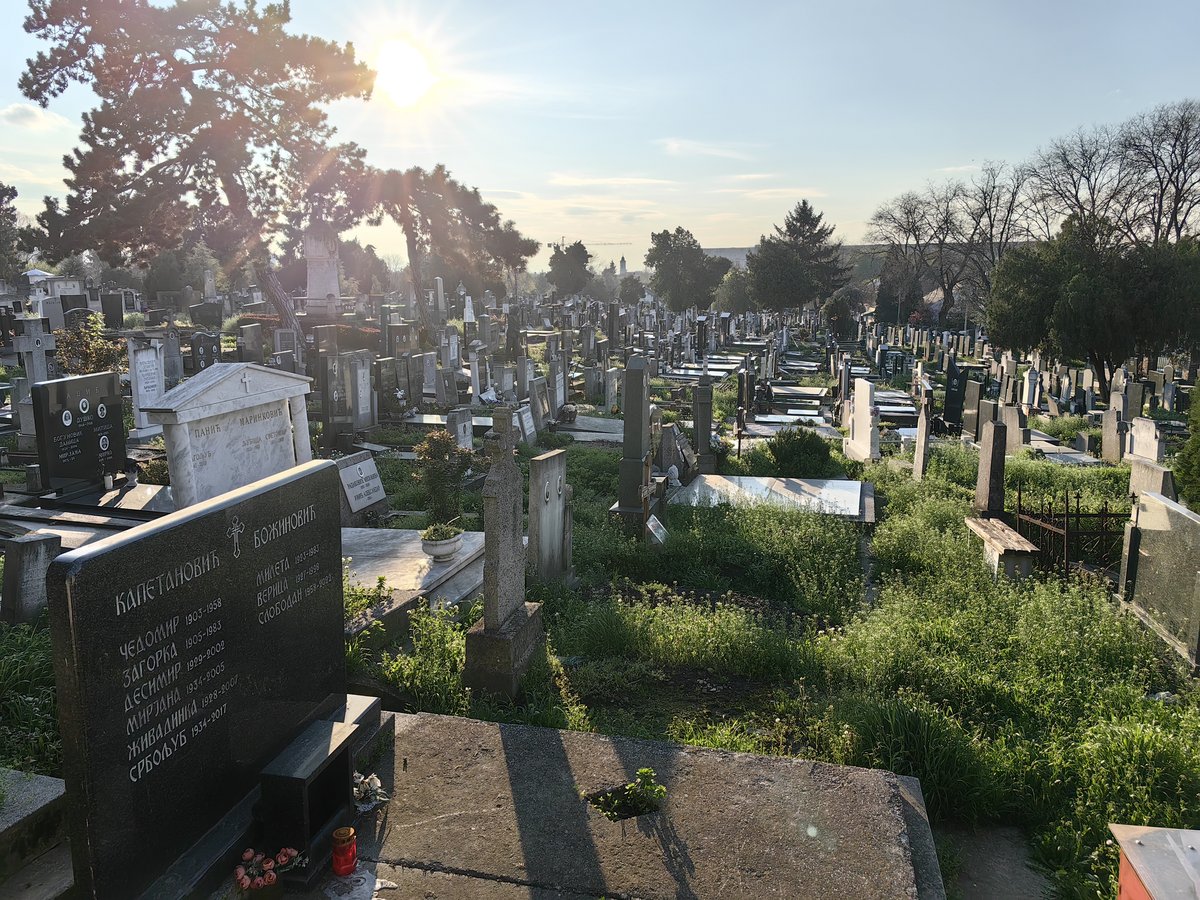
Perched atop the evocative Gardoš Hill in Belgrade’s Zemun district, Zemun Cemetery is one of Serbia’s most significant heritage sites. Established in the early 18th century during the Habsburg era, the cemetery is a living record of the region’s multicultural past. Its unique layout—with adjacent sections for Orthodox Christians, Catholics, Jews, and Protestants—embodies the peaceful coexistence of diverse communities that have shaped Zemun and, by extension, Belgrade. The cemetery’s monuments and memorials, many crafted by renowned Serbian sculptors, reflect a wide spectrum of architectural styles and artistic influences, serving as both a place of remembrance and an open-air museum (Tourist Organization of Belgrade; Significant Cemeteries; Lonely Planet).

History and Evolution
Early Beginnings
Zemun Cemetery’s location on Gardoš Hill holds deep historical resonance. Settlements here date back to the Neolithic period, and the area was once part of Roman Taurunum—an important military and trade outpost. Its establishment as a cemetery in the 18th century followed the Habsburg conquest, which brought urban planning and the integration of distinct religious and ethnic communities (Eyes on Belgrade).
Multicultural Growth
Zemun historically sat at the crossroads of empires—Roman, Ottoman, Habsburg, and Yugoslav—each leaving its mark on local customs, urban development, and burial practices. The cemetery’s multiconfessional structure, with adjacent Orthodox, Catholic, Jewish, and Protestant sections, mirrors the area’s demography and the spirit of coexistence that prevailed for centuries (Lonely Planet; The Nutshell Times).
Multiconfessional Heritage
Orthodox Section
The Orthodox section is the largest, centered around the 19th-century Church of St. Demetrius, a protected monument built by the Petrović-Hariš family. The area features the graves of prominent Serbian families, clergy, and public figures, often adorned with traditional crosses, Cyrillic inscriptions, and floral motifs (Serbian Orthodox Church).
Catholic Section
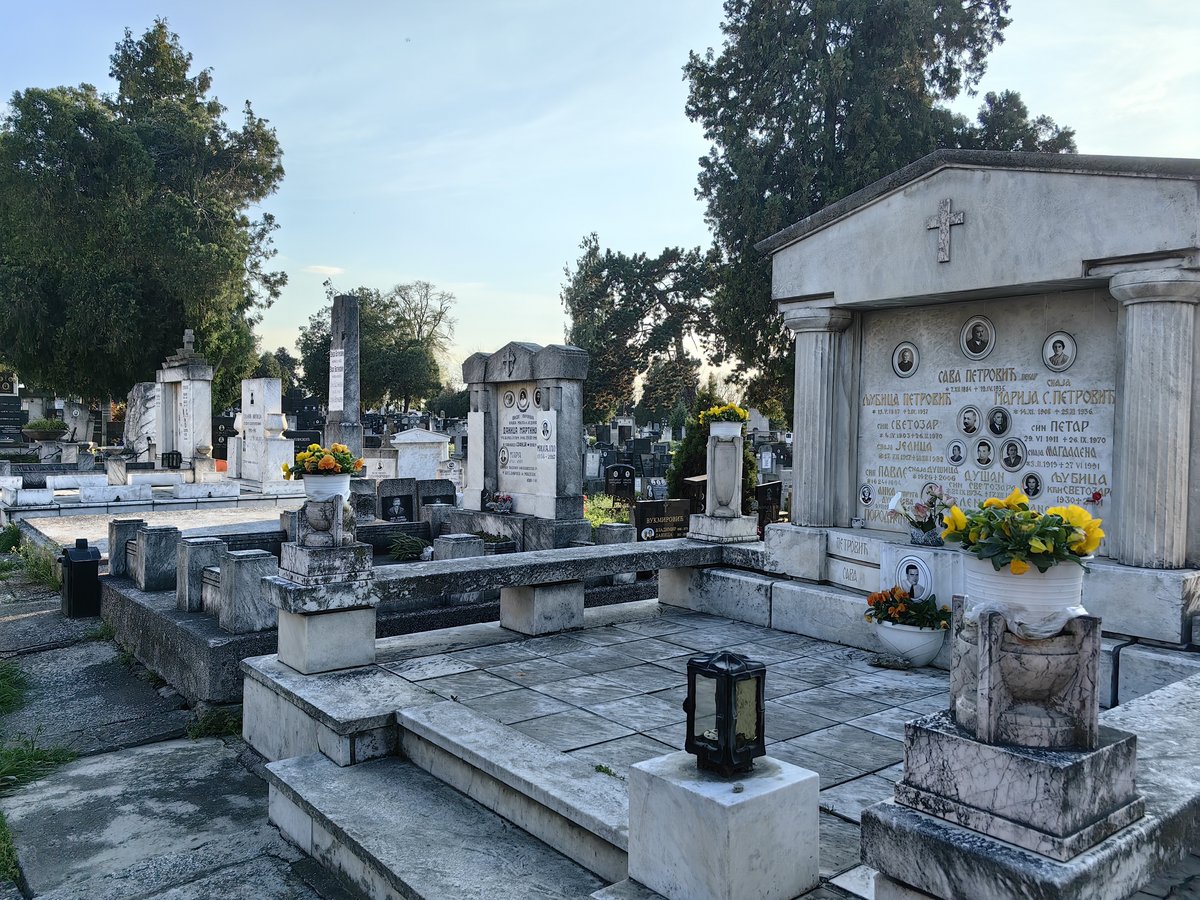
Reflecting Zemun’s Austro-Hungarian legacy, the Catholic section includes the 19th-century Chapel of St. Roch and tombstones in Baroque, Neo-Gothic, and Art Nouveau styles. Inscriptions in Latin and German are common, commemorating local merchants, military officers, and politicians (Catholic Heritage in Zemun).
Jewish Section
Established in the late 18th century, the Jewish section is among Serbia’s oldest. It contains both Sephardic and Ashkenazi graves, with modest tombstones and a Holocaust memorial honoring victims from World War II. Notable burials include the grandparents of Theodor Herzl, founder of modern Zionism (Jewish Heritage Europe).
Evangelical (Protestant) Section
The Protestant section, though smaller, is important for its simple crosses and German inscriptions—reminders of Zemun’s once-flourishing German-speaking community (Protestant Heritage).
Notable Sections and Monuments
- Spirta Family Chapel: A striking early 20th-century mausoleum, recently restored, belonging to a prominent Greek-origin family (Eyes on Belgrade).
- Monument to Fallen Serbian Soldiers (1914–1918): Erected in 1928, this memorial honors World War I casualties.
- Holocaust Memorial: Commemorates the Jewish victims of World War II, a focal point for remembrance (Jewish Heritage Europe).
- War Memorials and Epidemic Graves: Several collective graves and monuments honor victims of epidemics, wars, and the Stara Gradiška concentration camp.
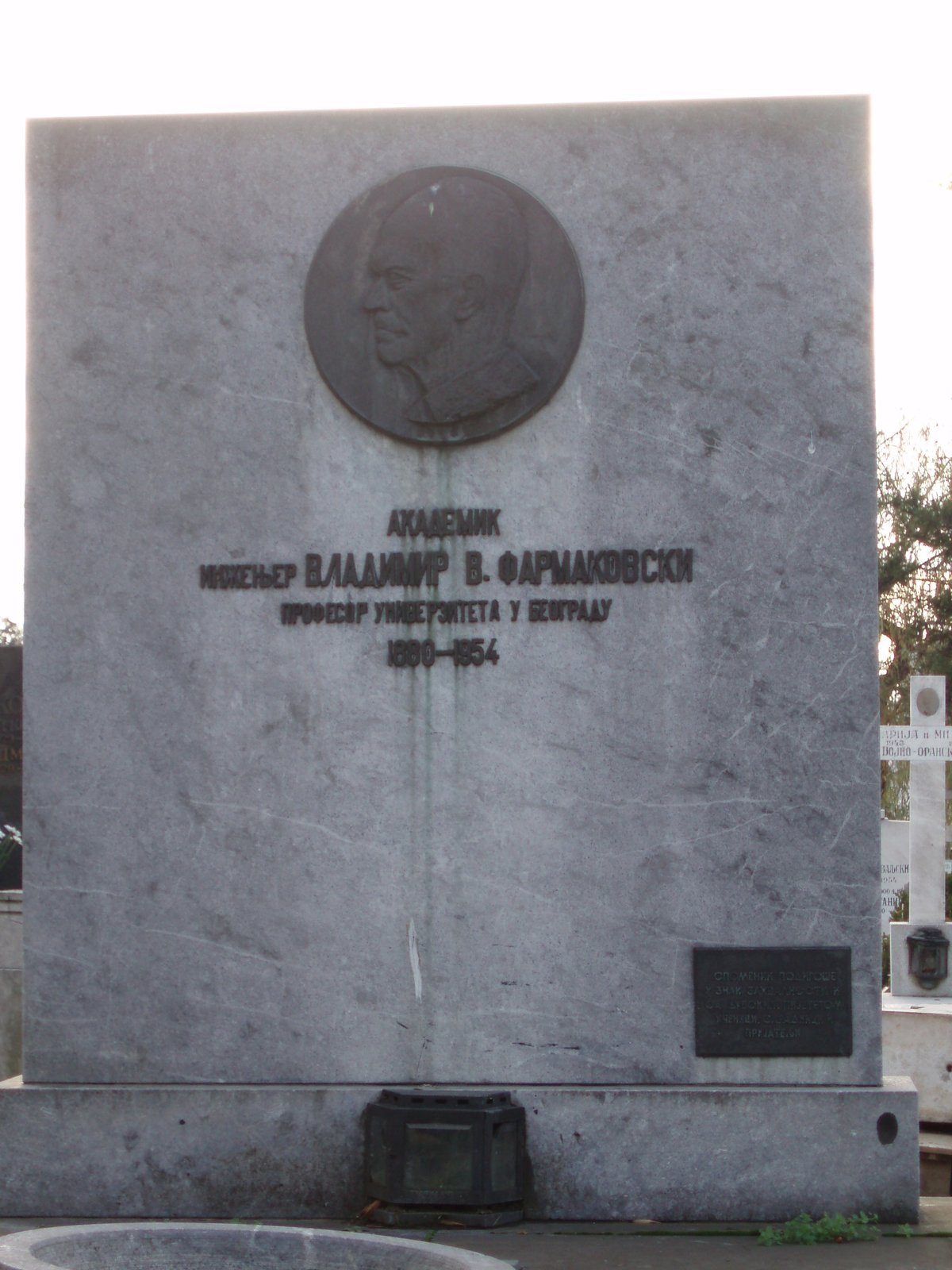
- Tombs of Notables: The cemetery is the final resting place for figures such as Dimitrije Davidović (author of Serbia’s first constitution), poet Jovan Subotić, and aviation pioneers.
Artistic and Architectural Significance
Zemun Cemetery is an open-air museum of funerary art. Its monuments and gravestones display a wide range of styles—from neoclassical and art nouveau to modernist—crafted by celebrated Serbian and regional artists such as Đorđe Jovanović, Tomo Rosandić, and Vojin Bakić. Symbolic motifs abound, including Orthodox crosses, angels, weeping willows, broken columns, Stars of David, and laurel wreaths, each conveying meaning about faith, loss, and remembrance (Funerary Art in Serbia).
Visiting Hours, Ticket Information, and Accessibility
- Opening Hours: The cemetery is open daily, typically from 8:00 AM to 6:00 PM (extended to 7:00 or 8:00 PM in summer). Hours may vary slightly; check before visiting.
- Tickets: Entry is free. Donations are welcome to support ongoing preservation (Significant Cemeteries).
- Accessibility: Main paths are paved and accessible, but some areas are on slopes or uneven ground. Wheelchair users may require assistance.
Directions and Getting There
- Public Transport: Bus lines 18, 84, and 707 connect central Belgrade to Zemun, with stops near Gardoš Hill (visitbelgradecity.com).
- Taxi: Taxis from the city center cost approximately 800–1200 RSD.
- Walking: It is a scenic 1 hour 50-minute walk from downtown Belgrade (travellemming.com).
- Parking: Limited parking is available nearby.
Visitor Etiquette and Practical Tips
- Dress modestly and remain respectful, as the cemetery is an active burial site.
- Photography is permitted, but avoid disturbing mourners or ceremonies.
- Stay on designated paths and do not touch or move gravestones.
- No on-site restrooms or cafés—plan accordingly.
- Guided tours are available through providers like Belgrade Walking Tours and self-guided apps (gpsmycity.com).
Nearby Attractions
Enhance your visit by exploring these nearby sites:
- Gardoš Tower: A distinctive 19th-century monument commemorating 1,000 years of Hungarian settlement.
- Zemun Old Town: Characterized by cobbled streets, riverside cafés, markets, and historic churches.
- Zemun Quay: A scenic promenade along the Danube River, perfect for leisurely walks and photography (secretattractions.com).
- Franciscan Monastery and St. Nicholas Church: Important religious and architectural landmarks.
Frequently Asked Questions (FAQ)
Q: What are the Zemun Cemetery visiting hours?
A: Generally 8:00 AM to 6:00 PM (extended in summer).
Q: Is there an entrance fee?
A: No, entry is free.
Q: Are guided tours available?
A: Yes, through local providers and self-guided apps.
Q: Is the cemetery accessible to those with disabilities?
A: Main paths are accessible, but some areas may be challenging.
Q: Can I take photographs?
A: Yes, but be discreet and respectful.
Q: How do I get there from central Belgrade?
A: Take bus lines 18, 84, or 707, or a taxi.
Listen to the full story in the app
The whole Zemun Cemetery,
told well.
Audio guides for 1,100+ cities across 96 countries. History, stories, and local insight — offline ready.
Verified, and shown.
Researched and written by the Audiala editorial team from historical records, architectural archives, and local expertise.
Researched from Wikidata, Wikipedia & official sources · fact-checked · How we make our guides →