Plan and listen to Residence Of Prince Miloš with Audiala.
Audio guide in your pocket, itinerary in your browser. Built for the way you actually visit.
Introduction
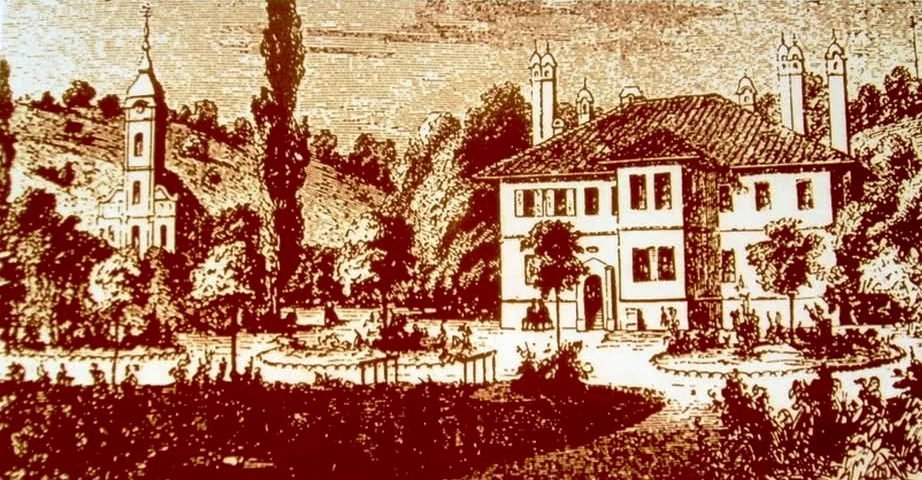
The Residence of Prince Miloš, known locally as "Konak kneza Miloša," stands as a cornerstone of Serbian heritage and a captivating destination for those interested in Belgrade’s rich historical landscape. Built in 1831 under the leadership of Prince Miloš Obrenović—a pivotal figure in Serbia’s journey toward autonomy—the residence served as both a princely home and a center of political, cultural, and social life during a formative period in Serbian statehood. Nestled in the verdant Topčider district, it remains a rare architectural gem, blending Balkan-Ottoman traditions with European influences, and is recognized today as a protected cultural monument of exceptional importance (beotura.rs; imus.org.rs).
This comprehensive guide details the residence’s architectural features, historical significance, and practical information for visitors—including updated opening hours, ticketing, accessibility, and nearby attractions. Whether you are a history enthusiast, architecture lover, or a first-time visitor to Belgrade, this guide will help you make the most of your visit to one of the city’s most treasured landmarks.

Origins and Construction
Commissioned in the early 1830s by Prince Miloš Obrenović, the residence was designed by architect Hadži Nikola Živković, with influences from both Ottoman and European styles (beotura.rs). It was part of a larger royal estate that included auxiliary buildings such as kitchens, stables, bakeries, and inns, reflecting the complexities of princely life and governance. The estate originally spanned areas now known as Senjak, Dedinje, and parts of Ada Ciganlija.
The residence quickly became a symbol of rising Serbian statehood, reflecting the aspirations and authority of the Obrenović dynasty during the country’s emergence from Ottoman rule.
Architectural Style and Interior Design
The building represents a harmonious blend of Balkan vernacular, Ottoman konak style, and early European classicism. Its ground and first floors are arranged around a central hall, with seven main rooms and four auxiliary rooms. The exterior features a classically styled portal and a glass-panelled balcony (divanhana), while the interiors combine oriental carpets, low benches, Viennese clocks, and imported paintings (beotura.rs).
Notable features include:
- Divanhana (Porch): A shaded wooden terrace, typical of Ottoman residences, used for social gatherings.
- London Plane Tree: Planted during the Obrenović era, this ancient tree in front of the residence is now a protected natural monument.
- Binjektaš: The traditional stone used by Prince Miloš to mount his horse, still visible on the grounds.
- Interior Details: A mix of painted motifs, geometric ceilings, and original 19th-century decorative elements, some of which have survived various wars and regime changes.
Historical Role and Significance
The Residence of Prince Miloš played a central role during a transformative period in Serbian history. It was both the seat of power for Prince Miloš during his reign—especially after the successful Second Serbian Uprising—and a venue for key political events, including national assemblies and gatherings that shaped the future of the Serbian state (imus.org.rs).
As the primary residence of the Obrenović dynasty, it witnessed significant moments in the nation’s development and the personal life of its founder. The exhibition "Serbia 1804–1903" showcases artifacts such as Karadjordje’s flag, weapons, and portraits of key historical figures, illuminating the residence’s role as both a home and a political hub.
Preservation and Museum Function
After its initial period as a royal residence, the building’s function evolved. It briefly housed the Museum of Hunting and Forestry after World War I and, post-World War II, became the Museum of the First Serbian Revolution. Since 1966, it has operated as part of the Historical Museum of Serbia, hosting permanent and temporary exhibitions that highlight the history of the Obrenović dynasty, the Serbian uprisings, and 19th-century Serbian society (imus.org.rs).
The residence is protected as an immovable cultural property of exceptional importance, with ongoing restoration efforts ensuring its preservation for future generations.
Visitor Information: Hours, Tickets & Accessibility
Opening Hours:
- April 1 – October 1: Tuesday to Sunday, 10:00 AM – 5:00 PM (last entrance at 4:30 PM). Closed Mondays.
- October 2 – March 31: Hours may vary; check the latest updates on the official website.
Tickets:
- Standard admission: Confirm current price directly with the museum (imus.org.rs)
- Group and student discounts available
- Guided tours in Serbian and English can be booked in advance via email ([email protected]) or phone (+381 60 3398 008, Viber/WhatsApp)
- Special programs like “A Brief Tour Through Serbia’s Past” are available for international groups
Accessibility:
- Most public areas and gardens are wheelchair accessible; contact the museum to arrange additional assistance if needed.
Getting There: Transport & Directions
Address: Bulevar Patrijarha Pavla 2, Topčider, Belgrade
- By Car: Easily accessible from the city center; parking is available nearby (Evendo).
- By Public Transport:
- Tram No. 3 and Bus lines 49, 94 (stop: Topčiderski park)
- The main train station (Prokop) is about a 30-minute walk away (Trek.Zone).
- Taxi/Ride-Sharing: Widely available; use the address above as your destination.
Visitor Tips
- Book guided tours and educational programs in advance, especially during peak seasons.
- Combine your visit with a stroll in Topčider Park, which offers scenic walks and picnic spots.
- Photography is allowed in most areas for personal use; flash and tripods may be restricted—ask staff for details.
- Wear comfortable shoes to explore the gardens and nearby attractions.
Nearby Attractions
- Topčider Park: Ideal for relaxation and outdoor activities.
- House of Flowers: Tito’s mausoleum and Museum of Yugoslav History.
- Košutnjak Park: Popular forest park for hiking and recreation.
- Museum of Yugoslavia: Chronicling the country’s 20th-century history.
- Red Star Stadium: Historic football venue.
- Royal Compound and White Palace: Former royal residences of the Karađorđević dynasty.
- Gornja Crnuća Residence: Prince Miloš’s earlier residence, now a museum (muzejgm.org).
Frequently Asked Questions (FAQ)
Q: What are the Residence of Prince Miloš visiting hours?
A: Tuesday–Sunday, 10:00 AM–5:00 PM (April–September); check website for seasonal changes.
Q: How can I purchase tickets?
A: At the museum entrance or by contacting the museum in advance via email/phone.
Q: Is the residence wheelchair accessible?
A: Most areas are accessible; contact the museum for specific arrangements.
Q: Are guided tours available in English?
A: Yes; advance booking is recommended.
Q: Can I take photographs?
A: Generally allowed in gardens and some museum areas; restrictions may apply in certain exhibits.
Listen to the full story in the app
The whole Residence Of Prince Miloš,
told well.
Audio guides for 1,100+ cities across 96 countries. History, stories, and local insight — offline ready.
Verified, and shown.
Researched and written by the Audiala editorial team from historical records, architectural archives, and local expertise.
Researched from Wikidata, Wikipedia & official sources · fact-checked · How we make our guides →