Plan and listen to Биста Алексе Шантића with Audiala.
Audio guide in your pocket, itinerary in your browser. Built for the way you actually visit.
Introduction
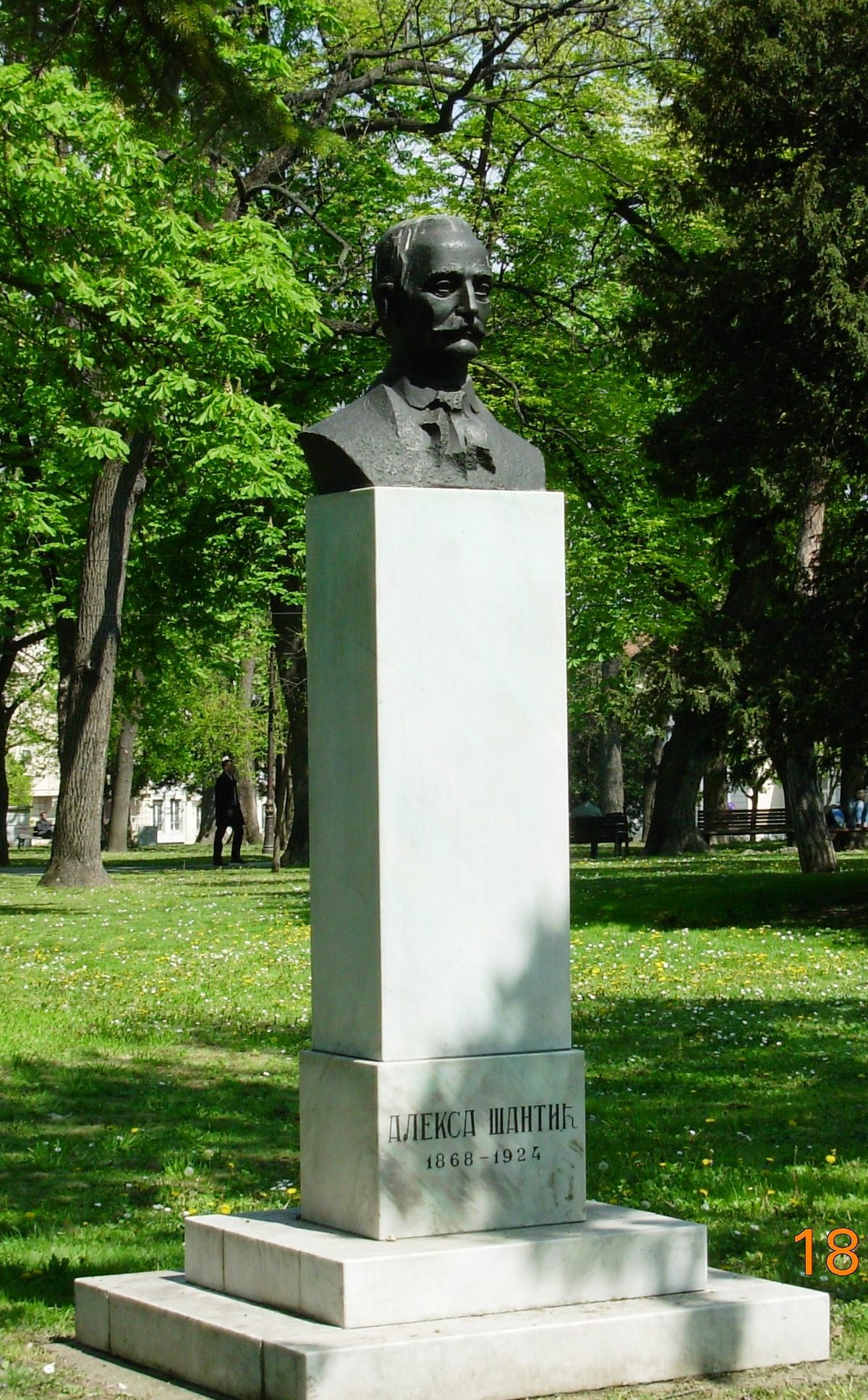
The Bust of Aleksa Šantić in Belgrade is more than a sculptural tribute; it is a gateway into Serbia’s literary and cultural heritage. Erected in the historic Kalemegdan Park, this monument commemorates Aleksa Šantić (1868–1924), a celebrated poet who captured the emotional and social landscape of the Balkans. This guide will provide you with a detailed overview of Šantić’s life, the artistic and historical context of the bust, practical visitor information, and tips for a rewarding experience in Belgrade.
(en.wikipedia.org, beogradskatvrdjava.co.rs, Be in Belgrade)

Aleksa Šantić: Life and Literary Legacy
Early Life and Historical Background
Aleksa Šantić was born in Mostar during the Ottoman era and grew up amid dramatic political changes, including Austro-Hungarian occupation. Despite a family background in commerce, Šantić developed a deep passion for literature. His work was shaped by the region’s multicultural environment and the socio-political upheavals of his time (en.wikipedia.org, pantheon.world).
Literary Career and Major Themes
Šantić produced nearly 800 poems, along with plays and prose, characterized by emotional depth and social consciousness. Influenced by Heinrich Heine and closely associated with Serbian literary peers like Jovan Dučić and Svetozar Ćorović, Šantić’s poetry often explored themes of love, longing, national identity, and social justice (sr.wikipedia.org, academia.edu).
Notable Works:
- "Emina" – A lyrical ode to Mostar’s multicultural spirit.
- "Ostajte ovdje" – A plea against emigration, reflecting community anxieties.
- "Što te nema?" – A poignant poem of longing.
- "Moja otadžbina" – A patriotic reflection on homeland.
Cultural and National Influence
Šantić played a vital role in the Serbian national movement in Herzegovina, serving as editor-in-chief of the influential magazine "Zora" and bridging divides through his work. His funeral was attended by people from diverse backgrounds, a testament to his unifying message (slobodnahercegovina.com).
Legacy
Šantić’s portrait appears on Bosnian currency, and his name graces schools, villages, and awards. His manuscripts are preserved in the National and University Library of Bosnia and Herzegovina (ivysci.com).
The Bust of Aleksa Šantić: History, Artistic Value, and Cultural Significance
Historical Context
The bust was unveiled in 1968 in Belgrade’s Kalemegdan Park, crafted by sculptor Aleksandar Zarin (beogradskatvrdjava.co.rs). It stands in the "Alley of Poets" alongside monuments to other Serbian literary icons, reflecting the city’s dedication to cultural memory (Eyes on Belgrade, Muzej Hercegovine).
Artistic Details
The bronze bust depicts Šantić in a contemplative pose, mounted on a stone pedestal inscribed with his name. Its realistic style and tranquil setting invite visitors to reflect on Šantić’s poetic legacy.
Cultural Importance
The monument is a site for annual commemorations, especially on Šantić’s birthday (May 27) and death anniversary (February 2), drawing literary societies and admirers (Vijesti.ba, ASfAR). It also serves as an educational tool, inspiring students and fostering literary appreciation.
Visiting the Bust of Aleksa Šantić: Hours, Access, and Tips
Location
The bust is located in the Alley of Poets within Kalemegdan Park, which is central Belgrade’s largest and most historic green space. The main park entrance is a short walk from Republic Square, accessible via Knez Mihailova Street (Be in Belgrade).
Hours and Admission
- Opening Hours: Kalemegdan Park is open 24 hours a day, year-round.
- Admission: Access to the park and the bust is free (TripHobo).
Getting There
- On Foot: 10–15 minutes from Republic Square.
- Public Transport: Bus and tram lines 2, 5, 10, and 24 stop near park entrances.
- By Car: Limited parking nearby; taxis can drop off at the main gates.
Accessibility
- Wheelchair/Stroller Access: Main paths are paved and mostly flat; some secondary routes may have cobblestones or gentle slopes.
- Seating: Benches and shaded areas are plentiful.
- Restrooms and Cafés: Facilities and refreshments are available throughout the park.
Best Time to Visit
- Spring and Autumn: Pleasant weather, fewer crowds, and vibrant park scenery.
- Photography: Early morning or late afternoon provides the best light.
Visitor Etiquette
- Respect the commemorative nature of the bust, especially during events.
- Photography is welcome, but do not climb on the monument.
- Keep the area clean and quiet.
Events and Commemorations
Key events at the bust include:
- Šantić’s Birthday (May 27): Literary readings and floral tributes (slobodnahercegovina.com).
- Death Anniversary (February 2): Wreath-laying and poetry recitations (slobodnahercegovina.com).
- Other Literary Events: Occasional poetry evenings and cultural gatherings.
Nearby Attractions
Kalemegdan Park and the surrounding Belgrade Fortress offer a range of attractions:
| Attraction | Type | Distance from Bust | Notable Features |
|---|---|---|---|
| Victor Monument (Pobednik) | Monument | ~5 min walk | Panoramic city/river views |
| Military Museum | Museum | ~3 min walk | Historic weapons and exhibitions |
| Ružica Church | Religious Site | ~7 min walk | Unique chandeliers, spiritual site |
| Cvijeta Zuzorić Art Pavilion | Art Gallery | ~2 min walk | Contemporary and classic exhibitions |
| Belgrade Zoo | Zoo | ~10 min walk | Family-friendly, diverse animals |
Other park amenities include playgrounds, recreational courts, and scenic walking paths (GPSmyCity).
Practical Tips
- Dress: Wear comfortable shoes, especially after rain as some paths may be slippery.
- Currency: The local currency is Serbian Dinar (RSD). Carry cash for small purchases (Chasing the Donkey).
- Safety: Belgrade is generally safe; observe usual precautions.
- Information: Most plaques are in Serbian; use translation apps or guides for deeper insight.
Frequently Asked Questions (FAQ)
What are the visiting hours?
Kalemegdan Park is open 24/7, and the bust is freely accessible at all times.
Is there an entrance fee?
No, entry is free.
Is the site wheelchair accessible?
Yes, main paths are suitable for wheelchairs and strollers.
Are guided tours available?
Yes, both free and paid guided tours include the bust; self-guided options are also popular.
When are commemorative events held?
On Šantić’s birthday (May 27), death anniversary (February 2), and during occasional poetry events.
Listen to the full story in the app
The whole Биста Алексе Шантића,
told well.
Audio guides for 1,100+ cities across 96 countries. History, stories, and local insight — offline ready.
Verified, and shown.
Researched and written by the Audiala editorial team from historical records, architectural archives, and local expertise.
Researched from Wikidata, Wikipedia & official sources · fact-checked · How we make our guides →