Plan and listen to Atelje 212 with Audiala.
Audio guide in your pocket, itinerary in your browser. Built for the way you actually visit.
Introduction
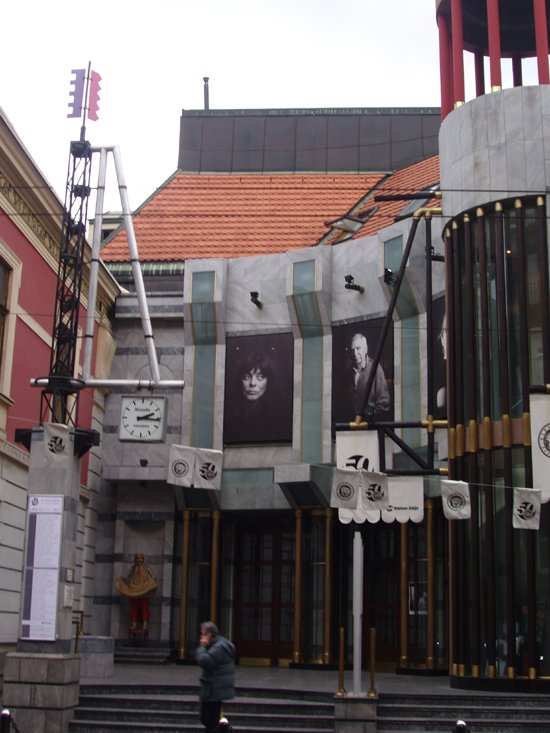
Nestled in the heart of Belgrade, Atelje 212 stands as a symbol of avant-garde theater and cultural innovation in Serbia. Since its establishment in 1956, the theater has played a pivotal role in shaping the city’s performing arts landscape, breaking away from traditional norms and fostering both local and international talent. This comprehensive guide offers historical context, insight into its architectural evolution, programming highlights, practical visitor information, and tips for making the most of your experience at one of Belgrade’s most celebrated cultural landmarks.

Origins and Founding Vision
Atelje 212 was founded on November 12, 1956, by a visionary group led by Borislav Mihajlović Mihiz and Bojan Stupica. Their goal was to create a theater that would challenge conventional artistic boundaries and provide a space for experimental, avant-garde drama—an audacious move during a period of strict artistic and political oversight in Yugoslavia. The name “Atelje 212” was derived from its original 212-seat attic venue in the Borba newspaper building (belgrade-beat.com; apartmani-u-beogradu.com).
Early leadership included Radoš Novaković and Bojan Stupica, with Mira Trailović—who would later become a legendary director—serving as assistant manager before taking over the directorship (wikipedia.org).
Avant-Garde and Absurdist Theater Milestones
Atelje 212 quickly made history by staging Samuel Beckett’s "Waiting for Godot" in 1956, the first such performance in Eastern Europe. This bold choice signaled the theater's commitment to challenging the status quo and introducing audiences to modernist and absurdist works. It paved the way for premieres by Jean-Paul Sartre, Eugène Ionesco, Alfred Jarry, Jean Genet, Arthur Kopit, and T.S. Eliot, among others (wikipedia.org; belgrade-beat.com).
The repertoire not only broadened the horizons of local audiences but also established Atelje 212 as a hub for creative freedom and artistic bravery.
Nurturing Local Talent and Playwrights
Beyond its international repertoire, Atelje 212 has been instrumental in developing Serbian drama and talent. The theater offered early platforms for writers like Brana Crnčević, Aleksandar Popović, and Dušan Kovačević, while also nurturing generations of actors and directors who gained national and international prominence (belgrade-beat.com; serbia.com). This commitment to fostering homegrown creativity remains a core part of the institution’s legacy.
Architectural Evolution and Facilities
After its initial years in the Borba building attic, Atelje 212 moved to a purpose-built venue at Svetogorska 21, designed by Bojan Stupica. The theater has undergone several renovations, including the installation of a retractable roof for open-air performances (apartmani-u-beogradu.com; wikipedia.org). Today, it comprises two main stages:
- Mira Trailović Stage: 385 seats
- Petar Kralj Stage: 141 seats
The design fosters intimacy between audience and performers, while advanced lighting, acoustics, and backstage facilities support diverse and innovative productions (seestage.org).

Cultural Significance and Legacy
Atelje 212’s impact reverberates far beyond its walls. Its progressive programming was central to the foundation of the Belgrade International Theatre Festival (BITEF), which has brought global theater to Belgrade and enhanced its reputation as a center of artistic innovation (apartmani-u-beogradu.com). The theater’s resilience during periods of political upheaval—especially in the 1990s—underscored its role as a forum for social dialogue and critical engagement (serbia.com).
Mystique and Urban Legends
Atelje 212 is also shrouded in local folklore, including tales of the ghost of actress Ljiljana Krstić haunting its halls. These stories only add to the theater’s mystique and enduring appeal (theofficebelgrade.com).
Essential Visitor Information
Location: Svetogorska 21, 11103 Belgrade, Serbia. The venue is centrally situated, within easy walking distance from Republic Square and other major attractions (apartmani-u-beogradu.com).
Visiting Hours (Box Office):
- Monday to Friday: 10:00–14:00 and 18:00 until performance start
- Saturday: Closed
- Sunday: 18:00 until performance start
Note: When there are no performances, the box office is open only in the morning and closed on Sundays (atelje212.rs).
Tickets:
Available at the theater or online via tickets.rs and the official website. Prices vary by production, with discounts for students, seniors, and groups.
Accessibility:
The theater is wheelchair accessible, with accommodations available upon request. It is easily reached via public transport or taxi.
Nearby Amenities:
The central location offers proximity to restaurants, cafes, and hotels. Notable options include Maya Apartments, Queen’s, and Mercure Belgrade Excelsior (belgrade-beat.com).

Programming and Repertoire Highlights
Atelje 212’s repertoire is a dynamic blend of Serbian and international drama, contemporary works, experimental pieces, and innovative adaptations. Its programming philosophy emphasizes:
- Contemporary Relevance: Productions address social, political, and cultural themes.
- Genre Diversity: Drama, comedy, musicals, and interdisciplinary performances.
- Support for New Voices: Emerging playwrights and artists are regularly featured.
- International Collaboration: Frequent partnerships with global artists and institutions.
Current and Upcoming Productions (June 2025)
- "Lažljivica": A thought-provoking play on rebellion and ideals (repertoar.rs)
- "Knjige – Nebeske reke": Explores the transformative power of literature
- Concerts: Example—Rambo Amadeus, June 24
- Film Screenings: Example—"F1," June 26
The theater’s calendar is updated regularly; check repertoar.rs for the latest.
Special Events and Collaborations
Atelje 212 extends beyond traditional theater with:
- Concerts and Music Events
- Film Nights and Screenings
- Workshops, Lectures, and Artist Talks
- Guided Tours: By appointment, offering behind-the-scenes access
These multidisciplinary programs reflect the theater’s commitment to cultural engagement and community outreach.
Practical Tips for Visitors
- Language: Most performances are in Serbian; some offer English surtitles or program notes.
- Dress Code: Smart-casual; the atmosphere is relaxed and artistic.
- Arrival: Arrive 15–20 minutes before showtime for ticket collection and seating.
- Combining Attractions: The location is ideal for pairing your visit with nearby museums, galleries, or a walk through Skadarlija.
Frequently Asked Questions (FAQs)
Q: What are Atelje 212’s visiting hours?
A: Box office is open Monday to Friday, 10:00–14:00 and 18:00 until showtime. Closed Saturdays; open Sunday evenings if there are performances.
Q: How do I buy tickets?
A: Tickets are available online via the official website, tickets.rs, or at the box office.
Q: Is the theater accessible?
A: Yes, with wheelchair access and staff assistance.
Q: Are there English-language performances?
A: Some productions offer surtitles or program notes in English; check listings for details.
Q: Are guided tours available?
A: Yes, by prior appointment. Contact the theater for availability.
Q: What else is nearby?
A: Republic Square, Knez Mihailova Street, and Kalemegdan Fortress are all within walking distance.
Listen to the full story in the app
The whole Atelje 212,
told well.
Audio guides for 1,100+ cities across 96 countries. History, stories, and local insight — offline ready.
Verified, and shown.
Researched and written by the Audiala editorial team from historical records, architectural archives, and local expertise.
Researched from Wikidata, Wikipedia & official sources · fact-checked · How we make our guides →