Introduction
A Serbia travel guide should start with one fact: this landlocked country holds Roman capitals, Danube gorges, and ski peaks within a day’s drive.
Serbia works best for travelers who like contrasts with edges still intact. In Belgrade, the Sava meets the Danube below fortress walls and concrete New Belgrade blocks; two hours north, Novi Sad trades late-night river energy for Habsburg facades and Petrovaradin’s long ramparts. Head east to Đerdap and the river tightens into the Iron Gates, a gorge that feels built for empires. Then go further back. Lepenski Vir preserves Mesolithic houses and fish-human stone figures that predate Stonehenge by about 4,000 years. Few European itineraries move this fast between prehistory, Rome, Ottoman frontiers, and 20th-century urban grit.
Food explains Serbia almost as well as history does. A table in Niš or Kruševac might start with rakija, move to ćevapi or pljeskavica, then end with something slower and richer: sarma, prebranac, a slab of gibanica still warm from the tray. But the country is not only grill smoke and kafana songs. Studenica turns medieval stone into something almost weightless, Subotica shows off Secessionist curves in bright color, and Zlatibor and Kopaonik pull the map upward into pine forests, ski runs, and long mountain breakfasts. Serbia is compact, affordable, and denser than it looks. That is the point.
A History Told Through Its Eras
Fish-Gods on the Danube, Then the Caesars Arrive
Origins and Rome, 7000 BCE-395 CE
Mist hangs over the Danube at Lepenski Vir, and the houses do something uncanny: they face the river with geometric discipline, as if the settlement were taking instructions from the water itself. Under the floors lay the dead, beneath the hearth, inside domestic life rather than outside it. Ce que l'on ignore souvent, c'est que some of Europe's oldest monumental sculptures were carved here around 7000 BCE, their faces half human, half fish, watching the gorge that now leads toward Đerdap.
Then came another world entirely. At Vinča, not far from modern Belgrade, a Neolithic culture left signs that still resist full deciphering, figurines dressed with almost theatrical care, and some of the earliest known copper working in Europe. Long before Serbia had a name, the land already had what history loves most: continuity mixed with interruption.
Rome understood the value of these corridors at once. Sirmium, today’s Sremska Mitrovica, became one of the great imperial cities of the late empire, while Naissus, modern Niš, gave Rome a man who would change Christianity itself: Constantine the Great, born around 272. His mother Helena, probably of humble origin, rose from provincial obscurity to imperial sanctity. That ascent tells you something about the Balkans. Empires came here to rule, and were often remade by the provinces instead.
The frontier was never quiet. Legions marched, emperors were proclaimed, usurpers gambled, Goths pressed south, and the Danube remained both wall and invitation. By the time the Roman order began to crack, the territory of present-day Serbia had already learned its enduring lesson: whoever controls the rivers and roads here does not merely pass through Europe. He rearranges it.
Helena Augusta turns this era into a family drama: a woman of uncertain birth from the Balkan provinces becomes the mother of an emperor and, later, one of Christianity's great matriarchs.
More Roman emperors were born on the territory of present-day Serbia than in Rome itself, an imperial statistic with a whiff of provincial revenge.
Monks, Kings, and the Serbian Middle Ages at Full Splendor
The Nemanjić Age, 1166-1371
White marble catches the mountain light at Studenica, and you begin to see what the Nemanjić dynasty wanted the world to understand. This was not a rough border principality improvising its future. It was a court with ambition, theology, and taste. Stefan Nemanja, who consolidated the Serbian state in the 12th century, built here not only for God but for memory.
And then he did something almost theatrical in its severity. In 1196 he abdicated, surrendered power, and became the monk Simeon on Mount Athos; his wife Ana also took the veil. Ce que l'on ignore souvent, c'est que their youngest son Rastko had already scandalized the family by fleeing court life, taking monastic vows before armed men sent by his father could drag him home. Europe has seen many princely rebellions. Few end with sainthood.
That runaway prince became Saint Sava, and with him Serbia acquired far more than a beloved holy man. He secured the autocephaly of the Serbian Church in 1219, wrote, negotiated, founded, taught. He gave the state a spiritual grammar. In medieval politics, that was worth fortresses.
A century later, the dynasty reached its most dazzling and most dangerous zenith under Stefan Dušan. Crowned emperor in 1346, he expanded Serbia into a vast Balkan power and issued Dušan's Code, a legal text severe, sophisticated, and revealing in equal measure. But the empire was built with the speed of a campaign tent. When Dušan died in 1355, still only 47, the structure remained; the force holding it together did not. The next age was already waiting on the horizon.
Saint Sava is the soul of the chapter: a teenage prince who chose the monastery over inheritance, then returned as the architect of Serbia's spiritual independence.
When Nemanja's soldiers chased Rastko to Mount Athos, he took monastic vows before they reached him, knowing a tonsured monk could not simply be hauled back to court.
The Battle That Never Ended
Kosovo, Despotate, and Ottoman Rule, 1389-1804
A field in June, dust, armor, priests, horses. Kosovo Polje on 28 June 1389 entered Serbian memory with such force that the historical event and the national myth have never quite separated since. Prince Lazar died. Sultan Murad I died as well. Militarily, the result was less simple than legend prefers. Emotionally, it was final.
From that wound came poetry, ritual, and a language of sacrifice that still shapes Serbian political feeling. Miloš Obilić, whether historical assassin or epic invention sharpened by song, became the man who entered the sultan's tent and struck. Lazar became the ruler who chose a heavenly kingdom over an earthly one. That is not archival history. It is something more potent: a usable moral universe.
Yet Serbia did not vanish overnight. The Morava Serbia of Lazar's heirs endured, and the brilliant Despot Stefan Lazarević, knight, ruler, and man of letters, turned Belgrade into a capital of consequence in the early 15th century. His court was refined, strategic, and fully aware that chivalry alone would not stop Ottoman power. After the fall of the Serbian Despotate in 1459, however, the Ottoman centuries began in earnest.
Under Ottoman rule, life was never one thing. Taxes bit hard, rebellions flared, monasteries guarded memory, merchants adapted, and border regions lived with permanent uncertainty. In Kruševac, in monasteries such as Studenica, in market towns and river crossings, the old order survived as liturgy, genealogy, and stubborn habit. That endurance mattered. By the late 18th century, the memory of statehood had not been erased; it had been compressed. Compression, in Balkan history, tends to end in explosion.
Prince Lazar endures not because he won, but because later generations turned his defeat into Serbia's most durable moral and political legend.
The cult of the Battle of Kosovo grew strongest not in the immediate aftermath alone, but through centuries of epic recitation, when gusle singers kept alive a version of history more emotionally binding than any state archive.
Pigs, Princes, and the Return of the State
Uprising, Kingdom, and the Long 19th Century, 1804-1918
The First Serbian Uprising did not begin in a palace. It began in violence, fear, and the frontier roughness of 1804, when local Janissary abuses pushed notables into revolt and Karađorđe Petrović emerged as the hard-faced leader the moment seemed to require. He was not polished. He was effective. Serbia, at that stage, needed the second quality more urgently.
The 19th century that followed was a dynastic family quarrel enlarged into national history. The Karađorđević and Obrenović houses competed for the throne, for legitimacy, and at times for the right to define Serbia's future between Vienna, Istanbul, and St Petersburg. Miloš Obrenović, shrewd where Karađorđe was ferocious, secured autonomy through negotiation, bribery, patience, and a peasant instinct for power. Ce que l'on ignore souvent, c'est que modern Serbia was built as much in bargaining rooms as on battlefields.
Belgrade changed with that ambition. So did Novi Sad, then within the Habsburg orbit, which became a great Serbian cultural center beyond the borders of the principality itself, a reminder that nations are often imagined before they are fully assembled. Schools, printing, churches, merchants, officers, and constitutional experiments all gathered force. Serbia became a kingdom in 1882, but the crown rested on very nervous foundations.
Then came the scandal worthy of any dynasty. In June 1903, King Aleksandar Obrenović and Queen Draga were murdered in their palace by army officers, their bodies thrown from a window after a night of conspiracy and gunfire. Europe was horrified, fascinated, and not entirely surprised. The Karađorđević returned. Eleven years later, the shots in Sarajevo would pull Serbia into a war that destroyed empires and remade the map of the continent.
Miloš Obrenović matters because he understood that survival sometimes depends less on heroic posture than on knowing when to threaten, when to flatter, and when to wait.
Serbia's 19th-century export boom in pigs was so important that foreign policy and customs disputes with the Habsburg Empire could feel, quite literally, like matters of swine and sovereignty.
From Royal Dream to Socialist Federation, Then the Painful Return to Itself
Yugoslavia, Rupture, and Serbia After 1918, 1918-2006
A new state was proclaimed in 1918 from triumph, exhaustion, and illusion. Serbia emerged from the First World War victorious and devastated, then entered the Kingdom of Serbs, Croats and Slovenes with the prestige of sacrifice and the burden of uniting peoples who did not remember power in the same way. The Karađorđević monarchy dreamed of cohesion. It got argument, centralization, resentment, and periodic violence.
The Second World War tore the region apart with almost unbearable intimacy. Occupation, resistance, collaboration, reprisals, camps, executions: the Balkans turned neighbor against neighbor with particular savagery. Out of that inferno came Josip Broz Tito, partisan commander and political magician, who built socialist Yugoslavia after 1945 as a federation held together by charisma, force, and a very careful balance of national questions. For decades, many people lived better than they had before. That, too, is part of the truth.
Tito died in 1980, and the silence after him was expensive. Debt mounted, legitimacy thinned, and the federal myth began to crack. In Serbia, Slobodan Milošević rose by speaking to grievance, especially over Kosovo, with a mixture of calculation and menace that changed the whole region. The Yugoslav wars of the 1990s, sanctions, bombardment in 1999, and democratic revolt in October 2000 left scars visible in institutions, families, and city streets from Belgrade to Niš.
Independent Serbia, after the State Union with Montenegro ended in 2006, is not a simple postscript. It is a country still arguing with empire, monarchy, socialism, nationalism, and modern Europe all at once. Walk through Belgrade today and you feel the layers pressing close together: royal ambition, Yugoslav memory, unfinished transition. History here does not sit politely in museums. It keeps interrupting the conversation.
Tito remains the most paradoxical figure of the era: a revolutionary who ruled like a courtier, balancing republics, egos, and global powers with unnerving elegance.
When protesters overthrew Milošević on 5 October 2000, one of the most famous symbols of the day was not a flag or a general, but a bulldozer pushing through the architecture of fear.
The Cultural Soul
A Tongue with Two Alphabets and One Raised Eyebrow
Serbian lives in both Cyrillic and Latin the way a clever host keeps two sets of porcelain and knows exactly when to bring out each one. In Belgrade, street signs, menus, graffiti, book covers, pharmacy windows: the city switches scripts without apology. A foreigner expects confusion. Instead, the effect is intimacy. The language seems to say: you may enter, but you will not enter carelessly.
Then come the trapdoors. "Vi" and "ti" are not grammar alone; they are distance measured in breath. You enter a bakery, say "Dobar dan," and the room relaxes by one degree. You say nothing, and you remain a piece of furniture. Serbian conversation can sound like an argument to anyone raised on polite cushioning, yet the heat often means interest, not hostility. A country reveals itself in particles, and Serbia has "bre": affection, impatience, disbelief, conspiracy, all compressed into one small verbal shrug.
Listen in Novi Sad on a tram platform, in Niš over coffee, in a market queue where Hungarian or Bosnian may flicker through the Serbian sentence like another current under the same river. The ear learns quickly that directness here is not rudeness. It is respect for the other person's spine.
The Ceremony of the Table and the Door
Serbia does not confuse warmth with informality. That is its elegance. A guest is greeted, seated, fed, asked again, fed again, watched with grave attention until the second helping is accepted or refused with enough conviction to qualify as a legal document. The threshold matters. So does the table. A country is a table set for strangers.
In many places, especially outside the polished center of Belgrade, greetings are still an ethical act. You enter a lift, a shop, a waiting room, and silence feels oddly theatrical, as if you had come dressed as your own indifference. Titles survive. "Gospodine." "Gospođo." They are small coins of order.
And yet the room is never stiff. Voices overlap. People interrupt with talent. A serious discussion about bread, politics, football, or the proper hour for rakija can acquire the density of opera within ninety seconds. In Serbia, courtesy does not require softness. It requires presence.
Smoke, Milk, Pepper, Fire
Serbian food begins where many northern cuisines lose courage: with fat, fermentation, smoke, and the absolute refusal to apologize for pleasure. The grammar is precise. Bread tears. Kajmak spreads. Onion bites back. Pepper arrives roasted, peeled, crushed, and turned into ajvar so dense with autumn that one spoonful tastes like an entire courtyard working for three days. A meal in Serbia does not pose for you. It occupies you.
The great trick is that heaviness rarely feels clumsy. Consider komplet lepinja in Zlatibor: bread, kajmak, egg, roasting juices, yogurt. On paper, a dare. On the tongue, a theology. Or the kafana table in Belgrade, where ćevapi, pickled peppers, white cheese, tomatoes, and a bottle of šljivovica create a civilization from six objects and a little smoke.
Every household has convictions. About ajvar. About sarma. About whether gibanica should collapse slightly in the middle or hold its posture. This is one of Serbia's finest qualities: it treats appetite as a branch of philosophy, but never says so aloud.
Incense in Stone, Gold in Shadow
Orthodoxy in Serbia is not decoration. It is atmosphere. You feel it in the way candles thicken the air, in the slowness of a hand crossing itself, in the dark gleam of icons that seem less painted than awakened. At Studenica, white marble catches the mountain light with almost indecent purity, and then the interior lowers the voice: frescoes, smoke, gold, old grief, old endurance.
The family ritual of slava says even more than a monastery can. A household keeps one patron saint, and once a year the home turns liturgical. Bread. Wheat. Wine. Candles. Guests arriving in waves. The saint is inherited through the family line, which means faith is carried not only by doctrine but by dining tables, recipes, surnames, and memory. Religion here does not stay in church. It sits in the apartment and asks whether you will have another slice.
Travel through central Serbia, then east toward Đerdap, and churches appear not as museum pieces but as participants in daily time. Bells cut through traffic. Monasteries keep their composure while the century changes clothes around them. The result is moving even for the non-believer. Especially for the non-believer.
Brass for Weddings, Melancholy for Midnight
Serbia understands that music should do more than accompany life. It should seize it by the collar. Brass bands in the south do not play discreetly; they arrive like weather. Trumpets flare, drums insist, clarinets thread through the noise, and suddenly a street, a wedding, a festival field near Guča, or a restaurant room has become too alive for neutrality. You do not merely hear this music. You are drafted by it.
Then the mood shifts. A kafana song after midnight can make an entire room look into its glass with the expression of someone reading a letter they should have burned years ago. This is where sevdah's neighboring sadness, old urban songs, folk refrains, and newer turbo-folk excess all brush against one another, sometimes elegantly, sometimes like a velvet fist. Serbia has little patience for the false border between high feeling and low taste.
In Novi Sad, EXIT brought global names into the shell of Petrovaradin Fortress, which is a very Serbian joke in itself: medieval masonry, electronic bass, dawn over the Danube. History keeps a straight face here while the speakers shake it.
Empires Leave Their Receipts
Serbia's architecture has the honesty of a place that has been claimed, divided, bombed, rebuilt, and argued over by almost everyone. In Belgrade, Austro-Hungarian facades, socialist blocks, Orthodox churches, glass towers, and scarred ministry buildings share the same avenues with the tense intimacy of relatives at a funeral lunch. The city does not curate its contradictions. It stacks them.
Novi Sad behaves differently. Habsburg order, pastel fronts, Catholic spires, Serbian institutions, then Petrovaradin Fortress above the river like a patient military thought. Subotica goes still further into ornament, with Hungarian Art Nouveau curves and ceramic exuberance that seem to have escaped from a fevered confectioner's notebook.
And then Serbia changes register completely. A Roman emperor's birthplace in Niš. Medieval monastic stone at Studenica. Prehistory at Lepenski Vir, where trapezoidal houses and fish-faced sculptures remain one of Europe's great acts of ancient strangeness. The lesson is severe and simple: in Serbia, buildings are not background. They are arguments made visible.
What Makes Serbia Unmissable
Fortresses and Frontiers
Belgrade Fortress, Petrovaradin in Novi Sad, and the Danube strongholds around Đerdap show how often this country sat on an imperial fault line. You keep seeing the same story in stone: Rome, Byzantium, Hungary, the Ottomans, then Serbia again.
Prehistory to Rome
Lepenski Vir’s 7000 BCE sculptures and the Roman remains of Niš and Sremska Mitrovica give Serbia unusual chronological range. Few countries let you move from Mesolithic ritual sites to the world of Constantine in a single itinerary.
Monasteries That Matter
Studenica is not background scenery for a road trip; it is one of the anchors of medieval Serbian art and statehood. White marble walls, 12th-century frescoes, and mountain silence do the work better than any slogan could.
Danube and Mountain Country
Đerdap brings cliff roads, river viewpoints, forests, and archaeology into one of the strongest landscapes in the Balkans. Zlatibor and Kopaonik add an easier mountain rhythm: hiking in summer, snow in winter, long meals all year.
Serious Table Culture
Serbia’s food is built for appetite rather than decoration: ćevapi, pljeskavica, kajmak, ajvar, slow-cooked cabbage, and plum rakija poured as hospitality, not theater. Coffee matters too, because people sit with it until the conversation takes over.
Cities With Texture
Subotica’s Art Nouveau facades, Belgrade’s layered architecture, and Novi Sad’s Austro-Hungarian core keep city breaks from feeling interchangeable. Serbia’s urban appeal lies in friction, not polish, and that makes it memorable.
Cities
Cities in Serbia
Belgrade
"A city that rebuilt itself so many times it stopped apologizing for the scars — the fortress where the Sava meets the Danube has watched empires arrive and dissolve since the Bronze Age."
173 guides
Novi Sad
"Vojvodina's capital sits on the Danube beneath a Habsburg fortress and hosts Exit, one of Europe's largest music festivals, in its moat every July."
Niš
"Constantine the Great was born here around 272 CE, and the skull tower the Ottomans built from Serbian rebels in 1809 is still standing on the road into town."
Subotica
"The northernmost major Serbian city wears its Hungarian and Art Nouveau past on every façade — the 1910 city hall is one of the most extravagant Secession buildings in the Balkans."
Zlatibor
"A high plateau in western Serbia where the air smells of pine resin and families have been arriving by train since the Yugoslav era to walk, ski, and eat lamb slow-roasted over open coals."
Kopaonik
"Serbia's largest mountain massif and its most developed ski resort, where the runs stay open from December into April and the summit plateau sits above 1,700 metres."
Kruševac
"The medieval capital of Prince Lazar, who led the Serbian army at Kosovo in 1389; the ruins of his fortress still occupy the city centre."
Sremska Mitrovica
"Roman Sirmium — one of the four capitals of the late empire — is buried under this quiet Sava-bank town, and the archaeology museum sits directly above the excavated palace complex."
Lepenski Vir
"A Mesolithic site on the Danube gorge where 7,000-year-old trapezoidal houses and fish-human stone sculptures — among the oldest monumental art in Europe — were found aligned to a single point on the horizon."
Studenica
"Stefan Nemanja's 12th-century monastery in a river valley in central Serbia holds the finest Byzantine-Romanesque sculpture in the country and the tomb of the man who founded medieval Serbia."
Đerdap
"The Iron Gates gorge on the Romanian border is where the Danube narrows to 150 metres between sheer cliffs, and a Roman road tablet cut into the rock face in 100 CE is still legible at water level."
Vrnjačka Banja
"Serbia's most visited spa town has been dispensing mineral water and slow afternoons since the 19th century, and the promenade of pastel villas along the Vrnjačka river has barely changed pace since."
Regions
Belgrade
Belgrade and the Sava-Danube Confluence
Belgrade runs on geography first. The city sits where the Sava meets the Danube, and that meeting point shapes everything from Kalemegdan's military logic to the barge clubs, concrete New Belgrade blocks and old Zemun streets that still feel half Central Europe, half Balkan improvisation.
Novi Sad
Vojvodina and the Danube Plain
North of Belgrade, Serbia flattens out into grain fields, river bends, monasteries and wine country. Novi Sad gives the region its cultural weight, but the real pleasure is the mix of Habsburg facades, Orthodox monasteries on Fruška Gora and easy drives that do not ask much from you.
Subotica
North Bačka Frontier
Subotica feels different from the rest of Serbia within ten minutes of arrival. Hungarian speech, Secession architecture and the flat run toward the Hungarian border give it a borderland character that is precise rather than theatrical, and easy to pair with a longer Vojvodina circuit.
Niš
Southern Serbia and the Morava Corridor
Niš is one of the oldest cities in the Balkans, and southern Serbia keeps that sense of long use. Roman Naissus, Ottoman lanes, fortress walls, grill smoke and bus stations full of movement all meet here, making the south feel tougher, older and less polished than the north in a way many travelers end up preferring.
Đerdap
Eastern Danube and Prehistoric Serbia
Eastern Serbia has the country's strongest big-scenery route. The Danube narrows, cliffs close in and archaeology stops being a museum label once you reach Lepenski Vir, where 7,000 BCE houses and fish-human stone figures turn the gorge into something stranger than a simple national park.
Zlatibor
Central and Western Mountains
This is the Serbia of resort plateaus, monastery detours, heavy breakfasts and roads that keep curving just enough to slow you down. Zlatibor is the easy entry point, but the region opens further through Vrnjačka Banja's spa culture, Kopaonik's ski slopes and Studenica's white marble church sitting in a wooded valley that still hushes the voice.
Suggested Itineraries
3 days
3 Days: Belgrade and Novi Sad
This is the clean first trip: two cities, one fast rail line, no wasted transfers. Start in Belgrade for fortress views and late dinners, then move on to Novi Sad for Petrovaradin, Danube air and a calmer rhythm.
Best for: first-timers, city breaks, rail travelers
7 days
7 Days: Subotica to the Roman Danube
Northern Serbia changes fast once you leave the capital corridor. This route links Subotica's Hungarian edge, Sremska Mitrovica's Roman past and the Danube logic of Novi Sad, with short travel days and enough room for wine, churches and old Habsburg street grids.
Best for: architecture fans, history travelers, slow regional trips
10 days
10 Days: Southern Serbia and Spa Country
This route moves through the old Morava corridor, where Roman Niš, monastery country and mountain air sit within a few hours of each other. It works best by car or a bus-and-driver mix, especially once you leave the main rail spine.
Best for: repeat visitors, monastery trips, mixed culture-and-nature travel
14 days
14 Days: Danube Gorges to Western Peaks
Start with Serbia's deepest prehistoric and river scenery in Lepenski Vir and Đerdap, then swing south and west for a longer cross-country trip. The route asks for patience, but it pays you back with fortress ruins, cliff roads, grilled fish by the Danube and a mountain finish in Zlatibor.
Best for: road trips, photographers, travelers who want more than city weekends
Notable Figures
Saint Sava
c. 1174-1236 · Prince, monk, church founderHe began as Rastko Nemanjić, a prince expected to serve dynasty and land, then slipped away to become a monk before his father's men could stop him. Serbia remembers him not as a dreamer in retreat, but as the man who gave the state its spiritual backbone and turned sanctity into statecraft.
Stefan Nemanja
c. 1113-1199 · Grand Prince and dynastic founderNemanja built power the old way, through war, alliances, and careful patronage, then startled his age by laying it all down for monastic life. That last act matters as much as his conquests: in Serbia, authority has long worn both a crown and a cowl.
Stefan Dušan
1308-1355 · Emperor and lawgiverDušan had the appetite of a conqueror and the instincts of a legislator, a combination history rarely grants in equal measure. He almost made Serbia the center of a new Balkan empire, then died before the structure could harden, leaving grandeur and instability in the same inheritance.
Prince Lazar
1329-1389 · Medieval ruler and martyr figureLazar's political career belongs to late medieval Serbia, but his afterlife belongs to poetry, liturgy, and myth. He became the ruler who lost a battle and won a civilization's imagination, which is sometimes the more lasting crown.
Despot Stefan Lazarević
1377-1427 · Ruler, knight, and writerHe inherited a broken landscape after Kosovo and answered with refinement rather than despair. Warrior, diplomat, and author, he gave Belgrade brilliance at precisely the moment survival looked narrowest.
Helena Augusta
c. 246/248-330 · Roman empress mother and Christian patronHelena stands at the edge of certainty and legend, which suits her rather well. From obscure beginnings in the Roman Balkans she rose to imperial rank, then to near-sacred memory, proving that dynasty is often built by the women official history first tries to relegate to the margins.
Constantine the Great
c. 272-337 · Roman emperorNiš can claim one of history's true hinge figures, a man born on the empire's Balkan flank who would legalize Christianity and refound imperial power in the east. Constantine reminds you that Serbia's story begins long before Serbia itself, in provinces that kept producing men the center could not ignore.
Karađorđe Petrović
1768-1817 · Revolutionary leaderKarađorđe was not made for salon politics. He looked and acted like insurrection itself, blunt, feared, and necessary in 1804. Modern Serbia begins with him partly because he embodied the dangerous truth of state-building: someone must first break the door.
Miloš Obrenović
1780-1860 · Prince and state-builderWhere Karađorđe struck, Miloš bargained. He could be patient, slippery, authoritarian, and extraordinarily effective, the sort of peasant prince who knew that sovereignty is won not only by courage but by exhausting stronger neighbors until they sign.
Josip Broz Tito
1892-1980 · Yugoslav leaderTito never belonged to Serbia alone, yet Serbia lived at the center of the Yugoslav state he built and stage-managed. He offered dignity, order, and international swagger after catastrophe, then left behind a federation so dependent on his balancing act that his death began the long unravelling.
Photo Gallery
Explore Serbia in Pictures
Aerial view of St. Mark's Church and the Belgrade skyline with autumn trees.
Photo by Kelly on Pexels · Pexels License
Moody exterior of a traditional restaurant in autumn with colorful foliage.
Photo by Nikola Kojević on Pexels · Pexels License
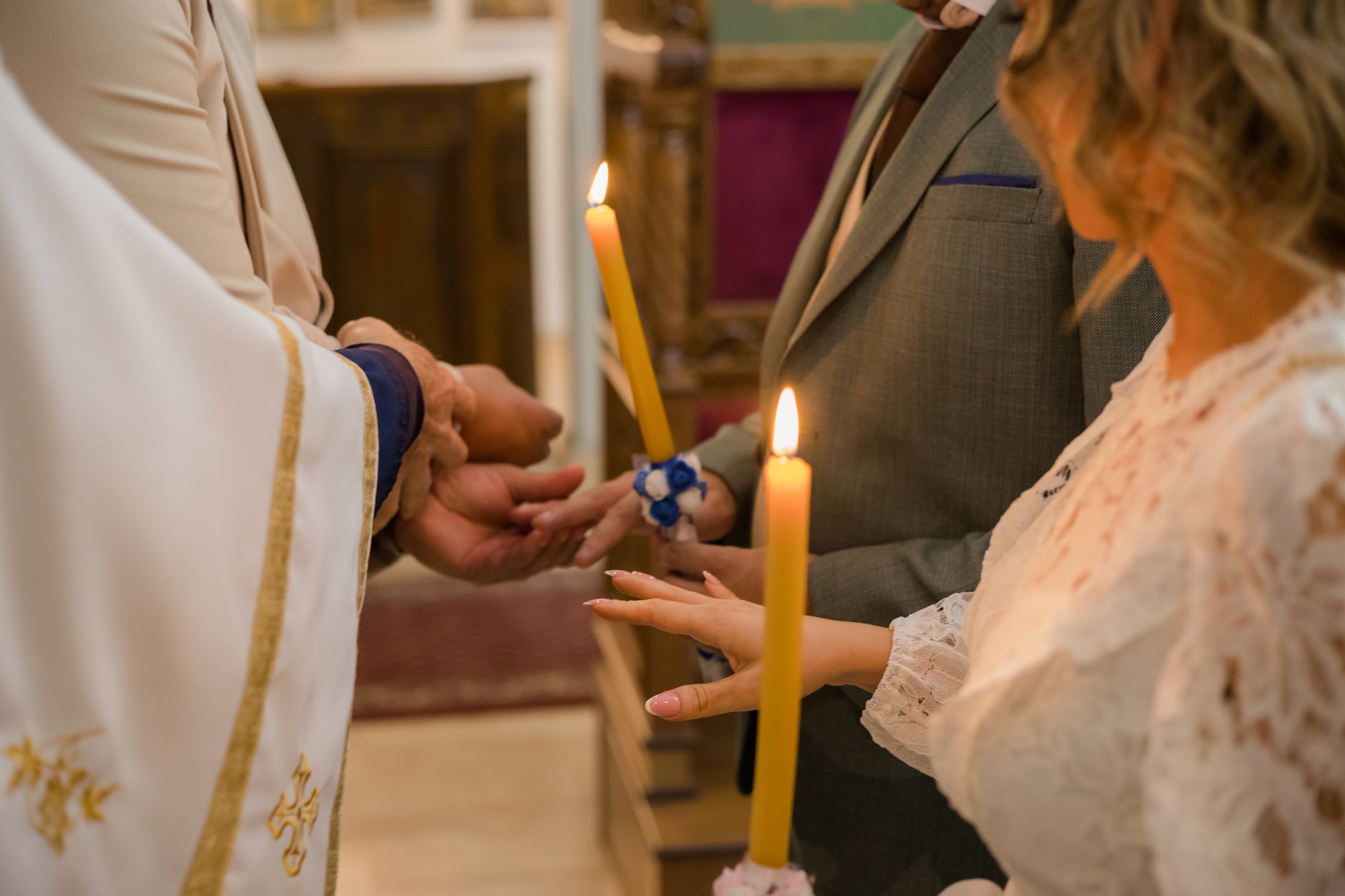
Close-up of traditional Serbian Orthodox wedding with candle lighting ritual.
Photo by Jovan Vasiljević on Pexels · Pexels License
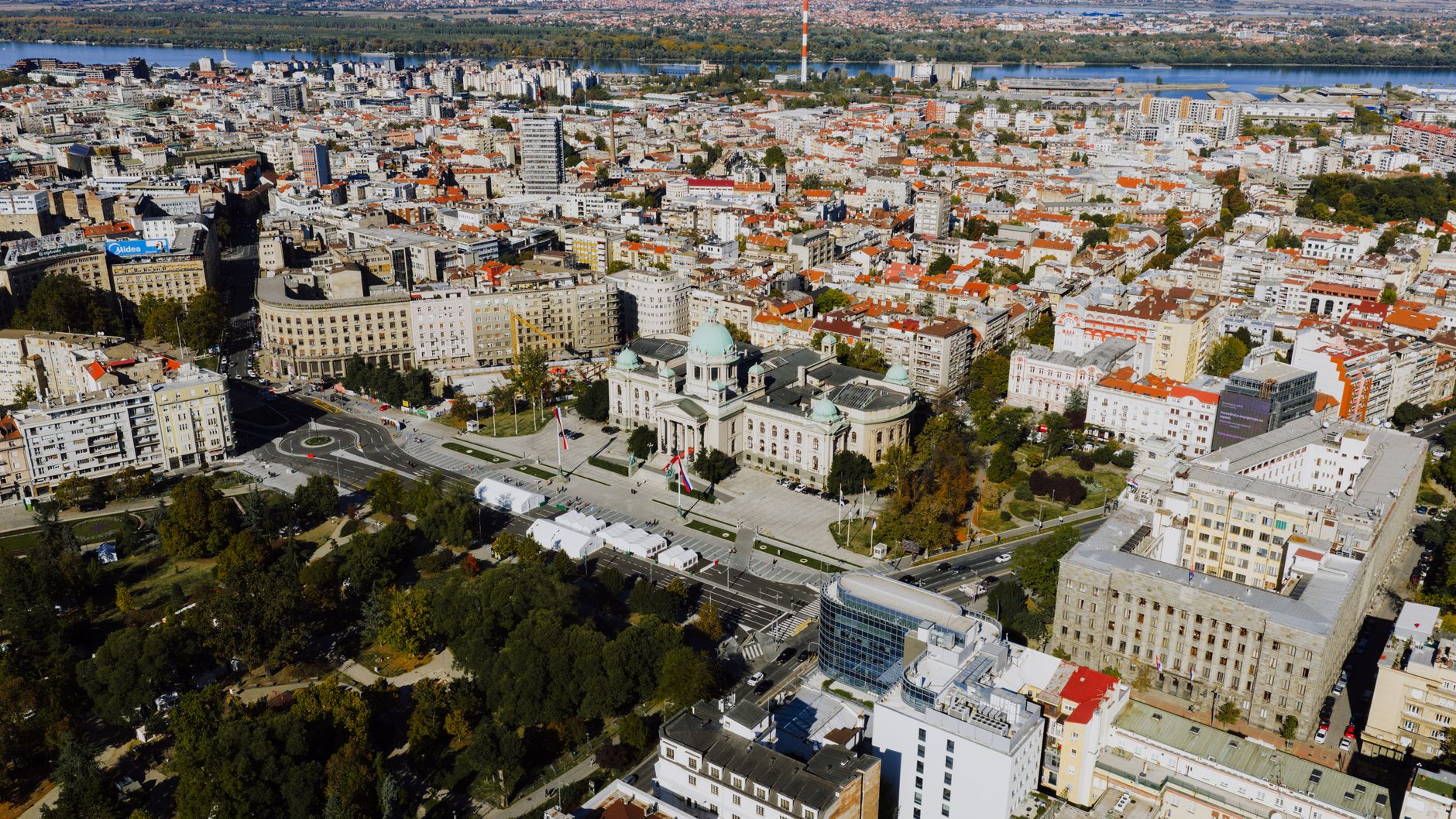
A picturesque aerial view of the National Assembly of Serbia in the heart of Belgrade.
Photo by Kelly on Pexels · Pexels License
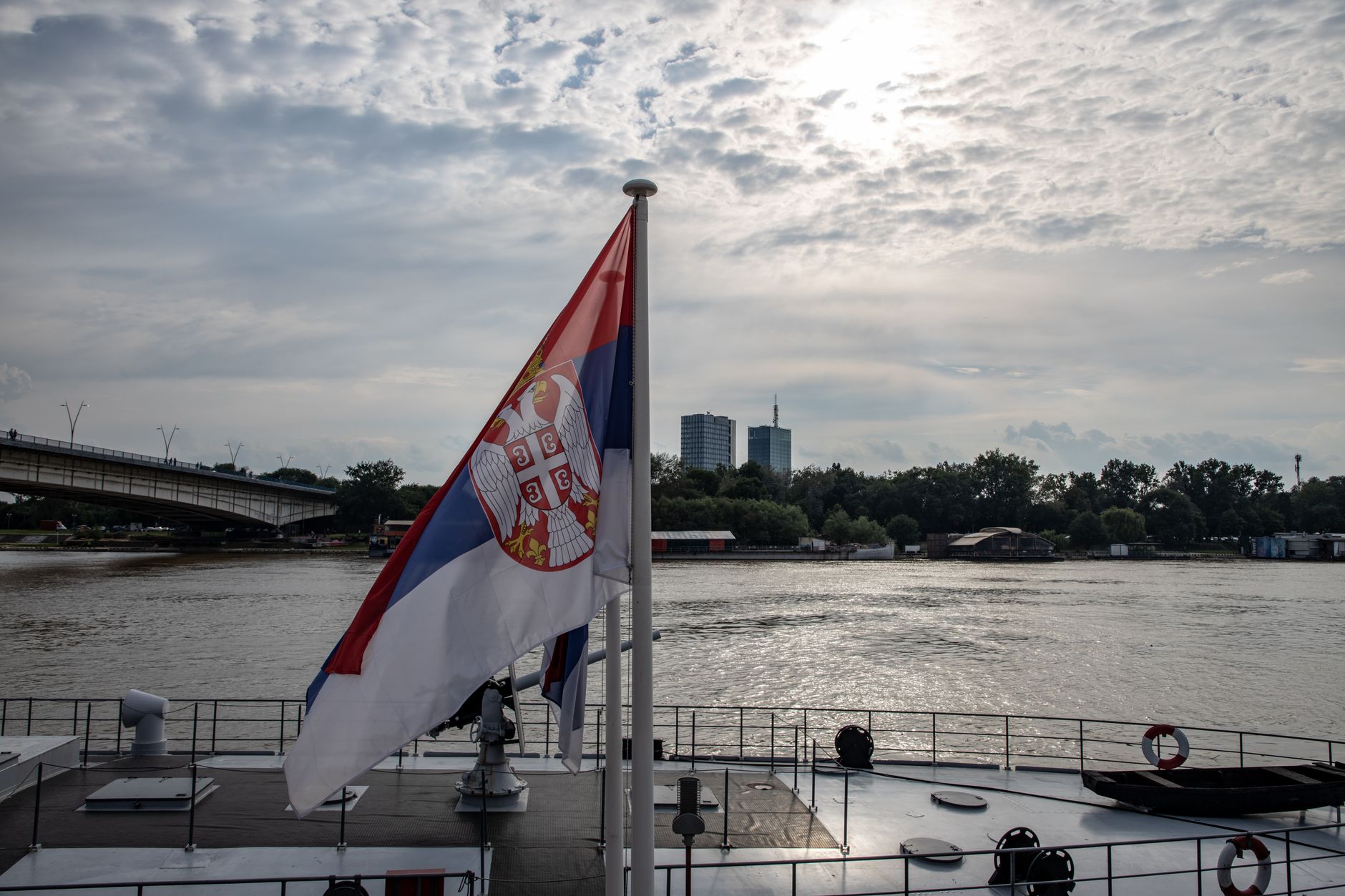
Serbian flag on a boat with an urban skyline and river scene in daytime.
Photo by Boris Hamer on Pexels · Pexels License
A vibrant aerial view of Belgrade, featuring the National Assembly of Serbia on a clear day.
Photo by Kelly on Pexels · Pexels License
Breathtaking aerial view of Belgrade, Serbia with the Danube River winding through the city.
Photo by Kelly on Pexels · Pexels License
Elegant historic building in Karlofça, Vojvodina, Serbia with scenic outdoor surroundings.
Photo by Muhammed Fatih Beki on Pexels · Pexels License
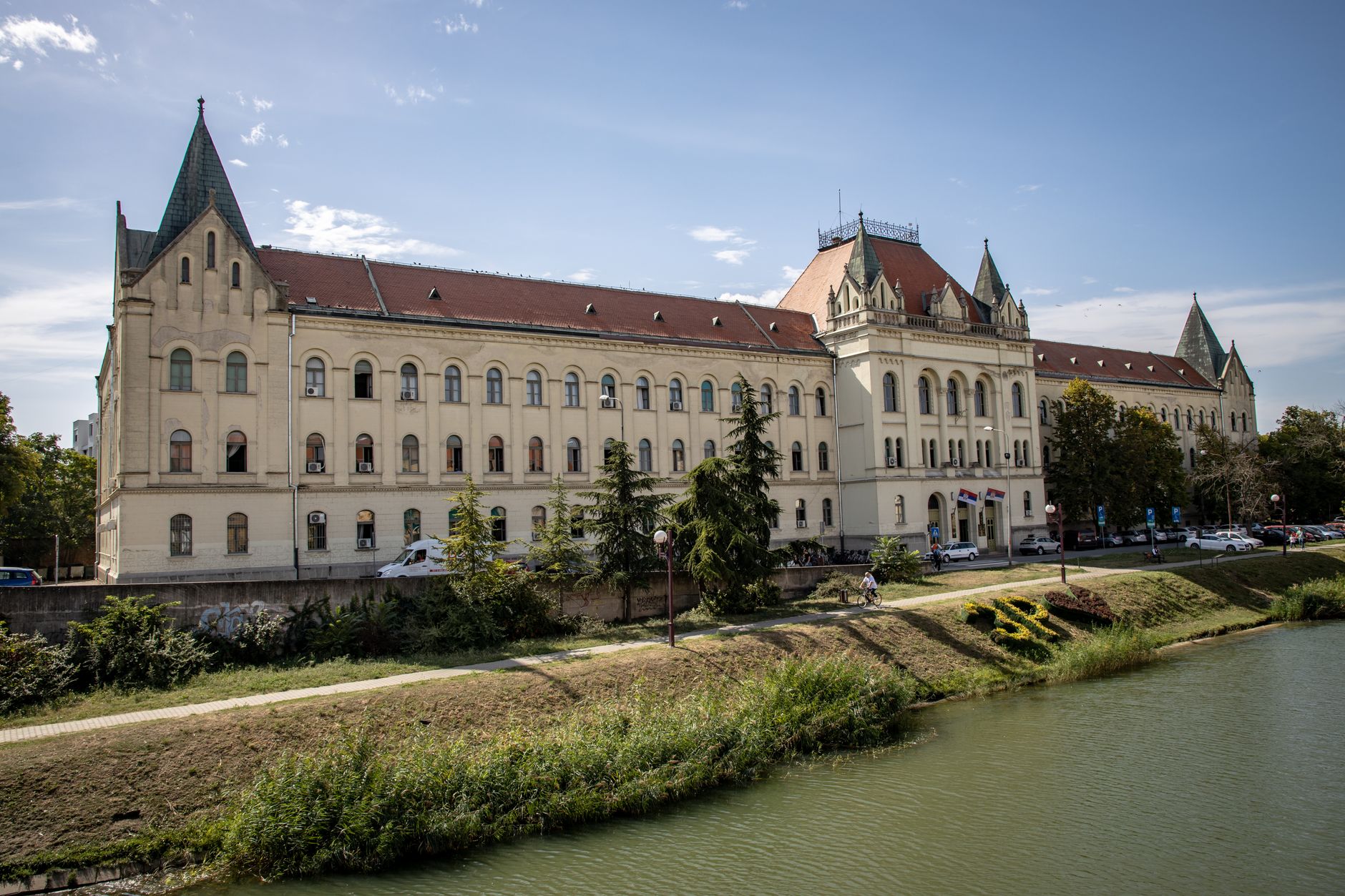
Beautiful view of the Zrenjanin Courthouse, a historic landmark by the river.
Photo by Boris Hamer on Pexels · Pexels License
Elegant historic building with red roof and spires in a tranquil European city square.
Photo by Saša Radojčić on Pexels · Pexels License
Top Monuments in Serbia
Church of Saint George
Belgrade
Built from a father's grief and still used as Banovo Brdo's meeting point, this interwar church shows Belgrade where candles, choirs, and daily life meet.
Institut Français
Belgrade
Church of St. Demetrius
Belgrade
Ruski Car Tavern
Belgrade
Kijevo Railway Station
Belgrade
Zemun Polje Railway Station
Belgrade
Kneževac Railway Station
Belgrade
Book and Travel Museum
Belgrade
The Building of the First Serbian Observatory
Belgrade
Old Telephone Exchange, Belgrade
Belgrade
Vlaško Polje Railway Station
Belgrade
Nebojša Tower
Belgrade
Embassy of Poland, Belgrade
Belgrade
Evangelical Church
Belgrade
Embassy of the United States, Belgrade
Belgrade
Tošin Bunar Railway Station
Belgrade
Stambol Kapija
Belgrade
Church of Saint Anthony of Padua, Belgrade
Belgrade
Practical Information
Visa
Serbia is outside both the EU and Schengen, so border checks apply even if you arrive from Hungary or Croatia. US, UK, Canadian, Australian and most EU passport holders can usually enter visa-free for up to 90 days in a 6-month period, and time spent in Serbia does not count against your Schengen 90/180 total.
Currency
You pay in Serbian dinars, written as RSD. Cards work well in Belgrade, Novi Sad and Niš, but cash still matters for bakeries, market stalls, village cafes and some local buses; tipping around 10% in restaurants is standard for good service.
Getting There
Belgrade Nikola Tesla Airport is the main entry point and the cleanest choice for almost every international trip. Niš works for southern Serbia and some low-cost routes, while Kraljevo's Morava Airport is only useful if its small schedule matches your dates.
Getting Around
Use rail where the upgraded corridor exists, especially between Belgrade and Novi Sad on the fast Soko service. For Zlatibor, Đerdap, Studenica, Vrnjačka Banja and smaller towns, buses or a rental car are usually faster and more realistic than waiting for a train that may not exist.
Climate
April to June and September to October give you the easiest city weather, with warm days and fewer heat spikes. July and August can turn Belgrade and the northern plains into a furnace, while Kopaonik and Zlatibor come into their own from December to February for snow.
Connectivity
4G coverage is solid in cities and along main corridors, and airport kiosks sell tourist SIMs from local operators. Hotel and cafe Wi-Fi is common, but speeds dip in mountain areas and deep parts of eastern Serbia, so download maps before heading into Đerdap or rural monastery country.
Safety
Serbia is generally easy for independent travel, including solo visitors, with the usual city precautions around nightlife districts, stations and taxi scams. Use licensed taxi apps in Belgrade, keep an eye on road conditions in rural areas after bad weather, and let your hotel handle the required foreigner registration when possible.
Taste the Country
restaurantDomaća kafa
Small cup, thick pour, slow sitting. Morning table, bakery stop, kafana corner. Talk first, sip second, leave the sediment.
restaurantŠljivovica
Tiny glass, first greeting, family lunch, village arrival. Raise, look, sip. Never rush.
restaurantĆevapi u lepinji
Warm bread, grilled meat, chopped onion, kajmak. Hands, not cutlery. Best with company and napkins.
restaurantKomplet lepinja
Bread, kajmak, egg, roasting drippings, yogurt. Breakfast in Zlatibor, hunger after a road, silence at first bite.
restaurantSarma
Sour cabbage rolls, minced meat, rice, long simmer. Winter table, family house, second day, better mood.
restaurantGibanica
Filo, cheese, eggs, kajmak. Breakfast, station snack, late morning rescue. Eat warm.
restaurantAjvar
Roasted pepper spread, bread, grilled meat, eggs. Autumn jars, aunt authority, argument over texture.
Tips for Visitors
Pay in dinars
Ask for prices in RSD and pay in dinars whenever you can. Euros appear in conversation for apartments or transfers, but everyday bills in Belgrade, Novi Sad and Niš are settled in local currency, and street exchangers are a bad idea.
Use bakeries early
A bakery breakfast keeps daily costs low without feeling like punishment. Expect burek, yogurt and pastry breakfasts for a fraction of a sit-down meal, especially outside central Belgrade.
Travel in May or September
Those two months usually give the best value equation: lighter crowds, easier hotel rates and weather that lets you walk cities without hiding from heat or snow. July is pricier in festival periods and harder work in lowland cities.
Book fast trains first
Reserve Belgrade-Novi Sad tickets as soon as your dates are fixed, especially on Fridays and Sundays. The fast line is excellent by Serbian standards, which means seats disappear exactly when you most want them.
Trust buses outside the rail spine
For Zlatibor, Studenica, Đerdap and many smaller towns, buses run where trains do not. Buy tickets at the station when possible, arrive 20 to 30 minutes early, and keep small cash for station fees or local add-ons.
Reserve mountains in winter
Kopaonik should be booked well ahead for January and February weekends, and Zlatibor fills during school breaks and New Year. Prices rise fastest when snow conditions are good, not when the calendar politely suggests they should.
Start with hello
Say "Dobar dan" when you enter a shop, bakery or waiting room. It takes two seconds, but skipping it can read as cold, especially outside the big-city bubble.
Buy a local SIM
A Serbian SIM or eSIM is cheap insurance if you are relying on bus stations, taxi apps or mountain driving. Coverage is good on main routes, but offline maps help once you head into eastern Serbia or monastery country.
Explore Serbia with a personal guide in your pocket
Your Personal Curator, in Your Pocket.
Audio guides for 1,100+ cities across 96 countries. History, stories, and local insight — offline ready.
Audiala App
Available on iOS & Android
Join 50k+ Curators
Frequently Asked
Is Serbia in the Schengen Area? add
No. Serbia is outside Schengen and outside the EU, so crossing into Serbia means a real border check even if you arrive from a Schengen country such as Hungary or Croatia.
Do US citizens need a visa for Serbia? add
Usually no for short trips. US passport holders can generally enter visa-free for up to 90 days in a 6-month period, but your passport should stay valid beyond your departure date and border officers can ask for proof of funds or onward plans.
Can you pay with euros in Serbia? add
Not for normal daily travel. Serbia uses the dinar, and while some hotels or landlords may quote in euros, restaurants, supermarkets, buses and museum desks expect payment in RSD.
Is the Belgrade to Novi Sad train worth booking in advance? add
Yes, especially for weekend departures and returns. The Soko service is fast, easy and popular, so advance booking saves both time and the irritating surprise of finding the one efficient rail route already full.
Is Serbia safe for solo female travellers? add
Generally yes, with the same caution you would use in any big city at night. Belgrade nightlife areas, stations and unlicensed taxis need common sense, but most travelers find Serbia more direct than threatening.
Do I need cash in Serbia or can I use cards everywhere? add
You need both. Cards cover most urban hotels, supermarkets and restaurants in Belgrade, Novi Sad and Niš, but cash still smooths out buses, bakeries, local markets and small-town cafes.
What is the best month to visit Serbia? add
May and September are the safest all-round picks. You get comfortable weather for Belgrade, Novi Sad and Niš, while mountain areas such as Zlatibor and Kopaonik are still pleasant rather than frozen or overbooked.
Can I travel from Hungary to Serbia by train? add
Yes, but keep your expectations precise. The practical rail crossing is via the Subotica-Szeged connection, and for many other cross-border routes in the region, buses are still easier than trains.
Is Serbia cheap compared with the rest of Europe? add
Yes, still noticeably. Budget travelers can get by on roughly RSD 4,000 to 6,500 a day outside heavy nightlife or ski weeks, while mid-range travel remains cheaper than in most EU capitals.
Sources
- verified Ministry of Foreign Affairs of the Republic of Serbia — Official visa regime, entry rules and visa-free nationality lists.
- verified Statistical Office of the Republic of Serbia — Population and national statistical baseline used for country facts.
- verified Serbia Travel — Official national tourism portal for destination structure, transport context and regional planning.
- verified Srbijavoz — Official passenger rail operator for current train routes, schedules and ticketing.
- verified Belgrade Nikola Tesla Airport — Primary airport source for international access and airline network context.
Last reviewed: