Introduction
The call to prayer rolls over Dakar at dawn, but the first thing you smell is the Atlantic—salt, diesel, and yesterday’s fish grilling over coals. Senegal’s capital is a peninsula city that behaves like an island: nowhere else in West Africa do you find surf breaks sharing headlands with slave-house museums, or midnight mbalax sets that don’t start until the muezzin has finished. Dakar doesn’t ask you to visit; it dares you to keep up.
Every street corners on a contradiction. French colonial balconies sag beside North-Korean-built monuments. Lunch is a single bowl of thieboudienne eaten with the right hand while the left scrolls TikTok. The city’s unofficial currency is teranga—hospitality so insistent that refusing a second spoonful of rice qualifies as mild treason.
You can cover the downtown map in a morning, yet the place keeps unfolding. A warehouse in Medina hosts pop-up art shows that ship directly to the Venice Biennale. A fishing village inside city limits, Yoff, still decides public policy by talking under a baobab. And somewhere offshore, an underwater museum grows algae on concrete sculptures you need scuba gear to argue with.
Places to Visit
The Most Interesting Places in Dakar
African Renaissance Monument
The African Renaissance Monument in Dakar, Senegal, stands as a monumental beacon of Africa’s unity, cultural pride, and hopeful future.
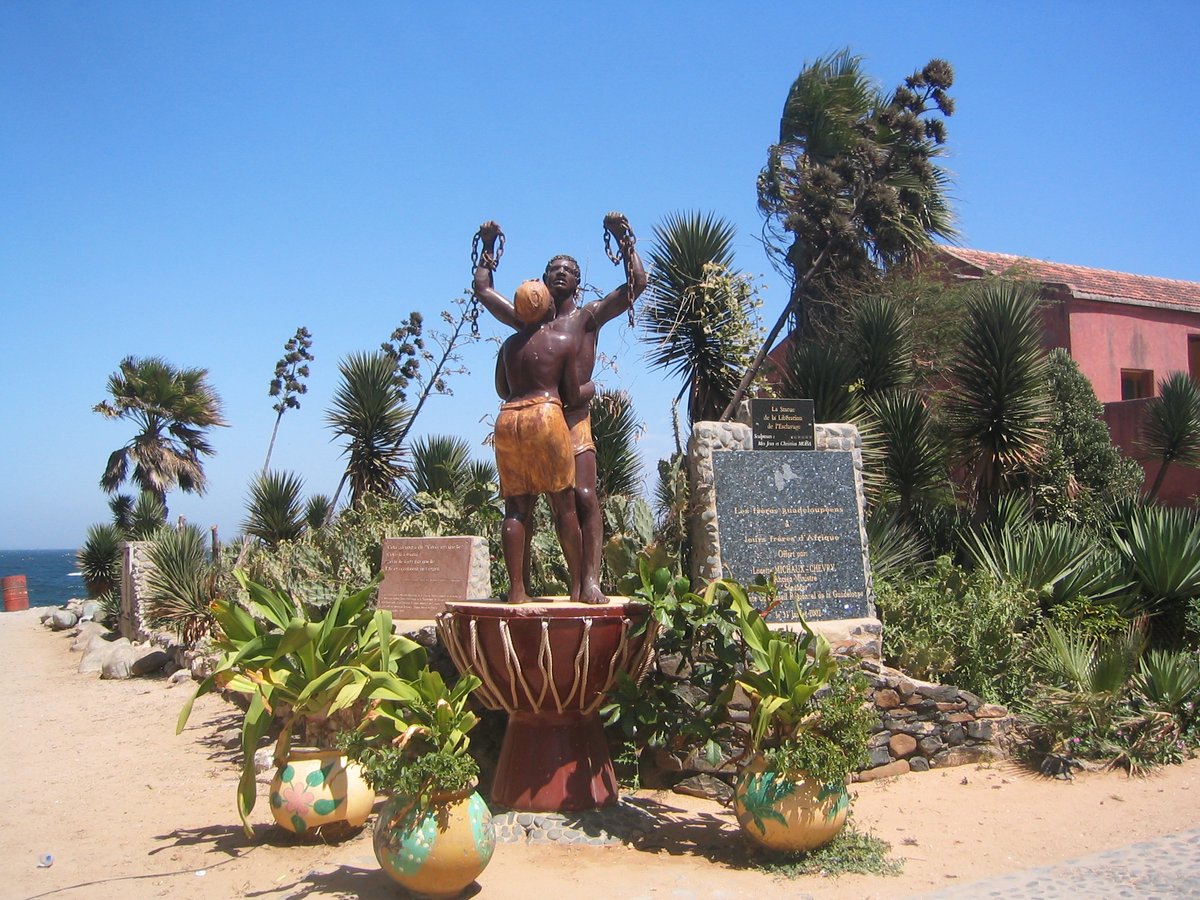
House of Slaves
The House of Slaves (Maison des Esclaves) on Gorée Island, located just off the coast of Dakar, Senegal, is a profoundly significant historical site and a…
National Library of Senegal
Nestled in the vibrant heart of Dakar’s Plateau district, the National Library of Senegal (Bibliothèque Nationale du Sénégal) stands as a cornerstone of…
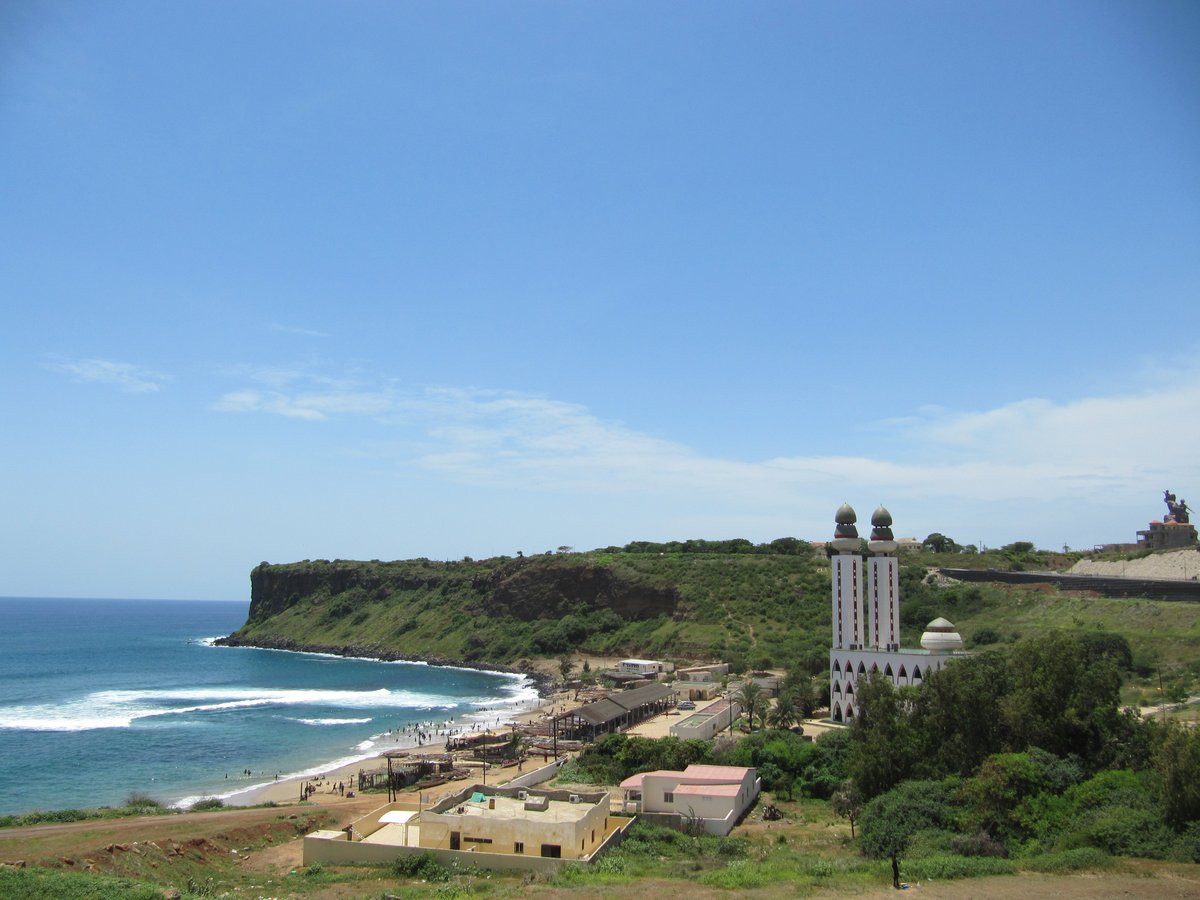
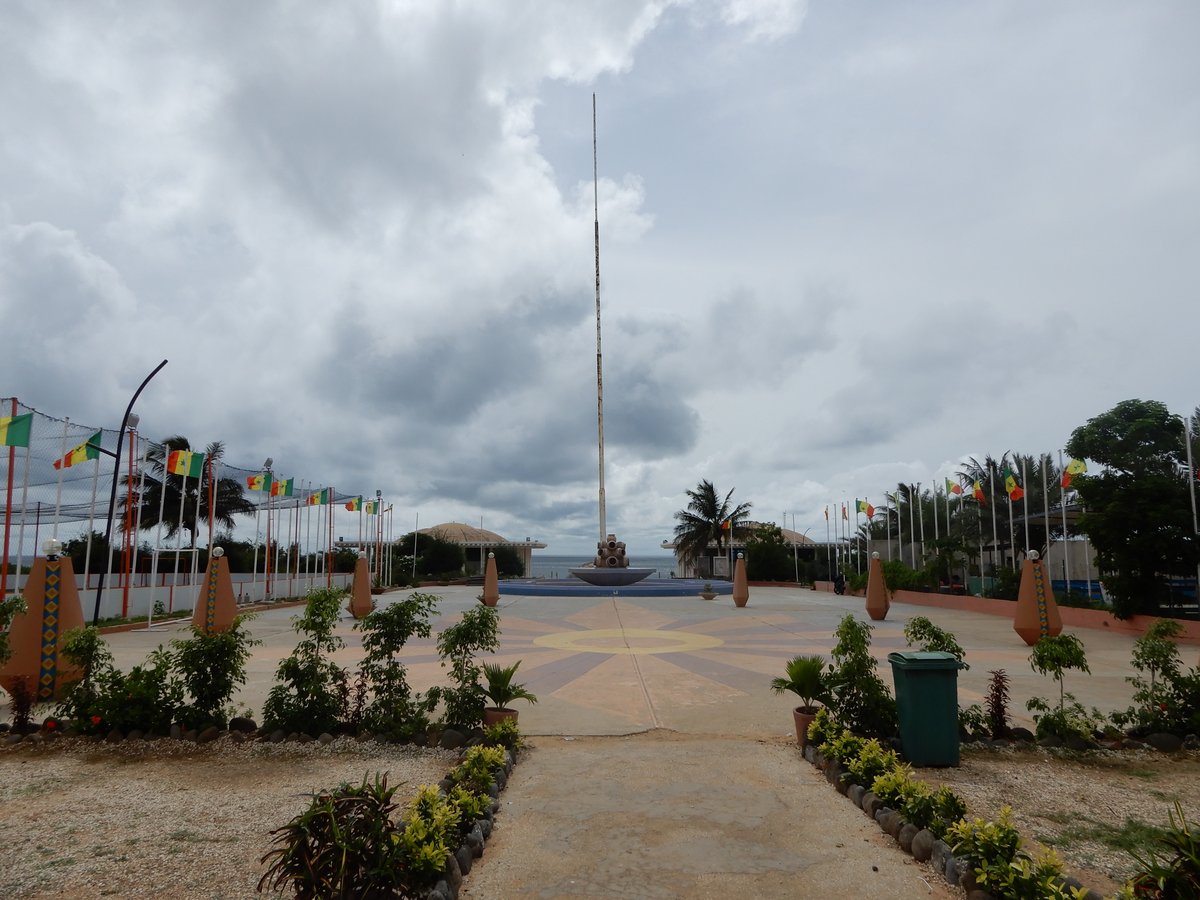
Place Du Souvenir Africain (Dakar)
Nestled along the picturesque Corniche Ouest in Dakar, Senegal, the Place Du Souvenir Africain stands as a profound testament to African heritage, resilience,…
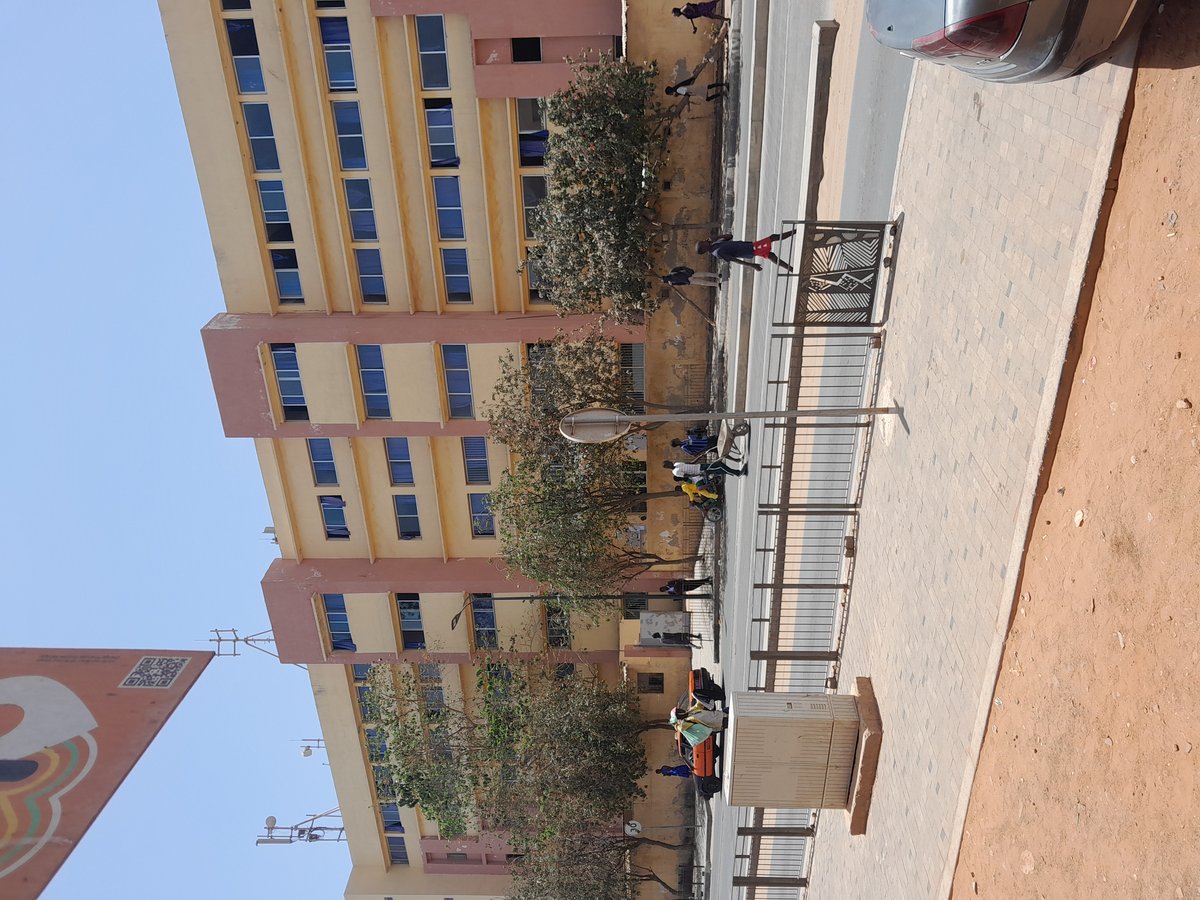
Parcelles Assainies
Nestled in the bustling metropolis of Dakar, Senegal, Parcelles Assainies stands out as a remarkable example of planned urban development born from a critical…
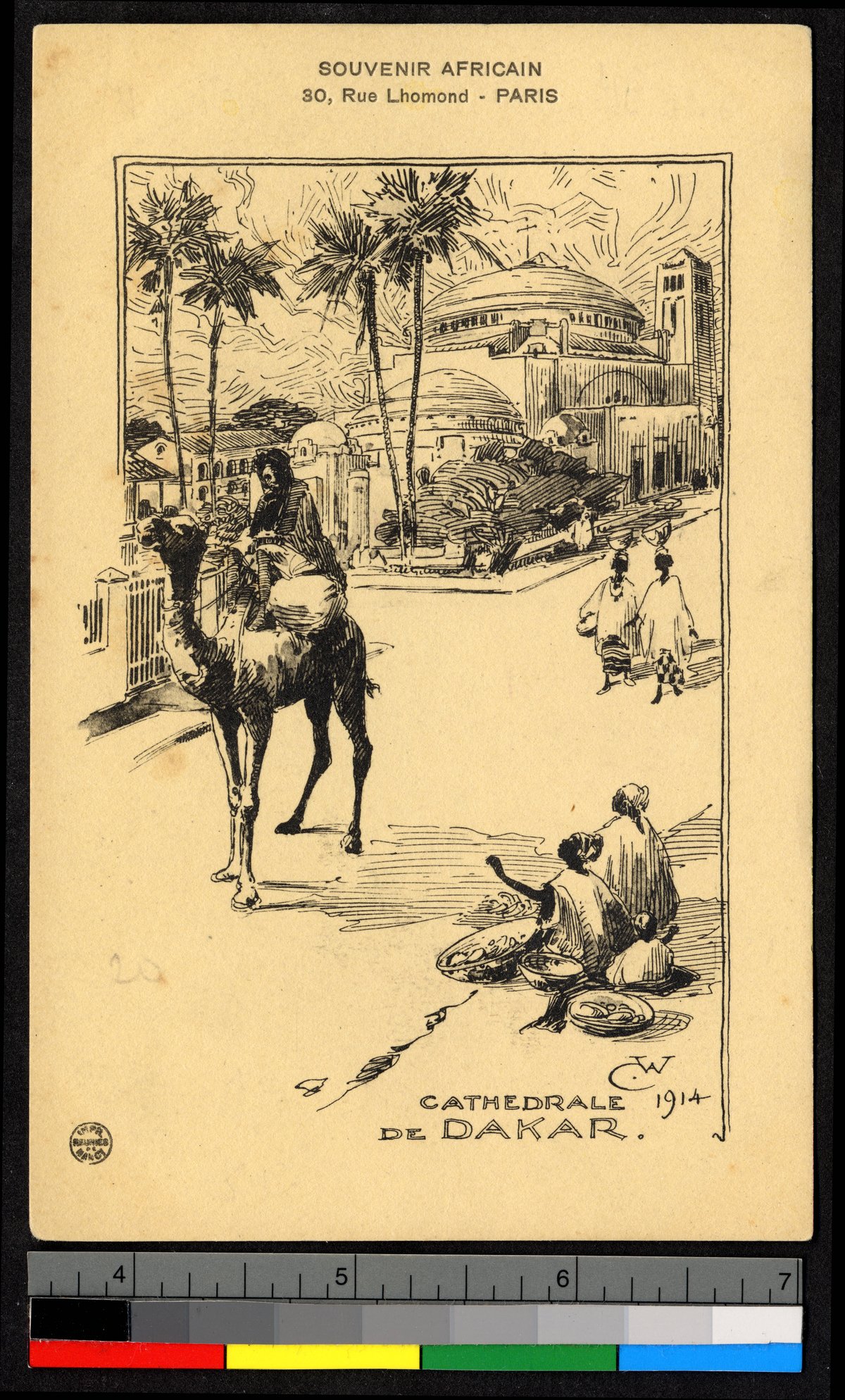
Our Lady of Victories Cathedral, Dakar
Nestled in the heart of Dakar’s historic Plateau district, the Our Lady of Victories Cathedral (Cathédrale Notre Dame des Victoires) stands as a monumental…
Ifan Museum of African Arts
Nestled in the vibrant heart of Dakar, Senegal, the IFAN Museum of African Arts—officially known as the Musée Théodore Monod d’Art Africain—stands as a beacon…
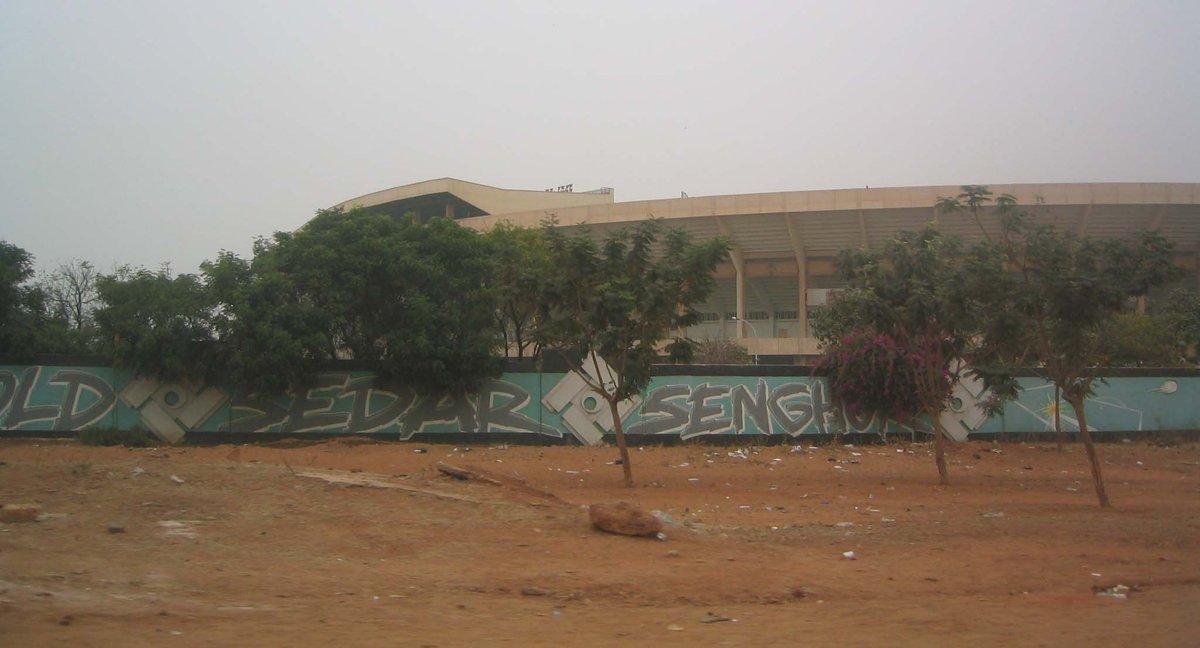
Stade Léopold Sédar Senghor
Stade Léopold Sédar Senghor stands as a monumental symbol of Senegal’s vibrant sporting culture and rich national heritage located in Dakar.
Dakar-Plateau
Dakar-Plateau, the historic and administrative core of Senegal’s vibrant capital, stands as an emblematic district steeped in rich history, cultural…
Ngor
Nestled at the westernmost edge of mainland Africa, Ngor, Dakar, Senegal, stands as a captivating destination that harmoniously blends rich history, vibrant…
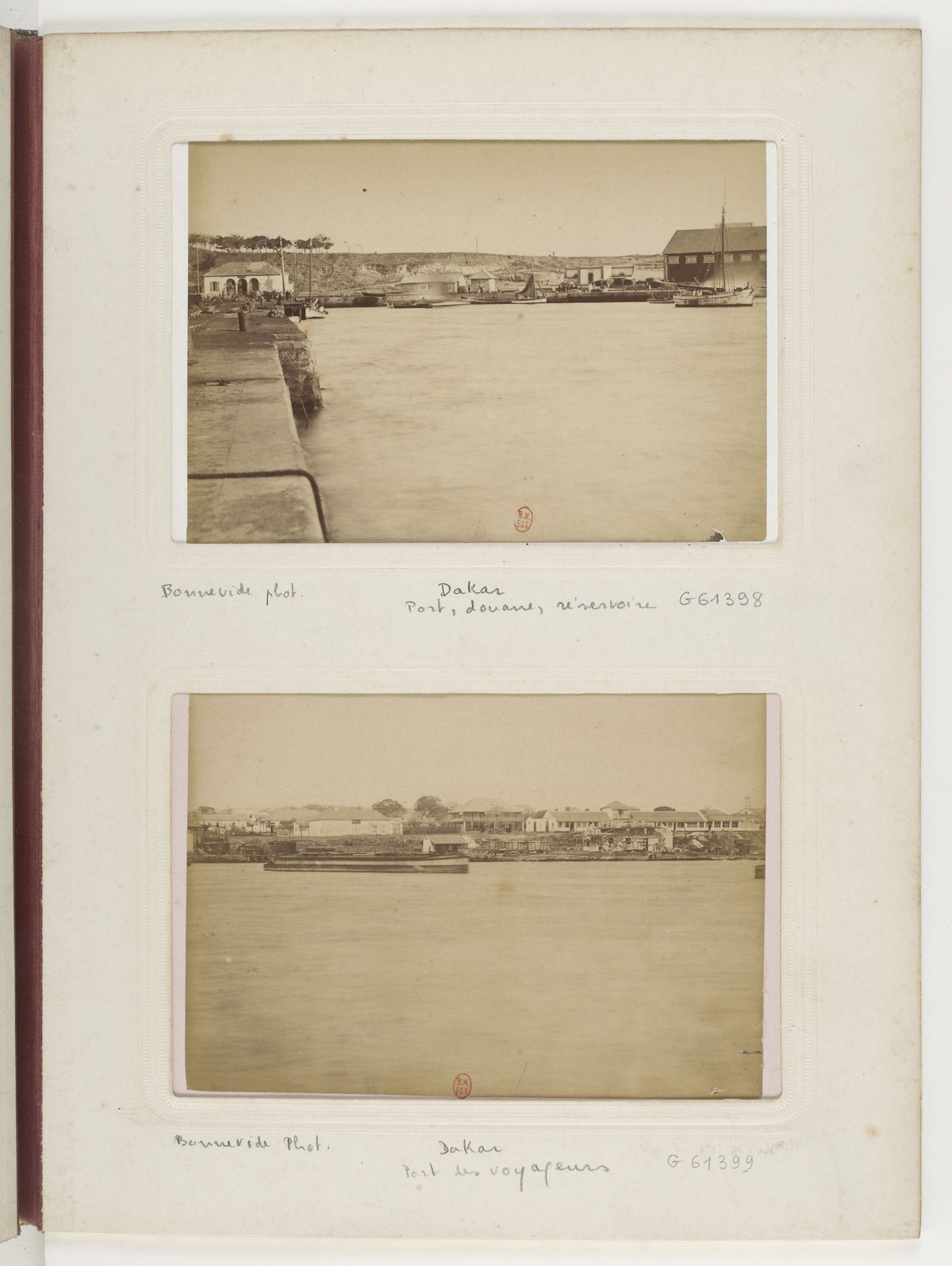
Autonomous Port of Dakar
Situated on the Cap-Vert Peninsula at Africa’s westernmost point, the Autonomous Port of Dakar stands as a critical maritime gateway and a symbol of Senegal’s…
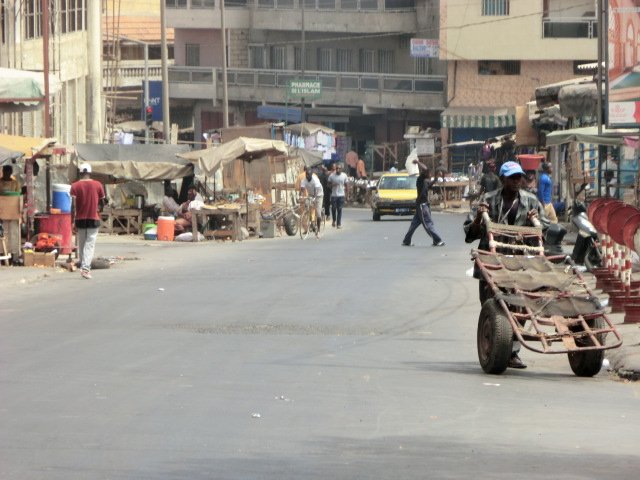
Grand Yoff
Grand Yoff, one of Dakar’s most vibrant and densely populated neighborhoods, offers an extraordinary glimpse into Senegalese urban life, culture, and history…
What Makes This City Special
Contemporary African Art Capital
Every two years Dakar becomes the continent’s largest open-air gallery during Dak’Art (next edition 19 Nov–19 Dec 2026). More than 200 unofficial ‘OFF’ shows pop up in living rooms, surf shacks and colonial courtyards, so you can walk from a courtyard in Medina straight into an El Anatsui installation.
Memory & Contradiction on One Peninsula
Gorée Island’s 28-hectare maze of slave houses and bougainvillea sits 20 minutes from a 49-metre North-Korean-built bronze couple who symbolise ‘Africa rising’. The same ferry route lets you taste both the Atlantic’s darkest chapter and its most brazen piece of post-independence propaganda.
Atlantic City That Actually Surfs
Dakar sticks farther west than Cabo Verde, so winter swells hit Ngor Island and Ouakam beachbreaks with zero fetch reduction. Boards rent for 8,000 CFA a session on Ngor, and the line-up is still majority local—no surf-club monoculture yet.
Historical Timeline
Where Africa Meets the Atlantic
From Lebou fishing village to pan-African capital
Lebou Fishermen Arrive
The first settlers beach their dugout canoes on the limestone cliffs of Cap-Vert. They call the place N'dakarou—'safe harbor' in Wolof—after the calm cove protected from Atlantic swells. These fishing families will still be here when Portuguese caravels appear two millennia later, their nets catching the same dorade that grills on Dakar's beaches tonight.
Portuguese Caravels Anchor
Navigator Dinis Dias drops anchor off Gorée Island, naming it Ilha de Palma for its coconut palms. His crew trades iron bars for gold dust and slaves, beginning the Atlantic exchange that will redraw Africa's map. The sailors carve their crosses into baobab bark—marks you can still trace if you know which tree to look for.
Dutch Build First Fort
The Dutch West India Company throws up earthen walls on Gorée, cannons pointed toward any Portuguese ships that might return. They rename it Goede Reede—'good harbor'—and stock it with 47 soldiers, twelve brass guns, and crates of trade beads. The fort's foundations lie beneath today's pink-washed Maison des Esclaves.
British Bombard Gorée
Commodore Augustus Keppel sails HMS Namur into the cove at dawn, broadsides blasting the French fort to rubble. By sunset, British marines raise the Union Jack over the island's shattered walls. The occupation lasts only seven years, but the cannonballs they leave behind become doorstops in Lebou homes—some still serve that purpose in the Medina.
House of Slaves Completed
Merchant Nicolas Pépin finishes his two-story coral-stone warehouse with iron shackles bolted to the basement floor. The Door of No Return frames ocean views so beautiful they seem cruel. Historians now argue about numbers—whether 200 or 20,000 passed through—but the building's arithmetic of human cargo still makes visitors count their own heartbeats.
French Found Dakar-Ville
Governor Louis Faidherbe orders troops to occupy the mainland village of N'dakarou, chasing away its Lebou chief. They lay out a grid of streets just wide enough for two ox-carts—dimensions that still choke today's taxis. The first stone administration building rises where fishermen once dried nets, its flagpole taller than any mosque minaret.
Blaise Diagne Born on Gorée
A boy enters the world in a modest fishing family on Gorée Island, 300 meters from the House of Slaves. He will grow up to become the first Black African elected to France's National Assembly in 1914, forcing Paris to recognize Senegalese as French citizens. His childhood playground of coral alleys becomes his political classroom.
Dakar Becomes Capital
The Governor-General moves his mahogany desk from Saint-Louis to Dakar's Plateau district, bringing with him 300 crates of files and a bronze bust of Marianne. Telegraph wires hum between the new capital and Paris, 4,000 kilometers away. The city's population triples in a decade as clerks, soldiers, and engineers arrive seeking colonial fortune.
IFAN Museum Opens
Théodore Monod founds the Institut Français d'Afrique Noire in a former military barracks, filling its cases with masks, drums, and griot harps. Scholars argue over whether this is preservation or pillage, but the collection becomes Africa's most important. The building's courtyard still smells of dust and old bronze, exactly as Monod left it.
Mariama Bâ Born
A future feminist voice enters the world in Dakar's Dakar's Médina quarter, where girls rarely learned to read. She will transform her school notebooks into 'So Long a Letter,' the epistolary novel that breaks Muslim marriage taboos. Her childhood mosque still stands on Rue 23, its walls whispering the same Quranic verses she questioned.
Allied Troops Mass
200,000 American GIs swarm Dakar's port, preparing for Operation Dragoon in southern France. The city's bars run out of Coca-Cola in three days; its brothels raise prices by 500 percent. Tank treads scar the corniche road—those grooves filled with asphalt became the city's first traffic lanes.
Youssou N'Dour Born
An infant's cry joins the dawn call to prayer in Dakar's Sicap neighborhood, where cassettes of Egyptian divas drift from open windows. He absorbs sabar drum rhythms on his grandmother's rooftop, turning them into mbalax music that will conquer global stages. The hospital where he was born now hosts a music school bearing his name.
Independence Declared
At 3:00 PM on April 4th, Léopold Sédar Senghor lowers the Tricolor and raises Senegal's green-yellow-red flag before 100,000 cheering citizens. The new flag catches the Atlantic wind as women ululate and men fire rifles into the sky. France's last governor drives to the airport through streets strewn with jasmine petals.
Touki Bouki Premieres
Djibril Diop Mambéty projects his anarchic road movie onto a bedsheet in Dakar's Cinéma Thiaroye. The film follows two lovers dreaming of Paris on a motorbike adorned with cattle horns. Shot for $30,000 with non-professional actors, it becomes African cinema's first masterpiece—its jazz soundtrack still leaks from Dakar's pirate DVD stalls.
Gorée Becomes UNESCO Site
The World Heritage committee inscribes Gorée Island as a monument to 'human suffering and reconciliation,' forcing Dakar to preserve its crumbling slave warehouses. The decision transforms the island from forgotten backwater to required pilgrimage. Local children start charging tourists to see the Door of No Return, earning more than their parents ever did fishing.
Abdou Diouf Concedes
President Diouf phones opposition leader Wade to concede defeat, making Senegal only Africa's third country to transfer power peacefully at the ballot box. Dakar's streets explode in celebration—drivers abandon cars to dance on the corniche. The election becomes a masterclass in African democracy, studied by diplomats across the continent.
Renaissance Monument Unveiled
North Korean sculptors unveil a 49-meter bronze family pointing toward Mecca, costing $27 million amid power cuts and rising bread prices. The statue's masculine physique makes Dakar women giggle; its Soviet-style aesthetics make intellectuals cringe. Climb inside at sunset—the Atlantic view through the man's nostrils is genuinely spectacular.
Museum of Black Civilizations Opens
China gifts Dakar a $34 million museum shaped like a circular hut stretched to cathedral proportions. Its first exhibition displays 18th-century Dahomey thrones returned from France, artifacts that left West Africa in shackles returning in climate-controlled crates. The building's concrete soaks up Harmattan dust, turning the same ochre color as village mosques.
UNESCO Warns Gorée
Heritage experts announce that rising seas and salt air will destroy Gorée's historic buildings within two decades. The House of Slaves already shows fist-sized holes where coral mortar has dissolved. Dakar's government promises sea walls, but taxi drivers know the real protection comes from schoolchildren who still lead visitors through the Door of No Return every afternoon.
Notable Figures
Youssou N’Dour
born 1959 · MusicianHe turned the sabar drum into a global instrument from a Dakar nightclub stage, then came home to serve as culture minister. Today he still owns the Thiossane club where the set starts after midnight—if you’re lucky he’ll step in for an unadvertised encore.
Mariama Bâ
1929–1981 · NovelistShe wrote ‘So Long a Letter’ in a quiet Plateau apartment, skewering polygamy and colonial hypocrisy in 120 pages. The school named after her still stands on the same street—girls in neat braids recite her lines at morning assembly.
Djibril Diop Mambéty
1945–1998 · Film directorWith ‘Touki Bouki’ he let two lovers dream of escaping to Paris on a motorbike, but filmed their longing against Dakar’s slaughterhouses and dusty hills. Criterion restored the print; you can watch it projected on a bedsheet in Ouakam’s artist yards during Dak’Art off-nights.
Ousmane Sow
1935–2016 · SculptorHe spent his days on the Pont des Arts welding 2.5-ton wrestlers from bicycle spokes and hospital gauze. When the state handed the African Renaissance commission to North Koreans, he publicly walked away—then kept sculpting on his balcony overlooking the same Atlantic surf.
Patrick Vieira
born 1976 · FootballerHe learned tight midfield turns on the dirt pitches of Dakar’s Medina before moving to France at eight. Return now and you’ll see his face on murals beside the new TER station—proof the city still claims its captain even after World Cup glory.
Photo Gallery
Explore Dakar in Pictures
A view of Dakar, Senegal.
Jeff Attaway · cc by 2.0
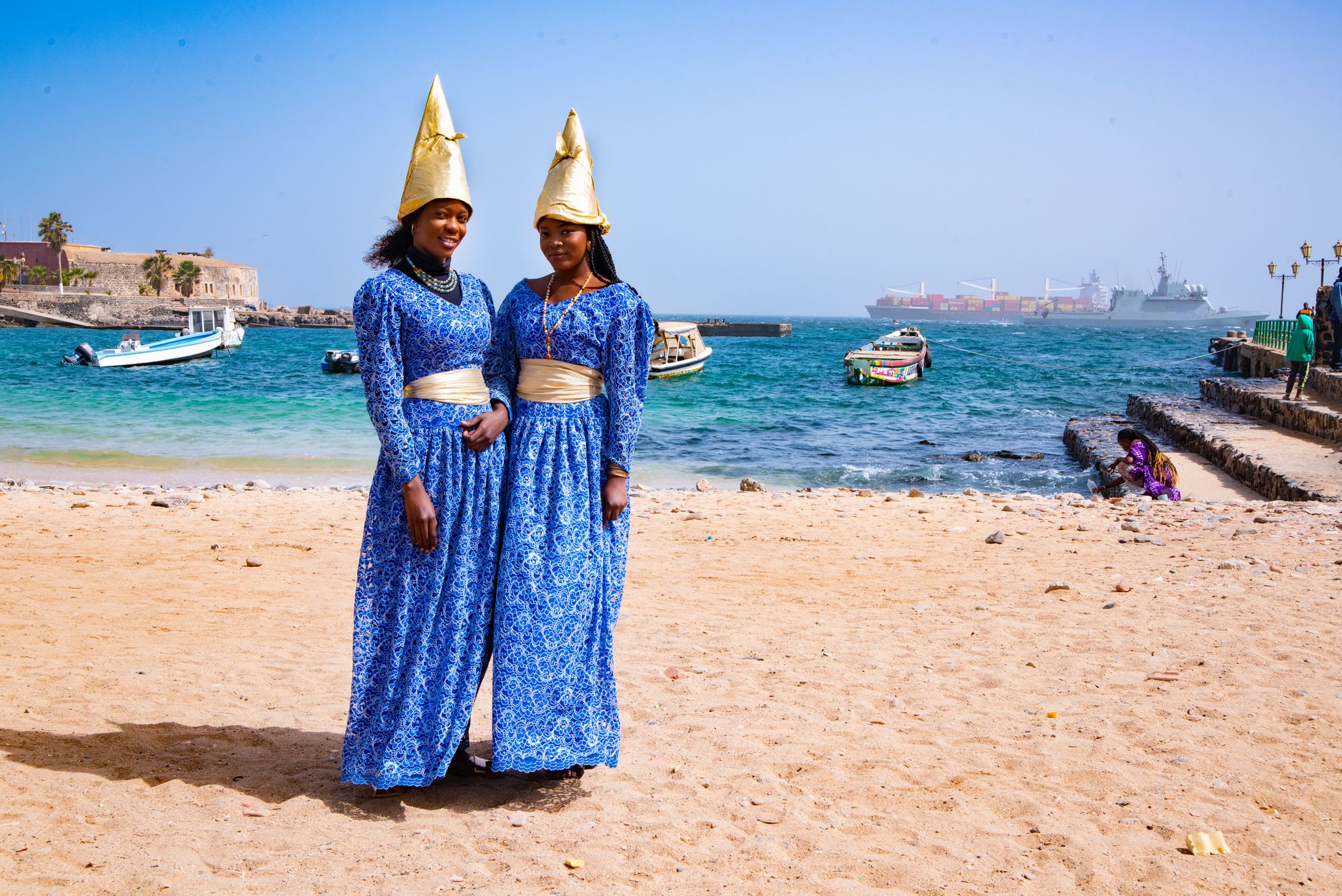
Two women wearing traditional attire stand on the shores of Dakar, Senegal, set against a vibrant coastal backdrop of boats and the Atlantic Ocean.
William Adams on Pexels · Pexels License
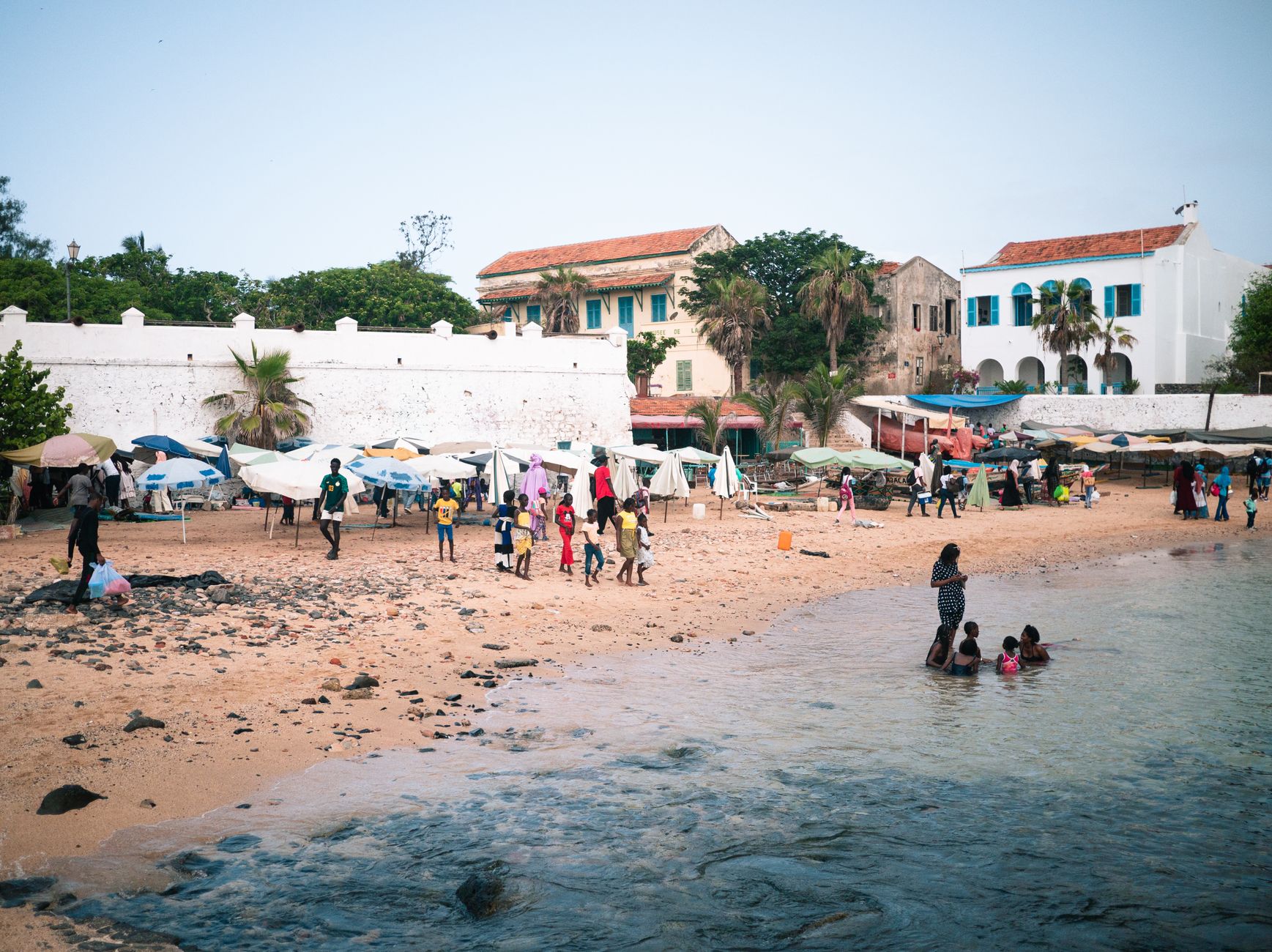
Locals and visitors enjoy a vibrant day on the beach in Dakar, Senegal, set against a backdrop of historic colonial architecture.
Amaury Michaux on Pexels · Pexels License
A view of Dakar, Senegal.
Ibn Koama · cc by-sa 4.0
A group of people prepare to board a boat along the sun-drenched coast of Dakar, Senegal, set against a backdrop of urban architecture.
Amaury Michaux on Pexels · Pexels License
An expansive aerial perspective of the densely populated city of Dakar, Senegal, showing its unique coastal geography and urban layout.
KaBa (KaaBaa) · cc by 3.0
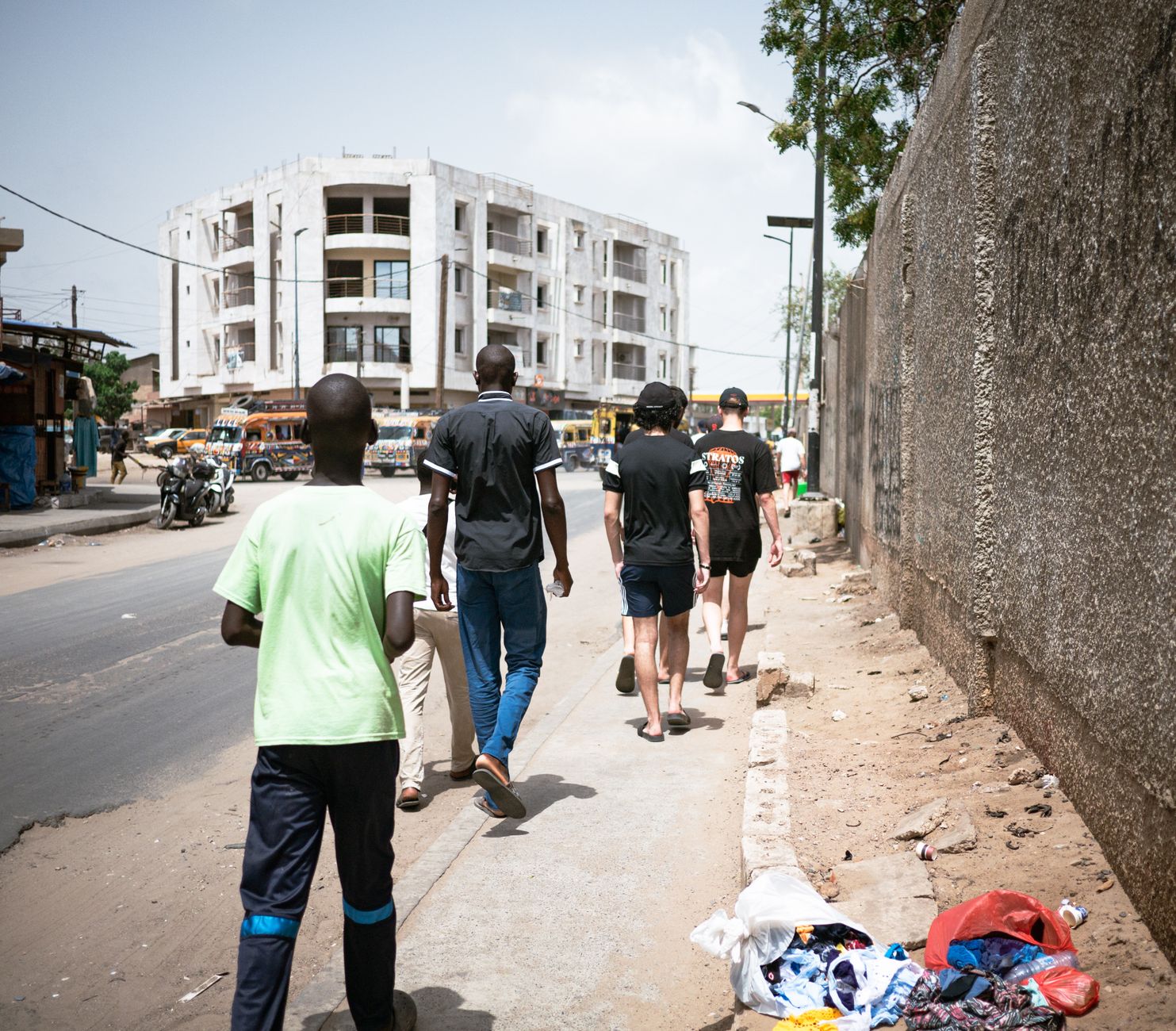
A diverse group of pedestrians walks along a sun-drenched sidewalk in Dakar, Senegal, set against a backdrop of modern urban architecture.
Amaury Michaux on Pexels · Pexels License
Traditional pirogues, intricately painted with vibrant patterns, line the sandy shores of Dakar, Senegal, under a soft, overcast sky.
Timon Cornelissen on Pexels · Pexels License
A vibrant street view in Dakar, Senegal, capturing the unique blend of local traffic, daily life, and the prominent architecture of a mosque under construction.
Yvcx Sanchez on Pexels · Pexels License
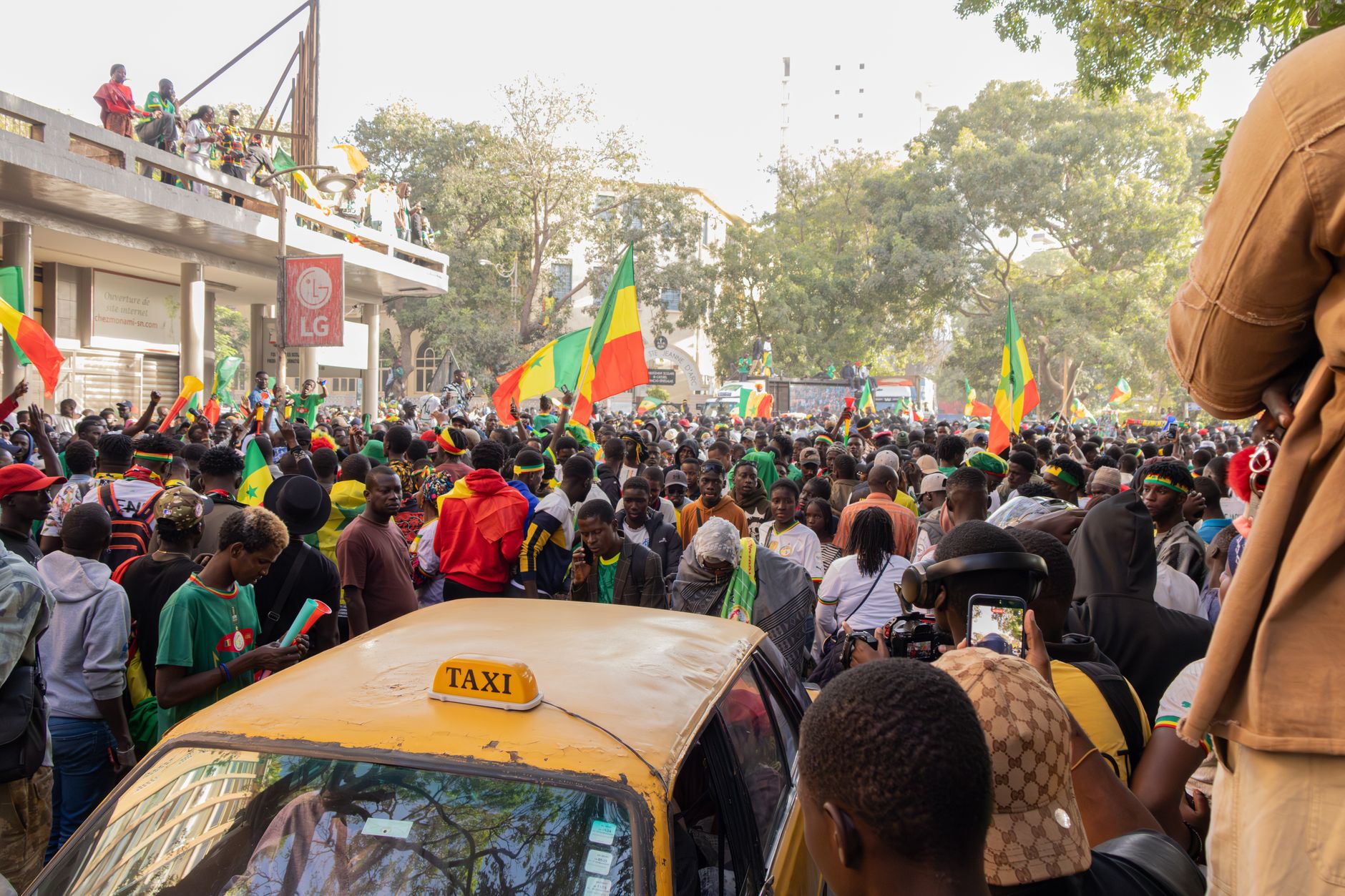
A lively crowd fills the streets of Dakar, Senegal, celebrating with national flags near a classic yellow taxi under the warm afternoon sun.
Felipe Esono Nguema on Pexels · Pexels License
Practical Information
Getting There
Blaise Diagne International Airport (DSS) is 60 km south-east of downtown; budget 90 min by DemDikk bus (6,000 CFA) or 60 min by negotiated taxi (from 25,000 CFA). There is no rail link to the terminal—TER trains terminate at Diamniadio, 20 km short. Overland, the N1 toll highway feeds north to Saint-Louis and south to The Gambia.
Getting Around
Dakar’s TER commuter rail runs 05:35–22:00 from downtown to Diamniadio every 10–15 min (1,500 CFA 2nd class). DemDikk air-con buses fan out from Gare Routière Baux Maraîchers but published route maps are scarce—ask the conductor. Taxis are unmetered: agree before you board; Yango and local app InDriver operate but driver supply is patchy. Dedicated cycle lanes do not exist; surfboards travel strapped to moto-taxis on the Corniche.
Climate & Best Time
Dry season (Nov–May) delivers 18–26 °C days, dusty harmattan mornings and almost zero rain—this is the sweet spot. June–October climbs to 28–32 °C with 70 % humidity and short, drenching storms; many galleries close in August. Hotel prices spike during Dak’Art in December and around the Dakar Rally (now in Saudi Arabia, but brand-loyal visitors still come).
Language & Currency
French is official; Wolof is what you’ll hear in taxis and markets. A polite ‘Nanga def?’ buys instant smiles. Currency is West African CFA (XOF) pegged at 655.96 = 1 €. ATMs are plentiful, but power cuts can disable them—carry small notes for thiof (grouper) sandwiches and museum entry.
Where to Eat
Don't Leave Without Trying
Chez Madame Biaye
local favoriteOrder: Try the Thiéboudienne, Dakar's national dish, served with fresh fish and vegetables.
A beloved local spot with a warm, family-run vibe. The food is authentic and the portions generous.
Sunu Gateaux
quick biteOrder: The Thiakry, a sweet millet couscous with yogurt, is a must-try dessert.
A 24-hour bakery with some of the best pastries and bread in Dakar. Perfect for a quick bite or a late-night snack.
Bar de l'amitié
cafeOrder: A cold local beer or a fresh fruit juice to cool off in the Dakar heat.
A cozy bar with a friendly atmosphere, perfect for a relaxed evening with friends.
G'ees sweetness
local favoriteOrder: The Yassa Poulet, a marinated chicken dish with caramelized onions and mustard, is a local favorite.
A small but charming spot known for its delicious Senegalese dishes and warm hospitality.
Tu
cafeOrder: A cup of Senegalese coffee or a fresh fruit smoothie to start your day.
A trendy cafe with a relaxed vibe, perfect for a morning coffee or an afternoon break.
Pâtisserie preira
quick biteOrder: The fresh croissants and pastries are a delight, especially in the morning.
A small bakery with a loyal following, known for its fresh and delicious pastries.
Express247
quick biteOrder: A quick snack or a cold drink to go, perfect for a late-night stop.
Open 24 hours, this bar is a lifesaver for late-night cravings or a quick bite.
Khaly Pub
cafeOrder: A cold beer or a local cocktail to enjoy with friends.
A lively pub with a great atmosphere, perfect for a night out with friends.
Dining Tips
- check Lunch is the main meal of the day in Dakar, especially for dishes like Thiéboudienne.
- check Eat with your right hand only, as it's traditional in Senegal.
- check Tipping is not obligatory but is appreciated, around 10% in tourist contexts.
- check Many places are cash-only, so carry small bills as change can be scarce.
- check Eat first, then drink after, following traditional Senegalese etiquette.
- check Communal eating is common, so eat from the section directly in front of you.
- check Men traditionally eat first, followed by women and then children in some settings.
- check The 3-round tea ceremony (attaya) is a social ritual often part of meals.
Restaurant data powered by Google
Tips for Visitors
Shows start at 2 a.m.
Live-music venues run on Dakar time: arrive after midnight or you’ll watch the band sound-check. Bring patience and a second wind.
Fix taxi price first
No meters. Agree the fare before you close the door—25 000 CFA is the floor for the 60 km ride from Blaise Diagne airport into town.
Eat lunch at midday
Thieboudienne is ready by 13:00 and sells out fast. Dinner is light; restaurants won’t serve the full menu at 19:00.
Climb the Renaissance statue
The 149-step spiral stairs inside the 50 m bronze monument give you the only 360° rooftop view over the Atlantic—go at sunset.
Gorée ferry hacks
Buy the 5 200 CFA return ticket at the quay, not from touts. First boat leaves at 06:45—beat the tour groups and have the slave house almost alone.
Visit Nov–Feb
Harmattan winds keep nights below 20 °C and skies postcard-clear. March-May is already hot; August humidity is brutal.
Explore the city with a personal guide in your pocket
Your Personal Curator, in Your Pocket.
Audio guides for 1,100+ cities across 96 countries. History, stories, and local insight — offline ready.
Audiala App
Available on iOS & Android
Join 50k+ Curators
Frequently Asked
Is Dakar worth visiting? add
Yes—few capitals mix this much contemporary African art, living Islamic culture and Atlantic surf scene in one peninsula. You can breakfast on a UNESCO slave-island, lunch on rice in a shared bowl with strangers, then dance to mbalax until the sun rises over the ocean.
How many days do I need in Dakar? add
Three full days covers Gorée Island, the Museum of Black Civilisations, the African Renaissance monument and a night in Almadies. Add two more if you want to surf Ngor, day-trip the pink Lac Rose or catch the Dak’Art biennial openings.
Is Dakar safe for solo female travellers? add
Generally yes—Senegal is one of West Africa’s most stable states. Expect catcalling in markets but violent crime is rare. Use Uber-equivalent apps at night, keep valuables out of Sandaga’s crowds and dress modestly away from the beach.
Do I need cash in Dakar? add
Absolutely. Most cafés, street food stalls and even some mid-range restaurants are cash-only. Withdraw CFA at airport ATMs; small notes help for 500 CFA dibi skewers and 1 500 CFA TER train tickets.
What language gets me further, French or English? add
French opens every door; Wolof greetings earn smiles. English works in hotels and galleries but stalls at neighbourhood thieb counters. Learn ‘Nanga def?’ (how are you?) and you’ll be handed the spoon first.
How do I get from Blaise Diagne airport to the city centre? add
Cheapest: DemDikk air-con bus (6 000 CFA, 90 min) drops near the stadium; add a 2 000 CFA taxi to Plateau. Fastest: negotiated taxi 25 000–30 000 CFA direct. TER train only reaches Diamniadio—skip unless you enjoy switching buses at midnight.
Sources
- verified UNESCO World Heritage Centre – Île de Gorée — Official listing details, integrity warnings and visitor numbers for Gorée Island.
- verified Dak’Art Biennale official site — Announced 2026 edition dates and distinction between IN and OFF exhibitions.
- verified Take Your Backpack – Senegal practical guide — Safety, language, tipping and cash advice from on-the-ground travellers.
- verified Afropop Worldwide – Dakar nightlife report Feb 2026 — Barra Mundi and Bazoff timings, mbalax set-lists and late-night culture.
- verified Scoot West Africa – DSS airport transport guide — Updated costs and schedules for DemDikk, taxis and TER connections.
Last reviewed: