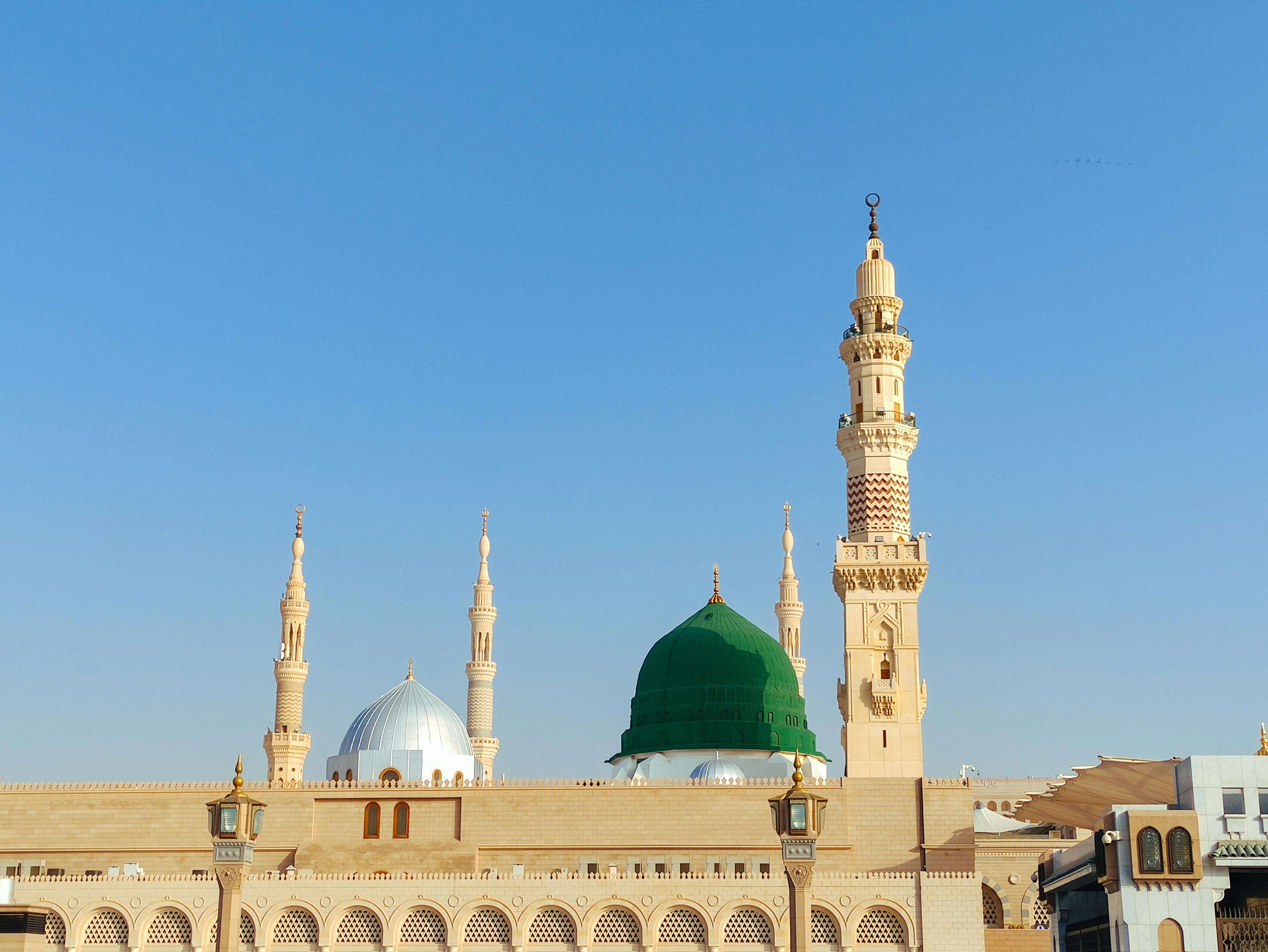
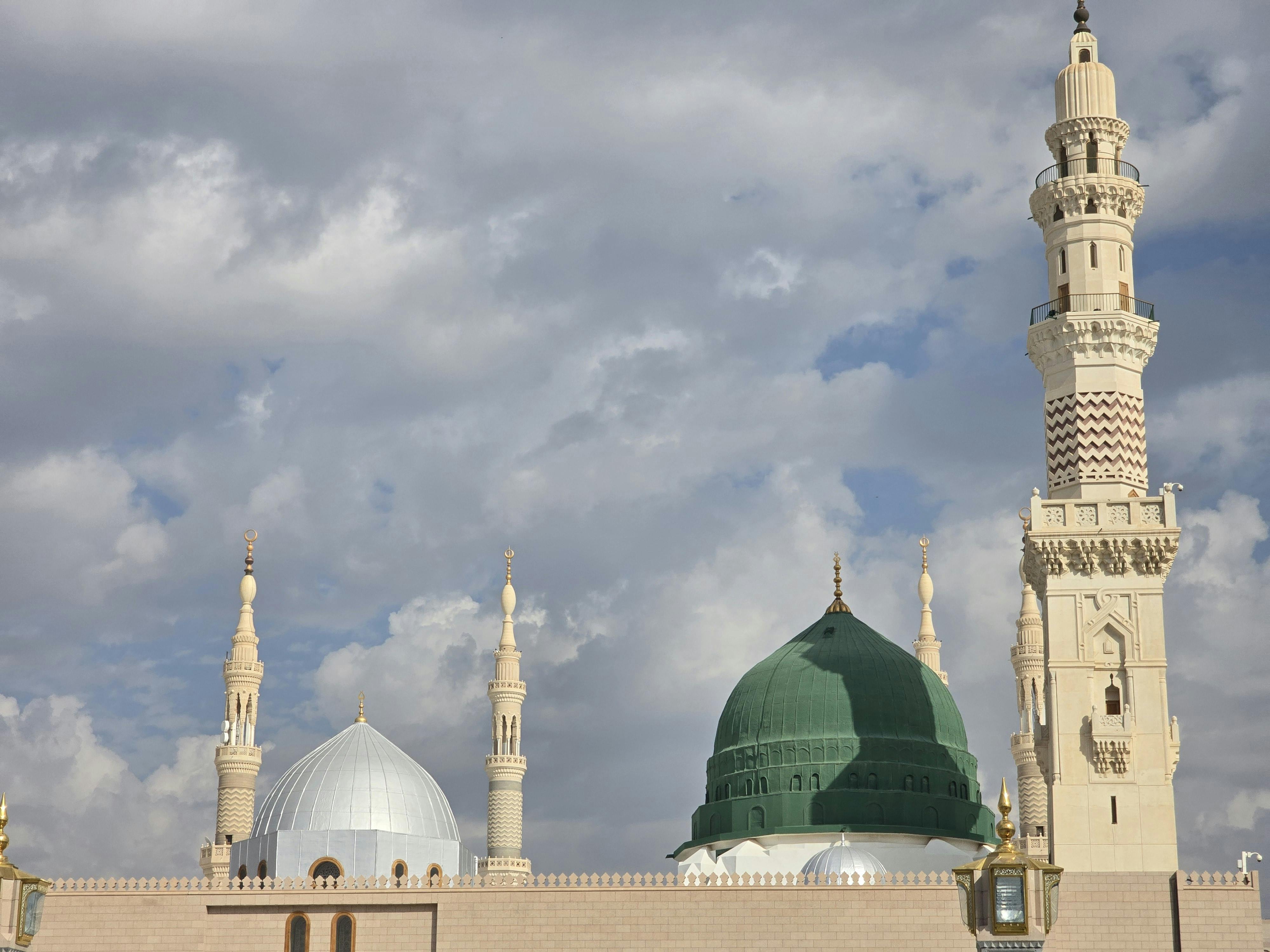
Plan and listen to Mosque Of Al-Saqiya with Audiala.
Audio guide in your pocket, itinerary in your browser. Built for the way you actually visit.
Introduction
The Mosque of Al-Saqiya (Masjid al-Saqiya) in Medina, Saudi Arabia, is a cherished testament to Islamic history, spirituality, and culture. Located within the historic Anbariya train station complex, this modest yet profoundly significant mosque is closely connected to pivotal moments in early Islam—most notably the Prophet Muhammad’s supplication for Medina and the preparations before the Battle of Badr in 624 CE. Its name is derived from the nearby Bir al-Saqiya well, associated with the Prophet’s companion Sa’d ibn Abi Waqqas, symbolizing sustenance and blessings for the early Muslim community (Prophetic Landmarks; Trek Zone).
Despite its unassuming size, the mosque’s historical and religious resonance makes it a notable destination for pilgrims, history enthusiasts, and travelers. Its central location, accessible from the Prophet’s Mosque and other major sites, further enhances its appeal. This comprehensive guide explores the history, religious significance, architecture, visiting hours, ticketing, accessibility, and practical travel tips for experiencing the Mosque of Al-Saqiya and its surroundings.
Historical Context and Religious Significance
Origins and Prophetic Connections
The Mosque of Al-Saqiya sits near the Anbariyah district and historic railway station grounds, tracing its name to a well owned by Sa’d ibn Abi Waqqas, a close companion of the Prophet (Prophetic Landmarks). It is renowned as the site where the Prophet Muhammad made a heartfelt supplication for Medina, asking Allah to bless the city and its people with double the blessings granted to Mecca. The mosque is also historically significant as the gathering point for the Prophet and his companions before the Battle of Badr—a defining moment in Islamic history.
The Prophetic Supplication
Ali ibn Abi Talib narrated the Prophet’s prayer for Medina:
“We went out with the Messenger of Allah (peace and blessings of Allah be upon him) until we were free of the Saqiyah that was for Sa’d ibn Abi Waqqas. The Messenger of Allah said: ‘O Allah, Abraham was Your servant and Your friend, and he called for blessings upon the people of Mecca. I am Your servant and Your Messenger, and I call upon You to bless the people of Medina in their measures and their weights, as You blessed the people of Mecca, and to grant them double the blessing.’”
(Prophetic Landmarks)
This supplication underscores Medina’s spiritual status and its enduring legacy within Islamic tradition.
The Battle of Badr
Before departing for the Battle of Badr, the Prophet and his companions prayed at this site, seeking divine guidance and support. The mosque thus serves as a symbol of faith, unity, and perseverance in the face of adversity (IslamReference.com).
Architectural Features and Preservation
The Mosque of Al-Saqiya exemplifies early Islamic architectural simplicity. Constructed with locally sourced stone and brick, the mosque features thick walls, a single wooden entrance door with geometric carvings, and a modest cylindrical minaret. The prayer hall, illuminated by natural light from high-set windows, is adorned with simple carpets and subtle calligraphic decorations referencing the Prophet’s supplication.
Restoration efforts have aimed to preserve the mosque’s original materials and appearance, employing discreet modern reinforcement to protect against environmental wear while retaining historical integrity (Life in Saudi Arabia). The adjacent Bir al-Saqiya well site and shaded courtyard with date palms enhance the atmosphere of tranquility and reflection.
Location, Directions, and Accessibility
Location and Proximity
- Address: Al-Suqya district, Medina, near the intersection of Al-Suqya Street and Prince Abdul Majeed Road, within the Anbariya train station complex.
- Coordinates: Approx. 24.4592° N, 39.6011° E
- Distance from Prophet’s Mosque: About 1.5–2 km (20-minute walk) (Trek Zone).
Getting There
- On Foot: Easily walkable from Al-Masjid an-Nabawi and other central landmarks.
- By Taxi/Ride-Hailing: Widely available (Uber, Careem).
- By Public Transport: Buses serve the area; the Anbariya train station is a key landmark (Visit Al Madinah).
- By Car: Parking is available near the station, but may be limited during peak times.
Accessibility
While the mosque has basic facilities such as ablution areas and restrooms, its traditional design means wheelchair access is somewhat limited. Arranging assistance in advance is recommended for differently-abled visitors.
Visiting Hours, Tickets, and Entry
- Opening Hours: Generally open daily from early morning (around 5:00 AM) until after evening prayer (about 9:00 PM). Hours may vary during Ramadan and religious holidays; verify locally for updates.
- Entry Fee: Free; no tickets required. Donations for mosque upkeep are welcome (Life in Saudi Arabia).
- Best Times to Visit: Early mornings or late afternoons offer a quieter atmosphere and optimal lighting for photography. Weekdays are less crowded than weekends.
Etiquette, Dress Code, and Visitor Conduct
- Dress Code:
- Men: Long trousers and sleeves.
- Women: Loose-fitting, ankle-length clothing and a headscarf. Abaya recommended but not required for non-Muslim women (Visit Al Madinah, Intosaudia).
- Shoes: Remove before entering; racks provided (The Islamic Information).
- Silence and Respect: Maintain a quiet, reverent demeanor.
- Photography: Ask permission before photographing people or inside the prayer hall.
- Food and Drink: Not permitted inside; during Ramadan, refrain from eating/drinking in public during daylight (Intosaudia).
- Gender Segregation: Separate areas for men and women; observe signage and staff instructions.
Facilities and Amenities
- Prayer Hall: Modest size, suitable for small congregations.
- Ablution Areas: Separate for men and women; basic facilities—bring personal towels or tissues.
- Restrooms: Available, but basic.
- Parking: Limited, especially during peak seasons.
- Nearby Amenities: Small shops, cafés, and a range of hotels within walking distance, particularly near the Prophet’s Mosque (Audiala).
- Other Attractions: Hejaz Railway Museum, Green Dome, Al-Baqi’ Cemetery, and more (Trek Zone).
Guided Tours and Educational Value
While there are no official guided tours dedicated solely to the Mosque of Al-Saqiya, many Medina historical tours include it as part of a broader itinerary. Local guides can offer deeper historical context and spiritual insights (Audiala).
The mosque is also a focal point for educational and cultural programs, helping visitors—Muslim and non-Muslim alike—understand Medina’s foundational role in Islamic civilization.
Nearby Attractions
- Al-Masjid an-Nabawi (The Prophet’s Mosque): Islam’s second holiest site, renowned for its green dome and spiritual importance (makaremhotels.com; meccamedina.net).
- Quba Mosque: The first mosque in Islamic history, located about 3 km south of Al-Masjid an-Nabawi (myholidays.com).
- Masjid al-Qiblatain: Famous for the change of qibla from Jerusalem to Mecca (meccamedina.net).
- The Seven Mosques (Saba Masajid): Linked to the Battle of the Trench (myholidays.com).
- Mount Uhud: Site of the Battle of Uhud, with graves of martyrs and panoramic views (makemytrip.com).
- Jannat al-Baqi Cemetery: Burial place of many early Islamic figures (meccamedina.net).
- AlMadina Museum and Dar Al Madinah Museum: Extensive exhibits on Medina’s history (travelsetu.com).
- King Fahd Central Park: Green oasis for relaxation (makemytrip.com).
- Yanbu Al Bahr: Historic port town on the Red Sea, suitable for day trips (myholidays.com).
Practical Travel Tips
- Access: Most of Medina is open to non-Muslim tourists, though the Prophet’s Mosque and its immediate vicinity remain restricted (kosupatravel.com).
- Identification: Carry your passport or a copy; security checks are common.
- Dress and Etiquette: Modest clothing required; observe local customs (kosupatravel.com).
- Photography: Be sensitive during prayers and avoid photographing people without permission.
- Transportation: Taxis and ride-hailing apps are convenient; many attractions are within walking distance.
- Accommodation: Numerous hotel options near the Prophet’s Mosque; book early during peak seasons (kosupatravel.com).
- Best Time to Visit: October to March for milder weather (myholidays.com).
- Food: Wide selection of local and international cuisine around religious sites.
- Safety: Medina is very safe; bottled water is widely available.
- Language: Arabic is official, but English is commonly used in tourist areas.
Frequently Asked Questions (FAQs)
Q: What are the visiting hours for the Mosque of Al-Saqiya?
A: The mosque is open daily from early morning (around 5:00 AM) to evening (about 9:00 PM), but hours may vary during religious occasions.
Q: Is there an entry fee?
A: No, entry is free for all visitors.
Q: Can non-Muslims visit the Mosque of Al-Saqiya?
A: Yes, unlike some other religious sites in Medina, non-Muslims may visit the Mosque of Al-Saqiya.
Q: Are guided tours available?
A: While no official tours are dedicated to this mosque alone, local guides and broader historical tours often include it.
Q: Is the mosque accessible for people with disabilities?
A: Basic accessibility is provided, but some areas may present challenges due to the mosque’s historic structure.
Summary Table: Key Visitor Information
| Feature | Details |
|---|---|
| Location | Inside Anbariya train station, Medina, Saudi Arabia |
| Distance from Prophet’s Mosque | ~1.5–2 km (20 min walk) |
| Visiting Hours | Open daily, 5:00 AM–9:00 PM (may vary during holidays) |
| Entry Fee | Free |
| Dress Code | Modest attire; headscarf for women, long trousers for men |
| Facilities | Prayer hall, ablution area, restrooms, limited parking |
| Accessibility | Generally accessible, but some uneven surfaces |
| Nearby Attractions | Hejaz Railway Museum, Prophet’s Mosque, Green Dome, Al-Baqi’ Cemetery, Quba Mosque |
| Transport Options | Walking, taxi, ride-hailing, public transport, car rental |
| Language | Arabic (English widely understood in tourist areas) |
Listen to the full story in the app
The whole Mosque Of Al-Saqiya,
told well.
Audio guides for 1,100+ cities across 96 countries. History, stories, and local insight — offline ready.

Verified, and shown.
Researched and written by the Audiala editorial team from historical records, architectural archives, and local expertise.
Researched from Wikidata, Wikipedia & official sources · fact-checked · How we make our guides →