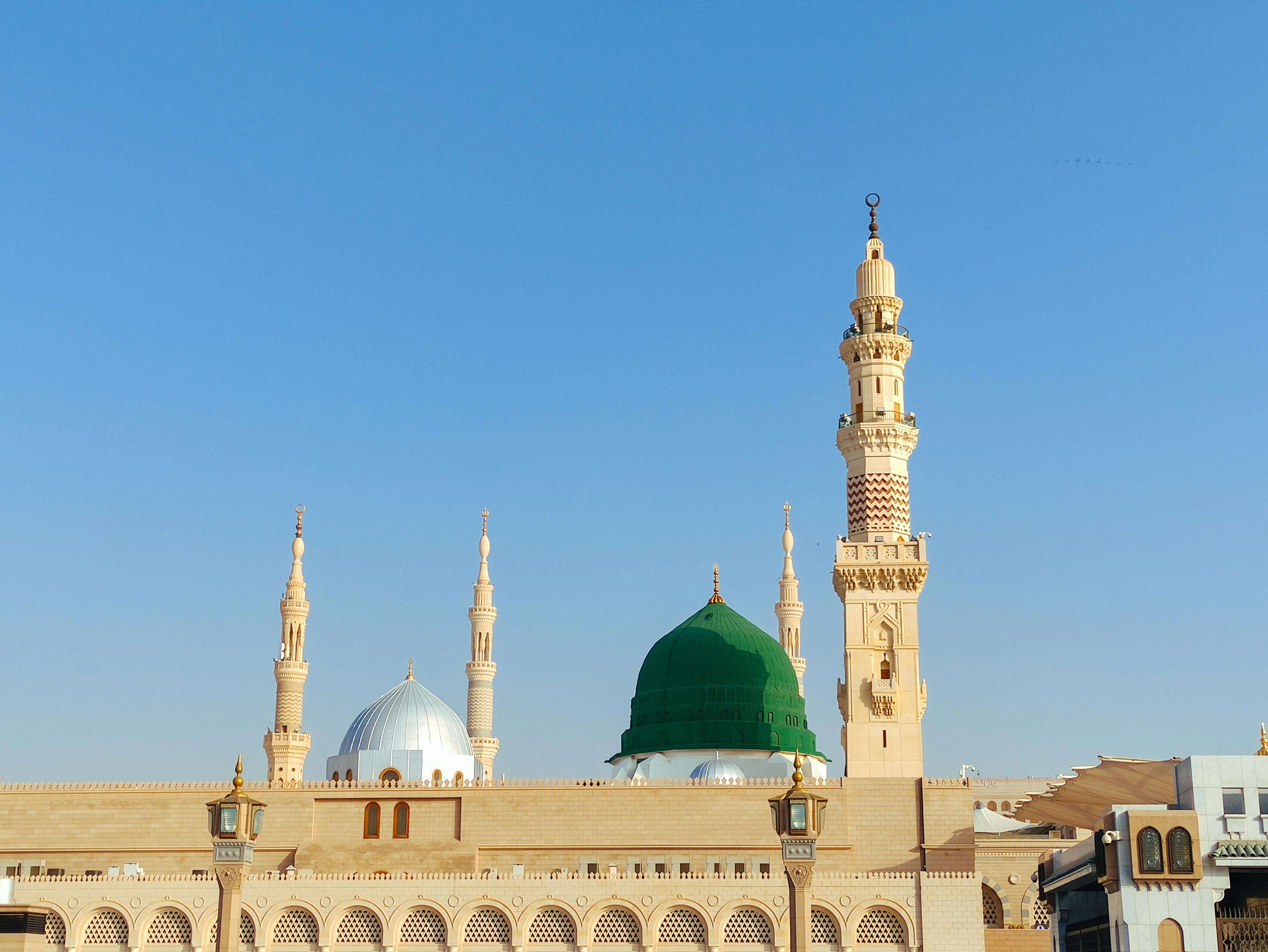
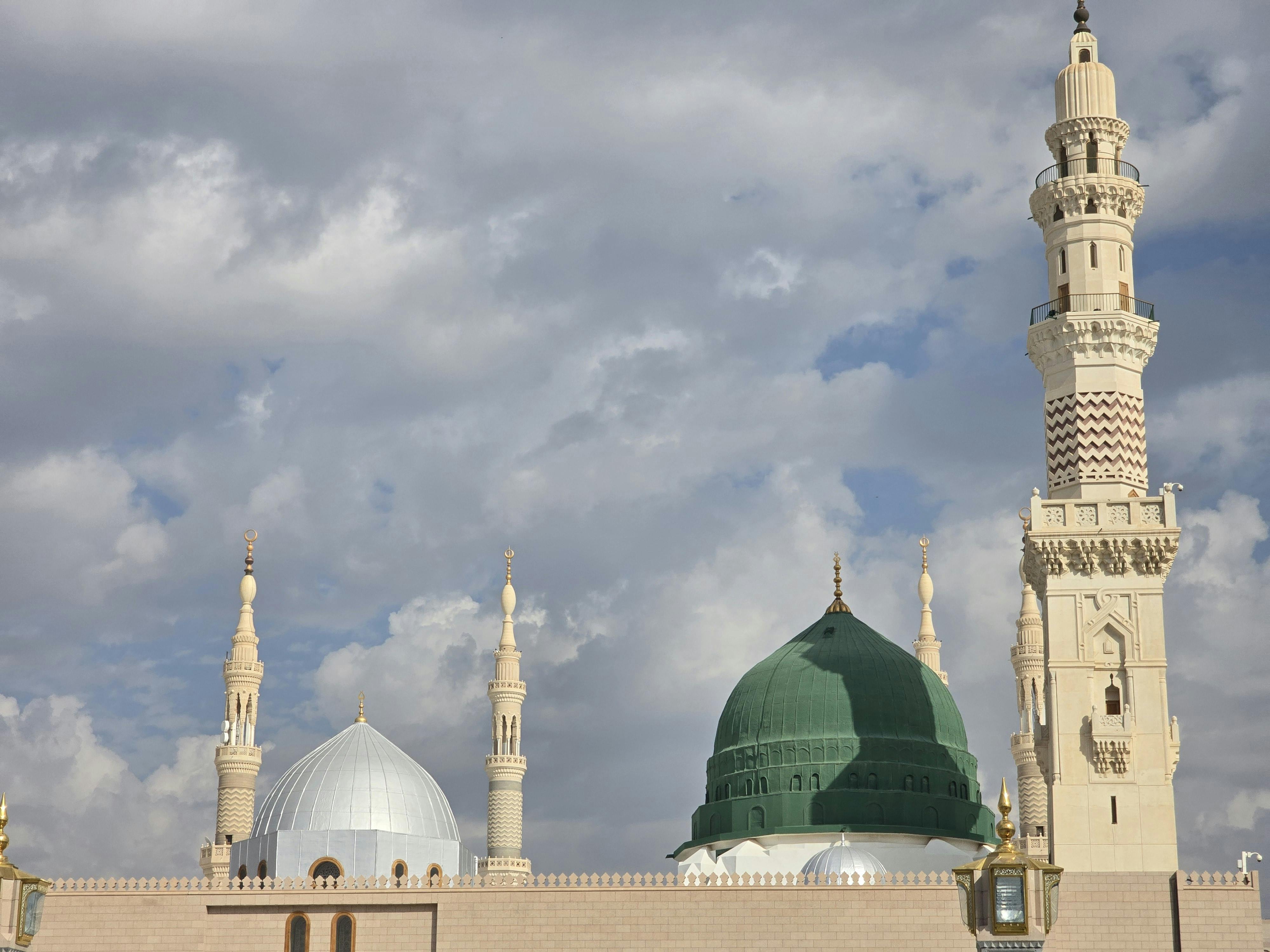
Plan and listen to Mosque Of Al-Fadeekh with Audiala.
Audio guide in your pocket, itinerary in your browser. Built for the way you actually visit.
Introduction
The Mosque of Al-Fadeekh (Masjid al-Fadeekh), located in the sacred city of Medina, Saudi Arabia, is a site of deep spiritual and historical resonance. Unlike the grand Masjid an-Nabawi or Quba Mosque, Al-Fadeekh is modest in scale but rich in significance. It marks a transformative moment in Islamic history: the site where the Quranic prohibition of intoxicants was revealed and immediately obeyed by the Prophet Muhammad’s companions, who poured out their stocks of date wine. This act of collective obedience and reform is etched into the fabric of the mosque’s legacy.
This guide provides a comprehensive overview of the Mosque of Al-Fadeekh, including its history, religious and cultural significance, practical visitor information, accessibility details, and tips for exploring nearby attractions. Whether you are on a spiritual pilgrimage or an exploration of Islamic heritage, understanding the story and context of this mosque will enrich your experience in Medina.
For the latest visitor information, immersive audio guides, and travel planning tools, platforms such as the Audiala app and official tourism resources are invaluable (madainproject.com, besidestheobvious.net).
Historical Background
Pre-Islamic Medina (Yathrib)
Medina, formerly known as Yathrib, was an oasis settlement inhabited by Arab and Jewish tribes who cultivated the land and engaged in caravan trade (madainproject.com). These tribal communities established a vibrant, if often contentious, society prior to Islam’s advent.
The Prophet’s Arrival and the Birth of the Islamic Community
The migration (Hijrah) of Prophet Muhammad (PBUH) from Mecca to Yathrib in 622 CE marked a pivotal transformation. Yathrib became al-Madinah al-Munawwarah (the Enlightened City), serving as the first Islamic polity and center for religious, social, and legal reforms (mexicohistorico.com).
Foundation of Al-Fadeekh Mosque
Masjid al-Fadeekh, also called Masjid al-Shams or Masjid al-Ansar, is closely tied to a significant event: the Quranic prohibition of alcohol. The companions of the Prophet poured out their date wine here in direct response to the divine command, giving the mosque its name and symbolic status (madainproject.com).
Architectural Evolution
The mosque’s design has evolved across centuries, reflecting influences from the Rashidun, Umayyad, Abbasid, and Ottoman eras. Despite renovations, it maintains a humble form, preserving its authenticity as a site of reflection and remembrance (wikipedia.org).
Religious and Cultural Significance
Quranic Revelation and Social Reform
The defining event at Al-Fadeekh is the companions’ immediate compliance with the Quranic prohibition of intoxicants (Surah Al-Ma’idah 5:90-91). This act represents both religious obedience and a major social reform in Medina’s early Muslim community (madainproject.com).
Connection to the Prophet and Companions
The mosque is associated with the Prophet’s daily life and moments of adversity, such as prayers offered during the siege of Banu Nadir. It stands as a testament to the resilience and unity of the early Muslims (besidestheobvious.net).
Symbol of Communal Change
Al-Fadeekh embodies Medina’s role as the birthplace of Islamic law and ethics. The rapid abandonment of alcohol by the community sets a precedent for moral responsibility and collective transformation.
Integration into Heritage Routes
The mosque is often included in Medina’s “Seven Mosques” heritage trail, providing a cohesive narrative of the city’s spiritual legacy (besidestheobvious.net).
Architectural Features
Al-Fadeekh Mosque is characterized by its simple prayer hall, small minaret, and understated courtyard. Renovations have preserved its modest scale and historical ambiance. Located in the Al-Fadeekh district, it is near several other major sites and is easily accessible (regencyholidays.com).
Visiting Information
Visiting Hours
- Opening Times: Generally from 6:00 AM to 8:00 PM, with variations during Ramadan and major Islamic holidays.
- Best Time to Visit: Early morning or late afternoon to avoid crowds and heat.
Entry and Tickets
- Admission: Free of charge for all Muslim visitors.
- Non-Muslim Access: Non-Muslims cannot enter mosques in Medina but may view exteriors and learn through tours.
Dress Code and Etiquette
- Dress modestly (men: long trousers and sleeves; women: abaya and headscarf).
- Remove shoes before entering the prayer area.
- Maintain decorum: keep noise low, refrain from eating/drinking inside, and ask permission before photographing people.
Accessibility and Facilities
- Mobility: The mosque features ramps and walkways for visitors with disabilities.
- Facilities: Basic wudu (ablution) areas and limited restrooms. No retail or dining facilities on site.
- Transport: Accessible by taxi, ride-hailing apps, or as part of guided tours.
Nearby Attractions
Major Religious Sites
- Al-Masjid an-Nabawi: The Prophet’s Mosque, Medina’s spiritual heart (Wikipedia), (Audiala).
- Masjid Quba: The first mosque in Islam (Saudi Arabia Immigration).
- Masjid Al-Qiblatain: Where the qibla direction changed (Agoda).
- Al-Baqi Cemetery: Resting place of Prophet’s family and companions.
- The Seven Mosques: Sites commemorating early Islamic battles (The Simple Travel).
- Mount Uhud: Site of the Battle of Uhud and Archers’ Hill (MakeMyTrip).
- Dar Al Madinah Museum: Exhibition of Medina’s history and Prophet’s life (Saudi Arabia Immigration).
Cultural and Community Experiences
- Traditional Souks: Lively markets for textiles, spices, and handicrafts (Hejaz e Moqaddus).
- Local Cuisine: Sample kabsa, dates, and Arabic coffee in local restaurants.
- Religious Lectures: Attend events and lectures at major mosques (Agoda).
- Hop-On, Hop-Off Bus: Convenient sightseeing option (The Simple Travel).
- Date Farms: Tour traditional date plantations (Nomadic Samuel).
Practical Travel Tips
- Transport: Use taxis or ride-hailing for distant sites (Visit Al Madinah).
- Accommodation: Book hotels near major mosques, especially during peak seasons (Agoda).
- Best Season: October to March is most comfortable.
- Customs: Respect prayer times, dress codes, and local etiquette.
- Safety: Medina is very safe, but always take standard precautions (againstthecompass.com).
Unique Spiritual Experiences
- Prayer Services: Join or observe congregational prayers for a profound spiritual atmosphere.
- Al Hijrah Walk: Follow the Prophet’s migration route (Trip.com).
- Natural Landscapes: Visit Wadi Aqiq and Wadi E Jinn for reflection (MakeMyTrip).
Frequently Asked Questions (FAQ)
Q: What are the visiting hours for the Mosque of Al-Fadeekh?
A: Generally 6:00 AM to 8:00 PM, with possible changes during Ramadan and holidays.
Q: Is there an entry fee?
A: No, entry is free for all Muslims.
Q: Are guided tours available?
A: Yes, through local operators or the Audiala app.
Q: Can non-Muslims visit the mosque?
A: Non-Muslims cannot enter, but may view exteriors and join educational tours nearby (thetravelersbuddy.com).
Q: Is the mosque accessible for people with disabilities?
A: Yes, there are ramps and paved walkways.
Visuals and Media


For more virtual tours and images, visit the Audiala app or official Medina tourism websites.
Summary and Final Tips
The Mosque of Al-Fadeekh represents a unique chapter in Medina’s history—symbolizing the early Muslim community’s obedience, resilience, and spiritual growth. Its modest stature belies its profound role as a site of religious transformation and community identity. When planning your visit, combine Al-Fadeekh with other significant sites, respect local customs, and take advantage of guided tours and digital resources for a meaningful and informed experience.
For further information and planning, consult resources such as madainproject.com, lifeinsaudiarabia.net, and the Audiala app.
Listen to the full story in the app
The whole Mosque Of Al-Fadeekh,
told well.
Audio guides for 1,100+ cities across 96 countries. History, stories, and local insight — offline ready.

Verified, and shown.
Researched and written by the Audiala editorial team from historical records, architectural archives, and local expertise.
Researched from Wikidata, Wikipedia & official sources · fact-checked · How we make our guides →