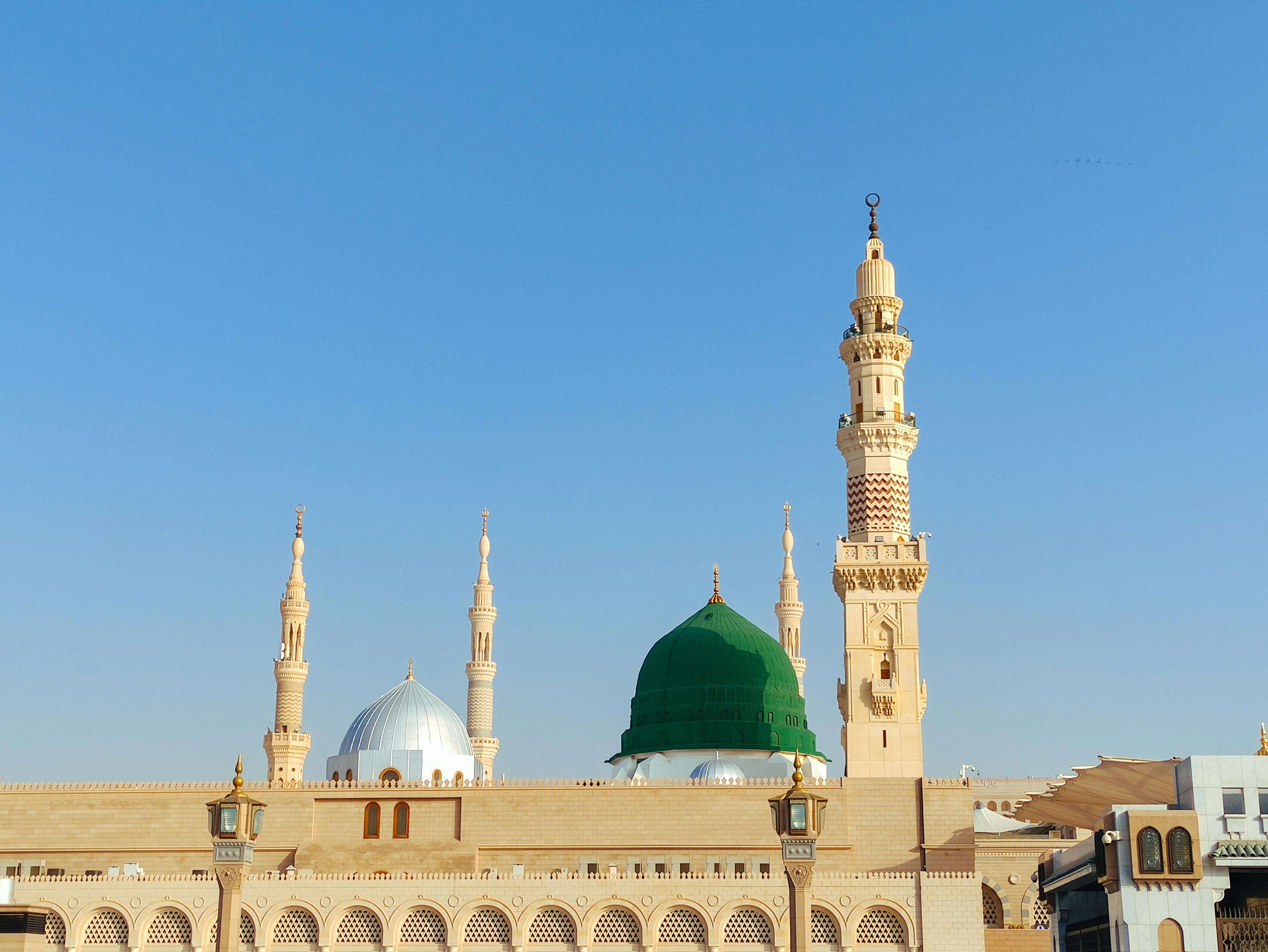
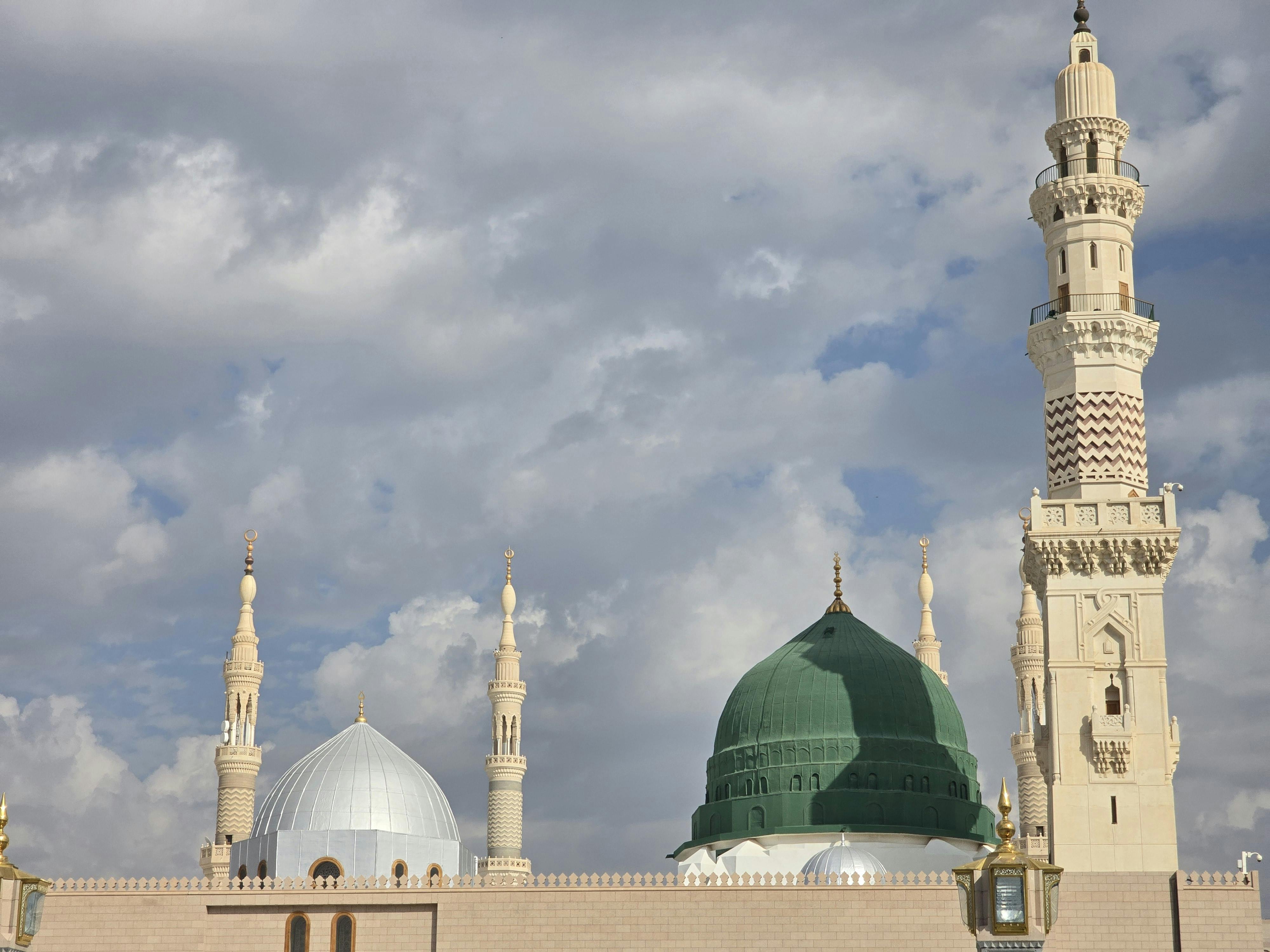
Plan and listen to Manartain Mosque with Audiala.
Audio guide in your pocket, itinerary in your browser. Built for the way you actually visit.
Introduction
Nestled between two natural hills in the historic city of Medina, Saudi Arabia, the Manartain Mosque—also known as Al-Manaratain Mosque or Masjid al-Manaratain—stands as a distinctive spiritual and cultural landmark. With origins tracing back to the early Islamic period and associations with the Bani Dinar tribe, this mosque embodies Medina’s enduring legacy as a center of faith, scholarship, and community. The name “Manartain,” meaning “the two minarets” or “the two beacons,” references the mosque’s unique placement between two hills, which enhances its tranquil atmosphere and historical resonance (Regency Holidays; Wikipedia).
This article provides a comprehensive guide to Manartain Mosque—including its historical background, religious significance, architectural highlights, visitor information, practical tips, nearby attractions, and etiquette. Whether you are a pilgrim, a history aficionado, or a cultural traveler, this resource is designed to help you plan a meaningful visit and appreciate the mosque’s place within Medina’s sacred landscape.

Historical Background
Origins and Early Development
The Manartain Mosque’s foundations were laid by the companions of the Prophet Muhammad (Sahabah) and the Bani Dinar tribe, making it one of Medina’s oldest surviving mosques (Wikipedia). Its initial construction utilized locally sourced volcanic rock for durability and climate adaptation, reflecting the simple, functional style of early Islamic architecture. The mosque’s location—between two prominent hills—provided a natural landmark and a calm setting for worship and reflection.
Renovations and Modernization
Throughout the centuries, Manartain Mosque has seen various phases of renovation. The most significant restoration occurred in 2003 during the reign of King Fahd bin Abdulaziz, when the mosque was expanded and modernized to accommodate a growing number of worshippers. This project preserved the mosque’s historic character while introducing improved lighting, ventilation, and accessibility features (Hajj Umrah Planner). The careful blending of traditional motifs with modern amenities ensures the mosque remains both a heritage site and a functional center for community life.
Connection to Medina’s Heritage
Medina’s landscape is dotted with significant mosques and sites commemorating early Islamic history, and Manartain Mosque is part of this sacred tapestry. Its location near al-Anbariya and the old main road to Mecca historically made it accessible to travelers and pilgrims, reinforcing its role as a spiritual and communal hub (MexicoHistorico).
Religious and Cultural Significance
Spiritual Importance
While not as globally renowned as the Prophet’s Mosque or Quba Mosque, Manartain Mosque holds a special place for Medina’s residents and visitors. Its serene environment offers solace for reflection and prayer, and its connection to the Bani Dinar tribe highlights its long-standing communal role (Regency Holidays).
Role in Pilgrimage and Worship
Though not a primary destination for Hajj or Umrah, Manartain Mosque is frequently included in local pilgrimage routes and historical tours. It is open 24 hours daily, allowing worshippers and visitors flexibility and access throughout the day and night (Besides the Obvious).
Community and Educational Functions
The mosque serves as a center for religious education, Quranic study, and community events. Its facilities are inclusive, providing prayer spaces for women and children and fostering an environment of hospitality and social cohesion (MexicoHistorico).
Architectural Highlights
Design and Layout
- Location: In the southern Al-Khudhar neighborhood, along the old main road to Mecca.
- Materials: Built primarily from local volcanic stone, with thick walls for insulation.
- Prayer Hall: Originally a simple rectangular hall, now expanded yet retaining its modest scale.
- Mihrab: Features a simple, functional recess indicating the qibla.
- Minarets: The “two minarets” metaphorically reference the flanking hills; later renovations may include modest decorative towers.
Restoration Approach
The 2003 restoration prioritized structural reinforcement, expansion to accommodate more worshippers, and the addition of modern amenities while maintaining harmony with the mosque’s historical essence (Wikipedia; Hajj Umrah Planner).
Visiting Manartain Mosque: Practical Information
Visiting Hours
The mosque is generally open 24 hours a day, though practical visiting is best from early morning (Fajr prayer) until after the Isha prayer. Hours may vary during Ramadan and other religious seasons.
Entry and Tickets
There is no entry fee or ticket required—Manartain Mosque is freely accessible to all.
Directions and Accessibility
- Location: Al-Khudhar area, behind Al-‘Assaf gas station, along the old Mecca road.
- By Car/Taxi: About 15–20 minutes from central Medina or Masjid al-Nabawi.
- Public Transport: Limited bus routes; taxis and ride-hailing apps recommended.
- Parking: Limited, especially during peak times; arrive early if driving.
- Accessibility: Ramps and basic facilities are available, but may not be as advanced as in larger mosques.
Dress Code and Visitor Etiquette
- Dress Modestly: Men should wear long trousers and sleeves; women must cover arms, legs, and hair (Agoda).
- Remove Shoes: Before entering prayer areas.
- Behavior: Maintain silence and respect; avoid photography during prayers, and always seek permission if photographing the mosque or worshippers.
Guided Tours and Multimedia
Occasional guided tours are available through local agencies. Virtual tours and online galleries can provide additional context and visuals (Besides the Obvious).
Nearby Attractions
Visiting Manartain Mosque can be combined with other Medina highlights:
- Al-Masjid an-Nabawi (The Prophet’s Mosque): The second holiest site in Islam.
- Quba Mosque: The first mosque in Islamic history (Wasalt Blog).
- Anbariya Mosque: Notable for Ottoman architecture.
- Mount Uhud: Historic battle site.
- Wadi Aqeeq: Valley of spiritual significance.
- Dates Market (Souq Al-Tamar): Vibrant market for local dates.
- King Fahd Central Park & The Holy Quran Exhibition: Relax and learn more about Islamic heritage.
Practical Tips
- Best Time to Visit: October through March for milder weather; early mornings and late afternoons are pleasant and less crowded.
- Hydration: Carry water, especially in warmer months.
- Language: Arabic is primary, but English is widely understood in tourist areas.
- Safety: Medina is safe; standard travel precautions apply.
Frequently Asked Questions (FAQs)
Q: What are the visiting hours of Manartain Mosque?
A: The mosque is open 24 hours daily, but most visits are recommended between Fajr and Isha prayers.
Q: Is there an entry fee or ticket required?
A: No, entry is free for all visitors.
Q: Are guided tours available?
A: Occasionally, through local agencies or as part of broader Medina historical tours.
Q: How do I get to Manartain Mosque?
A: By car or taxi from central Medina; ride-hailing apps are convenient.
Q: Is the mosque accessible for people with disabilities?
A: Basic accessibility features are available; plan ahead if you have specific needs.
Q: Can I take photos inside the mosque?
A: Only with permission and not during prayers.
Listen to the full story in the app
The whole Manartain Mosque,
told well.
Audio guides for 1,100+ cities across 96 countries. History, stories, and local insight — offline ready.
Verified, and shown.
Researched and written by the Audiala editorial team from historical records, architectural archives, and local expertise.
Researched from Wikidata, Wikipedia & official sources · fact-checked · How we make our guides →