Plan and listen to Amberiye Mosque with Audiala.
Audio guide in your pocket, itinerary in your browser. Built for the way you actually visit.
Introduction
The Amberiye Mosque (Masjid al-Anbariya), nestled in the historic heart of Medina, Saudi Arabia, is a celebrated Ottoman-era landmark that seamlessly blends spiritual significance with architectural and historical value. Erected in 1908 under Sultan Abdulhamid II, the mosque was constructed in conjunction with the transformative Hejaz Railway project, designed to ease pilgrimage from Damascus to Medina and onward to Mecca. The mosque stands today as a living testament to the Ottoman Empire’s vision of modernization interwoven with religious tradition, serving both as a sanctuary for travelers and a prominent symbol of Ottoman heritage in the region (makemytrip.com; Regency Holidays).
Strategically located beside the historic Medina railway station, Amberiye Mosque embodies late Ottoman architectural elegance—characterized by domes, arched windows, and intricate decoration—while providing visitors with a gateway to Medina’s pivotal era of cultural exchange and infrastructural progress (makemytrip.com; nabataea.net). This guide offers a detailed exploration of the mosque’s history, architecture, spiritual role, and practical information regarding visiting hours, tickets, accessibility, and nearby attractions. Additionally, it highlights the adjacent Hejaz Railway Museum, enriching your understanding of Medina’s layered past (visitalmadinah.com; besidestheobvious.net).
Ottoman Origins and Construction
Amberiye Mosque was commissioned as part of the late Ottoman modernization drive, directly linked to the completion of the Hejaz Railway in 1908. Sultan Abdulhamid II envisioned the project to facilitate the Hajj pilgrimage and reinforce the empire’s presence in the holy cities (makemytrip.com). The mosque’s proximity to the Medina railway station was a deliberate design, serving as a spiritual and cultural haven for arriving pilgrims.
The mosque’s name, derived from the Turkish “Anbariya,” reflects its roots in Ottoman heritage and its role as a bridge between faith, infrastructure, and community.
The Hejaz Railway: Vision and Impact
Vision and Purpose
The Hejaz Railway was conceived to transform the arduous, months-long journey of pilgrims from Damascus to Medina. By reducing travel time to mere days, it revolutionized pilgrimage logistics and enhanced Ottoman authority and connectivity in the region (nabataea.net).
Engineering Feats
Spanning approximately 1,320 kilometers, the railway included hundreds of bridges, tunnels, and stations—an extraordinary feat for its era. Sultan Abdulhamid II’s reverence for Medina’s sanctity led him to order felt lining near the Prophet’s Mosque to minimize vibrations (turkiyetoday.com).
Impact on Pilgrimage and Connectivity
The railway swiftly became a vital conduit for Hajj pilgrims and regional commerce, and Amberiye Mosque—situated at the gateway to Medina—emerged as both a spiritual and logistical landmark (nabataea.net).
Architectural Features and Ottoman Influence
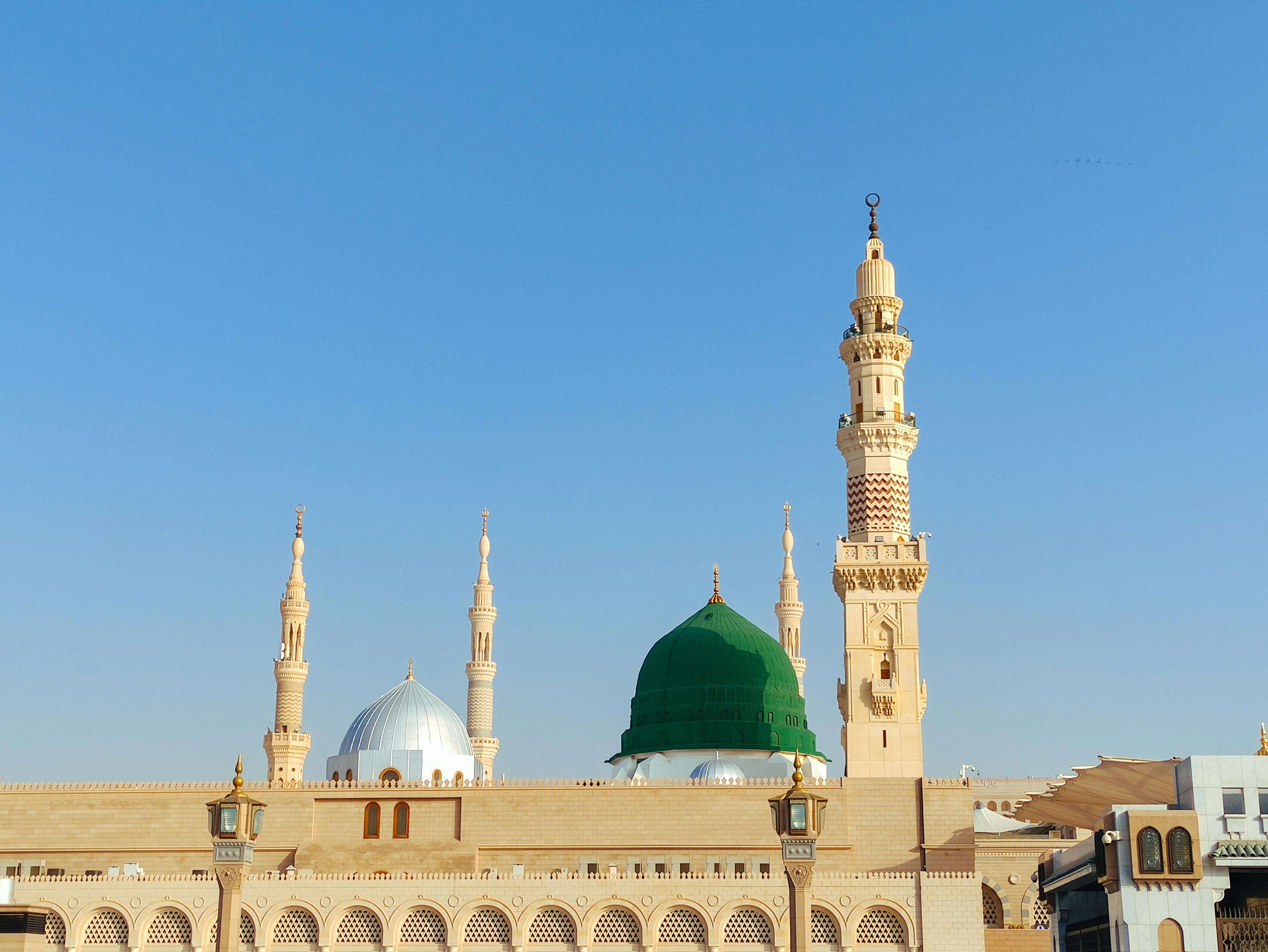
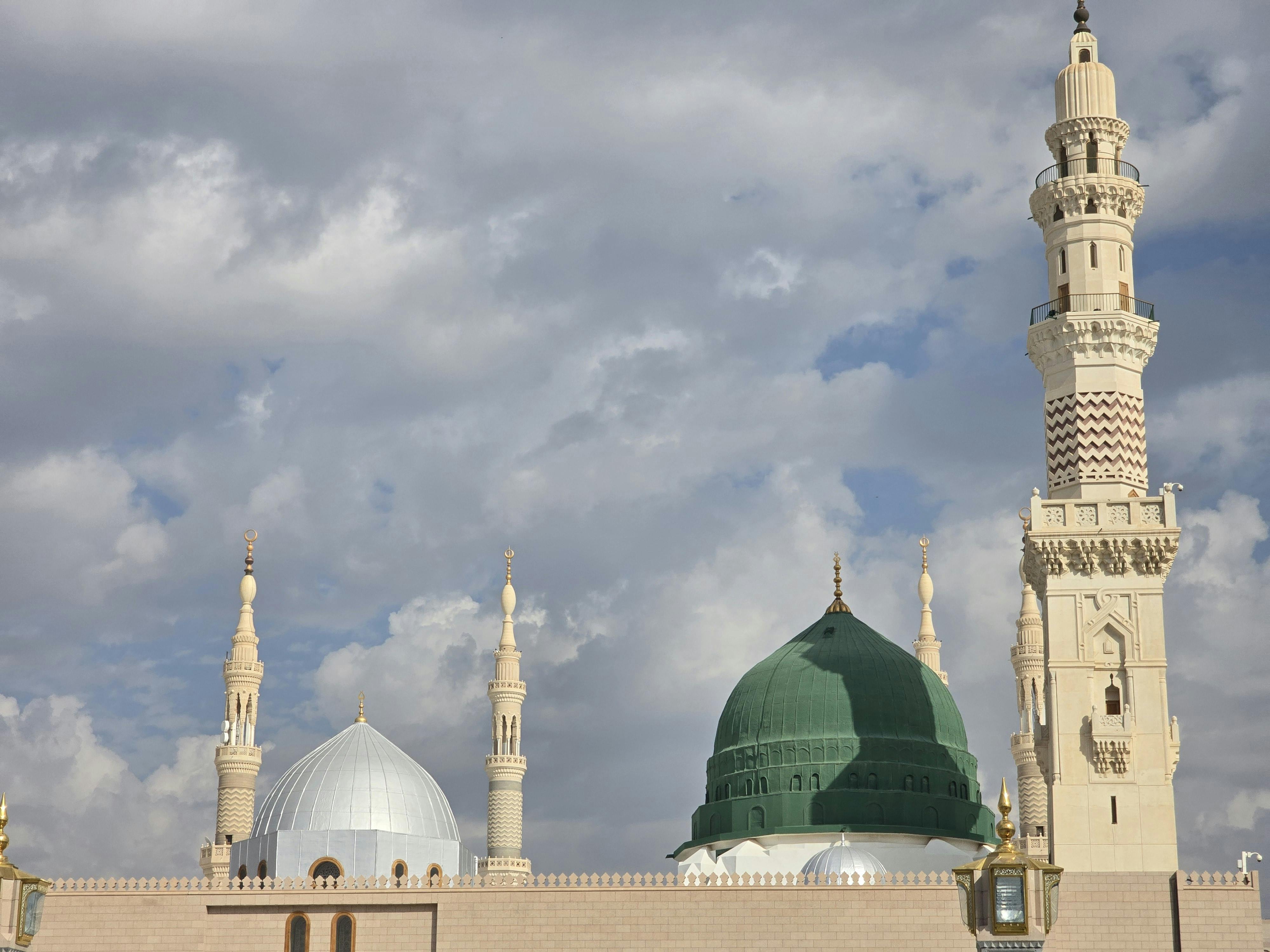
Amberiye Mosque is a classic example of late Ottoman religious architecture in Arabia. Its structure features a central dome flanked by smaller domes, arched windows, and an ornate minaret, all constructed from locally sourced stone. The facade and interior display geometric patterns and calligraphy, while elements such as the wooden doors and marble mihrab preserve its historic charm (makemytrip.com; Regency Holidays). The mosque’s harmonious integration with the adjacent railway station underscores the Ottoman philosophy of merging civic and sacred spaces.
Visiting Hours, Tickets, and Accessibility
-
Visiting Hours:
Amberiye Mosque is generally open daily from early morning until evening, with hours typically from 5:00 AM to 10:00 PM. During Ramadan and Hajj, hours may vary—check local sources in advance. -
Entry Fees:
There is no ticket required; entry is free for all visitors. Donations for upkeep are welcome but not obligatory. -
Accessibility:
The mosque features ramps and accessible prayer areas, accommodating visitors with mobility needs. Some exterior pathways may be uneven, so comfortable footwear is advised. -
Guided Tours:
No official tours are run by the mosque, but local operators and the Hejaz Railway Museum offer guided experiences that include the mosque as part of broader itineraries. -
Photography:
Photos of the mosque’s exterior and courtyard are generally permitted, but always seek permission before taking pictures inside or of worshippers.
Hejaz Railway Museum
Located adjacent to the mosque, the Hejaz Railway Museum occupies the preserved Medina railway station. Its exhibits include historical photographs, maps, models, restored locomotives, and original waiting rooms, offering an immersive journey through the railway’s conception and operation (trek.zone). Museum tours provide valuable context for Amberiye Mosque’s role in Medina’s modernization and the broader Ottoman legacy.
Travel Tips and Nearby Attractions
- Ideal Visiting Months:
November to March offers the most pleasant weather for sightseeing (evisa-to-saudi-arabia.info). - Location:
Centrally located, Amberiye Mosque provides easy access to other historical sites, including Al-Masjid an-Nabawi (the Prophet’s Mosque), Quba Mosque, Qiblatain Mosque, and Mount Uhud (besidestheobvious.net). - Etiquette:
Dress modestly (men in long trousers and sleeves, women covering arms, legs, and hair), remove shoes before entering, and avoid visiting during peak prayer times. Refrain from eating, drinking, or smoking inside the mosque or during Ramadan daylight hours (intosaudia.com). - Language:
Arabic is primary, but English is common in tourist areas. - Facilities:
Restrooms and ablution areas are available; personal hygiene items are recommended.
The nearby area features restaurants and shops for post-visit refreshments.
Frequently Asked Questions (FAQ)
Q: What are Amberiye Mosque’s visiting hours?
A: Generally 5:00 AM to 10:00 PM, but confirm locally during religious seasons.
Q: Is there an entry fee?
A: No, entry is free.
Q: Can non-Muslims visit Amberiye Mosque?
A: Non-Muslims may be restricted from entering the prayer hall but can view the exterior and visit the adjacent museum.
Q: Are guided tours available?
A: Yes, through local operators and the Hejaz Railway Museum.
Q: Is the mosque accessible for wheelchairs?
A: Yes, ramps are provided, but some surfaces may be uneven.
Q: Is photography allowed?
A: Allowed outside; inside, seek permission and respect worshippers’ privacy.
Listen to the full story in the app
The whole Amberiye Mosque,
told well.
Audio guides for 1,100+ cities across 96 countries. History, stories, and local insight — offline ready.

Verified, and shown.
Researched and written by the Audiala editorial team from historical records, architectural archives, and local expertise.
Researched from Wikidata, Wikipedia & official sources · fact-checked · How we make our guides →