hiking
Volcanic Rainforest
These islands rise fast from the sea, so routes shift quickly from palm-fringed coast to misty highland forest. Pico Cão Grande and the slopes below Pico de São Tomé give the country its unmistakable silhouette.
São Tomé and Príncipe is what happens when an equatorial map pin turns out to contain a whole Atlantic history: volcanic, creole, rain-soaked, and far more layered than its size suggests.
EntryMany US, UK, EU, and Canadian travelers can enter visa-free for up to 15 days; Schengen rules do not apply.
SA Sao Tome and Principe travel guide starts with one surprise: this equatorial country is less about beaches than volcanic peaks, cocoa estates, and rainforest dropping straight into the sea.
São Tomé and Príncipe feels improbably compact. In a single day on São Tomé, you can leave the capital of São Tomé, pass old plantation country near Trindade, cut south through São João dos Angolares, and end with black-rock coast and heavy surf near Porto Alegre. The country’s scale is small, but the terrain is not: Pico Cão Grande rises like a stone spike from the forest, rivers run fast and short, and the road keeps folding between breadfruit stalls, fishing villages, and roças built to organize labor with military precision. That mix is the hook. You come for an island break and find a place shaped by cocoa, revolt, and weather.
The second island changes the mood. Príncipe, with Santo António and Roça Sundy, feels quieter, richer in birdlife, and more insulated from hurry; even short distances seem to move at the islands’ own leve-leve rhythm. Back on São Tomé, places like Santana and Neves show daily life more than postcard fantasy, while Ilhéu das Rolas gives you the clean cartographic thrill of standing on the Equator without turning the moment into a gimmick. What stays with most travelers is not one landmark but the way everything connects: plantation history, creole cooking, cloud forest, sea stacks, and a capital city that still feels local after dark.
Founding and Forced Settlement, 1470-1499
A wet wind, black volcanic rock, and forest dropping straight to the sea: that is how São Tomé and Príncipe enter the written record, not as ancient kingdoms but as empty islands suddenly named by men with royal orders in their pockets. Around 1470-1471, Portuguese navigators João de Santarém and Pêro Escobar reached these shores and pinned feast-day names onto them. São Tomé took Saint Thomas. Príncipe took the prince's revenues. The paperwork came first.
Ce que l'on ignore souvent, c'est que the first great drama here was not exploration but forced childhood. In 1493, King João II deported Jewish children, some barely old enough to speak for themselves, to São Tomé after expelling their families from Portugal. They were meant to become settlers, Christians, and useful bodies for a colony that did not yet exist. Most died quickly in the equatorial climate. A few survived, and from that cruelty came one strand of the island's first creole society.
Álvaro de Caminha, the first effective governor, did not arrive as a dreamer. He arrived as an organizer of labor, land, and punishment. Under him, São Tomé became a laboratory for the plantation world: enslaved Africans brought from the mainland, sugar planted in ordered rows, wealth extracted through violence so methodically that later empires would copy the method almost line for line.
That is the beginning worth remembering. No misty tale of discovery, no innocent Eden. The country starts with naming, deportation, and the invention of a colonial machine that would soon make São Tomé famous in Lisbon and feared far beyond the Gulf of Guinea.
Álvaro de Caminha left no great speech behind him, only a system so efficient in its cruelty that it outlived him by centuries.
The story of the deported Jewish children survives above all through court chronicle and later church testimony, which gives the episode an almost unbearable intimacy: the founding population of the colony included toddlers taken from their parents by royal decree.
Sugar and Resistance, 1500-1595
Picture the harbor of São Tomé in the early 16th century: casks, ropes, sugar loaves, and ships from Europe edging toward a coast that looked like paradise and functioned as a machine. By the 1530s, São Tomé had become one of the world's great sugar producers. For a brief, feverish moment, this small island mattered to the Portuguese empire almost beyond its size. Money flowed in. So did enslaved people.
The island's wealth had a second chamber, darker than the first. São Tomé was not only a producer of sugar; it was a staging point in the Atlantic slave trade, where human beings were unloaded, held, and sent onward toward Brazil and the Caribbean. The sea between Africa and the Americas passes through this history like a blade. What looks remote on the map was central to the wound.
And yet the colony never fully obeyed. In the southern forests, the Angolares built communities beyond plantation discipline, whether born from a shipwreck, as local memory insists, or from repeated escapes into the interior. Near present-day Angolares and São João dos Angolares, freedom survived in ravines, fishing grounds, and settlements the Portuguese could raid but never quite absorb.
Then came July 1595. Amador, an enslaved man whose African name has vanished from the archive, led a vast uprising that burned plantations and shook colonial rule to its core. For about a month he styled himself Rei Amador, King of São Tomé. Imagine the terror of the planters, but also the majesty of the claim: a man born in bondage taking the language of monarchy and turning it against empire. The revolt was crushed, and Amador was executed with exemplary brutality. The idea outlived the scaffold.
Rei Amador stands at the center of Santomean memory because he was not born to power and still dared to speak in the voice of a king.
Amador's uprising began on 9 July, the feast of Saint Thomas, which may have been deliberate: even the calendar of the colonizers could be made to serve rebellion.
The Roça Empire, 1600-1953
After the sugar boom faltered, São Tomé and Príncipe did not fall silent. They changed masters, crops, and architecture. The Dutch seized São Tomé in 1641 and held it for seven years before the Portuguese returned, a reminder that even in decline the islands still mattered. Then, in the 19th century, cocoa and coffee transformed the landscape again. The roça was reborn, larger and more theatrical than before.
Walk through a former estate such as Roça São João or Roça Sundy and you can still read the hierarchy in stone. The manor house sits high, the service wings stretch outward, the hospital, chapel, drying yards, rail spurs, and workers' quarters fall into place like a social diagram. A roça was never just a farm. It was a whole kingdom of labor discipline, complete with its own clocks, punishments, and illusions of paternal order.
Portugal abolished slavery in law, but not in spirit. Contract laborers from Angola, Cape Verde, and Mozambique were brought in under conditions so coercive that outside observers often called the system slavery by another name. Ce que l'on ignore souvent, c'est que the scandal damaged Portugal's reputation across Europe; the empire wanted cocoa profits and respectability at the same time, which history rarely grants. Grandeur on the veranda, misery in the barracks.
One scene from this era feels almost too perfect to be true, yet it is documented. On 29 May 1919, at Roça Sundy on Príncipe, Arthur Eddington photographed a solar eclipse and helped confirm Einstein's theory of general relativity. Think of it: a plantation world built on forced labor briefly becoming the stage for a revolution in modern physics. A colony of exploitation looked up at the sun and changed the way humanity understood space and light. The contradiction is the whole country in miniature.
The absentee planter liked to pose as a patriarch, but the real human truth of the roças lies with the workers who carried cocoa sacks, buried children, and kept songs alive after the overseer had gone to bed.
At the start of the 20th century, São Tomé was one of the world's leading cocoa producers, so the chocolate eaten in Europe often began in estates where the labor regime was under international attack.
Awakening and Independence, 1953-1975
This chapter begins with rumor and blood. In February 1953, colonial authorities and allied settlers unleashed violence around the Batepá area after accusing local people of resisting forced labor schemes and plotting disorder. The repression spread through São Tomé with arrests, beatings, and killings. The number of dead is still debated. The scar is not.
For Santomeans, Batepá was more than a massacre. It was a revelation. Colonial rule could no longer pretend to be paternal or civilizing when its answer to fear was slaughter. Families carried the memory in silence, then in speech, then in politics. A nation often begins with a date people cannot forgive.
Out of that wound came a generation of writers and militants who turned culture into resistance. Alda do Espírito Santo wrote poems with the cadence of a people reclaiming their own dignity. Francisco José Tenreiro, scholar and poet, helped name the creole Atlantic world that the empire preferred not to see too clearly. And in exile and clandestine meetings, the MLSTP took shape, linking island grievances to the wider African movement for decolonization.
Independence arrived on 12 July 1975. The Portuguese empire, already collapsing after the Carnation Revolution, let go. The new flag rose over São Tomé, and the islands entered sovereignty with pride, fragility, and very little margin for error. One-party rule followed, because liberation movements rarely surrender power gracefully at the first attempt. But the essential thing had changed: decisions about São Tomé and Príncipe would now be fought over by Santomeans themselves.
Alda do Espírito Santo had the rare gift of making a poem sound like a civic act, as if a stanza could help found a republic.
Batepá is still commemorated every year, which means the nation keeps one of its darkest colonial episodes at the center of public memory rather than tucking it away.
Independent Republic, 1975-Present
The early republic inherited beauty, debt, weak infrastructure, and roças that were both economic assets and moral ruins. Manuel Pinto da Costa became the first president and governed within a single-party system shaped by the habits of liberation-era politics. Like many postcolonial states, São Tomé and Príncipe had to invent ministries, loyalties, and a future while still living inside buildings designed for empire.
Then came a quieter revolution. In 1990, the country adopted a multiparty constitution, and in 1991 Miguel Trovoada won the presidency in one of Africa's early democratic openings after the Cold War. For a small island state with scarce resources, that mattered enormously. Power could change hands without the entire house burning down.
Stability was never perfect. There was a coup attempt in 2003, constant economic pressure, and years when offshore oil looked like the next grand salvation. It did not quite arrive. Perhaps that is just as well. Nations built on sudden riches often pay dearly for the fantasy.
Another path emerged instead, one closer to the islands themselves. Príncipe gained UNESCO Biosphere Reserve recognition in 2012, and the country's image slowly shifted from forgotten cocoa colony to rare ecological sanctuary. In Santo António, in São Tomé, in the old estates reclaimed by vegetation, the past still stands in cracked stucco and rusted rails. But the future now speaks another language too: conservation, memory, and a republic learning, leve-leve, that survival can be a form of elegance.
Miguel Trovoada's importance lies less in charisma than in proof: he embodied the moment when opposition could become government through ballots rather than barricades.
Few capitals carry their national contradictions as plainly as São Tomé, where ministries, markets, and colonial facades sit within easy reach of roads leading toward abandoned plantation empires.
Portuguese rules the schoolroom, the office, the official stamp. Then the street answers back in Forro, in Angolar, in the nearly vanished Lung’ie of Príncipe, and the sentence acquires another body. A language can wear shoes or go barefoot.
In São Tomé, greetings are not decoration. You say "bom dia" before you ask for water, a direction, a price, a favor, and the ritual changes the air by two degrees; the request stops being a demand and becomes an encounter. Skipping that small prologue is like entering a church in flippers.
Certain words refuse translation because translation likes skeletons and these words still have flesh. "Leve-leve" gets rendered as easy, slowly, gently, but none of those quite capture its sly authority: the islands decline to be bullied by clocks, engines, and foreign urgency. "Roça" seems to mean plantation until you stand in Roça São João or Roça Sundy and grasp that the word also means hierarchy, memory, labor, weather, architecture, and the aftertaste of empire.
The cuisine of São Tomé and Príncipe begins with fish and then grows ambitious. Smoke, palm oil, banana, breadfruit, matabala, cassava leaves, coconut, hot pepper: each ingredient arrives with a history of trade, coercion, hunger, and invention, yet the plate never sounds theoretical. It tastes exact.
Calulú is the national lesson in patience. Someone smokes the fish, someone stirs the greens and okra into submission, someone judges the palm oil by eye rather than measurement, and lunch becomes a theorem proved by appetite. A country is a table set for strangers.
On Príncipe, azagoa asks for time the way a cathedral asks for silence. It gathers beans, leaves, smoke, tubers, labor, and company into one pot and makes casual eating impossible. Even dessert keeps its composure: queijadinhas, coconut and egg in small rounds, taste like Portugal after a tropical fever and a decent education.
The local politeness has a Lusophone skeleton and an island pulse. You do not rush into the useful part of the exchange as if words were machetes; first the greeting, then the inquiry, then the business, and only then, if the gods are in a generous mood, the answer. Efficiency is admired in machines. Less so in people.
This is where "leve-leve" becomes social technique rather than slogan. It cools irritation before it can perform itself, especially in queues, at roadside stops, in the little negotiations of taxis and market stalls around São Tomé. The system is not fast. It is human.
Dress, too, obeys an unwritten intelligence. Beachwear belongs on beaches, not in town, and a more careful shirt or dress at church or a family meal reads as respect rather than vanity. The islands understand ceremony on a modest scale, which is often the most demanding kind.
The music in São Tomé and Príncipe rarely hurries, which does not mean it lacks force. Ússua sways, socopé glides, dêxa bends toward melancholy, and the rhythm seems to know more history than the singer has time to explain. The body understands before the mind catches up.
These forms are creole in the old Atlantic sense: Portuguese salon traces, African percussion logic, church residues, plantation afterlives, island irony. You hear elegance, then ache, then a small refusal hidden inside the beat. That sequence matters.
At a gathering in São João dos Angolares or a bar in São Tomé, the line between performance and participation grows thin very quickly. Somebody claps, somebody answers the singer, somebody rises with the expression of a person who had no plan to dance and is now lost to the room. The correct response is surrender.
The great architectural fact of São Tomé and Príncipe is the roça. Plantation compounds were not merely farms; they were complete systems in masonry and timber, with main house, drying rooms, hospital, chapel, storehouses, rail spurs, workers’ quarters, all arranged so that labor, status, and sightlines remained obedient. Empire liked a veranda.
Today those places have entered their second life, which is always more interesting than the first. In Roça São João, in Roça Sundy, in the ghostlier estates scattered across São Tomé, you see walls streaked by rain, ironwork surviving out of stubbornness, courtyards where grandeur and abandonment keep sharing the same chair. Ruin is never neutral here.
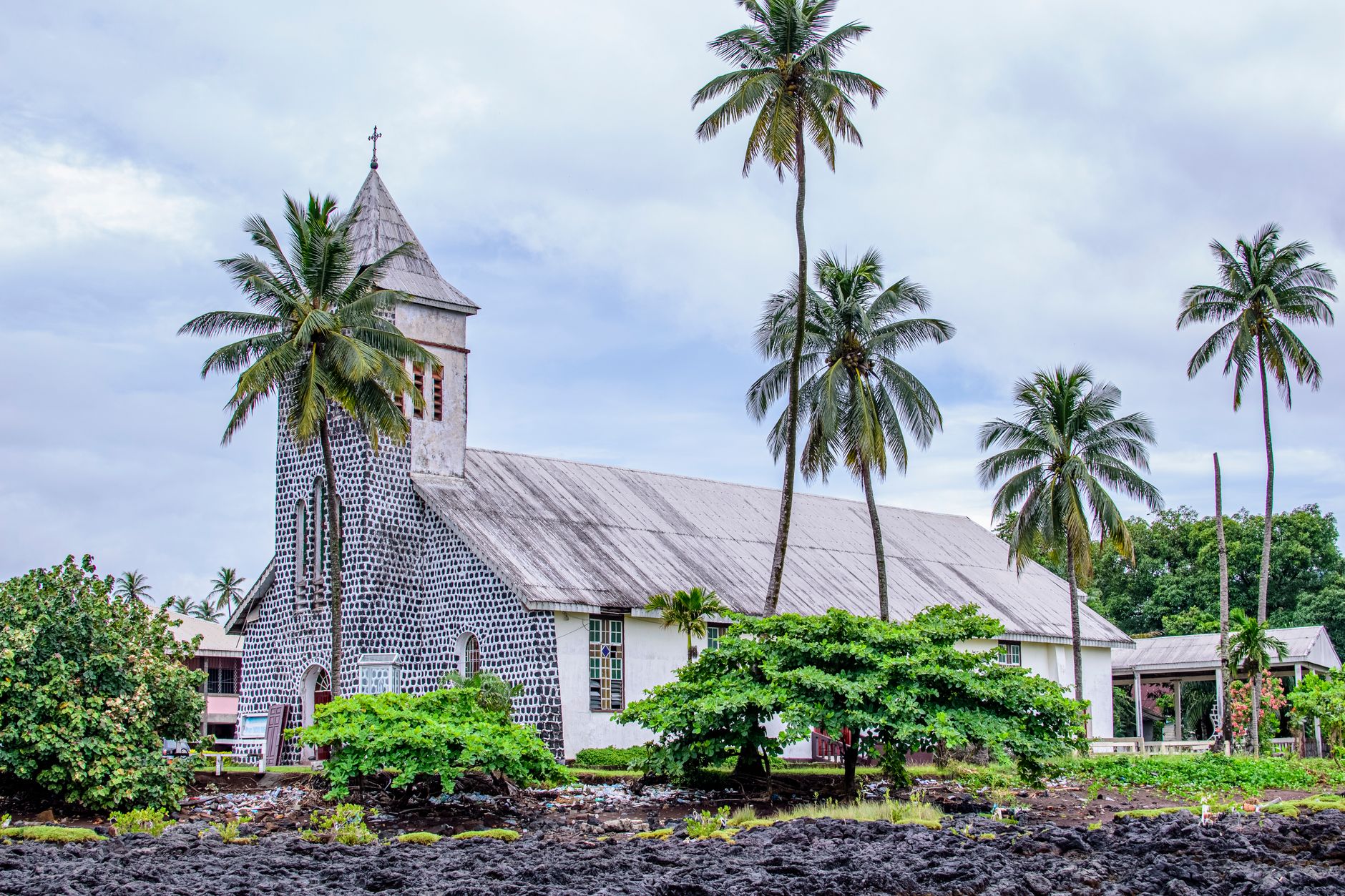
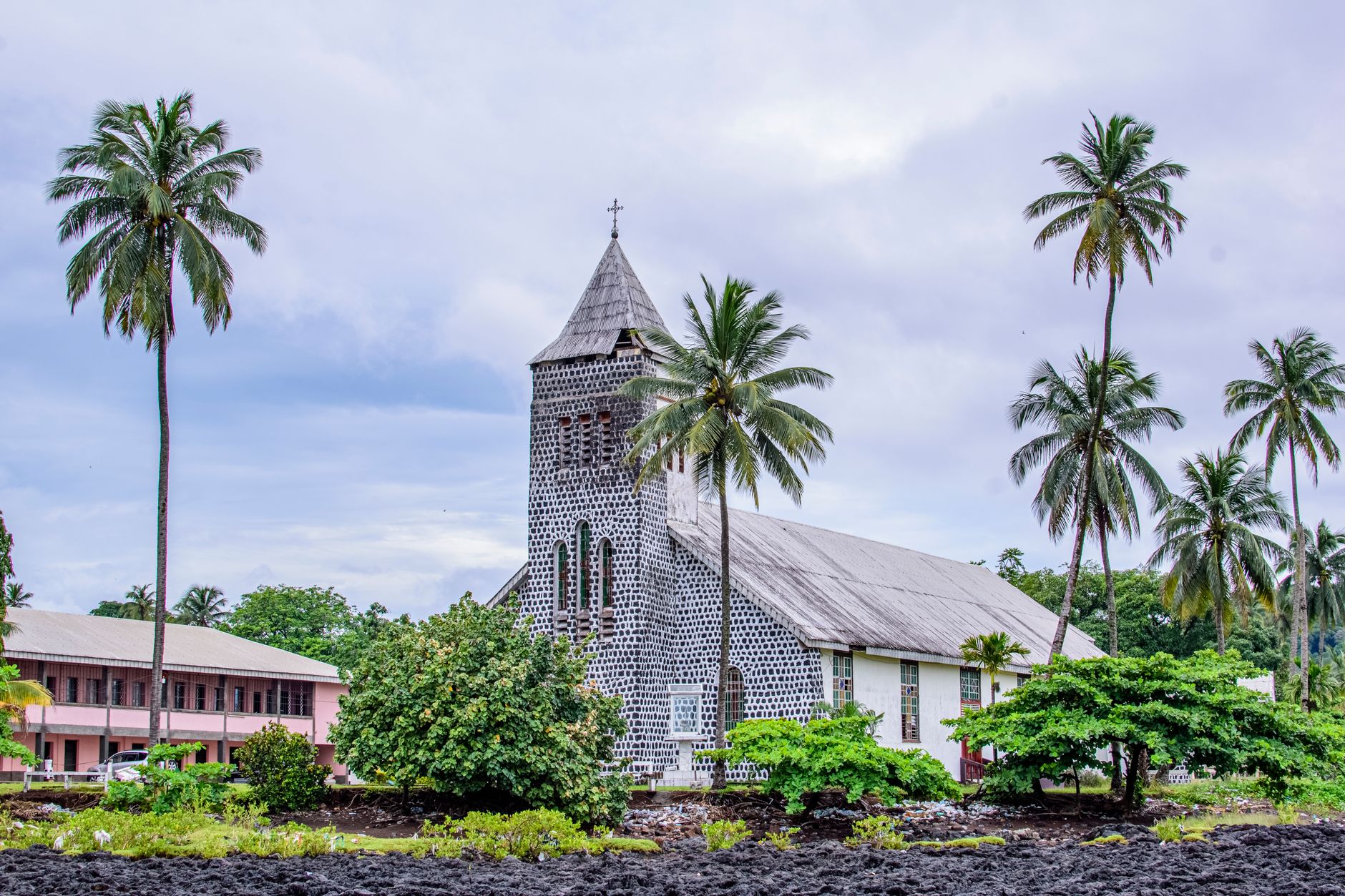
Even ordinary buildings reveal the islands’ negotiation with heat and downpour: deep eaves, shutters, verandas, thick walls, paint that accepts mildew as a frequent correspondent. Santo António on Príncipe can look almost toy-like from a distance, then suddenly exact at street level, every porch and color performing weather management with a side effect of grace. Beauty, in the tropics, often begins as engineering.
Every country has its secular theology. Here it is "leve-leve," a phrase so often repeated that an impatient visitor may mistake it for a slogan, which would be like mistaking salt for the sea. It is closer to a survival ethic, polished by humidity, scarcity, distance, and the old knowledge that frenzy solves very little on islands.
The phrase does not praise idleness. It resists useless violence against time: the kind that turns a delayed car, a slow lunch, a long conversation, or a sudden rainstorm into a personal insult. São Tomé and Príncipe has made a different wager. If the day is going to disobey you, you may as well learn its manners.
This philosophy becomes clearest at the table and on the road. Lunch extends. Greetings expand. The journey from São Tomé to Santana or down toward Porto Alegre may take longer than the map suggests, because maps do not account for weather, roadside talk, fruit purchases, and the temptation to stop when the sea abruptly appears between breadfruit trees. The islands have not abolished time. They have domesticated it.
These islands rise fast from the sea, so routes shift quickly from palm-fringed coast to misty highland forest. Pico Cão Grande and the slopes below Pico de São Tomé give the country its unmistakable silhouette.
Cocoa is not a souvenir add-on here; it is the backbone of the islands’ economy and memory. Meals lean on smoked fish, palm oil, breadfruit, banana, and slow-cooked dishes like calulu that taste of the Atlantic rather than any single country.
The old plantation estates are among the country’s strongest reasons to pay attention. At places like Roça Sundy and Roça São João, architecture, agriculture, and the afterlife of colonial power sit in plain view.
Ilhéu das Rolas gives you one of those rare map facts that becomes physically real under your feet. The setting helps: tropical light, open sea, and a sense that geography still matters here.
São Tomé offers more road access, more towns, and the broadest mix of landscapes. Príncipe is smaller, softer-edged, and more conservation-led, with a calm that feels earned rather than staged.
This is a strong pick for travelers who want drama without crowds. Forested headlands, black volcanic rock, and fishing villages around São Tomé, Santana, and Santo António make it a natural photography destination.
12 cities — start with the ones we'd send you to first.
The capital's waterfront Marginal runs past crumbling Portuguese colonial facades, a 16th-century fort, and fishermen hauling pirogues onto black-sand beaches — the whole country's history compressed into a single stroll
The smaller island, a UNESCO biosphere reserve of 142 sq km, has more endemic bird species than most countries have national parks, and its roças are slowly being reclaimed by forest rather than tourists.
This southeastern fishing town is the gateway to the island's wildest Atlantic coast, where the sea hits volcanic rock with enough force to spray the road.
Sitting in the cool midlands south of the capital, Trindade is the market town where the island's interior begins — breadfruit sellers, red-clay roads, and the first serious glimpse of the volcanic highlands above.
The northwest's main settlement is a working port town, not a resort, where the fish market runs at dawn and the ferry connections to the capital keep a genuinely local rhythm going.
Founded, according to island legend, by survivors of a 16th-century slave-ship wreck who escaped into the volcanic south and built their own creole nation — the town still carries that defiant separateness.
A tiny islet bisected by the Equator, where a stone marker lets you stand in both hemispheres simultaneously and the surrounding reef has seen almost no dive pressure.
The surrounding southern municipality is where Pico Cão Grande — a 663-metre volcanic needle rising from rainforest — dominates every sightline and makes the island's geology feel genuinely violent.
At the island's southern tip, this remote village is the last settlement before the road runs out and the Obo National Park forest takes over entirely.
São Tomé is where flights, banks, ministries, and ferry rumors all meet. It is the country's practical center, but it also has the port-city weariness that makes island capitals interesting: colonial facades, markets, government buildings, and sea light that changes by the hour rather than by the season.
The east side mixes easier access with some of the island's most cinematic volcanic scenery. Santana gives you coast and road convenience, while nearby Trindade opens the door to forest trails, river valleys, and day trips that feel far wilder than the mileage suggests.
This is the most layered stretch of São Tomé for anyone interested in how agriculture, labor, and landscape shaped the country. Around São João dos Angolares and Angolares, the road threads through old plantation country where elegant facades, decaying service buildings, and fishing settlements still sit inside the same humid frame.
Porto Alegre feels like the end of the island because, in practical terms, it nearly is. The pace drops, roads narrow, and the country's strongest map-level hook appears just offshore at Ilhéu das Rolas, where the Equator gives the geography a line people remember long after they forget the hotel Wi-Fi password.
Neves anchors the west coast, where fishing life and the old export economy still shape the roadside scene. This is good territory for travelers who want less polished beauty and more working landscape: harbors, cocoa routes, and settlements that look outward to the Gulf of Guinea rather than inward to resort logic.
Príncipe is smaller, greener, and more private in mood than São Tomé, with conservation and old estate history carrying more weight than urban life. Santo António is one of the smallest capital towns you will ever visit, while Roça Sundy gives the island its grand colonial silhouette and one of its sharpest historical echoes.
Five centuries of plantation power, revolt, memory, and reinvention in São Tomé and Príncipe
João de Santarém and Pêro Escobar bring São Tomé and Príncipe into European charts. The islands were uninhabited, which made them unusually vulnerable to becoming a colonial experiment from the first moment of contact.
King João II sends deported Jewish children to São Tomé as part of the first settlement drive. The episode remains one of the most haunting scenes in the country's early history: colonization beginning with children taken from their families.
As governor, Caminha helps shape São Tomé into an early plantation colony. The basic template is already there: enslaved labor, export agriculture, and a social order designed for extraction rather than settlement.
By the early 16th century, São Tomé is producing sugar on a scale that matters to Europe. The wealth is real, but so is the violence that sustains it, with enslaved Africans forced into a system that will echo across the Atlantic world.
The Portuguese crown and church formalize the colony's religious importance with a bishopric. Christianity, administration, and empire move together here, each lending authority to the others.
Whether born from a shipwreck, repeated escapes, or both, autonomous maroon communities take shape in the island's southern interior. Near today's Angolares and São João dos Angolares, freedom survives beyond plantation control.
Amador heads a major revolt of enslaved people, burns plantations, and briefly claims kingship over São Tomé. The rebellion is crushed, but Amador becomes the enduring heroic figure of Santomean history.
The Dutch occupation shows that the islands still matter strategically even after the first sugar boom has faded. Colonial possession in the Gulf of Guinea remains a contest of trade, routes, and imperial ambition.
Portugal recovers São Tomé from the Dutch and restores its authority. But the old order is already changing, and the islands will soon turn toward new crops and new labor regimes.
As sugar declines, planters reorganize the economy around coffee and then cocoa. The roças expand into fully fledged plantation worlds, with rail tracks, drying yards, hospitals, and workers' quarters built into one commanding design.
Formal abolition does not bring clean freedom. Contract labor replaces slavery on paper, but the conditions imposed on imported workers often look painfully close to the old system.
At the start of the 20th century, São Tomé stands among the world's leading cocoa producers. European chocolate owes a quiet debt to estates whose labor practices are already provoking international scandal.
On Príncipe, at Roça Sundy, Arthur Eddington's expedition photographs a solar eclipse and helps confirm Einstein's general relativity. A plantation colony briefly becomes the stage for one of modern science's great turning points.
Colonial repression in and around Batepá leaves deep trauma and lasting anger. The event becomes a foundational memory of national consciousness, proof that Portuguese rule could no longer disguise itself as benevolent authority.
The Movement for the Liberation of São Tomé and Príncipe gives political shape to anticolonial feeling. Writers, exiles, and activists begin turning grief and frustration into a clear demand for independence.
On 12 July 1975, São Tomé and Príncipe becomes an independent state. The new republic inherits colonial buildings, fragile institutions, and a powerful sense that history has finally changed direction.
Pinto da Costa embodies the authority and contradictions of the first postcolonial generation. Under him, the country enters independence through a single-party system shaped by liberation politics.
São Tomé and Príncipe opens a new political chapter with constitutional reform. For a small state with limited means, the move matters far beyond procedure: it creates space for peaceful competition over power.
The first multiparty presidential election brings Trovoada to office. The symbolism is immense: opposition can now govern through ballots rather than exile, conspiracy, or armed rupture.
A brief coup reminds the country that democratic procedure does not erase fragility. The crisis passes, but it exposes how narrow the margin can be in a small state under economic strain.
UNESCO recognition marks Príncipe as one of the world's rare ecological sanctuaries. The country's international image begins to shift from forgotten plantation outpost to place of exceptional biodiversity and careful stewardship.
Founding and Forced Settlement
Álvaro de Caminha left no great speech behind him, only a system so efficient in its cruelty that it outlived him by centuries.
A wet wind, black volcanic rock, and forest dropping straight to the sea: that is how São Tomé and Príncipe enter the written record, not as ancient kingdoms but as empty islands suddenly named by men with royal orders in their pockets. Around 1470-1471, Portuguese navigators João de Santarém and Pêro Escobar reached these shores and pinned feast-day names onto them. São Tomé took Saint Thomas. Príncipe took the prince's revenues. The paperwork came first.
Ce que l'on ignore souvent, c'est que the first great drama here was not exploration but forced childhood. In 1493, King João II deported Jewish children, some barely old enough to speak for themselves, to São Tomé after expelling their families from Portugal. They were meant to become settlers, Christians, and useful bodies for a colony that did not yet exist. Most died quickly in the equatorial climate. A few survived, and from that cruelty came one strand of the island's first creole society.
Álvaro de Caminha, the first effective governor, did not arrive as a dreamer. He arrived as an organizer of labor, land, and punishment. Under him, São Tomé became a laboratory for the plantation world: enslaved Africans brought from the mainland, sugar planted in ordered rows, wealth extracted through violence so methodically that later empires would copy the method almost line for line.
That is the beginning worth remembering. No misty tale of discovery, no innocent Eden. The country starts with naming, deportation, and the invention of a colonial machine that would soon make São Tomé famous in Lisbon and feared far beyond the Gulf of Guinea.
The story of the deported Jewish children survives above all through court chronicle and later church testimony, which gives the episode an almost unbearable intimacy: the founding population of the colony included toddlers taken from their parents by royal decree.
Sugar and Resistance
Rei Amador stands at the center of Santomean memory because he was not born to power and still dared to speak in the voice of a king.
Picture the harbor of São Tomé in the early 16th century: casks, ropes, sugar loaves, and ships from Europe edging toward a coast that looked like paradise and functioned as a machine. By the 1530s, São Tomé had become one of the world's great sugar producers. For a brief, feverish moment, this small island mattered to the Portuguese empire almost beyond its size. Money flowed in. So did enslaved people.
The island's wealth had a second chamber, darker than the first. São Tomé was not only a producer of sugar; it was a staging point in the Atlantic slave trade, where human beings were unloaded, held, and sent onward toward Brazil and the Caribbean. The sea between Africa and the Americas passes through this history like a blade. What looks remote on the map was central to the wound.
And yet the colony never fully obeyed. In the southern forests, the Angolares built communities beyond plantation discipline, whether born from a shipwreck, as local memory insists, or from repeated escapes into the interior. Near present-day Angolares and São João dos Angolares, freedom survived in ravines, fishing grounds, and settlements the Portuguese could raid but never quite absorb.
Then came July 1595. Amador, an enslaved man whose African name has vanished from the archive, led a vast uprising that burned plantations and shook colonial rule to its core. For about a month he styled himself Rei Amador, King of São Tomé. Imagine the terror of the planters, but also the majesty of the claim: a man born in bondage taking the language of monarchy and turning it against empire. The revolt was crushed, and Amador was executed with exemplary brutality. The idea outlived the scaffold.
Amador's uprising began on 9 July, the feast of Saint Thomas, which may have been deliberate: even the calendar of the colonizers could be made to serve rebellion.
The Roça Empire
The absentee planter liked to pose as a patriarch, but the real human truth of the roças lies with the workers who carried cocoa sacks, buried children, and kept songs alive after the overseer had gone to bed.
After the sugar boom faltered, São Tomé and Príncipe did not fall silent. They changed masters, crops, and architecture. The Dutch seized São Tomé in 1641 and held it for seven years before the Portuguese returned, a reminder that even in decline the islands still mattered. Then, in the 19th century, cocoa and coffee transformed the landscape again. The roça was reborn, larger and more theatrical than before.
Walk through a former estate such as Roça São João or Roça Sundy and you can still read the hierarchy in stone. The manor house sits high, the service wings stretch outward, the hospital, chapel, drying yards, rail spurs, and workers' quarters fall into place like a social diagram. A roça was never just a farm. It was a whole kingdom of labor discipline, complete with its own clocks, punishments, and illusions of paternal order.
Portugal abolished slavery in law, but not in spirit. Contract laborers from Angola, Cape Verde, and Mozambique were brought in under conditions so coercive that outside observers often called the system slavery by another name. Ce que l'on ignore souvent, c'est que the scandal damaged Portugal's reputation across Europe; the empire wanted cocoa profits and respectability at the same time, which history rarely grants. Grandeur on the veranda, misery in the barracks.
One scene from this era feels almost too perfect to be true, yet it is documented. On 29 May 1919, at Roça Sundy on Príncipe, Arthur Eddington photographed a solar eclipse and helped confirm Einstein's theory of general relativity. Think of it: a plantation world built on forced labor briefly becoming the stage for a revolution in modern physics. A colony of exploitation looked up at the sun and changed the way humanity understood space and light. The contradiction is the whole country in miniature.
At the start of the 20th century, São Tomé was one of the world's leading cocoa producers, so the chocolate eaten in Europe often began in estates where the labor regime was under international attack.
Awakening and Independence
Alda do Espírito Santo had the rare gift of making a poem sound like a civic act, as if a stanza could help found a republic.
This chapter begins with rumor and blood. In February 1953, colonial authorities and allied settlers unleashed violence around the Batepá area after accusing local people of resisting forced labor schemes and plotting disorder. The repression spread through São Tomé with arrests, beatings, and killings. The number of dead is still debated. The scar is not.
For Santomeans, Batepá was more than a massacre. It was a revelation. Colonial rule could no longer pretend to be paternal or civilizing when its answer to fear was slaughter. Families carried the memory in silence, then in speech, then in politics. A nation often begins with a date people cannot forgive.
Out of that wound came a generation of writers and militants who turned culture into resistance. Alda do Espírito Santo wrote poems with the cadence of a people reclaiming their own dignity. Francisco José Tenreiro, scholar and poet, helped name the creole Atlantic world that the empire preferred not to see too clearly. And in exile and clandestine meetings, the MLSTP took shape, linking island grievances to the wider African movement for decolonization.
Independence arrived on 12 July 1975. The Portuguese empire, already collapsing after the Carnation Revolution, let go. The new flag rose over São Tomé, and the islands entered sovereignty with pride, fragility, and very little margin for error. One-party rule followed, because liberation movements rarely surrender power gracefully at the first attempt. But the essential thing had changed: decisions about São Tomé and Príncipe would now be fought over by Santomeans themselves.
Batepá is still commemorated every year, which means the nation keeps one of its darkest colonial episodes at the center of public memory rather than tucking it away.
Independent Republic
Miguel Trovoada's importance lies less in charisma than in proof: he embodied the moment when opposition could become government through ballots rather than barricades.
The early republic inherited beauty, debt, weak infrastructure, and roças that were both economic assets and moral ruins. Manuel Pinto da Costa became the first president and governed within a single-party system shaped by the habits of liberation-era politics. Like many postcolonial states, São Tomé and Príncipe had to invent ministries, loyalties, and a future while still living inside buildings designed for empire.
Then came a quieter revolution. In 1990, the country adopted a multiparty constitution, and in 1991 Miguel Trovoada won the presidency in one of Africa's early democratic openings after the Cold War. For a small island state with scarce resources, that mattered enormously. Power could change hands without the entire house burning down.
Stability was never perfect. There was a coup attempt in 2003, constant economic pressure, and years when offshore oil looked like the next grand salvation. It did not quite arrive. Perhaps that is just as well. Nations built on sudden riches often pay dearly for the fantasy.
Another path emerged instead, one closer to the islands themselves. Príncipe gained UNESCO Biosphere Reserve recognition in 2012, and the country's image slowly shifted from forgotten cocoa colony to rare ecological sanctuary. In Santo António, in São Tomé, in the old estates reclaimed by vegetation, the past still stands in cracked stucco and rusted rails. But the future now speaks another language too: conservation, memory, and a republic learning, leve-leve, that survival can be a form of elegance.
Few capitals carry their national contradictions as plainly as São Tomé, where ministries, markets, and colonial facades sit within easy reach of roads leading toward abandoned plantation empires.
Portuguese rules the schoolroom, the office, the official stamp. Then the street answers back in Forro, in Angolar, in the nearly vanished Lung’ie of Príncipe, and the sentence acquires another body. A language can wear shoes or go barefoot.
In São Tomé, greetings are not decoration. You say "bom dia" before you ask for water, a direction, a price, a favor, and the ritual changes the air by two degrees; the request stops being a demand and becomes an encounter. Skipping that small prologue is like entering a church in flippers.
Certain words refuse translation because translation likes skeletons and these words still have flesh. "Leve-leve" gets rendered as easy, slowly, gently, but none of those quite capture its sly authority: the islands decline to be bullied by clocks, engines, and foreign urgency. "Roça" seems to mean plantation until you stand in Roça São João or Roça Sundy and grasp that the word also means hierarchy, memory, labor, weather, architecture, and the aftertaste of empire.
The cuisine of São Tomé and Príncipe begins with fish and then grows ambitious. Smoke, palm oil, banana, breadfruit, matabala, cassava leaves, coconut, hot pepper: each ingredient arrives with a history of trade, coercion, hunger, and invention, yet the plate never sounds theoretical. It tastes exact.
Calulú is the national lesson in patience. Someone smokes the fish, someone stirs the greens and okra into submission, someone judges the palm oil by eye rather than measurement, and lunch becomes a theorem proved by appetite. A country is a table set for strangers.
On Príncipe, azagoa asks for time the way a cathedral asks for silence. It gathers beans, leaves, smoke, tubers, labor, and company into one pot and makes casual eating impossible. Even dessert keeps its composure: queijadinhas, coconut and egg in small rounds, taste like Portugal after a tropical fever and a decent education.
The local politeness has a Lusophone skeleton and an island pulse. You do not rush into the useful part of the exchange as if words were machetes; first the greeting, then the inquiry, then the business, and only then, if the gods are in a generous mood, the answer. Efficiency is admired in machines. Less so in people.
This is where "leve-leve" becomes social technique rather than slogan. It cools irritation before it can perform itself, especially in queues, at roadside stops, in the little negotiations of taxis and market stalls around São Tomé. The system is not fast. It is human.
Dress, too, obeys an unwritten intelligence. Beachwear belongs on beaches, not in town, and a more careful shirt or dress at church or a family meal reads as respect rather than vanity. The islands understand ceremony on a modest scale, which is often the most demanding kind.
The music in São Tomé and Príncipe rarely hurries, which does not mean it lacks force. Ússua sways, socopé glides, dêxa bends toward melancholy, and the rhythm seems to know more history than the singer has time to explain. The body understands before the mind catches up.
These forms are creole in the old Atlantic sense: Portuguese salon traces, African percussion logic, church residues, plantation afterlives, island irony. You hear elegance, then ache, then a small refusal hidden inside the beat. That sequence matters.
At a gathering in São João dos Angolares or a bar in São Tomé, the line between performance and participation grows thin very quickly. Somebody claps, somebody answers the singer, somebody rises with the expression of a person who had no plan to dance and is now lost to the room. The correct response is surrender.
The great architectural fact of São Tomé and Príncipe is the roça. Plantation compounds were not merely farms; they were complete systems in masonry and timber, with main house, drying rooms, hospital, chapel, storehouses, rail spurs, workers’ quarters, all arranged so that labor, status, and sightlines remained obedient. Empire liked a veranda.
Today those places have entered their second life, which is always more interesting than the first. In Roça São João, in Roça Sundy, in the ghostlier estates scattered across São Tomé, you see walls streaked by rain, ironwork surviving out of stubbornness, courtyards where grandeur and abandonment keep sharing the same chair. Ruin is never neutral here.
Even ordinary buildings reveal the islands’ negotiation with heat and downpour: deep eaves, shutters, verandas, thick walls, paint that accepts mildew as a frequent correspondent. Santo António on Príncipe can look almost toy-like from a distance, then suddenly exact at street level, every porch and color performing weather management with a side effect of grace. Beauty, in the tropics, often begins as engineering.
Every country has its secular theology. Here it is "leve-leve," a phrase so often repeated that an impatient visitor may mistake it for a slogan, which would be like mistaking salt for the sea. It is closer to a survival ethic, polished by humidity, scarcity, distance, and the old knowledge that frenzy solves very little on islands.
The phrase does not praise idleness. It resists useless violence against time: the kind that turns a delayed car, a slow lunch, a long conversation, or a sudden rainstorm into a personal insult. São Tomé and Príncipe has made a different wager. If the day is going to disobey you, you may as well learn its manners.
This philosophy becomes clearest at the table and on the road. Lunch extends. Greetings expand. The journey from São Tomé to Santana or down toward Porto Alegre may take longer than the map suggests, because maps do not account for weather, roadside talk, fruit purchases, and the temptation to stop when the sea abruptly appears between breadfruit trees. The islands have not abolished time. They have domesticated it.
He is one of the men who brought São Tomé and Príncipe into the Portuguese archive, which sounds tidy until you remember what followed. His voyage opened the door to naming, claiming, and then building a colony where none had existed before.
Caminha did not merely administer São Tomé; he helped design its social machinery. Under his rule, the island became an early plantation colony, with enslaved labor at the center and profit arranged like architecture.
Amador took the title of king during a slave revolt and, for one extraordinary month, made that claim real enough to terrify the colonial order. Modern São Tomé and Príncipe remembers him not as a footnote in rebellion but as the moral founder of the nation.
She turned poetry into a political instrument without draining it of tenderness. Her words helped give the future nation a voice before it had full control of its own state, which is a rarer achievement than winning office.
Tenreiro wrote with the authority of someone who understood that islands are never isolated from history, only from excuses. He gave São Tomé and Príncipe a place in the wider story of Black Atlantic thought and creole identity.
Pinto da Costa stood at the hinge between anticolonial struggle and state power, which is where reputations grow complicated. He embodied independence, one-party rule, and later political return, all in the same lifetime.
Trovoada helped build the state, broke with the first post-independence order, then came back as the face of democratic change in the 1990s. His career tells you almost everything about how personal politics can mirror a young republic's growing pains.
Lima writes as if the islands' houses, roads, and absences could speak for themselves. In her work, São Tomé and Príncipe is never postcard scenery; it is memory, fracture, and inheritance made audible.
This is the shortest route that still shows why the island feels bigger than the map suggests. Base yourself in São Tomé, make an easy run inland to Trindade for waterfalls and cooler air, then follow the east coast toward Santana for volcanic views and roça country without spending half the trip in a car.
This route follows São Tomé's most dramatic coast, where the plantation story, fishing villages, and equatorial geography all sit on the same road. Start in São João dos Angolares for the roça world, continue to Angolares and Porto Alegre, then cross to Ilhéu das Rolas for the Equator marker and a literal end-of-the-road finish.
The west and northwest of São Tomé island reward travelers who care more about texture than checklists. Use Neves and Roça São João to read the old cocoa economy in buildings and landscapes, then spend time in Trindade for forest access and finish in São Tomé for markets, port life, and logistics that actually work.
Two weeks lets you treat Príncipe as a destination, not a side trip stapled onto São Tomé. Fly over for Santo António, spend real time around Roça Sundy, and leave room for weather, boat timing, and the fact that Príncipe works on a smaller, softer clock than the main island.
Sunday lunch. Shared pot, smoked fish, okra, greens, palm oil. Rice, banana, breadfruit beside it. Family table, long talk.
Feast dish on Príncipe. Beans, leaves, smoke, matabala in one pot. Group meal, patient cooking, no haste.
Midday plate near the water. Whole fish, charcoal, fingers, bones, lemon. Friends, silence, then argument.
Home lunch, weekday or rain day. Smoked fish, eggplant, leaves, palm oil over starch. Spoon, bowl, conversation.
Hearty noon meal. Beans, coconut, fish, tubers. Workers, families, refill if available.
Coffee hour or market stop. Small cakes, coconut, egg, sugar. One for courtesy, two for greed.
Evening ritual in São Tomé or Neves. Cold bottle, hot grill, sea air, plastic chair. Table of cousins, drivers, strangers.



São Tomé and Príncipe is outside Schengen, and most Western travelers get 15 days visa-free at most. U.S., UK, Canadian, and many EU passport holders are commonly admitted without a visa for stays up to 15 days, then need an eVisa or local authorization; the on-arrival entry fee is often listed as €20, so carry cash and check your exact nationality before you book.
The local currency is the dobra, written as Db, and the euro is the practical backup currency. The central bank fixes the rate at 24,500 dobras to €1; ATMs are limited, card acceptance is patchy outside São Tomé, and small bills matter for taxis, snacks, and roadside stops.
Most visitors fly into São Tomé International Airport from Lisbon, Luanda, Libreville, or Accra. Príncipe has a domestic airport, but it is still a flight away, so if your trip includes Santo António or Roça Sundy, build in buffer time rather than treating the connection like a commuter shuttle.
This is a shared-taxi and hired-car country, not a public-transport country. On São Tomé island, aluguers and taxis link places like Santana, Trindade, Neves, and Angolares, but fares should be agreed before you get in, and night driving on rough roads is a poor idea in the rainy months.
Heat and humidity are constant, but the islands do not behave like one uniform beach forecast. The northeast around São Tomé is drier, while the south and west turn wet fast; June to September is the main dry season, with a shorter drier window around December to February, though that improves road reliability more than it guarantees blue skies.
Mobile data works in and around São Tomé and most settled corridors, then thins out as you head south or into Príncipe's quieter corners. Download maps, hotel contacts, and cash-transfer details before leaving the capital, especially if you are sleeping near Porto Alegre, Ilhéu das Rolas, or Roça Sundy.
São Tomé and Príncipe is generally low-stress for visitors, but low-stress is not the same as friction-free. Petty theft can happen, medical infrastructure is limited, and yellow fever proof may be checked if you arrive from a risk country or transit through one, so keep documents, cash, and basic medicines organized.
Bring euros as backup even if you plan to use cards. Outside São Tomé, cash solves problems faster than promises about a terminal that might start working in five minutes.
Ignore any instinct to compare island transport to Europe. São Tomé and Príncipe has no rail network; your choices are flights, shared taxis, private cars, and the occasional boat link.
Agree the price before the car moves, especially on airport runs and longer hops to places like Santana or São João dos Angolares. Small notes help because change is often theoretical.
If your trip includes Príncipe or Roça Sundy, reserve flights and rooms early. Inventory is limited, and the country is small enough that one canceled connection can rearrange your whole week.
Keep your passport copy, yellow fever certificate, and accommodation details easy to reach. Border and airline checks can be informal in style and strict in outcome.
A quick 'bom dia' or 'boa tarde' matters more than rushing into a question. Formal politeness lands well, especially in guesthouses, shops, and roadside stops outside the capital.
Download maps, boarding passes, and hotel numbers before leaving São Tomé city. Coverage drops in the south and on Príncipe, and that is a poor moment to discover your booking email lives in the cloud.
Explore Sao Tome and Principe with a personal guide in your pocket
Audio guides for 1,100+ cities across 96 countries. History, stories, and local insight — offline ready.

Maybe not for a short trip, but do not assume the rule is the same for every passport. U.S., UK, Canadian, and many EU travelers are commonly admitted visa-free for up to 15 days, while longer stays usually require an eVisa or local authorization, and some other nationalities face conflicting guidance.
Seven to ten days is the sweet spot for most travelers. That gives you time for São Tomé island without turning every day into a transfer, while 14 days makes sense if you also want Príncipe and enough slack for flight or weather delays.
Yes, it is pricier than many mainland African destinations once flights and transport are counted. A realistic daily budget starts around €80-120 for simple travel, rises to about €170-260 for comfort, and goes much higher if you add Príncipe flights or top-end lodges.
Yes, euros are the most useful foreign cash to carry, even though the official currency is the dobra. Many prices are mentally converted from euros, and backup cash matters because ATMs and card terminals are unreliable outside the capital corridor.
Generally yes, if you travel with the same discipline you would use on any lightly serviced island destination. Violent risk is not the headline issue; limited medical care, rough roads, cash dependence, and patchy connectivity are the things that punish sloppy planning.
June to September is usually the most reliable window. That is the main dry season, known locally as gravana, though 'dry' here means fewer washouts and better odds for road travel, not a guarantee of endless sun.
You fly. Príncipe is connected by domestic air service from São Tomé, and that connection is practical but not frequent enough to treat casually, so leave buffer time on both ends rather than scheduling it against an international flight.
Yes on a short capital-and-coast trip, less so if you want freedom in remote areas. Shared taxis and hired drivers can get you to places like Santana, Neves, and São João dos Angolares, but schedules are loose and the farther south you go, the more a private car starts saving time.
Last reviewed