Introduction
Salt hangs in the air in Apia, and five minutes later the smell shifts to diesel, ripe papaya, and bread just out of a market oven. Samoa's capital surprises people who expect a sleepy beach town and find a real Pacific city instead: church bells, government buildings on Mulinuu, buses painted like carnival props, and a coral reef at Palolo Deep where the sea drops away almost from shore. Apia feels small until you listen closely. Then it opens up.
This is the place to understand fa'a Samoa without reducing it to a museum label. In Apia, daily life still bends around family, church, chiefs, and Sunday quiet, and visitors feel that rhythm fast: shops shutter earlier than you expect, hymns carry across the evening air, and modest dress matters once you step beyond resort walls.
Apia's pleasures are close together, which changes how you move through the city. You can spend the morning at Fugalei Market with taro stacked in rough pyramids, drive up to Vailima to see the house where Robert Louis Stevenson became Tusitala, then end the day in waist-deep water over coral at Palolo Deep. Few capitals let you switch registers that quickly.
The city makes more sense once you stop judging it by skyline or nightlife. Apia is about texture: the slap of rain on tin roofs, the white glare off harbor water, the formal grace of an ava ceremony, the quiet authority of a village boundary you should cross respectfully. Come here for beaches and you'll do fine. Come here to see how a capital can still answer to custom, and Apia becomes far more interesting.
What Makes This City Special
Reef at the City's Edge
Palolo Deep Marine Reserve sits close enough to town that you can leave Beach Road and be in clear salt water soon after, fins on and mask fogging. The reef wall drops about 30 meters just 30 to 40 meters offshore, which gives Apia a rare trick: city morning, coral garden before lunch.
Tusitala's Hill
Robert Louis Stevenson's former home at Vailima still feels like a working house rather than a polished relic, with wide verandas, heavy timber, and humid garden air pressing at the windows. Then you climb Mount Vaea to his tomb and the harbor opens below, and Apia stops being a port on a map and starts reading like a final chapter.
Fa'a Samoa in Public View
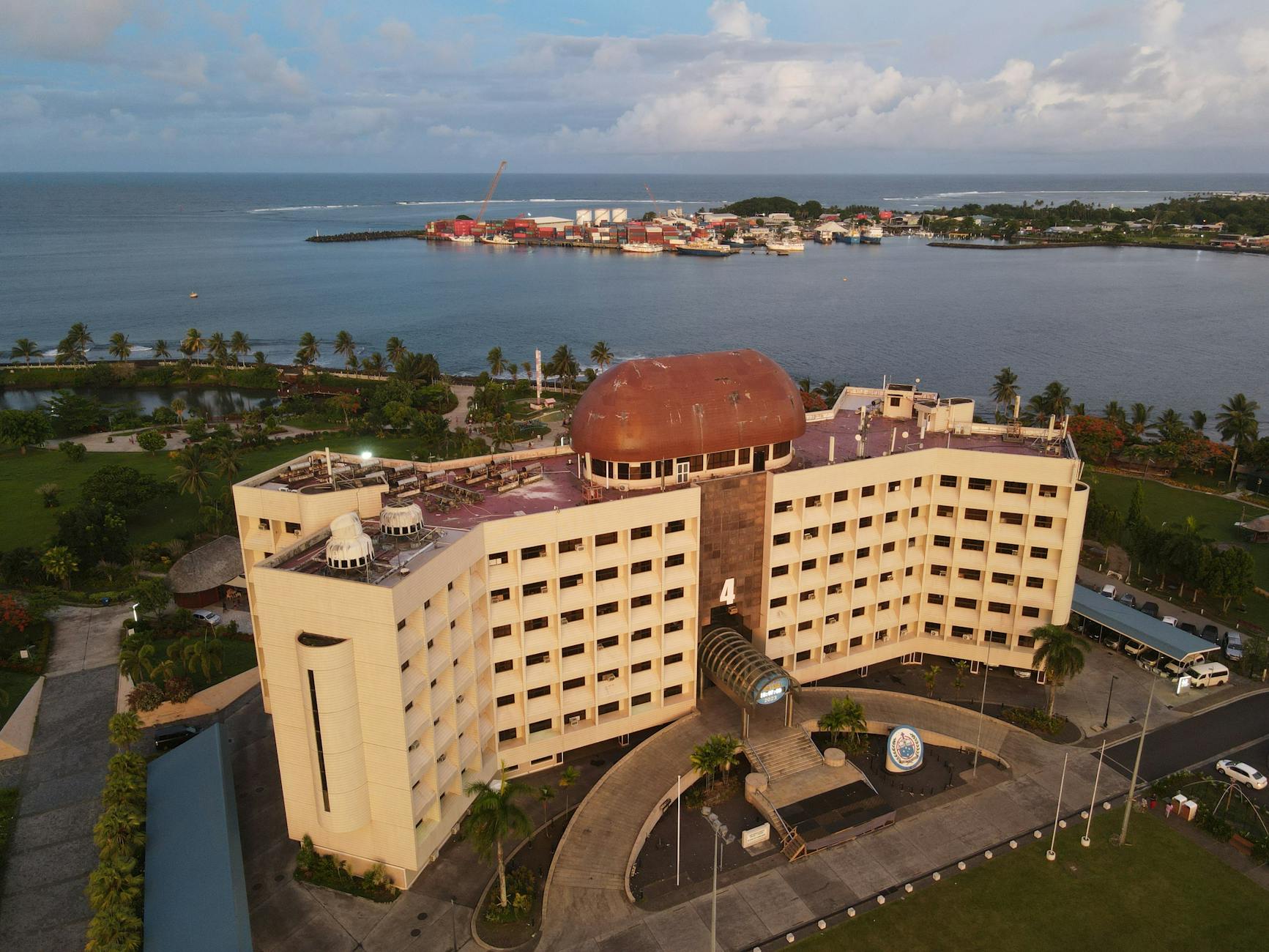
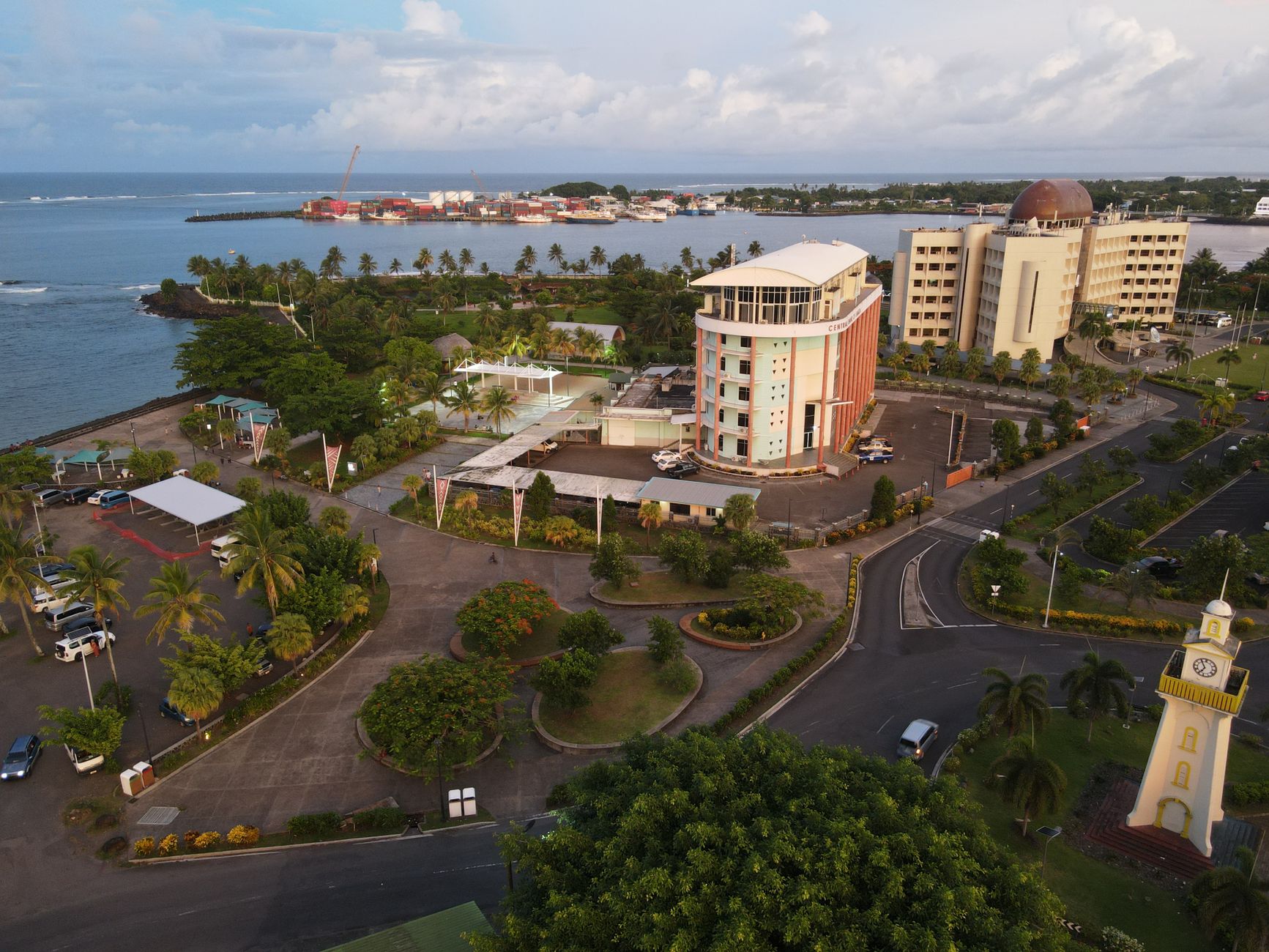
Apia's real architecture is social as much as physical: open-sided fale, church towers, government buildings on Mulinuu, and market sheds where daily life runs on respect, kinship, and the matai system. Samoa Cultural Village and the Fugalei market make that visible in the smell of coconut cream, the slap of woven mats, and conversations that never sound rushed.
Sacred Buildings, Different Rhythms
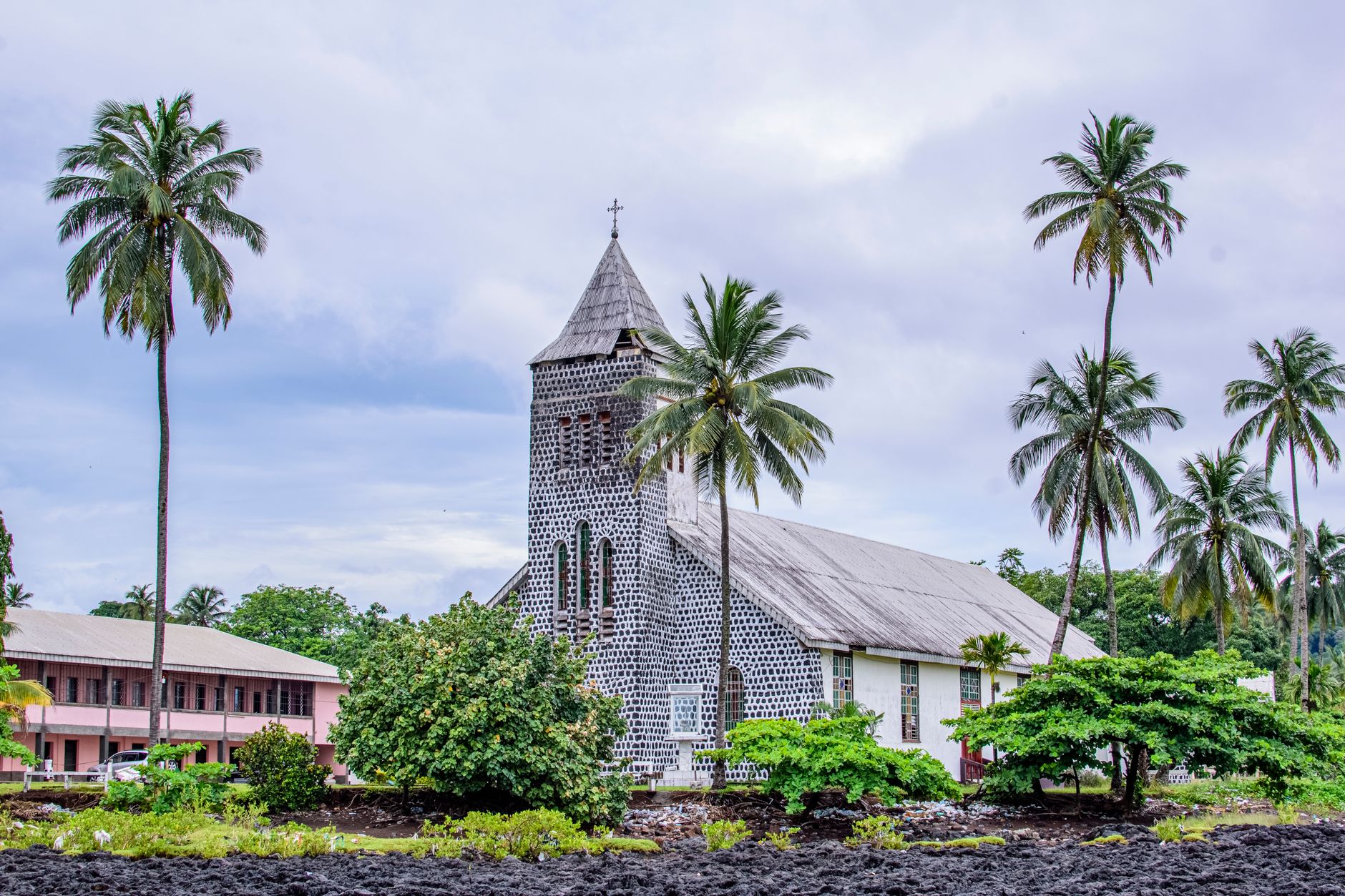
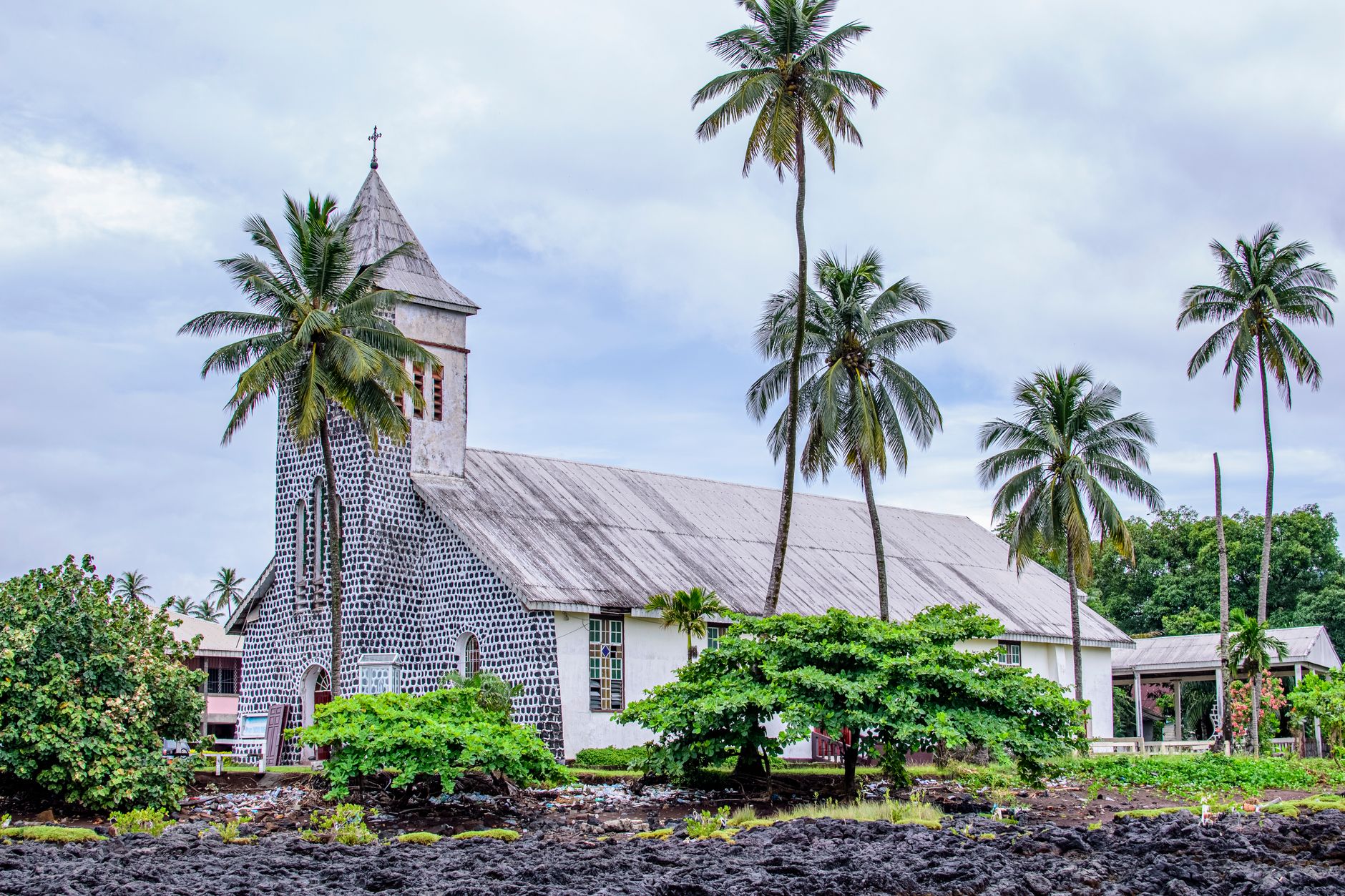
Few Pacific capitals pack this many contrasting places of worship into one small urban radius: the Immaculate Conception Cathedral, the forest-set Baha'i House of Worship, and the LDS temple out in Pesega. Sunday makes the point even sharper, when hymns carry across town and half the capital seems to exhale at once.
Historical Timeline
A Harbor Where Empires Broke and Samoa Spoke Back
From Lapita settlement on Upolu to a capital marked by grief, resistance, and survival
Lapita Canoes Reach Upolu
Most scholars date the first permanent settlement on Upolu to around 1000 BCE, when Lapita seafarers crossed the Pacific and established communities near what is now the Apia region. Their pottery, navigation skills, and reef knowledge laid the deep foundations for everything that came after. Apia did not exist as a town yet. The human story here already did.
Nafanua's Age of Authority
According to tradition, the warrior queen Nafanua belongs to the centuries when Samoa's chiefly order hardened into something durable and feared. The villages around Upolu, including the coast later gathered into Apia, lived under a political world shaped by titles, oratory, and obligations rather than stone walls or written law. Power here was spoken aloud. And remembered.
Salamasina Unifies Titles
Local accounts place Queen Salamasina in the era when Samoa's great title networks were drawn together under one woman of extraordinary rank. That mattered to the future Apia because the harbor would later become the meeting point of foreign powers trying, and often failing, to understand this older political order. Fa'a Samoa was already running the room.
Europe Sees Samoa
Dutch explorer Jacob Roggeveen became the first recorded European to sight the islands in 1722. He did not found Apia or reshape daily life overnight, but the horizon had changed. Foreign ships would keep coming.
Navigator Islands Named
Louis-Antoine de Bougainville passed through and gave the archipelago the European nickname 'Navigator Islands.' The label was flattering and slightly absurd, as if Samoan seafaring needed French approval. Still, names stick. Foreign charts now had Samoa on them.
Missionaries Enter Upolu
London Missionary Society missionaries arrived in Samoa in 1830, and Christianity began changing the sound of village life. Hymns joined older chant traditions; church bells and sermons started to share the air with chiefly speeches and ritual exchange. The future capital would grow inside that tension, never fully one thing or the other.
Apia Harbor Settlement Forms
A permanent missionary and trading settlement at Apia is commonly dated to 1837, though that year rests on thinner evidence than later records. What is clear is the pattern: foreign traders, consuls, and missionaries clustered around the protected harbor, and Apia began to harden from shoreline villages into a town. Salt air, timber sheds, copra, argument. A capital was starting in pieces.
German Trade Moves In
J.C. Godeffroy & Sohn established trading operations in 1855 and tied Apia to the booming copra economy. Money, warehouses, and plantation logic followed. The harbor stopped being just a local anchorage and became a contested commercial machine.
Civil War Reaches Apia
The First Samoan Civil War turned Apia into a place where local rivalries and imperial greed collided in plain view. German, British, and American interests backed competing claimants, and the town's streets filled with rumor, armed men, and diplomatic theater. Apia was no sleepy port. It was the fuse.
Cyclone Wrecks the Warships
In March 1889, a cyclone tore into Apia Harbor and smashed German and American warships that had been posturing at each other from the anchorage. Seven vessels were destroyed or badly damaged, and more than 140 sailors died as masts snapped and hulls drove onto the reef. Nature ended a showdown diplomats could not. The harbor still keeps that memory.
Robert Louis Stevenson Arrives
Robert Louis Stevenson reached Apia on 7 December 1889, sick in body and sharp in mind, and soon bought land at Vailima in the hills above town. Apia gave him more than tropical scenery. It gave him politics, friendships, enemies, and the raw material for 'A Footnote to History,' his fierce account of colonial meddling in Samoa.
Vailima Rises Above Town
Stevenson's Vailima estate was built in 1890 on a ridge inland from Apia, where the air ran cooler and the road climbed through thick green. The house became a literary workshop, a political salon, and a Samoan meeting place all at once. Few buildings around Apia carry so much argument in their floorboards.
Stevenson Buried on Vaea
When Stevenson died in 1894, Samoans carried his body up Mount Vaea above Apia and buried him on the summit. The climb is steep enough to make the story feel physical. You can still read the grave against sea light and rainclouds, with the capital spread below like the last page of a book he never quite finished.
Empire Divides the Islands
The Tripartite Convention of 1899 partitioned the Samoan islands between Germany and the United States, while Britain stepped aside. Apia became the colonial capital of German Samoa. A foreign border now ran through one cultural world, and the harbor paid the price for that mapmaker's arrogance.
Wilhelm Solf Shapes Colonial Apia
Governor Wilhelm Solf took charge in 1900 and gave German Samoa a style of rule that was pragmatic, controlled, and deeply colonial all the same. Under his administration, Apia gained roads, telegraph links, and a more formal port infrastructure. The town began to look administrative. The power inside it remained imported.
New Zealand Lands Unopposed
On 29 August 1914, New Zealand troops landed at Apia and seized German Samoa without a battle. No heroic last stand, no cannon smoke rolling over the harbor. Just a transfer of imperial custody at the edge of the First World War.
Influenza Comes Ashore
The SS Talune brought influenza into Apia in 1918, and the failure to quarantine the ship turned the capital into the entry point for catastrophe. Roughly one in five Samoans died in the epidemic that followed, about 8,500 people across the country. Grief moved house to house. The memory poisoned trust in New Zealand rule for a generation.
Black Saturday in Apia
On 28 December 1929, colonial police fired on a peaceful Mau procession in central Apia. Tupua Tamasese Lealofi III was killed, along with other demonstrators, and the bloodshed turned the town into a moral indictment of empire. Streets that had carried protest songs now carried the dead.
Tupua Tamasese Lealofi III Falls
Tupua Tamasese Lealofi III became the face of the Mau in Apia because he brought chiefly authority to a movement built on disciplined refusal. His death during Black Saturday made him more than a political leader. He became the capital's martyr, the man whose last public act exposed colonial rule at its ugliest.
Independence Begins at Midnight
Western Samoa became independent on 1 January 1962, the first Pacific island nation in the twentieth century to regain sovereignty. In Apia, the administrative city of colonial rule became the capital of a self-governing state. That change sounds ceremonial. It was not. It redrew who power was for.
Voting Opens Beyond Matai
A 1990 referendum expanded voting rights beyond matai titleholders and altered the political life centered in Apia. The city's parliament no longer spoke only through the old formal gatekeepers. Samoa did not abandon fa'a Samoa. It adjusted the balance.
Western Drops From the Name
In 1997, the country formally became 'Samoa' rather than 'Western Samoa.' For Apia, that was more than administrative tidying. The capital of a post-colonial state shed a label that had always sounded like someone else's filing system.
Tsunami Strikes the Coast
The undersea earthquake of 29 September 2009 sent a tsunami into parts of Upolu and hit Samoa with terrible force, killing about 189 people nationwide. Apia was less devastated than southern coastal villages, but the capital became the nerve center of shock, funerals, aid, and rebuilding. Sirens, mud, missing names. The whole island felt smaller after that.
A Day Vanishes
Samoa jumped the International Date Line in December 2011 and skipped 30 December entirely, shifting from the American side of the calendar to the Asia-Pacific one. In Apia, businesses closed on a Thursday and woke up in Saturday. Few capitals can say they misplaced a whole day on purpose.
Cyclone Evan Tears Through
Cyclone Evan struck in December 2012 and battered Apia hard, damaging roughly half the city's buildings and knocking out the power grid for weeks. Markets, roads, homes, and waterfront infrastructure took the hit. The capital smelled of floodwater, diesel, and broken timber.
Fiame Breaks the Ceiling
Fiame Naomi Mata'afa, born in Apia in 1957, became Samoa's first woman prime minister in 2021 after a bruising constitutional crisis centered in the capital. Her rise mattered because it happened in the very city where state power, chiefly lineage, and modern party politics rub against each other every day. Apia made her political life. She, in turn, changed what power in Apia could look like.
Notable Figures
Robert Louis Stevenson
1850โ1894 ยท WriterStevenson came to Samoa for his health and ended up tangled in its politics, friendships, and weather. Samoans called him Tusitala, the teller of tales, and his house above Apia still feels like the home of a man who preferred a wide veranda and a hard argument. He would probably recognize the harbor light, then complain about the traffic and ask to be taken uphill.
Photo Gallery
Explore Apia in Pictures
A view of Apia, Samoa.
George Njukeng on Pexels · Pexels License
A view of Apia, Samoa.
George Njukeng on Pexels · Pexels License
A view of Apia, Samoa.
Jordan McDade on Pexels · Pexels License
A view of Apia, Samoa.
Toktok No Maski Productions on Pexels · Pexels License
A view of Apia, Samoa.
Mel Mariano on Pexels · Pexels License
A view of Apia, Samoa.
Jonathan Borba on Pexels · Pexels License
A view of Apia, Samoa.
Jason Catan on Pexels · Pexels License
A view of Apia, Samoa.
Eric Seddon on Pexels · Pexels License
A view of Apia, Samoa.
Tony Rios on Pexels · Pexels License
A view of Apia, Samoa.
Ham Chitnupong on Pexels · Pexels License
A view of Apia, Samoa.
Eric Seddon on Pexels · Pexels License
A view of Apia, Samoa.
Dominik Gryzbon on Pexels · Pexels License
Practical Information
Getting There
Faleolo International Airport (APW) is Samoa's main gateway and sits about 35 kilometers west of Apia; the drive usually takes 45 to 60 minutes. As of 2026, Samoa has no rail network and no passenger train stations, and the road connection into town is the main west-east coastal route on Upolu rather than a numbered motorway.
Getting Around
As of 2026, Apia has no metro, tram, rideshare, or city rail system. Movement depends on privately run timber buses from Fugalei Market Bus Station and Savalalo Bus Station, cash-only fares around ST$1 to ST$8, plus unmetered taxis; cycling works best for confident riders because dedicated bike lanes are absent and roads outside the center narrow quickly.
Climate & Best Time
Apia stays warm all year, usually around 26 to 30C, with the wetter season from November to April and the heaviest rain between December and March. June through September is the cleanest window for lower humidity, clearer snorkeling water, and fewer weather headaches, which is why those months draw the heaviest visitor traffic.
Language & Currency
Samoan and English are both official, and English is widely used in hotels, banks, and tour businesses; a simple "Talofa lava" or "Fa'afetai" still changes the tone of an exchange. The currency is the Samoan tala (WST or ST$), and in 2026 cash remains necessary for buses, markets, village stops, and many small eateries even when larger hotels and supermarkets take cards.
Safety
Apia is generally calm, but petty theft turns up where crowds and bags mix, especially around markets, beaches, and bus transfers. The sharper risk is logistical: roads are often unlit after dark, taxis from APW should be price-agreed before you get in, tap water is best avoided, and Sunday closures can wreck a tight itinerary if you plan as though the city runs seven days a week.
Tips for Visitors
Respect Sunday Quiet
Plan around Sunday closures. Buses usually stop, many shops shut, and evening prayer curfews can quiet whole neighborhoods between about 6 and 7 PM.
Use Wooden Buses
Local buses from Apia are the cheapest way to get around Upolu at ST$1-8, but they run loosely and take cash only when you get off. Keep small notes handy and skip them if you're carrying a big suitcase.
Agree Taxi Fare
Taxis from Faleolo Airport are not metered, so settle the price before the door shuts. The usual airport run to Apia lands around ST$60-120, which makes a pre-booked shuttle far better value.
Snorkel At High Tide
Palolo Deep works best at high tide, when the reef edge is easier to reach and the water is clearer. The drop-off sits only 30 to 40 meters offshore, close enough to feel slightly absurd.
Carry Tala Cash
Markets, buses, small eateries, and many casual purchases still lean on cash. ATMs exist in Apia, but they can go offline, so don't wait until your last banknote is gone.
Eat Early, Politely
Breakfast stays light, dinner often starts around 6 to 7 PM, and meals in homes may begin with prayer and elders served first. If you're invited to share food, take your time and don't refuse too quickly.
Explore the city with a personal guide in your pocket
Your Personal Curator, in Your Pocket.
Audio guides for 1,100+ cities across 96 countries. History, stories, and local insight โ offline ready.
Audiala App
Available on iOS & Android
Join 50k+ Curators
Frequently Asked
Is Apia worth visiting? add
Yes, especially if you like places where daily life and travel don't sit in separate boxes. You can snorkel a reef a short walk from town, browse produce markets in the morning, and end the day with church bells rolling over the harbor. Apia feels less polished than many Pacific capitals, which is part of its pull.
How many days in Apia? add
Three to four days works well for most travelers. That gives you time for Apia itself, a day around east or south Upolu, and one slower day for museums, markets, or Palolo Deep. Stay longer if you want to add Manono, To Sua, or a Savai'i ferry trip.
How do I get from Faleolo Airport to Apia? add
A taxi is the fastest option, with the 35-kilometer trip usually taking 45 to 60 minutes. Expect roughly ST$60-120 and agree the fare first, since cabs are not metered. Shared shuttles at about ST$20-30 per person cost less, while local buses are cheapest but involve a 5 to 10 minute walk from the terminal.
Can you get around Apia without a car? add
Yes, if you keep your expectations realistic. Central Apia is walkable, and local buses reach much of Upolu during daylight, but schedules are loose and sidewalks thin out outside the core streets. Sundays change everything, so don't count on public transport then.
Is Apia safe for tourists? add
Apia is generally safe, with petty theft the main irritation rather than violent crime. Keep an eye on bags in markets and on buses, avoid flashing phones or cash, and think twice before driving rural roads after dark. Cultural respect matters here almost as much as street sense.
Is Apia expensive? add
Apia can be fairly affordable if you use local buses, eat at markets or casual spots, and save taxis for when you need them. Bus fares run from about ST$1-8, while airport taxis can wipe out the day's budget in one ride. Cash helps you avoid awkward moments at smaller places.
What is the best time to visit Apia? add
June through September is the sweet spot for most travelers. Those months usually bring drier weather, lower humidity, clearer water for snorkeling, and less cyclone risk. Samoa stays warm all year, but December to March is wetter and heavier.
Do I need cash in Apia? add
Yes. Cards work at larger hotels, supermarkets, and some restaurants, but buses, markets, taxis, and many small vendors still expect Samoan tala in cash. Carry small denominations because handing over a large note for a bus fare is a good way to start a negotiation you did not want.
What should I wear in Apia and Samoa? add
Dress modestly once you're away from the beach or hotel pool. Covered shoulders and knees are the safe default in town, near churches, and around villages, especially on Sundays. Samoa notices clothing more than many visitors expect.
Sources
- verified Samoa Pocket Guide โ Used for Apia attractions, cultural advice, bus practicalities, food guidance, and money-saving transport details.
- verified Samoa Tourism Authority โ Used for climate, culture, food traditions, and etiquette around Sundays, dress, and fiafia performances.
- verified Airport Transfer Portal: APW Guide โ Used for airport distance, transfer times, taxi and shuttle context, lack of rail or rideshare, and road safety notes.
- verified Secret Flying Samoa Airport Guide โ Used for airport taxi price ranges, bus timing context, Sunday service limits, connectivity, and drinking water advice.
- verified Wanderlog: Apia Skyline and Reviews โ Used for Robert Louis Stevenson Museum, Mount Vaea, and skyline viewpoints around Apia.
Last reviewed: