Introduction
This Samoa travel guide starts with the real surprise: the country feels less like a resort chain and more like a living village world shaped by reef, church bells, and custom.
Samoa rewards travelers who want more than a beach photo. In Apia, the capital, fruit stalls, government buildings, and the former home of Robert Louis Stevenson sit within a short drive of surf breaks and black-rock shoreline; an hour or two later, Upolu opens into places like Lalomanu and Lotofaga, where white sand and volcanic geology share the same coast. The famous To Sua Ocean Trench at Lotofaga is not a theme-park trick but a collapsed lava tube filled with salt water, 30 meters deep and reached by a steep ladder that makes the descent feel half swim, half leap of faith.
The deeper appeal is cultural, not decorative. Samoa still runs on fa'a Samoa: family obligations, chiefly titles, Sunday quiet, and the etiquette that shapes how people greet, eat, and move through a village. That rhythm is easiest to feel outside the capital, whether you cross by ferry from Mulifanua to Salelologa, spend time around Siumu or Fagaloa Bay, or continue to Savai'i for Taga and Falealupo. Roads circle both main islands, but the real map is social. A beach fale, an umu meal, and a respectful "talofa lava" will take you further than an itinerary packed to the minute.
Travelers usually come for reef water and slow roads, then remember Samoa for its contrasts. You can snorkel above coral in the morning, stand by lava fields and blowholes in the afternoon, and end the day in Vailima or Manono with church singing carrying across the dark. Whale season from July to October adds another reason to plan carefully, especially if you want Savai'i's coast at its best. But even without whales, Samoa has range: Lotofaga for the iconic swim, Palauli for village-scale quiet, Falealupo for edge-of-the-island drama, and Apia when you want the country's history, markets, and pulse in one place.
A History Told Through Its Eras
Where Polynesia Learned to Sail
Origins and Sacred Titles, c. 1500 BCE-1830
The first scene is not a palace but a shoreline: dentate-stamped pottery cooling in the salt air, pigs grunting in woven pens, and canoes pulled above the tide on islands that had already become a school for the Pacific. Archaeologists place Lapita settlers in Samoa around 1500 BCE, and from this archipelago their descendants pushed eastward into the oceanic world that would later include Hawai'i, Aotearoa, and Rapa Nui. Samoa was not a remote outpost. It was a center.
Ce que l'on ignore souvent, c'est que Samoan memory begins with a woman. In one creation tradition, Tagaloa sends life into the world and Sinaalelagi descends from the heavens, a founding image that says something subtle and lasting about rank, kinship, and the way authority could pass through women as well as men. Long before Europeans arrived with flags and categories, Samoa had already built its own order: the matai title system, the etiquette of fa'a Samoa, and a political life arranged through kin groups, obligation, speech, and public honor.
By the first millennium of the Common Era, titles mattered as much as territory. The Tui Manu'a, based far to the east, held an aura that reached across Polynesia, while the great lineages of Malietoa, Tupua, Mata'afa, and Faumuina fought, married, negotiated, and remembered. Power in Samoa rarely sat still. It moved through genealogy, ceremony, and the ability to hold people together without breaking the delicate relational space Samoans call va.
Then came Christianity in 1830, and with it one of those quiet revolutions that change a country's furniture, calendar, and conscience all at once. Malietoa Vai'inupo, the last ruler to hold the tafa'ifa, received baptism after meeting the London Missionary Society's John Williams, yet old ceremony did not vanish overnight. Conch shells still sounded at dawn. Fine mats still wrapped the dead. The new God entered a house that was already old, and that tension shaped everything that followed.
Malietoa Vai'inupo stands at the hinge of two worlds: the last great unifier of Samoa, and the first paramount ruler to let Christianity into the center of power.
When descendants of the Lapita settlers spread into the wider Polynesian world, they abandoned their decorated pottery tradition; the shards in Samoa are, in a sense, the fingerprints left in the childhood home.
The Day Europe Looked Ashore
Encounters, Missions, and Misunderstandings, 1722-1870
In 1768, French sailors watched Samoan canoe crews skim over the water with such control that Louis-Antoine de Bougainville gave the archipelago a name that lasted for generations: the Navigator Islands. One can see the scene at once. Salt on the rigging, officers leaning over the rail, and paddlers approaching with a confidence that made European seamanship look suddenly less singular than it imagined.
Not every first contact had grace. In 1787, at Aasu Bay on Tutuila, men from the Lapérouse expedition went ashore for water and did not return. A clash broke out, twelve French officers and sailors were killed, and the Comte de Lapérouse, writing that night, refused the cheap comfort of calling his attackers monsters. He called them passionate rather than cruel. That distinction matters. It tells you how quickly fear, protocol, pride, and misreading could turn a beach into a grave.
Missionaries arrived with scripture, cloth, schools, and the conviction that they were remaking the islands from the soul outward. John Williams landed in 1830 and found not a people waiting to be civilized but a society already ordered, articulate, and politically acute. Samoan chiefs accepted, redirected, and domesticated Christianity with startling speed. Sermons entered village life, but they entered on Samoan terms, braided into rank, speech, and communal discipline.
You can still feel that layered inheritance in Apia, where monuments to missionaries stand in a town shaped just as much by market rhythms and chiefly politics, and in Vailima, where another foreign observer would later read Samoa with equal parts fascination and incomprehension. The missions did not erase Samoa. They changed the language of authority, and by doing so prepared the ground for the next contest: empire.
John Williams is remembered as the missionary who helped open Christian Samoa, though the islands received him less as a conqueror than as a man entering an already formal society.
Williams, who became beloved in Samoa, was killed in Vanuatu in 1839; Samoans publicly mourned the news, an irony almost too sharp for fiction.
Apia, or How to Turn a Harbor into a Diplomatic Stage
The Three Flags, 1870-1914
Now the scene moves to Apia harbor in the late nineteenth century: German merchants balancing ledgers, British officers drafting memoranda, American officials counting coaling advantages, and Samoan chiefs watching all of them with more intelligence than the foreigners credited. A small Pacific town had become a grand theater of imperial vanity. Germany wanted commerce, the United States wanted strategic presence, Britain wanted not to be left out, and Samoa wanted, with remarkable persistence, to remain itself.
The tragedy is that foreign powers read Samoan politics as disorder when it was often complexity. Rival claims between Malietoa, Mata'afa, and Tupua lineages were real enough, but European and American interference hardened them, armed them, and turned succession into international crisis. In 1889, warships from Germany, Britain, and the United States crowded Apia during a near-war over the throne. Then nature intervened with imperial sarcasm: a cyclone smashed six of the seven warships in the harbor. Samoa had become the stage, but the storm stole the scene.
Robert Louis Stevenson arrived in 1889, ill, celebrated, restless, and far more politically awake than many visitors expected. At Vailima, above Apia, he wrote, entertained, rode through the hills, and threw himself into Samoan affairs with the zeal of a novelist who had wandered into a constitutional crisis. He defended Samoan leaders against colonial misrule, mocked official stupidity with relish, and died there in 1894, buried on Mount Vaea under the words he had written for his own requiem.
The settlement came not through justice but partition. In 1899, the Tripartite Convention divided the islands: the eastern group went to the United States, western Samoa to Germany, and Britain accepted compensation elsewhere in the Pacific. A harbor decided the map. Families, titles, and memories did not divide so neatly, and that wound would endure far longer than the ink on the treaty.
Robert Louis Stevenson, the invalid novelist of Vailima, became one of Samoa's fiercest foreign defenders because he could not resist a fight when power behaved stupidly.
During the 1889 Apia cyclone, the American ship USS Calliope escaped the harbor under full strain while larger imperial rivals were wrecked around her, a scene locals remembered for decades.
The Black Saturday That Changed Samoa
Occupation, Resistance, and Independence, 1914-1962
The opening image belongs to 29 August 1914: New Zealand troops landing without resistance to seize German Samoa at the start of the First World War. No grand battle, no cavalry flourish, just the administrative transfer of an island world from one empire to another. Yet occupations are often most consequential when they begin quietly. Under New Zealand rule, Samoa would suffer one of the Pacific's most painful colonial failures.
In 1918, the influenza pandemic reached Samoa on the SS Talune, and the administration failed to impose effective quarantine. The result was catastrophic. Roughly one in five Samoans died within weeks. Imagine the villages: prayer houses full, mats laid out for the dead, families collapsing faster than custom could absorb. This was not a natural inevitability. It was administrative negligence, and Samoans remembered it with terrible precision.
Out of that grief grew politics sharpened by mourning. The Mau movement, broad-based and disciplined, demanded Samoan self-government through petitions, public marches, and a refusal to accept colonial paternalism as normal. Its moral authority came in part from restraint. Here was a resistance that understood public dignity better than the administration that opposed it.
Then came Black Saturday, 28 December 1929, in Apia. New Zealand police opened fire on a peaceful Mau procession, killing several demonstrators, among them the high chief Tupua Tamasese Lealofi III, who is remembered for urging his people not to answer violence with violence. That sentence still echoes. It turned a protest into a national wound and a colonial embarrassment from which New Zealand never fully recovered.
On 1 January 1962, Western Samoa became the first Pacific Island country to gain independence in the twentieth century. The achievement did not erase sorrow; it crowned it with purpose. Later generations would walk the seawall in Apia, swim at Lotofaga, cross from Mulifanua to Salelologa, or drive out toward Lalomanu almost casually, scarcely noticing how much of that ordinary national life had been paid for by discipline, grief, and the refusal to kneel forever.
Tupua Tamasese Lealofi III became the conscience of the independence struggle because he faced gunfire with composure and left his people a command rather than a slogan.
New Zealand's prime minister Helen Clark made a formal apology in Apia in 2002 for the colonial administration's failures, especially the 1918 influenza disaster and Black Saturday.
The Cultural Soul
A Greeting That Measures the Room
In Samoa, speech does not begin with information. It begins with temperature. A calm "talofa lava" in Apia can do more than a paragraph of explanation, because the phrase asks whether you know how to enter a human space without stamping on it.
The pleasure lies in the precision. Samoan keeps one register for ordinary life, another for respect, and another still for chiefly oratory; politeness here is not sugar sprinkled on a sentence, it is grammar with a pulse. "Tulou" means excuse me, yes, but more exactly it means that another person's line of sight, dignity, and stillness exist, and that you have noticed.
Europeans often imagine language as a tool. Samoa treats it like a ceremony. Listen in a market in Salelologa, or outside a church after evening prayer, and you hear voices doing social architecture in real time: greeting, placing, softening, honoring, remembering.
One word explains half the country: "vā." The space between people is not emptiness but a living bond that can be tended, neglected, bruised, repaired. A nation is sometimes a grammar of relationships.
The Elegance of Lowering Yourself
Samoan etiquette has the beauty of a fan opening. You notice one rib at a time: remove shoes before entering, sit a little lower than an elder, do not eat while walking through a village as if hunger excused bad manners, and keep quiet during sa, the evening prayer pause when the air itself seems to stand still.
None of this feels ornamental. It feels structural. In many places, manners are decorative lace stitched onto individual desire; in Samoa they are load-bearing beams, and the room holds because people agree to carry it together.
A traveler learns quickly that confidence here looks different. The admired person is not the loudest but the one who understands sequence: greeting before asking, waiting before speaking, noticing the chief before noticing the buffet. That is why a village on Upolu can feel more ordered than certain European parliaments. The bar is not high. Still.
You will see the code most clearly outside the capital. In Lotofaga, on the path to To Sua Ocean Trench, or in Manono where the island refuses hurry, courtesy has the exactness of an old dance whose steps still matter because everyone remembers what happens when they do not.
Coconut Cream, Smoke, and the Law of Sharing
Samoan food understands a truth many grand cuisines forget: pleasure does not need decoration. It needs taro pulled apart by hand, fish bright with lime, coconut cream with the density of velvet, and smoke from the umu drifting over a yard where somebody's aunt is already deciding whether you have eaten enough. You have not.
The umu is not merely a method. It is a social sentence written in hot stones, banana leaves, waiting, and appetite. Open one at noon and the aroma tells the whole story before a word is spoken: palusami rich with coconut, ulu with char on the skin, talo holding heat like a secret, pisupo arriving with the stubborn afterlife of empire.
Sunday to'ona'i matters more than any restaurant ranking. After church, families gather in good clothes and very serious hunger; food appears in sequence, not spectacle, and what looks abundant on the table often represents hours of labor, obligation, and love so disciplined that it almost ceases to resemble sentiment.
If you want the edible map of Samoa, follow the islands. Oka i'a near Apia tastes of lime and reef. Beach meals near Lalomanu bring salt, smoke, and papaya. On the road toward Falealupo or Taga, roasted breadfruit makes a better argument than any brochure ever could.
When the Evening Stops Breathing
Christianity in Samoa is not an overlay. It has entered the bones of the day. Churches dominate village skylines, hymn singing spills into roadsides, and Sunday rearranges time so thoroughly that a visitor who expects casual holiday freedom instead encounters liturgy, white clothing, family processions, and a moral seriousness that can feel almost theatrical until one understands that the theater is belief.
Then comes sa. Dusk lowers itself over the village, prayer begins, and movement softens. Even the light seems to obey. A secular person can still recognize the genius of the ritual: a whole community agreeing that noise will step back for a moment so reverence can take the front seat.
Yet Samoa does not erase what came before. Older cosmologies, genealogies, chiefly protocols, and Christian devotion live in the same house, sometimes in harmony, sometimes with the polite tension of relatives who know they cannot move out. That tension gives the culture depth.
You feel it strongly in Vailima, where Robert Louis Stevenson chose to live and where his grave above Apia watches a country that converted with astonishing speed but never surrendered its appetite for ceremony. Faith arrived by ship. It stayed because Samoa already understood ritual.
Houses With No Wish to Hide
The traditional Samoan fale is one of the most intelligent buildings in the Pacific. No walls, or few. Posts. A domed roof. Space open to air, voice, weather, and witnesses. Privacy is not the first principle here; relationship is. A house can reveal an entire philosophy.
Western visitors, trained to admire fortresses and locked doors, may need a moment. The fale proposes that life should remain visible enough for kinship to function, for obligations to circulate, for conversation and correction to pass through as easily as wind. Architecture as moral weather.
This openness is not naivete. It is adaptation sharpened by climate and custom: shade for heat, height for air, mats for gathering, flexibility for ceremony. In villages across Upolu and Savai'i, and especially in places where beach fales still line the shore near Lalomanu or the ferry routes toward Mulifanua and Salelologa, one sees how a building can belong to both landscape and law.
Then the churches arrive with their concrete, painted facades, and imported denominational ambitions. The contrast is almost comic. One form says, we gather. The other says, we have committees.
The Space Between Two People Is Never Empty
Every country has a hidden doctrine. Samoa's may be this: the self is real, but relation comes first. Not as a slogan. As daily engineering. Family, village, title, church, gift, funeral, wedding, seating order, apology, contribution: each act says that identity is not something you carry alone in your chest like a private jewel. It is negotiated, witnessed, maintained.
That is why fa'alavelave can puzzle outsiders. A wedding or funeral does not merely happen and pass; it calls resources, labor, money, mats, travel, speeches, tears, and kin into motion. The burden is obvious. So is the grace. A person is never left to stand as a solitary event.
This can feel demanding, even merciless. It is. Freedom in Samoa does not always look like escape; sometimes it looks like competence within obligation, the ability to honor others without vanishing yourself. That paradox gives the culture its tensile strength.
Sit long enough in Fagaloa Bay, where rainforest drops toward the sea with indecent confidence, and the idea becomes clear. An island is not isolation. An island is proof that edges create relation.
What Makes Samoa Unmissable
Volcanic Water Worlds
Lotofaga's To Sua Ocean Trench turns a collapsed lava tube into Samoa's signature swim. Sea caves, reef shelves, and blowholes on Savai'i make the coastline feel geologically alive.
Beaches Without Crowds
Lalomanu and the south coast of Upolu deliver the white sand most travelers picture, but without the high-rise strip. Beach fales keep the experience close to the water and close to village life.
Lava and Blowholes
Around Taga and the wider Savai'i coast, old eruptions still shape the landscape in plain view. The Alofaaga blowholes fire seawater through lava rock with enough force to turn a coconut into a prop.
Fa'a Samoa
Samoa's strongest draw is cultural: village protocol, chiefly systems, Sunday meals, and the etiquette of respect still organize daily life. Travelers feel it in the pace of a fale stay, a church service, or a shared umu lunch.
Rainforest to Reef
Fagaloa Bay and Upolu's interior hold lowland rainforest, waterfalls, and birdlife within short distance of the coast. Few countries this size move from jungle road to reef snorkel so quickly.
Easy Island Hopping
The ferry from Mulifanua to Salelologa makes it simple to combine Upolu with a few days on Savai'i. That short crossing opens up quieter villages, bigger lava landscapes, and some of Samoa's best whale-watching waters.
Cities
Cities in Samoa
Apia
"The only capital in the world where Robert Louis Stevenson chose to die, its waterfront market opens before dawn and smells of taro, dried fish, and the previous night's rain."
Lalomanu
"A village on Upolu's southeast tip where the beach is so white it reads almost blue in photographs, and the open-sided fales sit close enough to the water that waves wake you at 3 a.m."
Salelologa
"Savai'i's ferry-town and commercial hub is nobody's idea of beauty, but the market behind the wharf is where you learn what the island actually eats."
Lotofaga
"A small south-coast village whose collapsed lava tube — To Sua Ocean Trench, a 30-metre saltwater swimming hole reached by a single wooden ladder — looks like the earth opened its mouth and filled it with the Pacific."
Falealupo
"At Savai'i's westernmost tip, a canopy walkway threads through rainforest above a village that was forced to sell logging rights to pay for a school, then bought them back; the story is carved into the place."
Palauli
"A district on Savai'i's south coast where the 1905–1911 lava fields reach the sea in frozen black waves, burying an older world that locals still name by memory."
Fagaloa Bay
"A deep, road-difficult inlet on Upolu's north coast sheltering the Uafato Conservation Zone, described by UNESCO as the largest remaining lowland rainforest in the Pacific."
Manono
"A car-free island between Upolu and Savai'i where the path around the entire island takes two hours on foot and no engine has ever broken the silence."
Siumu
"A south-coast Upolu village that sits at the edge of one of the island's last intact coastal rainforest corridors, where humpback whales pass close enough in August that you can hear them before you see them."
Taga
"A Savai'i village where the Alofaaga blowholes drive seawater 20 metres into the air through lava tubes, and locals still throw coconuts into the vents to watch them explode skyward."
Mulifanua
"The Upolu ferry terminal is a functional, unglamorous place, but the crossing it launches — to Salelologa, across a channel where Manono and Apolima sit like punctuation marks — is one of the finest short sea passages in"
Vailima
"The hillside estate above Apia where Stevenson spent his last four years, wrote Weir of Hermiston, learned Samoan, and was carried by sixty chiefs up Mt. Vaea after his death in 1894, is now a museum that still smells fa"
Regions
Apia
Apia and the North Coast
Apia is Samoa's administrative and commercial center, but the city works best when you treat it as a port with a memory rather than a checklist. Markets, churches, government buildings, and the harbor sit close together, and the north coast gives you the practical backbone of the trip: banks, transport, museums, and the easiest first read on daily Samoan life.
Vailima
Vailima and the Inland Hills
The hills above Apia feel cooler, quieter, and more reflective than the waterfront below. Vailima is where you come for Robert Louis Stevenson, older estates, and the sense that Upolu's interior still holds the island's most interesting silences.
Lalomanu
Southeast Upolu
This is the postcard coast, but the beauty is sharper than the brochures usually admit: reef flats, sudden weather, and beaches that still belong to villages before they belong to tourism. Lalomanu draws the eye, while nearby Lotofaga gives the region its most famous geological jolt at To Sua.
Fagaloa Bay
Fagaloa and the East Rainforest Coast
Fagaloa Bay is the greener, less discussed side of Upolu, where the road bends around rainforest and the sea looks darker under the cliffs. It suits travelers who like long drives, village life, and places that ask for attention rather than applause.
Mulifanua
Southwest Upolu and the Ferry Side
The west side of Upolu is about movement: airport arrivals, ferry departures, and the small logistical decisions that shape the rest of a Samoa trip. Yet places like Mulifanua, Siumu, and Manono also show how quickly the practical edge of the island turns into village coast and open water.
Salelologa
Savai'i
Savai'i is larger than Upolu and feels less arranged for visitors, which is exactly the point. Salelologa handles the arrivals, Palauli and Taga carry the volcanic drama, and Falealupo gives you the western edge of the country, where lava fields, sea cliffs, and village roads keep winning the argument over polish.
Suggested Itineraries
3 days
3 Days: South Coast Swim Route
This is the short Upolu trip for travelers who want the famous water and none of the wasted mileage. Start west at Siumu, curve east to Lotofaga for To Sua, then end on the white sand at Lalomanu, where the reef finally makes you slow down.
Best for: short breaks, swimmers, first-time Samoa visitors who want the south coast
7 days
7 Days: Capital, Rainforest, and Old Estates
This week-long route keeps you on Upolu but avoids the lazy beach-only version of the island. You base yourself between Apia and Vailima for museums and history, then head into Fagaloa Bay for rainforest and a quieter coast that feels far older than the capital.
Best for: culture-focused travelers, readers, and travelers without a car for the full week
10 days
10 Days: Savai'i Lava and Sea Cliffs
Savai'i rewards anyone willing to give it time. You arrive through Salelologa, push west through Palauli and Taga for lava coast and blowholes, then finish in Falealupo, where the island seems to run out and the Pacific takes over.
Best for: repeat visitors, road trippers, and travelers who prefer wild coasts to resort strips
14 days
14 Days: Slow Ferries and Village Shores
This two-week route is built for travelers who want Samoa at half speed. Start with Manono for village life and no cars, use Mulifanua as your ferry hinge, then cross to Salelologa and stay long enough on Savai'i to stop treating every beach as a photo stop.
Best for: slow travelers, couples, and anyone planning a beach fale trip with plenty of empty time
Notable Figures
Malietoa Vai'inupo
d. 1841 · Paramount rulerHe was the last man to hold the tafa'ifa, the cluster of four paramount titles that amounted to kingship without a crown. His baptism did not simply change his own faith; it shifted the spiritual direction of the islands while leaving old ceremony stubbornly alive.
John Williams
1796-1839 · MissionaryWilliams matters in Samoa not because he arrived from abroad, but because chiefs chose to engage with what he brought and refashion it within Samoan life. His death in Vanuatu shocked Samoa deeply; the grief tells you how fully he had entered the islands' emotional world.
Jean-Francois de Galaup, comte de Lapérouse
1741-1788? · French navigatorLapérouse's Samoan episode has the force of tragedy because he responded to violence with a rare refusal to demonize. He saw the clash as human error under strain, not proof of savagery, and that makes his journal unusually moving.
Malietoa Laupepa
1841-1898 · High chief and claimant to kingshipLaupepa spent years being recognized, undermined, restored, and manipulated by rival foreign powers who treated Samoa like a negotiable asset. Behind the title was a man trying to hold legitimacy together while three empires pulled at the seams.
Mata'afa Josefo
1832-1912 · High chief and political leaderEuropean officials often described him as a problem, which is usually a sign that he understood power better than they did. He represented continuity, prestige, and a Samoan claim to self-direction that did not fit neatly into foreign paperwork.
Robert Louis Stevenson
1850-1894 · WriterStevenson came to Samoa for his health and found instead a cause. At Vailima he wrote, entertained, and campaigned against colonial blundering with enough passion that Samoans mourned him as Tusitala, the teller of tales, and not merely as a visiting celebrity.
Tupua Tamasese Lealofi III
1899-1929 · Mau leader and high chiefHe gave the Mau movement a face that combined rank with restraint, which made him harder for the colonial state to dismiss. His death on 28 December 1929 turned him into something more than a martyr: a measure of national dignity.
Olaf Frederick Nelson
1883-1944 · Merchant and nationalistPart businessman, part strategist, Nelson used money, print, and persistence to keep anti-colonial politics alive when the administration hoped to exhaust it. He was not a saint. That is precisely why he is interesting: political endurance rarely comes wrapped in innocence.
Fiame Naomi Mata'afa
born 1957 · PoliticianHer rise carried old chiefly lineage into modern democratic life without turning tradition into costume. She is the daughter of Samoa's first prime minister, yet her own authority comes from navigating coalition politics in a country that knows the weight of names and the danger of relying on them alone.
Photo Gallery
Explore Samoa in Pictures

A serene beach scene in Samoa with a fallen tree and vibrant blue sea.
Photo by Eric Seddon on Pexels · Pexels License
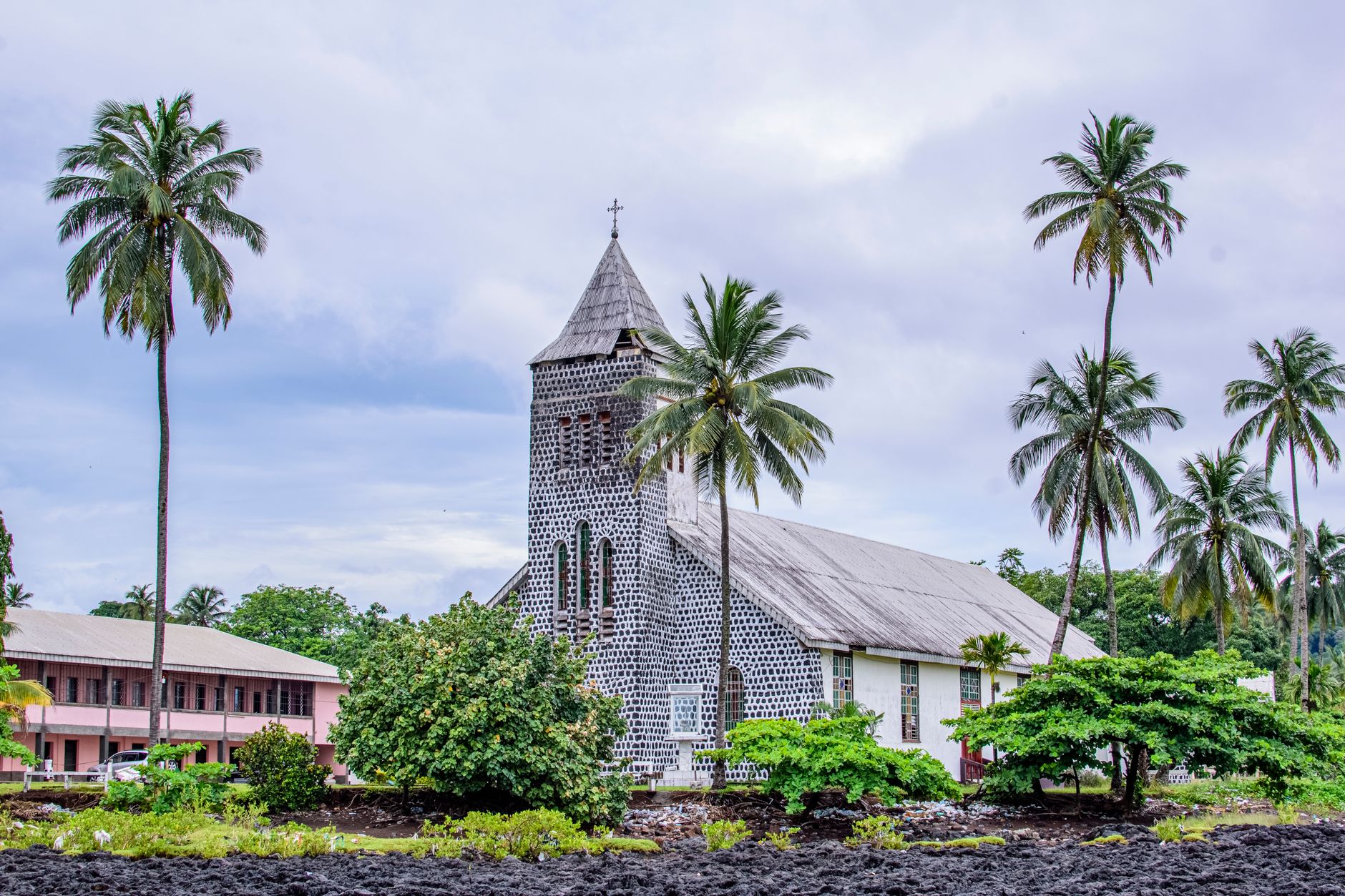
Scenic church with unique black and white tile facade amidst lush palms, showcasing tropical architecture.
Photo by George Njukeng on Pexels · Pexels License
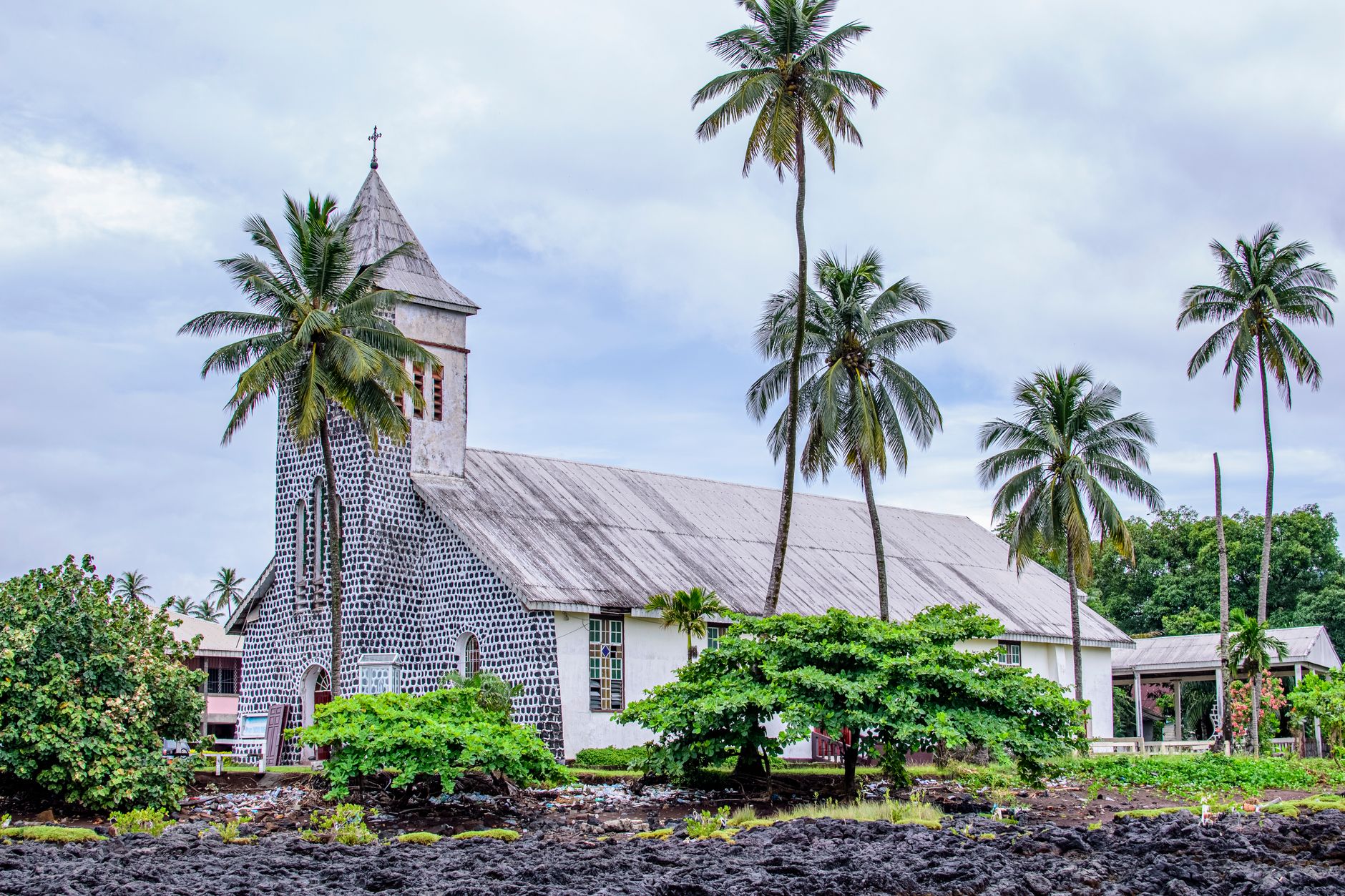
Historic stone church, tropical palm trees in Limbe, Cameroon.
Photo by George Njukeng on Pexels · Pexels License

Tranquil beach scene with palm trees and dramatic clouds in Banten, Indonesia at sunset.
Photo by Tom Fisk on Pexels · Pexels License
Practical Information
Visa
For trips under 60 days, travelers from the US, UK, Canada, and most EU countries do not need to arrange a visa before flying. Samoa Immigration now states that foreign nationals can receive a free visitor permit on arrival for up to 90 days, but some foreign-office pages still quote 60 days, so check directly with Immigration if you plan to stay longer than two months.
Currency
Samoa uses the Samoan tala (WST). Cards work in many resorts, hotels, and larger businesses in Apia and some parts of Salelologa, but cash still covers buses, taxis, village entry fees, and many small shops, so withdraw before leaving the main towns.
Getting There
Most travelers land at Faleolo International Airport on Upolu, about 35 to 40 km west of Apia. Nonstop international links usually come via Auckland, Brisbane, Nadi, Pago Pago, or Honolulu, so long-haul trips almost always involve one of those hubs.
Getting Around
Samoa is a road-and-ferry country: buses and taxis handle local travel, and the key inter-island link is the ferry between Mulifanua and Salelologa, which takes about 60 to 90 minutes. Car rental makes the biggest difference if you want beaches, waterfalls, and cave sites on your own schedule, but you will need a temporary Samoan driver's licence and you should avoid driving after dark.
Climate
The drier, easier travel window runs roughly from May to October, with lower humidity and steadier weather. November to April is hotter and wetter, with cyclone risk highest from December to March; the south and southeast coasts usually get more rain than the north and northwest sides.
Connectivity
Mobile data is good enough for maps and messaging in Apia, Vailima, and larger settlements, then gets patchier once you are out on the coast or deep into Savai'i. Buy a local SIM from Vodafone Samoa or Digicel, download offline maps before leaving town, and do not assume every beach fale has reliable Wi-Fi.
Safety
Samoa is generally an easy, low-crime destination, but road conditions, stray dogs, strong currents, and storm disruption cause more trouble than petty theft. Respect village rules, avoid swimming on rough surf days, and monitor weather alerts during cyclone season, especially if you are staying in coastal areas like Lalomanu, Lotofaga, or Falealupo.
Taste the Country
restaurantPalusami
Taro leaves fold. Coconut cream fills. Umu heat works. Sunday tables gather family after church.
restaurantOka i'a
Raw fish meets lime, coconut cream, onion. Lunch bowls arrive cold. Friends share near the sea in Apia or Lalomanu.
restaurantFa'alifu talo
Boiled taro lands first. Salted coconut cream follows. Hands, forks, family, noon.
restaurantUlu tao
Breadfruit roasts in embers. Skin blackens. People tear flesh at the table with fish and talk.
restaurantSapasui
Glass noodles, soy, ginger, meat. Trays feed birthdays, church halls, cousins, neighbors. Forks move fast.
restaurantPani popo
Buns bake in coconut sauce. Tea waits. Afternoons call children, aunties, visitors.
restaurantSunday to'ona'i
Church ends. Houses fill. Umu dishes, prayer, elders, cousins, second helpings, long sitting.
Tips for Visitors
Carry Small Cash
Bring enough tala for buses, taxis, village fees, and beach fale meals. ATMs are easiest to find in Apia, at Faleolo Airport, and around Salelologa, not once you are out on remote coasts.
Book Ferry Smart
If you are taking a car to Savai'i, reserve the ferry early in busy periods and confirm sailing times the day before. Weather and demand can reshape a neat plan very quickly.
Reserve Sundays Carefully
Beach fales and small guesthouses can fill around school holidays, Teuila Festival, and the Christmas-New Year return season. Sundays are quieter for transport and commerce, so arrive with meals and check-in timing already agreed.
No Rail Here
Samoa has no passenger trains. Every transfer is by road, boat, or the occasional limited domestic flight, so travel days look short on the map and longer in real life.
Watch the Water
Reef cuts, surf, and currents catch more visitors than crime does. Ask locally before swimming outside protected lagoons, especially on the south coast and around exposed sites in Taga or Falealupo.
Respect Village Rules
Dress modestly away from the beach, keep noise down near churches, and learn one useful word: tulou, said when passing in front of someone. Samoa runs on courtesy with structure, and visitors are noticed when they ignore it.
Set Taxi Price First
Most taxis are not metered. Agree the fare before you get in, especially for airport runs, cross-town trips in Apia, and longer rides to places like Lotofaga or Lalomanu.
Explore Samoa with a personal guide in your pocket
Your Personal Curator, in Your Pocket.
Audio guides for 1,100+ cities across 96 countries. History, stories, and local insight — offline ready.
Audiala App
Available on iOS & Android
Join 50k+ Curators
Frequently Asked
Do I need a visa for Samoa as a US, UK, Canadian, or EU traveler? add
Usually no for short tourist trips. Samoa allows visa-free or permit-on-arrival entry for those passport groups, but the permitted stay is inconsistently listed as 60 or 90 days depending on the source, so anything beyond 60 days should be checked directly with Samoa Immigration before you book.
Is Samoa expensive for tourists? add
No by Pacific standards, especially if you use buses, beach fales, and local food. A careful traveler can manage on about WST 180 to 300 a day, while private rooms, car hire, and resort dining push the daily total much higher.
What is the best month to visit Samoa? add
July through September is the safest bet for weather, road trips, and whale season. You can also travel well in April, May, or October, but November to April is wetter and brings cyclone risk.
How many days do you need in Samoa? add
Seven days is the minimum that feels like a real trip rather than a rushed loop. Three days works for south Upolu, but once you add Savai'i and ferry time, 10 to 14 days makes much better sense.
Is it better to stay on Upolu or Savai'i? add
Upolu is easier; Savai'i is more rewarding if you have time. Stay on Upolu for Apia, Lalomanu, Lotofaga, and simpler logistics, then go to Savai'i for blowholes, lava country, quieter beaches, and fewer people.
Can you get around Samoa without renting a car? add
Yes, but you will lose time and flexibility. Buses and taxis can cover a lot on Upolu and around Salelologa, though a rental car is far better for waterfalls, remote beaches, and early starts.
Is Samoa safe to drive? add
Yes in daylight if you drive slowly and expect wandering dogs, potholes, and limited signage. Night driving is the part to avoid, especially outside Apia and on rural stretches of Savai'i.
Do I need cash in Samoa or can I pay by card everywhere? add
You need cash more often than many first-time visitors expect. Cards are accepted in many larger businesses, but village shops, local buses, taxis, and small entry fees often still mean tala notes and coins.
Is Wi-Fi good in Samoa? add
It is decent in towns and much less dependable once you leave them. Buy a local SIM, keep offline maps on your phone, and treat guesthouse Wi-Fi in rural areas as a bonus rather than a guarantee.
Sources
- verified Samoa Immigration Division — Entry rules, visitor permits on arrival, and passport requirements.
- verified Samoa Tourism Authority — Official travel planning information, transport basics, money, and destination logistics.
- verified U.S. Department of State - Samoa Travel Information — US entry guidance, safety notes, and local travel conditions.
- verified GOV.UK Foreign Travel Advice - Samoa — UK entry rules, health and safety guidance, and departure tax notes.
- verified Samoa Shipping Corporation — Mulifanua-Salelologa ferry information and booking details.
Last reviewed: