Introduction
Things to do in Saint Vincent and the Grenadines start with a surprise: one country gives you an active volcano, working fishing towns, and reef-bright cays in a single boat ride.
Saint Vincent and the Grenadines works best when you stop expecting one postcard and let the country split into many. On the main island, Kingstown still feels like a capital built for trade rather than display, with market noise, ferry traffic, and hills rising fast behind the harbor. Drive north and the land turns steep, wet, and volcanic, ending at La Soufrière, a 1,234-meter stratovolcano that erupted as recently as 2021. On the leeward coast, Wallilabou and Barrouallie show a darker, rougher Caribbean: black sand, fishing boats, breadfruit, and sea that looks calmer than it always is.
Then the Grenadines change the scale completely. Bequia has boatyards, a proper harbor at Port Elizabeth, and enough daily life to keep the beauty from turning sugary. Mustique and Canouan take the polished route, with private villas, clipped lawns, and beaches kept in almost suspicious order. Farther south, Union Island, Mayreau, and the Tobago Cays strip things back to what matters: wind, anchorages, sea turtles, and water so clear it can make distance hard to judge. You are never far from another island here. That is the seduction.
Food and culture keep the country from becoming scenery. Roasted breadfruit with fried jackfish tells a longer story than any resort menu, from Captain Bligh's 1793 breadfruit introduction to what Vincentians actually chose to make delicious. In fishing towns and roadside kitchens, you taste saltfish, ground provisions, callaloo, arrowroot biscuits, and pepper that arrives with intent. You also hear the place thinking out loud: English in formal settings, Vincentian Creole in the street, and a political, teasing style of conversation that rewards attention. Saint Vincent and the Grenadines is not polished for outsiders. That's exactly the point.
A History Told Through Its Eras
Before Columbus, the island already had a memory
Sea Roads and Sacred Stone, c. 160-1498
A canoe noses onto a black-sand shore, somewhere near what is now Layou. In it are people who know currents, rain, cassava, and the moods of a volcanic island they have never seen before but can already read. Ce que l'on ignore souvent, c'est que Saint Vincent did not begin as a European sighting in 1498; Saladoid ceramics dated to around A.D. 160 place the island firmly inside an older Orinoco world, linked by paddles, trade, and ritual rather than by empire.
The first durable settlements clung to the coasts, not the mountain interior. That choice was practical and intelligent. The sea fed you, the rivers gave fresh water, and the volcano at the island's heart, now La Soufrière, reminded everyone that beauty here came with terms.
Those early Vincentians left no palaces. They left something stranger and, in its way, more intimate: petroglyphs cut into living rock at places like Layou and Buccament. Spirals, faces, cup-holes, signs whose exact meanings are still debated. The monument is not a wall. It is a conversation with stone.
Archaeology has given these people back some of their rooms. At the Argyle and Cayo sites, post holes, ceramics, and village plans show ordered domestic life, not a vague prehistory blurred into green. Long before Kingstown, before Barrouallie, before any governor thought he had authority here, the island was named, farmed, argued over, and made sacred.
Corinne Hofman, the Dutch archaeologist, helped turn Saint Vincent's earliest inhabitants from an anonymous backdrop into neighbors with houses, tools, and ritual lives.
Some of the island's oldest surviving monuments are not buildings at all but engraved boulders left exactly where surf, rain, and roots can still touch them.
The island Europe could see, but could not easily take
Kalinago Stronghold and the Birth of the Garifuna, 1498-1763
When Christopher Columbus passed the island on 22 January 1498, the feast day of Saint Vincent of Saragossa gave him a name to write on a map. The people who lived here had their own: Youloumain, or Yurumein. That is the better beginning. Names tell you who thought they belonged.
By the seventeenth century, Saint Vincent had become one of the hardest islands in the Lesser Antilles for Europeans to settle. Missionary Raymond Breton wrote of Carib country with a mixture of fascination and dread, and he noted that earlier missionaries had been killed there. One sentence, and an entire reputation comes into focus.
Then came the great Caribbean reversal. Africans reached Saint Vincent in the seventeenth century, some escaping slavery from neighboring colonies, others remembered in oral history through the story of a wrecked slave ship. On this rugged island they joined with the Kalinago, and from that meeting emerged the people Europeans would call the Black Caribs, ancestors of today's Garifuna.
French settlers eventually gained a foothold at Barrouallie from 1719, but they entered a world that had already chosen its own balance of power. Ce que l'on ignore souvent, c'est that Saint Vincent's most dramatic origin story is not one of conquest, but of refuge. An Afro-Indigenous people formed here not in a plantation barracks, but in a mountain-ringed redoubt that had resisted outside rule for generations.
Raymond Breton never mastered Saint Vincent by word or cross, but his Carib-language records later became a keyhole through which scholars could glimpse the world Europeans failed to control.
For decades, Saint Vincent was so formidable that nearby islands entered colonial routine while this one kept Europeans largely offshore, bargaining, raiding, and waiting.
Chatoyer's island and the price of empire
Sugar, War, and Exile, 1763-1838
Picture the table in a colonial office after the Treaty of Paris in 1763: ink, seals, elegant signatures, and the usual imperial confidence. On paper, Britain now held Saint Vincent. On the ground, the island still belonged to people who had no intention of accepting the transaction.
Joseph Chatoyer rose from that refusal. The leader of the Black Caribs became the great antagonist of British expansion, not as a marble patriot invented later, but as a strategist dealing with farms, ravines, alliances, and hunger. In 1795, during the First Carib War's last violent phase, he fought with French support against British rule; he was killed near Dorsetshire Hill, above what is now Kingstown, and turned almost instantly into legend.
The British won the island, then did what empires do when they have finally broken resistance: they reorganized the land. Sugar estates spread. Enslaved Africans were forced into the plantation order. And after the Second Carib War, in 1797, around five thousand Black Caribs were deported from Saint Vincent to Roatan, off the coast of Honduras, beginning one of the Caribbean's great exiles.
Another drama ran beside the war. In 1793, Captain William Bligh brought breadfruit plants from the Pacific to Saint Vincent's Botanic Gardens after the Bounty mutiny had already made him infamous. He did not bring them as a culinary gift. He brought them as cheap food for enslaved laborers. History stayed on the plate, and the national dish still carries that aftertaste.
Emancipation in 1834 ended slavery in law, though not at once in lived equality. The old order cracked slowly, grudgingly. But the damage had already made the modern Caribbean: a displaced Garifuna world across Central America, an island marked by estates, and a memory in which resistance came before respectability.
Joseph Chatoyer was not simply a rebel chief; he was a political mind who understood that control of ravines, ridges, and coastal access could embarrass an empire far larger than his own people.
Saint Vincent's Botanic Gardens claim one of the oldest living breadfruit trees in the western hemisphere, a descendant of the plants Bligh landed for plantation discipline rather than pleasure.
From imperial outpost to a state of islands
Crown Colony, Independence, and the Volcano's Shadow, 1838-present
On 7 May 1902, La Soufrière exploded with catastrophic force. Ash fell, villages in the north were devastated, and roughly 1,500 people died. Four days later, Mont Pelée destroyed Saint-Pierre in Martinique and seized the world's headlines, but on Saint Vincent grief had already done its work in places like Georgetown and the windward settlements.
The twentieth century remade the islands by argument as much as by disaster. Trade unions, teachers, preachers, and political organizers pushed against colonial rule. Ebenezer Theodore Joshua gave the laboring classes a sharper voice; Milton Cato would later carry the country to independence on 27 October 1979, as Saint Vincent and the Grenadines entered the Commonwealth with King Charles III's predecessor as sovereign and its own flag of three green diamonds.
The Grenadines were changing too. Bequia kept its boat-building and seafaring self-possession. Mustique became a global stage set for aristocrats, rock stars, and Princess Margaret, who gave the island a sort of royal afterglow that tabloids adored. Yet the contrast is the real story: the same nation contains Kingstown's market bustle, Canouan's luxury enclaves, Union Island's working harbor grit, and Tobago Cays, where the sea still seems to have the last word.
Then the volcano returned. In April 2021, La Soufrière erupted again, forcing the evacuation of around 16,000 residents and sending ash across Saint Vincent. Ce que l'on ignore souvent, c'est that the country's history is not just colonial or parliamentary. It is geological. The mountain keeps editing the script, and every generation learns, once more, that survival here is a civic skill.
That is what ties the eras together. The first canoe settlers, Chatoyer's fighters, the market women of Kingstown, the evacuees of 2021: all lived with the same bargain between sea, mountain, and human stubbornness. And that bargain is the beginning of the present.
Milton Cato, schoolteacher turned nation-builder, spent years translating constitutional language into something ordinary Vincentians could claim as their own.
Princess Margaret's villa on Mustique gave the Grenadines a glamorous reputation, but the same archipelago was still measuring daily life by ferry timetables, fish landings, and volcanic alerts.
The Cultural Soul
A Tongue That Smiles Sideways
English runs the country in courtrooms, classrooms, immigration desks. Vincentian Creole runs it everywhere that matters more. In Kingstown, one sentence can arrive in polished school English and leave in dialect with the punchline hidden in the last two words, like a knife folded into a handkerchief.
The local lexicon has appetite. "Comess" is not mere gossip; it is social weather, thunder with an audience. "Pree" means watch, but with suspicion attached, the way a cat watches another cat near its fish. "Nyam" is eat as an act of faith. A country is a table set for strangers.
You hear this verbal virtuosity on the minibus, at the fish market, outside a rum shop in Barrouallie, on the quay in Bequia where men discuss engines, weather, politics, and somebody's cousin with the same seriousness. The pleasure is not only in what is said. It is in timing. Vincentians know that wit, delivered cleanly, can do the work of biography.
Breadfruit, or the Revenge of History
Saint Vincent and the Grenadines eats with memory. Breadfruit arrived here in 1793 on Captain Bligh's second expedition, imported as cheap fuel for enslaved labor, and the islands performed a miracle common to the Caribbean: they took an instrument of contempt and made it beloved. Roasted breadfruit with fried jackfish is now the national plate. History rarely receives such elegant punishment.
The food prefers gravity to decoration. Saltfish with ground provisions, callaloo thickened with dasheen leaves and coconut milk, bouillon full of okra and root vegetables, cassava pone cut into dense squares that ask for tea and silence. Nothing on the table behaves like garnish. Every starch has a biography.
On Saint Vincent, breakfast can be the sternest meal of the day, as if appetite itself were a moral discipline. In the Grenadines, especially on Bequia, Union Island, and Mayreau, fish enters the plate so quickly that the sea still seems to be finishing the sentence. Then comes the Scotch bonnet, the lime, the onion, the hand tearing open a bake while it is still too hot. Civilization, properly understood.
Drums for Argument, Brass for Heat
Music here does not ask permission to take up space. It spills from roadside bars, election trucks, village fêtes, regatta days in Bequia, and late-night corners in Kingstown where a speaker the size of a wardrobe turns public opinion into bass. Calypso and soca remain the sharpest local newspapers. They rhyme mockery with rhythm and expect you to keep up.
Then the drums arrive. Big Drum traditions in the wider eastern Caribbean still echo in Saint Vincent and the Grenadines through ceremony, memory, and the old understanding that rhythm is not entertainment first but summons. Steelpan adds brightness, a metallic sweetness that feels almost too elegant until the groove hardens beneath it.
What strikes an outsider is the intimacy between music and commentary. A tune here can flatter, accuse, seduce, and campaign within four minutes, which is more efficient than parliament. On Union Island, during carnival season, the streets prove another rule: volume is not vulgarity. Volume is evidence.
The Courtesy of Seeing People Properly
These islands care about greetings with a seriousness many richer countries have misplaced. You do not drift into a shop and begin asking for things as if the room were a vending machine with windows. You say good morning. You acknowledge the people already present. After that, commerce may begin.
This is not ornamental politeness. It is a social philosophy with excellent shoes. Recognition comes first, transaction second. The same logic explains why photographing strangers without asking can go badly, and why calling out to someone across a street can sound coarse instead of friendly. Don't treat human beings as scenery. The islands have already considered that possibility and rejected it.
In Kingstown and Georgetown, older people and church figures receive verbal room; in smaller places such as Layou or Barrouallie, that room can feel almost architectural. The point is not stiffness. The point is measure. A Vincentian conversation may sound brisk, even combative, to foreign ears. Underneath it sits a refined code: if people tease you, they may have accepted you. If they ignore you, worry.
Church Hats Under a Volcano
Christianity is everywhere in Saint Vincent and the Grenadines, but not as a vague backdrop. It has texture, tailoring, tempo. Sunday means pressed shirts, careful shoes, Bibles with notes in the margins, women in hats that understand both dignity and theater. Even people who do not attend regularly live within the calendar, the language, the moral weather.
On Saint Vincent, this devotion unfolds under the gaze of La Soufrière, which is a stern companion for any theology. The volcano erupted in 1902, again in 1979, again in April 2021, sending ash over homes, roads, crops, schools, and forcing thousands to leave. Faith sounds different when the mountain can answer back. Less abstract. More muscular.
That same mixture of doctrine and older unease survives in the vocabulary of jumbies, warnings, stories told half seriously and therefore most effectively. In villages near Wallilabou or farther north toward Georgetown, the sacred and the uncanny still share a fence line. Churches ring their bells. The bush keeps its own counsel.
Wood, Verandas, and the Sea Looking In
Architecture in Saint Vincent and the Grenadines begins with a concession to heat and ends in style. Wooden houses on stilts, deep verandas, jalousie windows, steep roofs, galleries that invite breeze and gossip in equal measure: these are not rustic ornaments but climate intelligence. A house here must breathe before it can impress.
Kingstown keeps some of the best evidence in its older churches, civic buildings, and lanes where stone, timber, corrugated metal, and paint negotiate daily with salt air and rain. Elsewhere the islands change register. Bequia's harborfront has the practical grace of a place built by sailors and traders. Mustique performs privacy with manic discipline. Canouan favors the polished geometry of money.
And then Saint Vincent reminds you that beauty here is never only gentility. The black-sand shores near Wallilabou, the steep roads, the green collapse of slopes after rain, the far authority of La Soufrière: all of it shapes how walls stand and where settlements cling. The prettiest veranda in the Caribbean still knows who is in charge.
What Makes Saint Vincent and the Grenadines Unmissable
Volcano to Rainforest
La Soufrière rises 1,234 meters above Saint Vincent, and the island around it is all steep roads, river valleys, and dense green interior. Few Caribbean trips let you move from market streets to an active volcanic landscape in the same day.
Grenadines by Boat
The real map here is nautical. Bequia, Canouan, Union Island, Mayreau, and the Tobago Cays sit close enough to island-hop, but each changes the mood, the sand color, and the pace.
Tobago Cays Reefs
The Tobago Cays Marine Park delivers what people imagine the southern Caribbean will look like, then sharpens it: shallow reefs, sea turtles, and pale sandbars under trade-wind light. It is one of the strongest sailing and snorkelling stops in the Eastern Caribbean.
Breadfruit and Jackfish
The national plate is roasted breadfruit with fried jackfish, and it tastes of the country's history as much as its coastline. Add saltfish, callaloo, arrowroot sweets, and roadside rum shops, and the food starts reading like an archive.
Island Contrast
This is one of the few countries where Kingstown's working harbor, Mustique's private-island polish, and Wallilabou's black-sand coast belong to the same itinerary. The variety is not staged. It is structural.
Amerindian Traces
Petroglyphs at places such as Layou point back to a much older Saint Vincent, tied to the Orinoco world long before European settlement. The islands make more sense once you see that history written into rock, not just colonial records.
Cities
Cities in Saint Vincent and the Grenadines
Kingstown
"The capital's Saturday market on Bay Street sells everything from dasheen to live chickens under a corrugated-iron roof that has barely changed since Victorian merchants built it."
Bequia
"Port Elizabeth's waterfront smells of fiberglass and fresh paint because this island still builds wooden boats by hand in the old Admiralty Bay tradition."
Mustique
"A private island where one road connects a handful of ultra-discreet villas to Basil's Bar, the bamboo-and-thatch rum shack where Mick Jagger once kept a regular stool."
Canouan
"The southern half is a resort that charges four figures a night; the northern half is a Creole fishing village where the same fish costs EC$20 at the dock."
Union Island
"Clifton's anchorage is the last provisioning stop before the Venezuelan coast, which gives the harbor bar a transient, end-of-the-world sociability."
Mayreau
"Fewer than 300 people live on this hill above Saltwhistle Bay, and the one road to the Catholic church on the ridge is the closest thing to a rush hour."
Tobago Cays
"Five uninhabited islets inside a horseshoe reef where hawksbill turtles graze on seagrass so shallow you can kneel beside them without a tank."
Barrouallie
"This leeward-coast town is one of the last places in the Caribbean where small-boat whalers still go out for blackfish — pilot whales — using methods that predate refrigeration."
Georgetown
"The windward coast's main town sits at the foot of a black-sand beach battered by Atlantic swells, a reminder that the island has two completely different personalities divided by a ridge."
Layou
"The Layou petroglyph boulder sits in a private garden near the river mouth — a carved Saladoid face from around A.D. 160 that you can touch if you ask the owner politely."
Wallilabou
"The ruined jetty and stone walls here were dressed as Port Royal for the first Pirates of the Caribbean film; the set is half-collapsed now, which makes it more interesting than it was."
La Soufrière
"The 1,234-metre summit last erupted in April 2021, burying the northern valleys in grey ash that has since turned the soil so fertile the farmers moved straight back."
Regions
Kingstown
Southwest Saint Vincent
Kingstown is the administrative capital, but the better reason to stay here is practical: ferries, markets, minibus routes, and the easiest access to the island's southwest coast all run through it. The streets feel compact rather than grand, and from here you can pivot quickly toward Wallilabou, Bequia, or the interior without burning a full day in transit.
Barrouallie
Leeward Coast
The leeward side is calmer water, darker sand, fishing harbors, and roads that keep bending around steep green folds. Barrouallie and Layou are working places first, visitor stops second, which is exactly why this stretch reads as Vincentian rather than stage-managed.
Georgetown
Windward North and the Volcano
Georgetown is the practical base for the island's rougher northeastern side, where weather hits harder and the terrain starts to feel volcanic in earnest. From here the road points toward La Soufrière, and the island's scale changes: more forest, fewer soft edges, and a real sense that geology still has the upper hand.
Mustique
Central Grenadines
Mustique and Canouan sit in the polished middle ground of the Grenadines, where private villas, marina slips, and expensive calm replace the rough utility of the main island. You come here for controlled beauty, reliable sun, and the slightly surreal contrast between local geography and private-island economics.
Union Island
Southern Grenadines Marine Belt
Union Island, Mayreau, and Tobago Cays form the country's classic sailing belt, a part of Saint Vincent and the Grenadines where distances are measured less by roads than by anchorages and weather windows. Union Island handles the practical side, Mayreau offers the bay you daydream about later, and Tobago Cays is the protected seascape people cross oceans to reach.
Suggested Itineraries
3 days
3 Days: Kingstown, Wallilabou and La Soufrière
This is the sharpest short trip on the main island: markets and old stone in Kingstown, the cinematic harbor at Wallilabou, then the volcanic north around La Soufrière. It works well for travelers who want roads, trailheads, and black-sand coastline rather than a week of ferry logistics.
Best for: first-timers with limited time, hikers, travelers staying on Saint Vincent
7 days
7 Days: Bequia, Mustique and Canouan
This route moves south through three very different Grenadines: Bequia for harbor life and boatyards, Mustique for private-island polish, and Canouan for reefs and high-end downtime. Distances are short, but the mood shifts fast, which is the point.
Best for: couples, sailors, travelers who want one easy island-hopping week
10 days
10 Days: Union Island, Mayreau and Tobago Cays
Base the trip in the southern Grenadines, where the sea does most of the talking. Union Island gives you beds, boats, and supplies; Mayreau slows the rhythm; Tobago Cays delivers the clear-water payoff with reefs, turtles, and anchorages that look almost edited.
Best for: snorkelers, charter guests, travelers chasing the classic sailing Caribbean
14 days
14 Days: Layou, Barrouallie, Georgetown and La Soufrière
Spend two weeks on the less polished, more revealing Saint Vincent: fishing towns, old roads, Atlantic weather, and the hard green bulk of the volcano above it all. Layou and Barrouallie show the leeward coast at working pace, while Georgetown and La Soufrière pull you toward the island's older geological drama.
Best for: repeat Caribbean travelers, road-trippers, people who prefer local texture to resort timing
Notable Figures
Joseph Chatoyer
d. 1795 · Garifuna leader and resistance commanderChatoyer is the country's great insurgent ghost. He fought the British from the ridges above Kingstown and died in battle in 1795, which turned a military opponent into a national ancestor. In Saint Vincent and the Grenadines, he matters because he reminds the state that its history did not begin with obedience.
Raymond Breton
1609-1679 · Dominican missionary and linguistBreton never ruled anything, and that is precisely why he is valuable. His dictionaries and observations preserved words, customs, and social clues from a Kalinago world Europeans could not easily domesticate. He stands at the edge of the story, listening hard.
William Bligh
1754-1817 · Naval officer and colonial transporter of breadfruitBligh arrived already infamous from the Bounty mutiny, but in Saint Vincent his legacy is quieter and more unsettling. He brought breadfruit not as a gourmet curiosity but as plantation food for enslaved people. Today the fruit sits at the center of national cooking, with all that history still tucked inside it.
Ebenezer Theodore Joshua
1908-1991 · Trade unionist and chief ministerJoshua gave colonial politics a harder edge by speaking for workers who had long been expected to stay grateful and quiet. He did not inherit a throne or an estate; he built power through organization, argument, and the rough business of democratic pressure.
Milton Cato
1915-1997 · First Prime MinisterCato has the air of a constitutional statesman, but the real achievement was more delicate than ceremony. He helped turn a small island colony into a sovereign country without theatrical rupture, which in Caribbean politics is a form of craft. He is one of the men behind the flag's calm face.
Princess Margaret
1930-2002 · British royalMargaret did not govern Saint Vincent and the Grenadines, but she changed how one part of it was imagined abroad. Her villa on Mustique gave the island aristocratic glamour, romantic gossip, and endless column inches. Royal scandal, even at a distance, can be excellent economic policy.
Sir James Fitz-Allen Mitchell
1931-2021 · Prime Minister and development strategistMitchell understood earlier than most that the Grenadines could never compete on volume. They would compete on distinction. Much of the country's modern image, especially in places like Mustique and Canouan, bears the mark of that calculation.
Corinne Hofman
born 1959 · ArchaeologistHofman did something rare in Caribbean history: she gave deep time back its furniture. Through excavations linked to sites such as Argyle, she helped show that pre-colonial Saint Vincent was not an empty prologue but a lived-in world of houses, ceramics, ritual, and social order.
Photo Gallery
Explore Saint Vincent and the Grenadines in Pictures
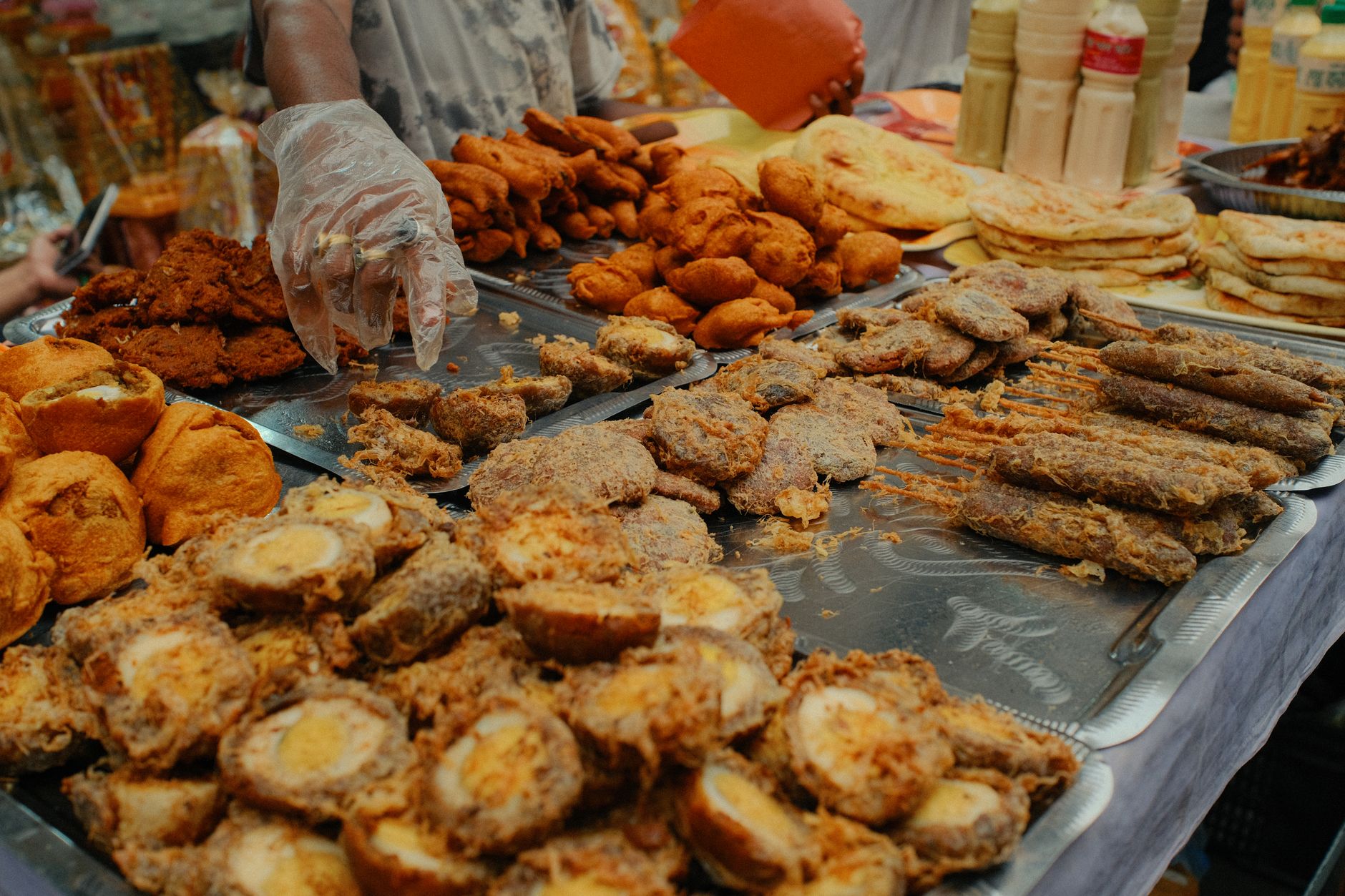
A variety of traditional foods displayed at a bustling Dhaka Iftar market during Ramadan.
Photo by Kabiur Rahman Riyad on Pexels · Pexels License
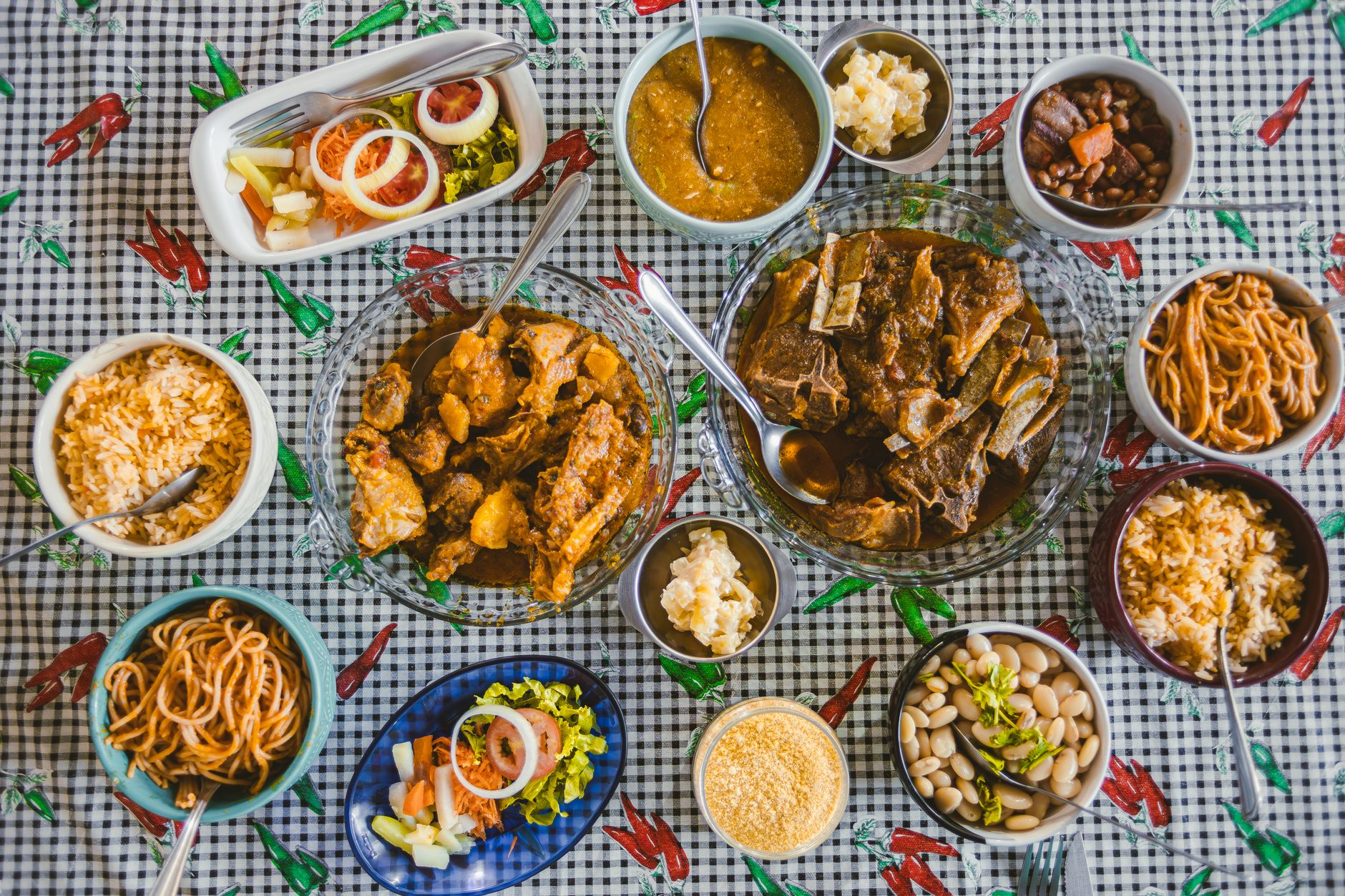
A diverse Brazilian feast displayed in a traditional setting, showcasing local cuisine varieties.
Photo by Matheus Alves on Pexels · Pexels License
An appetizing display of street food with fried plantains, corn dogs, and French fries.
Photo by Heidi Brittany EnrÃquez Esparragoza on Pexels · Pexels License
Practical Information
Visa
Most travelers do not need a visa for short tourist stays in Saint Vincent and the Grenadines. U.S. passport holders can enter visa-free, while many other nationalities are usually admitted for up to 30 days; British citizens are commonly granted longer, often six months. Carry proof of onward travel, enough funds for your stay, and treat six months of passport validity as the safe minimum.
Currency
The local currency is the East Caribbean dollar, written XCD or EC$, fixed at EC$2.70 to US$1. Cards work in many hotels and dive shops in Kingstown and Bequia, but cash still matters for minibuses, ferries, market food, and small guesthouses on the outer islands. If a restaurant has not already added service, 10% is a normal tip for good service.
Getting There
Most visitors arrive through Argyle International Airport on Saint Vincent, about 30 minutes from Kingstown. For the Grenadines, many routes connect through Barbados, then continue on short regional flights to Bequia, Canouan, or Union Island. Airport, ferry, and domestic flight schedules can shift quickly, so check again 24 to 48 hours before you move.
Getting Around
Saint Vincent runs on minibuses, taxis, ferries, and short domestic flights rather than on fixed, polished transport systems. Minibuses are cheap on the main island, taxis are common but not metered, and the Bequia ferry is the standard sea link from Saint Vincent. If you rent a car, remember you drive on the left and roads can be steep, narrow, and badly lit after dark.
Climate
Expect tropical heat year-round, with daytime temperatures around 27C and cooler evenings only by Caribbean standards. December to April is the driest and easiest season for island-hopping, while May to October is wetter, and the hurricane risk rises from July through October. The Grenadines are usually drier and sunnier than the mountainous main island.
Connectivity
Wi-Fi is standard in most hotels, villas, and cafes in Kingstown, Bequia, Mustique, and Canouan, but speeds vary once you leave the main visitor hubs. Argyle International Airport offers free public Wi-Fi, which is useful when ferries are delayed or domestic flights move. Buy a local SIM or eSIM before heading to Tobago Cays or Mayreau, where coverage can thin out fast.
Safety
Saint Vincent and the Grenadines is generally manageable for independent travelers, but small-island practicalities matter more than dramatic crime headlines. Petty theft can happen, especially around beaches, boats, and unattended bags, and weather or sea conditions can disrupt plans harder than anything else. Respect volcano advisories around La Soufrière, do not leave valuables visible in cars, and ask before photographing people.
Taste the Country
restaurantRoasted breadfruit and fried jackfish
Breakfast or late lunch. Fingers, lime, pepper sauce. Families, beach bars, roadside tables.
restaurantSaltfish with ground provisions
Morning plate. Dasheen, green banana, sweet potato, onion, pepper. Workdays, grandparents, long talk.
restaurantCallaloo soup with crab
Lunch bowl or Sunday start. Spoon first, bread after. Coconut milk, dasheen leaves, crab, silence.
restaurantBouillon
Big pot, slow fire, wet afternoon. Fish, okra, dumplings, provisions. Neighbors arrive, lids lift, stories start.
restaurantFried bakes and cocoa tea
Early morning ritual. Tear, fill, drink, wipe fingers. School runs, ferry days, harbor light.
restaurantCassava pone with tea
Afternoon square on a plate. Cassava, coconut, sugar, nutmeg. Shop counter, enamel cup, no hurry.
restaurantRum and black cake at Christmas
December custom. Slice, pour, repeat. Family houses, office tables, church halls, old grudges resting.
Tips for Visitors
Carry Small Cash
Bring EC dollars for buses, ferry tickets, beach bars, and simple lunches. A card that works in Kingstown may not help much on a dock in Union Island when the signal drops.
No Trains Here
Ignore any planning habit built around rail. Saint Vincent and the Grenadines moves by minibus, taxi, boat, and short regional flights, and missed connections usually cost time rather than comfort.
Book Boats Early
Reserve domestic flights, holiday-week ferries, and Tobago Cays day trips as soon as your dates are fixed. Small-island capacity is limited, and the best departures disappear before the weather does.
Tax Check
Read accommodation quotes carefully because room taxes and service charges are not always folded into the first price you see. The room rate can jump once VAT and local fees appear at checkout.
Ask Before Photos
Do not photograph people as if they are part of the scenery. A quick question goes a long way, especially in markets, fishing areas, and village streets.
Eat Local Lunch
The best-value meal is often lunch, not dinner. Look for breadfruit, fried jackfish, saltfish, or a proper plate of provisions before resort menus take over the day.
Pad Connections
Do not plan island moves with tight same-day links unless you enjoy expensive surprises. Leave slack between ferries and flights, especially if you are connecting from Bequia, Canouan, or Union Island.
Explore Saint Vincent and the Grenadines with a personal guide in your pocket
Your Personal Curator, in Your Pocket.
Audio guides for 1,100+ cities across 96 countries. History, stories, and local insight — offline ready.
Audiala App
Available on iOS & Android
Join 50k+ Curators
Frequently Asked
Do I need a visa for Saint Vincent and the Grenadines? add
Usually no for short tourist stays. U.S. travelers do not need a tourist visa, and many other nationalities are admitted visa-free for around 30 days, though the exact period is set by immigration on arrival. Bring proof of onward travel and enough funds to avoid check-in or border friction.
What currency is used in Saint Vincent and the Grenadines and can I pay in US dollars? add
The official currency is the East Caribbean dollar, but U.S. dollars are widely accepted in many visitor-facing businesses. You will usually get change in EC dollars, and local transport works better with small cash than with large U.S. notes.
How do you get from Saint Vincent to Bequia? add
Most people take the ferry. It is the standard link from Saint Vincent and usually the cheapest, simplest way to reach Bequia, though schedules should always be checked close to departure.
Is Saint Vincent and the Grenadines expensive? add
It can be reasonable on Saint Vincent and Bequia, then turn expensive very fast in Mustique, Canouan, and charter-heavy parts of the Grenadines. Budget travelers can manage on guesthouses, ferries, and local food, but private transfers, resort rooms, and inter-island flights push daily costs up quickly.
When is the best time to visit Saint Vincent and the Grenadines? add
December to April is the easiest season for most travelers. It is drier, sunnier, and better for hiking La Soufrière or moving between Bequia, Canouan, Union Island, and Tobago Cays without betting your trip on the weather.
Is Saint Vincent and the Grenadines safe for tourists? add
Generally yes, with normal precautions. Petty theft and transport disruption are more likely problems than serious crime, so keep an eye on bags, agree taxi fares before you start, and watch official advisories for storms or volcanic activity around La Soufrière.
Can you island-hop easily between Bequia, Mustique, Canouan and Union Island? add
Yes, but not casually. The islands are close on a map, yet the transport network depends on ferry timetables, domestic flight capacity, and weather, so each move needs checking instead of guesswork.
Is La Soufrière open for hiking year-round? add
No, access depends on volcanic conditions and official guidance. The mountain is one of the country's signature experiences, but this is an active volcano, so trail plans should only be made after checking the latest local advisories.
Sources
- verified U.S. Department of State - Saint Vincent and the Grenadines International Travel Information — Entry requirements, visa status for U.S. citizens, and core safety guidance.
- verified Government of Saint Vincent and the Grenadines - Ministry of Foreign Affairs — Official visa policy, visa-required nationalities, and general entry rules.
- verified Eastern Caribbean Central Bank — Authoritative source for the East Caribbean dollar and the XCD to USD peg.
- verified Argyle International Airport — Official airport information for arrivals on Saint Vincent, including facilities and current notices.
- verified Bequia Fast Ferries — Current ferry schedules and booking information for the Saint Vincent to Bequia route.
Last reviewed: