Plan and listen to Rumyantsev Museum with Audiala.
Audio guide in your pocket, itinerary in your browser. Built for the way you actually visit.
Introduction: The Rumyantsev Museum and Its Significance in Moscow
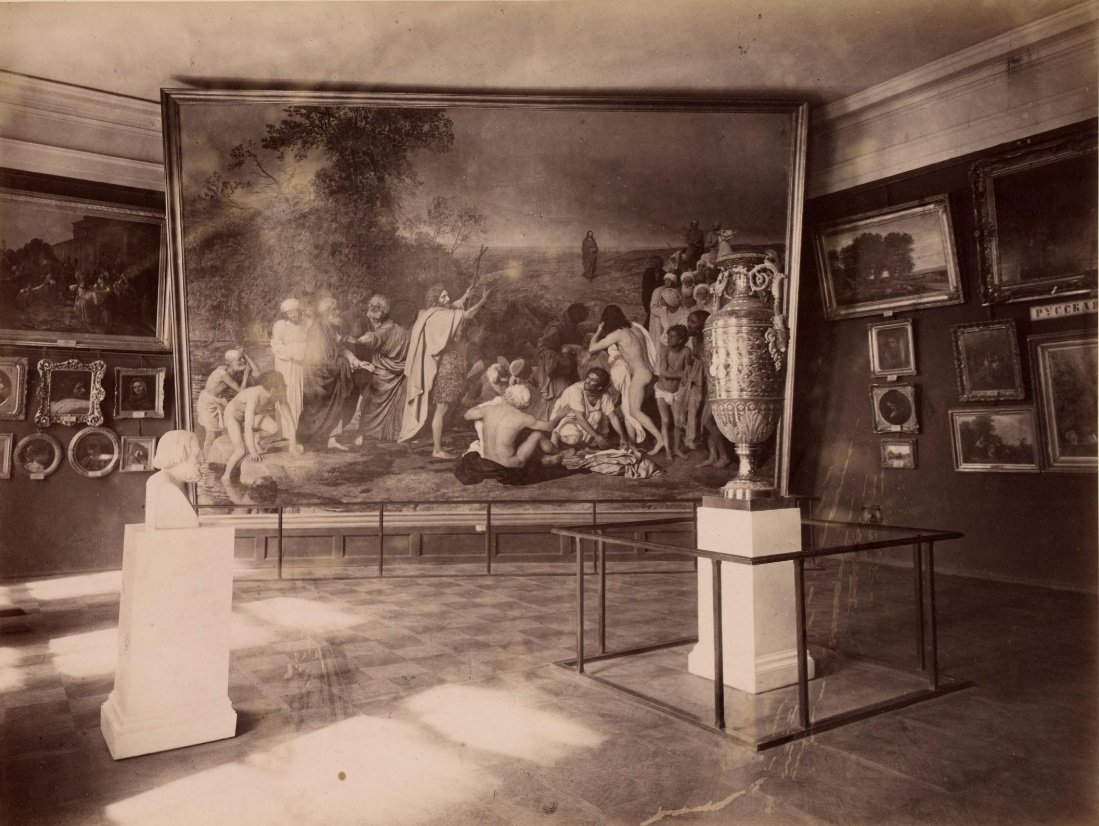
Prominently located near the Moscow Kremlin, the Rumyantsev Museum, housed in the renowned Pashkov House, stands as a monument to Russia’s cultural and intellectual history. Established in the early 19th century from the extensive collections of Count Nikolai Petrovich Rumyantsev, the museum was the first private institution in Russia to open its doors to the public. This pioneering move embodied Enlightenment ideals and promoted the democratization of knowledge. The museum’s relocation to the neoclassical Pashkov House in 1861 transformed Moscow into a center of scholarly activity, offering access to invaluable manuscripts, books, coins, and works of art.
Over time, the Rumyantsev Museum became the foundation of what is now the Russian State Library—one of the world’s largest libraries. Today, visitors can explore the museum’s legacy through special exhibitions, guided tours, and cultural events, as daily general access is limited. The museum’s central location, near landmarks such as Red Square, the Kremlin, and the State Historical Museum, makes it an essential destination for anyone interested in Moscow’s rich heritage.
This comprehensive guide provides all the information you need for your visit, including Rumyantsev Museum visiting hours, ticketing, accessibility, nearby attractions, and practical tips. For the latest updates, consult the Russian State Library’s official website and other Moscow cultural resources (Russia Beyond).

Origins and Architectural Grandeur: The Pashkov House
Constructed between 1784 and 1786 by Pyotr Pashkov and designed by Vasily Bazhenov, the Pashkov House is a masterpiece of Russian neoclassical architecture. Its symmetrical façade, grand portico, white columns, and green roof have made it a distinctive feature of Moscow’s skyline, especially from its commanding position on Vagankovo Hill overlooking the Kremlin.
The Rumyantsev Legacy: From Private Collection to Public Treasure
Count Nikolai Petrovich Rumyantsev (1754–1826) was a distinguished statesman and an avid collector of books, manuscripts, coins, and art. His extensive collections formed the basis for the Rumyantsev Museum, first established in St. Petersburg in 1828 and relocated to Moscow’s Pashkov House in 1861. This move marked a turning point, making Moscow a leading center for culture and scholarship.
When the museum opened to the public in 1862, it quickly became a magnet for scholars and intellectuals. Its library, known as the Rumyantsev Library, housed over 1.5 million volumes by the late 19th century—making it one of the largest collections in Russia (Russia Beyond).
Cultural and Educational Impact
The Rumyantsev Museum broke social barriers by granting the public access to rare books and artifacts, fostering education and a sense of national identity. It hosted lectures, exhibitions, and educational programs that played a significant role in Russian cultural development during periods of intense social change. The Pashkov House has also been immortalized in Russian literature, most notably in Mikhail Bulgakov’s The Master and Margarita.
Evolution and Preservation in the 20th Century
Following the Russian Revolution, the museum’s collections were redistributed among institutions such as the Lenin State Library (now the Russian State Library) and the State Historical Museum. The Pashkov House itself continued to serve cultural functions and underwent several restoration projects to maintain its neoclassical splendor. The Russian State Library currently manages the building and ensures the preservation of its historical and architectural heritage.
Visiting the Rumyantsev Museum: Practical Information
Location and Directions
- Address: Pashkov House, 3/5 Vozdvizhenka Street, Moscow, Russia (Google Maps)
- Nearby Metro Stations: Biblioteka Imeni Lenina, Arbatskaya, Borovitskaya
- Transport: Easily accessible by metro, bus, tram, or taxi (Yandex GO app recommended)
Visiting Hours and Tickets
- Opening Hours: Generally open Tuesday to Sunday, 10:00 AM – 6:00 PM; closed on Mondays. Last admission at 5:30 PM. Hours may vary for special exhibitions or holidays; check the Russian State Library website for updates.
- Tickets: Entry to the Pashkov House is often free, though special exhibitions may require a ticket. Discounts are available for students, seniors, and children. Some areas, especially archives, may require advance registration or special permission.
- Free Entry: On occasions such as Museum Night and citywide cultural events, admission may be free or discounted (Night of Museums).
Accessibility
The Pashkov House has ramps and elevators to assist visitors with limited mobility, but some historic areas may have restricted access due to preservation concerns. For specific needs, contact the Russian State Library in advance.
Visitor Experience and Amenities
- Facilities: Cloakroom, restrooms, café, museum shop with books and souvenirs, free Wi-Fi in public areas
- Photography: Permitted in most public spaces (without flash), but restricted in some exhibition areas to protect sensitive materials
- Guided Tours: Available in Russian and English (by arrangement). Audio guides in multiple languages can be rented at the entrance.
- Visitor Etiquette: Maintain quiet in reading rooms, check large bags at the cloakroom, and comply with all posted regulations.
Educational and Cultural Programs
The Rumyantsev Museum continues its legacy through lectures, workshops, and tours for a broad audience. Programs cover Russian literary history, manuscript conservation, and architectural heritage. The museum participates in significant cultural events, such as the Moscow Estates Festival and Night of Museums (Night of Museums).
Highlights and Notable Collections
- Rare Manuscripts and Early Printed Books: Including medieval Slavic texts and first editions of Russian classics
- Historic Maps and Atlases: Some dating back to the 16th and 17th centuries
- Personal Archives: Letters and memorabilia from prominent Russian figures
- Artworks and Decorative Objects: Paintings, sculptures, and period furnishings
Rotating exhibitions ensure that there is always something new to discover.
Integration with Moscow’s Cultural Scene
The Rumyantsev Museum is part of a vibrant cultural landscape. Nearby attractions include:
- The Kremlin and Red Square
- State Historical Museum
- Alexander Garden
- Pushkin Museum of Fine Arts
- Tretyakov Gallery
Combine your visit with these sites for a comprehensive experience of Moscow’s history and art (Moscow Travel Guide).
Practical Tips for Visitors
- Plan Ahead: Check the museum website for the latest visiting hours and exhibitions.
- Peak Times: Visit on weekday mornings for fewer crowds; May–September offers pleasant weather.
- Language: While English tours are available, some signage and materials may be in Russian—translation apps can be helpful.
- Security: Standard checks at the entrance; large bags must be checked.
- Dress Code: Modest attire is recommended, especially if visiting nearby religious or cultural sites.
Frequently Asked Questions (FAQ)
Q: What are the Rumyantsev Museum’s visiting hours?
A: Typically Tuesday to Sunday, 10:00 AM – 6:00 PM; closed Mondays. Check for special hours during holidays and events.
Q: How can I purchase tickets?
A: Tickets are available at the entrance or online via the Russian State Library’s website.
Q: Is the museum accessible to visitors with disabilities?
A: The building has ramps and elevators, but some historic sections may be less accessible.
Q: Are tours available in English?
A: Yes, by prior arrangement. Audio guides in several languages are also offered.
Q: Can I take photos inside?
A: Non-flash photography is generally allowed except in restricted areas.
Q: Are there free entry days?
A: Yes, during events like Museum Night and citywide festivals (Night of Museums).
Recent Developments and Digital Initiatives
The museum and Russian State Library have embraced digital technology, providing virtual tours and digitized collections online. These initiatives expand global access to the Rumyantsev legacy and foster international collaboration through exhibitions and conferences.
Listen to the full story in the app
The whole Rumyantsev Museum,
told well.
Listen to sourced travel stories with local history and practical context — ready offline.
Verified, and shown.
Researched and written by the Audiala editorial team from historical records, architectural archives, and local expertise.
Built from cited sources · see the method · How we make our guides →