Plan and listen to Pochtamtsky Bridge with Audiala.
Audio guide in your pocket, itinerary in your browser. Built for the way you actually visit.
Introduction
Pochtamtsky Bridge, also known as the Postoffice Bridge, stands as a testament to Saint Petersburg's rich architectural and historical landscape. Constructed between 1823 and 1824, this pedestrian chain suspension bridge connects Kazansky Island and the 2nd Admiralty Island across the Moika River. Designed by pioneering architects Wilhelm von Traitteur and Christianovich, the bridge was named after the nearby Central Post Office, a landmark since the 1780s. The bridge’s elegant cast-iron railings and granite obelisks topped with gilded orbs make it not only a functional structure but also a work of art (Wikipedia).
Throughout its history, Pochtamtsky Bridge has undergone several modifications and restorations to address structural challenges and adapt to the evolving urban landscape. Despite these changes, the bridge has retained its historical and architectural essence, making it a unique attraction for both locals and tourists (Life Globe). Beyond its architectural significance, the bridge has been immortalized in Russian literature and has borne witness to historical events, further cementing its status as a cultural icon (Petersburg24).
This comprehensive guide aims to provide detailed insights into the history, cultural significance, and visitor information for Pochtamtsky Bridge. Whether you are a history enthusiast, an architecture lover, or a casual traveler, this guide will help you make the most of your visit to this historical gem in Saint Petersburg.

History of Pochtamtsky Bridge
Early Conception and Construction
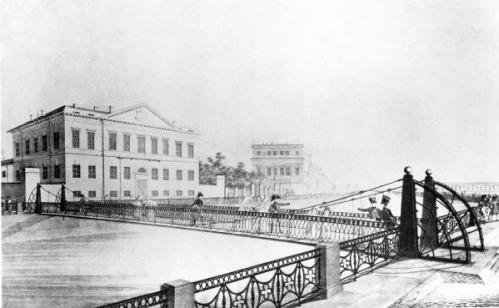
Constructed between 1823 and 1824, the Pochtamtsky Bridge was initially a chain suspension bridge designed by architects Wilhelm von Traitteur and Christianovich. It was named after the nearby Central Post Office, or "Pochtamt," a landmark since the 1780s. This early version of the bridge was innovative for its time, featuring chains fixed in coastal cast iron obelisks acting as pylons with fan-shaped sectors (Wikipedia).
Design and Architectural Features
The chains of the original bridge were made of forged iron and held the wooden superstructure by means of suspension rods of circular cross-section. The chains were fastened to the obelisks-pylons by special hinge locks, and the obelisks were topped with gilded metal balls. The railings were crafted from wrought iron, forming an artistic lattice that added to the bridge's aesthetic appeal (Petersburg24).
Early Challenges and Modifications
Soon after its completion, structural challenges emerged due to deviations from the original design. Issues such as a sagging deck and displaced obelisks necessitated immediate modifications to ensure stability and safety (Mostotrest-SPB).
20th Century Reengineering
By the early 20th century, the bridge had become unstable. In 1905, timber supports were added, transforming the suspension bridge into a three-span single bridge, with the chains serving only a decorative purpose (Life Globe).
Mid-20th Century Reconstruction
Further stabilization efforts were made in 1936, with additional supports placed underneath the bridge. Although these changes compromised the original suspension design, they were crucial for maintaining the bridge's usability (Wikipedia).
Restoration in the 1980s
A comprehensive restoration took place between 1981 and 1983, led by engineers B.B. Dvorkin and R.R. Shipov. This project aimed to restore the bridge's historical design while enhancing its stability and durability (Life Globe).
Architectural Significance
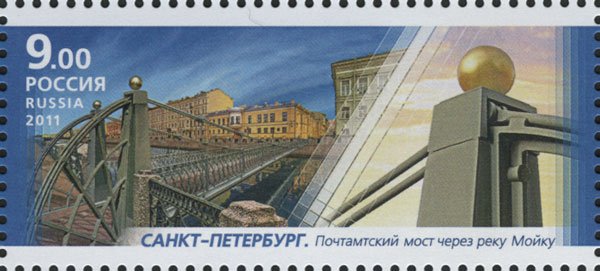
The Pochtamtsky Bridge is notable for its elegant cast-iron railings and four granite obelisks topped with gilded orbs. These obelisks, supported by quarter-hoop cast-iron braces, now act as the bridge's pillars. The railings form an artistic lattice, adding to the bridge's visual appeal (Saint Petersburg Essential Guide).
Unique Features
The Pochtamtsky Bridge is the only pedestrian chain suspension bridge in Saint Petersburg that preserves its original "hanging" structure. Unlike similar bridges, such as the Bank and Lion Bridges, its chains retain their historical design and functionality (Life Globe).
Cultural and Historical Significance
Literary Connections
The bridge has been immortalized in Russian literature, most notably in the works of Fyodor Dostoevsky. In his novel "Crime and Punishment," the protagonist Raskolnikov crosses the Griboyedov Canal, and Pochtamtsky Bridge is believed to be one of the bridges he traverses. This literary connection adds a layer of cultural significance to the bridge, making it a point of interest for literary enthusiasts visiting the city.
Historical Events
Pochtamtsky Bridge has witnessed numerous historical events over the centuries. During the October Revolution of 1917, the bridge and its surrounding areas were scenes of significant activity as revolutionary forces moved through the city. The bridge's proximity to key government buildings made it a strategic location during this tumultuous period in Russian history.
Visitor Information
Visiting Hours and Tickets
The Pochtamtsky Bridge is accessible to visitors 24/7 and does not require an entrance fee. This makes it a convenient and cost-effective attraction for tourists exploring Saint Petersburg's historical sites.
Accessibility and Travel Tips
The bridge is located in the Admiralty District, with nearby metro stations including "Admiralteiskaya," "Nevsky Prospekt," "Gostiny Dvor," "Sennaya Ploshchad," "Sadovaya," and "Spasskaya." It offers picturesque views of the Moika River and surrounding historical buildings, making it a popular spot for photography.
Nearby Attractions
Visitors can explore the Central Post Office and various historical buildings along the Moika River embankment. These attractions provide a comprehensive cultural experience, reflecting the rich heritage of Saint Petersburg.
Special Events and Guided Tours
While the bridge itself does not host events, it is often included in guided tours of Saint Petersburg's historical sites. Check local tour operators for available packages that include the Pochtamtsky Bridge.
Photographic Spots
The intricate design and historical significance of the Pochtamtsky Bridge make it a must-visit landmark for photography enthusiasts. Capture the elegant railings, obelisks, and scenic views of the Moika River from various angles.
Practical Information
Accessibility
Pochtamtsky Bridge is easily accessible by public transportation. The nearest metro station is "Admiralteiskaya," which is a short walk from the bridge. Visitors can also use the city's extensive bus and tram network to reach the bridge. For those preferring to explore on foot, the bridge is conveniently located within walking distance of many of Saint Petersburg's major attractions.
Safety Tips
While Saint Petersburg is generally safe for tourists, it is advisable to take standard precautions when visiting Pochtamtsky Bridge, especially during the evening. Keep an eye on personal belongings and avoid isolated areas late at night. The bridge and its surroundings are well-lit and frequented by locals and tourists alike, making it a relatively safe area to explore.
Local Customs
When visiting Pochtamtsky Bridge, it is essential to respect local customs and traditions. Saint Petersburg is a city with a rich cultural heritage, and visitors are encouraged to dress modestly, especially when visiting nearby religious sites such as Saint Isaac's Cathedral. Additionally, it is customary to greet locals with a polite "Здравствуйте" (Zdravstvuyte), which means "Hello" in Russian.
Dining Options
Saint Petersburg boasts a diverse culinary scene, with numerous dining options near Pochtamtsky Bridge:
- Mansarda Restaurant: Located on Pochtamtskaya Street, this restaurant offers stunning views of St. Isaac's Cathedral and serves a variety of European and Russian dishes. It is open daily from 12 PM to 1 AM (Stingy Nomads).
- Terrassa Restaurant: Situated on Kazanskaya Street, this restaurant provides a panoramic view of Kazan Cathedral and Nevsky Prospekt. It is open daily from 12 PM until the last guest (Stingy Nomads).
Accommodation
There are numerous accommodation options in Saint Petersburg to suit different budgets and preferences. It is advisable to book your stay in advance, especially during the peak tourist season:
- Hotels: Saint Petersburg offers a wide range of hotels, from luxury establishments to budget-friendly options. Websites like Saint-Petersburg.com can help you find the right choice.
- Hostels: For budget travelers, hostels provide an affordable and social accommodation option. Many hostels in the city center offer comfortable stays with easy access to major attractions.
Additional Tips
- Visa Requirements: Most visitors to Saint Petersburg will require a visa. It is recommended to apply for a tourist visa well in advance of your trip to avoid any last-minute complications (Tourist Secrets).
- Currency: The local currency is the Russian Ruble (RUB). Credit cards are widely accepted, but it is always a good idea to carry some cash for smaller establishments or in more remote areas.
- Tap Water: While it is generally safe to drink tap water in Saint Petersburg, those with sensitive stomachs may prefer to drink bottled water (Tourist Secrets).
FAQ Section
Q: What are the visiting hours for the Pochtamtsky Bridge? A: The Pochtamtsky Bridge is accessible 24/7.
Q: Is there an entrance fee for the Pochtamtsky Bridge? A: No, visiting the bridge is free of charge.
Q: How do I get to the Pochtamtsky Bridge? A: The bridge is located in the Admiralty District, near several metro stations including "Admiralteiskaya," "Nevsky Prospekt," and "Gostiny Dvor."
Q: Are there guided tours available? A: Yes, many local tour operators include the Pochtamtsky Bridge in their guided tours of Saint Petersburg's historical sites.
Discover More
The Pochtamtsky Bridge stands as a testament to the architectural ingenuity and historical richness of Saint Petersburg. Whether you're a history buff, architecture enthusiast, or simply looking for a picturesque spot to visit, the Pochtamtsky Bridge offers a unique and enriching experience. Don't miss the opportunity to explore this historical gem on your next visit to Saint Petersburg. For more travel tips and guides, follow us on social media and check out our other posts!
Listen to the full story in the app
The whole Pochtamtsky Bridge,
told well.
Listen to sourced travel stories with local history and practical context — ready offline.
Verified, and shown.
Researched and written by the Audiala editorial team from historical records, architectural archives, and local expertise.
Built from cited sources · see the method · How we make our guides →