An introduction.
Researched by the Audiala editorial team from historical records, architectural archives, and local expertise.
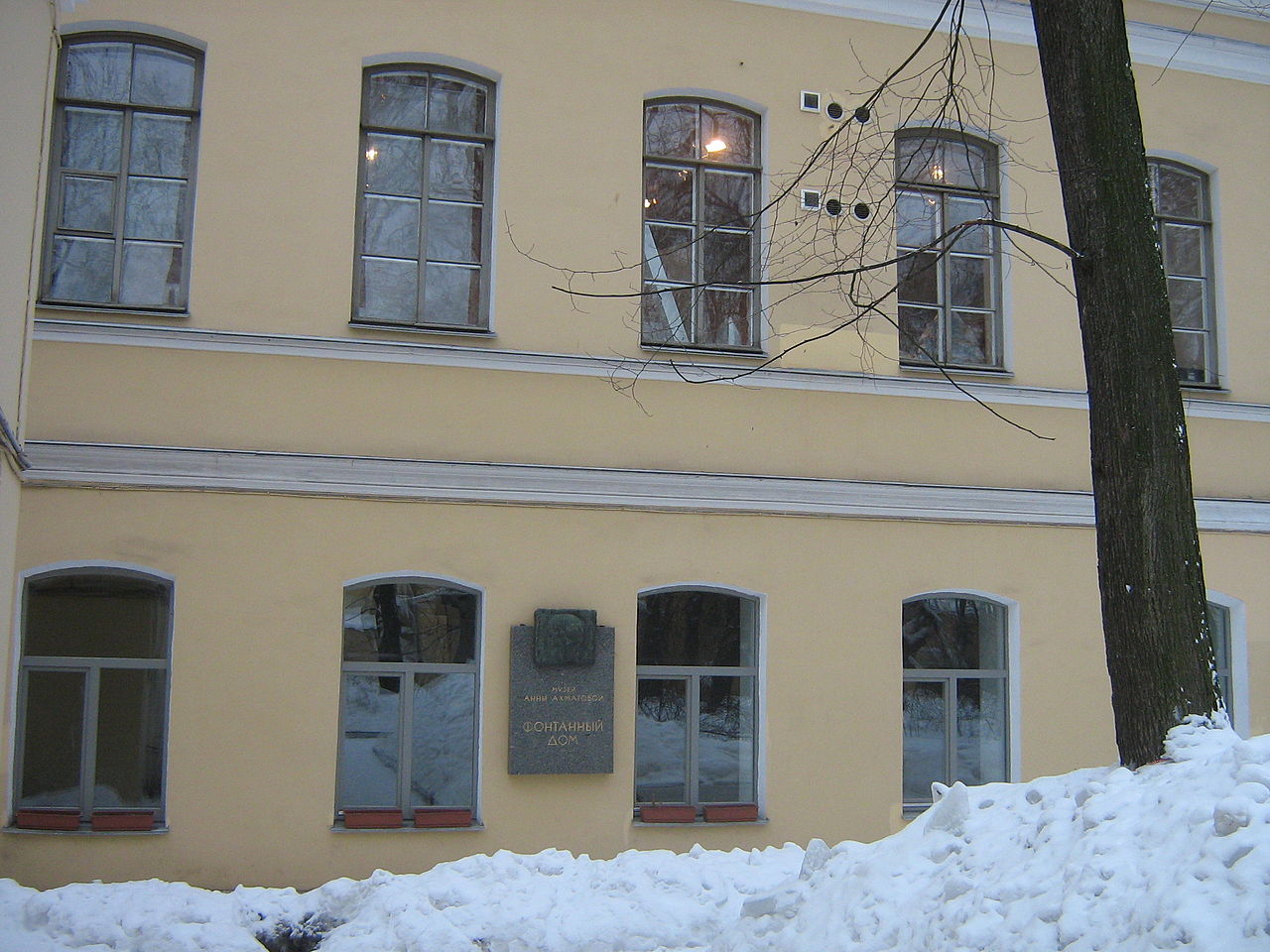
RRussia's greatest twentieth-century poem was composed entirely in someone's head, in a cramped apartment where writing it down could mean death — and you can stand in that room today. The Anna Akhmatova Literary and Memorial Museum in Saint Petersburg occupies the south wing of the Sheremetev Palace on the Fontanka River, the very rooms where Anna Akhmatova lived from 1926 to 1952 and where she silently assembled Requiem, her searing cycle about Stalinist terror. This is not a shrine to literary fame. It's a record of what it cost.
The museum sits behind an archway at Liteyny Prospekt 53, inside a garden courtyard that still feels conspiratorial. Visitors pass through a tunnel whose walls are covered in handwritten poetry — lines scrawled by strangers, photographed by staff, painted over, then written on again. The wall functions as a palimpsest, and the museum treats it as part of the collection.
Inside, don't expect a polished period reconstruction. The Soviet secret police searched these rooms repeatedly; Akhmatova lived in near-poverty under constant surveillance. Almost nothing she owned survived. What the curators have built instead is something more honest: a memorial assembled from fragments, context, and absence. The bare corridors and sparse furnishings say more about her life than any velvet-roped salon ever could.
A separate wing holds the "American Cabinet" of Joseph Brodsky — items transferred here in 2003. Brodsky never set foot in the Fountain House, but the pairing makes a kind of poetic sense: teacher and student, two Nobel-adjacent voices, one silenced by the state and the other by exile.
Saint Petersburg, Russia 🇷🇺 in 8K HDR ULTRA HD 60 FPS Dolby Vision™ Drone Video
Exploropia01 What to see.
The Memorial Apartment
The Joseph Brodsky Cabinet
The Fountain House Courtyard and the Walk Through the Arch
02 In pictures.




Watch & Explore Anna Akhmatova Literary and Memorial Museum.
Plan and listen to Anna Akhmatova Literary And Memorial Museum with Audiala.
Audio guide in your pocket, itinerary in your browser. Built for the way you actually visit.
03 Visitor logistics.
The practical scaffolding for a good visit — kept short.
Getting There
The museum sits at 53 Liteiny Prospekt — enter through the archway on the Liteiny side into the garden, not from the Fontanka embankment. The nearest metro stations are Vladimirskaya, Dostoevskaya, and Mayakovskaya, each a 10–15 minute walk. Trolleybus lines 3, 8, and 15 also stop nearby. Street parking is scarce; don't count on it.
Opening Hours
As of 2026: Tuesday, Thursday, Friday, Saturday, and Sunday from 10:30 AM to 6:30 PM. Wednesday opens late, 1:00 PM to 9:00 PM — good for evening visits. Closed every Monday. The ticket office shuts one hour before closing, so plan accordingly.
Time Needed
A focused visit through the permanent Akhmatova and Brodsky exhibitions takes 1 to 1.5 hours. If you linger in the garden and catch a temporary show in the Saray gallery, budget closer to 2 hours. A quick pass without an audio guide could take 45 minutes, but you'd miss most of the story — the rooms are spare, and the context is everything.
Accessibility
The museum occupies a wing of a Baroque palace built long before anyone thought about ramps. Wheelchair access is currently not available — the museum itself states this plainly. Expect stairs, narrow corridors, and restrooms that are not adapted for mobility-impaired visitors.
Cost & Tickets
Standard admission runs approximately 400 RUB as of 2026. Discounts apply for students, pensioners, and multi-child families. Buy tickets online via akhmatova.spb.ru to guarantee entry on your chosen date. Free admission for visitors under 18 every third Thursday of the month.
04 Tips for visitors.
Small things that change the day.
Get the Audio Guide
Locals and repeat visitors agree: without an audio guide or a guided tour, the museum's spare, reconstructed rooms can feel bewildering. Akhmatova lived in poverty under surveillance, so almost nothing original survived — the story fills the gaps the objects can't.
Keep It Quiet
This is a place of reverence, not a gallery crawl. Speak softly and treat the memorial rooms the way you'd treat a library where someone is concentrating.
Photography Allowed, Mostly
Personal, non-commercial photography is generally fine, but leave the flash off and the tripod at home. Temporary exhibitions sometimes have their own restrictions — check signage at the entrance.
Combine with Sheremetev Palace
The Museum of Music occupies the main Sheremetev Palace in the same complex, so you can see both in a single afternoon. Walk through the garden between them — ginger cats often patrol the grounds, and locals consider them unofficial mascots.
Eat at Five Corners
Walk 10 minutes southeast to the Pyat Uglov (Five Corners) intersection for a cluster of mid-range cafes popular with students and locals. For something cheaper, grab a pyshka — a Russian doughnut — from one of the old-school pyshechnaya shops along Liteiny Prospekt.
Watch Your Pockets at Metro
The museum itself is safe and low-key, but the Vladimirskaya and Mayakovskaya metro stations are busy transit hubs where pickpockets work the crowds. Keep bags zipped and phones out of back pockets.
Where to Eat
Don't Leave Without Trying
Sumerian Coffeeshop by Dobro Coffee Microroasters
cafeOrder: Single-origin specialty espresso or pour-over from Dobro's microroastery; the coffee is roasted on-site and rivals anything in the city.
Named after the historic 'Sumerian Room' where Akhmatova lived with her husband Vladimir Shileyko (1918–1920), this café sits directly within the museum grounds, making it the most literary coffee stop in Petersburg. You're literally drinking coffee where one of Russia's greatest poets once lived.
Bao Mochi
local favoriteOrder: Bao buns with pulled pork or miso chicken; the mochi desserts are addictively light and delicate.
With over 1,500 reviews and a stellar 4.8 rating, this is where locals actually eat when they want something bold and contemporary. The fusion approach respects both traditions without pretension—exactly what Petersburg's food scene does best.
Imbibe Bar
local favoriteOrder: House cocktails crafted with Russian spirits and local ingredients; ask the bartender for something off-menu inspired by Petersburg's literary history.
A serious cocktail bar with 675 reviews and a 4.7 rating, Imbibe is where the neighborhood goes when the museum closes. The late hours (until 3 AM) make it perfect for extending a literary evening with a well-made drink.
Melt кофе
quick biteOrder: Quality espresso-based drinks and pastries; a straightforward, unpretentious spot to grab coffee before or after the museum.
Tucked just steps from the museum on Liteyny Prospect, Melt is a neighborhood regular with a perfect 5.0 rating. It's the kind of place locals pop into for a quick caffeine fix—no fuss, excellent coffee.
Dining Tips
- check The Liteyny Prospect area around the Akhmatova Museum is a hub for independent coffee shops and literary culture—expect smaller, curated spaces rather than chains.
- check Many Petersburg restaurants operate with flexible hours; always check ahead via Google Maps or call, especially for smaller cafés.
- check Specialty coffee culture is thriving in this neighborhood—single-origin roasters and microroasteries are taken seriously by locals.
Restaurant data powered by Google
05 The Poet Who Wrote in Silence
Anna Andreyevna Akhmatova arrived at the Fountain House in 1926, not as a celebrated poet but as the companion of Nikolai Punin, an art historian who held an apartment in the south wing of the Sheremetev Palace. The palace itself dates to the 1740s, a Baroque estate built by serf laborers for the Sheremetev family. By the time Akhmatova moved in, the Revolution had carved it into communal flats. She shared Punin's apartment with his first wife and their daughter — three adults and a child in rooms originally designed for a single aristocratic household's servants.
For nearly three decades, this address was Akhmatova's anchor and her trap. The Soviet state banned her from publishing between 1925 and 1940, then again after 1946. The NKVD arrested her son, Lev Gumilev, three times. They arrested Punin twice. She remained, writing poems she dared not put on paper, waiting in prison queues that sometimes stretched for seventeen months.
Requiem, Whispered into Being
In the late 1930s, Akhmatova began composing Requiem — a cycle of poems documenting the terror that Stalin's regime inflicted on millions of families, including her own. Her son Lev Gumilev sat in a Leningrad prison cell, and Akhmatova stood in line outside for months, clutching food parcels she was never sure would reach him. The poems grew from that line, from the women around her, from the specific weight of not knowing whether your child is alive.
She could not write the words down. The NKVD searched apartments without warning, and a manuscript of anti-Soviet poetry would have meant arrest or worse — not just for her, but for anyone found near it. So Akhmatova memorized each poem, then recited it in whispers to her friend Lydia Chukovskaya. Chukovskaya would memorize the lines, repeat them back, and then both women would confirm the text was fixed in their minds. Only then did Akhmatova consider the poem "saved."
The turning point came not with a dramatic escape but with patience measured in decades. Requiem circulated in samizdat for years, was first published abroad in 1963, and did not appear in full in Russia until 1987 — twenty-one years after Akhmatova's death. The Leningrad City Executive Committee authorized the creation of this museum in 1988, and it opened on June 24, 1989. The rooms where she had been forbidden to write became the rooms where her words were finally displayed.
Before the Fountain House
Legacy in Fragments
Listen to the full story in the app
The whole Anna Akhmatova Literary And Memorial Museum,
told well.
Listen to sourced travel stories with local history and practical context — ready offline.

06 Frequently asked.
The questions travellers send us most about Anna Akhmatova Literary And Memorial Museum.
Is the Anna Akhmatova Museum in Saint Petersburg worth visiting?
Yes, but come prepared — this is not a pretty house museum with velvet ropes and period furniture. Because the Soviet regime stripped Akhmatova of nearly everything, the curators rebuilt her world from fragments and atmosphere rather than original belongings. An audio guide or a guided tour transforms the experience from "sparse rooms" to something that sits with you for days. Without context, you'll wonder what you're looking at; with it, you'll feel the weight of a poet who composed entire works in her head because she feared the secret police would find paper.
How long do you need at the Anna Akhmatova Museum?
Plan for 1 to 1.5 hours. The permanent exhibitions cover Akhmatova's life in the Fountain House, the Silver Age, and a separate room dedicated to Joseph Brodsky's personal library and belongings. If you linger in the courtyard garden — home to local ginger cats and walls covered in spontaneous poetry — add another 20 minutes.
How do I get to the Anna Akhmatova Museum from central Saint Petersburg?
The museum sits at 53 Liteyny Prospekt, a 10- to 15-minute walk from Vladimirskaya, Dostoevskaya, or Mayakovskaya metro stations. Enter through the archway on the Liteyny Prospekt side — do not try the Fontanka River embankment entrance, which leads to the main Sheremetev Palace, not the museum. Trolleybus lines 3, 8, and 15 also stop nearby.
Can you visit the Anna Akhmatova Museum for free?
Students and visitors under 18 get free admission on the third Thursday of every month. Standard tickets run about 400 RUB, with discounts for students, pensioners, veterans, and holders of the Unified St. Petersburg Card. Buy tickets online through the official website to guarantee entry on your chosen date.
What should I not miss at the Anna Akhmatova Museum?
Don't rush past the archway on Liteyny Prospekt — its walls are covered in handwritten poetry and quotes from visitors, a living palimpsest that the museum staff photographs before painting over to make room for new inscriptions. Inside, the Joseph Brodsky "American Cabinet" surprises most people; Brodsky never actually set foot in the Fountain House, but his desk, books, and photographs sit here as a symbolic tribute. Pay attention to the background soundscape threading through the rooms — it's a deliberate design choice, not ambient noise.
What is the best time to visit the Anna Akhmatova Museum?
Wednesday evenings, when the museum stays open until 9:00 PM, draw smaller crowds and a quieter atmosphere that suits the contemplative mood of the place. Winter visits carry their own stark beauty: the Fountain House courtyard takes on a cold, grey Petersburg quality that matches the tone of Akhmatova's poetry better than any summer afternoon could. The museum closes on Mondays, and the ticket office shuts one hour before closing.
Is the Anna Akhmatova Museum wheelchair accessible?
No — the museum explicitly states it cannot accommodate wheelchair users. The building dates to 1845, with narrow passages and stairs typical of a 19th-century palace wing, and the restrooms are not adapted for mobility-impaired visitors. If accessibility is a concern, contact the museum in advance through their official website to discuss options.
What are the opening hours of the Anna Akhmatova Museum in Saint Petersburg?
The museum opens Tuesday, Thursday, Friday, Saturday, and Sunday from 10:30 AM to 6:30 PM, with Wednesday hours shifted to 1:00 PM to 9:00 PM. It closes every Monday. The ticket office stops selling tickets one hour before the doors close, so don't arrive at 6:25 on a Tuesday expecting to get in.
Verified, and shown.
Researched and written by the Audiala editorial team from historical records, architectural archives, and local expertise.
Primary source for opening hours, ticket prices, accessibility information, visiting rules, FAQ, and exhibition descriptions.
Confirmed founding date of June 24, 1989; architectural history of the Sheremetev Palace south wing; details on the archway graffiti and communal apartment debates.
Architectural details including Ieronim Corsini's 1845 south wing design.
Biographical details on Punin's arrest, death in a labor camp in 1953, and his role in the Fountain House apartment.
Confirmation of founding date, details on the Brodsky exhibition and its symbolic nature, and information on the Saray gallery programming.
Context on the composition of Requiem and the whispered recitations to Lydia Chukovskaya.
Confirmed the 1988 Leningrad City Executive Committee decision to establish the museum.
History of the Sheremetev Palace's post-revolutionary transitions: Museum of Private Life, communal apartments, Arctic and Antarctic Research Institute.
Practical guidance on entering from Liteyny Prospekt rather than the Fontanka embankment; note on the reconstruction myth.
Visitor reviews describing the courtyard inscriptions, the intimate atmosphere, and the recommendation for audio guides.
Biographical context on Lev Gumilev's repeated arrests and the catalyst for the Requiem cycle.
Details on the museum's modern exhibition design philosophy and the Open Literary School programming.
Estimated visit duration of 1 to 1.5 hours.
Local cultural perspective on the museum as a shrine to the Silver Age and Leningrad intelligentsia.
Built from cited sources · see the method · How we make our guides →