Plan and listen to Anichkov Bridge with Audiala.
Audio guide in your pocket, itinerary in your browser. Built for the way you actually visit.
Introduction
The Anichkov Bridge is one of Saint Petersburg's most iconic and historically significant structures. Spanning the Fontanka River, this landmark not only serves as a crucial crossing point but also as a symbol of architectural grandeur and cultural richness. Initially conceived in the early 18th century as part of Peter the Great's vision to develop Saint Petersburg into a major European capital, the bridge has undergone numerous transformations. From its early wooden incarnation to its current robust cast-iron structure adorned with the famous 'Horse Tamers' statues, the Anichkov Bridge encapsulates the evolution of Russian engineering and artistry (Saint Petersburg.com) (Russia Beyond).
The bridge's significance extends beyond its architectural beauty. It has borne witness to pivotal moments in Russian history, including the Decembrist Revolt and the Russian Revolution, and has been immortalized in the works of literary giants like Fyodor Dostoevsky and Alexander Pushkin. Today, it stands as a testament to the resilience and continuity of Saint Petersburg's urban landscape, drawing thousands of visitors each year who come to marvel at its intricate design and to immerse themselves in the rich tapestry of Russian culture and history (Literary Russia).

History of Anichkov Bridge
Early Conception and Construction
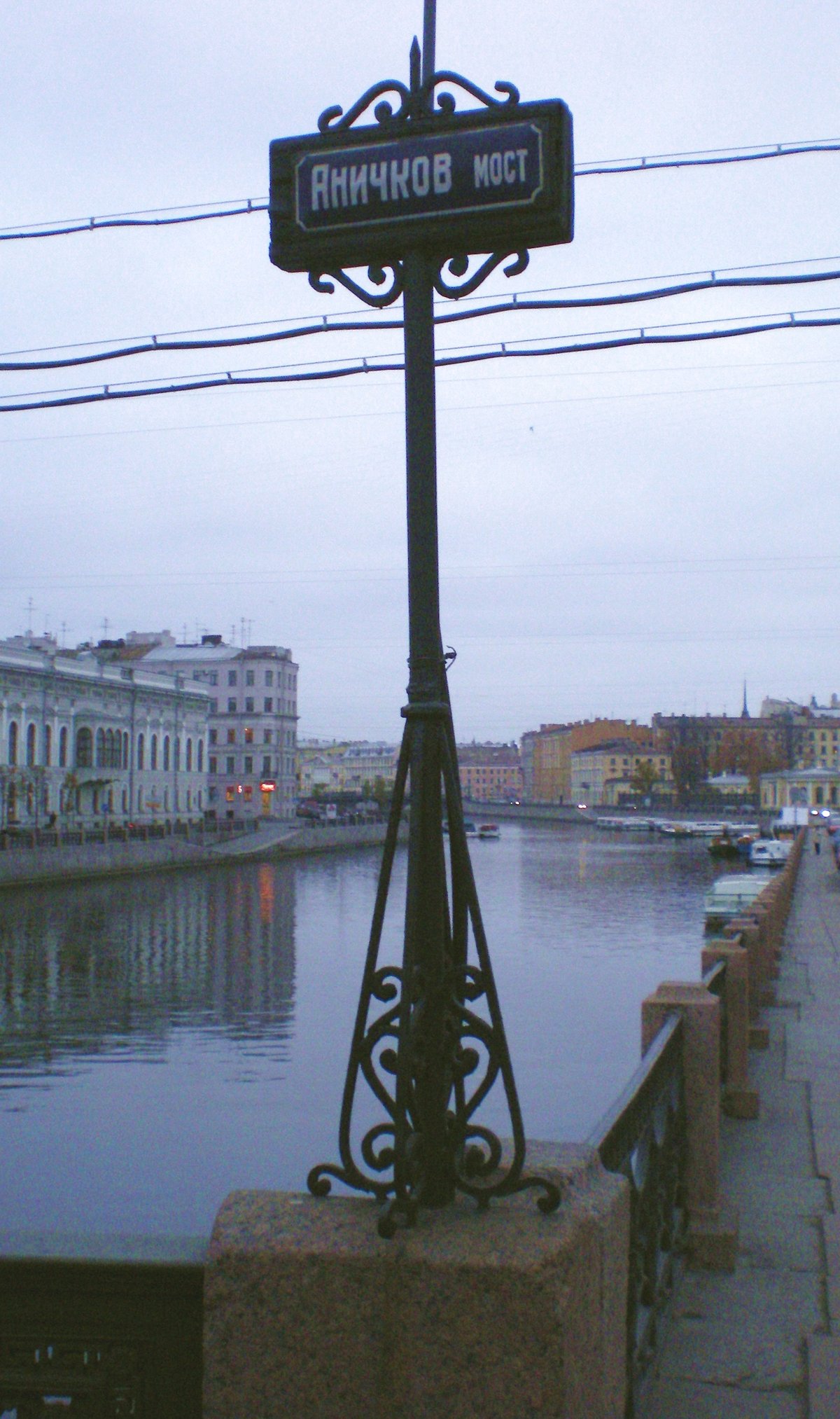
The Anichkov Bridge, initially conceived as part of Peter the Great's grand plan to develop Saint Petersburg into a major European capital, has a history dating back to the early 18th century. The first wooden bridge was constructed in 1715-1716 by engineer Mikhail Anichkov, after whom the bridge is named. This early version was designed to span the Fontanka River, facilitating the movement of people and goods across the burgeoning city.
18th Century Developments
By the mid-18th century, the wooden bridge had deteriorated and was no longer sufficient for the increasing traffic. In 1749, Empress Elizabeth ordered the construction of a new, more durable bridge. The new structure, completed in 1753, was designed by architect Bartolomeo Rastrelli. This version of the bridge featured stone piers and wooden spans, making it more robust and capable of handling heavier loads.
19th Century Transformations
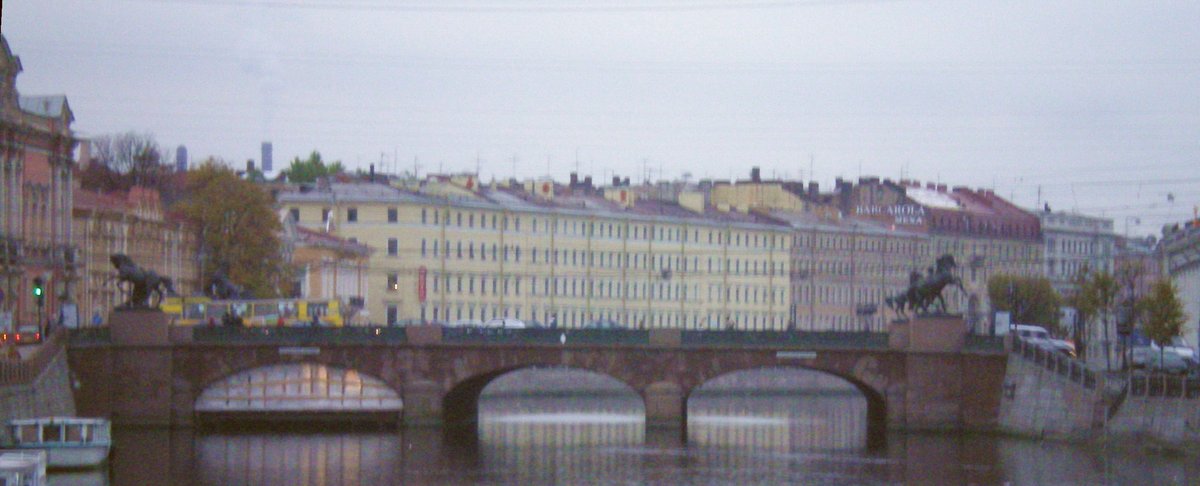
The 19th century saw significant transformations for the Anichkov Bridge. In 1841-1842, the bridge underwent a major reconstruction under the supervision of engineers Adam and Stanisław Kierbedź. This reconstruction replaced the wooden spans with cast iron, a material that was becoming increasingly popular in bridge construction due to its strength and durability. The new design also included four granite obelisks topped with bronze lanterns, adding a decorative element to the functional structure.
The Horse Tamers Statues
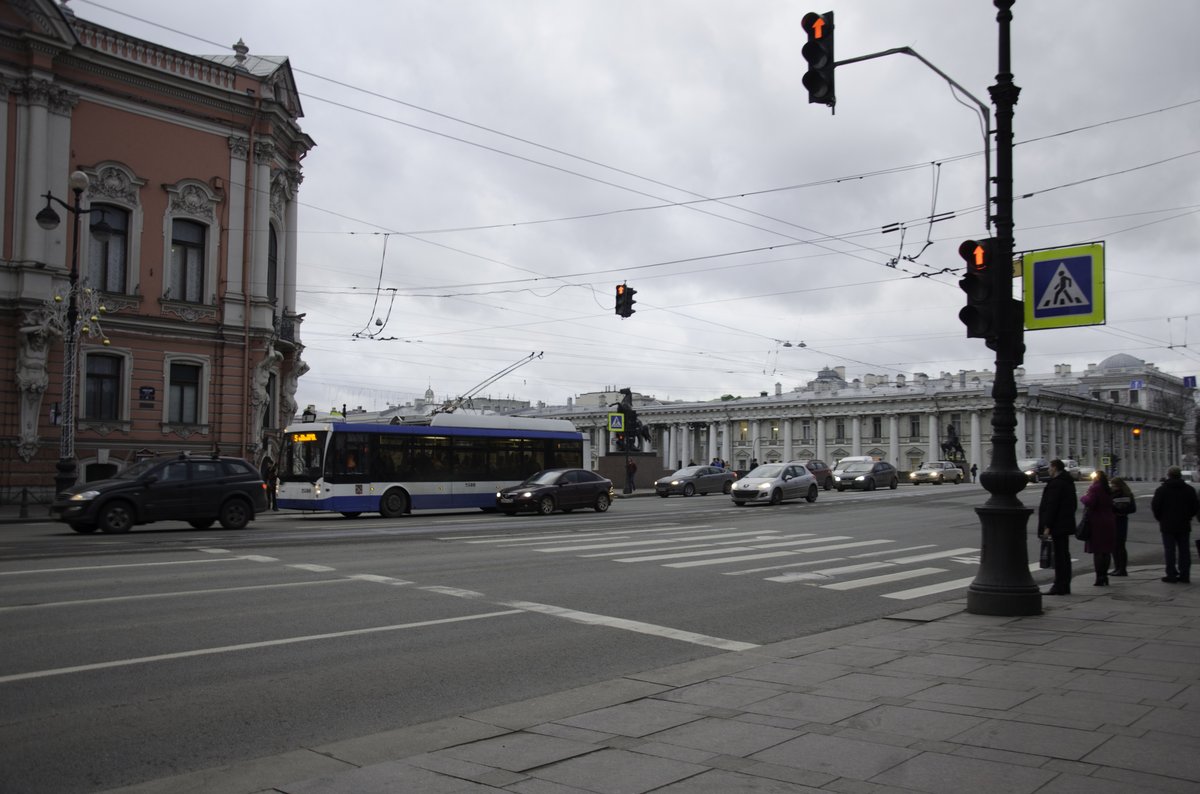
One of the most notable additions to the Anichkov Bridge came in the mid-19th century with the installation of the famous "Horse Tamers" statues, sculpted by Baron Peter Clodt von Jürgensburg. These statues are not only artistic masterpieces but also symbolize human control over nature, a recurring theme in neoclassical art. The bridge's granite balustrades and ornate iron railings further enhance its aesthetic appeal, making it a significant landmark in Saint Petersburg's architectural landscape.
Significance of Anichkov Bridge
Architectural Marvel
Anichkov Bridge, spanning the Fontanka River in Saint Petersburg, is a quintessential example of Russian neoclassical architecture. The bridge's design features four equestrian statues, known as "The Horse Tamers," sculpted by Baron Peter Clodt von Jürgensburg. These statues are not only artistic masterpieces but also symbolize human control over nature, a recurring theme in neoclassical art. The bridge's granite balustrades and ornate iron railings further enhance its aesthetic appeal, making it a significant landmark in Saint Petersburg's architectural landscape (Saint Petersburg.com).
Historical Significance
Anichkov Bridge holds a prominent place in Russian history. It was originally constructed in 1715 under the orders of Tsar Peter the Great, making it one of the oldest bridges in Saint Petersburg. Over the centuries, the bridge has witnessed numerous historical events, including the Decembrist Revolt of 1825 and the Russian Revolution of 1917. During World War II, the bridge was partially dismantled to protect its statues from Nazi bombings, highlighting its cultural importance to the Russian people (Russia Beyond).
Cultural Symbolism
The bridge is not just a physical structure but a cultural icon. It has been immortalized in Russian literature, most notably in the works of Fyodor Dostoevsky and Alexander Pushkin. In Dostoevsky's "Crime and Punishment," the bridge serves as a backdrop for some of the novel's most pivotal scenes, symbolizing the moral and existential dilemmas faced by the protagonist, Raskolnikov. Pushkin, on the other hand, often mentioned the bridge in his poetry, using it as a symbol of the city's grandeur and historical depth (Literary Russia).
Visitor Information
Visiting Hours
Anichkov Bridge is accessible to visitors 24/7, making it an ideal spot for both day and night visits. However, the best time to visit is during the "White Nights" in summer, when the city is bathed in perpetual twilight.
Tickets
There is no admission fee to visit Anichkov Bridge. It is a public structure open to all.
Travel Tips
- Accessibility: The bridge is centrally located on Nevsky Prospekt, easily accessible by public transportation, including buses and the metro.
- Photography: The bridge offers stunning views of the Fontanka River and surrounding landmarks, making it a popular spot for photography.
- Safety: While the area is generally safe, it's advisable to be cautious of pickpockets, especially during peak tourist seasons.
Nearby Attractions
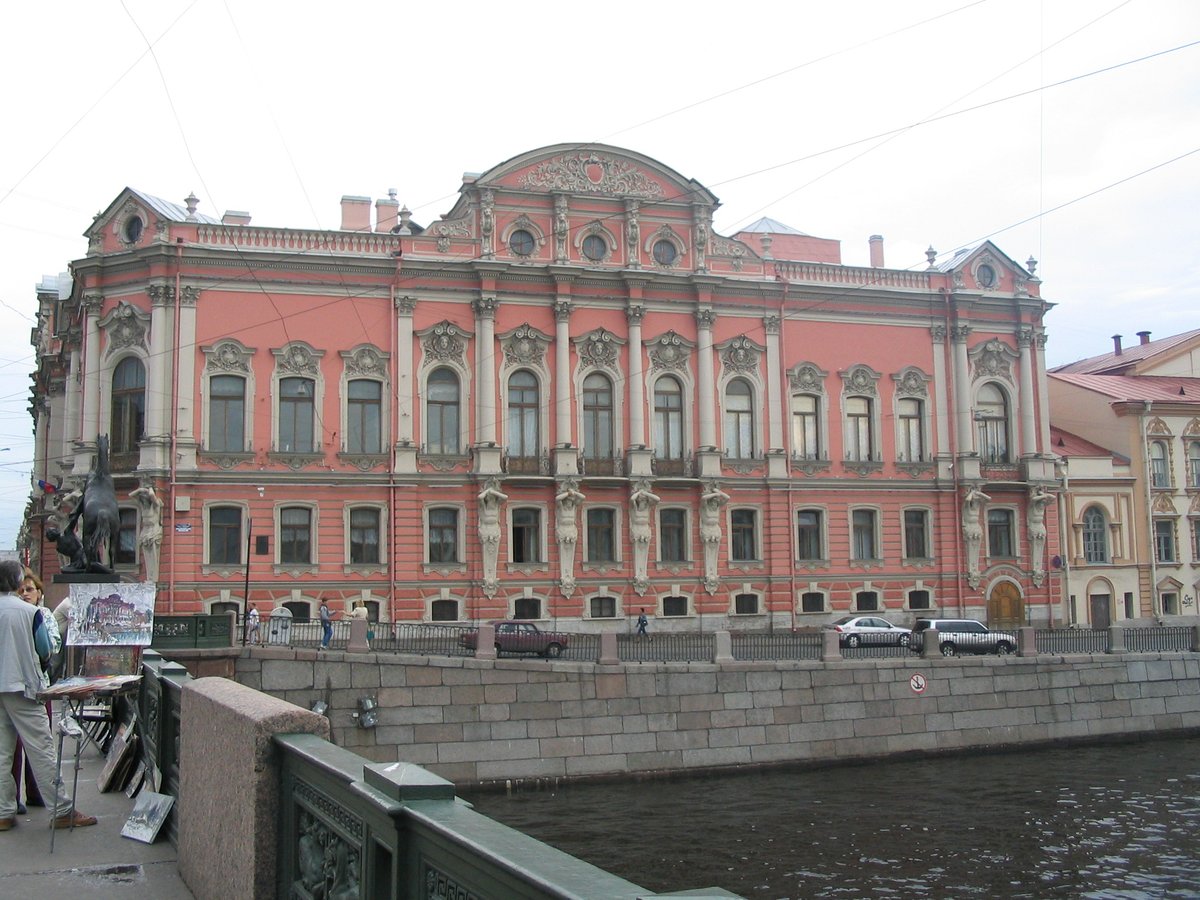
Anichkov Bridge is surrounded by several notable landmarks, including the Beloselsky-Belozersky Palace and the Anichkov Palace. These sites are within walking distance and offer a deeper dive into the rich history and culture of Saint Petersburg.
Engineering Feat
From an engineering perspective, Anichkov Bridge is a marvel of 19th-century technology. The bridge was one of the first in Russia to use cast iron in its construction, a material that was revolutionary at the time. The use of cast iron allowed for a more durable and stable structure, capable of withstanding the harsh Russian winters and the heavy traffic of Nevsky Prospekt. The bridge's design also incorporates a unique system of arches and supports, which distribute the weight evenly and prevent structural damage (Engineering History).
Preservation Efforts
Given its historical and cultural significance, Anichkov Bridge has been the focus of numerous preservation efforts. In the early 20th century, the bridge underwent extensive restoration to repair damage caused by flooding and general wear and tear. More recently, in 2003, a major restoration project was undertaken to restore the bridge to its original glory. This project involved meticulous work to preserve the original sculptures and architectural details, ensuring that the bridge remains a testament to Russian engineering and artistry for future generations (Restoration Projects).
Symbol of Resilience
Anichkov Bridge stands as a symbol of resilience and continuity in the face of adversity. Despite the numerous challenges it has faced over the centuries, including wars, revolutions, and natural disasters, the bridge has remained a steadfast part of Saint Petersburg's urban landscape. Its survival and continued relevance are a testament to the enduring spirit of the city and its people. The bridge's ability to adapt and endure makes it a powerful symbol of resilience, not just for Saint Petersburg, but for Russia as a whole (Cultural Resilience).
Economic Impact
The bridge also plays a crucial role in the local economy. As one of the most visited landmarks in Saint Petersburg, it attracts thousands of tourists each year, contributing significantly to the city's tourism industry. The influx of tourists generates revenue for local businesses, including hotels, restaurants, and souvenir shops. Additionally, the bridge's central location makes it a vital transportation link, facilitating the movement of goods and people across the city. This economic impact underscores the bridge's importance beyond its historical and cultural significance (Economic Impact Studies).
Educational Value
Anichkov Bridge serves as an educational resource for students and scholars of architecture, engineering, and history. Its unique design and construction techniques provide valuable insights into 19th-century engineering practices. The bridge is often included in academic curricula and research projects, making it a living classroom for those interested in Russian history and architecture. Educational tours and workshops are frequently organized, offering hands-on learning experiences that deepen the understanding of this iconic structure (Educational Tours).
Community Engagement
The bridge also fosters community engagement and pride. Local residents often participate in events and activities centered around the bridge, such as historical reenactments, art exhibitions, and cultural festivals. These events not only celebrate the bridge's rich history but also strengthen community bonds and promote a sense of shared heritage. The bridge thus serves as a focal point for community life, bringing people together and fostering a sense of belonging (Community Events).
FAQ
What are the visiting hours of Anichkov Bridge?
Anichkov Bridge is accessible 24/7, but the best time to visit is during the "White Nights" in summer.
How to buy tickets for Anichkov Bridge?
There are no tickets required to visit Anichkov Bridge as it is a public structure.
Are there guided tours available?
Yes, guided tours are available and often provide historical insights and anecdotes that enrich the visitor experience.
What are some nearby attractions?
Nearby attractions include the Beloselsky-Belozersky Palace and the Anichkov Palace, both within walking distance of the bridge.
For more information, visit our website or follow us on social media.
Listen to the full story in the app
The whole Anichkov Bridge,
told well.
Listen to sourced travel stories with local history and practical context — ready offline.
Verified, and shown.
Researched and written by the Audiala editorial team from historical records, architectural archives, and local expertise.
Built from cited sources · see the method · How we make our guides →