An introduction.
Researched by the Audiala editorial team from historical records, architectural archives, and local expertise.
WWhy does everyone call it the wrong name? The cathedral that anchors Red Square in Moscow, Russia, was never dedicated to Saint Basil. Its official title is the Cathedral of the Intercession of the Virgin on the Moat — a mouthful that nobody uses, overwritten in popular memory by a barefoot holy fool who was buried beside it decades after it was finished. St. Basil's Cathedral is worth visiting not because it looks like a fever dream of candy-colored domes (though it does), but because almost nothing you think you know about it turns out to be true.
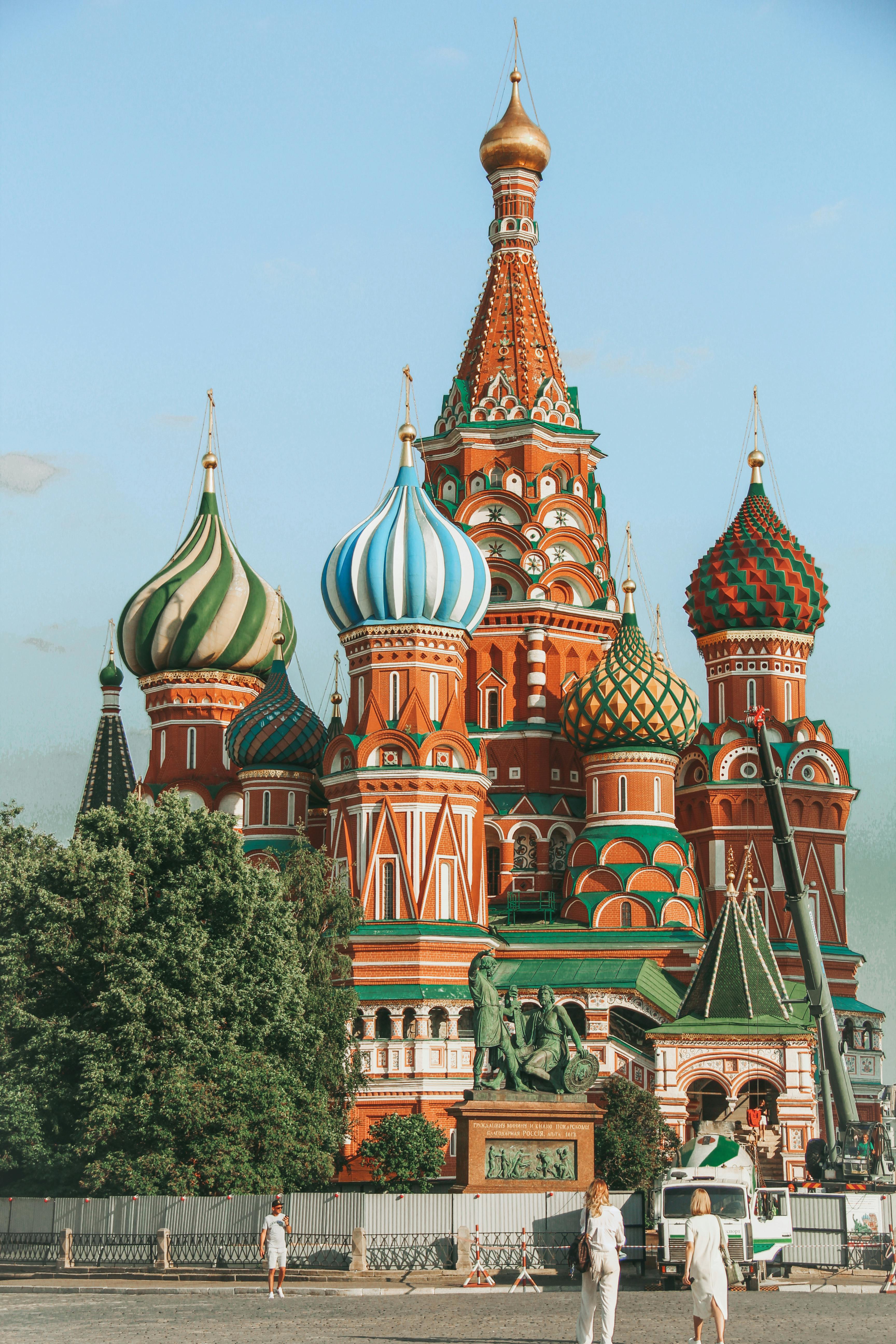
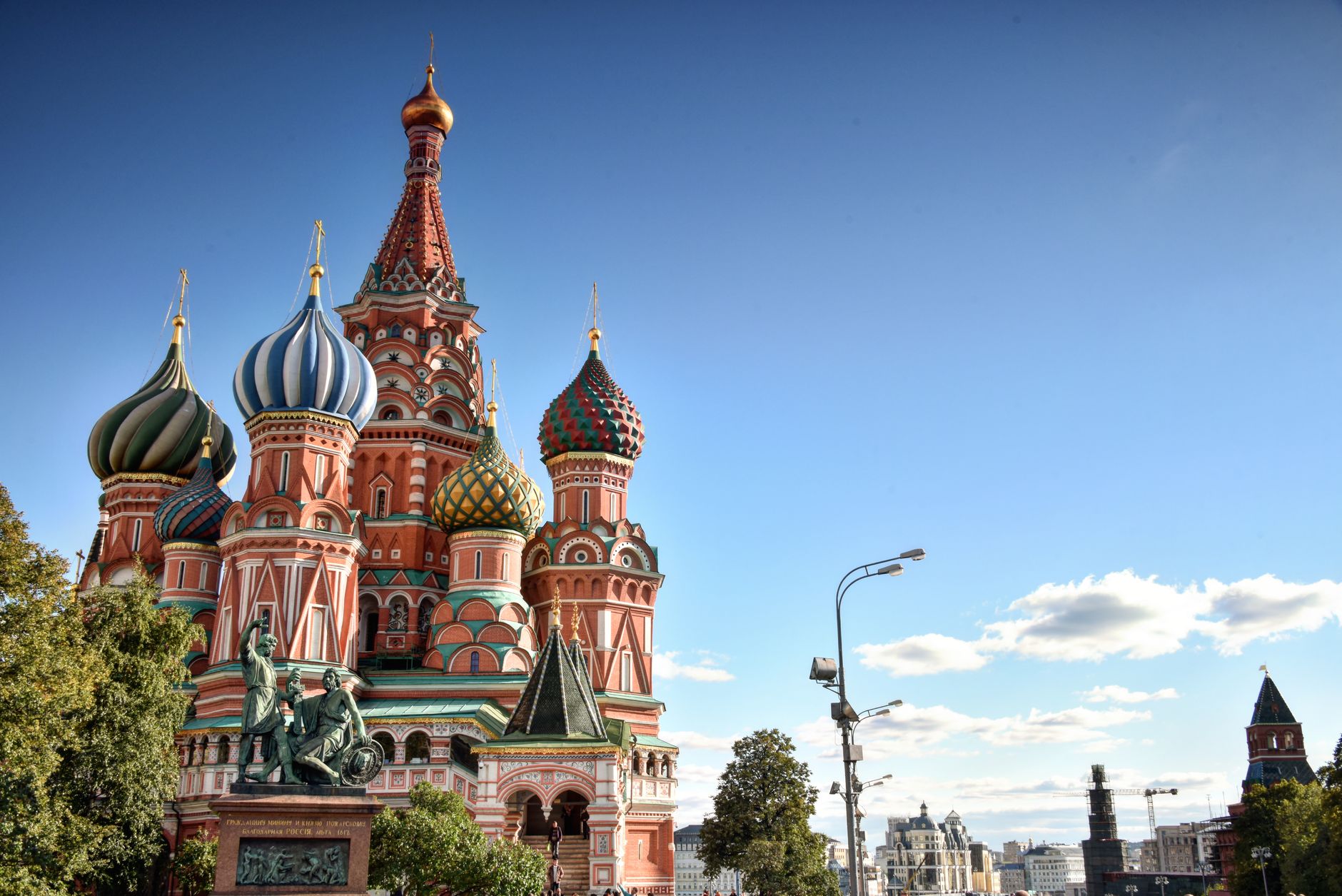
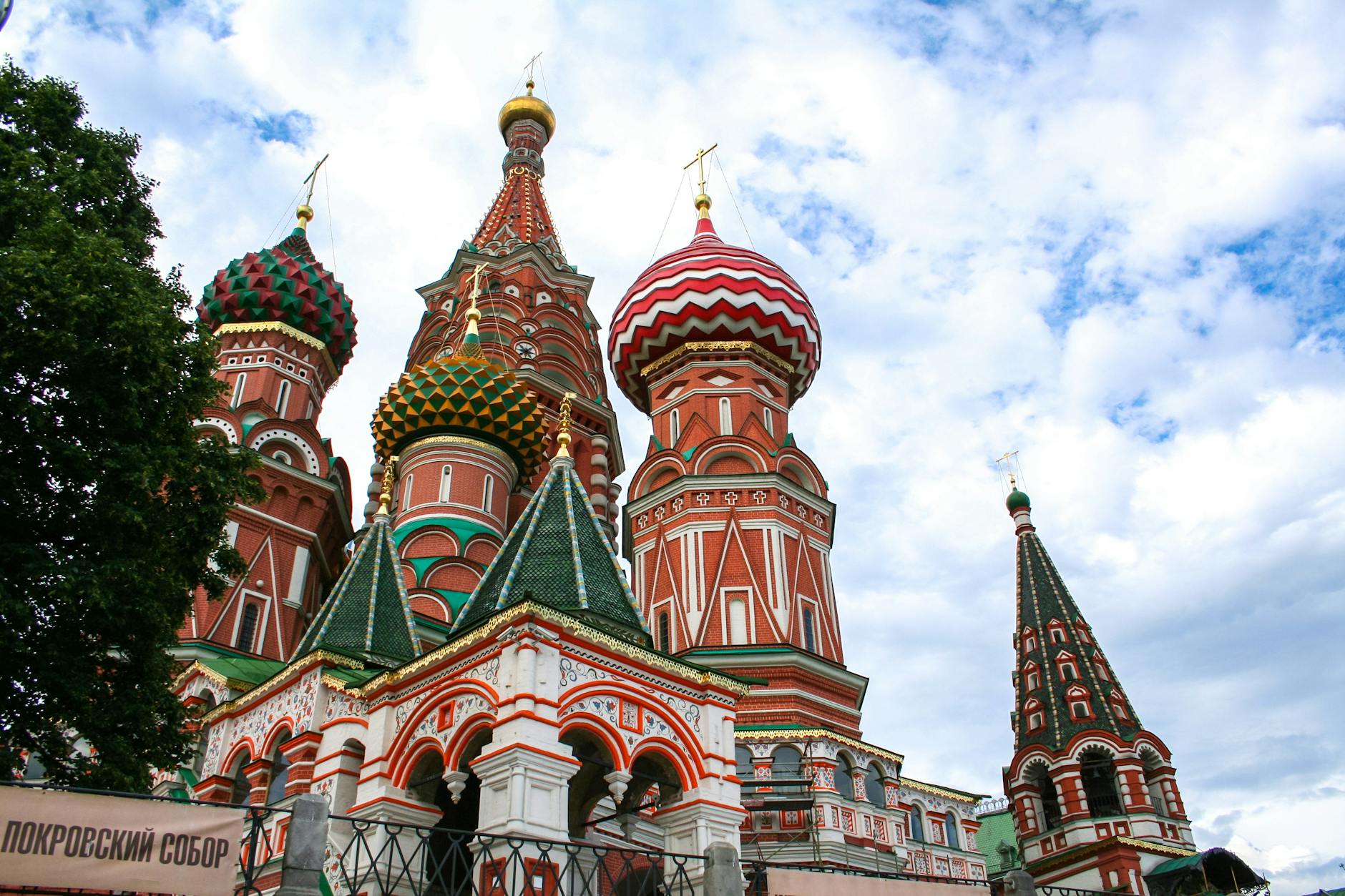
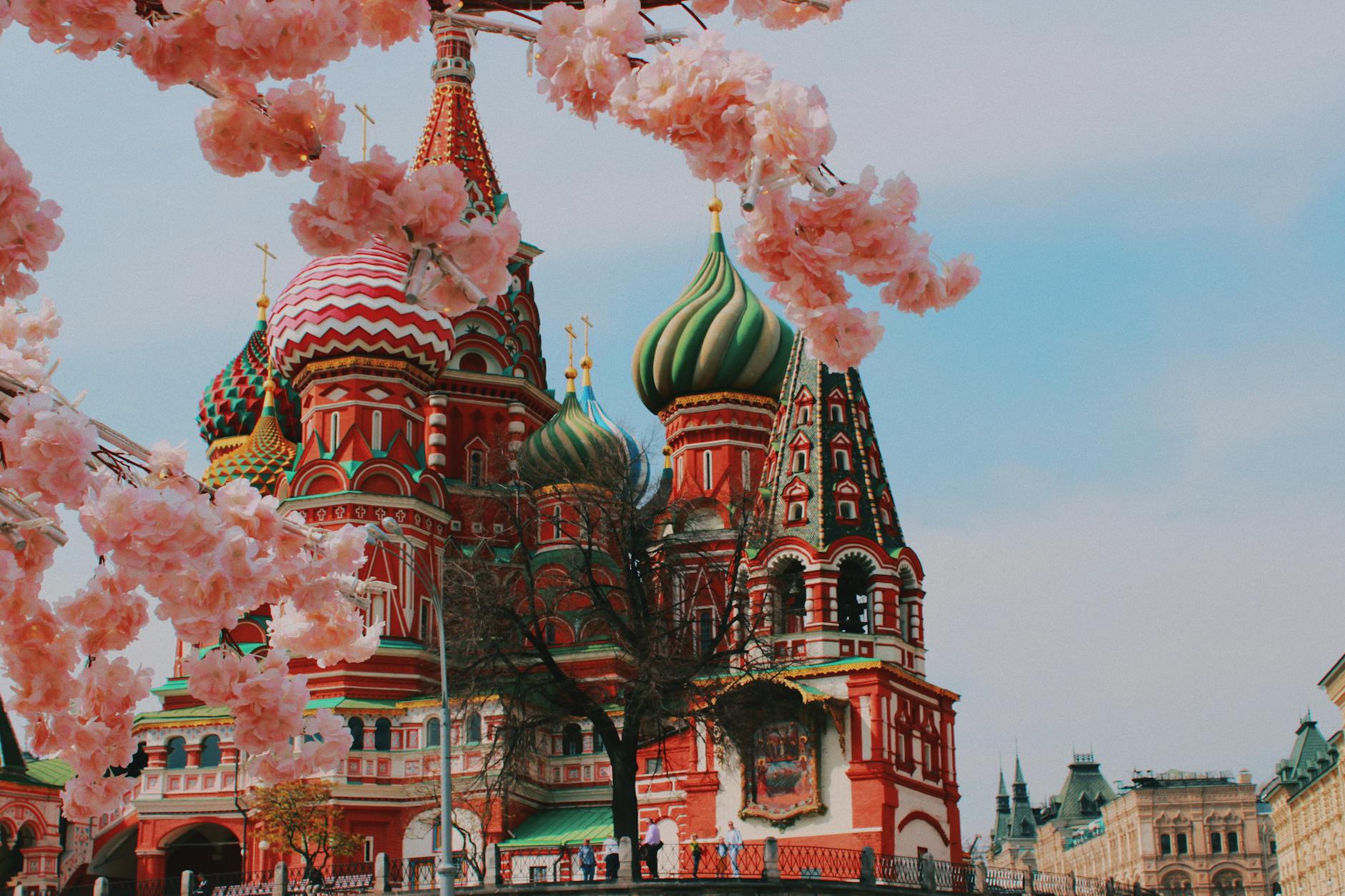
Stand at the south end of Red Square and the building hits you like a hallucination. Nine domes — no two alike — twist and bulge against the sky in a riot of color that didn't exist when the cathedral was first completed in 1561. The original exterior was white with gold domes. Every swirl of red, green, and blue you see today was painted on more than a century later, around 1683. The icon of Russia that tourists photograph millions of times a year is, in a sense, a 17th-century makeover.
Step closer and the scale surprises. The cathedral is smaller than most people expect — its footprint would fit inside a mid-sized supermarket. Eleven chapels crowd onto a single foundation, connected by narrow corridors with ceilings so low you instinctively duck. The interior is intimate, almost claustrophobic, a sharp contrast to the operatic exterior. Incense lingers in the passageways. Candlelight catches fragments of 16th-century murals. The hum of Red Square fades the moment you cross the threshold.
And here is the deeper paradox: what looks from below like architectural chaos is, from above, a perfectly symmetrical eight-pointed star. The building's secret is mathematical order disguised as exuberance — a trick that has fooled visitors for over 460 years.
Best places to visit in Moscow 2023
Travora01 What to see.
The Onion Domes Up Close
The Interior Labyrinth
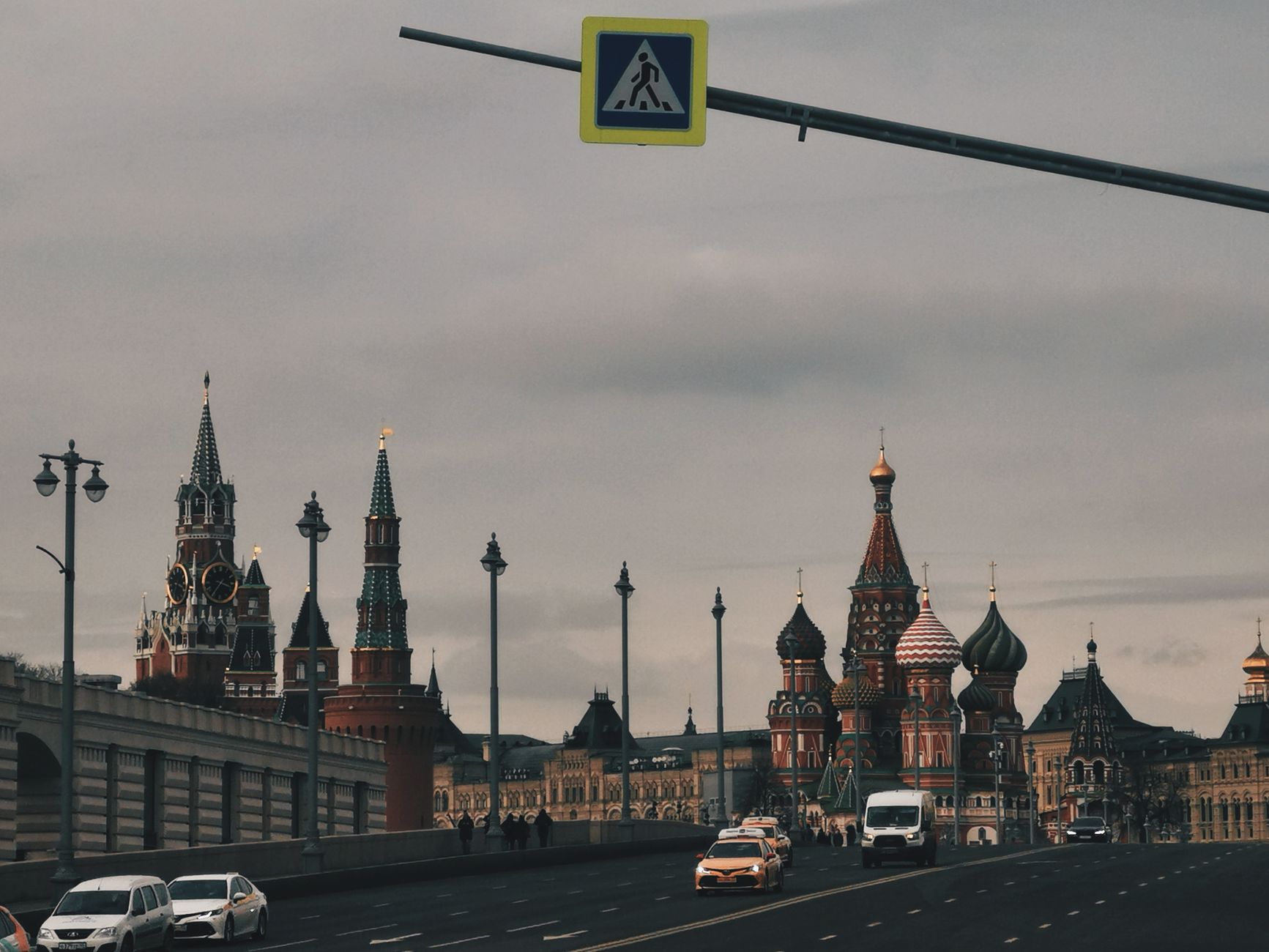
The Walk Around: Red Square at Twilight
02 In pictures.




Watch & Explore St. Basil'S Cathedral.
Plan and listen to St. Basil'S Cathedral with Audiala.
Audio guide in your pocket, itinerary in your browser. Built for the way you actually visit.
03 Visitor logistics.
The practical scaffolding for a good visit — kept short.
Getting There
Take the Metro to Okhotny Ryad (Line 1) or Ploshchad Revolyutsii (Line 3), then walk 5–10 minutes south through Red Square — the domes will guide you. Kitay-gorod station (Lines 6 and 7) also works, approaching from the east. Forget driving: Red Square is pedestrian-only, and central Moscow parking is both scarce and punishingly expensive.
Opening Hours
As of 2026, the cathedral opens at 10:00 daily. Monday through Wednesday and Sunday it closes at 18:00; Thursday through Saturday it stays open until 19:00. The ticket office shuts 45 minutes before closing — arrive at least an hour before if you want an unhurried visit.
Time Needed
A brisk walkthrough takes 30–45 minutes, enough to absorb the painted walls and the disorienting layout. To properly explore all nine chapels, read the exhibition panels, and linger over the 16th-century murals, budget 1.5–2 hours. Pair it with a stroll through nearby Zaryadye Park and you've got a solid half-day in the heart of Moscow.
Accessibility
The interior is a 16th-century labyrinth of steep, narrow staircases and uneven stone floors — no elevators, no ramps. Wheelchair access is not possible inside. Visitors with mobility concerns can still appreciate the exterior from Red Square, where the ground is flat and paved.
Tickets
As of 2026, adult tickets run roughly 1,000–2,000 RUB depending on the platform; children under 7 enter free. Book through the official State Historical Museum website (en.shm.ru) at least a few days ahead — it's cheaper than resellers and lets you skip the outdoor queue.
04 Tips for visitors.
Small things that change the day.
Dress Respectfully
The cathedral is a museum that still hosts occasional Orthodox services. Avoid shorts and bare shoulders; women aren't strictly required to cover their heads, but carrying a scarf shows awareness of where you are.
Leave the Tripod
Personal photography is allowed inside, but flash, tripods, and drones are all banned. The dim interiors reward a steady hand and a phone with good low-light performance.
Dodge the Tsars
Men dressed as Ivan the Terrible or Peter the Great patrol Red Square looking for photo ops, then demand steep fees. A polite "nyet" and steady walking pace is all you need.
Eat Nearby, Wisely
For budget Soviet nostalgia, hit Stolovaya 57 inside GUM — canteen trays, honest borscht, prices that won't sting. For a mid-range splurge with Red Square views, Dr. Zhivago serves elevated Russian classics two minutes north of the cathedral.
Golden Hour Outside
The domes photograph best in late afternoon when the western sun hits them directly, turning the swirled patterns almost liquid. In winter, arrive just before closing when floodlights ignite against the early dark — a different cathedral entirely.
It's Nine Churches
Most visitors assume they're entering one building. They're actually walking through nine separate churches on a shared foundation, connected by corridors tighter than a subway car. Knowing this transforms the maze-like interior from confusing to logical.
Where to Eat
Don't Leave Without Trying
Stolovaya 57
local favoriteOrder: The borscht with sour cream, pelmeni, and Olivier salad — authentic Soviet-era comfort food that tastes like it's been perfected over decades. Don't miss the blini if they have them.
Housed inside the historic GUM department store directly on Red Square, this is where locals actually eat near the cathedral. It's a genuine 20th-century Soviet canteen experience — no pretense, just honest Russian food at fair prices with over 3,300 reviews backing it up.
Pavil'on Kitay
quick biteOrder: Light cafe fare and refreshments — ideal for a quick break between sightseeing without heavy commitment.
A neighborhood spot in the heart of Red Square's tourist zone that keeps its head down and serves straightforward cafe food. Good for a coffee or light bite when you need to escape the crowds.
Dining Tips
- check GUM department store on Red Square is the primary destination for food within immediate walking distance of St. Basil's Cathedral.
- check Stolovaya 57 offers an authentic Soviet canteen experience — expect no-frills, straightforward Russian comfort food at budget prices.
Restaurant data powered by Google
05 The Cathedral That Survived Everyone Who Tried to Destroy It
Ivan the Terrible ordered the cathedral built in 1555 to celebrate his conquest of the Khanate of Kazan three years earlier. The construction took six years. By 1561, the stone structure stood complete — a cluster of nine chapels, each commemorating a saint whose feast day fell during the siege. It was a war memorial dressed in the language of heaven, planted deliberately outside the Kremlin walls, in the marketplace where ordinary Muscovites gathered.
What followed was a cycle of near-destruction and improbable survival that spans fires, foreign armies, and Soviet bulldozers. The cathedral burned severely in 1583 and again in 1737. Napoleon's troops reportedly tried to blow it up in 1812. Stalin's planners earmarked it for demolition in the 1930s. Each time, something — or someone — intervened. The building still stands, which is itself the most remarkable thing about it.
Pyotr Baranovsky and the Cathedral Stalin Almost Erased
The surface story is simple: St. Basil's survived the Soviet era because it was too famous to tear down. Tourists repeat this as though beauty were its own insurance policy. But in the 1930s, beauty meant nothing to the planners reshaping Moscow. Churches across the city were dynamited to make room for parade grounds and workers' housing. The Cathedral of Christ the Saviour, far larger and more prominent, was demolished in 1931 without hesitation. St. Basil's was next on the list — its removal would clear Red Square for military vehicles to pass unobstructed during parades.
What doesn't add up is why it survived when so many others didn't. The answer, according to persistent accounts, centers on one man: Pyotr Baranovsky, a restoration architect who had devoted his career to documenting and preserving medieval Russian buildings. The story goes that when Baranovsky received the order to prepare the cathedral for demolition, he refused — and sent a telegram directly to Stalin stating he would rather kill himself than carry out the work. He was arrested and spent years in the Gulag. But the demolition order was never executed. Whether Stalin was moved by the protest, distracted by other priorities, or simply forgot, historians still debate. What is documented is that Baranovsky lost his freedom, and the cathedral kept its foundations.
Knowing this changes what you see when you look at the building. The candy-colored domes aren't just photogenic — they're evidence of a reprieve that cost a man his liberty. Baranovsky survived the camps and returned to restoration work after Stalin's death. The cathedral he saved now draws roughly two million visitors a year. A small plaque near the entrance acknowledges the museum's history, but Baranovsky's name is easy to miss. Most visitors walk right past it on their way to take a selfie.
The Holy Fool Who Stole the Name
The Rain That Saved the Domes
Listen to the full story in the app
The whole St. Basil'S Cathedral,
told well.
Audio guides for 1,100+ cities across 96 countries. History, stories, and local insight — offline ready.
06 Frequently asked.
The questions travellers send us most about St. Basil'S Cathedral.
Is St. Basil's Cathedral worth visiting inside?
Yes, though the interior will surprise you — it's nothing like the grand, open nave you might expect. The cathedral is actually nine separate churches connected by narrow, low-ceilinged passageways covered in dense 16th-century frescoes. The contrast between the explosive exterior and the intimate, maze-like interior is itself the experience, and you'll find ancient icons, painted walls lit by small recessed windows, and over 80 clay sound-amplifying vessels embedded in the masonry.
How long do you need at St. Basil's Cathedral?
A quick walkthrough takes 30–45 minutes; a thorough visit with time to study the individual chapels and wall paintings runs closer to 1.5–2 hours. The interior is compact — smaller than most visitors expect — but the layered detail rewards slow looking. Arrive at least 60 minutes before closing, as the ticket office shuts 45 minutes early.
How do I get to St. Basil's Cathedral from central Moscow?
Take the Metro to Okhotny Ryad (Line 1) or Ploshchad Revolyutsii (Line 3), then walk 5–10 minutes south through Red Square. The cathedral sits at the square's southern end in a pedestrian-only zone. Don't bother driving — there's no visitor parking on Red Square, and central Moscow parking is scarce and expensive.
What is the best time to visit St. Basil's Cathedral?
Weekday mornings offer the thinnest crowds and the best chance to actually absorb the interior without being shuffled along. For photography, twilight is hard to beat — the floodlights cast a dramatic glow against the domes that midday sun can't match. Winter delivers the most striking visual contrast: those candy-colored onion domes against fresh snow on Red Square.
Can you visit St. Basil's Cathedral for free?
No — admission costs roughly 1,000–2,000 RUB for adults, depending on the booking platform. Children under 7 enter free. Book through the official State Historical Museum website rather than third-party resellers, which tend to add service fees.
What should I not miss at St. Basil's Cathedral?
Don't skip the basement level, where 20th-century restorers discovered previously walled-off corridors in the foundation. Look for the small air vents (produhi) punched into the thick masonry — they've kept the stone dry since the 1550s. And before you leave, study the floor plan from the gallery above: what looks chaotic from ground level is actually a perfectly symmetrical eight-pointed star, a mathematical order that almost no one perceives while standing among the domes.
Is St. Basil's Cathedral wheelchair accessible?
Unfortunately, no. The 16th-century interior consists of steep, narrow staircases and uneven stone floors with no elevator access. The exterior and Red Square itself are flat and accessible, so the outside views remain available to everyone, but the interior is genuinely difficult even for visitors without mobility issues.
Why is St. Basil's Cathedral so colorful?
The domes weren't always a riot of color — the originals were likely gold or plain metal, and the current candy-swirl patterns date to the 1680s when the entire color scheme was completed. Each of the nine churches received a unique dome pattern, possibly to help illiterate worshippers identify which chapel they were entering from the outside. The vivid ceramic tiles and copper cladding have been maintained and restored continuously since, turning what was once a more austere monument into the fairy-tale silhouette recognized worldwide.
Verified, and shown.
Researched and written by the Audiala editorial team from historical records, architectural archives, and local expertise.
Confirmation of UNESCO World Heritage listing (1990) as part of 'Kremlin and Red Square, Moscow' and symbolic status.
Core historical timeline, construction dates (1555–1561), architect attribution, secularization dates, and restoration of liturgy.
Official opening hours, ticketing, museum management details, and visitor guidelines.
Architectural composition details including the eight-pointed star floor plan and chapel arrangement.
Architectural analysis, construction materials, placement outside the Kremlin walls, and scholarly debate on Italian influence.
Historical fires (1583, 1737), the blinding myth debunking, and survival narrative.
Floor plan symmetry analysis and Stalin-era survival anecdotes.
Golosniki (acoustic vessels), hidden passages, air vents (produhi), and chapel chronology.
Interior sensory experience — narrow passageways, low ceilings, and contrast with exterior.
Construction date confirmation and general historical overview.
Visitor tips, photography rules, and dress code guidance.
Folklore, community memory, and seven key facts about the cathedral.
The Alevizov Moat reference and the heating controversy explaining why St. Basil's chapel became dominant.
Visitor reviews on accessibility challenges, crowd patterns, and visit duration.
Ticket pricing, guided tour availability, and booking recommendations.
Dome material evolution from gold to colorful copper and ceramic tiles.
Legends of the blinding of architects, Stalin survival stories, and the Saint's coin legend.
Researched from Wikidata, Wikipedia & official sources · fact-checked · How we make our guides →