Plan and listen to Sretensky Monastery with Audiala.
Audio guide in your pocket, itinerary in your browser. Built for the way you actually visit.
Introduction
Sretensky Monastery stands as a spiritual and historical beacon in Moscow, embodying centuries of Russian religious tradition, architectural evolution, and cultural resilience. Founded in 1397, the monastery commemorates the miraculous deliverance of Moscow from Tamerlane’s invasion—an event intrinsically tied to the veneration of the Vladimir Icon of the Mother of God (Moscow City Tourism Committee). Over the centuries, Sretensky Monastery has played significant roles in Russia’s spiritual, cultural, and political landscapes, surviving times of turmoil, suppression, and ultimately experiencing a vibrant revival in the modern era.
This comprehensive guide explores Sretensky Monastery’s rich history, architectural highlights, cultural and spiritual significance, and offers essential practical information for visitors—including up-to-date visiting hours, ticket details, accessibility, nearby attractions, and tips to enhance your experience at one of Moscow’s most revered landmarks.

Foundation and Medieval Era
Sretensky Monastery was established in 1397 by Grand Prince Vasily I, in gratitude for the city’s deliverance from Tamerlane’s forces two years before. This event, marked by the arrival of the revered Vladimir Icon of the Mother of God, is reflected in the monastery’s name—“Sretensky” meaning “Meeting” in Old Church Slavonic (Advantour; Christian Today). The monastery quickly became a religious and cultural hub, hosting guests and processions along the main route from Vladimir to Moscow.
Architectural Evolution
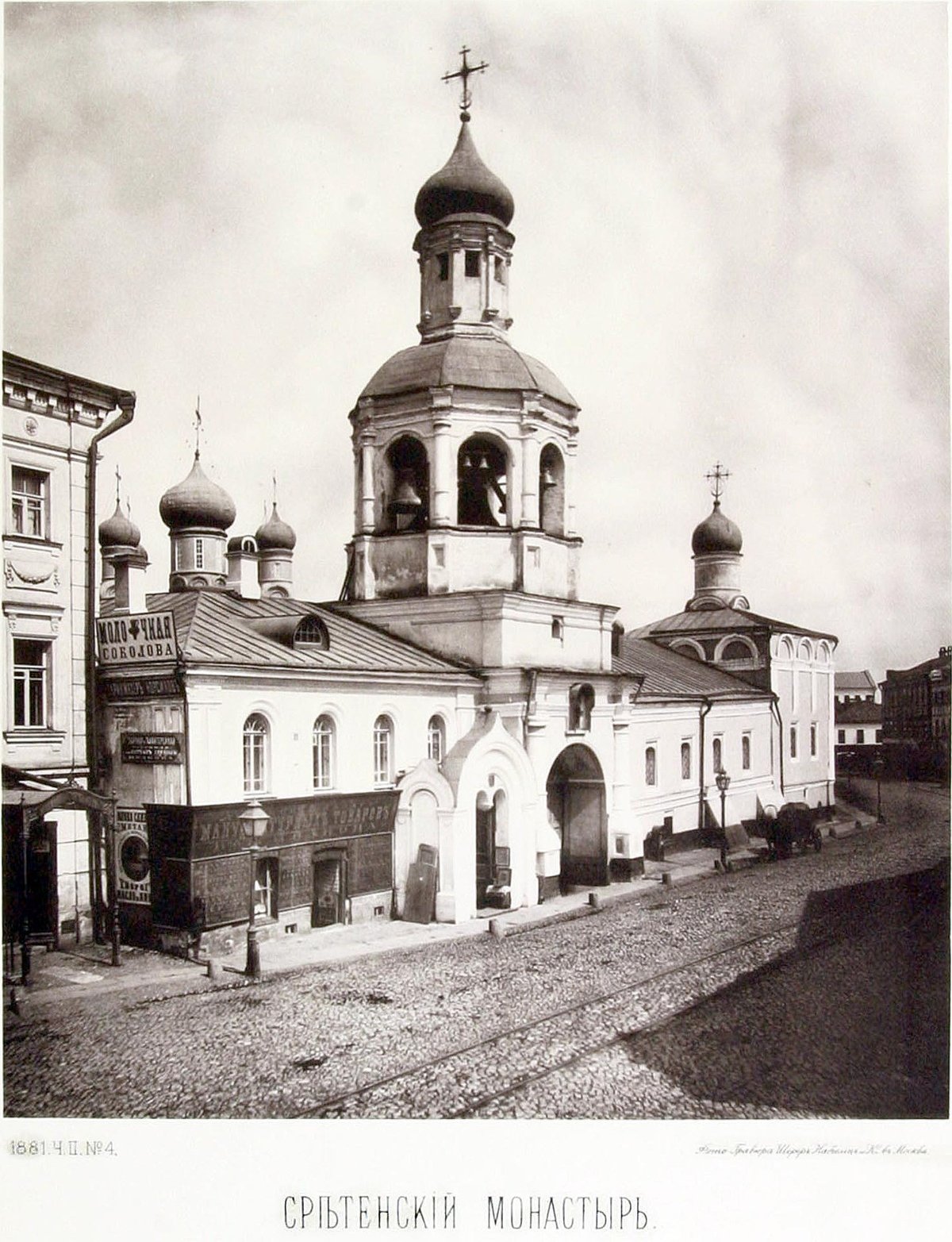
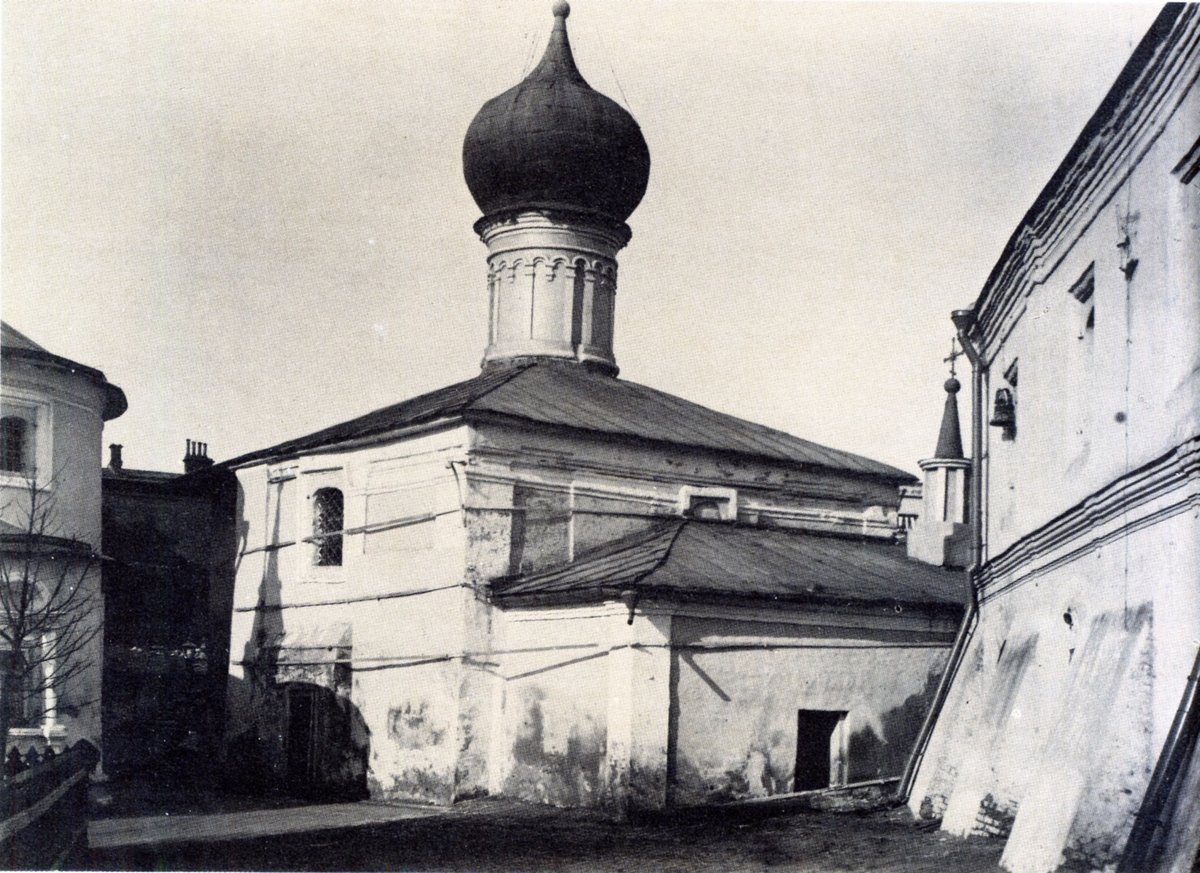
Initially composed of wooden structures, Sretensky Monastery began adopting stone architecture in the late 15th century, reflecting the growing importance of the site (Russia Beyond). The Church of the Meeting of the Vladimir Icon (1679–1689) is a prime example of Moscow Baroque style, with its distinctive five domes and elaborate ornamentation. Subsequent centuries saw further expansion, including the addition of the bell tower and several residential and educational buildings (Trip101).
The early 21st century brought a significant transformation with the construction of the Cathedral of the Resurrection of Christ and the New Martyrs, consecrated in 2017. Designed by D. Smirnov, this structure honors those persecuted for their faith and integrates traditional Orthodox aesthetics with modern functionality (TostPost; OrthoChristian).
Imperial Patronage and Cultural Contributions
Throughout its history, Sretensky Monastery enjoyed the support of Russian tsars and nobility, contributing to its wealth and the expansion of its manuscript and icon collections (Life-Cheb). In the 19th century, the monastery became a center for charity, education, and musical excellence—its choir remains one of the most prominent in the Russian Orthodox Church (Sretensky Monastery Choir).
Soviet Suppression and Revival
In 1925, the Bolshevik regime closed the monastery, repurposing its buildings and persecuting its clergy (Orthodox Christianity). During the Soviet era, parts of the complex were used as a prison and administrative offices, and many of the original structures were damaged or lost.
Following the collapse of the USSR, the Russian Orthodox Church regained control of the site in 1994. Restoration efforts began promptly, culminating in the construction of the new cathedral and the revival of religious and educational activities (OrthodoxWiki; Moscow Patriarchate; TASS News Agency).
Religious and Cultural Significance
Spiritual Life and Pilgrimage
Sretensky Monastery is an active spiritual center, hosting daily liturgies and evening services that attract both local worshippers and international pilgrims (Life-Cheb). The monastery houses revered relics, including those of the New Martyrs and Confessors, and maintains vibrant traditions of Orthodox worship.
Education and Publishing
The Sretensky Theological Seminary, established in 1999, integrates classical theological training with modern educational approaches. The monastery also operates one of Russia’s largest Orthodox publishing houses and manages Pravoslavie.ru, a leading online resource on Orthodox Christianity (Life-Cheb; Christian Today).
Memorial to the New Martyrs
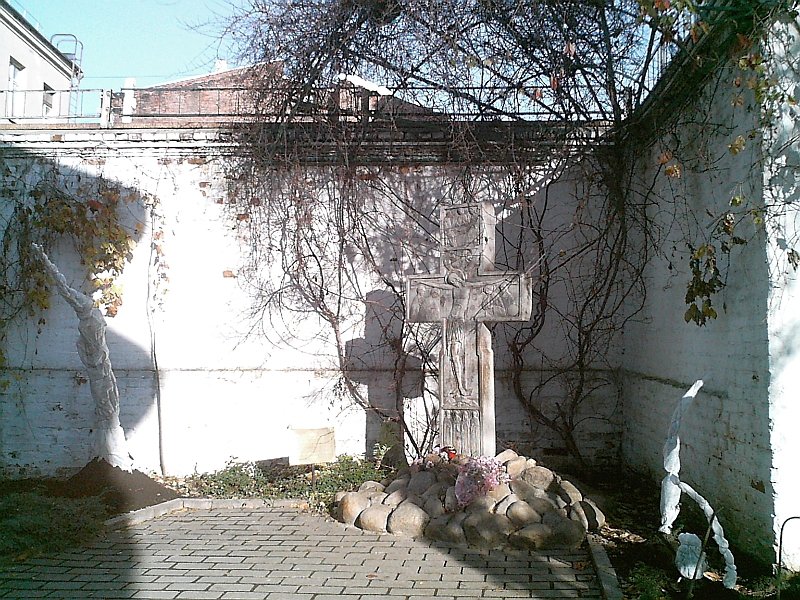
The new cathedral is not only an architectural landmark but also a living memorial to the countless victims of religious persecution in Russia’s 20th-century history. Its interiors feature mosaics, frescoes, and iconography dedicated to the New Martyrs and Confessors (TostPost).
International and Social Outreach
Sretensky Monastery fosters inter-Orthodox relations, notably with the Serbian Orthodox Church, and supports charitable initiatives, youth programs, and the restoration of Russian religious monuments (OrthoChristian; OrthoChristian; Gorthodox).
Visitor Information
Location and Accessibility
Situated at 19 Bolshaya Lubyanka Street, Sretensky Monastery is easily reached via several metro stations, including Sretensky Bulvar, Turgenevskaya, Chistye Prudy, and Lubyanka. The central location makes it a convenient starting point for exploring Moscow’s historical district (Brilliant Tourism; Life-Cheb).
The grounds are generally accessible to visitors with mobility challenges, with ramps and assistance available—though some historic areas may be less accessible due to steps or uneven surfaces.
Visiting Hours and Tickets
- Standard Hours: Open daily, typically from 7:00 AM to 8:00 PM; some sources note extended hours (5:00 AM to 10:00 PM). Check the official website for updates, especially during religious holidays.
- Admission: Entry to the monastery grounds and cathedrals is free. Donations are welcomed.
- Guided Tours: Available in Russian and, by prior arrangement, in English. Tours provide in-depth exploration of the monastery’s history, architecture, and religious life. Booking ahead is recommended (ExtraGuide.ru).
Services, Tours, and Etiquette
- Worship Services: Divine Liturgy is celebrated daily at 8:00 AM; evening services at 6:00 PM. Additional services occur on Sundays and feast days.
- Dress Code: Modest attire is required—men should avoid shorts; women should wear skirts/dresses covering the knee and headscarves (often provided at the entrance).
- Behavior: Silence and respectful conduct are expected, particularly during services. Photography is allowed outdoors and in certain interior spaces; restrictions apply during services and in specific areas.
- Group Visits: Groups, including school and pilgrimage parties, should notify the monastery in advance to arrange tours or special access.
Facilities and Amenities
- Monastery Shop: Sells icons, candles, literature, and souvenirs; proceeds support charity and maintenance.
- Restrooms: Available near the entrance.
- No On-site Café: Numerous restaurants and coffee shops are nearby.
Nearby Attractions
The monastery’s location places it close to several of Moscow’s notable sites:
- Red Square and the Kremlin: Approximately 2 km away.
- Chistye Prudy district, Polytechnical Museum, Myasnitskaya Street: All within walking distance.
- Tsvetnoy Boulevard and Rozhdestvensky Boulevard: Popular for shopping and dining.
Frequently Asked Questions (FAQ)
Q: What are Sretensky Monastery’s visiting hours?
A: Generally 7:00 AM to 8:00 PM daily; check for special hours on religious holidays (Trip101).
Q: Do I need a ticket to enter?
A: Entry is free; guided tours and special exhibitions may require tickets.
Q: Are guided tours available in English?
A: Yes, but they must be arranged in advance.
Q: Is the monastery accessible for people with disabilities?
A: Most main areas are accessible, though some old structures have steps or uneven paths.
Q: Is photography allowed?
A: Permitted outdoors and in designated areas; restrictions apply inside churches, especially during services.
Q: Can I attend religious services as a visitor?
A: Yes, visitors are welcome; maintain respectful silence.
Listen to the full story in the app
The whole Sretensky Monastery,
told well.
Audio guides for 1,100+ cities across 96 countries. History, stories, and local insight — offline ready.
Verified, and shown.
Researched and written by the Audiala editorial team from historical records, architectural archives, and local expertise.
Researched from Wikidata, Wikipedia & official sources · fact-checked · How we make our guides →