An introduction.
Researched by the Audiala editorial team from historical records, architectural archives, and local expertise.
WWhy would a 16th-century gate built to trap invaders between iron grilles become, five centuries later, the backdrop for bagpipers from Oman and drummers from South Korea? The Spasskaya Bashnya festival, held each summer on Red Square in Moscow, Russia, is one of the strangest cultural inversions you'll find anywhere — a military tattoo staged at the very threshold where tsars once dismounted and Napoleon allegedly lost his hat to a prophetic gust of wind.
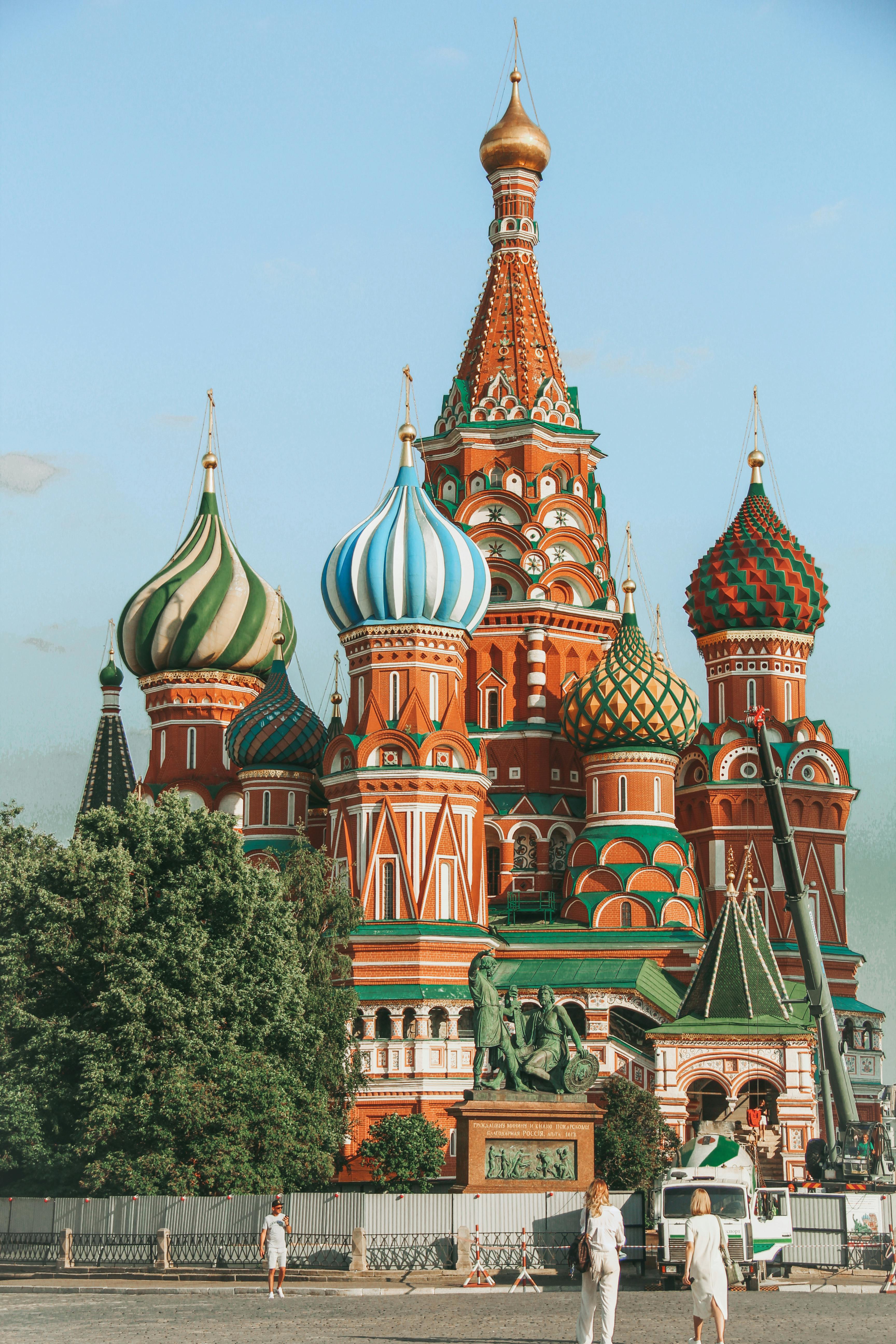
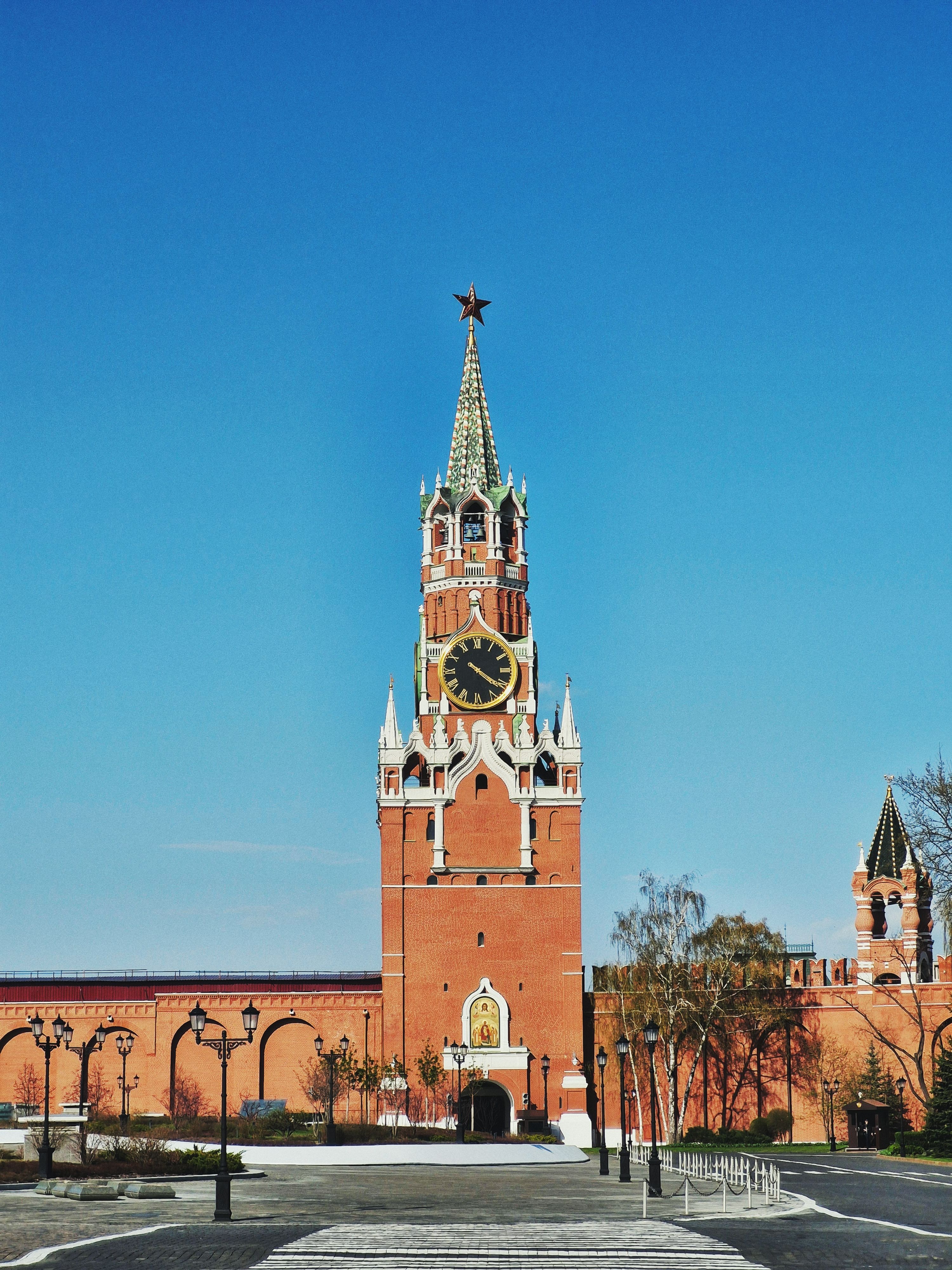
What visitors see today is a temporary grandstand filling Red Square, the 71-meter Spasskaya Tower rising behind the stage like a crenellated exclamation point. Its ruby star — wider than a car at 3.75 meters across — glows above ranks of marching musicians from dozens of countries. The chimes of the tower's clock punctuate the performances, the same bells that ring in every Russian New Year. The air carries brass and percussion across the cobblestones, bouncing off the candy-colored domes of St. Basil's Cathedral at the square's opposite end.
Since 2007, the festival has drawn participants from 59 countries and over 900,000 spectators. But the spectacle is layered on top of something much older and more complicated — a gate that was once so sacred that walking through it bareheaded was not optional, it was law. The tower's identity has been rewritten at least four times: Italian fortress, Russian Orthodox shrine, Soviet symbol, international stage. Each version left its mark, and all of them are visible at once if you know where to look.
That collision of meanings is the real reason to come. You can watch military bands anywhere. Only here do they march through a gate designed by a Renaissance Italian, crowned by a Scottish clockmaker, plastered over by Soviet ideologues, and reopened — icon and all — in the 21st century.
Best places to visit in Moscow 2023
Travora01 What to see.
The Spasskaya Tower Itself
The Evening Performances on Red Square
The Lobnoye Mesto Angle and a Pre-Show Walk
02 In pictures.


Watch & Explore Spasskaya Bashnya (Festival).
Plan and listen to Spasskaya Bashnya (Festival) with Audiala.
Audio guide in your pocket, itinerary in your browser. Built for the way you actually visit.
03 Visitor logistics.
The practical scaffolding for a good visit — kept short.
Getting There
Take the Moscow Metro to Okhotny Ryad (Line 1), Ploshchad Revolyutsii (Line 3), or Teatralnaya (Line 2) — all within a 5-minute walk of Red Square. Don't even think about driving: streets surrounding the square close to private traffic for the entire festival run, and parking in the immediate area is banned. The metro is fast, cheap, and drops you practically at the security perimeter.
Opening Hours
As of 2026, the festival typically spans roughly ten days in late August, with the main performances held in the evening after dark — that's when the light and pyrotechnic design hits full force. Red Square access is restricted during the festival and often closes to the general public by 16:00 for stage preparation. Check spasstower.ru closer to your dates for the exact 2026 schedule, as specific days shift year to year.
Time Needed
The main evening performance runs 2–3 hours. If you want the full experience, budget a half-day: arrive early to explore the periphery of Red Square, duck into GUM for a pre-show bite, then settle into the grandstands. The daytime "Bands in the Parks" satellite events at places like VDNKh are free and worth an extra hour or two if you're in Moscow during the festival window.
Tickets
Tickets sell out in advance — do not plan on buying at the gate. Purchase only through the official site (spasstower.ru); third-party resellers like spasskayabashnya.com explicitly state they are not the organizers. As of 2026, specific pricing hasn't been published yet, but expect tiered prices based on seating section and performance date. The grand finale night commands the highest demand.
Accessibility
Red Square is paved in uneven cobblestones — a challenge for wheelchair users and anyone with mobility concerns. Grandstand seating is provided, but getting to it across the cobbles requires planning. Contact the festival organizers through spasstower.ru well in advance to arrange specific access points and assistance.
04 Tips for visitors.
Small things that change the day.
Layer Up at Sunset
Late-August Moscow evenings drop sharply once the sun disappears behind the Kremlin walls. Bring a jacket or fleece — you'll be sitting still on stone for hours, and the temperature can fall 10°C between the start and the finale.
Leave the Tripod Behind
Tripods, professional telephoto lenses, and drones are all banned inside the security perimeter. Flash photography is forbidden too — it disrupts both the performers and the carefully designed lighting. A phone or compact camera is your best bet.
Beware Costume Hustlers
People dressed as Peter the Great, Lenin, or oversized animal mascots patrol the edges of Red Square and will pose for photos, then demand steep fees. Ignore them and keep walking — engaging even briefly invites a confrontation over payment.
Eat Before You Enter
Stolovaya 57 inside GUM is a Soviet-style canteen with honest prices and surprisingly good borscht — perfect for a budget pre-show dinner. For something splurge-worthy with Kremlin views, Dr. Zhivago on Mokhovaya Street serves upscale Russian classics. Once past the security screening, food options are limited.
Catch Bands in Parks
The festival's daytime satellite program sends military bands to public parks like VDNKh for free, open-air performances. These are more relaxed, more accessible, and let you get close to musicians from dozens of countries without a ticket or a security line.
Use GUM's Restrooms
Public toilets on Red Square are scarce, and once you're inside the festival security perimeter, options shrink further. Hit the restrooms inside GUM department store before you queue for entry — your future self will thank you.
Where to Eat
Don't Leave Without Trying
Rote platz
local favoriteOrder: Traditional Russian pelmeni and beef stroganoff — the kind of comfort food that's been feeding Muscovites for generations.
Located directly on Red Square with perfect views of St. Basil's Cathedral, this is where locals actually eat when they're in the historic center. Small, highly-rated spot that doesn't feel like a tourist trap.
Dining Tips
- check The GUM Department Store (directly across from the Kremlin) offers quick bites and historic Soviet-style ice cream kiosks alongside modern dining — a cultural experience in itself.
- check Look for traditional stolovaya (cafeteria-style) dining in the area for efficient, affordable meals that feel authentically Moscow.
- check Red Square is highly tourist-oriented, so smaller local spots like Rote platz offer better value and genuine atmosphere than chain restaurants.
Restaurant data powered by Google
05 Five Centuries of Reinvention at a Single Gate
The Spasskaya Tower is not one building. It's at least four, stacked on top of each other across 530 years. Pietro Antonio Solari's original 1491 structure was a squat, functional military gate — shorter than the current tower by several stories, with no clock, no spire, and no star. Everything visitors photograph today was added later, often by foreigners working under enormous pressure to impress Russian rulers.
Understanding the tower means understanding that each era demanded something different from the same pile of stone. A defensive chokepoint became a sacred threshold, then a propaganda billboard, then a concert venue. The walls didn't change. The story painted onto them did.
The Scotsman Who Gave Russia Its Clock
Most visitors assume the Spasskaya Tower has always had its distinctive tiered spire and famous clock. The surface story is simple enough: an Italian built a tower, Russians put a clock on it. But the dates don't line up. Solari's 1491 tower stood for over a century as a blunt, flat-topped military structure. The ornate Gothic-style crown that defines the tower's silhouette wasn't added until 1624–1625, and the man responsible was neither Italian nor Russian.
Christopher Galloway, a Scottish clockmaker, arrived in Moscow in 1621 with a commission that carried real personal stakes: build a clock that could survive Russian winters, for a court that had recently emerged from a period of civil war and foreign invasion. Galloway didn't just install a mechanism — he designed a clock where the dial rotated and the single hand stayed fixed, the opposite of every European convention. Working alongside Russian master Bazhen Ogurtsov, he also oversaw the construction of the tower's new multi-tiered top, transforming a military gatehouse into the ceremonial centerpiece of the Kremlin. The turning point came in 1625, when the clock first chimed across Red Square. What had been a defensive slit in a fortress wall became the most important timepiece in Russia.
Knowing this changes what you see. The ornate spire that looks so quintessentially Russian was designed by a Scotsman improvising with local craftsmen. The clock that broadcasts every Russian New Year descends from a mechanism that ran backwards by Western standards. Stand in front of the tower and you're looking at a collaboration between cultures that most people assume was purely homegrown.
The Sacred Gate (1658–1937)
Soviet Symbol to International Stage (1935–Present)
Listen to the full story in the app
The whole Spasskaya Bashnya (Festival),
told well.
Audio guides for 1,100+ cities across 96 countries. History, stories, and local insight — offline ready.
06 Frequently asked.
The questions travellers send us most about Spasskaya Bashnya (Festival).
Is the Spasskaya Bashnya festival worth visiting?
Yes — if you want to see military bands from dozens of countries perform against the backdrop of a 530-year-old Kremlin tower lit up with pyrotechnics, there's nothing else quite like it. The festival has hosted performers from 59 countries since 2007, and the acoustic effect of brass instruments reverberating off Red Square's stone walls is something a recording can't replicate. Think of it as Russia's answer to the Edinburgh Military Tattoo, but staged in front of a building that predates Columbus reaching the Americas.
How long do you need at the Spasskaya Bashnya festival?
The main evening performance runs about 2–3 hours. If you want to explore the surrounding Red Square area, St. Basil's Cathedral, and the GUM department store beforehand, budget a full day. The "Bands in the Parks" satellite events at venues like VDNKh are free and more relaxed, worth an extra afternoon if you're in Moscow during the festival window.
How do I get to Spasskaya Bashnya festival from central Moscow?
Take the metro to Okhotny Ryad (Line 1), Ploshchad Revolyutsii (Line 3), or Teatralnaya (Line 2) — all within a 5-minute walk of Red Square. Don't drive: streets around the square close to private traffic during the festival, and parking in the immediate area is banned. Arrive early, because security screening at the entrance takes time and the cobblestone walk to the grandstands isn't short.
What is the best time to visit the Spasskaya Bashnya festival?
The festival runs in late August, typically spanning about 10 days. Evening performances are the highlight — the LED lighting, pyrotechnics, and the illuminated Spasskaya Tower against a dark sky create the full theatrical effect. Arrive before sunset to watch the light shift across the Kremlin's red brick, and stay for the hourly clock chimes, which pause the music and let the 1851 mechanism speak for itself.
Can you visit the Spasskaya Bashnya festival for free?
The main grandstand performances on Red Square require a ticket, and they tend to sell out in advance — don't count on buying one at the gate. However, the "Bands in the Parks" daytime events, held at public spaces around Moscow, are free and open to all. These give you a close-up, informal look at the international musicians outside the formality of the main show.
What should I not miss at the Spasskaya Bashnya festival?
Listen for the Spasskaya Tower clock chimes on the hour — the bands fall silent, and the deep metallic toll of the 1851 Butenop brothers' mechanism fills the square. Look up at the gate itself: the icon of Christ the Saviour above the entrance was plastered over in 1937 and hidden for 73 years before being rediscovered and restored in 2010. And position yourself near the Lobnoye Mesto stone dais for the best architectural angle on the tower's 71-meter silhouette — taller than a 20-story building.
What are the rules for attending the Spasskaya Bashnya festival?
Security screening is strict: no drones, no large bags, no professional cameras with big telephoto lenses, and no flash photography. Bring layers — late-August Moscow evenings get cold fast on an open square. Use the restrooms in GUM or nearby metro stations before entering the security perimeter, because facilities inside are limited. And leave the tripod at the hotel; it'll be confiscated at the gate.
Was the Spasskaya Bashnya festival cancelled?
The festival was cancelled in 2023 due to the ongoing conflict in Ukraine. It has been held annually since 2007, with occasional disruptions. Check the official site (spasstower.ru) for confirmed dates before booking, as schedules can shift due to security or administrative decisions.
Verified, and shown.
Researched and written by the Audiala editorial team from historical records, architectural archives, and local expertise.
Official festival history, dates, ticketing, rules, and FAQ for the International Military Music Festival.
Detailed architectural history, construction dates, clock mechanism, and ruby star installation for the Spasskaya Tower.
Historical anecdotes including the Napoleon legend, the 2010 icon rediscovery, and the tradition of removing hats at the gate.
Overview of festival history, international participation, 2023 cancellation, and AMBC membership.
Confirmation of the 2006 initial demonstration at Poklonnaya Gora and the 2007 official festival launch.
Road closure and traffic restriction details during the festival period.
Local legends about the 1812 French attempt to destroy the tower and the Don Cossack intervention.
Architectural details including the 1624-1625 hipped roof addition by Christopher Galloway and Bazhen Ogurtsov.
Festival background and cultural context within Moscow's event calendar.
World Heritage listing for the Kremlin and Red Square, confirming the site's international heritage status.
Visitor reviews describing the emotional and sensory experience of attending the festival.
Researched from Wikidata, Wikipedia & official sources · fact-checked · How we make our guides →