Plan and listen to Palace Of Facets with Audiala.
Audio guide in your pocket, itinerary in your browser. Built for the way you actually visit.
Introduction to the Palace of Facets
The Palace of Facets (Russian: Грановитая палата, Granovitaya palata) is a jewel of the Moscow Kremlin and remains the oldest preserved secular building within its walls. Commissioned by Grand Duke Ivan III and completed in 1492 by Italian architects Marco Ruffo and Pietro Antonio Solario, the Palace introduced Renaissance architectural aesthetics to Moscow’s medieval skyline, symbolizing Russia’s unification and modernization at the close of the 15th century (uvisitrussia.com; planergo.com; Britannica).
Characterized by its distinctive faceted white limestone façade and a grand, column-free main hall of approximately 500 square meters, the Palace of Facets has long been a center for Russian ceremonial and political life. Its interiors are notable for intricate frescoes and gilded carvings that weave together religious and historical narratives, highlighting the deep connection between royal authority and the Orthodox Church (kremlin-architectural-ensemble.kreml.ru; brilliant-tourism.com).
Over the centuries, the palace has witnessed coronations, state banquets, diplomatic receptions, and pivotal assemblies such as the Zemsky Sobor and Boyar Duma, making it a living monument to Russia’s evolving identity (russinfo.in; Alexander Palace). Today, while interior access is restricted due to continued use for official state ceremonies, guided Kremlin tours often include insights into this remarkable site (vision.kreml.ru; SmartTravelers).
This guide offers a detailed overview of the Palace of Facets’ history, architecture, visiting information, and practical tips for experiencing Moscow’s historic core.
Origins and Construction
The Palace of Facets marked a turning point in Kremlin architecture by transitioning from wooden to stone construction. Initiated in 1487 by Ivan III, the palace was designed by Italian Renaissance architects Marco Ruffo and Pietro Antonio Solario and finished in 1492. It stands as a symbol of the centralization of Russian power and the introduction of Renaissance techniques to Russian architecture (uvisitrussia.com; wikiwand.com).
Architectural Significance
The palace derives its name from the unique faceted limestone blocks on its eastern façade, arranged in sharp horizontal rows—a hallmark of Italian Renaissance rustication (planergo.com; brilliant-tourism.com). Though it appears as a three-story structure, it is in fact a single-story hall with a semi-basement. The main hall, supported by a single central pillar, is renowned for its vast vaulted ceiling and elaborate frescoes illustrating episodes from Russian history and religious themes.
Positioned strategically between the Cathedral of the Annunciation and the Dormition Cathedral, the Palace connects directly to the Grand Kremlin Palace and is accessed via the historic Red Porch and Golden Lattice staircase (planergo.com).
Role in Russian History
Ceremonial and Political Center
Throughout its existence, the Palace of Facets has been the ceremonial heart of Russian tsardom—hosting coronations, state banquets, receptions for foreign dignitaries, and assemblies such as the Zemsky Sobor and Boyar Duma. The ratification of the Treaty of Pereyaslav (1654), which united Ukraine with Russia, occurred here (russinfo.in).
Notable Historical Events
- 1552: Ivan the Terrible’s conquest of Kazan celebrated here
- 1682: Streltsy Uprising executions on the Red Porch
- 1709 & 1721: Peter the Great’s victories commemorated
- 1896: Coronation procession of Nicholas II
- 1994: Visit by Queen Elizabeth II (wikiwand.com)
Visiting the Palace of Facets
Visiting Hours
-
Kremlin Grounds & Cathedral Square:
- Summer: 09:30–18:00
- Winter: 10:00–17:00
- Closed Thursdays (Kremlin Museums)
-
Palace of Facets:
- Accessible primarily through pre-booked guided tours due to its ongoing ceremonial function.
Tickets and Admission
-
Tickets for the Kremlin complex (including exterior viewing and nearby museums):
- Adults: 700–800 RUB
- Children 7–15: 500 RUB
- Under 7: free
(SmartTravelers; Russiable)
-
Purchase tickets online at the official Kremlin website or at Alexander Garden booths.
Guided Tours
- Entry to the Palace of Facets’ interior is only possible with pre-booked guided tours led by Kremlin Museums staff or reputable agencies.
- Tours are available in English and Russian. Private tours offer deeper insight.
Accessibility
- Due to historic architecture, access for visitors with mobility challenges is limited. Contact tour providers in advance for assistance.
Photography
- Photography is allowed on the Kremlin grounds and exterior of the Palace. Interior photography is generally prohibited—always follow guide instructions.
Nearby Attractions
While at the Kremlin, don’t miss:
- Armoury Chamber: State regalia and Fabergé eggs.
- Cathedral Square: Surrounded by the Assumption, Archangel, and Annunciation Cathedrals.
- Ivan the Great Bell Tower: Panoramic city views.
- Alexander Garden: Parkland outside the Kremlin walls.
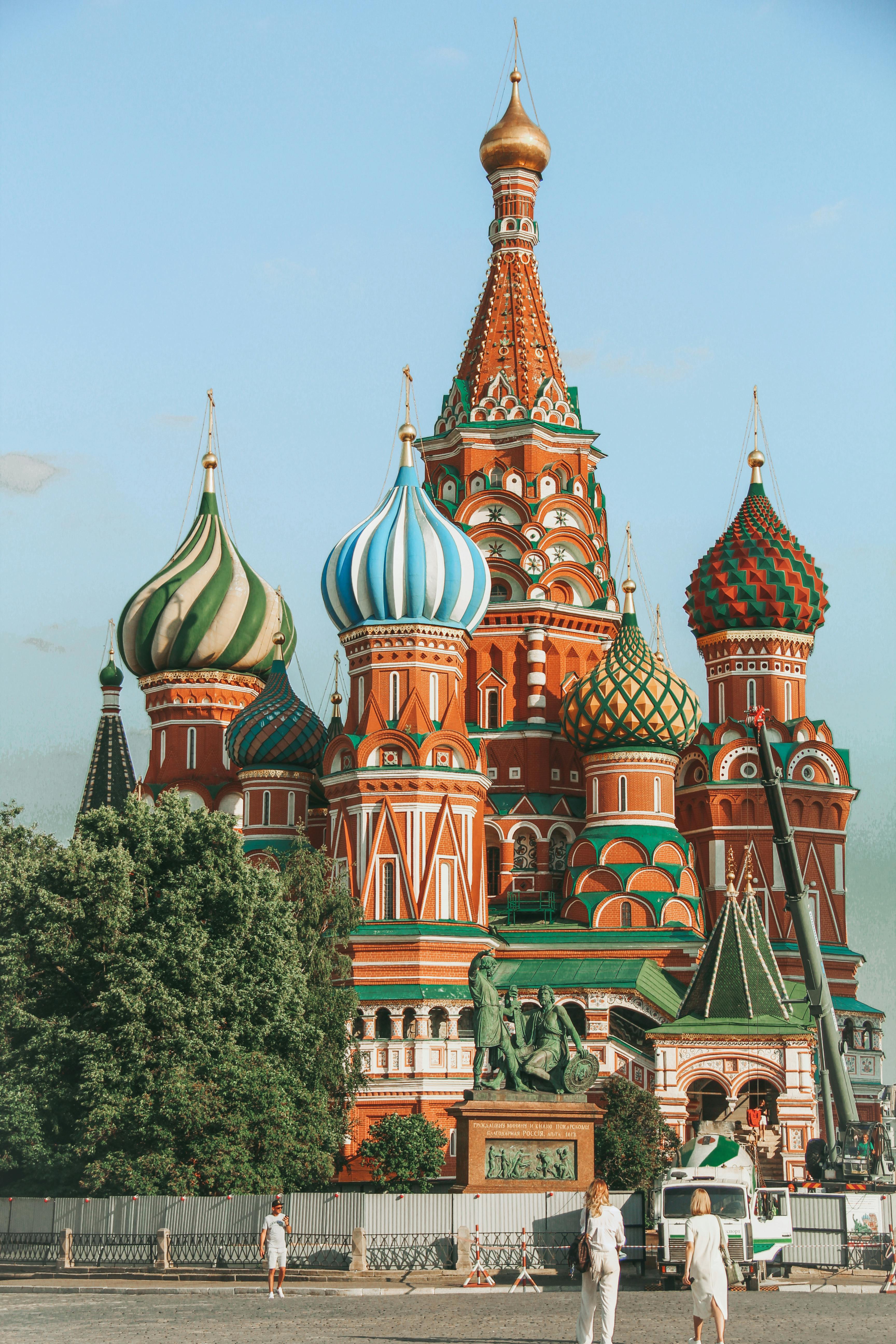
Red Square and St. Basil’s Cathedral are short walks from the Kremlin.
Restoration and Modern Use
The Palace has undergone multiple restorations, notably after the 1737 Trinity fire and again in the 19th and 20th centuries (brilliant-tourism.com). Its Red Porch was rebuilt in 1994. Today, the Palace serves as an official ceremonial hall for the Russian President, maintaining its historical role (kremlin-architectural-ensemble.kreml.ru).
Frequently Asked Questions (FAQ)
Q: How do I buy Palace of Facets tickets?
A: Purchase tickets online via the official Kremlin website or at Alexander Garden ticket booths. Online purchase is advised to avoid queues.
Q: What are the Palace of Facets visiting hours?
A: The Kremlin is open 09:30–18:00 in summer, 10:00–17:00 in winter, closed on Thursdays. The Palace of Facets interior is accessible by guided tour only.
Q: Is photography allowed inside the Palace of Facets?
A: Interior photography is generally prohibited to protect the frescoes.
Q: Is the Palace of Facets accessible for visitors with disabilities?
A: Accessibility is limited due to historic architecture. Inquire in advance.
Q: What is the best time to visit?
A: Late spring and early autumn for pleasant weather and smaller crowds; early mornings are best.
Practical Tips for Visitors
- Best time to visit: May–June or September for good weather and fewer tourists (HikersBay).
- Dress code: Modest attire is required, especially when visiting cathedrals.
- Security: Airport-style checks at the entrance; large bags may be restricted.
- Facilities: Plan ahead—no cafes inside the Kremlin. Restrooms are available.
- Language: Russian and English signage; guided tours recommended for non-Russian speakers.
- Transportation: Metro lines 1 (Biblioteka imeni Lenina) and 4 (Alexandrovsky Sad) are nearest.
- Visa: Most visitors need a visa—apply in advance (Penguin Travel).
Listen to the full story in the app
The whole Palace Of Facets,
told well.
Audio guides for 1,100+ cities across 96 countries. History, stories, and local insight — offline ready.

Verified, and shown.
Researched and written by the Audiala editorial team from historical records, architectural archives, and local expertise.
Last reviewed