Plan and listen to Monument To Alexander Ii with Audiala.
Audio guide in your pocket, itinerary in your browser. Built for the way you actually visit.
Introduction
The Monument to Alexander II in Moscow stands as a testament to a transformative era in Russian history. Known as the "Tsar Liberator," Alexander II is celebrated for abolishing serfdom in 1861 and spearheading a range of progressive reforms that profoundly shaped modern Russia. Erected in 2005 near the Cathedral of Christ the Saviour, the monument marks both the emperor’s enduring legacy and Russia’s journey through reform, revolution, and national revival.
Strategically located on Volkhonka Street, just steps from the Moscow Kremlin and the Pushkin State Museum of Fine Arts, the monument is easily accessible via metro, making it a convenient stop for both locals and tourists. Surrounded by iconic landmarks and open to the public year-round, the monument offers visitors a chance to reflect on Russia’s rich historical tapestry.
This comprehensive guide covers the monument’s historical background, architectural features, visitor information, travel tips, and nearby attractions. Whether you are a history enthusiast, a cultural traveler, or a first-time visitor to Moscow, this article provides everything you need to enrich your experience at the Monument to Alexander II.
For further historical details and visitor information, refer to Tretyakov Gallery Magazine, Wikipedia, and Russiable.

Historical Background
Origins and Early Commemoration of Alexander II
Alexander II, who ruled Russia from 1855 to 1881, is best remembered for the Emancipation Reform of 1861, which freed over 23 million serfs and set the stage for sweeping changes in Russian society (Tretyakov Gallery Magazine). His reign included significant judicial, military, and administrative reforms, but also faced fierce opposition, culminating in his assassination.
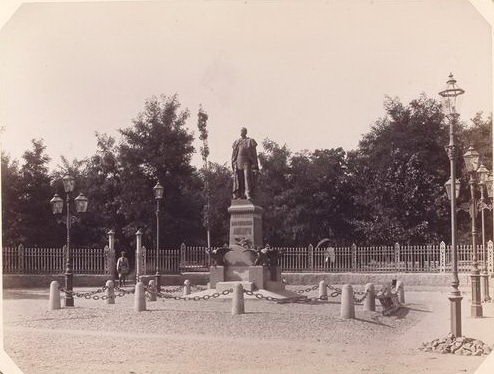
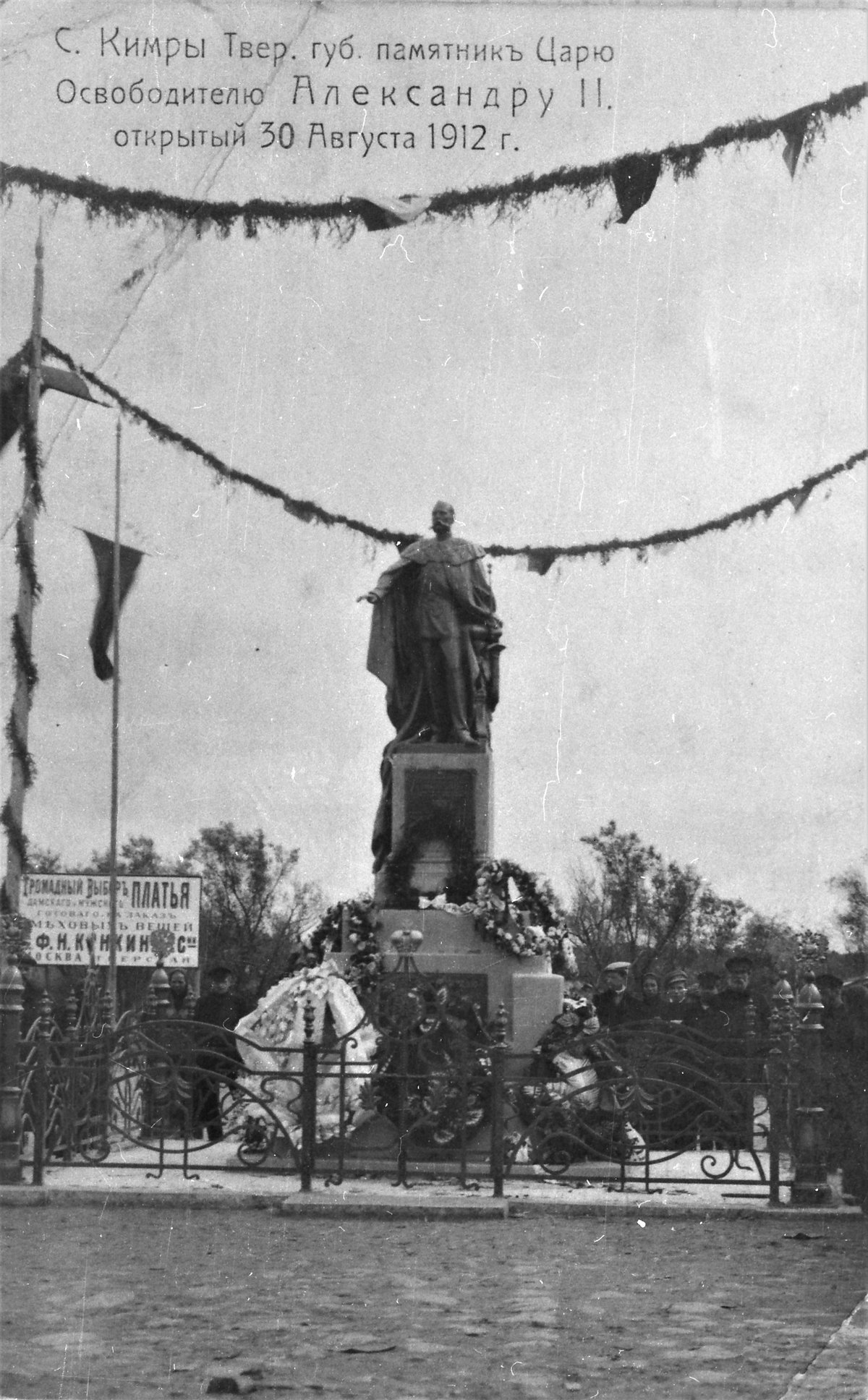
The first monument to Alexander II was commissioned in the late 19th century above the Kremlin’s Taynitsky Gardens, a prominent Moscow location. Designed by sculptor Alexander Opekushin, artist Peter Zhukovsky, and architect Nicholas V. Sultanov, it featured a life-size bronze statue beneath a grand canopy of Karelian granite and gilded bronze (Wikipedia). The monument symbolized both imperial dignity and the gratitude of the Russian people (Vision Kremlin).
Destruction and Soviet Erasure
After the 1917 Revolution, the Soviet regime systematically removed tsarist symbols. In 1918, the original monument was dismantled as part of this campaign (RFE/RL). The surrounding Kremlin area was further altered in the 1930s, erasing much of the imperial landscape (Revisiting History). The monument’s destruction reflected broader efforts to break from the Romanov past and create a new Soviet identity.
The Cathedral of Christ the Saviour: A Parallel History
The monument’s story is closely linked to the nearby Cathedral of Christ the Saviour, commissioned to commemorate Russia’s victory over Napoleon. The cathedral itself was demolished in 1931 to make way for the unbuilt Palace of Soviets, then rebuilt in the 1990s after the fall of the Soviet Union (Wikipedia; Life-Cheb; OrthoChristian). This cycle of destruction and revival mirrors the fate of the Alexander II monument and the broader narrative of Russian history.
Revival and the Modern Monument (2005)
Russia’s post-Soviet era saw a renewed interest in national history and heritage. In 2004, Moscow officials approved the construction of a new monument to Alexander II. Designed by Alexander Rukavishnikov and unveiled in 2005, the new statue draws inspiration from the original but is adapted to its location near the rebuilt Cathedral of Christ the Saviour (Wikipedia; Tretyakov Gallery Magazine). Standing 5 meters tall atop a 5-meter pedestal, the emperor gazes toward the cathedral, symbolizing the connection between reform, faith, and national renewal.
Visiting the Monument to Alexander II: Practical Information
Location and Directions
Address: Volkhonka Street, Moscow, Russia
Nearby Metro Stations:
- Kropotkinskaya (5-minute walk)
- Biblioteka Imeni Lenina (15-minute walk)
The monument is located adjacent to the Cathedral of Christ the Saviour and within walking distance of the Kremlin and the Pushkin State Museum of Fine Arts. The area is well-served by public transport and is pedestrian-friendly.
Visiting Hours and Tickets
- Hours: The monument is outdoors and accessible 24 hours a day, 7 days a week.
- Tickets: No ticket or entrance fee is required.
Accessibility
The monument and its immediate surroundings are wheelchair accessible, with paved walkways and ramps. The central location and proximity to public transport make it suitable for visitors of all mobility levels.
Guided Tours and Visitor Tips
The Monument to Alexander II is frequently included in guided history and architecture tours of Moscow. These tours often also visit the Cathedral of Christ the Saviour, the Kremlin, and other notable landmarks. Booking a guided tour can provide historical context and enhance your visit.
Tips:
- Visit in spring or early autumn for the most pleasant weather and scenic views.
- Early morning or late afternoon offers the best lighting for photography.
- Wear comfortable shoes, as the surrounding area invites exploration.
Nearby Attractions
- Cathedral of Christ the Saviour: Russia’s largest Orthodox church, rebuilt in the 1990s.
- Moscow Kremlin: The historic fortress and seat of Russian government.
- Pushkin State Museum of Fine Arts: Art collections ranging from ancient to modern.
- Gorky Park: A popular green space for relaxation and leisure.
Artistic and Cultural Significance
The monument represents a dialogue between Russia’s past and present. Rather than replicating the original, the new design by Alexander Rukavishnikov embraces both neoclassical and contemporary elements. The statue’s orientation toward the cathedral underscores the interconnectedness of Alexander II’s reforms and Russia’s spiritual renewal (Tretyakov Gallery Magazine). The site serves as a place for public commemoration and reflection on themes of freedom, justice, and the nation’s capacity for transformation.
Frequently Asked Questions (FAQ)
Q: What are the visiting hours of the Monument to Alexander II?
A: The monument is outdoors and accessible 24/7.
Q: Is there an entrance fee or ticket required?
A: No, visiting the monument is free of charge.
Q: How do I get to the monument using public transportation?
A: The nearest metro station is Kropotkinskaya, about a 5-minute walk away.
Q: Are guided tours available?
A: Yes, many guided tours of central Moscow include the monument.
Q: Can I take photographs at the monument?
A: Yes, photography is encouraged.
Q: What is the historical significance of the monument?
A: It commemorates Alexander II’s reforms and Russia’s ongoing journey of national renewal.
Listen to the full story in the app
The whole Monument To Alexander Ii,
told well.
Audio guides for 1,100+ cities across 96 countries. History, stories, and local insight — offline ready.
Verified, and shown.
Researched and written by the Audiala editorial team from historical records, architectural archives, and local expertise.
Researched from Wikidata, Wikipedia & official sources · fact-checked · How we make our guides →