Plan and listen to Lenin Museum In Moscow with Audiala.
Audio guide in your pocket, itinerary in your browser. Built for the way you actually visit.
Introduction
The Lenin Museum in Moscow stands as a profound testament to the life, ideology, and legacy of Vladimir Ilyich Lenin, the founder of the Soviet Union. For visitors interested in Russian history, Soviet heritage, and political symbolism, this museum offers an invaluable window into a transformative era that shaped not only Russia but the wider world. Comprising the Central Museum of V.I. Lenin on Revolution Square, the Gorki Leninskiye estate, and the iconic Lenin’s Mausoleum on Red Square, the museum complex houses a vast collection of artifacts, documents, and immersive exhibitions that chronicle Lenin’s personal journey, his revolutionary activities, and the cult of personality that developed around him (Central Museum of V.I. Lenin History).
Origins and Establishment
The Lenin Museum was established in 1935 by a resolution of the Politburo of the Central Committee of the CPSU(b), with Joseph Stalin actively involved in shaping its founding document. The museum was assigned the former City Duma building at 2 Revolution Square, and preparations for its opening were rapidly completed despite initial use by various Soviet institutions. The museum’s early mandate was to serve as a central hub for ideological education and commemoration, preserving Lenin’s legacy for future generations (Central Museum of V.I. Lenin History).
The Museum’s Role in Soviet Society
From its inception, the Lenin Museum played a central role in Soviet society, functioning as a major institution for preserving and promoting Lenin’s legacy. Its extensive collection of artifacts, documents, and memorabilia—including Lenin’s personal belongings, political posters, and state gifts—made it a focal point for Soviet ideological education and a pilgrimage destination for both citizens and international visitors.
Architectural and Exhibition Developments
The museum underwent several significant redesigns, most notably in 1970 for Lenin’s centenary, which modernized the exhibitions and created a unified artistic vision. Ambitious plans for a new monumental building near the Kremlin were proposed in 1971 but ultimately not realized (Central Museum of V.I. Lenin History).
The Museum’s Collection
The Lenin Museum’s collection is one of the largest and most comprehensive assemblages of Soviet-era artifacts. Highlights include:
- Authentic personal effects and family relics belonging to Lenin
- Materials documenting Lenin’s political activities
- Paintings, sculptures, and folk art depicting Lenin
- Political posters and propaganda objects
- Gifts and honors exchanged among Soviet leaders
With over 100,000 items, the museum’s collection is continually preserved and displayed, offering both permanent and rotating temporary exhibitions (Atlas Obscura).
Practical Visitor Information
Visiting Hours
- Lenin Museum (Central Museum of V.I. Lenin, Revolution Square):
- Open Tuesday–Sunday: 10:00 AM – 6:00 PM (last admission 5:30 PM)
- Closed Mondays and select public holidays
- Gorki Leninskiye Estate:
- Open Wednesday–Sunday: 10:00 AM – 5:00 PM (last entry an hour before closing)
- Closed Mondays and Tuesdays
- Lenin’s Mausoleum:
- Open Tuesday, Wednesday, Thursday, and Saturday: 10:00 AM – 1:00 PM
- Closed Mondays, Fridays, Sundays, and during national holidays or maintenance
Always confirm current hours on the official website before your visit.
Tickets and Admission
-
Central Museum of V.I. Lenin:
- Adults: 500 RUB
- Students/Seniors: 300 RUB
- Children under 16: Free
- Tickets available at the entrance or online; advance booking recommended during peak seasons
- Discounts for groups and special events
-
Gorki Leninskiye Museum-Reserve:
- Ticket includes access to all estate museums and Lenin’s house
- Guided tours available in Russian and English (advance booking for English tours is advised)
-
Lenin’s Mausoleum: Entry is free; no tickets required
Accessibility
Both the Central Museum and Gorki Leninskiye estate strive to be accessible:
- Ramps, elevators, and accessible restrooms are available in the main museum
- Some historic estate buildings may have limited access; inquire ahead for assistance
- Multilingual audio guides and digital kiosks are available
Guided Tours & Special Events
Regular guided tours (multiple languages) provide historical context and deeper insights. Special exhibitions, lectures, and cultural events are often announced via the museum’s website and social media channels. English-language tours at Gorki Leninskiye require advance reservation.
Photography & Interactive Elements
- Photography is permitted in most areas (no flash or tripods)
- Temporary restrictions may apply to some exhibits
- The museum features interactive digital displays, virtual tours, and unique installations such as Apple II-controlled “cubes” that demonstrate Soviet technological innovation (Atlas Obscura)
Nearby Attractions
The museum’s central location allows easy access to:
- Red Square
- The Kremlin
- State Historical Museum
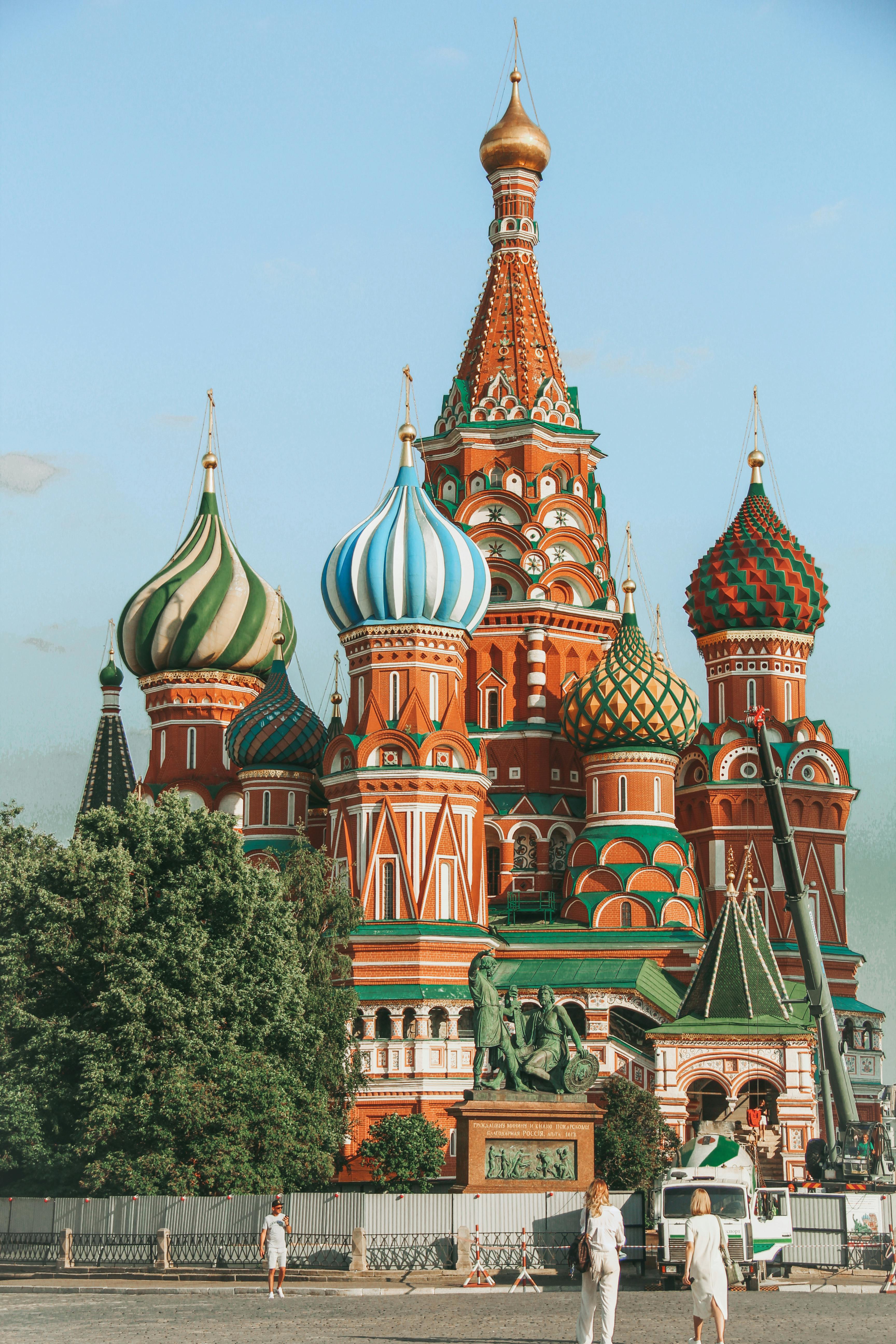
- Saint Basil’s Cathedral
- GUM Department Store
- Bolshoi Theatre
Combine your visit for a rich historical experience in Moscow (Introducing Moscow).
Historical & Political Significance
Lenin’s Legacy and the Soviet State
The museum chronicles Lenin’s rise from his early years to his central role in the creation of the Soviet Union, emphasizing key milestones such as national electrification and the October Revolution. The narrative selectively focuses on achievements, reflecting the period’s ideological priorities (Atlas Obscura).
Architectural Symbolism
As a grand example of Soviet architectural propaganda, the museum’s design and exhibitions evoke a sense of reverence akin to Lenin’s Mausoleum. The use of glass “cubes” and multimedia installations underscores the Soviet embrace of modern technology for ideological impact.
The Cult of Lenin
The phrase “Ленин жил, Ленин жив, Ленин будет жить” (“Lenin lived, Lenin lives, Lenin will live”) reflects Lenin’s symbolic immortality. The museum served as a site for secular pilgrimage and state rituals, reinforcing the quasi-sacred status of Lenin in Soviet society (Museum Studies Abroad).
Post-Soviet Reinterpretation
After 1991, the museum expanded its exhibits to include materials from opposing factions, offering a more pluralistic narrative while retaining much of its original Soviet perspective. Today, the museum stands as an authentic example of Soviet museology and propaganda (Atlas Obscura).
Cultural Memory and Contemporary Relevance
The museum and its associated memorial sites remain focal points for reflecting on Russia’s Soviet past. The Gorki Leninskiye estate, where Lenin spent his final years, offers a personal dimension to the political narrative (Atlas Obscura).
Lenin’s Mausoleum: Essential Visitor Guide
Location and Access
Situated at the heart of Red Square, adjacent to the Kremlin and Alexander Garden, Lenin’s Mausoleum is easily reached by metro (Okhotnyy Ryad, Teatralnaya, and Ploschad’ Revolyutsii stations). Entering via the Marshal Zhukov monument offers a dramatic first view (History Hit).

Entry Procedures and Security
- Entry is free; no tickets required
- Bags, cameras, and mobile phones must be checked at a nearby cloakroom; photography and videography are strictly prohibited inside
- Silence and respectful behavior are enforced by security
- The viewing experience is brief and solemn (History Tools)
Opening Hours and Best Time to Visit
- Open Tuesday, Wednesday, Thursday, and Saturday: 10:00 AM – 1:00 PM
- Closed Mondays, Fridays, Sundays, and for maintenance or official ceremonies
- Arrive early (30–45 minutes before opening) to minimize waiting time, especially in spring and autumn for optimal weather (TravelSetu)
Visitor Experience Inside
Visitors proceed in a continuous line through the mausoleum’s stark granite and marble interior to view Lenin’s embalmed body. The atmosphere is reverent and strictly regulated, with no stopping allowed. The interior architecture reinforces the site’s gravity (History Tools).
Accessibility and Facilities
- Steps at entrance and exit may limit access for visitors with mobility challenges
- No restrooms or refreshments inside; public amenities are available nearby in Red Square and GUM
- Cloakroom service for prohibited items is available near the entrance
Surrounding Attractions
Combine your visit with Red Square’s other highlights: Saint Basil’s Cathedral, the Kremlin, State Historical Museum, and the GUM Department Store. The Bolshoi Theatre, Tretyakov Gallery, and Pushkin Museum are also close by (TravelSetu).
Special Considerations
- Always check the official website for unexpected closures
- Dress respectfully
- Prepare for outdoor waiting in variable weather
Frequently Asked Questions (FAQ)
Q: What are the Lenin Museum’s opening hours?
A: Central Museum: Tuesday–Sunday, 10:00 AM–6:00 PM; Gorki Leninskiye: Wednesday–Sunday, 10:00 AM–5:00 PM; Mausoleum: Tuesday, Wednesday, Thursday, Saturday, 10:00 AM–1:00 PM.
Q: How do I purchase tickets?
A: Tickets for the museums are available onsite and online. Guided tours, especially in English, should be booked in advance.
Q: Is the museum accessible for people with disabilities?
A: Main museums are accessible; historic buildings may have some limitations. Contact the museum in advance for assistance.
Q: Are guided tours offered?
A: Yes, in multiple languages. Book in advance for English-language tours, especially at Gorki Leninskiye.
Q: Can I take photos inside the museum or mausoleum?
A: Photography is allowed in most museum areas (no flash/tripods), but strictly prohibited inside the mausoleum.
Q: What other historical sites are nearby?
A: Red Square, the Kremlin, State Historical Museum, Saint Basil’s Cathedral, GUM Department Store, and more.
Summary & Tips for Visitors
The Lenin Museum complex—including the Central Museum, Gorki Leninskiye estate, and Lenin’s Mausoleum—offers an immersive journey into Soviet history and Lenin’s enduring legacy. The extensive collections, accessible facilities, and central location near Moscow’s top landmarks make it a must-visit for history enthusiasts. For the best experience, check current visiting hours, book tickets and tours in advance, and explore both the physical and virtual resources offered by the museum.
Stay connected by downloading the Audiala app for audio guides, interactive maps, and updates on Moscow’s historical sites.
Listen to the full story in the app
The whole Lenin Museum In Moscow,
told well.
Audio guides for 1,100+ cities across 96 countries. History, stories, and local insight — offline ready.

Verified, and shown.
Researched and written by the Audiala editorial team from historical records, architectural archives, and local expertise.
Researched from Wikidata, Wikipedia & official sources · fact-checked · How we make our guides →